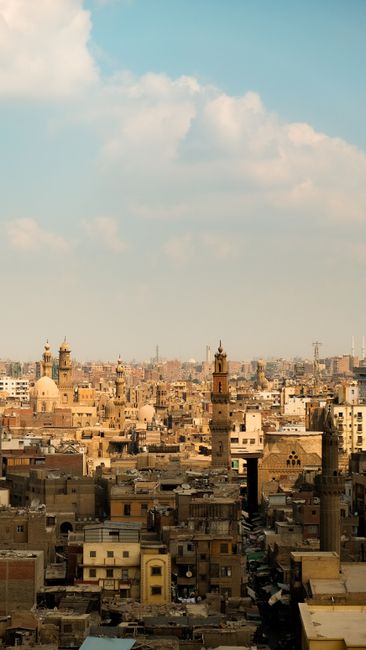
Cairo, “the Victorious”, is the biggest city in Africa and the Arab world, a sprawling metropolis of more than 20 million people on both banks of the Nile, just south of where the river fans out into its delta. It is loud, crowded and exhausting, and also one of the most rewarding cities anywhere. Within a short ride of each other are the Egyptian Museum on Tahrir Square, with the world’s greatest collection of pharaonic art outside the new Grand Egyptian Museum; the royal mummies at the National Museum of Egyptian Civilization; the hilltop Citadel of Saladin with the Muhammad Ali Mosque; the medieval lanes of Islamic Cairo, packed with mosques, madrasas and caravanserais of the Fatimid and Mamluk sultans; the Khan el-Khalili bazaar; and the churches and synagogue of Coptic Cairo, built inside a Roman fortress. Across the river, the pyramids and the Grand Egyptian Museum are in our separate Giza guide. The best way to tackle Cairo is to accept the chaos, start early, use the metro or ride-hailing apps instead of haggling for taxis, and finish each day with a felucca on the Nile or a mint tea in a café. The most pleasant months are October to April.
Right now in Cairo
- Wed19–31°C66–87°FClear
- Thu19–31°C67–88°FClear
- Fri21–31°C70–87°FClear
- Today Armed Forces Day (عيد القوات المسلحة)
Top tours in Cairo
See all tours for Cairo →
From local operators, with prices and reviews; you check availability and book on Viator, our partner. We may earn a commission at no extra cost to you. How we earn money
Cairo at a glance
- Best for: museums, Islamic architecture, bazaars, Coptic churches, food and the Nile, with the pyramids next door.
- How long: 3 days, or 4–5 with Giza, Saqqara and Dahshur.
- Best time: October to April; May to September is hot, with highs around 35 °C (95 °F).
- Getting there: fly into Cairo International (CAI), or Sphinx International (SPX) west of Giza; trains from Alexandria, Luxor and Aswan arrive at Ramses station.
- Getting around: by metro, Uber or Careem, and on foot in the old city.
- Good to know: carry a card for site tickets, dress modestly in Islamic Cairo, and avoid driving yourself.
- Before you go: visas, money, tickets and general safety are in our Egypt travel guide.
Cairo’s areas and where to stay
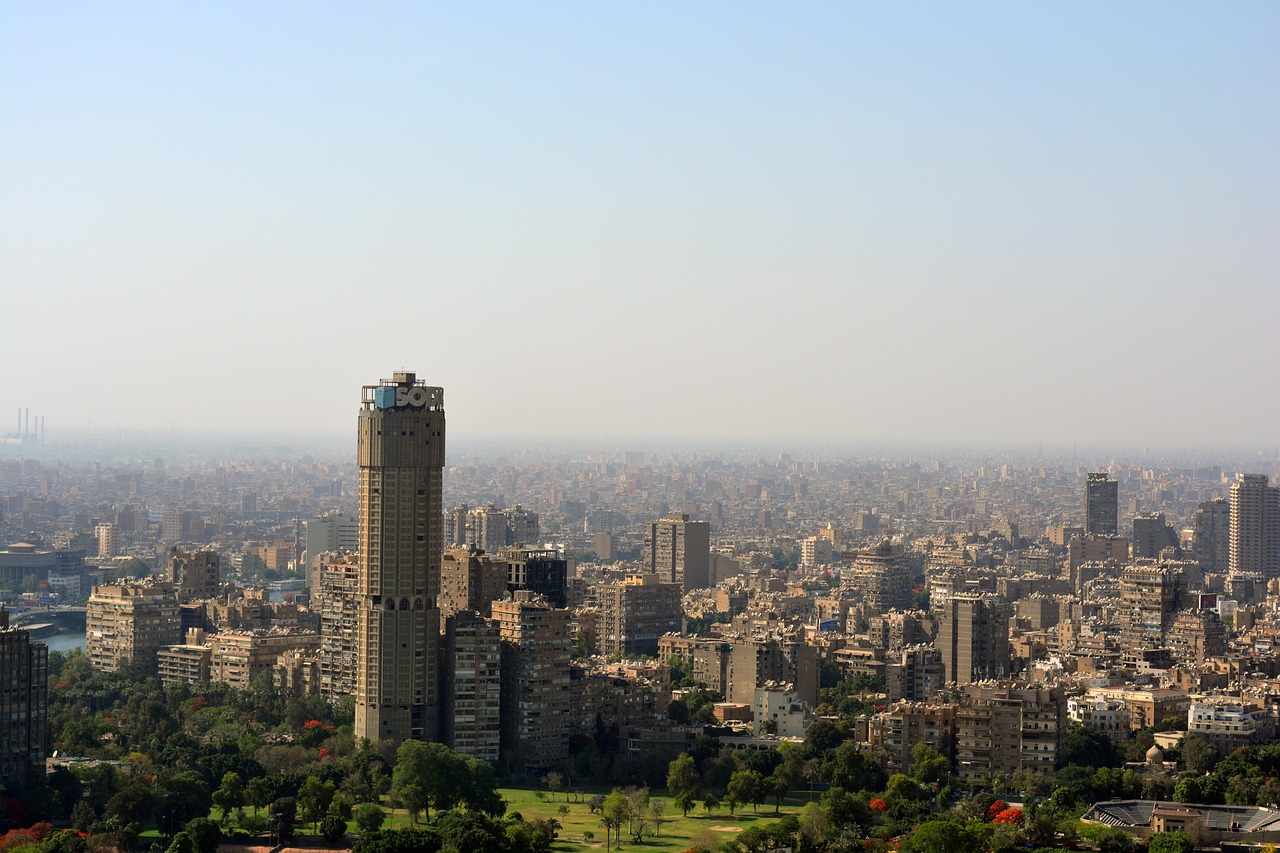
Central Cairo lies on the east bank of the Nile, with the islands of Zamalek and Roda in the river and Giza on the west bank. The medieval city climbs east toward the Citadel and the Muqattam hills, and the airport and newer suburbs spread northeast and east into the desert.
Downtown and Tahrir
The 19th-century center, built in a Parisian style around Tahrir Square, has the Egyptian Museum, faded Belle Époque buildings, cheap hotels and hostels on upper floors, and lively cafés. It is noisy but the most central place to sleep on a budget, with the Sadat metro station under the square.
Garden City and the Corniche
South of Tahrir, leafy Garden City and the Nile Corniche have big international hotels with river views, including several towers on the riverbank and Gezira Island, close to the museum and the metro.
Zamalek
The northern half of Gezira Island is Cairo’s most relaxed district: tree-lined streets, embassies, galleries, bookshops, restaurants and bars, with boutique hotels and apartments. It suits first-time visitors who want calm evenings, though you will use taxis to reach most sights.
Islamic Cairo
Staying near Al-Azhar and Khan el-Khalili puts you in the medieval city, with a few small hotels and guesthouses. It is atmospheric and noisy, and conservative, so dress modestly.
Heliopolis, New Cairo and the airport
Heliopolis, a garden suburb founded in 1905 with the extraordinary Baron Empain Palace, is close to the airport. Business hotels near the airport and in New Cairo suit short stopovers.
Where to stay in Cairo
- Zamalek: calm, leafy and full of restaurants; good for a first visit.
- Downtown: cheapest and most central, with the metro and the Egyptian Museum on the doorstep.
- Garden City and the Corniche: big hotels with Nile views.
- Giza: pyramid-view hotels; see our Giza guide.
- Heliopolis: close to the airport.
Many visitors split their stay: two or three nights in Zamalek or on the Corniche for the city, then one or two nights in Giza for the pyramids and the Grand Egyptian Museum.
Top things to see in Cairo
The Egyptian Museum (Tahrir)
The rose-colored Egyptian Museum, opened in 1902 on Tahrir Square, holds well over 100,000 objects, crammed into old-fashioned cases on two floors. Most of Tutankhamun’s treasures, including the gold mask, have moved to the Grand Egyptian Museum at Giza, but the Tahrir museum still has wonders: the Narmer Palette, the seated statue of Khafre, Old Kingdom statues such as Rahotep and Nofret, the treasures of Yuya and Tjuya, Amarna art, Graeco-Roman portraits and the gold of Tanis. According to the Ministry of Tourism and Antiquities, foreign adults pay EGP 550 (about US$10.50) and students EGP 275, and the museum opens at 9 a.m., with last entry at 4 p.m. Allow at least two to three hours, and consider a guide.
The National Museum of Egyptian Civilization (NMEC)
In Fustat, near Coptic Cairo, the NMEC tells the story of Egypt from prehistory to the present, but its star is the dimly lit Royal Mummies Hall, where 20 kings and queens, including Ramesses II, Seti I and Hatshepsut, have rested since a televised golden parade moved them here in 2021. The ministry lists foreign tickets at EGP 550 for adults and EGP 300 for students, with daytime opening from 9 a.m. to 5 p.m. and evening opening from 6 p.m. to 9 p.m.; the terrace looks over the lake of Ain el-Sira.
The Citadel and the Muhammad Ali Mosque
Saladin began the Citadel in 1176 to defend the city against the Crusaders, and it was the seat of Egypt’s rulers for almost 700 years. On top stands the Ottoman-style Mosque of Muhammad Ali, completed in the 1840s, whose domes and pencil minarets dominate the skyline; inside the walls are the older Mamluk mosque of al-Nasir Muhammad and several small museums. The terraces have the best panorama over Cairo, with the pyramids visible on clear days. The ministry’s area ticket costs EGP 550 for foreign adults.
Islamic Cairo and Al-Muizz Street
The medieval city, a UNESCO World Heritage Site, is the largest collection of Islamic monuments in the world. Walk the length of Al-Muizz li-Din Allah Street, the Fatimid main street, from the northern gate of Bab al-Futuh past the Qalawun complex, the madrasa of Sultan Barquq and the restored house of Bayt al-Suhaymi to the southern gate of Bab Zuweila, whose twin minarets you can climb. The ministry sells a ticket for the main monuments along the street (EGP 220 for foreign adults), and Bab Zuweila (EGP 100) and Bayt al-Suhaymi (EGP 220) have their own tickets. Al-Azhar Mosque, founded in 970 and one of the oldest universities in the world, is free to visit outside prayer times.
Sultan Hassan and Ibn Tulun
Below the Citadel, the colossal 14th-century Mosque-Madrasa of Sultan Hassan (EGP 220) is one of the masterpieces of Mamluk architecture, with a soaring entrance and a vast courtyard. Nearby, the 9th-century Mosque of Ibn Tulun has a huge, serene courtyard and a unique spiral minaret, and next to it the Gayer-Anderson Museum (EGP 100) fills two Ottoman houses with an English officer’s collection.
Khan el-Khalili
The Khan el-Khalili bazaar, founded in the 14th century, is a maze of lanes selling lanterns, spices, perfume, brass, silver, textiles and souvenirs. It is touristy, but the side streets, where craftsmen still work, are fascinating, and El Fishawy café has served tea and shisha for more than 200 years. Haggle with a smile and be ready to walk away.
Coptic Cairo
Inside the walls of the Roman fortress of Babylon, at the Mar Girgis metro station, lie the Hanging Church, built over the fortress gatehouse; the churches of St Sergius and Bacchus, where tradition says the Holy Family sheltered; the Ben Ezra Synagogue; and the Coptic Museum (EGP 280), with icons, textiles and carvings. The churches and synagogue are free; dress modestly.
More classic sights
- Museum of Islamic Art: carpets, ceramics, metalwork and woodwork from across the Islamic world, near Bab al-Khalq (EGP 340).
- Al-Azhar Park: a hilltop park built on a former rubbish dump, with views over the minarets at sunset and a restored Ayyubid wall.
- Baron Empain Palace: a Hindu-temple-style mansion of 1911 in Heliopolis, now a museum (EGP 220).
- The City of the Dead: the Mamluk cemetery east of the old city, where people live among domed tombs such as the complex of Sultan Qaitbay; go with a guide.
- Cairo Tower: a 187 m (614 ft) tower in Zamalek with a viewing deck.
Other things to do in Cairo
Food and drink
Cairo eats late and well. Start the day with ful medames and taameya at a street stall; try koshari at one of the famous downtown koshari halls; eat hawawshi (spiced meat baked in bread), grilled kofta, stuffed pigeon, molokhia and fatta; and finish with om ali, basbousa or a mango juice. Zamalek and Garden City have international restaurants and wine bars, and the hotels have rooftop bars with Nile views. Many traditional places don’t serve alcohol.
The Nile by felucca
A one- or two-hour felucca sail at sunset from the Corniche near Garden City is one of Cairo’s simple pleasures; boats are rented whole, so agree the price and time before you board. Dinner cruises run in the evening, some with belly dance and tanoura shows.
Shows and culture
The tanoura Sufi whirling show at the Wikala of al-Ghuri, near Al-Azhar, is a colorful evening of music and dance. The Cairo Opera House stages ballet, classical music and Arabic music, and the downtown cafés and galleries are good for meeting locals. See our guide to city sightseeing.
Day trips from Cairo
- Giza and the Grand Egyptian Museum: the pyramids, the Sphinx and Tutankhamun’s treasures, 30–60 minutes away; see our Giza guide.
- Saqqara, Memphis and Dahshur: the Step Pyramid of Djoser, the Serapeum, the colossus of Ramesses II at Memphis, and the Bent and Red pyramids, about 30–40 km (19–25 miles) south; best with a driver for a full day.
- Alexandria: about 2.5–3 hours by train for a long day; better overnight. See our Alexandria guide.
- Fayoum and Wadi El Hitan: a green oasis with a lake, waterfalls and the fossil whale skeletons of the “Valley of the Whales”, a UNESCO site, about 2–3 hours southwest; go with a licensed driver.
- Wadi El Natrun: ancient Coptic monasteries in the desert on the road to Alexandria.
Nearby destinations
- Giza7 km
- Alexandria182 km
Getting there and getting around
By air
Cairo International Airport (CAI), about 20 km (12 miles) northeast of downtown, is Egypt’s main gateway and EgyptAir’s hub, with domestic flights to Luxor, Aswan, Abu Simbel, Hurghada and Sharm El Sheikh. The ride to downtown or Zamalek takes 45–90 minutes depending on traffic; Uber and Careem pick up in the terminals, and hotels arrange transfers. Sphinx International (SPX), west of Giza, handles a growing number of flights and is closest to the pyramids.
By train
Ramses station (Misr station), north of downtown on metro Lines 1 and 2, has trains to Alexandria in about 2.5–3 hours and day trains and sleeper trains south to Luxor and Aswan. According to the Abela sleeper train timetable for October 2026, evening sleepers leave Cairo between about 19:20 and 23:00, stopping at Giza, and reach Luxor early the next morning. Buy tickets at the station with your passport or online.
By bus
Comfortable long-distance buses (Go Bus, Blue Bus and others) leave from Cairo stations such as Abdel Moneim Riad near Tahrir and Cairo Gateway (Turgoman) to Alexandria, Hurghada, El Gouna, Sharm El Sheikh, Dahab and Marsa Matruh.
Around town
The Cairo Metro is the fastest way across the city. Line 1 runs north–south through Sadat (Tahrir) and Mar Girgis (Coptic Cairo); Line 2 links Ramses, Attaba, Sadat and Giza; and Line 3 runs from Attaba east to Heliopolis and west across the Nile. According to Cairo Metro, a single ticket costs EGP 10 for up to 9 stations, EGP 12 for up to 16, EGP 15 for up to 23 and EGP 20 for longer journeys; the first carriages of each train are reserved for women. Rechargeable cards are sold at stations. Uber, Careem and inDrive are cheap and avoid haggling; white city taxis have meters but drivers often prefer to negotiate. Walking is the only way to see Islamic Cairo, but crossing big roads takes nerve: cross with locals.
When to go and how long to stay
Cairo has a hot desert climate with almost no rain. Winter (December to February) is mild and sunny by day, with highs around 19–21 °C (66–69 °F), but cool at night, so bring a sweater. Spring (March to May) warms up quickly, and hot, dusty khamsin winds can blow from the desert. Summer (June to September) is hot, with highs around 35 °C (95 °F) and warm nights. Autumn (October and November) is warm and pleasant. Air pollution can be heavy, especially in autumn and winter. The table uses the 1991–2020 climate normals for the Cairo airport station of the Egyptian Meteorological Authority (EMA), as published by the World Meteorological Organization (WMO): average daily highs and lows, total precipitation, and days with at least 1 mm of rain.
| Month | Average high / low | Rain (days with 1 mm or more) | What to expect |
|---|---|---|---|
| January | 19 °C (66 °F) / 10 °C (50 °F) | 5 mm (0.2 in), 1 day | Mild days, cool nights; busy season |
| February | 21 °C (69 °F) / 11 °C (52 °F) | 4 mm (0.1 in), 2 days | Mild; occasional showers |
| March | 24 °C (75 °F) / 13 °C (56 °F) | 6 mm (0.2 in), 1 day | Warming; dusty khamsin winds possible |
| April | 28 °C (83 °F) / 16 °C (61 °F) | 1 mm (under 0.1 in), 1 day | Warm; Sham el-Nessim holiday |
| May | 32 °C (90 °F) / 19 °C (67 °F) | under 1 mm, 1 day | Hot afternoons; quieter |
| June | 35 °C (94 °F) / 22 °C (72 °F) | under 1 mm, 1 day | Hot; plan sights early |
| July | 35 °C (95 °F) / 24 °C (75 °F) | under 1 mm, 1 day | Hot; summer holidays |
| August | 35 °C (95 °F) / 24 °C (76 °F) | under 1 mm, 1 day | The hottest month |
| September | 33 °C (92 °F) / 23 °C (73 °F) | under 1 mm, 1 day | Hot; quieter |
| October | 30 °C (86 °F) / 20 °C (68 °F) | 1 mm (under 0.1 in), 0 days | Warm and pleasant; season starts |
| November | 25 °C (77 °F) / 16 °C (60 °F) | 4 mm (0.2 in), 1 day | Very pleasant; one of the best months |
| December | 21 °C (69 °F) / 12 °C (53 °F) | 3 mm (0.1 in), 1 day | Mild days, chilly evenings |
Cairo receives only about 25 mm (1 in) of rain a year, falling on a handful of days in winter.
Three days in Cairo
Day one, the Egyptian Museum in the morning, lunch downtown, and the Citadel and Sultan Hassan in the afternoon. Day two, a walk down Al-Muizz Street to Bab Zuweila, Al-Azhar Mosque and Khan el-Khalili, with sunset in Al-Azhar Park. Day three, Coptic Cairo and the National Museum of Egyptian Civilization, then a felucca at sunset.
Four to five days
Add a day at the pyramids and the Grand Egyptian Museum in Giza, and a day at Saqqara and Dahshur, or a long day trip to Alexandria.
What a trip to Cairo costs
Prices are approximate, for October 2026, converted at about EGP 52.3 to the US dollar. Site tickets are the ministry’s foreign adult prices.
| Item | Typical cost |
|---|---|
| Egyptian Museum ticket | EGP 550 (about US$10.50) |
| NMEC ticket | EGP 550 (about US$10.50) |
| Citadel ticket | EGP 550 (about US$10.50) |
| Metro ride | EGP 10–20 (about US$0.20–0.40) |
| Uber from the airport to Zamalek | EGP 300–600 (about US$5.70–11.50) |
| Koshari meal | EGP 60–120 (about US$1.15–2.30) |
| Felucca for an hour (whole boat) | EGP 400–800 (about US$7.65–15) |
| Mid-range hotel double, per night | EGP 3,000–7,000 (about US$57–135) |
Practical tips for Cairo
- Start early: traffic builds by mid-morning; see the big sights at opening time.
- Use the apps: Uber and Careem avoid haggling; check the license plate before you get in.
- Carry a card and small notes: a card for site tickets, and small notes for tips, toilets and drinks.
- Dress modestly: especially in Islamic Cairo and mosques; women should carry a scarf.
- Hire a guide for the old city: a licensed guide makes sense of the monuments and keeps touts away.
- Mind Friday: mosques are busy at midday prayers, and Khan el-Khalili is liveliest in the evening.
Safety
Cairo has low rates of violent crime against visitors, and there is a visible police and tourist police presence at the main sights. The most common problems are scams and touts: a friendly stranger who “works at your hotel” and leads you to a papyrus or perfume shop, taxi drivers who claim a site is closed, and “guides” who attach themselves to you at the Citadel or Khan el-Khalili. Say a firm “la, shukran” (no, thank you) and keep walking. Watch for pickpockets in crowded metro cars, buses and the bazaar. Traffic is the biggest everyday hazard: cars rarely stop for pedestrians, so cross with locals or use footbridges. Women traveling alone may face verbal harassment and staring; modest dress, sitting in the women’s metro carriages and using ride-hailing apps help. Avoid political demonstrations and large gatherings, and don’t photograph police, soldiers or government buildings. From May to September, the heat is intense, and air pollution can be high in autumn and winter. Drink bottled water. In an emergency, call 122 for the police, 123 for an ambulance, 180 for fire and 126 for the tourist police.
What to pack for Cairo
Light, loose clothes that cover shoulders and knees, a scarf for mosques, comfortable walking shoes for uneven old streets, a sun hat and sunscreen, a sweater for winter evenings, a mask if you are sensitive to dust, hand sanitizer, tissues, and a power bank for ride-hailing apps. Egypt uses 220 V with two-pin European sockets. See our travel adapters and hiking shoes guides.
Cairo travel FAQ
Is Tutankhamun’s mask in the Egyptian Museum in Tahrir?
No. Tutankhamun’s gold mask and the rest of his treasures are now displayed in the Grand Egyptian Museum at Giza. The Tahrir museum still holds thousands of masterpieces, including the Narmer Palette and the treasures of Yuya and Tjuya.
How much is the Egyptian Museum ticket?
According to the Ministry of Tourism and Antiquities, EGP 550 (about US$10.50) for foreign adults and EGP 275 for students, paid by card.
Where can I see the royal mummies?
In the Royal Mummies Hall of the National Museum of Egyptian Civilization (NMEC) in Fustat, included in the museum ticket.
How many days do I need in Cairo?
Three days for the museums, the Citadel, Islamic and Coptic Cairo, plus one or two days for Giza, the Grand Egyptian Museum, Saqqara and Dahshur.
Where should I stay in Cairo?
Zamalek for a calm, leafy base; Downtown for budget hotels near the Egyptian Museum; the Nile Corniche for river-view hotels; or Giza for the pyramids.
How do I get from Cairo airport to the city?
By Uber, Careem, a hotel transfer or a taxi, in about 45–90 minutes depending on traffic.
Is the Cairo Metro easy to use?
Yes. Three lines cover Tahrir, Ramses station, Coptic Cairo and Giza, single tickets cost EGP 10–20 depending on distance, and the first carriages are reserved for women.
What is the best time to visit Cairo?
October to April, when days are warm and sunny; summer highs average about 35 °C (95 °F).
Is Khan el-Khalili worth visiting?
Yes, for the atmosphere, the side-street workshops and a tea at El Fishawy; haggle firmly and compare prices.
Can I walk from Cairo to the pyramids?
No. Giza is about 15–20 km (9–12 miles) from central Cairo; take an Uber, a driver, or the metro to Giza and a taxi from there.
Plan your trip
Partner links: TravelerCenter may earn a commission if you book, at no extra cost to you.
🇪🇬 Useful Arabic phrases for Cairo
All 38 Arabic phrases: restaurant, hotel, emergencies, romance (printable) →
Sources · last reviewed 5 October 2026
Researched and last reviewed on 5 October 2026. Ticket prices and hours for the Egyptian Museum, the NMEC, the Citadel, Al-Muizz Street, Bab Zuweila, Bayt al-Suhaymi, Sultan Hassan, the Gayer-Anderson Museum, the Coptic Museum, the Museum of Islamic Art and the Baron Empain Palace: the Ministry of Tourism and Antiquities (egymonuments.com and egymonuments.gov.eg); metro fares: Cairo Metro; sleeper train times: Abela Trains; climate normals: the Egyptian Meteorological Authority via the World Meteorological Organization’s 1991–2020 normals (Cairo airport station); the exchange rate: the Central Bank of Egypt. Museum collections, history, transport times, bus companies and typical prices are general references or estimates, flagged for checking. Prices and rules change, so check locally before you go. For visas, money and general safety, see our Egypt travel guide.
Data: Weather: MET Norway (CC BY 4.0) · Rates: ECB · Holidays: Nager.Date · Costs: World Bank ICP and price levels · Wikidata (CC0)