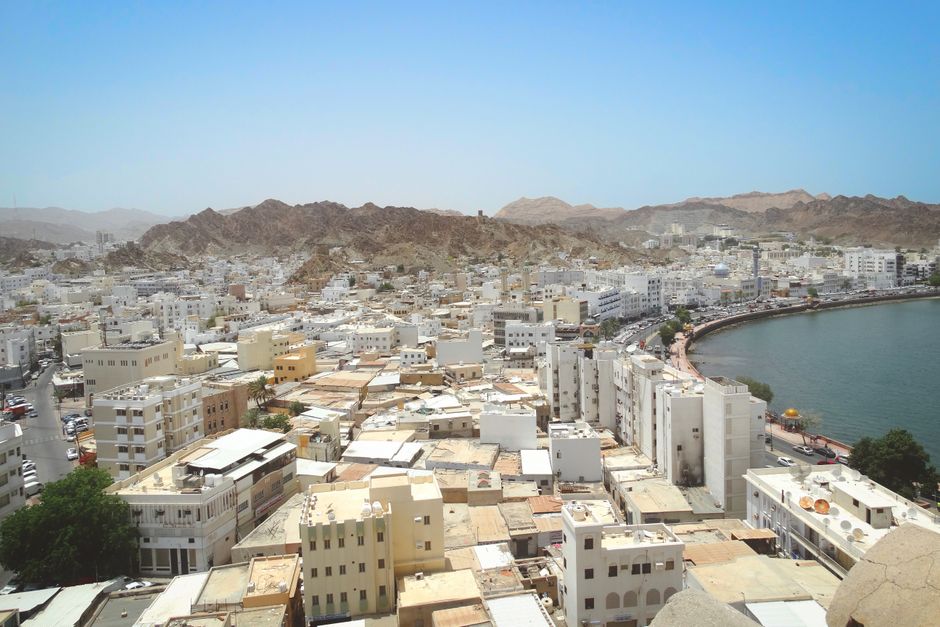
Muscat, the capital of Oman, is a long, low-rise city strung along the coast of the Gulf of Oman between the sea and the jagged brown Hajar Mountains, with white houses, domed mosques and no skyscrapers to break the view. Its districts follow the bays: Old Muscat, a walled cove with the blue-and-gold Al Alam Palace guarded by the Portuguese-era forts of Al Jalali and Al Mirani; Muttrah, with its corniche, fish market and labyrinthine souq; the beaches and parks of Qurum and the Royal Opera House; and, to the west, the Sultan Qaboos Grand Mosque, one of the most beautiful mosques in the Gulf. Beyond the city, beach resorts sit in coves to the east, the Daymaniyat Islands offer snorkeling with turtles, and wadis, forts and mountains are within a day trip. About 1.4 million people live in Muscat governorate, a relaxed and easy-going capital. Muscat has a hot climate: winters from November to March are warm and sunny, with average temperatures around 26 °C (79 °F), and summers are very hot and humid, with highs that commonly reach 40–45 °C (104–113 °F).
Right now in Muscat
- Wed 28–34°C 82–93°F Clear
- Thu 28–34°C 82–93°F Clear
- Fri 27–34°C 80–93°F Clear
Weather: MET Norway (CC BY 4.0) · Sea temperature: NOAA CoastWatch
Top tours in Muscat
See all tours for Muscat →
From local operators, with prices and reviews; you check availability and book on Viator, our partner. We may earn a commission at no extra cost to you. How we earn money
Muscat at a glance
- Best months: November to March, with warm, sunny days and pleasant evenings. April and October are hot; May to September is very hot and humid.
- Time needed: two days for the Grand Mosque, Old Muscat and Muttrah; four days with the beaches, the Opera House and a boat trip; a week with Wadi Shab, Nizwa or the Wahiba Sands.
- Getting there: Muscat International Airport (MCT) is in Seeb, west of the center; citizens of 103 countries can stay up to 14 days without a visa.
- Costs (as of October 2026): the Grand Mosque costs OMR 8 (about US$21) for non-Muslim visitors, and the National Museum OMR 5 (about US$13) for foreign visitors.
- Before you go: visas, alcohol, dress and medicine rules are covered in our Oman travel guide.
Muscat areas and who each one suits
Old Muscat
The historic walled town around a small bay, with Al Alam Palace, the forts of Al Jalali and Al Mirani, the National Museum and Bait Al Zubair. Quiet, with few hotels, but the most atmospheric area for sightseeing.
Muttrah
A few kilometers west along the coast, Muttrah has the corniche, the souq, the fish market, Muttrah Fort and the harbor where dhows and cruise ships dock. Its guesthouses and mid-range hotels suit travelers who like to walk.
Qurum and Shatti Al Qurum
The residential and leisure heart of the city, with Qurum Beach, parks, the Royal Opera House, cafes and beach hotels. Good for families and couples.
Al Khuwair, Ghubra and Bausher
The central business districts along Sultan Qaboos Street, near the Grand Mosque, with business hotels, malls and restaurants.
Al Mouj and Seeb
Near the airport, Al Mouj is a marina development with apartments, hotels, a golf course and a beach, and the Mall of Oman nearby has the Oman Aquarium.
Al Bustan, Bandar Al Jissah and the eastern coves
Southeast of Old Muscat, luxury resorts sit in rocky coves with private beaches, ideal for a beach stay but reliant on taxis.
Top things to see in Muscat
Sultan Qaboos Grand Mosque
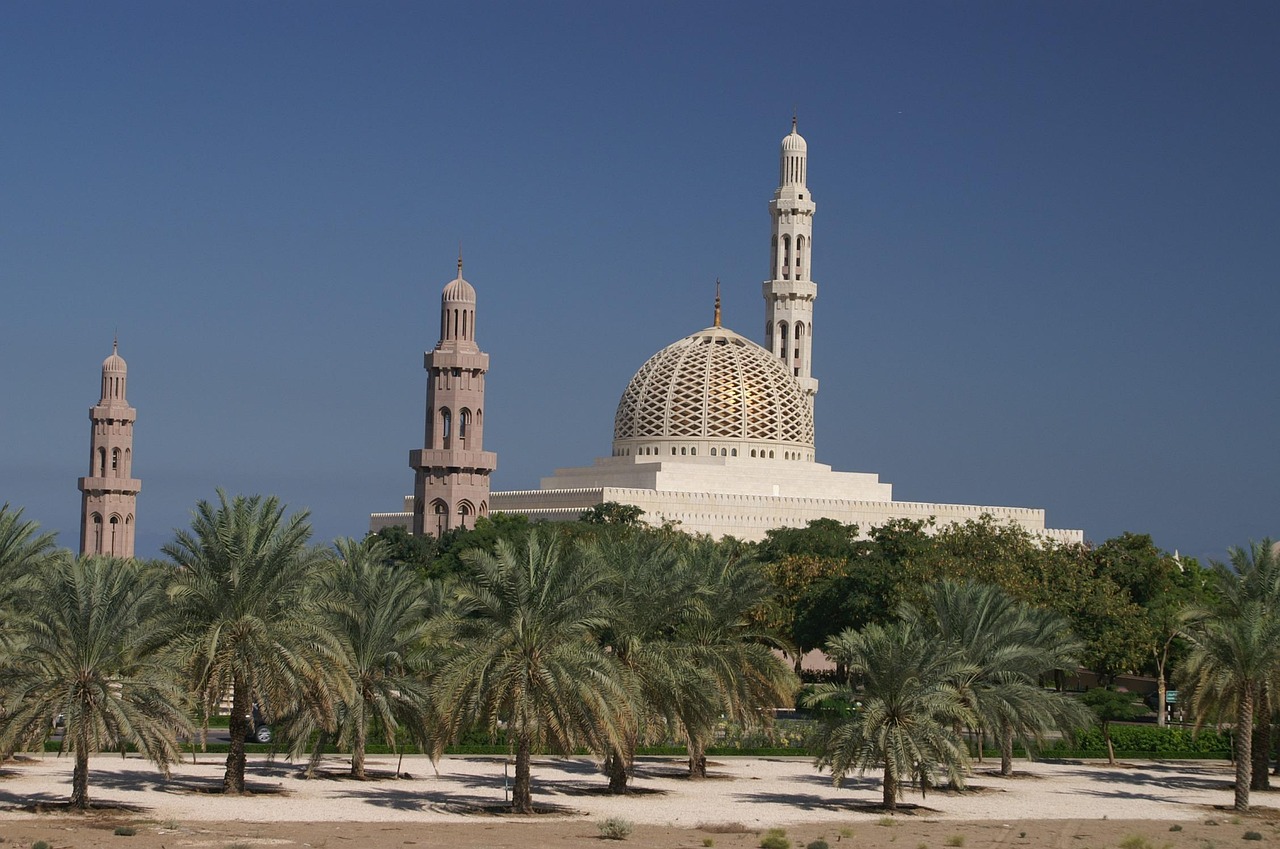
Inaugurated in 2001 on the orders of Sultan Qaboos bin Said, the Grand Mosque was built with nearly 300,000 tons of Indian sandstone, with a dome that rises 50 m (164 feet) and five minarets representing the Five Pillars of Islam. The main prayer hall holds about 6,500 worshippers and the whole mosque around 20,000; it contains one of the world’s largest hand-woven Persian carpets and a vast crystal chandelier. Non-Muslim visitors are welcome Saturday to Thursday from 8 to 11 a.m., and the admission fee is OMR 8. Dress modestly: clothing must cover shoulders and knees, and women must cover their hair; abayas and headscarves are available at the entrance. Remove your shoes before entering the prayer halls, and keep your voice low.
National Museum
Opened in 2016 in Old Muscat, opposite Al Alam Palace, the National Museum tells Oman’s story through more than 7,000 objects, from prehistoric finds and maritime instruments to early Islamic manuscripts, weapons, jewelry and costumes. It opens Saturday to Thursday from 10 a.m. to 5 p.m. and on Friday from 2 to 6 p.m.; entry costs OMR 5 for foreign visitors, OMR 2 for residents and OMR 1 for Omani and GCC nationals, payable by card.
Al Alam Palace and the forts of Old Muscat
The ceremonial palace of the Sultan, with its blue and gold facade and mushroom-like columns, can be seen from the gates; it isn’t open to visitors. Flanking the bay are Al Jalali Fort and Al Mirani Fort. Al Mirani was originally a tower, rebuilt by the Portuguese in 1588 and later restored under the Ya’rubi and Al Busaidi dynasties; it now has a weapons museum, traditional battle dress, an open-air theater, telescopes and panoramic views, and opens daily from 8 a.m. to midnight, with tickets at the reception desk.
Muttrah Souq and Corniche
One of the oldest markets in the Arab world, Muttrah Souq is a covered maze of lanes selling frankincense and burners, silver jewelry, khanjar daggers, pashminas, spices, perfume and Omani halwa. Go in the morning or after 4:30 p.m., as many shops close in the early afternoon and on Friday mornings. Outside, the corniche promenade curves around the harbor, lively at sunset, with the fish market at its western end best early in the morning.
Muttrah Fort
Built by the Portuguese in the 1580s and rebuilt by the Ya’rubi rulers between 1624 and 1742, the fort’s three round towers overlook the corniche and the old harbor. It opens daily from 8 a.m. to 11 p.m.; tickets cost OMR 3 for non-resident adults and OMR 2 for non-resident children (OMR 1 and 0.5 for residents). Climb for the best view over Muttrah.
Bait Al Zubair Museum
A private museum founded in 1998 by the Zubair family in traditional houses in Old Muscat, displaying Omani weapons, jewelry, costumes, household items and models of town and village life. It opens Saturday to Thursday from 9:30 a.m. to 6 p.m.; entry costs OMR 3 for foreign visitors and OMR 1 for Omani and GCC nationals, and children under 12 enter free.
Royal Opera House Muscat
Opened in 2011 as the Gulf’s first opera house, it hosts opera, ballet, concerts and Arabic music, with a dress code for performances. Guided tours run Saturday to Thursday from 8:30 a.m. to 5:30 p.m.: OMR 3.15 for adults and OMR 1.05 for children for the opera house or museum only, or OMR 4.20 and OMR 2.10 for both.
Other things to do in Muscat
- Beaches: Qurum Beach has a promenade and sand popular for walks and water activities; the eastern coves have quieter beaches at resorts.
- Oman Aquarium: at the Mall of Oman, over 7,500 m² (81,000 square feet) with more than 100 exhibits and 10,000 marine creatures, open from 10 a.m. to 10 p.m., with diving and snorkeling experiences for ages 12 and 4 and up.
- Dolphin watching and dhow cruises: morning boat trips to see dolphins and sunset cruises along the coast leave from marinas in Muscat.
- Daymaniyat Islands: a protected archipelago northwest of the city, with snorkeling among reef fish and turtles; book with licensed operators.
- Riyam Park and the incense burner monument: views over Muttrah from the hillside park.
- Ghubrah and the Hajar foothills: short hikes on trails behind the city in the cooler months, starting early.
Food and drink
Muscat is a good place to try Omani dishes: shuwa (slow-cooked marinated lamb), mashuai (whole kingfish with lemon rice), harees, maqbous rice with meat or fish, and Omani halwa with bitter, cardamom-scented kahwa. Muttrah’s corniche cafes serve fresh juices and grilled fish, and the city has excellent Indian, Pakistani, Lebanese and Iranian restaurants reflecting centuries of trade. Alcohol is served only in licensed hotels, restaurants and bars, to people aged 21 and over; drinking in public is illegal.
Day trips from Muscat
Wadi Shab and the Bimmah Sinkhole
About 140 km (87 miles) southeast along the coast road, Wadi Shab has a short boat crossing, a hike between canyon walls and turquoise pools where you can swim to a hidden waterfall cave. Nearby, the Bimmah Sinkhole is a limestone pool of blue-green water in a park. Avoid wadis when rain is forecast.
Nizwa and the forts
About 160 km (100 miles) inland, roughly two hours by road, Nizwa has its great round fort and souq, with Jabreen and Bahla forts nearby. See our Nizwa guide.
Nakhal Fort and the Batinah
About 1.5 hours west, Nakhal Fort stands on a rocky outcrop below the mountains, with a hot spring at Al Thowarah nearby.
Wahiba Sands
About 2.5–3 hours southeast, the dunes of the Wahiba Sands are best for an overnight stay in a desert camp, combined with Wadi Bani Khalid.
Getting there and getting around
Muscat International Airport (MCT)
The airport is in Seeb, about 30–40 km (19–25 miles) west of Muttrah and Old Muscat, roughly 30 to 45 minutes by taxi. It is the hub of Oman Air and SalamAir, with flights to the Gulf, India, Asia, Africa and Europe, and Mwasalat buses connect the airport with the city and intercity routes. Since early 2026, regional tensions have led to periodic airspace closures across the Gulf, so flights can be delayed, rerouted or canceled at short notice; check your flight with the airline and the airport’s status before you travel.
Buses
Mwasalat runs city bus routes across Muscat, linking the airport, Ruwi, Muttrah and the main districts, and intercity buses to Nizwa, Sur, Salalah, Sohar and Dubai. Buses are cheap and air-conditioned but not very frequent; check timetables in the Mwasalat app or website.
Taxis
Use licensed taxi apps such as O Taxi, Marhaba and Tasleem, which the Ministry of Heritage and Tourism lists, or agree a fare before getting into a street taxi. Hotels can arrange cars for day trips.
Driving
Renting a car is the easiest way to explore Muscat’s spread-out districts and the surrounding sights. Sultan Qaboos Street and the Muscat Expressway carry most traffic; drive on the right, watch for speed cameras, and never drink and drive, as any alcohol in your system is an offense. Traffic fines must be paid before you leave Oman.
When to go and how long to stay
November to March is the best time, with warm, sunny days, cool evenings and calm seas; the Ministry of Heritage and Tourism puts Muscat’s average winter temperature at about 26 °C (79 °F). April and October are hot. May to September brings very hot and humid weather, with highs that commonly reach 40–45 °C (104–113 °F) and records above 47 °C (117 °F); plan outdoor sightseeing for early morning and evening. Rain is rare and falls mostly between November and April, sometimes in sudden storms that flood wadis and roads.
| Month | Lowest recorded | Highest recorded | Average rain |
|---|---|---|---|
| Jan | 11 °C (52 °F) | 33 °C (91 °F) | 14 mm (0.6 in) |
| Feb | 14 °C (56 °F) | 35 °C (94 °F) | 7 mm (0.3 in) |
| Mar | 16 °C (60 °F) | 41 °C (106 °F) | 12 mm (0.5 in) |
| Apr | 19 °C (66 °F) | 43 °C (110 °F) | 11 mm (0.4 in) |
| May | 23 °C (73 °F) | 47 °C (117 °F) | 3 mm (0.1 in) |
| Jun | 28 °C (82 °F) | 48 °C (118 °F) | 7 mm (0.3 in) |
| Jul | 26 °C (78 °F) | 48 °C (118 °F) | 2 mm (0.1 in) |
| Aug | 26 °C (78 °F) | 47 °C (116 °F) | 1 mm (0 in) |
| Sep | 24 °C (74 °F) | 42 °C (108 °F) | under 1 mm (0 in) |
| Oct | 18 °C (64 °F) | 42 °C (108 °F) | 1 mm (0 in) |
| Nov | 16 °C (60 °F) | 40 °C (103 °F) | 7 mm (0.3 in) |
| Dec | 13 °C (55 °F) | 32 °C (90 °F) | 10 mm (0.4 in) |
| Year | 11 °C (52 °F) | 48 °C (118 °F) | 73 mm (2.9 in) |
Temperatures are the lowest and highest readings that Oman’s Directorate General of Meteorology reports for each month at Muscat International Airport over 2002–2021; average rainfall is from the 1991–2020 normals Oman submitted to the World Meteorological Organization for the same station. Oman’s published normals don’t include reliable average highs and lows.
Events worth planning around
- Royal Opera House season (roughly September to May): opera, ballet and concerts; book ahead.
- National Day (20 November): celebrations and lights across the city.
- Muscat Nights and winter festivals: family events in parks in the cooler months, when held.
- Ramadan: in 2027 expected from about 8 February to 9 March; museums and souqs change their hours.
Dates change each year; check with the organizers.
How long to stay: 2, 4 and 7 days
- Two days: the Grand Mosque in the morning, Old Muscat and the National Museum; Muttrah Souq, the fort and the corniche at sunset.
- Four days: add Bait Al Zubair, the Royal Opera House, a dolphin cruise and a beach day.
- Seven days: add Wadi Shab and the Bimmah Sinkhole, and an overnight trip to Nizwa or the Wahiba Sands.
Where to stay in Muscat
- Muttrah: guesthouses and mid-range hotels near the souq and corniche.
- Qurum: beach hotels near the Opera House and parks.
- Al Khuwair and Ghubra: business hotels near the Grand Mosque and malls.
- Al Mouj and Seeb: marina hotels and apartments near the airport.
- Eastern coves: luxury beach resorts at Al Bustan and Bandar Al Jissah.
Hotel rates are highest from November to March; compare total prices, as taxes and service charges are added.
Typical costs in Muscat
| Item (as of October 2026) | Omani rials | About US dollars |
|---|---|---|
| Sultan Qaboos Grand Mosque, non-Muslim visitors | OMR 8 | $21 |
| National Museum, foreign visitors | OMR 5 | $13 |
| Muttrah Fort, non-resident adult | OMR 3 | $7.80 |
| Bait Al Zubair Museum, foreign visitors | OMR 3 | $7.80 |
| Royal Opera House tour, adult (one / both venues) | OMR 3.15 / 4.20 | $8.20 / $10.90 |
| Taxi from the airport to Muttrah | about OMR 8–12 | about $21–31 |
| Casual restaurant meal | about OMR 2–5 | about $5–13 |
| Mid-range hotel room, per night in winter | about OMR 35–80 | about $90–210 |
Entry fees are those published by the Ministry of Heritage and Tourism’s Experience Oman website; taxis, meals and hotels are typical ranges. The rial is worth about US$2.60.
Safety in Muscat
Muscat is one of the safest capitals in the region, with low crime. The main risks for visitors are heat, traffic and strict laws.
- Heat: from May to September, highs above 40 °C (104 °F) with humidity are normal. Drink plenty of water, wear a hat and avoid hiking in the heat of the day.
- Dress codes: cover shoulders and knees in public, including malls and souqs; swimwear only at beaches and pools. The Grand Mosque requires full cover and a headscarf for women.
- Alcohol: only in licensed venues at 21 or over; drinking in public, being drunk in public and drink-driving are illegal.
- Drugs, vapes and medicines: drug penalties are severe, e-cigarettes are illegal, and some medicines legal elsewhere are banned; carry prescriptions and check with the Ministry of Health.
- Photography: avoid palaces, government and military sites, and ask before photographing people.
- Wadis and flash floods: storms can cause sudden floods in wadis and on roads, mostly from October to March; never cross flowing water.
- Sea safety: swim only where it’s safe, and check that boats carry life jackets.
- Flight disruptions: since early 2026, regional tensions have led to periodic airspace closures across the Gulf, and flights can be delayed, rerouted or canceled at short notice. Check your flight with the airline before you travel, and follow instructions from the local authorities.
- Emergencies: call 9999 for police, ambulance and fire.
Practical tips for Muscat
- Time zone: Gulf Standard Time (UTC+4) all year.
- Weekend: Friday and Saturday; many souq shops close on Friday mornings.
- Money and plugs: cards are widely accepted, but carry cash for the souq. Sockets are type G (British three-pin) at 240 V.
What to pack for Muscat
Pack light, loose clothes that cover shoulders and knees, and for the Grand Mosque, women need a long, loose outfit and a headscarf (abayas can be borrowed at the entrance). Add swimwear, sandals, water shoes for wadis, a hat, sunglasses, high-SPF sunscreen and a light layer for air-conditioning. Don’t bring e-cigarettes, and carry medicines with your prescription.
Muscat travel FAQ
What are the Grand Mosque’s visiting hours for non-Muslims?
Saturday to Thursday, 8 to 11 a.m. It is closed to tourist visits on Friday.
How much does it cost to visit the Sultan Qaboos Grand Mosque?
The admission fee for visitors is OMR 8.
What should I wear to the Grand Mosque?
Clothes that cover shoulders and knees; women must cover their hair. Abayas and headscarves are available at the entrance.
Is the National Museum open on Fridays?
Yes, from 2 to 6 p.m.; Saturday to Thursday it opens from 10 a.m. to 5 p.m.
When is Muttrah Souq open?
Mornings and from late afternoon into the evening; many shops close in the early afternoon and on Friday mornings.
How do I get from Muscat airport to the city?
By taxi app or licensed taxi, about 30 to 45 minutes to Muttrah, or by Mwasalat bus.
Can I visit Al Alam Palace?
You can see its facade from the gates, but the palace isn’t open to visitors.
What is the best time to visit Muscat?
November to March, when days are warm and sunny. Summers are very hot and humid.
Do I need a visa for Muscat?
Citizens of 103 countries can visit Oman without a visa for up to 14 days; others need an e-visa. See our Oman guide.
Is Wadi Shab a good day trip from Muscat?
Yes. It’s about 140 km (87 miles) away by the coast road, with a boat crossing, a hike and swimming pools; avoid it when rain is forecast.
Sources and last review
Researched and last reviewed on 5 October 2026. The Grand Mosque’s history, visiting hours, fee and dress code, the National Museum’s opening year, collection, hours and fees, Muttrah Fort’s history, hours and fees, Al Mirani Fort, Bait Al Zubair, the Royal Opera House tours, the Oman Aquarium, Qurum Beach, taxi apps and Muscat’s winter temperature come from the Ministry of Heritage and Tourism’s Experience Oman website; the visa-free stay from the Royal Oman Police and Visit Oman; laws, alcohol, vaping, medicines, driving, flooding, sea safety and emergency numbers from GOV.UK’s Oman travel information (updated 22 July 2026); airspace disruption from the European Union Aviation Safety Agency; temperature extremes from Oman’s Directorate General of Meteorology and rainfall from the 1991–2020 normals Oman submitted to the World Meteorological Organization; population from Wikidata. Souq hours, Al Alam Palace access, Al Jalali Fort, dolphin cruises, the Daymaniyat Islands, Riyam Park, day-trip distances, airport details, bus routes, Opera House season, events, Ramadan 2027 dates and typical prices are general references and flagged for checking. For entry rules and money, see our Oman travel guide.
Plan your trip
Partner links: TravelerCenter may earn a commission if you book, at no extra cost to you.
🇪🇬 Useful Arabic phrases for Muscat
All 38 Arabic phrases: restaurant, hotel, emergencies, romance (printable) →