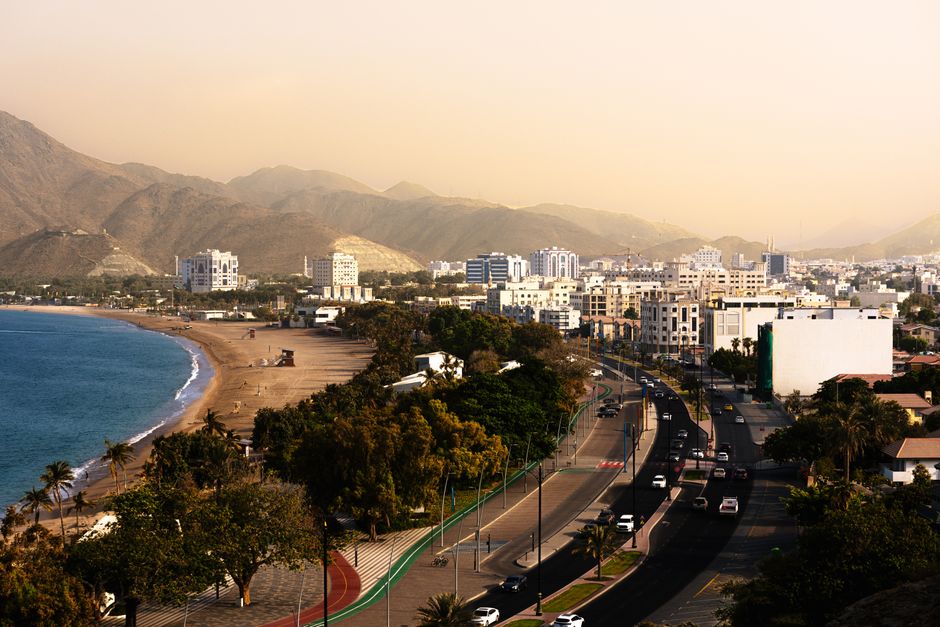
Fujairah is the UAE’s east-coast emirate, the only one that lies almost entirely on the Gulf of Oman rather than the Arabian Gulf. Here the jagged Hajar Mountains drop to a coastline of long sandy beaches, coral-fringed islets and fishing villages, and the sea is clearer and richer in marine life than on the western coast, which makes Fujairah the country’s main base for diving and snorkeling. Inland, wadis cut through the mountains, and in July 2026 Wadi Wurayah, a protected mountain valley with rare freshwater pools and a waterfall, became the UAE’s first natural UNESCO World Heritage Site. The emirate also has some of the oldest buildings in the country, including the small Al Bidya Mosque and the hilltop Fujairah Fort, and its port is one of the world’s largest ship-refueling hubs. The city of Fujairah has about 94,000 people. Since 2026 it has been linked to Abu Dhabi and Dubai by Etihad Rail passenger trains through the mountains. The climate is hot and more humid than inland: winters (November to March) are warm and pleasant, and summers are hot and sticky, with warm nights.

Right now in Fujairah
- Wed29–38°C84–101°FClear
- Thu28–34°C83–94°FClear
- Fri27–34°C81–92°FClear
Top tours in Fujairah
See all tours for Fujairah →
From local operators, with prices and reviews; you check availability and book on Viator, our partner. We may earn a commission at no extra cost to you. How we earn money
Fujairah at a glance
- Best months: October to April, with days of about 25–34 °C (77–94 °F) and sea temperatures good for diving year-round. June to September is hot and humid, with nights around 31 °C (88 °F).
- Time needed: two days for the city, the mosque and a snorkeling trip; four or five days for a beach resort stay with diving and mountain drives.
- Getting there: about 1.5 to 2 hours by road from Dubai, or by Etihad Rail from Dubai and Abu Dhabi. Fujairah International Airport (FJR) has only a few scheduled flights.
- Costs (as of October 2026): Etihad Rail tickets start at AED 39 (about US$10.60); beach resorts are usually cheaper than in Dubai.
- Before you go: visas, the weekend, alcohol and medicine rules are covered in our United Arab Emirates travel guide.
Fujairah areas and who each one suits
Fujairah city
The emirate’s capital has a corniche, the Fujairah Fort and museum, the Sheikh Zayed Mosque and business hotels. It suits travelers on a budget and those using the train.
Al Aqah and the north coast
About 40 minutes north of the city, between the mountains and the sea, Al Aqah has the coast’s main beach resorts, facing Snoopy Island, a rocky islet with coral reefs. This is the best area for a beach-and-snorkeling holiday.
Dibba
At the northern end of the coast, Dibba Al Fujairah is a fishing town on the border with Oman’s Musandam peninsula, with dive centers, dhow harbors and resorts around the bay.
Kalba and Khor Fakkan (Sharjah)
The towns of Khor Fakkan and Kalba, north and south of Fujairah city, belong to the emirate of Sharjah, a dry emirate, but share the same coast. See our Sharjah guide.
The mountains
Inland, villages such as Masafi and the wadis around Wadi Wurayah and Al Hayl are reached by mountain roads, with a few lodges and campsites.
Top things to see in Fujairah
Snorkeling and diving
The Gulf of Oman has the UAE’s best underwater life: coral gardens, reef fish, rays, turtles and, at times, whale sharks. Snoopy Island, off Al Aqah, is the classic snorkeling spot, reachable from the beach in calm conditions or by boat. Divers head for Dibba Rock, Martini Rock and the Inchcape wrecks, sunk as artificial reefs. Dive centers run trips year-round; visibility is usually best in winter and spring, and plankton blooms can cloud the water at times.
If you are new to diving, several centers run beginner courses and try-dives in the sheltered bays, and snorkelers can join half-day boat trips that visit two or three sites. Book with a licensed operator, ask about current conditions and follow the briefing: don’t stand on coral, touch turtles or feed fish, and use reef-safe sunscreen. Boats also run along the coast at sunset in the cooler months.
Al Bidya Mosque
This small whitewashed mosque with four low domes, near the village of Bidya north of Al Aqah, is considered the oldest mosque still in use in the UAE, dating from around the 15th century. Watchtowers on the hill behind give views over the mosque, palm groves and sea. It is open to respectful visitors outside prayer times; dress modestly, and women should cover their hair.
Fujairah Fort and Museum
The fort, a rebuilt stone-and-mud citadel on a rocky outcrop above the old town, is one of the oldest and largest in the country, with parts traditionally dated to the 16th century. Around it, the old town’s mud-brick houses are being restored. The Fujairah Museum nearby covers archaeology, traditional life and weapons.
Sheikh Zayed Mosque, Fujairah
The second-largest mosque in the UAE, with six minarets and white domes, stands beside the main road into the city and is especially striking when lit at night.
Wadi Wurayah
A protected mountain valley in the Hajar Mountains with permanent freshwater pools, a waterfall, rare dragonflies, mountain plants and wildlife such as the Arabian tahr. It became a protected area in 2009 and was inscribed on UNESCO’s World Heritage List in 2026. Access is controlled to protect the habitat; check with the Fujairah authorities or a licensed guide before visiting, and never swim in or pollute the pools.
Other things to do in Fujairah
- Beaches: swim at the resorts of Al Aqah and Dibba, or the public beaches along the corniche; jellyfish can appear seasonally.
- Friday Market (Masafi): a roadside strip of stalls on the Dubai road selling carpets, pottery, plants and fruit.
- Bull butting: a local tradition in which bulls push against each other (without harming each other) on Friday afternoons near the corniche, drawing crowds of local spectators.
- Hot springs: the Ain Al Madhab gardens on the edge of the city have mineral springs.
- Al Hayl Fort: a ruined fort and palace in a mountain valley, about 15 minutes inland from the city.
- Dhow trips: cruises from Dibba into Musandam’s fjord-like inlets (Oman); check visa and permit requirements in advance.
Food and drink
Fujairah’s restaurants are mostly casual: grilled and fried fish, Emirati rice dishes, Indian and Pakistani curries and Arabic grills. The fish market is worth a look early in the morning. Resorts at Al Aqah and Dibba serve international buffets and are the main places to find alcohol, served in licensed venues to people aged 21 and over.
Day trips from Fujairah
Dubai and Sharjah
About 1.5 to 2 hours west across the mountains, or by Etihad Rail to Dubai. See our Dubai and Sharjah guides.
Abu Dhabi
About 1 hour 45 minutes by Etihad Rail, which first opened between Abu Dhabi and Fujairah. See our Abu Dhabi guide.
Ras Al Khaimah
About 1 to 1.5 hours northwest through the mountains, for Jebel Jais. See our Ras Al Khaimah guide.
Khor Fakkan
About 30 minutes north of Fujairah city, Sharjah’s east-coast town has a long beach, an amphitheater and the Al Rabi Tower lookout.
Nearby destinations
Getting there and getting around
By train: Etihad Rail
Fujairah is on the UAE’s first passenger railway. Trains between Abu Dhabi and Fujairah started on 30 June 2026, and services to and from Dubai began on 30 September 2026, crossing the Hajar Mountains through tunnels. Fares start at AED 39 in Comfort Class and AED 109 in Premium; book in the Etihad Rail app, on the website or at station machines, ideally several days ahead at weekends.
By road
From Dubai, the E611 and E89 highways cross the mountains via Masafi, taking about 1.5 to 2 hours; from Sharjah, the road through Al Dhaid is similar. Intercity buses link Fujairah with Dubai and Sharjah. Inside the emirate, a rental car or taxi is needed to move between the city, Al Aqah and Dibba.
By air
Fujairah International Airport (FJR) has few scheduled flights, so most visitors fly to Dubai International (DXB) or Sharjah (SHJ). Since early 2026, regional tensions have led to periodic airspace closures across the Gulf, so flights can be delayed, rerouted or canceled at short notice; check your flight with the airline and the airport’s status before you travel.
| Getting to Fujairah (as of October 2026) | Typical time | Price |
|---|---|---|
| Etihad Rail from Abu Dhabi | about 1 hour 45 min | from AED 39 (Comfort) |
| Etihad Rail from Dubai | check the timetable | from AED 39 (Comfort) |
| Drive from Dubai | about 1.5–2 hours | fuel and tolls |
| Fujairah city to Al Aqah by taxi | about 40 min | about AED 80–120 |
When to go and how long to stay
October to April is the best time, with warm, sunny days, calm seas and good diving. Rain is rare but heavier than on the west coast, falling mostly in winter; storms can cause flash floods in the wadis, as in July 2022. May to September is hot and humid, with average highs of 36–39 °C (97–103 °F) and nights around 31 °C (88 °F); the sea is very warm, and resort prices drop.
| Month | Average high | Average low | Rain | Highest recorded |
|---|---|---|---|---|
| Jan | 25 °C (77 °F) | 17 °C (63 °F) | 20 mm (0.8 in) | 31 °C (88 °F) |
| Feb | 26 °C (79 °F) | 18 °C (65 °F) | 10 mm (0.4 in) | 36 °C (96 °F) |
| Mar | 29 °C (83 °F) | 20 °C (69 °F) | 25 mm (1.0 in) | 42 °C (107 °F) |
| Apr | 34 °C (93 °F) | 25 °C (77 °F) | 8 mm (0.3 in) | 44 °C (111 °F) |
| May | 39 °C (101 °F) | 29 °C (85 °F) | 2 mm (0.1 in) | 50 °C (122 °F) |
| Jun | 39 °C (103 °F) | 31 °C (89 °F) | 0 mm (0 in) | 50 °C (121 °F) |
| Jul | 38 °C (100 °F) | 32 °C (89 °F) | 2 mm (0.1 in) | 49 °C (120 °F) |
| Aug | 36 °C (98 °F) | 31 °C (87 °F) | 0 mm (0 in) | 48 °C (119 °F) |
| Sep | 36 °C (97 °F) | 29 °C (85 °F) | 0 mm (0 in) | 45 °C (113 °F) |
| Oct | 34 °C (94 °F) | 26 °C (80 °F) | 6 mm (0.2 in) | 42 °C (107 °F) |
| Nov | 30 °C (86 °F) | 22 °C (72 °F) | 9 mm (0.4 in) | 39 °C (102 °F) |
| Dec | 27 °C (80 °F) | 19 °C (66 °F) | 25 mm (1.0 in) | 33 °C (91 °F) |
| Year | 33 °C (91 °F) | 25 °C (77 °F) | 107 mm (4.2 in) | 50 °C (122 °F) |
Figures are the 1991–2020 climate normals for Fujairah International Airport that the UAE submitted to the World Meteorological Organization; “highest recorded” is the hottest day in each month over those 30 years. Hot winds from the mountains can push temperatures far above average on some days.
Events worth planning around
- Fujairah International Freediving Championship and dive events: held in some years, usually in the cooler months.
- UAE National Day (2 December): celebrations across the emirate.
- Ramadan: in 2027 expected from about 8 February to 9 March; resorts stay open, but local life slows by day.
Dates change each year; check with the organizers.
How long to stay: 2, 3 and 5 days
- Two days: snorkeling at Snoopy Island and the Al Bidya Mosque; Fujairah Fort and the Sheikh Zayed Mosque.
- Three days: add a dive or boat trip from Dibba and the Friday Market.
- Five days: add Wadi Wurayah with a guide, Al Hayl Fort and Khor Fakkan, or a dhow trip into Musandam.
Where to stay in Fujairah
- Al Aqah: beach resorts facing Snoopy Island, the best choice for snorkeling and diving.
- Dibba: resorts and dive lodges near the Oman border.
- Fujairah city: business hotels close to the station, fort and mosque.
- Mountains: a few lodges and campsites for hikers.
Hotel bills add VAT, service charges and local tourism and municipality fees.
Typical costs in Fujairah
| Item (as of October 2026) | UAE dirhams | About US dollars |
|---|---|---|
| Etihad Rail ticket, Comfort / Premium, from | AED 39 / 109 | $10.60 / $29.70 |
| Snorkeling boat trip to Snoopy Island | about AED 100–200 | about $27–55 |
| Two-tank boat dive with equipment | about AED 400–600 | about $110–165 |
| Casual restaurant meal | about AED 30–60 | about $8–16 |
| Beach resort room, per night in winter | about AED 450–1,000 | about $120–270 |
Train fares are official; the rest are typical ranges, not official prices. The dirham is pegged at about AED 3.67 to US$1.
Safety in Fujairah
Fujairah is safe and quiet, with low crime. Most risks are natural, from heat, sea and flash floods, together with strict UAE laws.
- Heat and humidity: the combination makes summer days tiring; drink plenty of water, avoid midday activity and rest in shade.
- Sea: swim at resort or lifeguarded beaches, watch for currents and seasonal jellyfish, and dive only with licensed centers. Don’t touch or stand on coral.
- Wadis and flash floods: heavy winter storms can send floods down wadis and onto roads within minutes; stay out of wadis when rain is forecast and follow road closures.
- Mountain roads: roads are steep and winding, with trucks heading to the port; drive carefully, especially at night.
- Dress code and decency: swimwear is for beaches and pools; cover shoulders and knees in town, and dress modestly at mosques.
- Alcohol: only in licensed venues, at 21 or over; drinking in public and drink-driving are offenses. Neighboring Khor Fakkan and Kalba are dry, as part of Sharjah.
- Ramadan: don’t eat, drink or smoke in public during daylight hours.
- Drugs and medicines: UAE drug laws are severe, and some prescription medicines need approval from the UAE Ministry of Health before travel.
- Flight disruptions: since early 2026, regional tensions have led to periodic airspace closures across the Gulf, and flights can be delayed, rerouted or canceled at short notice. Check your flight with the airline and the airport’s status before you travel, and follow instructions from the local authorities, including emergency alerts sent to phones.
- Emergencies: police 999, ambulance 998, fire 997.
Practical tips for Fujairah
- Time zone: Gulf Standard Time (UTC+4) all year.
- Weekend: Saturday and Sunday; Friday midday prayers close some sites briefly.
- Money and plugs: cards are accepted at hotels and larger shops; carry some cash for markets and small restaurants. Sockets are type G at 230 V.
What to pack for Fujairah
Pack swimwear, a rash guard, reef-safe sunscreen, a mask and snorkel if you have your own, and water shoes for rocky entries. Add light, modest clothes for town and mosques (a headscarf for women), a hat, sunglasses and sandals, plus a light layer for air-conditioned trains and winter evenings.
Fujairah travel FAQ
Is there a train to Fujairah?
Yes. Etihad Rail passenger trains run between Abu Dhabi and Fujairah since 30 June 2026, and between Dubai and Fujairah since 30 September 2026. Fares start at AED 39.
How far is Fujairah from Dubai?
About 130 km (80 miles), or 1.5 to 2 hours by road across the Hajar Mountains.
Where is the best snorkeling in Fujairah?
Snoopy Island, off the Al Aqah resorts, is the most popular spot, with coral, reef fish and turtles. Dive centers also go to Dibba Rock and Martini Rock.
What is the oldest mosque in the UAE?
The Al Bidya Mosque, north of Al Aqah, is considered the oldest mosque still in use, dating from around the 15th century.
Can I visit Wadi Wurayah?
Access to this protected UNESCO-listed valley is controlled. Check with the Fujairah authorities or a licensed guide before you go, and follow all rules to protect the pools and wildlife.
Is Fujairah better than Dubai for a beach holiday?
For snorkeling, diving and quieter beaches, yes: the Gulf of Oman is clearer and resorts are often cheaper. Dubai has far more nightlife and sightseeing.
When is the best time to visit Fujairah?
October to April, when days are warm and seas calm. Summer is hot and very humid.
Can you drink alcohol in Fujairah?
Yes, in licensed resort and hotel venues, at 21 or over. Nearby Khor Fakkan and Kalba belong to Sharjah, where alcohol is banned.
Can I go to Musandam from Fujairah?
Dhow trips and tours run from Dibba into Oman’s Musandam peninsula; you need the right Oman visa or tour permit, so check before you book.
Are there jellyfish in Fujairah?
Sometimes, especially in warmer months. Ask your hotel or dive center about current conditions and wear a rash guard.
Plan your trip
Partner links: TravelerCenter may earn a commission if you book, at no extra cost to you.
🇪🇬 Useful Arabic phrases for Fujairah
All 38 Arabic phrases: restaurant, hotel, emergencies, romance (printable) →
Sources · last reviewed 5 October 2026
Researched and last reviewed on 5 October 2026. Wadi Wurayah’s 2026 inscription comes from UNESCO; Etihad Rail’s Abu Dhabi–Fujairah and Dubai services, start dates and fares from Etihad Rail and the Dubai Media Office; laws, medicines, emergency numbers and the factual background on local rules from GOV.UK’s UAE travel information (updated 24 July 2026); climate from the 1991–2020 normals the UAE submitted to the World Meteorological Organization; population from Wikidata. The age of the Al Bidya Mosque and Fujairah Fort, dive sites, wadi access rules, flood years, bull butting, journey times, events, Ramadan 2027 dates and typical prices are general references and flagged for checking. For entry rules and money, see our United Arab Emirates travel guide.
Data: Weather: MET Norway (CC BY 4.0) · Sea temperature: NOAA CoastWatch · Rates: ECB · Costs: World Bank ICP and price levels · Wikidata (CC0)