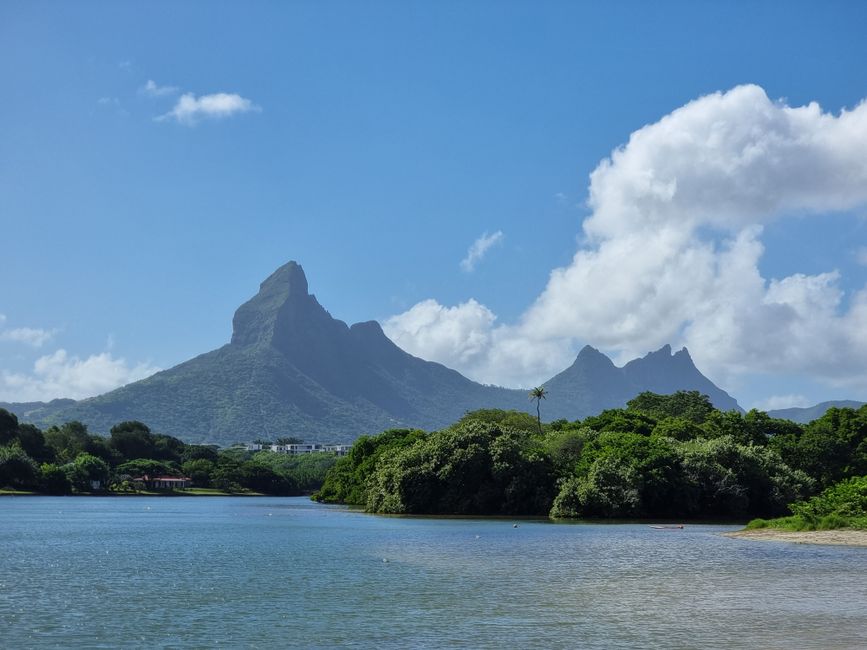
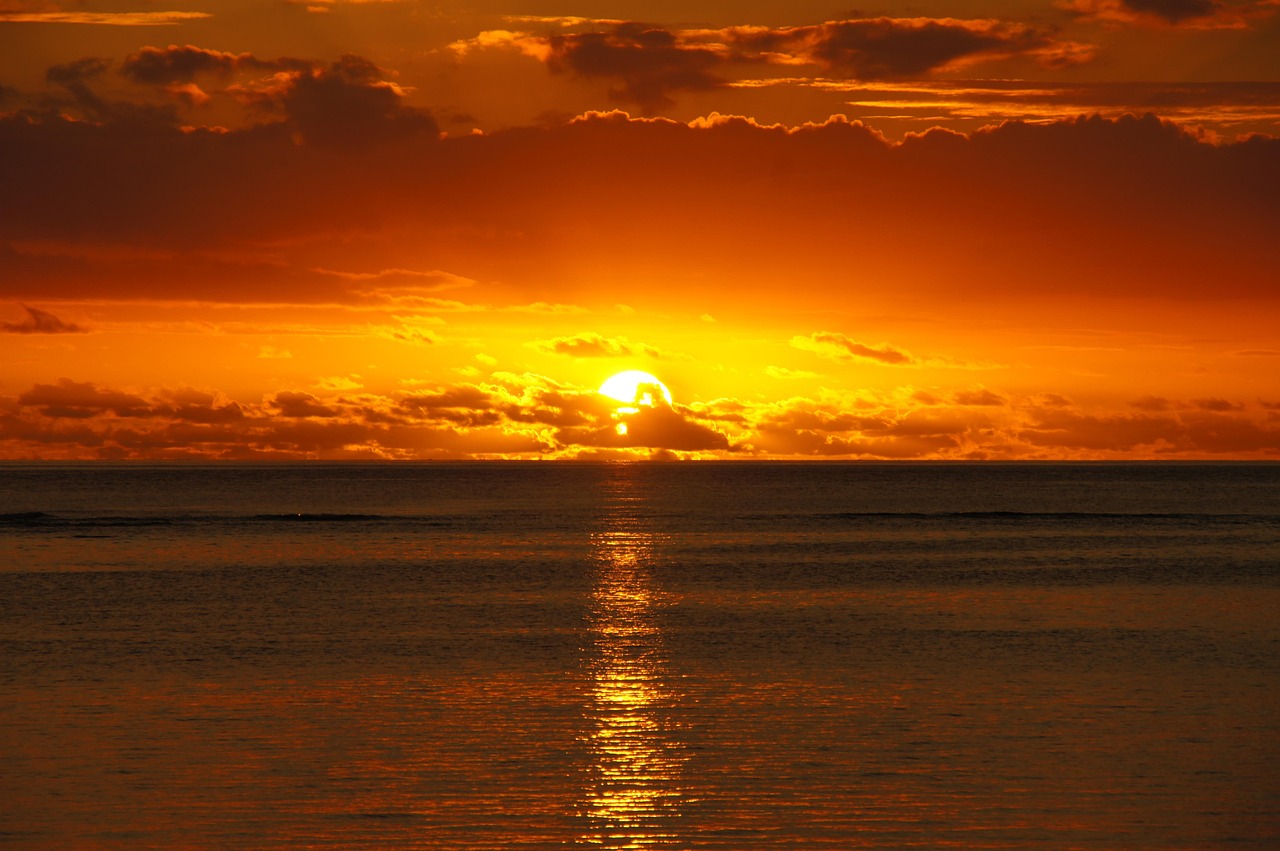
Flic-en-Flac is the main beach town on the west coast of Mauritius, strung along one of the longest white-sand beaches on the island. A wide lagoon of pale turquoise water, sheltered by the reef and fringed with casuarina trees, runs the length of the village, and the sun sets straight over the sea. The west is the driest and sunniest side of Mauritius, so Flic-en-Flac enjoys warm, clear weather even in the southern winter, when the east and south coasts are windy and showery. The village itself is simple and relaxed, with apartments, guesthouses, small hotels, supermarkets and beach restaurants, while a strip of larger resorts lines the beach to the south at Wolmar. Behind it rise the green slopes of the Black River Gorges National Park, and within a short drive are the dolphins of Tamarin Bay, Casela Nature Parks, the salt pans of Tamarin, the waterfalls and colored earths of Chamarel and the mountain of Le Morne. Divers come for the outer-reef sites, among the best in Mauritius. Flic-en-Flac is busy with Mauritian families on weekends and holidays, which gives it a lively local atmosphere. It is good value all year, and the best months are May to December.
Right now in Flic-en-Flac
- Wed20–28°C67–83°F3 mm rain
- Thu20–27°C67–81°F15 mm rain
- Fri20–27°C69–80°F2 mm rain
Top tours in Flic-en-Flac
See all tours for Flic-en-Flac →
From local operators, with prices and reviews; you check availability and book on Viator, our partner. We may earn a commission at no extra cost to you. How we earn money
Flic-en-Flac at a glance
- Best months: May to December for dry, sunny weather; the west coast has sunshine even in winter. January to April is hot and humid, with most of the year’s rain and a cyclone risk.
- Getting there: about an hour by road from the international airport in the southeast, and about 30 minutes from Port Louis.
- Where to stay: apartments, guesthouses and small hotels in the village; resorts at Wolmar; villas toward Tamarin.
- Time needed: three to five nights, or a week as a base for the west and southwest.
- Costs (as of October 2026): a dolphin trip from Tamarin or Flic-en-Flac costs about Rs 1,400–2,900 (US$30–60); apartments start from about Rs 2,400 (US$50) a night, plus the €3 tourist fee per person per night.
- Before you go: entry rules, the All-in-One Travel Digital Form and the tourist fee are covered in our Mauritius travel guide.
Flic-en-Flac’s areas and who each one suits
The village and the public beach
The heart of Flic-en-Flac is the long public beach and the coast road behind it, lined with supermarkets, snack bars, restaurants and dive centers. Apartments and guesthouses here are the cheapest on the west coast, and you can walk to the sand and to dinner. On weekends, families set up picnics under the casuarinas and the beach comes alive with music and food stalls; during the week it is calm.
Wolmar
South of the village, Wolmar is a quieter strip of upscale beach resorts with spas, pools and restaurants, directly on the lagoon. It suits couples and families who want a resort holiday with the village a short walk or taxi ride away.
Tamarin and La Preneuse
About 15 minutes south by car, Tamarin is a laid-back village with a surf break, a beach at the mouth of the river, salt pans and the departure point for many dolphin trips; La Preneuse, next door, has a 19th-century Martello tower. Villas, guesthouses and cafés make it popular with long-stay visitors and surfers.
Albion and the north end
North of the village, Albion is a quiet area of residences and a resort near the red-and-white Albion lighthouse, standing on cliffs above the sea, with good sunset views.
Top things to see around Flic-en-Flac
Flic-en-Flac beach
The beach is the main attraction: several kilometers of soft sand and a shallow, sheltered lagoon, ideal for swimming, paddleboarding and snorkeling, with lifeguards on the main public section. The water is calmest in the morning. Sunsets from the beach are among the best on the island.
Black River Gorges National Park
The forested hills behind the coast belong to the national park, which protects much of the island’s native forest. From the west, trails start near the visitor center at Black River (Grande Rivière Noire); from the plateau, paved roads lead to the Black River Gorges viewpoint and Alexandra Falls. Walks such as the Macchabée Trail and the climb to Black River Peak, at 828 m (2,717 ft) the highest point in Mauritius, reward early starters with views over the gorges and sightings of endemic birds such as the Mauritius kestrel and pink pigeon.
Casela Nature Parks
A few minutes south at Cascavelle, Casela is a large wildlife and adventure park on the slopes above the coast, with giant tortoises, birds, zebras and other African animals, zip lines, quad bikes and a canyon walk. It is popular with families. Activities with big cats and walking with animals have long been controversial; choose activities that keep a respectful distance.
Dolphins in Tamarin Bay
Spinner and bottlenose dolphins rest in the sheltered bays of the west coast in the early morning. Boat trips from Tamarin, Rivière Noire and Flic-en-Flac go out to see them, often with a stop at Île aux Bénitiers. Choose licensed operators that follow the national rules for watching marine mammals, which limit how many boats approach and how close, and do not chase the animals; seeing dolphins from the boat is better for them than swimming among them. From about July to October, humpback whales also pass the west coast.
Tamarin salt pans
At the edge of Tamarin, shallow pans of seawater are left to evaporate in the sun, and workers rake the salt into piles by hand. The pans, with the mountains of Le Rempart and the Trois Mamelles behind them, are a photogenic stop at sunrise or late afternoon.
Chamarel
About 40 minutes south and inland, the village of Chamarel has the Seven Coloured Earths, small dunes of red, brown and violet volcanic soil, the 100 m (330 ft) Chamarel Waterfall and a rum distillery with tastings. Combine it with the gorges viewpoint and the drive down to Le Morne.
Other things to do in Flic-en-Flac
- Diving: the west coast’s outer reef drops off into deep water. Well-known sites include La Cathédrale, an arch and cavern with light beams, and Rempart Serpent, a reef ridge with scorpionfish and moray eels, along with several wrecks. Dive centers in Flic-en-Flac and Wolmar offer courses and guided dives.
- Snorkeling: in the lagoon off the beach, best on calm mornings, and on boat trips to coral gardens.
- Glass-bottom boats and catamarans: sunset cruises and trips down the coast to Île aux Bénitiers and the “Crystal Rock.”
- Big-game fishing: charters leave from Black River and Tamarin for marlin and tuna, mainly from October to April.
- Surfing: Tamarin Bay is a classic left-hand reef break for experienced surfers, best with winter swells.
- Hiking: Le Rempart and the Trois Mamelles, Black River Peak and Le Morne Brabant; take a guide for the steeper peaks.
- Golf: courses at Tamarina and Médine.
Food and drink
Flic-en-Flac’s food scene is simple and good value. Snack bars and food trucks near the beach sell dholl puri, farata, mine frit (fried noodles), briyani and gato piment (chili cakes), and on weekends families grill fish and chicken under the trees. Restaurants along the coast road serve Creole seafood, such as octopus salad, fish vindaye and rougaille, as well as Indian, Chinese and Italian food; the Wolmar resorts have upscale dining, and Tamarin has cafés and brunch spots. Supermarkets in the village stock everything for self-catering. Many restaurants close one day a week.
Day trips from Flic-en-Flac
Le Morne Brabant
About 35 minutes south, Le Morne Brabant is a UNESCO-listed mountain with a steep summit hike, a public beach on its peninsula, the Slave Route Monument and the best kitesurfing lagoon on the island.
Port Louis
About 30 minutes by car, or an hour by bus via Bambous: visit the Central Market, the Aapravasi Ghat World Heritage Site and Le Caudan Waterfront.
Grand Bassin and the central plateau
Drive up through the national park to Grand Bassin (Ganga Talao), the sacred crater lake, then on to the tea gardens of Bois Chéri, or to Curepipe’s Trou aux Cerfs crater for views over the island.
The north coast
A long day trip to Grand Baie, Pamplemousses’ botanical garden and the red-roofed church at Cap Malheureux, about an hour each way.
Nearby destinations
- Le Morne Brabant21 km
- Grand Baie37 km
- Saint-Gilles-les-Bains234 km
Getting there and getting around
By air and road
International flights land at Sir Seewoosagur Ramgoolam International Airport (MRU) in the southeast. Flic-en-Flac is about an hour away by road, across the island’s center or along the south coast. Hotels arrange transfers, and taxis and rental cars are available at the airport.
Getting around
- On foot: the village and beach are walkable; the coast road has sidewalks in the center but not everywhere.
- By bus: buses run from Flic-en-Flac to Quatre Bornes and Port Louis via Bambous; services along the coast to Tamarin and Le Morne are less frequent, and most buses stop by early evening.
- By taxi: taxis wait in the village and at resorts; agree on the price before you go, or hire a driver for the day.
- By car: the best way to explore the southwest. Drive on the left, and take care on the winding roads to Chamarel and through the national park.
- By bicycle: bikes can be rented for short trips along the coast, but traffic can be fast on the main road.
When to go and how long to stay
Flic-en-Flac is on the leeward, western side of Mauritius, in the rain shadow of the central mountains, so it is one of the driest and sunniest places on the island. Summer, from November to April, is hot and humid, with most of the rain falling from December to April in heavy showers and the risk of tropical cyclones, most often from January to March. Winter, from June to September, is dry and sunny, with warm days and cool evenings, and calmer, more sheltered seas than on the east and south coasts.
The table shows long-term averages (1971–2000) from Mauritius Meteorological Services (MMS) for Medine, its reference station for the west coast, just inland of Flic-en-Flac.
| Month | Average high | Average low | Rain | Rain days (over 1 mm) | Sunshine (hours a day) |
|---|---|---|---|---|---|
| Jan | 30 °C (87 °F) | 22 °C (72 °F) | 153 mm (6.0 in) | 9 | 7.5 |
| Feb | 30 °C (87 °F) | 23 °C (73 °F) | 182 mm (7.2 in) | 10 | 7.4 |
| Mar | 30 °C (86 °F) | 22 °C (72 °F) | 86 mm (3.4 in) | 8 | 7.3 |
| Apr | 30 °C (85 °F) | 21 °C (70 °F) | 88 mm (3.4 in) | 8 | 7.2 |
| May | 28 °C (83 °F) | 20 °C (67 °F) | 43 mm (1.7 in) | 5 | 7.8 |
| Jun | 26 °C (80 °F) | 18 °C (64 °F) | 29 mm (1.1 in) | 4 | 7.6 |
| Jul | 26 °C (78 °F) | 17 °C (63 °F) | 15 mm (0.6 in) | 3 | 7.6 |
| Aug | 26 °C (79 °F) | 17 °C (63 °F) | 15 mm (0.6 in) | 3 | 7.6 |
| Sep | 27 °C (80 °F) | 18 °C (64 °F) | 12 mm (0.5 in) | 2 | 7.3 |
| Oct | 28 °C (82 °F) | 19 °C (65 °F) | 16 mm (0.6 in) | 2 | 7.8 |
| Nov | 29 °C (84 °F) | 20 °C (68 °F) | 26 mm (1.0 in) | 3 | 8.0 |
| Dec | 30 °C (86 °F) | 22 °C (71 °F) | 116 mm (4.6 in) | 7 | 8.0 |
| Year | 28 °C (83 °F) | 20 °C (68 °F) | 781 mm (30.7 in) | 64 | 7.6 |
Figures are MMS long-term means; sunshine is the average number of hours of bright sunshine per day. From June to October, rain falls on only two to four days a month. The sea ranges from about 23 °C (73 °F) in August to 28 °C (82 °F) in February and March.
Events worth planning around
- Maha Shivaratri (February or March): pilgrims walk from all over the island to Grand Bassin; roads up to the plateau are busy.
- Independence Day (March 12): a national holiday, with families on the beaches.
- Whale season (July to October): humpback whales pass the west coast.
- Divali (October or November): oil lamps and fireworks in villages.
- Christmas, New Year and Sundays: Flic-en-Flac’s public beach is one of the most popular on the island with local families.
How long to stay: 3, 5 and 7 nights
- Three nights: beach days, a morning dolphin trip and a sunset cruise.
- Five nights: add a dive at La Cathédrale, the national park and a day at Chamarel and Le Morne.
- Seven nights: add Port Louis, Grand Bassin and the plateau, or split your stay with the north coast.
Where to stay in Flic-en-Flac
- Apartments and studios: the best value, in the village and set back from the beach, many with kitchens and pools.
- Guesthouses: small, family-run places with breakfast and Creole dinners.
- Mid-range hotels: in the village and on the beachfront, some all-inclusive.
- Resorts: at Wolmar, on the beach, with spas and several restaurants.
- Villas: private villas with pools at Tamarin, La Preneuse and Black River, good for groups and long stays.
Book early for Christmas, New Year and European school holidays. All tourist accommodation adds the €3 per person per night tourist fee for guests aged 12 and over.
Typical costs in Flic-en-Flac
| Item (as of October 2026) | Mauritian rupees | About US dollars |
|---|---|---|
| Dolphin-watching boat trip | Rs 1,400–2,900 | US$30–60 |
| Two-tank dive | Rs 4,300–6,700 | US$90–140 |
| Casela Nature Parks entry, adult | Rs 1,000–1,500 | US$21–32 |
| Bus to Port Louis | Rs 40–70 | about US$1–1.50 |
| Taxi from the airport | Rs 2,400–3,300 | US$50–70 |
| Snack-bar lunch (noodles, briyani) | Rs 100–250 | US$2–5 |
| Dinner main in a beach restaurant | Rs 450–900 | US$10–19 |
| Apartment or guesthouse double, per night | Rs 2,400–4,800 | US$50–100 |
| Resort double at Wolmar, half board | Rs 11,900–23,800 | US$250–500 |
Prices are typical ranges, not official figures. Conversions use about Rs 47.5 per US dollar, from the Bank of Mauritius’ indicative rates of 5 October 2026.
Safety in Flic-en-Flac
- Cyclone season (November to April): follow Mauritius Meteorological Services warnings; during the highest warning classes, everyone must stay indoors and boat trips stop.
- The sea: swim inside the lagoon and near the lifeguard posts; currents are strong near the reef passes and outside the reef. Wear reef shoes against sea urchins and stonefish.
- Boats: use licensed operators, check life jackets are on board, and stay in marked swimming zones away from boat lanes.
- Hiking: trails in the national park and on the peaks are steep and slippery after rain; start early, carry water and tell someone your route.
- Theft: do not leave valuables in cars at beaches and trailheads, or unattended on the sand.
- Roads: drive and walk carefully on the coast road, especially at night.
- Health: use repellent against dengue; pharmacies and private clinics are nearby in Flic-en-Flac, Tamarin and Quatre Bornes.
- Emergencies: call 999 or 112 for police, 114 for an ambulance and 115 for fire.
Practical tips for Flic-en-Flac
- Weekends: the public beach fills with picnicking families on Saturdays and Sundays; come early or enjoy the atmosphere.
- Dolphin trips: go early in the morning, and pick small, licensed operators.
- Cash: ATMs are in the village; food trucks and small shops want cash.
- Groceries: supermarkets in the village open daily, with shorter hours on Sundays.
- Sunset: every evening, people gather on the beach and at Albion to watch the sun drop into the sea.
What to pack for Flic-en-Flac
Swimwear, a rash vest, reef shoes, a mask and snorkel, reef-safe sunscreen, a hat and sunglasses, insect repellent, a light jacket for winter evenings and the plateau, sturdy hiking shoes for the national park, a rain jacket in summer and a type G plug adapter.
Flic-en-Flac travel FAQ
How far is Flic-en-Flac from the airport?
About an hour by road from Sir Seewoosagur Ramgoolam International Airport in the southeast of Mauritius.
Is Flic-en-Flac a good place to stay in Mauritius?
Yes, for beaches, sunsets, diving and value. It has the driest weather on the island and is close to the national park, Chamarel and Le Morne.
Is Flic-en-Flac beach good for swimming?
Yes. The lagoon is shallow and sheltered by the reef, with lifeguards on the main public beach. Stay away from the reef passes.
Where can I see dolphins near Flic-en-Flac?
Off Tamarin and the west coast, on morning boat trips from Tamarin, Rivière Noire and Flic-en-Flac. Choose licensed operators that follow the rules for marine mammals.
What is the best time to visit Flic-en-Flac?
May to December, when it is dry and sunny. The west coast stays sunny even in winter, from June to September.
Is Flic-en-Flac good for diving?
Yes. The outer reef has some of the best dive sites in Mauritius, including La Cathédrale and Rempart Serpent.
Do I need a car in Flic-en-Flac?
Not to enjoy the beach and village, but a car or driver makes it easy to visit Chamarel, the national park and Le Morne.
How far is Le Morne from Flic-en-Flac?
About 35 minutes by car along the coast road through Tamarin and Black River.
Is Flic-en-Flac busy?
On weekends and public holidays the public beach is popular with Mauritian families; during the week it is relaxed.
What is Wolmar?
The resort strip at the southern end of Flic-en-Flac beach, with upscale hotels directly on the lagoon.
Plan your trip
Partner links: TravelerCenter may earn a commission if you book, at no extra cost to you.
🇫🇷 Useful French phrases for Flic-en-Flac
All 38 French phrases: restaurant, hotel, emergencies, romance (printable) →
Sources · last reviewed 5 October 2026
Researched and last reviewed on 5 October 2026. Climate: Mauritius Meteorological Services long-term means (1971–2000) for Medine, its reference station for the west; seasons and cyclone warnings: Mauritius Meteorological Services; the €3 tourist fee: the Mauritius Revenue Authority; rupee rates: the Bank of Mauritius; coordinates: Wikidata. Descriptions of the beach, dive sites, Casela, dolphin and whale seasons, events, travel times, emergency numbers and all prices are general references or estimates and should be checked locally. For entry rules, the All-in-One Travel Digital Form and money, see our Mauritius travel guide.
Data: Weather: MET Norway (CC BY 4.0) · Sea temperature: NOAA CoastWatch · Air quality: OpenAQ · Rates: ECB · Costs: World Bank ICP and price levels · Wikidata (CC0)