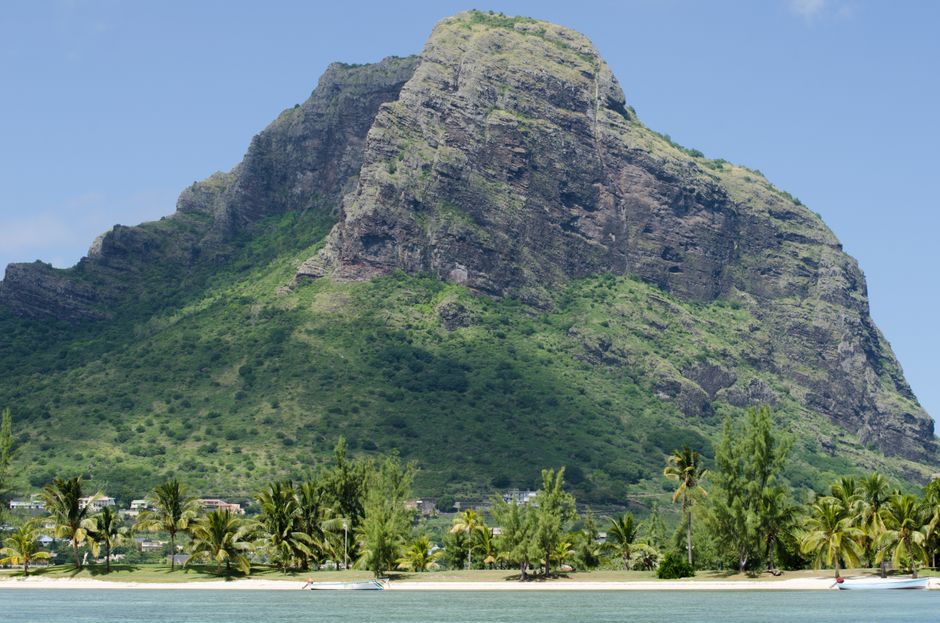
Mauritius is a volcanic island in the southwest Indian Ocean, about 2,000 km (1,250 miles) off the southeast coast of Africa and 175 km (110 miles) northeast of its French neighbor, Réunion. It is small, about 65 km (40 miles) from north to south, but packs in an extraordinary range of scenery: white-sand beaches and turquoise lagoons protected by an almost continuous coral reef, jagged mountains such as Le Morne Brabant and Pieter Both, the rainforest gorges of the Black River Gorges National Park, waterfalls, sugarcane fields and tea plantations on the cooler central plateau. Its people descend from Indian, African, French, Chinese and other settlers, and the island’s mix of Hindu temples, mosques, churches and pagodas, its Creole, Indian and Chinese cooking, and its relaxed blend of English and French make it one of the most varied destinations in the Indian Ocean. Mauritius is known for its high-end beach resorts, but it also has guesthouses, self-catering villas and public beaches that make it possible on a moderate budget. Most nationalities, including US, UK, EU, Canadian and Australian citizens, need no visa; every traveler must complete the free All-in-One Travel Digital Form before arrival, and since October 2025 hotels charge a tourist fee of €3 per person per night. The cooler, drier months from May to November are the most comfortable; the summer from December to April is hotter, wetter and the cyclone season.
Right now in Mauritius
- Wed 20–29°C 67–83°F 1 mm Light rain
- Thu 20–29°C 69–84°F 2 mm Light showers
- Fri 21–28°C 70–82°F Mostly clear
Weather: MET Norway (CC BY 4.0) · Air quality: OpenAQ
Multi-day tours of Mauritius
Multi-day tours from local operators. You check dates and book on Viator, our partner; we may earn a commission at no extra cost to you. How we earn money
Mauritius at a glance
Mauritius became independent from Britain in 1968 and a republic in 1992. The country covers about 2,040 km² (790 sq miles), including the island of Rodrigues, 560 km (350 miles) to the east, and the remote outer islands of Agaléga and St. Brandon. About 1.26 million people live here, most of them on the main island, and Port Louis, the capital, sits on the northwest coast. The island was uninhabited until the Dutch arrived in 1598, naming it after Prince Maurice of Nassau; the French followed in 1715 and the British in 1810. Enslaved Africans and Malagasy worked the sugar estates until slavery was abolished in 1835, after which hundreds of thousands of indentured laborers came from India. Their descendants are the largest community today, and the Aapravasi Ghat in Port Louis, where they landed, is a UNESCO World Heritage Site, as is Le Morne Brabant, the mountain where escaped slaves took refuge.
English is the official language of government and road signs, French is used widely in the press and business, and almost everyone speaks Mauritian Creole (Kreol Morisien), a French-based language. Hindi, Bhojpuri, Urdu, Tamil and Mandarin are also heard. Mauritius Time is UTC+4, with no daylight saving time, the same as Réunion and Seychelles. The currency is the Mauritian rupee (MUR). Electricity is 230 V; sockets are mostly British-style three-pin (type G), with some European two-pin (type C). Traffic drives on the left.
Regions of Mauritius
- The north: Grand Baie, Pereybère, Trou aux Biches and Mont Choisy, with calm lagoons, restaurants, nightlife and catamaran trips to the northern islets.
- The west: Flic-en-Flac, Wolmar, Tamarin and Black River, with long beaches, sunsets, dolphin trips and the national park in the hills behind.
- The southwest: the Le Morne peninsula, a UNESCO World Heritage cultural landscape with luxury resorts, the island’s best kitesurfing lagoon, and the villages and waterfalls of Chamarel.
- The south: wild cliffs at Gris Gris, the sugar estates and Creole heritage of Souillac and Bel Ombre, and Blue Bay Marine Park near the airport at Mahébourg.
- The east: Belle Mare, Trou d’Eau Douce and Île aux Cerfs, with long white beaches and some of the island’s largest resorts.
- Port Louis and the central plateau: the capital’s markets and museums, and the cooler upland towns of Curepipe, Vacoas and Quatre Bornes, with Grand Bassin’s sacred lake and the gorges of the national park.
- Rodrigues: a small, quiet island about 90 minutes by air from the main island, with a huge lagoon, hiking and Creole village life.
Where to go: beaches, mountains and islands
Mauritius is small enough to explore from a single base, but the coasts feel different, and the weather varies: the west is drier and sunnier, the east breezier and greener, the south wilder. See our guides:
- Grand Baie: the lively hub of the north, with a sheltered bay, shopping, restaurants and bars, nearby beaches at Pereybère and Trou aux Biches, and boat trips to Coin de Mire and Île Plate.
- Flic-en-Flac: a long west-coast beach with apartments, mid-range hotels and resorts at Wolmar, sunsets, diving on the outer reef, and easy access to Tamarin, Casela and the national park.
- Le Morne Brabant: the dramatic UNESCO-listed mountain and peninsula in the southwest, with luxury resorts, a public beach, kitesurfing, the Slave Route Monument and a steep hike with views over the lagoon.
Other highlights include Port Louis, for the Central Market, Le Caudan Waterfront, the Blue Penny Museum and the Aapravasi Ghat; the Sir Seewoosagur Ramgoolam Botanical Garden at Pamplemousses, with its giant water lilies; Chamarel, for the Seven Coloured Earths, a waterfall and a rum distillery; the Black River Gorges National Park, for hiking and viewpoints; Grand Bassin (Ganga Talao), a crater lake sacred to Hindus; Île aux Cerfs off the east coast; Blue Bay Marine Park, for snorkeling; and Rodrigues, for a slower pace.
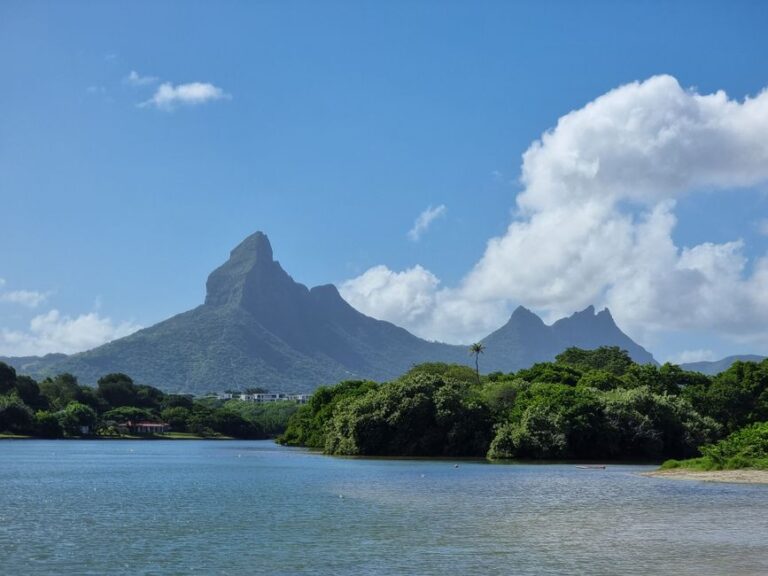
Flic-en-Flac Travel Guide
Plan a trip to Flic-en-Flac, Mauritius: the long west-coast beach and lagoon, Wolmar resorts, dolphins off Tamarin, diving at La Cathédrale, Casela, Black River…
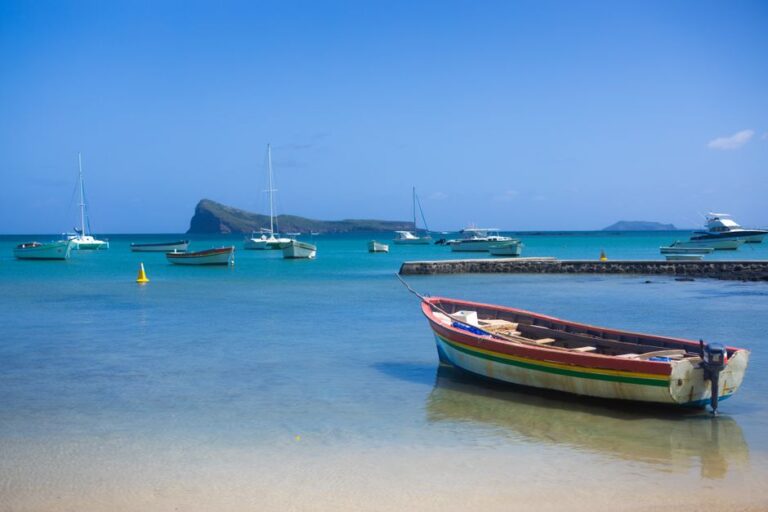
Grand Baie Travel Guide
Plan a trip to Grand Baie, Mauritius: Pereybère, Trou aux Biches and Mont Choisy beaches, Cap Malheureux's red-roofed church, catamaran trips to Coin de…
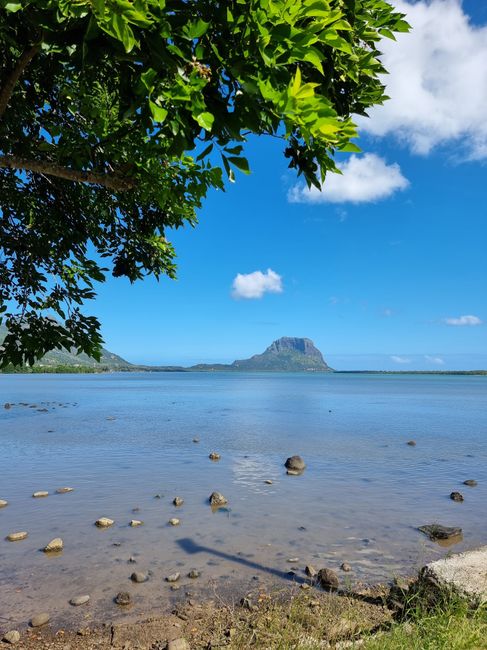
Le Morne Brabant Travel Guide
Plan a visit to Le Morne Brabant, Mauritius: the UNESCO-listed mountain and its maroon history, the summit hike and guides, the Slave Route Monument,…
Where to stay: which coast suits you
North coast: Grand Baie, Pereybère and Trou aux Biches
The busiest stretch of coast and the best for first-time visitors who want restaurants, shops, bars and excursions within walking distance. Lagoons are calm, and there are hotels and guesthouses at every price. The north is sheltered from the southeast trade winds, so it is warm and fairly dry most of the year. It is about 1 hour 15 minutes from the airport by car.
West coast: Flic-en-Flac, Wolmar, Tamarin and Black River
The driest and sunniest coast, with the warmest winters and sunsets over the sea. Flic-en-Flac has a long public beach and plenty of apartments; Wolmar has resorts; Tamarin and Black River are bases for dolphin trips, deep-sea fishing, surfing at Tamarin Bay and hiking in the national park.
Southwest: Le Morne and Chamarel
Quieter and more scenic, with a handful of upscale resorts on the Le Morne peninsula, villas around La Gaulette, and mountain lodges at Chamarel. It is the island’s kitesurfing center and close to the national park, but you will need a car or taxis to go out to eat.
East coast: Belle Mare and Trou d’Eau Douce
Long white beaches, big resorts with golf courses, and fresh breezes that keep it cooler in summer; winter trade winds can make it windy and the sea choppy. Trou d’Eau Douce is the departure point for boats to Île aux Cerfs.
South: Mahébourg, Blue Bay and Bel Ombre
Mahébourg is a historic fishing town near the airport with guesthouses, a waterfront and a Monday market; Blue Bay has a marine park; and Bel Ombre has a cluster of resorts and access to the Frédérica nature reserve. Some southern beaches face open ocean with no reef, so check where it is safe to swim.
Best time to visit Mauritius
Mauritius has a mild tropical maritime climate. According to Mauritius Meteorological Services (MMS), there are two seasons: a warm, humid summer from November to April and a cooler, drier winter from June to September, with May and October as transition months. February and March are the wettest months, and October is the driest. Temperatures vary less between seasons than between places: the coast is several degrees warmer than the central plateau, which gets far more rain, and the west and north are much drier than the east and south. Sea temperatures range from about 22 °C (72 °F) in winter to 28 °C (82 °F) in summer.
The table shows the 1991–2020 climate normals for Plaisance, the station at the international airport in the southeast, as published by MMS through the World Meteorological Organization (WMO). The west coast is drier: MMS long-term averages for Medine, near Flic-en-Flac, show only about 780 mm (31 in) of rain a year.
| Month | Average high | Average low | Rain | Rain days (≥1 mm) |
|---|---|---|---|---|
| Jan | 30 °C (86 °F) | 24 °C (75 °F) | 231 mm (9.1 in) | 16.2 |
| Feb | 30 °C (86 °F) | 24 °C (75 °F) | 263 mm (10.4 in) | 16.3 |
| Mar | 30 °C (85 °F) | 24 °C (74 °F) | 243 mm (9.6 in) | 16.7 |
| Apr | 29 °C (84 °F) | 23 °C (73 °F) | 176 mm (6.9 in) | 15.8 |
| May | 27 °C (81 °F) | 21 °C (70 °F) | 116 mm (4.5 in) | 13.6 |
| Jun | 26 °C (78 °F) | 20 °C (67 °F) | 85 mm (3.4 in) | 13.2 |
| Jul | 25 °C (76 °F) | 19 °C (66 °F) | 86 mm (3.4 in) | 15.8 |
| Aug | 25 °C (76 °F) | 19 °C (66 °F) | 74 mm (2.9 in) | 13.4 |
| Sep | 26 °C (78 °F) | 19 °C (66 °F) | 62 mm (2.4 in) | 10.4 |
| Oct | 27 °C (80 °F) | 20 °C (68 °F) | 50 mm (2.0 in) | 8.5 |
| Nov | 28 °C (83 °F) | 21 °C (70 °F) | 76 mm (3.0 in) | 9 |
| Dec | 30 °C (85 °F) | 23 °C (73 °F) | 131 mm (5.2 in) | 11.3 |
| Year | 28 °C (82 °F) | 21 °C (70 °F) | 1,592 mm (62.7 in) | 160 |
Mauritius month by month
| Month | Weather | Highlights | Crowds and prices |
|---|---|---|---|
| January | Hot, humid; frequent showers | Peak summer; Chinese New Year in some years | High after New Year holidays |
| February | Wettest month; cyclone risk highest | Thaipusam and Chinese Spring Festival; lush scenery | Moderate |
| March | Hot, wet early, drying later | Maha Shivaratri pilgrimage to Grand Bassin; Independence Day (March 12) | Moderate |
| April | Warm; showers easing | Good diving visibility; end of cyclone season | High around Easter |
| May | Pleasant, drier | Calm weather; good value | Low to moderate |
| June | Cool, breezy winter weather | Kitesurfing season starts; hiking weather | Low |
| July | Coolest month; trade winds | Whale watching begins on the west coast; surf at Tamarin | Moderate in European school holidays |
| August | Cool, windy on the east and south | Humpback whales; kitesurfing at Le Morne | Moderate to high |
| September | Dry, sunny | Good hiking and whale watching | Moderate |
| October | Driest month; warming up | Excellent beach weather everywhere | Moderate to high |
| November | Warm, mostly dry | Start of summer; good diving | High |
| December | Hot, with more showers | Christmas and New Year festivities | Very high from mid-December |
Cyclone season
Tropical cyclones can affect Mauritius from about November to April, most often from January to March. MMS issues cyclone warnings in four classes, and during a Class III or IV warning everyone, visitors included, must stay indoors; flights, buses and boat trips stop, and shops close. Most summers bring no direct hit, but heavy rain, wind and rough seas can interrupt a few days of a trip. MMS also issues torrential rain warnings, which can close roads and cause flash floods. If you travel in summer, follow the MMS bulletins and your hotel’s instructions, and have travel insurance that covers weather disruption.
Holidays and festivals
Mauritius celebrates the festivals of all its communities, many as public holidays, so dates move with the Hindu, Muslim and Chinese calendars. The biggest are Maha Shivaratri (February or March), when hundreds of thousands of pilgrims walk to Grand Bassin; Thaipusam and Cavadee, with processions of devotees; Chinese Spring Festival; Eid al-Fitr; Divali, the festival of lights, in October or November; and Christmas. Independence Day and Republic Day fall on March 12, and the abolition of slavery is commemorated on February 1, with gatherings at Le Morne.
How long to stay: sample itineraries
- 5 days: stay in one coastal area, such as Grand Baie or Flic-en-Flac, with a catamaran trip, a day touring the southwest (Chamarel, Black River Gorges viewpoints, Grand Bassin) and a half day in Port Louis.
- 7–10 days: split your stay between the west or southwest (Flic-en-Flac or Le Morne) and the north or east, adding a dive or dolphin trip, the botanical garden at Pamplemousses, Île aux Cerfs and a hike in the national park or up Le Pouce.
- 2 weeks: add three or four nights on Rodrigues, or combine Mauritius with Réunion, a 45-minute flight away, for volcano and cirque hiking.
- Twin-center trips: Mauritius pairs well with Seychelles, Madagascar, South Africa or a stopover in Dubai.
Entry, money and costs
Visas and entry (last reviewed October 2026)
Mauritius is visa-free for most visitors. According to the Passport and Immigration Office’s country list, citizens of the United States, Canada, the United Kingdom, Ireland, the EU countries, Australia, New Zealand, South Africa, India and China need no visa; many other nationalities get a visa on arrival, and a few need one in advance. Visas and extensions are issued free of charge. Every person entering Mauritius must hold a passport valid beyond the intended stay, a return ticket, sufficient funds, a confirmed hotel booking or sponsorship for accommodation, and must be eligible to re-enter their country of origin or residence. Tourists can be granted up to six months in a calendar year, case by case, and the immigration officer stamps the permitted length of stay in your passport. Visitors may not work without a permit.
The All-in-One Travel Digital Form
Before you travel, every visitor must complete the Mauritius All-in-One Travel Digital Form on the government’s official site, safemauritius.govmu.org. It combines the immigration arrival card with health and customs information, including your flight, address in Mauritius and an emergency contact. According to the form’s official instructions, it is required under Mauritian law, proof of completion may be checked at boarding, and it is free of charge; beware of websites that charge for it. Keep the confirmation with its QR code on your phone or printed. French residents of Réunion can enter with a national identity card under the “Mauritius without a passport” arrangement.
Tourist fee and taxes
Since October 1, 2025, according to the Mauritius Revenue Authority, every tourist aged 12 and over staying in a hotel, guesthouse, tourist residence or “domaine” pays a tourist fee of €3 per night, collected by the accommodation. Children under 12 and residents are exempt. Hotel and restaurant prices normally include 15% VAT, and many upmarket restaurants add a service charge.
Money and cards
The Mauritian rupee (MUR, Rs) traded at about Rs 47.5 to the US dollar and Rs 53 to the euro in early October 2026, according to the Bank of Mauritius’ indicative rates. Many resorts and some tour operators quote in euros. Credit cards are widely accepted in hotels, malls and larger restaurants, and ATMs are easy to find in towns and at the airport; carry cash for markets, street food, buses and small guesthouses.
Tipping
Tipping is not obligatory but is appreciated: round up taxi fares, leave about 5–10% in restaurants that do not add a service charge, and tip guides and boat crews if you are happy with the trip.
What a trip costs
Prices are approximate for October 2026, converted at about Rs 47.5 per US dollar.
| Item | Mauritian rupees | About US dollars |
|---|---|---|
| Tourist fee, per person aged 12+ per night | €3 (about Rs 160) | about US$3.40 |
| Guesthouse or studio double, per night | Rs 2,400–4,800 | US$50–100 |
| Mid-range beach hotel double, half board | Rs 9,500–19,000 | US$200–400 |
| Luxury resort double, per night | Rs 28,500 and up | US$600 and up |
| Rental car, per day | Rs 1,400–2,400 | US$30–50 |
| Taxi, airport to Grand Baie or Flic-en-Flac | Rs 2,400–3,300 | US$50–70 |
| Bus fare | Rs 30–70 | under US$1.50 |
| Catamaran day trip with lunch | Rs 2,400–4,300 | US$50–90 |
| Two-tank dive | Rs 4,300–6,700 | US$90–140 |
| Dholl puri or roti from a street stall | Rs 20–40 | under US$1 |
| Main course in a mid-range restaurant | Rs 450–900 | US$10–19 |
A couple can manage on about US$120–180 a day in a guesthouse with a rental car and local food; mid-range trips cost US$300–500 a day for two, and luxury resorts much more.
Getting there and getting around
Flights
Sir Seewoosagur Ramgoolam International Airport (MRU), at Plaine Magnien in the southeast, is the only international airport on the main island. The national airline, Air Mauritius, and international carriers fly nonstop from Paris, London, other European cities, Dubai, Istanbul, Johannesburg, Nairobi, Mumbai and other Indian cities, Perth and Singapore, among others, and there are frequent short flights to Réunion and connections to Madagascar and Seychelles. There are no nonstop flights from North America; most travelers connect in Europe, the Gulf or Johannesburg. By road, the airport is about an hour from Flic-en-Flac and Le Morne and about 1 hour 15 minutes from Grand Baie.
Driving
A rental car is the easiest way to explore, and the island is small enough for day trips anywhere. Driving is on the left, roads are generally good, and the motorway runs from the airport past Port Louis to the north. Expect heavy traffic around Port Louis, Ebène and the plateau towns at rush hour, narrow roads in villages, buses stopping without warning, motorbikes without lights at night, and pedestrians and cyclists on the shoulder, including on main roads. Drink-driving limits are low and strictly enforced.
Buses and the Metro Express
Public buses are cheap and cover most of the island, with main hubs in Port Louis, Curepipe, Rose Hill and Mahébourg, but they are slow and most routes stop by early evening. The Metro Express light rail links Port Louis with Rose Hill, Quatre Bornes, Ebène and Curepipe, useful for day trips to the capital from the plateau.
Taxis
Taxis are plentiful at hotels, the airport and town ranks. Few use meters, so agree on the fare before you set off; many drivers offer day tours at fixed prices. Ride-hailing apps operate in some areas.
Island hopping and day trips
- Northern islets: catamarans from Grand Baie and Trou aux Biches visit Coin de Mire, Île Plate and Île Gabriel, with snorkeling and a barbecue lunch.
- Île aux Cerfs: boats from Trou d’Eau Douce, often with a stop at the Grande Rivière Sud-Est waterfall.
- Île aux Aigrettes: a nature reserve off Mahébourg with giant tortoises and rare birds, visited on guided tours.
- Rodrigues: about 90 minutes by air with Air Mauritius; a quiet island with a vast lagoon, hiking and fishing villages.
- Réunion: a 45-minute flight; an easy two-island trip.
Things to do in Mauritius
- Beaches and lagoons: all beaches in Mauritius are public, and the lagoons inside the reef are ideal for swimming and snorkeling. Favorites include Trou aux Biches, Mont Choisy and Pereybère in the north, Flic-en-Flac in the west, Le Morne in the southwest, Belle Mare in the east and Blue Bay in the south.
- Diving and snorkeling: sites along the outer reef include Cathedral and Rempart Serpent off Flic-en-Flac and wrecks and drop-offs in the north. Blue Bay Marine Park has shallow coral gardens.
- Catamaran cruises: full-day trips to the northern islets or Île aux Cerfs, with snorkeling and lunch.
- Dolphins and whales: spinner and bottlenose dolphins live off Tamarin, and humpback whales pass the west coast from about July to October. Choose licensed operators that follow the rules for marine mammals, which limit how close and how many boats can approach.
- Hiking: Le Morne Brabant, Le Pouce above Port Louis, Pieter Both and the trails of the Black River Gorges National Park, such as Macchabée and the Black River Peak.
- Port Louis: the Central Market, Le Caudan Waterfront, the Aapravasi Ghat World Heritage Site, the Blue Penny Museum and Chinatown.
- Chamarel and the southwest: the Seven Coloured Earths, Chamarel waterfall, a rum distillery and viewpoints over the gorges.
- Gardens and plantations: the botanical garden at Pamplemousses, tea tasting at Bois Chéri and colonial houses such as Eureka.
- Grand Bassin (Ganga Talao): a crater lake ringed by temples and a giant statue of Shiva.
- Kitesurfing, surfing and sailing: Le Morne is world-famous for kitesurfing; Tamarin Bay has a classic reef break.
See our beaches, snorkeling, diving, boat trips, hiking and surfing guides.
Port Louis
The capital is busy, hot and worth a day. Start at the Central Market, a 19th-century iron hall piled with fruit, vegetables, spices and herbal remedies, with stalls selling dholl puri and alouda outside. Walk to the Aapravasi Ghat, the immigration depot where indentured laborers from India landed from 1849, now a World Heritage Site with a museum in the nearby Beekrumsing Ramlallah Interpretation Centre. Le Caudan Waterfront has shops, restaurants, the Blue Penny Museum, home to two of the world’s rarest stamps, and a view of the harbor. Climb to the Citadel (Fort Adelaide) for views over the city to the mountains, browse the shophouses of Chinatown, and see the Jummah Mosque, built in the 1850s. Come on a weekday morning; many shops close on Saturday afternoons and Sundays.
Black River Gorges National Park
Mauritius’s largest national park protects most of the island’s remaining native forest in the southwest uplands. Paved roads cross it to viewpoints such as the Black River Gorges viewpoint and Alexandra Falls, and marked trails lead through forest of ebony, tambalacoque and endemic palms. You may see Mauritius kestrels, pink pigeons and echo parakeets, three birds saved from near extinction by local conservation programs, and fruit bats and macaque monkeys. Popular walks include the Macchabée Trail and the climb to Black River Peak, the island’s highest point at 828 m (2,717 ft). Start early, bring water and rain gear, and check trail conditions after heavy rain.
Chamarel and the south coast road
The road from Chamarel down to the south coast is one of the most scenic drives on the island. At Chamarel, the Seven Coloured Earths are small dunes of red, brown, violet and yellow volcanic soil in a geopark that also has giant tortoises; nearby, the Chamarel Waterfall drops about 100 m (330 ft) in a single fall. The Rhumerie de Chamarel offers tastings, and Le Morne viewpoints overlook the lagoon. Further east, Gris Gris is a windswept cliff where waves crash on a reefless shore, and Souillac has a garden and the museum house of the poet Robert Edward Hart.
Rodrigues
Rodrigues, an autonomous region of Mauritius, is a different world: a hilly island of 108 km² (42 sq miles) ringed by a lagoon about twice its size, with about 40,000 inhabitants, almost all Creole, and little tourism. The capital, Port Mathurin, has a Saturday market; around the island you can hike the coastal path from Graviers to Saint François, visit the François Leguat Giant Tortoise and Cave Reserve, kitesurf at Mourouk and take a boat to Île aux Cocos for its seabirds. Guesthouses and small hotels serve octopus curry and sweet papaya pies. The MMS station at Pointe Canon shows that Rodrigues is drier than the main island, with about 1,110 mm (44 in) of rain a year.
Responsible travel
Mauritius’s reefs and native forests are fragile: less than 5% of the original forest survives. Do not touch or stand on coral, use reef-safe sunscreen, never buy shells or coral, and choose dolphin, whale and boat operators that respect the rules for marine mammals. In the national park, stay on marked trails, and support the conservation projects that protect the island’s endemic birds and reptiles.
Food and drink
Mauritian food reflects every community on the island. The national street food is dholl puri, soft flatbread filled with ground split peas and served with bean curry, pickles and chutney; farata (paratha) is its cousin. Try gajak fritters such as gato piment (chili cakes), rougaille (a Creole tomato stew with fish, sausage or chicken), vindaye (fish or octopus pickled with mustard and turmeric), briyani, Chinese-style mine frit (fried noodles) and boulettes (dumplings in broth), and octopus curry. Fresh fruit stalls sell pineapple with chili salt. Wash it down with Phoenix beer, local rum, vanilla tea from the plateau or alouda, a sweet milk drink with basil seeds. Restaurants in the resort areas serve seafood and international food, and table d’hôte meals in guesthouses are a good way to taste home cooking. Tap water is treated, but many visitors drink bottled or filtered water, especially after heavy rain.
Culture and etiquette
Mauritians are friendly, multilingual and proud of their island’s harmony between communities. Dress modestly away from the beach, and cover shoulders and knees and remove shoes when visiting temples and mosques; some Hindu temples ask visitors not to wear leather. Topless sunbathing is frowned upon on public beaches. Sundays are family beach days, so public beaches fill up and some shops close. Ask before photographing people, especially during religious ceremonies.
Safety, health and connectivity
Mauritius is one of the easiest places in the region to visit, with good roads, clean hotels and a stable society. The main things to know:
- Cyclones (November to April): follow MMS warnings; during a Class III or IV warning, everyone must stay indoors, and car insurance may not cover driving.
- The sea: swim inside the lagoon and in front of hotels or lifeguard posts; currents are strong in reef passes and on beaches without a reef, such as parts of the south coast at Gris Gris. Wear reef shoes against sea urchins and stonefish, and use licensed boat operators with enough life jackets on board.
- Roads: traffic accidents are common; drive defensively, especially at night.
- Crime: petty theft from cars, beaches and hotel rooms occurs; use safes and do not leave valuables in parked cars.
- Health: dengue fever occurs; use insect repellent. Mauritius has no malaria transmission, but travelers arriving from malaria areas may be asked for a blood test. Good private clinics are found in Port Louis, Curepipe, Quatre Bornes and the north.
- Emergencies: call 999 or 112 for police, 114 for an ambulance (SAMU) and 115 for fire.
Mobile coverage from my.t and Emtel is good across the island, with tourist SIM cards and eSIMs sold at the airport; Wi-Fi is standard in hotels.
Mauritius travel FAQ
Do I need a visa for Mauritius?
US, Canadian, UK, Irish, EU, Australian and New Zealand citizens need no visa, according to the Passport and Immigration Office. You need a passport valid for your stay, a return ticket, funds and confirmed accommodation.
What is the Mauritius All-in-One Travel Digital Form?
A free online form, at safemauritius.govmu.org, that every traveler must complete before arriving. It replaces the paper arrival card and includes health and customs questions.
Is there a tourist tax in Mauritius?
Yes. Since October 1, 2025, hotels and other tourist accommodation charge €3 per night for each guest aged 12 or over, according to the Mauritius Revenue Authority.
What is the best time to visit Mauritius?
May to December is the most comfortable, with October and November warm and dry. January to April is hotter and wetter, with a cyclone risk.
When is cyclone season in Mauritius?
From about November to April, most often from January to March. Most summers bring no direct hit, but storms can disrupt travel for a few days.
Which coast of Mauritius is best?
The west (Flic-en-Flac, Le Morne) is driest and best for sunsets; the north (Grand Baie) is liveliest; the east (Belle Mare) has long beaches and big resorts but is windier in winter.
Do I need a car in Mauritius?
Not if you stay in one resort, but a rental car makes it easy to explore. Driving is on the left; taxis and buses are alternatives.
What currency is used in Mauritius?
The Mauritian rupee. Many resorts quote in euros, and cards are widely accepted in hotels and larger restaurants.
What language is spoken in Mauritius?
English is the official language and is on all road signs; French is widely used, and Mauritian Creole is spoken by almost everyone.
Is it safe to swim in Mauritius?
Inside the lagoons, generally yes. Avoid reef passes and beaches without a reef where currents are strong, and follow lifeguards and warning flags.
Can you swim with dolphins in Mauritius?
Dolphin trips run from Tamarin and the west coast. Choose licensed operators that follow the national rules for marine mammals, which limit boat numbers and distances.
How many days do you need in Mauritius?
A week covers two coasts and the main sights; ten days to two weeks lets you add Rodrigues or Réunion.
Is Mauritius expensive?
Resorts can be, but guesthouses, self-catering studios, street food and buses make a budget trip possible.
Sources and last review
Researched and last reviewed on 5 October 2026. Visa exemptions by nationality, entry conditions and free visas: the Passport and Immigration Office of Mauritius; the All-in-One Travel Digital Form and its legal requirement: the official form site (safemauritius.govmu.org); the €3 tourist fee from 1 October 2025: the Mauritius Revenue Authority; seasons, regional climate and cyclone, torrential rain and landslide warnings: Mauritius Meteorological Services, with 1991–2020 normals for Plaisance via the World Meteorological Organization (archived by NOAA’s National Centers for Environmental Information); rupee rates: the Bank of Mauritius (indicative rates of 5 October 2026); area and population: Wikidata. History, festivals, flight routes, transfer times, the Metro Express, dolphin rules, emergency numbers and all typical prices are general references or estimates, flagged for checking. Rules change, so check the official sites before you go.
Plan your trip
Partner links: TravelerCenter may earn a commission if you book, at no extra cost to you.
🇫🇷 Useful French phrases for Mauritius
All 38 French phrases: restaurant, hotel, emergencies, romance (printable) →