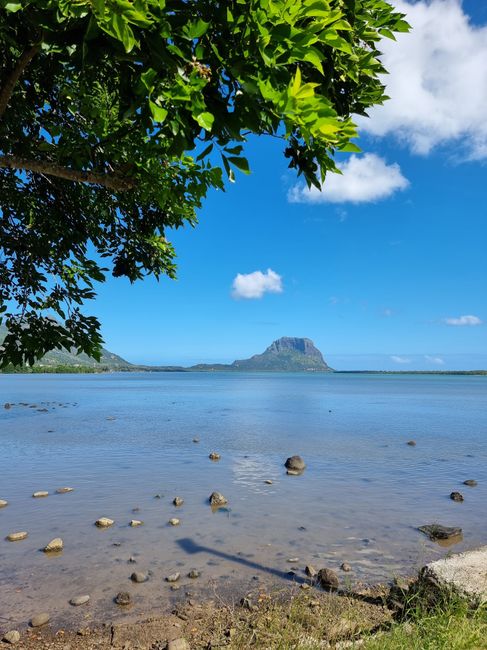
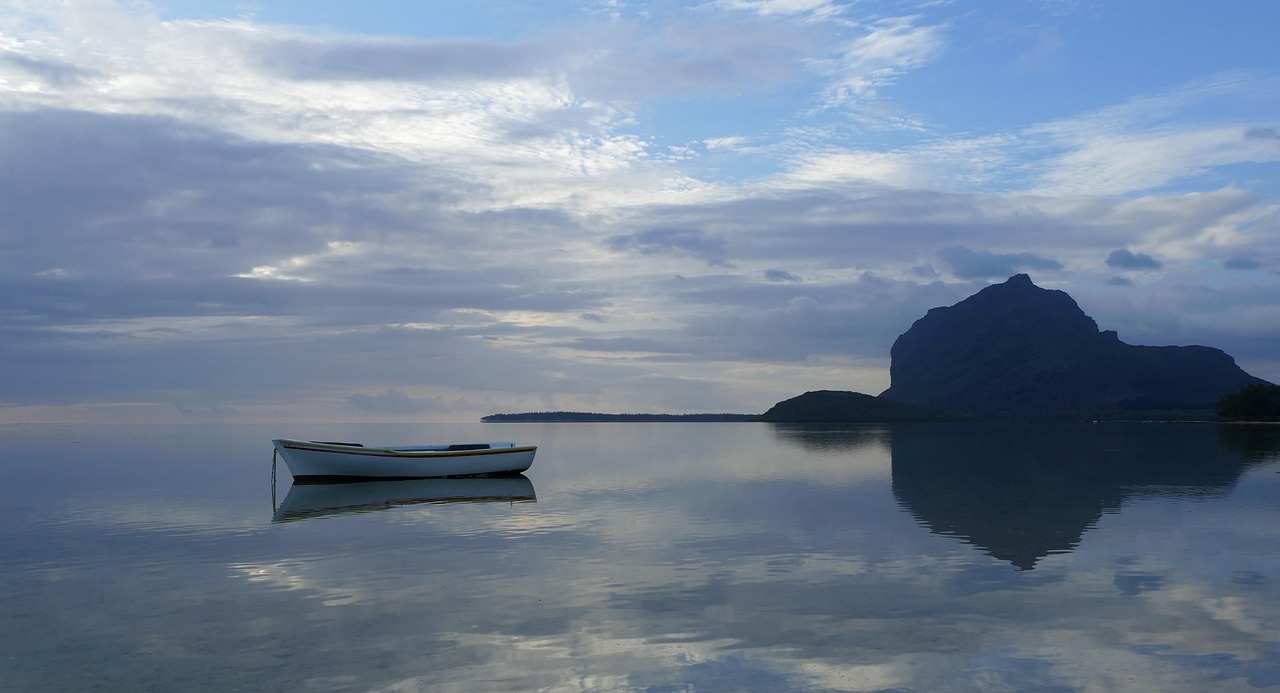
Le Morne Brabant is the great basalt mountain at the southwest tip of Mauritius, a sheer-sided block of rock 556 m (1,824 ft) high that rises from a peninsula ringed by one of the island’s widest and most beautiful lagoons. It is the most recognizable landscape in the country and one of its most meaningful: in the 18th and early 19th centuries, enslaved people who escaped from the plantations, known as maroons, hid in the caves and on the summit of this almost inaccessible mountain. Le Morne became a symbol of their resistance and suffering, and in 2008 the mountain and its surroundings were inscribed by UNESCO as the Le Morne Cultural Landscape, a World Heritage Site. Today the peninsula is also one of the island’s top beach destinations, with a long public beach, a handful of upscale resorts, and a lagoon that makes Le Morne the kitesurfing capital of Mauritius. Hikers climb the mountain’s eastern ridge for a view that takes in the lagoon, the reef and the open ocean, while boats leave from nearby La Gaulette for Île aux Bénitiers and dolphin trips. The southwest is dry and sunny for much of the year, and Le Morne can be visited in any season; the windy winter months from June to September are best for kitesurfing, and October to December for calm beach days.
Right now in Le Morne Brabant (Le Morne)
- Wed21–25°C70–78°F1 mm rain
- Thu22–26°C71–78°FMostly clear
- Fri21–25°C70–77°FMostly clear
Top tours in Le Morne Brabant
See all tours for Le Morne Brabant →
From local operators, with prices and reviews; you check availability and book on Viator, our partner. We may earn a commission at no extra cost to you. How we earn money
Le Morne Brabant at a glance
- Best months: May to December for dry, sunny weather; June to September for steady winds and kitesurfing; October to December for calmer seas. January to April is hot and humid, with a cyclone risk.
- Getting there: about an hour by road from the international airport and 35 minutes from Flic-en-Flac; there is no train, and buses are infrequent.
- Where to stay: upscale resorts on the peninsula; guesthouses, villas and apartments at La Gaulette, Le Morne village and Black River.
- Time needed: a day trip for the hike and the beach, or three to five nights for a resort stay or a kitesurfing course.
- Costs (as of October 2026): a guided hike costs about Rs 1,400–2,400 (US$30–50) per person; a kitesurfing lesson from about Rs 3,300 (US$70) an hour; resort doubles from about Rs 14,300 (US$300) a night, plus the €3 tourist fee per person per night.
- Before you go: entry rules, the All-in-One Travel Digital Form and the tourist fee are covered in our Mauritius travel guide.
Le Morne’s areas and who each one suits
The peninsula and Le Morne public beach
A flat strip of land at the foot of the mountain holds a row of resorts facing the lagoon, with the long public beach at the northwest end, shaded by casuarinas and popular with Mauritian families on weekends. The water is shallow and calm in the morning, with the mountain as a backdrop. Stay here for a resort holiday with the beach on your doorstep.
Le Morne village
A small fishing village at the foot of the mountain’s eastern side, with a few guesthouses and snack bars, the trailhead for the hike and a strong Creole identity. It is a reminder that this is a living community, not just a resort area.
La Gaulette
The nearest village with shops, restaurants, supermarkets, boat operators and many guesthouses and villas, about 10 minutes north. It is the base for budget travelers, kitesurfers on longer stays and boat trips to Île aux Bénitiers.
Black River and Tamarin
About 20 minutes north, these villages have more restaurants, cafés, villas and dive and fishing centers, and are within reach of the national park and Flic-en-Flac.
Top things to see at Le Morne
Hiking Le Morne Brabant
The hike up Le Morne is one of the classic walks in Mauritius. The trail starts near Le Morne village and climbs through dry forest along the eastern ridge to a cross on a shoulder of the mountain, about 500 m (1,640 ft) up, with a breathtaking view over the lagoon, the reef and the peninsula. The lower part is a steady climb; the upper section is steep, rocky and exposed, with scrambling over boulders where hands are needed. Allow about three to four hours for the round trip, start early to avoid the heat, and bring plenty of water, sun protection and shoes with good grip. Do not hike after heavy rain, when the rock is slippery, or in strong wind. The upper trail and summit area are sensitive heritage land managed for their cultural value; hiking with a local guide is strongly recommended, both for safety and to hear the mountain’s story. Check current access hours and rules before you go, as sections can be closed.
The Slave Route Monument and the story of the maroons
At the foot of the mountain, the International Slave Route Monument is a circle of sculptures surrounding a central stone, created by artists from Mauritius and other countries whose people were touched by the slave trade, and inaugurated in 2009. Information panels tell the story of the maroons, who formed hidden communities on Le Morne and in the forests of the southwest. A well-known oral tradition holds that when police came to the mountain in 1835 to announce the abolition of slavery, maroons who believed they had come to capture them threw themselves from the cliffs. Each year on February 1, the anniversary of abolition, Mauritians gather at Le Morne to remember. Visit respectfully.
Le Morne public beach
One of the island’s finest public beaches, with soft white sand, shallow turquoise water and the mountain rising behind. It is quieter on weekdays. Swim in the calm areas near the shore and away from kite and boat zones.
The kitesurfing lagoon
Le Morne’s huge, shallow lagoon and the reliable southeast trade winds have made it one of the world’s best-known kitesurfing spots. Several schools along the peninsula teach beginners in the flat water of the lagoon, while experienced riders head to “One Eye,” a world-famous wave on the reef, suitable only for experts. The windiest months are from about June to October. Windsurfing and wing foiling are also popular.
The “underwater waterfall”
Off the southwest tip of the peninsula, sand and silt flowing down the steep edge of the island’s underwater shelf create the illusion, seen from above, of a waterfall plunging into the depths. It can only be seen properly from the air, on helicopter or seaplane flights, which are expensive and depend on clear weather.
Île aux Bénitiers and the Crystal Rock
From La Gaulette, boats cross the lagoon to Île aux Bénitiers, a flat island with a white-sand beach, and to the Crystal Rock, a small rock pinnacle eroded into a mushroom shape in the shallow lagoon, a favorite photo stop. Many trips start early with dolphin watching off the west coast and include snorkeling and a barbecue lunch.
Other things to do around Le Morne
- Snorkeling and diving: the reef off Le Morne has coral gardens and drop-offs; dive centers at Le Morne and Black River visit sites along the southwest coast.
- Dolphin and whale watching: morning trips from La Gaulette and Black River; humpback whales pass from about July to October. Use licensed operators that follow the rules for marine mammals.
- Paddleboarding and kayaking: in the calm lagoon on still mornings.
- Chamarel: about 25 minutes uphill, with the Seven Coloured Earths, the Chamarel Waterfall and a rum distillery.
- Black River Gorges National Park: trails and viewpoints in the native forest above the coast.
- Horse riding: rides along the beach and peninsula with local stables.
- Golf: courses at the resorts on the peninsula and nearby.
- Spas: the resorts have some of the best spas in Mauritius.
Food and drink
Most visitors to the peninsula eat at their resort, where restaurants range from beach grills to fine dining. For local food, go to La Gaulette, Le Morne village and Black River, where snack bars sell dholl puri, mine frit and briyani, and small restaurants serve Creole seafood such as octopus curry, fish vindaye and grilled catch of the day. On weekends, families picnic on the public beach with grilled meat and rum. Supermarkets in La Gaulette and Black River stock supplies for villas.
Day trips from Le Morne
Chamarel and the national park
Drive up the winding road to Chamarel for the colored earths and waterfall, continue to the Black River Gorges viewpoint and Alexandra Falls, and return via Grand Bassin, the sacred crater lake.
The south coast
Head east along the coast road through Baie du Cap and the resorts of Bel Ombre to Souillac and the cliffs of Gris Gris, where waves pound a reefless shore. This is one of the most scenic drives in Mauritius.
Flic-en-Flac and Tamarin
About 35 minutes north: Flic-en-Flac has a long beach and village life, and Tamarin has salt pans, a surf break and cafés.
Port Louis
About an hour by road: the Central Market, the Aapravasi Ghat World Heritage Site and Le Caudan Waterfront.
Nearby destinations
- Flic-en-Flac21 km
- Grand Baie57 km
- Saint-Gilles-les-Bains222 km
Getting there and getting around
By air and road
International flights land at Sir Seewoosagur Ramgoolam International Airport (MRU) in the southeast. Le Morne is about an hour away by road, along the south coast or across the island; resorts arrange transfers, and taxis and rental cars are available at the airport.
Getting around
- By car: the most practical option, as the peninsula is isolated. Drive on the left, and take care on the narrow coast road and the steep road to Chamarel.
- By taxi: resorts call taxis and arrange drivers for day trips; agree on the fare first.
- By bus: buses link Le Morne village and La Gaulette with Black River, Quatre Bornes and the south coast, but they are infrequent and stop early.
- On foot or by bicycle: you can walk along the beach and the peninsula road; cycling is pleasant on quiet stretches.
When to go and how long to stay
The southwest is on the dry, leeward side of Mauritius. Summer, from November to April, is hot and humid, with most of the year’s rain falling as showers from December to April and the risk of tropical cyclones, most often from January to March. Winter, from June to September, is dry and sunny, with cooler evenings and strong southeast trade winds, perfect for kitesurfing but sometimes too breezy for lazy beach days. October to December often brings the best combination of sunshine, light winds and calm water.
Mauritius Meteorological Services (MMS) has no reference station at Le Morne itself; the table shows its long-term averages (1971–2000) for Medine, its reference station for the west coast, about 25 km (15 miles) to the north. Le Morne’s coast is similar, though often windier.
| Month | Average high | Average low | Rain | Rain days (over 1 mm) | Sunshine (hours a day) |
|---|---|---|---|---|---|
| Jan | 30 °C (87 °F) | 22 °C (72 °F) | 153 mm (6.0 in) | 9 | 7.5 |
| Feb | 30 °C (87 °F) | 23 °C (73 °F) | 182 mm (7.2 in) | 10 | 7.4 |
| Mar | 30 °C (86 °F) | 22 °C (72 °F) | 86 mm (3.4 in) | 8 | 7.3 |
| Apr | 30 °C (85 °F) | 21 °C (70 °F) | 88 mm (3.4 in) | 8 | 7.2 |
| May | 28 °C (83 °F) | 20 °C (67 °F) | 43 mm (1.7 in) | 5 | 7.8 |
| Jun | 26 °C (80 °F) | 18 °C (64 °F) | 29 mm (1.1 in) | 4 | 7.6 |
| Jul | 26 °C (78 °F) | 17 °C (63 °F) | 15 mm (0.6 in) | 3 | 7.6 |
| Aug | 26 °C (79 °F) | 17 °C (63 °F) | 15 mm (0.6 in) | 3 | 7.6 |
| Sep | 27 °C (80 °F) | 18 °C (64 °F) | 12 mm (0.5 in) | 2 | 7.3 |
| Oct | 28 °C (82 °F) | 19 °C (65 °F) | 16 mm (0.6 in) | 2 | 7.8 |
| Nov | 29 °C (84 °F) | 20 °C (68 °F) | 26 mm (1.0 in) | 3 | 8.0 |
| Dec | 30 °C (86 °F) | 22 °C (71 °F) | 116 mm (4.6 in) | 7 | 8.0 |
| Year | 28 °C (83 °F) | 20 °C (68 °F) | 781 mm (30.7 in) | 64 | 7.6 |
Figures are MMS long-term means; sunshine is the average number of hours of bright sunshine per day. The sea is about 23 °C (73 °F) in August and 28 °C (82 °F) in February.
Events worth planning around
- Abolition of Slavery Day (February 1): a public holiday, with commemorations at the foot of Le Morne.
- Kitesurfing season (June to October): schools and the lagoon are busiest, and international riders come for One Eye.
- Whale season (July to October): humpbacks off the west and southwest coasts.
- Christmas and New Year: the resorts’ peak season; book well ahead.
How long to stay: 1 day, 3 nights and 5 nights
- Day trip: the morning hike, lunch in La Gaulette, the Slave Route Monument and an afternoon on the public beach.
- Three nights: add a dolphin and Île aux Bénitiers boat trip and a drive to Chamarel and the gorges.
- Five nights or more: a kitesurfing course, a dive or two, and time to relax at a resort.
Where to stay at Le Morne
- Peninsula resorts: five-star hotels on the lagoon, with spas, pools, kids’ clubs, kitesurfing schools and several restaurants.
- Guesthouses and apartments: in La Gaulette and Le Morne village, much cheaper, popular with kitesurfers and independent travelers.
- Villas: with pools and mountain views around La Gaulette and Black River, good for groups.
- Kite lodges: small guesthouses aimed at kitesurfers, with gear storage and lessons.
Book early for Christmas, New Year, Easter and the windy season. All tourist accommodation adds the €3 per person per night tourist fee for guests aged 12 and over.
Typical costs at Le Morne
| Item (as of October 2026) | Mauritian rupees | About US dollars |
|---|---|---|
| Guided Le Morne hike, per person | Rs 1,400–2,400 | US$30–50 |
| Kitesurfing lesson, per hour | Rs 3,300–4,800 | US$70–100 |
| Dolphin and Île aux Bénitiers boat trip | Rs 1,900–3,300 | US$40–70 |
| Helicopter flight over the “underwater waterfall” | Rs 19,000 and up per person | US$400 and up |
| Taxi from the airport | Rs 2,400–3,300 | US$50–70 |
| Lunch at a snack bar in La Gaulette | Rs 150–300 | US$3–6 |
| Dinner main at a resort restaurant | Rs 1,000–2,400 | US$21–50 |
| Guesthouse double in La Gaulette | Rs 2,400–4,800 | US$50–100 |
| Peninsula resort double, half board | Rs 14,300–38,000 | US$300–800 |
Prices are typical ranges, not official figures. Conversions use about Rs 47.5 per US dollar, from the Bank of Mauritius’ indicative rates of 5 October 2026.
Safety at Le Morne
- Hiking: the upper trail is steep and exposed, with scrambling; go with a guide, start early, carry water, and turn back in rain or strong wind. Several hikers have been injured in falls.
- Heat and sun: there is little shade on the mountain or the beach; use reef-safe sunscreen and a hat.
- Kitesurfing: take lessons with a recognized school, respect the zones for beginners and swimmers, and leave One Eye to experts.
- The sea: swim in the calm parts of the lagoon near the shore and away from kite areas and boat lanes; currents are strong at the reef passes.
- Cyclone season (November to April): follow Mauritius Meteorological Services warnings and your hotel’s instructions.
- Theft: do not leave valuables in cars at the trailhead or on the beach.
- Emergencies: call 999 or 112 for police, 114 for an ambulance and 115 for fire.
Practical tips for Le Morne
- Start the hike early: aim to be on the trail by 7 a.m. to avoid the midday heat.
- Respect the heritage site: Le Morne is a place of memory for many Mauritians; keep to the trail, do not leave litter and behave respectfully at the monument.
- Kite gear: most schools rent equipment, so you do not need to bring your own.
- Restaurants: outside the resorts, choices are limited after dark; plan dinners in La Gaulette or Black River.
- Weekends: the public beach is busy with families on Sundays and holidays.
What to pack for Le Morne
Hiking shoes with good grip, at least 2 liters (half a gallon) of water per person for the hike, a hat, reef-safe sunscreen, swimwear and a rash vest, water shoes, a mask and snorkel, a windbreaker for winter evenings, insect repellent and a type G plug adapter. Kitesurfers may want a wetsuit top for winter sessions.
Le Morne Brabant travel FAQ
Why is Le Morne Brabant a UNESCO World Heritage Site?
Because the mountain sheltered escaped slaves, known as maroons, in the 18th and early 19th centuries, and became a symbol of resistance to slavery. It was inscribed as the Le Morne Cultural Landscape in 2008.
How high is Le Morne Brabant?
556 m (1,824 ft).
How long does the Le Morne hike take?
About three to four hours round trip, including time at the viewpoint. The upper part is steep and involves scrambling.
Do I need a guide to hike Le Morne?
A local guide is strongly recommended for the upper section, for safety and to learn the mountain’s history. Check current access rules before you go.
Can you swim at Le Morne beach?
Yes. The public beach and lagoon are calm and shallow near the shore. Keep away from kitesurfing zones and boat lanes.
Is Le Morne good for kitesurfing?
It is one of the best kitesurfing spots in the world, with a large, flat lagoon for learning and the famous One Eye wave for experts. The windiest months are June to October.
What is the underwater waterfall in Mauritius?
An optical illusion off the southwest tip of Le Morne, created by sand flowing down the island’s underwater slope. It can be seen from helicopter or seaplane flights.
How far is Le Morne from the airport?
About an hour by road from Sir Seewoosagur Ramgoolam International Airport.
What is the best time to visit Le Morne?
May to December for dry weather; June to October for kitesurfing; October to December for calm seas.
Where can I eat near Le Morne?
At the resorts, or at snack bars and restaurants in La Gaulette, Le Morne village and Black River.
Plan your trip
Partner links: TravelerCenter may earn a commission if you book, at no extra cost to you.
🇫🇷 Useful French phrases for Le Morne Brabant
All 38 French phrases: restaurant, hotel, emergencies, romance (printable) →
Sources · last reviewed 5 October 2026
Researched and last reviewed on 5 October 2026. Height, coordinates and World Heritage status: Wikidata; climate: Mauritius Meteorological Services long-term means (1971–2000) for Medine, its reference station for the west (no station at Le Morne); cyclone warnings: Mauritius Meteorological Services; the €3 tourist fee: the Mauritius Revenue Authority; rupee rates: the Bank of Mauritius. The year of UNESCO inscription, the maroon history and oral tradition, the monument, hike times and access rules, kitesurf spots, the underwater waterfall, travel times, emergency numbers and all prices are general references or estimates and should be checked with the Le Morne Heritage Trust Fund and local operators. For entry rules, the All-in-One Travel Digital Form and money, see our Mauritius travel guide.
Data: Weather: MET Norway (CC BY 4.0) · Sea temperature: NOAA CoastWatch · Rates: ECB · Costs: World Bank ICP and price levels · Wikidata (CC0)