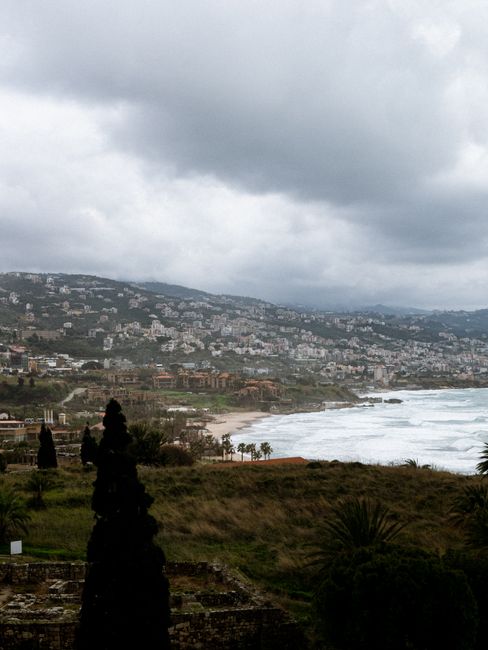
Byblos, called Jbeil in Arabic, is a small harbor town on the Lebanese coast about 40 km (25 miles) north of Beirut and one of the oldest continuously inhabited towns in the world. People have lived on its low headland above the sea for some 7,000 years, and in the Bronze Age it was a great Phoenician port, trading cedar wood from the mountains to the pharaohs of Egypt. The Greeks named it Byblos after the papyrus that passed through it, the root of the word “Bible,” and the Phoenician alphabet, ancestor of the Greek and Latin scripts, is recorded here on the sarcophagus of King Ahiram. Today, the compact archaeological site, crowned by a 12th-century Crusader castle, sits beside a pretty old souk of restored stone shops, a medieval church and a tiny fishing harbor lined with seafood restaurants. Byblos has been a UNESCO World Heritage site since 1984. In summer, it adds beaches, beach clubs and the Byblos International Festival. It is an easy day trip from Beirut but well worth a night. The best months are April to June and September to November.

Right now in Byblos
- Wed19–25°C67–76°FClear
- Thu21–28°C69–82°FClear
- Fri23–27°C73–81°FClear
Top tours in Byblos
See all tours for Byblos →
From local operators, with prices and reviews; you check availability and book on Viator, our partner. We may earn a commission at no extra cost to you. How we earn money
Byblos at a glance
- Best for: ancient ruins and the Crusader castle, the old souk, seafood by the harbor, sunsets, beaches and summer concerts.
- How long: half a day to a full day, or a night to enjoy the harbor in the evening.
- Best time: April to June and September to November; July and August for beaches and the festival.
- Getting there: 45 minutes to an hour by car from Beirut; the airport’s published taxi fare to Jbeil is US$43; minibuses run along the coast.
- Getting around: the old town, souk, site and harbor are all within a few minutes’ walk.
- Before you go: visas, money, transport and general practical advice are in our Lebanon travel guide.
Byblos’s areas and where to stay
Byblos is small: the historic center around the castle, souk and harbor is only a few hundred meters across, with the modern town spreading inland and along the coast.
The old souk and the medieval town
The restored stone lanes of the old souk, with craft and souvenir shops, cafés and restaurants, lead from the main road to the castle entrance and down to the harbor, past the Crusader church of St. John-Mark. This is the heart of Byblos and the most atmospheric place to stay, in small boutique hotels and guesthouses.
The harbor
The small, sheltered fishing port, framed by the remains of medieval towers, is lined with fish restaurants and is the place to be at sunset. Fishing boats offer short trips along the coast in good weather.
The coast north and south
South of the old town, the seafront has public and paid beaches, beach clubs and resort hotels; the coast continues north toward Amchit and Batroun.
Top things to see in Byblos
The Crusader castle and archaeological site
The entrance to the archaeological site is through the Crusader castle, built in the 12th century from older stones, some reused Roman columns among them. Climb to its roof for the best view over the ruins, the old town and the sea. Below it, paths lead through layers of history on the headland: remains of Neolithic and Chalcolithic houses, the Bronze Age city walls and gate, the Temple of Baalat Gebal, the “Lady of Byblos,” the town’s chief goddess, and the Obelisk Temple, with a cluster of small standing obelisks, moved from its original place to reveal older levels beneath. Nearby are a small reconstructed Roman theater overlooking the sea, a colonnaded Roman street, the ancient spring, and the royal necropolis, a set of deep shaft tombs cut into the rock for the kings of Byblos; the sarcophagus of King Ahiram, found here in 1923, is now in the National Museum in Beirut. Signs explain the main sights; a guide brings the site to life. Allow 1.5 to 2 hours, wear comfortable shoes and bring water and a hat, as there is little shade. Opening hours and the entry fee are set by the authorities; check them on arrival.
The Church of St. John-Mark
A Romanesque church begun by the Crusaders in the early 12th century, with an unusual open-air baptistery, a domed canopy on columns, on its north side. It is still used by the town’s Maronite community; dress modestly and avoid visiting during services.
The old souk
The restored lanes of the souk are ideal for an unhurried walk, with shops selling olive-oil soap, embroidery, copperware, jewelry and fossil fish, which are found in the limestone hills inland near Hjoula and Haqel and sold in several shops. Stop for a lemonade, a coffee or a manakish.
The fishing harbor
One of the oldest harbors on the Mediterranean, now a small fishing and pleasure port, ringed by medieval fortifications and restaurants. Walk out along the breakwater to the lighthouse at sunset.
More sights
- Byblos Wax Museum: a small museum near the souk with scenes from Phoenician times to the modern day.
- Fossil museum (Memory of Time): a shop and small exhibition in the souk showing fossil fish from the quarries of the region, some about 100 million years old.
- Sultan Abdel Majid Mosque: a small Ottoman-era mosque near the castle entrance.
- The medieval walls: sections of the walls that enclosed the medieval town still stand around the souk.
Other things to do in Byblos
The Byblos International Festival
Every summer, the festival stages concerts by Lebanese and international artists on a seafront stage at the edge of the old town, a few steps from the ruins. Programs are usually announced in spring, and tickets for the biggest names sell out quickly, so book early and reserve a hotel at the same time.
Beaches and the sea
From June to September, swim from the public beaches and paid beach clubs south of the old town or along the coast toward Amchit and Batroun. Diving centers explore reefs and wrecks off the coast, and boat trips leave from the harbor in calm weather. See our beaches, diving and boat trips guides.
Food and drink
Byblos is known for its seafood: choose your fish at the harbor restaurants, grilled or fried and served with mezze such as hummus, tabbouleh and sayadieh, fish with spiced rice. The souk has cafés and bakeries for manakish, and bars in the old town and along the seafront are busy on summer nights. Several wineries in the hills inland welcome visitors for tastings. See our wine tasting guide.
Day trips from Byblos
- Batroun: about 20 minutes north, a seaside town with a Phoenician sea wall, old churches, beaches and lively summer nightlife.
- Jeita Grotto and Harissa: about 30 to 40 minutes south, the limestone caves (open Tuesday to Sunday, 9 a.m. to 5 p.m., according to their official accounts) and the cable car from Jounieh to the shrine of Our Lady of Lebanon.
- The Adonis Valley and Afqa: inland from Byblos, a deep valley following the Nahr Ibrahim river up to the spring and cave of Afqa, linked in ancient myth with Adonis.
- Annaya: about an hour inland, the mountain monastery of St. Maron and the shrine of St. Charbel, a major pilgrimage site.
- The Qadisha Valley and the Cedars: about two hours to the monasteries of the Holy Valley, Bsharri and the Cedars of God.
- Beirut: 45 minutes to an hour south. See our Beirut guide.
Getting there and getting around
From Beirut airport
Byblos is about 50 km (31 miles) from Beirut–Rafic Hariri International Airport (BEY), about an hour by road, longer at rush hour. Licensed airport taxis wait beside the arrivals hall, and the airport publishes a fixed fare of US$43 to Jbeil (Byblos). Ride-hailing apps, hotel transfers and rental cars are alternatives.
From Beirut
By car or taxi, take the coastal highway north, 45 minutes to an hour without heavy traffic. Minibuses and buses heading north to Byblos, Batroun and Tripoli leave frequently from the Charles Helou station area near Beirut’s port and stop on the highway at Jbeil, a short walk from the old town; tell the driver you want Jbeil. There is no train.
Getting around
The historic center is entirely walkable. Paid parking is available near the souk and the archaeological site. Taxis and ride-hailing apps cover trips to beaches and nearby towns.
When to go and how long to stay
Byblos has the same Mediterranean climate as Beirut, 40 km (25 miles) down the coast. Spring, from April to June, and autumn, from September to November, are warm and ideal for exploring the ruins. Summer, from June to September, is hot and humid, with highs commonly around 30 °C (86 °F), but it is beach and festival season; visit the site early or late in the day. Winter, from December to March, is mild and wet, with stormy seas at times and few visitors. The nearest official climate station is Beirut airport; the table shows its average monthly rainfall, published by Lebanon’s meteorological service on the World Meteorological Organization’s (WMO) World Weather Information Service.
| Month | Rain at Beirut airport | What to expect in Byblos |
|---|---|---|
| January | 191 mm (7.5 in) | Mild and wet; quiet |
| February | 133 mm (5.3 in) | Cool and showery |
| March | 111 mm (4.4 in) | Warming; showers easing |
| April | 46 mm (1.8 in) | Pleasant; wildflowers on the ruins |
| May | 15 mm (0.6 in) | Warm and dry; ideal for sightseeing |
| June | 2 mm (0.1 in) | Hot; beaches open |
| July | under 1 mm | Hot and humid; festival season |
| August | under 1 mm | Hottest month; busy weekends |
| September | 2 mm (0.1 in) | Hot, easing late; warm sea |
| October | 60 mm (2.4 in) | Warm; first rains |
| November | 101 mm (4.0 in) | Mild; rainy spells |
| December | 164 mm (6.4 in) | Cool and wet; Christmas decorations in the souk |
A day in Byblos
Arrive in the morning for the castle and archaeological site while it is cool, have lunch in the souk, visit the Church of St. John-Mark and browse the shops, then end at the harbor for sunset and a seafood dinner.
2 days with Batroun or Jeita
Spend a night in the old town, then add Batroun’s seafront and old churches to the north, or the Jeita Grotto and Harissa on the way back to Beirut.
Where to stay in Byblos
- The old souk: boutique hotels and guesthouses in restored stone houses, within steps of the castle and harbor.
- The seafront south of the old town: resort hotels and beach clubs with pools, best in summer.
- The hills inland: guesthouses with sea views, quieter but needing a car.
Book well ahead for summer weekends and festival nights.
What a trip to Byblos costs
Prices are approximate, for October 2026, in US dollars, which are widely used alongside the Lebanese pound (the Banque du Liban’s official rate is LBP 89,500 to the dollar). The airport taxi fare is the one published by Beirut airport; site fees change, so check them on the day.
| Item | Typical cost |
|---|---|
| Licensed airport taxi to Byblos (Jbeil) | US$43 |
| Minibus from Beirut | US$1–3 |
| Taxi or ride-hailing from central Beirut | US$25–40 |
| Manakish or lemonade in the souk | US$1–4 |
| Seafood dinner for two at the harbor, without wine | US$50–100 |
| Beach club entry, per day | US$15–35 |
| Boutique hotel or guesthouse double, per night | US$80–180 |
Practical tips for Byblos
- Start at the castle: its roof gives you a map of the whole site before you explore.
- Go early or late: the ruins have little shade, and summer middays are hot.
- Combine with the National Museum: the finest finds from Byblos, including the Ahiram sarcophagus, are in Beirut.
- Bring cash: small US dollar notes or Lebanese pounds for the souk and cafés.
- Leave Beirut early: traffic on the coastal highway builds quickly in the morning and on summer weekends.
Safety
Byblos is a relaxed, friendly town, and the practical risks are small. Watch your footing on the uneven stones and steep drops of the archaeological site and the castle roof, carry water and a hat in summer, and take care crossing the busy coastal highway if you arrive by minibus. Swim only where others are swimming or at beach clubs with lifeguards, as currents can be strong when the sea is rough. For emergencies, call 112 for the police (Internal Security Forces) and 140 for a Lebanese Red Cross ambulance.
What to pack for Byblos
Comfortable walking shoes with a good grip for the ruins, a sun hat, sunscreen and a water bottle, swimwear and water shoes for rocky beaches in summer, a light layer for breezy evenings by the harbor, a rain jacket from November to March, modest clothing for the church, and a universal adapter for type C, D and G sockets. See our water shoes, hiking shoes and travel adapters guides.
Byblos travel FAQ
Is Byblos the oldest city in the world?
It is one of several towns that claim to be among the oldest continuously inhabited places in the world, with settlement on the site going back some 7,000 years.
Is Byblos a UNESCO World Heritage site?
Yes. UNESCO inscribed Byblos on the World Heritage List in 1984, together with Anjar, Baalbek and Tyre.
How do I get from Beirut to Byblos?
By car or taxi along the coastal highway, 45 minutes to an hour without heavy traffic, or by minibus from the Charles Helou station area near Beirut’s port. From the airport, the published taxi fare to Jbeil is US$43.
How much time do I need in Byblos?
Half a day for the castle, ruins and souk; a full day or an overnight stay to add the harbor at sunset, a beach or Batroun.
What does the name Byblos mean?
The Greeks called the town Byblos after the papyrus (byblos) traded through its port; the word gave rise to “Bible.” Its Phoenician name was Gebal, which survives in the Arabic Jbeil.
Can you swim in Byblos?
Yes, from June to September, at public beaches and beach clubs south of the old town and along the coast toward Batroun.
When is the Byblos International Festival?
In summer, with concerts on a seafront stage by the old town; the program is usually announced in spring.
What is the best time to visit Byblos?
April to June and September to November for sightseeing; July and August for beaches and the festival.
Plan your trip
Partner links: TravelerCenter may earn a commission if you book, at no extra cost to you.
🇪🇬 Useful Arabic phrases for Byblos
All 38 Arabic phrases: restaurant, hotel, emergencies, romance (printable) →
Sources · last reviewed 5 October 2026
Researched and last reviewed on 5 October 2026. World Heritage inscription (1984): UNESCO World Heritage Centre; airport taxi stand and fixed fare to Jbeil: Beirut–Rafic Hariri International Airport (beirutairport.gov.lb); festival venue and summer timing: the Byblos International Festival (byblosfestival.com); rainfall at Beirut airport: Lebanon’s meteorological service, via the World Meteorological Organization’s World Weather Information Service; emergency numbers: the Internal Security Forces (112) and the Lebanese Red Cross (140); exchange rate: Banque du Liban; coordinates: Wikidata. Jeita Grotto hours are from its official social media accounts. History, monument dates, sight descriptions, temperatures, transport, distances, travel times and prices are general references or estimates, flagged for checking. Hours and fees change, so check on arrival. For visas, money and general practical advice, see our Lebanon travel guide.
Data: Weather: MET Norway (CC BY 4.0) · Sea temperature: NOAA CoastWatch · Rates: ECB · Wikidata (CC0)