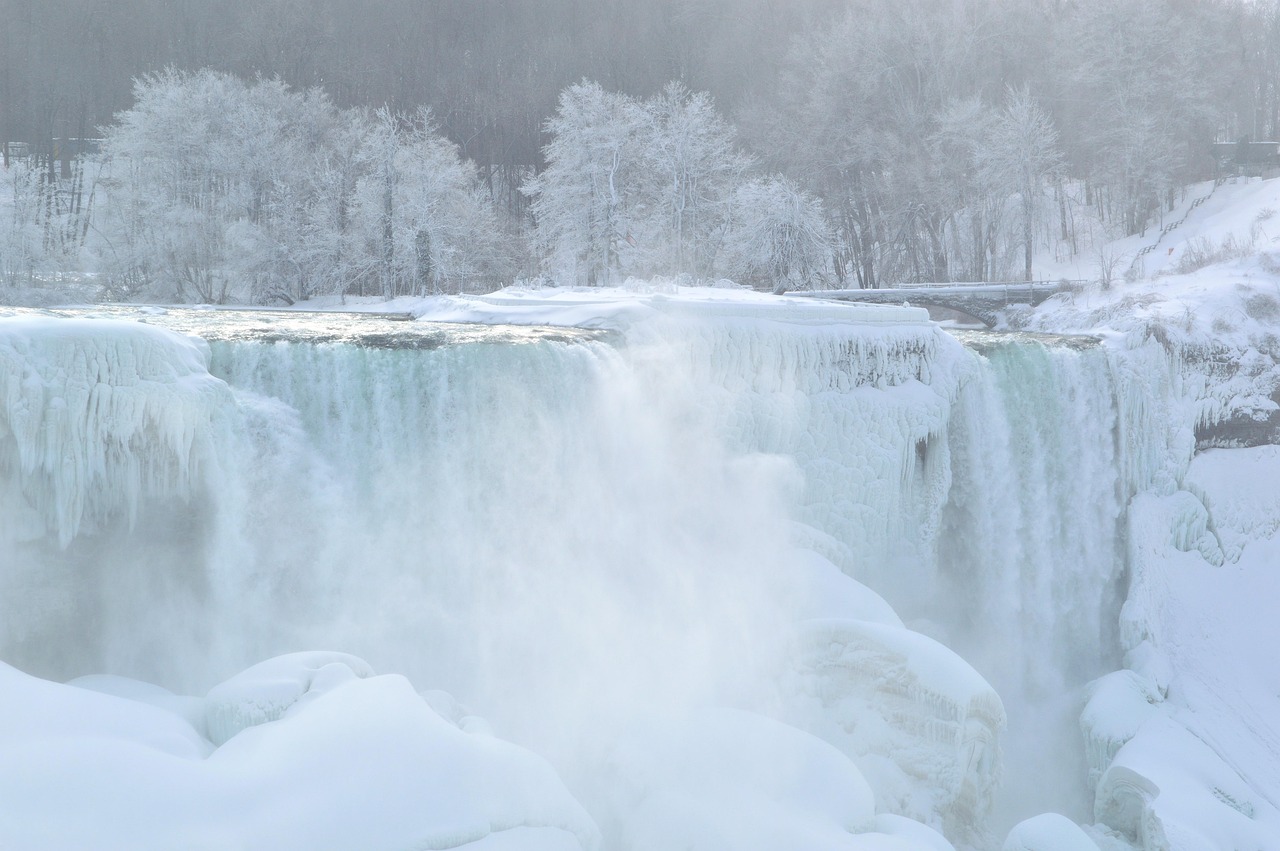
Short answer: New York State is much more than its famous city. Beyond New York City lie the river towns and mansions of the Hudson Valley, the thundering waters of Niagara Falls, the wineries and waterfall gorges of the Finger Lakes, six million acres of mountains and lakes in the Adirondacks, the forested Catskills and the beaches of Long Island. Start in the city, then head up the Hudson by train or car; with a week you can reach Niagara Falls via the Finger Lakes, and with two weeks you can add the Adirondacks or Long Island.

New York is the fourth most populous US state, with about 20.0 million people according to the US Census Bureau’s 2025 estimates, and stretches more than 400 miles from the tip of Long Island to Lake Erie, bordering Canada along Lake Ontario, the St. Lawrence River and the Niagara River. More than half of its people live in and around New York City; most of the rest of the state, usually called “upstate,” is a land of farms, forests, small cities and lakes. It is one of the most visited states in the country: according to Empire State Development, the state’s economic development and I LOVE NY tourism agency, New York welcomed 321.2 million visitors in 2025, who spent $97.6 billion. Albany is the state capital. For entry rules, ESTA, money and tipping, see our United States travel guide.
Where to go in New York State
Most visitors arrive in New York City, and almost everything else in the state is a day trip or a road trip from there. The Hudson Valley and Long Island are one to three hours away; the Catskills about two and a half hours; the Adirondacks, the Finger Lakes and Saratoga Springs four to five hours; and Niagara Falls, at the far western end, about seven hours by car or by train. A classic route runs north up the Hudson Valley to Albany and Saratoga, west through the Finger Lakes to Niagara Falls, and back, or continues across the border to Toronto.
New York City
The state’s great city is the starting point of most trips: the skyline of Manhattan, Central Park, Broadway, world-class museums and the Statue of Liberty in the harbor. It is also the hub for trains and buses to the rest of the state: Metro-North runs up the Hudson, the Long Island Rail Road to the beaches and the Hamptons, and Amtrak to Albany, Buffalo, Niagara Falls and Montreal. Our New York City travel guide has everything for the city itself, from tickets and neighborhoods to the subway and airports.
The Hudson Valley
North of the city, the Hudson River runs between wooded hills and cliffs that inspired the Hudson River School of American painters. Along its banks are grand estates and historic sites: Sleepy Hollow and Washington Irving’s Sunnyside, the US Military Academy at West Point, and Hyde Park, where the Home of Franklin D. Roosevelt and the Vanderbilt Mansion are national historic sites. Small towns such as Cold Spring and Beacon, with the Dia Beacon art museum, are easy day trips by Metro-North train, and the Storm King Art Center sets giant sculptures in open fields. At Poughkeepsie, the Walkway Over the Hudson, a former railroad bridge, is now one of the longest elevated footbridges in the world. Farm stands, orchards, cideries and farm-to-table restaurants make the valley especially popular in autumn.
The Catskills
West of the Hudson, the Catskill Mountains are a land of forested peaks, trout streams and old resort towns, protected within the Catskill Park. The two-tiered Kaaterskill Falls is one of the state’s most painted and photographed waterfalls, and North-South Lake has camping and swimming in summer. Woodstock, Phoenicia and the villages around them have galleries, music and good food, and in winter there is skiing at Hunter and Windham mountains. Many New Yorkers come here for a weekend of hiking and fresh air, just a couple of hours from the city.
Albany and Saratoga Springs
The state capital, Albany, has a grand State Capitol and the modernist Empire State Plaza. Half an hour north, Saratoga Springs is a Victorian spa town with mineral springs, a lively main street and the historic Saratoga Race Course, whose summer horse-racing meet is one of the highlights of the season: in 2026 it ran from July 3 to Labor Day, September 7. Nearby, Saratoga National Historical Park preserves the battlefield of a turning point of the American Revolution. Further north, Lake George is a long, island-dotted lake on the edge of the Adirondacks, with boat cruises and summer resorts.
The Adirondacks
The Adirondack Park covers about six million acres of northern New York, according to the state’s Department of Environmental Conservation, making it the largest protected area in the contiguous United States, larger than Yellowstone, Yosemite, Grand Canyon and Glacier national parks combined. It has more than 3,400 lakes and ponds and nearly 2,000 miles of trails, and the High Peaks rise above 5,000 feet, with Mount Marcy the highest point in the state. Lake Placid, which hosted the Winter Olympics in 1932 and 1980, is the best-known base, with Olympic venues, Whiteface Mountain and a walkable main street; Saranac Lake, Old Forge and the Thousand Islands region along the St. Lawrence River, just north of the park, are other good choices for paddling, hiking and boat trips.
The Finger Lakes
In central New York, long, narrow glacial lakes stretch north to south like the fingers of a hand. Their slopes are lined with more than a hundred wineries, best known for Riesling, and small towns such as Skaneateles, Geneva, Hammondsport and Watkins Glen. Ithaca, home of Cornell University, sits at the foot of Cayuga Lake among waterfalls and gorges. The great sight of the region is Watkins Glen State Park, where the Gorge Trail passes 19 waterfalls in about a mile of stone stairs, bridges and tunnels. Corning, with its Museum of Glass, is half an hour away.
Niagara Falls, Buffalo and western New York
At the western end of the state, the Niagara River plunges over the American, Bridal Veil and Horseshoe falls. Niagara Falls State Park, established in 1885, is the oldest state park in the United States, according to New York State Parks, and receives more than nine million visitors a year. Walk to Prospect Point and Goat Island, ride the Maid of the Mist boat into the spray, and stand at the foot of the falls on the decks of the Cave of the Winds. Across the Rainbow Bridge, the Canadian side has the widest views of the Horseshoe Falls; see our Niagara Falls, Ontario guide. Nearby Buffalo has fine architecture, including Frank Lloyd Wright’s Darwin Martin House, and is the home of Buffalo wings. To the southeast, Letchworth State Park, the “Grand Canyon of the East,” has three major waterfalls and cliffs up to 600 feet high above the Genesee River.
Long Island
Long Island stretches more than 100 miles east from New York City into the Atlantic. Its south shore is lined with beaches, from Jones Beach to Fire Island National Seashore, a car-free barrier island reached by ferry; the National Park Service charges no entrance fee there. Further east, the villages of the Hamptons have grand summer houses and wide sandy beaches, and at the very tip, Montauk has surf, seafood and the Montauk Point Lighthouse, commissioned under George Washington. The quieter North Fork is Long Island’s wine and farm country. In summer, the Long Island Rail Road and the Hampton Jitney buses fill with New Yorkers heading east.
Top things to do in New York State
Get close to Niagara Falls
Entry to Niagara Falls State Park is free; you pay only to park or for the attractions. In 2026, parking in the park’s main lots costs $10 a day, rising to $15 on summer weekends. The Maid of the Mist sails from late April to early November: its 2026 season ran from April 24 to November 8, with tickets at $30.25 for adults and $19.75 for children aged 6 to 12, and it reopens in spring 2027. The Cave of the Winds stays open in winter in a shorter form, with winter tickets (October 19, 2026 to March 31, 2027) at $14 for adults and $10 for children. Come at night to see the falls lit up in color.
Walk the gorges of the Finger Lakes
Watkins Glen’s Gorge Trail is open only in the warmer months: it closed for 2026 on October 25 and is scheduled to reopen in mid to late May 2027. When fees are collected, from mid-May to mid-October, vehicle entry costs $10. Letchworth State Park, about an hour southwest of Rochester, charges the same $10 per vehicle during its fee season and has trails along the rim of the gorge to its Upper, Middle and Lower falls. In Ithaca, Taughannock Falls and the gorges of Robert H. Treman and Buttermilk Falls state parks are close together. If you plan to visit many state parks, the 2026 Empire Pass, which costs $80, covers a year of day-use vehicle entry to state parks and DEC forest lands.
See autumn color
New York has some of the best fall foliage in the country, and the state’s tourism agency publishes weekly foliage reports from September. The color usually starts in the Adirondacks and the Catskills in late September and moves south to the Hudson Valley, the Finger Lakes and Long Island through October. Good ways to see it include the scenic roads of the Catskills, a cruise on Lake George, the cable cars and chairlifts of the ski mountains, the Walkway Over the Hudson and the Amtrak trains along the river.
Tour the Hudson Valley’s estates and art
At Hyde Park, the Home of Franklin D. Roosevelt can be visited on a guided tour for $15 per person aged 16 and over, with tickets sold first come, first served at the Henry A. Wallace Visitor Center (cards only); the FDR Presidential Library and Museum next door charges a separate $15. The Walkway Over the Hudson, 1.28 miles long and 212 feet above the river, is free and open daily from 7 a.m. until sunset, with an elevator from the Poughkeepsie waterfront. Add Dia Beacon, Storm King, the Vanderbilt Mansion and the riverside town of Hudson for a full weekend.
Hike, paddle and ski in the mountains
The Adirondacks and the Catskills have hikes for every level, from short climbs to fire towers with wide views to the long, rocky trails of the High Peaks, where hikers aim to climb all 46 peaks over 4,000 feet. The Adirondack lakes are made for canoes and kayaks, with chains of lakes linked by short carries around Saranac Lake and Old Forge. In winter, Whiteface, Gore, Hunter and Windham are the main ski areas, and Lake Placid’s Olympic venues offer skating, bobsled rides and tours. Mountain weather can change quickly, so carry layers, water and a map.
Taste the wine country
New York is one of the country’s leading wine states. The Finger Lakes are the biggest region, with wine trails around Seneca, Cayuga and Keuka lakes, and the cool climate makes excellent Riesling, sparkling wine and ice wine. Long Island’s North Fork is known for Merlot and Bordeaux-style blends, and the Hudson Valley, one of the oldest wine regions in the United States, is also full of cideries and craft distilleries. Plan a designated driver or a tour, and book tastings ahead on autumn weekends.
Watch the races and big events
Saratoga’s summer racing meet draws huge crowds; the New York Racing Association plans a 40-day meet for 2027 but has not yet published the dates. In 2027, the Belmont Stakes returns to a rebuilt Belmont Park on Long Island, which will also host the Breeders’ Cup World Championships on October 29 and 30, 2027. Cooperstown, in the hills between the Catskills and the Adirondacks, is home to the National Baseball Hall of Fame and Museum, and the Great New York State Fair takes place in Syracuse every summer.
When to go to New York State
New York has four distinct seasons. Summers are warm and humid, with highs in the 80s °F; winters are cold, and much colder and snowier upstate than in New York City. Western New York and the land east of Lake Ontario get heavy “lake-effect” snow: Buffalo averages about 95 inches a year and Albany about 59 inches, compared with about 30 inches in Central Park. Spring comes late in the mountains, where snow can last into April and black flies are common in May and June. Precipitation is spread evenly through the year, at about 40 to 50 inches. The figures below are 1991–2020 averages from NOAA.
| Season | New York City: average high / low | Albany: average high / low | Buffalo: average high / low | Good for |
|---|---|---|---|---|
| Winter (Dec–Feb) | 40–44 °F (4–7 °C) / 28–34 °F (−2 to 1 °C) | 33–38 °F (1–3 °C) / 16–23 °F (−9 to −5 °C) | 32–37 °F (0–3 °C) / 19–26 °F (−7 to −3 °C) | Skiing, Lake Placid’s winter sports, frozen Niagara views, city museums and holiday lights |
| Spring (Mar–May) | 50–71 °F (10–22 °C) / 36–55 °F (2–13 °C) | 45–71 °F (7–22 °C) / 26–48 °F (−3 to 9 °C) | 42–67 °F (6–19 °C) / 26–48 °F (−3 to 9 °C) | Blossoms in the Hudson Valley, full waterfalls, the Maid of the Mist season opening |
| Summer (Jun–Aug) | 80–85 °F (27–29 °C) / 64–70 °F (18–21 °C) | 79–84 °F (26–29 °C) / 57–62 °F (14–17 °C) | 76–80 °F (24–27 °C) / 58–63 °F (14–17 °C) | Beaches on Long Island, lakes and hiking in the Adirondacks, Saratoga racing, Watkins Glen |
| Autumn (Sep–Nov) | 76 °F falling to 54 °F (24 to 12 °C) / 62 °F falling to 42 °F (17 to 6 °C) | 74 °F falling to 49 °F (23 to 9 °C) / 53 °F falling to 32 °F (12 to 0 °C) | 72 °F falling to 48 °F (22 to 9 °C) / 55 °F falling to 34 °F (13 to 1 °C) | Fall foliage, wine harvest, apple picking, hiking without the summer crowds |
Best overall: June to mid-October, when every region is open and the weather is warm. For fall foliage: late September to mid-October in the mountains, through October further south. For Niagara Falls: late April to early November, when the boats run and all the decks are open; winter visits are quieter, with ice on the gorge. For skiing: December to March. Summer weekends and fall foliage weekends are the busiest and most expensive times upstate, so book hotels early.
Getting there and getting around
Airports
Most international visitors fly into New York City’s John F. Kennedy (JFK) or LaGuardia (LGA) airports, or into Newark (EWR) in New Jersey; our New York City guide explains the airport trains and buses. Upstate, Albany, Syracuse, Rochester and Buffalo have busy domestic airports, Buffalo is the nearest US airport to Niagara Falls, and smaller airports serve Ithaca, Elmira, Plattsburgh and Long Island (Islip). Toronto Pearson, across the border in Canada, is another option for western New York. Flying into New York City and out of Buffalo, or the other way round, avoids a long drive back.
Trains and buses
Amtrak’s state-supported Empire Service runs several times a day from Moynihan Train Hall in New York City along the east bank of the Hudson, one of the most scenic rail routes in the country, to Poughkeepsie, Rhinecliff, Hudson and Albany-Rensselaer, and on to Syracuse, Rochester, Buffalo and Niagara Falls, a journey of about 7 hours 20 minutes. The Adirondack continues north from Albany to Montreal (about 10 hours from New York), the Maple Leaf crosses the border at Niagara Falls to Toronto (about 12 hours 30 minutes), and the Lake Shore Limited links Albany and Buffalo with Chicago. Closer to the city, Metro-North trains run up the Hudson to Poughkeepsie, and the Long Island Rail Road reaches the Hamptons and Montauk. Intercity buses link most upstate cities, but the parks and wine trails need a car.
Driving
Outside New York City, a car is the easiest way to travel. The New York State Thruway (Interstate 87 north to Albany and Interstate 90 west to Buffalo) is the main highway, and its tolls are collected electronically: cameras record your license plate, and drivers without E-ZPass are billed by mail at a higher rate plus a $2 surcharge per bill. Ask your rental company how it charges tolls. Most travelers pick up a car when they leave the city, since driving and parking in Manhattan are slow and expensive. In winter, lake-effect snow can close roads near Buffalo and in the Tug Hill area at short notice, and mountain roads in the Adirondacks and Catskills can be icy, so check conditions on 511NY before long drives. Watch for deer at dawn and dusk on rural roads.
Food and drink in New York State
New York City’s pizza, bagels, pastrami and cheesecake are famous worldwide, but each upstate region has its own specialties. Buffalo gave the world Buffalo chicken wings, served with blue cheese and celery, and also has “beef on weck,” roast beef on a salty caraway roll. Rochester’s “garbage plate” piles meat, fries and macaroni salad on one plate, and Central New York is known for salt potatoes and, around Utica, spicy “chicken riggies.” On Long Island, eat clams, oysters and lobster rolls by the water, and in late summer buy sweet corn and peaches from farm stands.
New York is one of the country’s largest apple growers, so autumn means apple picking, cider donuts and hard cider, especially in the Hudson Valley and around Lake Ontario. Maple syrup comes from the Adirondacks and the Catskills, and dairy farms make good cheese and yogurt. To drink, there is Riesling from the Finger Lakes, wine from Long Island’s North Fork and the Hudson Valley, and a large craft beer scene; many breweries and wineries also serve food. Diners are a classic part of a road trip, and farm-to-table restaurants are easy to find in the Hudson Valley and the Finger Lakes.
Plan your trip
Tell our AI trip planner how many days you have and what you enjoy, and it will build a New York State itinerary from our guides, for example New York City and the Hudson Valley, or a road trip from the city through the Finger Lakes to Niagara Falls. Check the forecast and monthly averages for each stop with our Destination weather tool, and use the packing list: layers and a rain jacket in spring and autumn, a warm coat, hat and boots in winter, and a waterproof jacket for the spray at Niagara Falls. Crossing the border? Our Toronto and Montreal guides are a train ride away, and Boston and Philadelphia are easy to combine with New York City.
Frequently asked questions
What is the best time to visit New York State?
June to mid-October is best for most of the state, with warm weather, open parks and boats running at Niagara Falls. Late September and October bring famous fall color, and winter, from December to March, is for skiing and snow in the mountains.
How far is Niagara Falls from New York City?
About 400 miles, roughly seven hours by car. Amtrak’s Empire Service takes about 7 hours 20 minutes from Moynihan Train Hall to Niagara Falls, and there are flights to Buffalo, about 30 minutes’ drive from the falls. It is too far for a comfortable day trip; plan at least one night, ideally with stops in the Finger Lakes on the way.
Is Niagara Falls better from the US or the Canadian side?
Both are worth seeing. The Canadian side has the best panoramic views of the Horseshoe Falls, while the US side, in Niagara Falls State Park, lets you get closer to the American Falls on Goat Island, Prospect Point and the Cave of the Winds decks. You can walk across the Rainbow Bridge between them, but you need a passport and the right documents to enter Canada and return.
Do you need a car to visit upstate New York?
For most of it, yes. Amtrak and Metro-North reach the Hudson Valley towns, Albany, Saratoga Springs (on the Adirondack), the cities along the Thruway and Niagara Falls, but the Finger Lakes wineries, the state parks, the Catskills and most of the Adirondacks are much easier by car.
How many days do you need in New York State?
Add at least three days outside the city for the Hudson Valley or Long Island, and a week for a loop through the Finger Lakes to Niagara Falls. With two weeks, you can combine New York City, the Hudson Valley, the Adirondacks, the Finger Lakes and Niagara Falls.
Before you go: guidebooks and travel gear
Affiliate links: we may earn a commission at no extra cost to you. As an Amazon Associate we earn from qualifying purchases. We pick items for the place, not for the commission. How we earn money