New York City is the biggest city in the United States and one of the great cities of the world: five boroughs on islands and mainland at the mouth of the Hudson River, home to more than eight million people. Most visitors spend their days in Manhattan, between the Statue of Liberty, the skyscrapers of Midtown, Central Park and some of the finest museums anywhere, and their evenings at a Broadway show or a neighborhood restaurant in Brooklyn or Queens. It is a city best seen on foot and by subway. Summers are hot and humid and winters cold; spring and fall are the most comfortable seasons to visit.
Right now in New York City
- Wed8–19°C47–66°FClear
- Thu12–23°C54–74°FClear
- Fri12–20°C54–69°FClear
- Mon 12 Oct Columbus Day · regional holiday in New York
Top tours in New York City
See all tours for New York City →
From local operators, with prices and reviews; you check availability and book on Viator, our partner. We may earn a commission at no extra cost to you. How we earn money
New York City at a glance
- Best for: world-class museums, skyline views, Broadway, food from every corner of the globe and long city walks.
- How long: 3 days for the headline sights; 5–7 days to add Brooklyn, more museums and a day trip.
- Best time: April to June and September to early November. July averages a high of 85 °F (29 °C); January about 40 °F (4 °C).
- Getting there: three big airports (JFK, LaGuardia and Newark) and Amtrak trains into Penn Station.
- Getting around: the subway runs 24 hours. Tap a contactless card or phone: $3 a ride, capped at $35 in 7 days, as of October 2026.
- Before you go: entry rules and ESTA, money, tipping and driving are in our United States travel guide.
The five boroughs and the neighborhoods that suit you
The city is made up of Manhattan, Brooklyn, Queens, the Bronx and Staten Island. Most sights are in Manhattan, a narrow island about 13 miles (21 km) long, laid out north of Houston Street in a grid of numbered streets and avenues. “Uptown” means north, “downtown” south.
Midtown Manhattan
Times Square, the Broadway theaters, Rockefeller Center, the Empire State Building, Grand Central and Fifth Avenue. Midtown has the most hotels and the best subway links, so it is the easiest base for a first trip. Around Times Square it is crowded and noisy day and night; stay a few blocks east or west for quieter nights.
Lower Manhattan and the Village
The oldest part of the city: Wall Street, the 9/11 Memorial, the Battery (for the Statue of Liberty ferry) and the Brooklyn Bridge. Just north, Tribeca, SoHo, Chinatown, the Lower East Side, Greenwich Village and the East Village are the best walking neighborhoods, full of small shops, restaurants and bars. Good for second-time visitors and night owls.
Upper East Side and Upper West Side
Residential neighborhoods on either side of Central Park: Museum Mile and the Met on the east, the Natural History Museum and Lincoln Center on the west. Quieter, leafy and family-friendly.
Brooklyn, Queens and the Bronx
Brooklyn Heights and DUMBO have the classic skyline views; Williamsburg is known for bars, music and vintage shops; Coney Island has the beach and boardwalk. Queens, home of JFK and LaGuardia, is one of the most diverse places on earth, with food from dozens of countries in Flushing, Jackson Heights and Astoria. The Bronx has Yankee Stadium, the Bronx Zoo and the New York Botanical Garden. Staying in Brooklyn or Long Island City is often cheaper than in Manhattan and only a few subway stops away.
Top things to see in New York City
Prices and hours below were checked on the official sites in October 2026, unless we say otherwise; check again before you go. Most big attractions sell timed tickets online, and booking ahead saves time.
The Statue of Liberty and Ellis Island
The copper statue on Liberty Island, dedicated in 1886, and Ellis Island, where millions of immigrants entered the country, form a national monument run by the National Park Service (NPS). The NPS charges no entrance fee, but the only way onto the islands is the ferry of Statue City Cruises, the only authorized operator, from the Battery in Lower Manhattan (tickets in Castle Clinton) or Liberty State Park in New Jersey. As of October 2026 the round trip, which includes both islands, both museums and an audio tour, costs $26 for adults (13+), $23 for seniors (62+) and $17 for children aged 4–12; under-4s are free. Pedestal and crown tickets add $0.30, and the Hard Hat Tour of the old Ellis Island hospital adds $55 (age 13+).
The crown needs a Crown Reserve ticket booked in advance; it often sells out weeks ahead. According to the NPS, it is a climb of 162 steps in a tight spiral with no elevator, children must be at least 42 inches (1.1 m) tall, you may buy four tickets per order and one per person in six months, and time at the top is limited to 10 minutes. Bags go in lockers (quarters only). The NPS warns about street sellers at the Battery offering boats that do not land on the islands: buy only from Statue City Cruises. Allow half a day, including up to an hour for security at busy times.
The Empire State Building and the observation decks
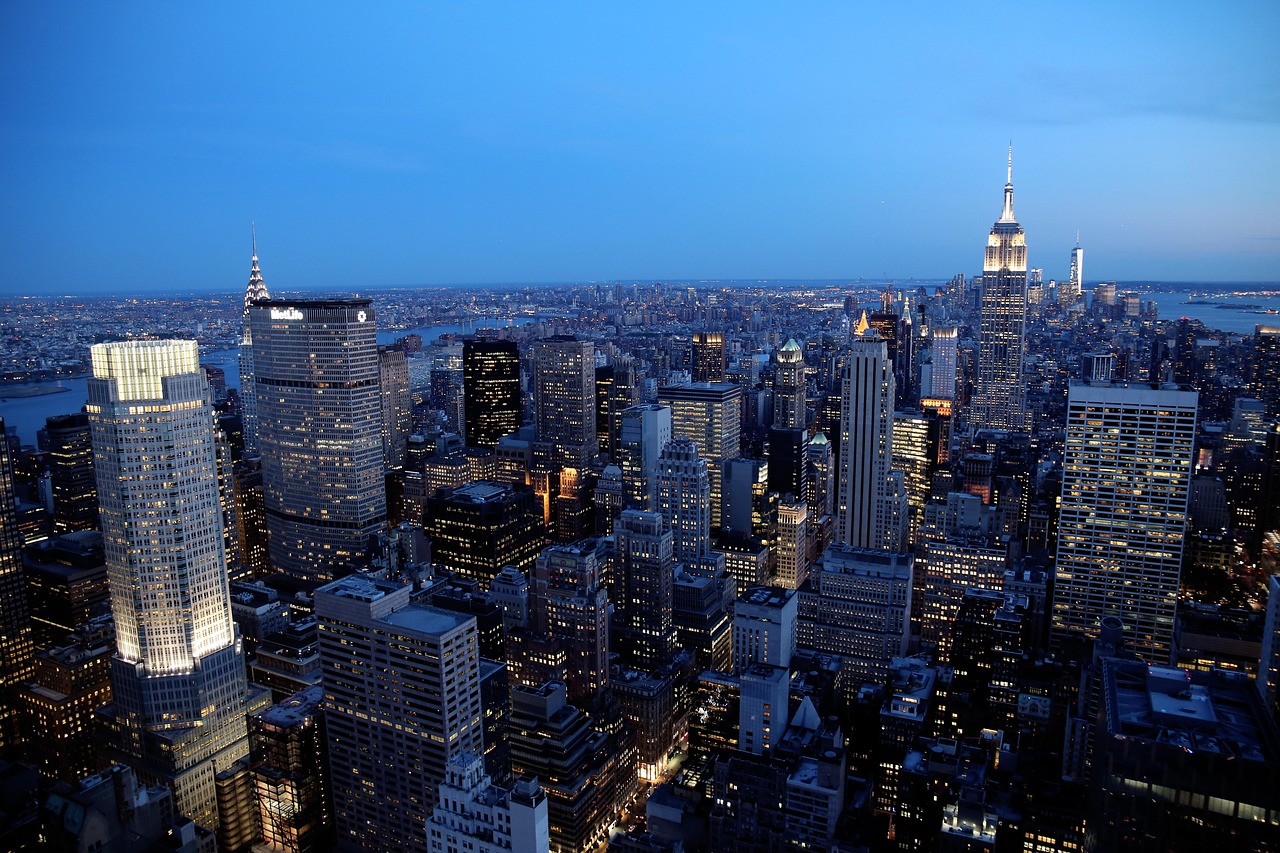
The 1931 Art Deco tower is still the classic place to see the city from above. As of October 2026 its official site lists the open-air 86th-floor deck from $46, the 86th plus the 102nd floor from $81 and express passes from $87; prices vary by time slot, and sunset sells out first. The decks were open 10 a.m. to 11 p.m. in early October. Alternatives are Top of the Rock (with a view of the Empire State Building), Summit One Vanderbilt, Edge at Hudson Yards and One World Observatory. Pick one; the views overlap.
The Metropolitan Museum of Art
The Met, on Fifth Avenue beside Central Park, is one of the largest art museums in the world, from an Egyptian temple to European masters and a summer rooftop garden. As of October 2026 admission is $30 for adults, $22 for seniors and $17 for students, free for children 12 and under, and includes same-day entry to The Met Cloisters. Pay-what-you-wish is only for New York State residents and students from New York, New Jersey and Connecticut, who must pay something; online it needs a New York State billing address. Other visitors pay the full price. It is open Sunday to Tuesday and Thursday 10 a.m.–5 p.m., Friday and Saturday until 9 p.m., and closed on Wednesdays, Thanksgiving, December 25, January 1 and the first Monday in May.
MoMA and the American Museum of Natural History
The Museum of Modern Art in Midtown holds Van Gogh’s The Starry Night and Monet’s water lilies. According to MoMA’s visitor page, tickets cost $30 for adults, $22 for seniors 65+ and $17 for students, free for children 16 and under, and it opens daily 10:30 a.m.–5:30 p.m., until 8:30 p.m. on Fridays. The American Museum of Natural History, on the Upper West Side, is famous for its dinosaur halls, the blue whale and the planetarium. Its site lists general admission at $37 for adults, $30 for seniors and $22 for students, with special shows extra, open daily 10 a.m.–5:30 p.m. except Thanksgiving and Christmas. Pay-what-you-wish general admission is for New York State residents with ID only.
The 9/11 Memorial and Museum
Two reflecting pools fill the footprints of the Twin Towers, with the names of the nearly 3,000 people killed in the attacks of 2001 and 1993 cut in bronze around them. The Memorial is free and open daily 8 a.m.–8 p.m. The Museum below opens Wednesday to Monday, 9 a.m.–7 p.m., plus selected Tuesdays, with tickets bought in advance; allow 45–90 minutes or more. Free tickets for Monday evenings (5:30–7 p.m.) are released online at 7 a.m. that Monday, first come, first served, and on the first Sunday of the month (4–7 p.m.) entry is free for people who live, work or study in the New York area. Next door is the white-ribbed Oculus by Santiago Calatrava.
Central Park
Manhattan’s 843-acre (341-hectare) green heart runs from 59th to 110th Street and is free. Wander from the Mall and Bethesda Terrace to Bow Bridge, Strawberry Fields, the Reservoir and Belvedere Castle, rent a rowboat or bike, or join the runners on the 6-mile (10 km) loop drive, which is closed to cars. Summer brings free concerts and Shakespeare in the Park; winter, ice skating.
The Brooklyn Bridge and DUMBO
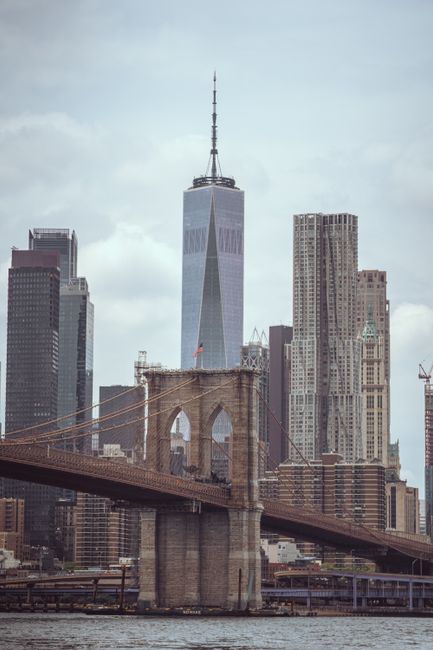
Opened in 1883, the Brooklyn Bridge is still the most beautiful way into Brooklyn. Its raised wooden promenade, a little over a mile (about 1.8 km) from City Hall, is free and open around the clock; go early to beat the crowds and watch for cyclists. On the far side, DUMBO’s cobbled Washington Street frames the Manhattan Bridge, and Brooklyn Bridge Park has lawns and piers on the water.
Broadway and the TKTS booths
A musical or play in one of the 40-odd theaters around Times Square is a highlight for many visitors; book big hits ahead on the theater’s official ticketing site. For discounts, the non-profit Theatre Development Fund runs the TKTS booths, selling same-day evening tickets and next-day matinees for up to 50% off, under the red steps in Times Square and at Lincoln Center. Hours change by day of the week (earlier on matinee days), so check TDF’s site, which also shows what was recently on the board.
More to see
- The High Line: a park on an old elevated rail line from the Meatpacking District to Hudson Yards.
- Grand Central Terminal: the 1913 station with its starry ceiling and whispering gallery.
- The Guggenheim: Frank Lloyd Wright’s spiral museum on Museum Mile.
- The Staten Island Ferry: a free ride across the harbor past the Statue of Liberty.
Other things to do in New York City
Eat your way around the world
You do not need a big budget to eat well here. Try a pizza slice, a bagel with lox, pastrami on rye at a deli, dim sum in Chinatown or Flushing, and Greek tavernas in Astoria. Food halls such as Chelsea Market make easy lunch stops. For top restaurants, book weeks ahead.
Walking, cycling and beaches
Walk neighborhood by neighborhood: Greenwich Village to SoHo, the High Line to Hudson Yards, or over the Brooklyn Bridge to Brooklyn Heights Promenade. Citi Bike, the bike share, has docks across Manhattan and much of Brooklyn and Queens, and the Hudson River Greenway runs car-free along Manhattan’s west side. In summer, lifeguarded city beaches include Coney Island, reached by subway, and the Rockaways, popular with surfers. See our city sightseeing, cycling and beaches guides.
Day trips and onward travel
The Hudson Valley: Metro-North trains from Grand Central follow the river north to Beacon, for the Dia Beacon art museum and Mount Beacon, and Cold Spring, for antique shops and trails with river views; fall color peaks around mid-October. See our hiking guide. Further afield: the Long Island Rail Road reaches Long Beach and, in summer, the Hamptons and Montauk; Amtrak trains from Penn Station reach Philadelphia in about an hour and a half and Washington, D.C., in about three hours. See our Washington, D.C. travel guide.
Nearby destinations
- Philadelphia129 km
Getting there and getting around
From JFK airport
JFK, in southern Queens, handles most long-haul flights. The AirTrain JFK is free between terminals; to leave the airport, ride it to Jamaica or Howard Beach and pay $8.75 as of October 2026 by tapping a contactless card, phone or OMNY card. From Jamaica take the subway (E, J or Z, $3) or the Long Island Rail Road to Penn Station or Grand Central Madison in about 20 minutes, with a CityTicket for $5.25 off-peak or $7.25 peak; from Howard Beach, the A train. The airport warned of overnight AirTrain closures (10 p.m.–6 a.m.) from October 5 to 15, 2026, with free replacement buses. Yellow taxis charge a flat $70 to Manhattan, plus surcharges, tolls and tip.
From LaGuardia and Newark
LaGuardia (LGA), in northern Queens, has no rail link, but the Q70 LaGuardia Link bus is free from Terminals B and C to the subway at Jackson Heights–Roosevelt Avenue and 74 St–Broadway. Taxis use the meter plus a $5 airport surcharge. Newark Liberty (EWR) is in New Jersey, about 16 miles (26 km) from Midtown: take the AirTrain to the airport rail station, then NJ Transit or Amtrak to Penn Station. The Port Authority lists NJ Transit to Midtown at about 30 minutes for $17.25, including the $8.75 AirTrain fee. The Newark Airport Express bus costs $23.50 one way.
Subway, buses, trains and taxis
The MTA’s subway runs 24 hours on most lines. As of October 2026 the fare is $3 on the subway and local buses, with a free transfer between them, and $7.25 on express buses. Pay with OMNY: tap the same contactless card, phone or watch every time, or buy an OMNY card. OMNY’s rolling 7-day fare cap means that once you have paid $35 on subways and local buses in seven days, the rest of your rides in that period are free. Each traveler needs their own card or device. Amtrak and NJ Transit use Penn Station, Metro-North uses Grand Central, and PATH trains link Manhattan with Hoboken and Jersey City. Yellow taxis can be hailed when the roof light is on; trips through Manhattan south of 96th Street add a state congestion surcharge, and those in the congestion zone a 75-cent MTA toll.
Driving and congestion pricing
You do not need a car here, and parking is very expensive. The MTA’s congestion relief zone charges vehicles entering Manhattan at or below 60th Street. As of October 2026, cars with a valid E-ZPass pay $9 in the peak period (5 a.m.–9 p.m. weekdays, 9 a.m.–9 p.m. weekends) and $2.25 overnight; Tolls by Mail cost up to 50% more, so check how your rental company bills tolls. Bridge and tunnel tolls are extra.
When to go and how long to stay
New York has four clear seasons. The table uses NOAA’s 1991–2020 climate normals for the Central Park weather station: average daily highs and lows, and days with at least 0.1 inch (2.5 mm) of rain or melted snow.
| Season | Average high / low | Wet days per month | What it’s like | Good for |
|---|---|---|---|---|
| Winter (Dec–Feb) | 40–44 °F (4–7 °C) / 28–34 °F (−2 to 1 °C) | 6–7 | Cold and windy, with snow some years | Museums, Broadway, holiday lights |
| Spring (Mar–May) | 50–71 °F (10–22 °C) / 36–55 °F (2–13 °C) | 6.5–7.5 | Cool March, mild and blooming in May | Walking, parks |
| Summer (Jun–Aug) | 80–85 °F (27–29 °C) / 64–70 °F (18–21 °C) | 6.5–7 | Hot and humid, with thunderstorms | Beaches, outdoor concerts, baseball |
| Fall (Sep–Nov) | 76 °F falling to 54 °F (25–12 °C) / 62 °F falling to 42 °F (17–6 °C) | 5.5–6 | Warm September, crisp October | Sightseeing, fall color |
Central Park gets about 49.5 inches (1,260 mm) of precipitation a year, spread evenly through the months, and about 30 inches (76 cm) of snow, mostly from December to March.
Events worth planning around
- Late August to September: the US Open tennis in Queens.
- Early November: the New York City Marathon through all five boroughs.
- Thanksgiving to New Year: the Macy’s parade, the Rockefeller Center tree and the Times Square ball drop; the priciest weeks for hotels.
How long to stay: 3, 5 and 7 days
3 days: day one, the Statue of Liberty and Ellis Island, then the 9/11 Memorial and a sunset walk over the Brooklyn Bridge; day two, the Met, Central Park and a Broadway show; day three, the High Line, Greenwich Village and an observation deck at night. 5 days: add MoMA or the Natural History Museum and a day in Brooklyn or Queens. 7 days: add Harlem and The Met Cloisters, Coney Island and a Hudson Valley day trip.
Where to stay in New York City and the hotel taxes
- Midtown: the widest choice and the best transport; ideal for a first visit and theatergoers.
- Lower Manhattan and the Village: character and nightlife, close to the Statue of Liberty ferry.
- Upper West and Upper East Side: quieter, near Central Park and the big museums.
- Brooklyn and Long Island City: often better value, a few subway stops from Manhattan.
Room rates are usually quoted before tax. According to the city’s Department of Finance and New York State’s tax department, a hotel bill in New York City adds 8.875% sales tax, the city’s 5.875% hotel room occupancy tax, $2 per room per night (for rooms of $40 or more) and the state’s $1.50 per night hotel unit fee, often called the Javits fee: about 14.75% plus $3.50 a night in total, as of October 2026. Some hotels also add a nightly “facility” or “destination” fee; check the full price before booking.
Short-term rentals are tightly limited. Under Local Law 18, enforced since September 2023, hosts renting for less than 30 days must register with the city’s Office of Special Enforcement, and platforms such as Airbnb may not process bookings for unregistered rentals. Legal short-stay apartments are scarce, so most visitors stay in hotels.
Practical tips for New York City
- Sales tax: prices in shops and on menus exclude the 8.875% sales tax added at the register.
- Tipping: 18–22% is usual at sit-down restaurants; more in our United States travel guide.
- Closing days: the Met closes on Wednesdays and the 9/11 Museum on most Tuesdays.
- Avoid touts: buy Statue of Liberty tickets only from Statue City Cruises; costumed characters in Times Square expect payment for photos.
- Safety: the city is generally safe for visitors; watch your phone and bag on crowded trains.
- Emergencies: call 911; for city information, 311.
What to pack for New York City
Comfortable walking shoes come first: most visitors walk many miles a day, and subway stations have plenty of stairs. Pack layers for hot streets and cold air-conditioning in summer, and a warm, windproof coat, hat and gloves from December to March. A compact umbrella helps in every season. Carry a small day bag rather than a backpack, since the Statue of Liberty crown allows no bags and many museums and theaters limit bag size, and bring a portable charger for long days of maps and photos.
New York City travel FAQ
How much are Statue of Liberty tickets?
As of October 2026, the Statue City Cruises ferry costs $26 for adults, $23 for seniors and $17 for children aged 4–12, including both islands and museums. Pedestal and crown access add $0.30.
Do I need to book the Statue of Liberty crown?
Yes, in advance from Statue City Cruises, up to four per order. It is a 162-step climb with no elevator, and children must be at least 42 inches (1.1 m) tall.
Is the Met pay-what-you-wish?
Only for New York State residents and students from New York, New Jersey and Connecticut. Others pay $30 for adults, $22 for seniors and $17 for students; children 12 and under are free.
Is the 9/11 Memorial free?
The outdoor Memorial is free daily 8 a.m.–8 p.m. The Museum needs a ticket booked in advance, except Monday evenings from 5:30 to 7 p.m., when free tickets are released online that morning.
How much is the subway in New York?
$3 a ride as of October 2026. Tap the same card or phone with OMNY, and after $35 in seven days the rest of your rides that week are free.
What is the cheapest way from JFK to Manhattan?
The AirTrain to Jamaica or Howard Beach ($8.75) plus the subway ($3): $11.75 in total. A yellow taxi costs a flat $70 plus extras and tip.
What taxes are added to New York hotel bills?
8.875% sales tax, 5.875% city hotel tax, $2 per room per night and a $1.50 nightly state unit fee: about 14.75% plus $3.50 a night.
How much is congestion pricing in Manhattan?
As of October 2026, $9 a day for a car with E-ZPass entering Manhattan at or below 60th Street at peak times, and $2.25 overnight.
How many days do I need in New York City?
Three full days covers the Statue of Liberty, Lower Manhattan, the Met, Central Park and a Broadway show. Five to seven days adds Brooklyn, Queens, more museums and a day trip.
Plan your trip
Partner links: TravelerCenter may earn a commission if you book, at no extra cost to you.
Sources · last reviewed 4 October 2026
Researched and last reviewed on 4 October 2026. Statue of Liberty ferry prices and crown rules: the National Park Service and Statue City Cruises; Empire State Building: its official site; the Met, MoMA and the American Museum of Natural History: the museums’ sites; 9/11 Memorial and Museum: the memorial’s site; TKTS: Theatre Development Fund; airports, AirTrain and taxi fares: the Port Authority of New York and New Jersey and the NYC Taxi and Limousine Commission; subway fares, OMNY and congestion pricing: the MTA; hotel taxes: NYC Department of Finance and New York State Department of Taxation and Finance; short-term rentals: the NYC Office of Special Enforcement; climate: NOAA’s 1991–2020 normals for Central Park. Amtrak journey times and event dates are general references, flagged for checking. Prices and hours change, so check the official sites before you go. For entry rules, ESTA, tipping and driving, see our United States travel guide.
Data: Weather: MET Norway (CC BY 4.0) · Sea temperature: NOAA CoastWatch · Rates: ECB · Holidays: Nager.Date · Costs: World Bank ICP and price levels · Wikidata (CC0)