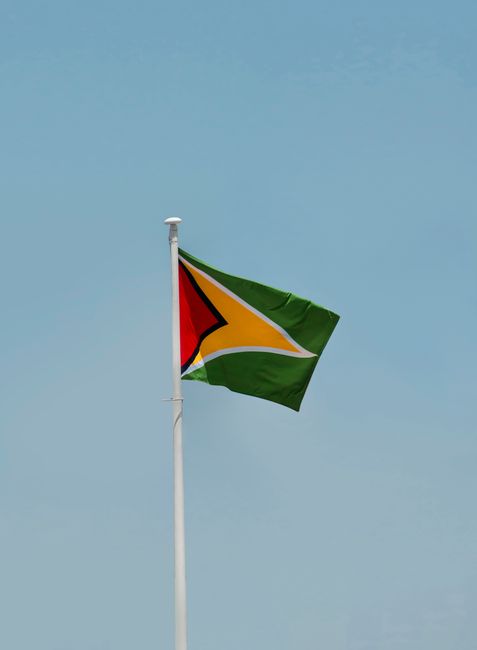
Georgetown, the capital of Guyana, sits at the mouth of the Demerara River on the Atlantic coast of South America, on flat land reclaimed from the sea and protected by a long seawall. Laid out by the Dutch and the British, it is a city of canals, wide avenues with grassy, tree-shaded central walks, and painted wooden buildings with louvered windows, porches and fretwork, which earned it the old nickname “Garden City of the Caribbean.” Its landmarks include St. George’s Cathedral, described by the Guyana Tourism Authority as the world’s tallest wooden church, the Gothic-style City Hall and Stabroek Market, with its iron clock tower over the river. It is a lively, mixed city, with Indian, African, Chinese, Portuguese and Indigenous influences in its food, festivals and faces, and a growing scene of restaurants, rum bars and new hotels. Almost every visitor to Guyana passes through, because it is the gateway to the interior: from here, small planes fly to Kaieteur Falls, about an hour away, and to the lodges of Iwokrama and the Rupununi. The drier months on the coast, mid-January to May and mid-July to mid-November, are the best time to visit.
Right now in Georgetown
- Sat27–30°C81–86°F2 mm rain
- Sun25–30°C78–85°F7 mm rain
- Mon27–30°C81–86°F3 mm rain

Georgetown: quick answers
- Things to do in Georgetown
- St. George’s Cathedral, Stabroek Market, City Hall and the wooden heritage, The museums, The Botanical Gardens and the Promenade Gardens. More
- Best time to visit Georgetown
- The drier seasons, from mid-January to May and from mid-July to mid-November. October is the driest month and June the wettest, according to the WMO normals. More
- Where to stay in Georgetown
- The center, Kingston and the seawall, Bourda, Queenstown and the gardens. More
Georgetown at a glance
- Best for: wooden colonial architecture, markets and museums, Guyanese food and rum, and day trips to Kaieteur Falls and the rivers.
- How long: one or two days for the city, plus a day for Kaieteur and a day on the rivers.
- Best time: mid-January to May and mid-July to mid-November, the drier seasons on the coast; Mashramani on February 23.
- Getting there: Cheddi Jagan International Airport at Timehri is about 41 km (25 miles) south; Eugene F. Correia International Airport at Ogle, about 11 km (7 miles) east, handles flights to Suriname and the interior.
- Getting around: by taxi, booked through your hotel or a licensed company; minibuses run numbered routes; the center is walkable by day.
- Money: Guyana dollars (about G$210 to US$1 in November 2026); cards work in larger hotels, restaurants and supermarkets.
- Before you go: entry rules, money and general tips are in our Guyana travel guide.
Explore Georgetown in videos
Hand-picked travel videos from YouTube creators to help you picture the trip. They play from YouTube; the facts in this guide come from our own research.
Georgetown’s areas
The city is compact and flat, stretching along the east bank of the Demerara River and the Atlantic shore, with the main sights within a few kilometers of each other.
The center: Stabroek, Main Street and the waterfront
The busy commercial heart around Stabroek Market and Water Street, by the river, with Regent Street’s shops, the boat and minibus stops, the Parliament Building and the Supreme Court. Main Street and Avenue of the Republic have some of the finest wooden buildings, among them St. George’s Cathedral and City Hall. It is crowded and lively by day and quiet at night.
Kingston and the seawall
North of the center, toward the mouth of the river, Kingston has hotels, restaurants and the old Dutch-era lighthouse, and the start of the seawall, which runs east along the coast. On weekend evenings, families gather on the wall and the seawall bandstand to enjoy the breeze.
Bourda, Queenstown and the gardens
East of the center are leafy residential districts with large wooden houses, the Bourda Market and cricket ground, the Promenade Gardens and, farther east, the Botanical Gardens and the zoo. Sheriff Street, on the eastern side, is known for its restaurants and nightlife.
Top things to see in Georgetown
St. George’s Cathedral
The Anglican cathedral on Church Street is a soaring white Gothic-style building made almost entirely of local hardwood, completed at the end of the 19th century, with a tall spire and a high timber nave. The Guyana Tourism Authority describes it as the world’s tallest wooden church, and it is one of the city’s best-known sights. Visitors are welcome outside service times; dress modestly.
Stabroek Market
The city’s main market fills a large cast-iron hall on the riverfront, crowned by a clock tower that is one of Georgetown’s symbols. Inside and around it, stalls sell fruit and vegetables, fish, spices, household goods, jewelry and local crafts, and the area outside is the hub for minibuses and river boats. Go in the morning, when it is busiest, keep your bag close and carry small notes.
City Hall and the wooden heritage
Georgetown’s City Hall, on the Avenue of the Republic, is a fanciful Gothic Revival building with turrets and fretwork, built in the late 19th century. Nearby stand the Parliament Building, the Victoria Law Courts with a statue of Queen Victoria, the Roman Catholic Brickdam Cathedral, and many private houses of the same era, painted white with dark trim and tall shuttered windows designed to catch the breeze. A walk along Main Street, Camp Street and the tree-lined central walk of Brickdam takes in many of them.
The museums
The Guyana National Museum, on North Road, traces the country’s history and natural heritage, according to the Tourism Authority, with exhibits on its peoples, animals and geology. The Walter Roth Museum of Anthropology, on Main Street, displays archaeological finds and crafts of Guyana’s Indigenous peoples. The Castellani House art gallery shows Guyanese painting and sculpture.
The Botanical Gardens and the Promenade Gardens
The large Botanical Gardens, on the eastern side of the city, have ponds with water lilies and lotus, royal palms, many birds and, in the canals, West Indian manatees that sometimes surface to feed on grass held out by the keepers. The zoo is next door. Closer to the center, the small, formal Promenade Gardens are a shady place to rest.
More sights
- The seawall: the long sea defense along the Atlantic coast, a favorite spot for walks at sunset and for kite flying on Easter Monday.
- Bourda Cricket Ground: one of the Caribbean’s historic cricket grounds, where many famous matches have been played, according to the Tourism Authority.
- Hibiscus Craft Plaza: on the Avenue of the Republic, where, according to the Tourism Authority, local artisans sell hand-woven baskets, wood carvings, paintings and jewelry.
- Umana Yana: a tall cone-shaped thatched benab (meeting house), built in the traditional Indigenous style near the seawall.
- The 1763 Monument: on Square of the Revolution, honoring Cuffy, leader of the Berbice uprising of enslaved people in 1763.
- Demerara Harbour Bridge: the long floating bridge across the Demerara River, on the road to the west bank.
Other things to do in Georgetown
Food and drink
Georgetown is the best place to taste Guyana’s mix of cuisines. Look for pepperpot, the dark, slow-cooked stew flavored with cassareep; cook-up rice with peas, coconut milk and meat; curries with roti or dhal puri; metemgee; Chinese-Guyanese fried rice and chow mein; and snacks such as egg balls, cheese rolls and pine tarts from bakeries and street stalls. Fresh coconut water is sold from carts, and drinks include sorrel, mauby and local beer. For rum, take the heritage tour at the El Dorado distillery at Diamond, about 20 minutes south, where some of the world’s last wooden stills are still in use, or try aged Demerara rums in the city’s bars.
Mashramani and festivals
On February 23, Republic Day, Georgetown hosts the Mashramani parade, with costumed bands, floats and steel bands moving through the streets, after weeks of calypso and costume competitions. Phagwah brings colored powder to the streets in March in most years; on Easter Monday, the seawall and open spaces fill with kites; Emancipation Day, August 1, is marked with African heritage events at the National Park; and for Diwali, motorcades of lit floats tour the city.
Shopping
According to the Guyana Tourism Authority, popular souvenirs include Indigenous woven items, balata curios (figures made from the latex of the balata tree), cotton hammocks, local paintings, wooden crafts and old Dutch bottles. Look for them at the Hibiscus Craft Plaza, the markets and the craft shops, and pick up a bottle of aged rum and a jar of cassareep for home.
Day trips from Georgetown
- Kaieteur Falls: about an hour by small plane from Ogle, according to the Tourism Authority, usually with a two-hour guided walk to viewpoints over the 741-foot (226 m) drop; many trips add Orinduik Falls. Book a few days ahead and keep the next day free in case of weather delays.
- The Essequibo River: drive to Parika, about an hour west across the Demerara Harbour Bridge, then take a boat to Fort Island, with its 18th-century Dutch fort, or to river resorts and blackwater creeks for swimming. See our boat trips guide.
- Santa Mission: an Indigenous Arawak village on a creek off the lower Demerara River, reached by boat, with crafts and a look at village life.
- The Demerara River: boat trips up the river from Georgetown pass old plantations and forested creeks, with birdlife along the banks.
- El Dorado rum: the heritage center and tours at the Diamond distillery, just south of the city.
- Into the interior: scheduled flights from Ogle reach Fairview, for Iwokrama, and Lethem, for the Rupununi savannas, for stays of two nights or more.
Getting there and getting around
By air
Cheddi Jagan International Airport, at Timehri, about 41 km (25 miles) south of the city, according to the Guyana Tourism Authority, has flights from New York, Miami, Houston, Toronto, Panama, Trinidad, Barbados and Suriname; the drive into Georgetown along the East Bank road takes about an hour, more in traffic. Arrange a taxi through your hotel or take an official airport taxi. Eugene F. Correia International Airport, at Ogle on the East Coast, about 11 km (7 miles) from the center, has flights to Paramaribo and is the base for domestic airlines flying to Kaieteur and the interior; on scheduled domestic flights, the baggage allowance is 20 lb (about 9 kg) per person.
By road and river
The coast road runs east from Georgetown to New Amsterdam and Moleson Creek, where the Canawaima ferry crosses the Corentyne River to South Drain in Suriname, and buses and 4×4 services run south through Iwokrama to Lethem on the Brazilian border. Boats to the Essequibo leave from Parika.
Getting around
Taxis are the easiest way to get around; they are not metered, so agree on the fare first, and book through your hotel or a licensed taxi company rather than hailing one in the street. Fifteen-seat minibuses run numbered routes from stops around Stabroek Market and are cheap but crowded. The center is flat and walkable by day, although sidewalks are uneven and there are open drains and canals, so watch your step. Driving is on the left; traffic is heavy at rush hours, and many visitors prefer to hire a driver.
When to go and how long to stay
Georgetown is hot and humid all year, with highs of about 30–32 °C (85–89 °F). According to the Guyana Tourism Authority, the coast has two dry seasons, from mid-January to May and from mid-July to mid-November, and two wet seasons, from May to mid-July and from mid-November to mid-January, when heavy showers can flood low-lying streets for a while. The table shows averages from the World Meteorological Organization’s (WMO) 1991–2020 normals for the Georgetown Botanical Gardens station, rounded.
| Month | Average high / low | Rain (days with 1 mm or more) | What to expect |
|---|---|---|---|
| January | 30 °C (85 °F) / 23 °C (73 °F) | 239 mm (9.4 in), 15 days | Wet early in the month, then drier |
| February | 30 °C (86 °F) / 23 °C (73 °F) | 127 mm (5.0 in), 12 days | Drier; Mashramani on February 23 |
| March | 31 °C (88 °F) / 22 °C (71 °F) | 100 mm (3.9 in), 10 days | Dry season; Phagwah in most years |
| April | 30 °C (87 °F) / 23 °C (74 °F) | 142 mm (5.6 in), 11 days | Dry; Easter kite flying on the seawall |
| May | 30 °C (86 °F) / 24 °C (74 °F) | 287 mm (11.3 in), 19 days | Main rains begin |
| June | 30 °C (86 °F) / 23 °C (73 °F) | 303 mm (11.9 in), 22 days | Wettest month |
| July | 30 °C (86 °F) / 22 °C (72 °F) | 282 mm (11.1 in), 21 days | Wet, then drier from mid-month |
| August | 31 °C (88 °F) / 23 °C (74 °F) | 167 mm (6.6 in), 14 days | Second dry season; Emancipation Day |
| September | 31 °C (88 °F) / 23 °C (73 °F) | 92 mm (3.6 in), 7 days | Dry and sunny |
| October | 32 °C (89 °F) / 22 °C (71 °F) | 69 mm (2.7 in), 8 days | Driest and hottest month |
| November | 31 °C (88 °F) / 23 °C (74 °F) | 197 mm (7.7 in), 12 days | Rains return from mid-month |
| December | 30 °C (86 °F) / 23 °C (74 °F) | 276 mm (10.9 in), 19 days | Short wet season; Christmas |
One or two days in Georgetown
Start early at Stabroek Market, then walk up to St. George’s Cathedral, City Hall and the Parliament Building, and on to the National Museum and the Walter Roth Museum. After lunch on cook-up rice or curry, take a taxi to the Botanical Gardens to look for the manatees, and finish on the seawall at sunset, followed by dinner and a glass of aged rum. On a second day, fly to Kaieteur Falls, or take a boat trip on the Essequibo.
Before or after the interior
Most interior trips start and end in Georgetown, so plan a night in the city at each end: it gives you a buffer for weather delays on small planes and a place to leave the luggage that won’t fit within the 20 lb allowance.
Where to stay in Georgetown
- Kingston and the seawall: international business hotels and some newer properties near the sea, convenient for restaurants.
- The center: older hotels and guesthouses in colonial buildings, within walking distance of the main sights.
- Queenstown, Bel Air and the east: smaller hotels and guesthouses in quieter residential streets, near Sheriff Street’s restaurants.
- Near the airports: a few hotels on the East Bank, toward Timehri, for early flights.
Many hotels arrange airport transfers, taxis and Kaieteur trips. The Guyana Tourism Authority publishes a list of licensed tourism providers, which is worth checking when you book tours and lodges.
What a visit to Georgetown costs
Prices are approximate, for November 2026, at about G$210 to US$1:
| Item | Typical cost |
|---|---|
| Cook-up rice or curry with roti at a local restaurant | G$1,000–2,000 (US$5–10) |
| Fresh coconut water from a cart | G$200–400 |
| Local beer in a bar | G$400–800 |
| Minibus ride on a city route | G$100–200 |
| Taxi across the city | G$800–1,500 (US$4–7) |
| Taxi, Cheddi Jagan Airport to the city | US$25–40 |
| Dinner for two at a mid-range restaurant | US$40–80 |
| Kaieteur Falls day trip by plane, per person | US$250–450 |
| Guesthouse double, per night | US$50–100 |
| Business hotel double, per night | US$150–280 |
These figures are our estimates, not official prices.
Practical tips for Georgetown
- Book taxis through your hotel: or use a licensed company, and agree on the fare first.
- Change money at banks or cambios: never on the street, as the Guyana Tourism Authority advises, and use ATMs inside banks or shopping centers.
- Carry cash: markets, minibuses and small restaurants take Guyana dollars only, and the interior is mostly cash.
- Beat the heat: sightsee in the morning and late afternoon, carry water and use sunscreen.
- Book Kaieteur early: planes need a minimum number of passengers, so book a few days ahead and keep a spare day.
Safety
The Guyana Tourism Authority’s general tips apply in Georgetown: walk in groups after dark or take a taxi, book taxis through your hotel or a designated company, keep valuables and large amounts of cash out of sight, use ATMs inside banks or shopping centers, change money only at banks, hotels or licensed cambios, and keep a photocopy of your passport. Ask your hotel about the area you are staying in. Drink bottled or filtered water, use insect repellent, and drink plenty of water in the heat. For emergencies, call 911 for the police, 912 for the fire service and 913 for an ambulance.
What to pack for Georgetown
Light, breathable clothes, with long sleeves and trousers for the evenings and the interior; a sun hat, sunglasses and sunscreen; comfortable walking shoes; a light rain jacket or umbrella in the wet seasons; insect repellent; something smarter for dinner; and modest clothes for churches and temples. The standard supply is 240 V at 60 Hz, with some 110 V outlets and mixed socket types, so bring a universal adapter; see our travel adapters guide. If you are continuing to the interior, pack a small bag within the 20 lb flight limit.
Georgetown travel FAQ
How far is the airport from Georgetown?
Cheddi Jagan International Airport, at Timehri, is about 41 km (25 miles) south, roughly an hour by road. Eugene F. Correia International Airport, at Ogle, used for flights to Suriname and the interior, is about 11 km (7 miles) east of the center.
Can I visit Kaieteur Falls as a day trip from Georgetown?
Yes. Small planes fly from Ogle in about an hour, and most day trips include a guided walk of about two hours to the viewpoints before flying back the same afternoon.
Is St. George’s Cathedral really made of wood?
Yes. It is built almost entirely of local hardwood, and the Guyana Tourism Authority describes it as the world’s tallest wooden church.
When is Mashramani?
On February 23, Guyana’s Republic Day, with the main costume parade in Georgetown and events in the weeks before.
What is the best time to visit Georgetown?
The drier seasons, from mid-January to May and from mid-July to mid-November. October is the driest month and June the wettest, according to the WMO normals.
Where can I see manatees in Georgetown?
In the ponds and canals of the Botanical Gardens, on the eastern side of the city, where they sometimes come up to feed.
What should I eat in Georgetown?
Pepperpot, cook-up rice, curry with roti or dhal puri, metemgee, Chinese-Guyanese dishes, egg balls and pine tarts, washed down with coconut water, sorrel or a Demerara rum.
Plan your trip
Partner links: TravelerCenter may earn a commission if you book, at no extra cost to you.
Before you go: guidebooks and travel gear
Affiliate links: we may earn a commission at no extra cost to you. As an Amazon Associate we earn from qualifying purchases. We pick items for the place, not for the commission. How we earn money
Sources · last reviewed 10 November 2026
Researched and last reviewed on 10 November 2026. St. George’s Cathedral, Stabroek Market, the Guyana National Museum, Bourda Cricket Ground, the Hibiscus Craft Plaza, souvenirs, seasons, airports and distances, flights, domestic baggage limits, Kaieteur Falls and visitor tips: the Guyana Tourism Authority (guyanatourism.com); exchange rate: the Bank of Guyana; climate averages: the WMO 1991–2020 normals for Georgetown Botanical Gardens (NOAA archive); emergency numbers: GOV.UK; the Corentyne ferry point: Suriname’s Ministry of Foreign Affairs. Building dates and descriptions, neighborhoods, the other museums, gardens and monuments, festivals, food, day-trip times and all prices are general references or our estimates, flagged for checking. For entry rules, money and general tips, see our Guyana travel guide.
Data: Weather: MET Norway (CC BY 4.0) · Sea temperature: NOAA CoastWatch · Rates: ECB · Wikidata (CC0)