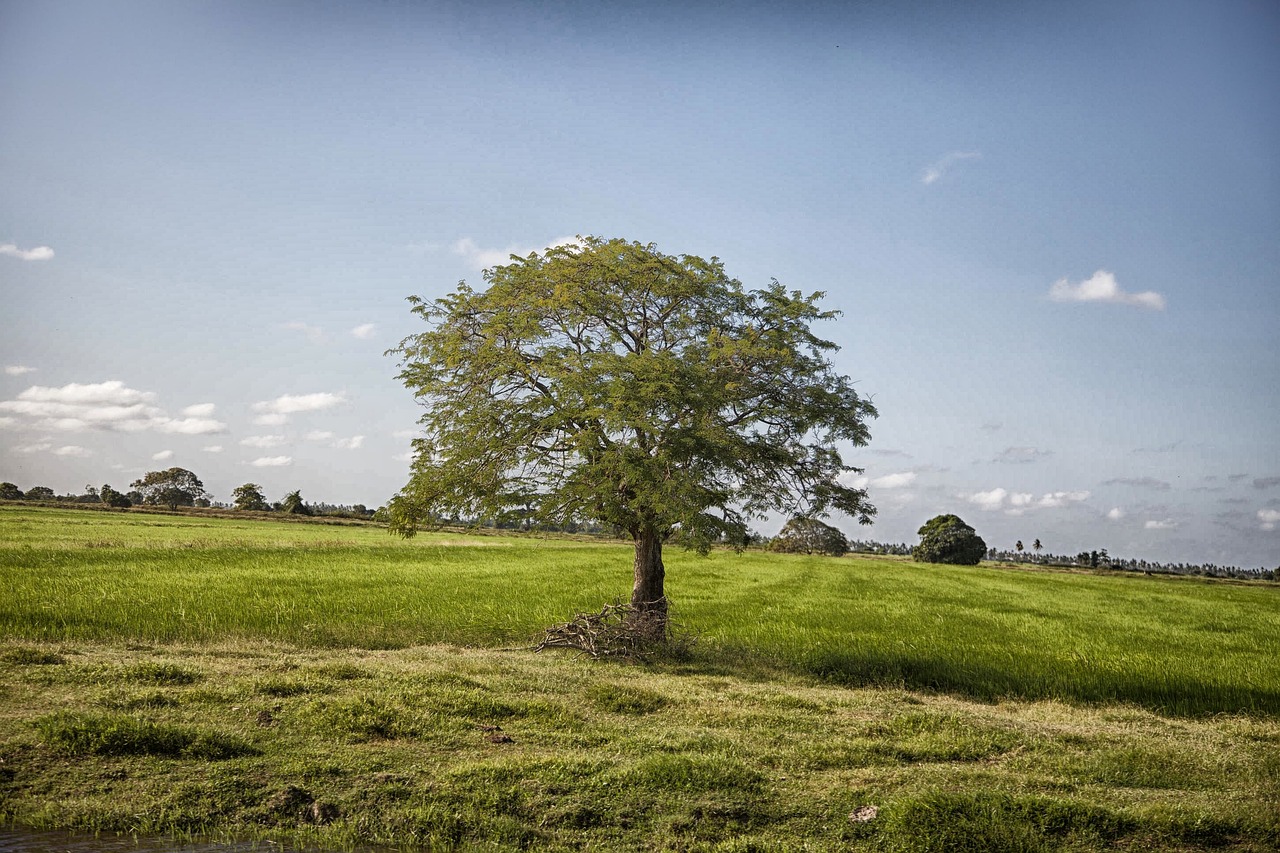
Guyana is the only English-speaking country in South America, a land of vast rainforest, wide savannas and mighty rivers on the continent’s Atlantic shoulder, between Suriname, Brazil and Venezuela. Most of its people live on a narrow strip of coast, much of it below sea level and protected by seawalls and Dutch-built canals, while the interior is one of the least-disturbed forest regions on Earth. Its capital, Georgetown, is a city of white-painted wooden buildings, tree-lined avenues and canals, with the tall timber St. George’s Cathedral and the iron clock tower of Stabroek Market. The star attraction is Kaieteur Falls, where the Potaro River drops 741 feet (226 m) in a single plunge, reached on an hour’s flight from Georgetown in a small plane. Beyond it lie the Rupununi savannas, home to giant river otters, black caimans, jaguars and Indigenous villages that run their own eco-lodges; the rainforest of Iwokrama; the mouth of the great Essequibo River, with its islands; and nesting sea turtles on the remote beaches of the northwest. The currency is the Guyana dollar (G$), and many nationalities, including US, Canadian and British citizens, do not need a visa. The country is warm all year, with two drier seasons on the coast: mid-January to May and mid-July to mid-November.
Right now in Guyana
- Sat27–30°C81–86°F2 mm rain
- Sun25–30°C78–85°F7 mm rain
- Mon27–30°C81–86°F3 mm rain
Weather, sun and air quality here are for one point near the centre of Guyana, not the whole country; conditions elsewhere can differ. Readings refresh through the day.
Guyana: quick answers
- Best time to visit Guyana
- Guyana is hot and humid all year, with temperatures of about 24–31 °C (75–87 °F), according to the Guyana Tourism Authority, and the seasons are defined by rain, not temperature. More
- Places to visit in Guyana
- Georgetown, Kaieteur Falls, Iwokrama and the central rainforest, The Rupununi savannas, The Essequibo River and its islands, A few more worth your time. More
- Things to do in Guyana
- Waterfalls, wildlife, rivers and rum. More
- Entry rules for Guyana
- According to Guyana’s Ministry of Foreign Affairs, nationals of the countries on its visa-exempt list (updated July 17, 2025) do not need a visa to enter Guyana. More
Guyana at a glance
Guyana covers about 214,970 km² (83,000 square miles), a little smaller than the United Kingdom or the US state of Idaho, yet it has fewer than a million people. Its name is usually explained as an Indigenous word meaning “land of many waters,” and it suits a country crossed by the Essequibo, Demerara, Berbice and Corentyne rivers and hundreds of their tributaries, with countless waterfalls in the highlands. Roughly four-fifths of the country is forest, part of the Guiana Shield, one of the oldest rock formations on the planet, and its flat-topped mountains, the tepuis of the Pakaraima range, rise toward Mount Roraima on the western edge.
The country’s people descend from Indigenous nations (Guyanese say Amerindians), Africans brought as enslaved workers, Indians, Portuguese and Chinese who came as indentured laborers after emancipation, and Europeans, and its calendar includes Mashramani, Phagwah (Holi), Diwali, Eid, Easter and Christmas. English is the official language, and Guyanese Creole (Creolese) is spoken everywhere, along with several Indigenous languages. Guyana is a member of CARICOM, the Caribbean Community, whose secretariat has its headquarters in Georgetown, and culturally it feels as much Caribbean as South American: think cricket, rum, calypso and roti. The currency is the Guyana dollar (GYD, G$). Guyana keeps UTC−4 all year, with no daylight saving time, one hour behind neighboring Suriname. Cars drive on the left. The international dialing code is +592.
Guyana’s regions
- Georgetown and the Demerara coast: the capital at the mouth of the Demerara River, with its markets, museums and gardens, the seawall, the rum distillery at Diamond, and the airports at Timehri and Ogle.
- The Essequibo: the country’s longest river, with a wide estuary dotted with islands, among them Fort Island with its 18th-century Dutch fort; the river town of Bartica; and the Essequibo Coast to the west.
- Kaieteur and the Potaro: Kaieteur National Park in the central highlands, with its waterfall, and the forested Potaro River valley below.
- Iwokrama and the central forest: a large protected rainforest crossed by the Essequibo, with a canopy walkway, river lodges and the road south to Lethem.
- The Rupununi: the open savannas and wetlands of the southwest, with ranches, Indigenous villages and community lodges, and the border town of Lethem, opposite Brazil.
- Berbice and the east: New Amsterdam and the farmland of the Berbice and Corentyne rivers, on the road to Suriname.
- The northwest: the remote coast of Barima-Waini, with Shell Beach, a nesting ground for sea turtles, reached by boat.
Videos of Guyana
Hand-picked travel videos from YouTube creators to help you picture the trip. They play from YouTube; the facts in this guide come from our own research.
Where to go: a wooden capital, a giant waterfall and the wild interior
Nearly every trip starts in Georgetown, where all international flights land, and the interior is reached mainly by small plane, 4×4 or boat. Most visitors spend a day or two in the capital, fly to Kaieteur, and then head for the forest and savanna lodges. Our Georgetown guide covers the city in detail.
Georgetown
Laid out by the Dutch and British on reclaimed land below sea level, Georgetown is crossed by canals and wide, tree-shaded avenues with grassy central walks. Its landmarks are wooden: St. George’s Cathedral, described by the Guyana Tourism Authority as the world’s tallest wooden church, the Gothic-style City Hall and many old colonial houses with louvered windows and verandas. Browse the stalls under the iron clock tower of Stabroek Market, see the country’s history at the Guyana National Museum and its Indigenous cultures at the Walter Roth Museum of Anthropology, look for manatees in the ponds of the Botanical Gardens, buy crafts at the Hibiscus Craft Plaza, and walk along the seawall at sunset. Cricket fans can visit the historic Bourda ground.
Kaieteur Falls
Kaieteur is the reason many people come to Guyana. According to the Guyana Tourism Authority, the Potaro River plunges 741 feet (226 m) over a sandstone cliff, a single drop several times higher than Niagara Falls, into a deep gorge wrapped in rainforest. Kaieteur National Park, set up in 1929, is the oldest protected area in the Amazon region, according to the Protected Areas Commission. There are no roads up: several local airlines fly from Georgetown’s Ogle airport (now named Eugene F. Correia International Airport) to the park’s airstrip in about an hour, and most trips include a guided walk of about two hours to a series of viewpoints, with no railings, close to the edge. Along the way, guides point out giant tank bromeliads where tiny golden frogs live, the bright orange Guianan cock-of-the-rock, and the Kaieteur swifts that nest behind the falling water. Many tours combine Kaieteur with Orinduik Falls, a wide series of cascades on the Brazilian border where you can swim. The Tourism Authority suggests September to November, after the rains, as the best time; heavy rain can make flights bumpy or delay them.
Iwokrama and the central rainforest
South of Georgetown, the road and the Essequibo River run through the Iwokrama Forest, a large protected area managed for conservation and sustainable use. Lodges on the river and at Atta, near the canopy walkway, offer night walks, boat trips and guided hikes, including to the top of Turtle Mountain for the view over unbroken forest. This is one of the best places in the Guianas to see wildlife: giant river otters, black caimans, tapirs, monkeys, harpy eagles and, with luck, a jaguar crossing the road. Scheduled flights to Fairview Village, near the river lodge, save the long drive.
The Rupununi savannas
Beyond the forest, the land opens into the Rupununi, a huge region of grassland, termite mounds, wetlands and mountains, home to Makushi, Wapishana and other Indigenous communities and to cattle ranches with cowboys called vaqueros. Community-run lodges such as those at Surama and Rewa, and ranches such as Karanambu and Dadanawa, arrange birdwatching, canoeing, fishing, horse riding and visits to see giant anteaters, giant river otters and the huge Victoria amazonica water lilies. Lethem, on the Takutu River, is the main town, with scheduled flights from Georgetown and a road bridge to Brazil.
The Essequibo River and its islands
The Essequibo reaches the sea in an estuary about 20 miles (30 km) wide, with hundreds of islands. Boats from Parika, an hour west of Georgetown, run up the river to Bartica, a gateway to the interior, and to Fort Island, where the brick walls of Fort Zeelandia and the old Dutch Court of Policy recall the colonial era. River resorts on the lower Essequibo and its tributaries are popular weekend escapes, with swimming in the dark, tea-colored “blackwater” creeks.
A few more worth your time
The El Dorado rum heritage tour at the Diamond distillery just south of Georgetown; the Indigenous village of Santa Mission on a creek of the lower Demerara River; Shell Beach in the far northwest, where leatherback, green and hawksbill turtles nest; the upper Mazaruni and the Pakaraima Mountains for expedition-style trips; and the Berbice River, with its historic towns, on the way to Suriname.
Georgetown Travel Guide
Plan a visit to Georgetown, Guyana's capital and gateway to the interior: St. George's wooden cathedral, Stabroek Market and its clock tower, City Hall,…
Best time to visit Guyana
Guyana is hot and humid all year, with temperatures of about 24–31 °C (75–87 °F), according to the Guyana Tourism Authority, and the seasons are defined by rain, not temperature. On the coast, the Tourism Authority describes two dry seasons, from mid-January to May and from mid-July to mid-November, and two wet seasons, from May to mid-July and from mid-November to mid-January. In the interior, it gives one main wet season, from mid-May to August, and dry seasons from January to early May and from September to December. In the dry months, rain is light, roads are easier and wildlife gathers around shrinking water; in the wet months, days are cooler but humid, interior roads such as the one to Lethem can be very hard going, and the rivers and waterfalls are at their fullest.
The table shows averages for Georgetown (Botanical Gardens station) from the World Meteorological Organization’s (WMO) climate normals for 1991–2020, rounded.
| Month | Average high / low | Rain (days with 1 mm or more) | What to expect |
|---|---|---|---|
| January | 30 °C (85 °F) / 23 °C (73 °F) | 239 mm (9.4 in), 15 days | End of the short wet season; drier from mid-month |
| February | 30 °C (86 °F) / 23 °C (73 °F) | 127 mm (5.0 in), 12 days | Drier; Mashramani parades (February 23) |
| March | 31 °C (88 °F) / 22 °C (71 °F) | 100 mm (3.9 in), 10 days | Dry season; Phagwah in some years |
| April | 30 °C (87 °F) / 23 °C (74 °F) | 142 mm (5.6 in), 11 days | Dry; Easter kite flying on the seawall |
| May | 30 °C (86 °F) / 24 °C (74 °F) | 287 mm (11.3 in), 19 days | Main wet season begins; Independence Day (May 26) |
| June | 30 °C (86 °F) / 23 °C (73 °F) | 303 mm (11.9 in), 22 days | Wettest month on the coast |
| July | 30 °C (86 °F) / 22 °C (72 °F) | 282 mm (11.1 in), 21 days | Wet, drying out from mid-month |
| August | 31 °C (88 °F) / 23 °C (74 °F) | 167 mm (6.6 in), 14 days | Second dry season; Emancipation Day (August 1) |
| September | 31 °C (88 °F) / 23 °C (73 °F) | 92 mm (3.6 in), 7 days | Dry and sunny; a good month for Kaieteur |
| October | 32 °C (89 °F) / 22 °C (71 °F) | 69 mm (2.7 in), 8 days | Driest and hottest month on the coast |
| November | 31 °C (88 °F) / 23 °C (74 °F) | 197 mm (7.7 in), 12 days | Rains return from mid-month; Diwali in some years |
| December | 30 °C (86 °F) / 23 °C (74 °F) | 276 mm (10.9 in), 19 days | Short wet season; Christmas |
Georgetown gets about 2,280 mm (90 in) of rain a year, falling mostly in heavy showers rather than all-day rain; October is the driest month and June the wettest. Guyana lies south of the usual track of Atlantic hurricanes. The interior savannas of the Rupununi are hotter and drier by day than the coast, with cooler nights, and are at their greenest and most flooded from June to August.
Festivals and holidays
- Mashramani: February 23, Republic Day, with costumed parades, steel bands and calypso in Georgetown; the name is often explained as an Arawak word for a celebration after a cooperative effort.
- Phagwah (Holi): in March in most years, when people throw colored powder and water in the streets.
- Easter: Easter Monday is kite-flying day, when families fill the seawall and open spaces with homemade kites; the Rupununi Rodeo is held at Lethem over Easter.
- Arrival Day: May 5, marking the arrival of indentured workers from India, beginning in 1838.
- Independence Day: May 26, the anniversary of independence from Britain in 1966.
- CARICOM Day: the first Monday in July.
- Emancipation Day: August 1, with African heritage events at the National Park in Georgetown.
- Diwali, Eid and Youman Nabi: Hindu and Muslim holidays whose dates follow the lunar calendars; for Diwali, usually in October or November, towns light up with clay lamps and motorcades.
- Christmas and Boxing Day: December 25 and 26, with black cake, pepperpot and garlic pork on every table.
How long to stay: sample itineraries
- 3 days: a day exploring Georgetown, a day trip by plane to Kaieteur Falls (and Orinduik, if the tour includes it), and a day on the Demerara or Essequibo rivers, with the rum distillery at Diamond or a visit to Santa Mission.
- 7 days: two days in Georgetown and Kaieteur, then fly or drive into the interior for two nights at Iwokrama, with the canopy walkway and the river, and two nights at a Rupununi lodge such as Surama or Karanambu, before flying back from Lethem or Fairview.
- 10–14 days: add more time in the Rupununi, with a stay at Rewa or a ranch in the south savannas, a trip up the Essequibo to Bartica and Fort Island, and, from about April to August, a boat expedition to the turtle beaches of Shell Beach.
- The Guianas: combine Guyana with neighboring Suriname, by air or overland via the Corentyne River ferry, and continue to French Guiana; or cross from Lethem into northern Brazil (see our Brazil guide).
Entry, money and costs
Passports and visas (as of November 2026)
According to Guyana’s Ministry of Foreign Affairs, nationals of the countries on its visa-exempt list (updated July 17, 2025) do not need a visa to enter Guyana. The list includes the United States, Canada, the United Kingdom, Ireland, France, the Netherlands, Italy, Australia, New Zealand and Japan, the CARICOM member states and Suriname, among others; Brazilian ordinary passports are exempt for 90 days and South Koreans for up to 30 days. Some countries appear only for diplomatic or official passports, so check your own nationality on the ministry’s list before you book. Other nationalities apply for a visa through the Ministry of Foreign Affairs, which issues tourist, business, student and courtesy visas.
Your passport should be valid for at least six months, according to the Guyana Tourism Authority. The length of stay is decided by the immigration officer when you arrive and written in your passport: the UK government notes that British visitors normally receive 30 days, and the Tourism Authority says non-CARICOM visitors can stay up to 90 days and CARICOM nationals up to six months. Extensions are handled by the Central Immigration Office in Georgetown. A yellow fever vaccination certificate is required if you arrive from a country with a risk of yellow fever transmission; the Tourism Authority adds that it is also needed if you are continuing to Suriname. Departure taxes are included in your airline ticket. Rules change, so check with the Ministry of Foreign Affairs or a Guyanese embassy before you travel.
Money and cards
The currency is the Guyana dollar (GYD, G$). On November 10, 2026, the Bank of Guyana’s rates were about G$208 to buy and G$210 to sell one US dollar, and about G$233–236 to the euro. Guyana is a largely cash-based economy, according to the Tourism Authority: credit cards and foreign ATM cards work at major hotels, supermarkets and restaurants in Georgetown, but the interior is mostly cash only, and ATMs outside the capital are limited. Banks in Georgetown usually limit daily withdrawals for international cards to about G$100,000 (around US$475), so it is easiest to pay lodges and tour operators in advance. US dollars are widely used for tours and hotels. Change money only at banks or licensed cambios (exchange houses), never on the street, and keep your receipts.
Tipping
Some restaurants and hotels add a service charge, so check your bill. Where none is included, about 10% in restaurants is usual. Interior lodges often have a tip box for their staff, and guides, boat drivers and drivers appreciate a tip for good service.
What a trip costs
Georgetown is moderately priced, but the interior is expensive, because almost everything moves by small plane or boat and most lodges charge all-inclusive rates. These are approximate prices for November 2026, at about G$210 to US$1:
| Item | Typical cost |
|---|---|
| Roti or cook-up rice at a local restaurant | G$1,000–2,000 (US$5–10) |
| Local beer in a bar | G$400–800 (US$2–4) |
| Taxi across central Georgetown | G$800–1,500 (US$4–7) |
| Minibus ride on a city route | G$100–200 |
| Dinner for two at a mid-range restaurant in Georgetown | US$40–80 |
| Mid-range hotel double in Georgetown, per night | US$100–200 |
| Kaieteur Falls day trip by plane, per person | US$250–450 |
| Interior eco-lodge, full board with activities, per person per night | US$150–350 |
A trip combining Georgetown, Kaieteur and a week of interior lodges with flights typically costs roughly US$250–400 per person per day. These figures are our estimates, not official prices.
Getting there and getting around
Flights
Cheddi Jagan International Airport (GEO), at Timehri, about 41 km (25 miles) south of Georgetown, is the main gateway. According to the Guyana Tourism Authority, it has flights from New York JFK (American Airlines, Caribbean Airlines and JetBlue), Miami (American Airlines, Caribbean Airlines and Surinam Airways), Houston (United Airlines), Toronto (Caribbean Airlines and others), Panama (Copa Airlines), Trinidad (Caribbean Airlines), Barbados and other Caribbean islands, and Suriname. There are no direct flights from Europe; British Airways connects via St. Lucia, and other routes run via Barbados, Miami, New York or Paramaribo. The smaller Eugene F. Correia International Airport (OGL), at Ogle, about 11 km (7 miles) east of the center and long known simply as Ogle, handles flights to Paramaribo and most domestic flights. Allow about an hour by road from Timehri to central Georgetown.
Overland from Suriname and Brazil
A road runs along the coast from Georgetown east to the Corentyne River, where the Canawaima ferry crosses between Moleson Creek in Guyana and South Drain, near Nieuw Nickerie, in Suriname; there is no bridge. If you are heading for Suriname, check whether you need its online entry fee before you cross. In the southwest, a bridge over the Takutu River links Lethem with Bonfim in the Brazilian state of Roraima, with road connections on to Boa Vista and Manaus. The road between Georgetown and Lethem, through Iwokrama, is long and unpaved in places and very rough in the wet season, according to the Tourism Authority; buses and 4×4 services make the trip in a day or more.
Domestic flights
Small planes are the lifeline of the interior. According to the Guyana Tourism Authority, Cessnas with 4 to 12 seats and 19-seat Beechcraft serve more than 160 active airstrips from Eugene F. Correia International Airport, and Air Services Limited, Roraima Airways and Trans Guyana Airways run scheduled flights to Lethem, Fairview (for Iwokrama) and other airstrips, as well as Kaieteur trips and charters. On scheduled flights, the baggage allowance is only 20 lb (about 9 kg) per person, including hand luggage; extra weight costs more, must be arranged in advance and is not guaranteed space, so pack light and leave the rest at your Georgetown hotel. Weather can delay flights, so build a spare day into your plans.
On the ground and on the water
On the coast, 15-seat minibuses run numbered routes from Georgetown’s main stops, and taxis are more comfortable; book them through your hotel or a licensed company. Rental cars are available in Georgetown, but the Tourism Authority suggests leaving the driving to someone else, because road conditions can be poor; driving is on the left. In the interior, most taxis are 4×4 pickups, and many lodges arrange transfers. Ferries cross the Essequibo and link the coast with the islands, and speedboats from Parika run to Bartica and the river resorts; jet boats and dugout canoes reach villages and lodges. Use registered boat operators with life jackets, and avoid traveling on the rivers after dark.
Rainforest, savanna and wildlife
Guyana is one of the best places in South America to see big wildlife in the wild, largely because its forests are so intact and its people so few. In the rivers and creeks live giant river otters, black caimans and the arapaima, one of the largest freshwater fish in the world; on the savannas, giant anteaters and giant armadillos; and in the forest, tapirs, several species of monkey, jaguars and the huge harpy eagle. Birdwatchers come for more than 800 species, among them the Guianan cock-of-the-rock, scarlet macaws, the hoatzin (Guyana’s national bird) and the red siskin of the south Rupununi. On the northwest coast, Shell Beach is a nesting ground for leatherback, green, hawksbill and olive ridley turtles. Most of this is seen with local guides from community lodges, which share the income with their villages.
Typical activities include early-morning bird walks, boat trips at dusk to spot caimans by flashlight, canoeing through flooded forest, fishing for peacock bass, horse riding on the savanna, hikes to waterfalls and viewpoints, and visits to Indigenous villages to learn about cassava bread, farine and crafts. See our hiking and boat trips guides.
Culture, food and everyday etiquette
A short history
Indigenous peoples lived here for thousands of years before Europeans arrived. The Dutch set up trading posts and sugar plantations along the rivers from the early 17th century, building the dikes and canals that still drain the coast, and enslaved Africans worked the plantations. Britain took control of the colonies of Essequibo, Demerara and Berbice in the early 19th century and joined them as British Guiana in 1831. After slavery ended in the 1830s, many freed people bought land and founded villages, and planters brought indentured workers from Portugal’s Madeira, from China and, above all, from India. British Guiana became independent as Guyana on May 26, 1966, and a republic on February 23, 1970, the date celebrated each year as Mashramani. Large offshore oil discoveries in the 2010s have made Guyana one of the world’s fastest-growing economies, and Georgetown is changing fast, with new hotels, roads and restaurants.
Food and drink
Guyanese food mixes Indian, African, Portuguese, Chinese and Indigenous traditions. The national dish is pepperpot, a dark, slow-cooked stew of meat flavored with cassareep, a sauce made from cassava, eaten with bread at Christmas. Try cook-up rice, rice and peas cooked in coconut milk with meat; curry with roti or dhal puri; metemgee, a stew of ground provisions and dumplings in coconut milk; Chinese-Guyanese fried rice and chow mein; garlic pork, a Portuguese Christmas dish; and street snacks such as egg balls, pholourie, cheese rolls and pine tarts. Fruit is excellent, and drinks include fresh coconut water, sorrel, mauby and the local Banks beer. Guyana is famous for its Demerara rums, aged in wooden stills, some of them the last of their kind. In interior villages, you may be offered cassava bread and drinks made from cassava.
Etiquette
Guyanese are friendly and easygoing; greet people with “good morning” or “good afternoon” before getting down to business. Dress is casual, but cover up away from the beach and river resorts, and dress modestly in churches, mandirs and mosques, removing your shoes where asked. In Indigenous villages, visit with a guide or by arrangement with the village, ask before taking photographs of people, and respect the rules of each community. Cricket is a passion, and a conversation about the West Indies team is a good way to make friends.
Health, practical tips and connectivity
- Vaccinations: the Guyana Tourism Authority recommends checking your routine vaccinations and asking your doctor about hepatitis A and B, typhoid, tetanus and rabies, and about antimalarial tablets for the interior regions you plan to visit; a yellow fever certificate is required if you arrive from a country with risk of transmission.
- Water and food: drink filtered or bottled water, or use purifying tablets, as the Tourism Authority advises; cooked food is fine, and wash raw fruit and vegetables.
- Insects: use insect repellent and wear long sleeves and trousers in the forest and at dusk.
- Medicines: bring a personal medical kit and any prescription medicines, labeled, as they can be hard to find outside Georgetown; take travel insurance that covers medical treatment and evacuation from remote areas.
- Everyday precautions: the Tourism Authority suggests traveling in groups at night, using taxis booked through your hotel or a designated company, using ATMs inside banks and shopping centers, changing money only at banks, hotels or cambios, keeping valuables out of sight, and carrying a photocopy of your passport; arrange interior travel through a licensed tour operator.
- On the rivers: travel with registered boat operators, wear the life jacket provided, and avoid boat travel after dark.
- Emergencies: call 911 for the police, 912 for the fire service and 913 for an ambulance.
Mobile roaming works mainly in urban areas; for better coverage, buy a local SIM card or eSIM from Digicel or One Communications, according to the Tourism Authority. Internet is widely available in towns but limited in remote areas, and many interior lodges run on solar power or generators, so bring a power bank, as overnight charging is not always possible. The standard electricity supply is 240 V at 60 Hz, but some buildings have 110 V or 220 V outlets, so check before plugging in; sockets vary, with both North American and British-style plugs in use, so bring a travel adapter.
Things to do: waterfalls, wildlife, rivers and rum
Fly over the rainforest to Kaieteur Falls and stand at the edge of the gorge; swim at Orinduik Falls; walk through the treetops on the Iwokrama canopy walkway; watch giant river otters and black caimans from a canoe; ride with vaqueros across the Rupununi savanna; look for giant anteaters and harpy eagles with Indigenous guides; see the Victoria amazonica lilies bloom; boat up the Essequibo to Fort Island; tour the El Dorado rum distillery; browse Stabroek Market and look up at St. George’s Cathedral; fly kites on Easter Monday; and join the Mashramani parades in February. See our hiking, boat trips and city sightseeing guides.
What to pack
The Guyana Tourism Authority’s packing list is a good start: long-sleeved shirts and long trousers in light, breathable colors; a lightweight rain jacket; a sun hat, neck covering and polarized sunglasses; hiking shoes with extra socks, and waterproof sandals or water shoes for blackwater creeks; strong insect repellent and anti-itch cream; binoculars; a flashlight or headlamp; a reusable water bottle; a power bank; and dry bags or plastic bags to keep electronics dry. Remember the 20 lb (9 kg) limit on interior flights, and pack a small separate bag for the lodges.
Guyana travel FAQ
Do I need a visa for Guyana?
Not if you are a citizen of a country on the Ministry of Foreign Affairs’ visa-exempt list, which includes the United States, Canada, the United Kingdom, Australia, New Zealand, Japan, several EU countries and the CARICOM states. Your passport should be valid for six months, and the immigration officer sets your length of stay on arrival.
How do I get to Kaieteur Falls?
By small plane from Georgetown’s Eugene F. Correia (Ogle) airport, about an hour each way, usually as a day trip with a guided walk of about two hours at the falls. There is no road; a multi-day overland trek by boat and on foot is also possible with specialist operators.
How high is Kaieteur Falls?
The Potaro River drops 741 feet (226 m) in a single plunge, according to the Guyana Tourism Authority, making Kaieteur one of the highest single-drop waterfalls of its size in the world.
What is the best time to visit Guyana?
The drier months: on the coast, mid-January to May and mid-July to mid-November; in the interior, September to April. September to November is a good time for Kaieteur, and the wet months, May to July, make interior roads hard going but fill the rivers and waterfalls.
What language is spoken in Guyana?
English is the official language, making Guyana the only English-speaking country in South America. Guyanese Creole is spoken everywhere, and several Indigenous languages are used in the interior.
What currency is used in Guyana?
The Guyana dollar (G$), about G$210 to US$1 in November 2026. US dollars are widely used for tours and hotels, but the interior is mostly cash only, so carry enough Guyana dollars.
How much luggage can I take on interior flights?
Usually 20 lb (about 9 kg) per person on scheduled flights, including hand luggage. Extra weight must be arranged and paid for in advance, so leave what you don’t need at your hotel in Georgetown.
Can I travel overland from Guyana to Suriname or Brazil?
Yes. For Suriname, take the coast road to Moleson Creek and the Canawaima ferry across the Corentyne River to South Drain. For Brazil, cross the Takutu River bridge from Lethem to Bonfim, after the long road south from Georgetown.
Which side of the road do they drive on in Guyana?
The left, as in the United Kingdom and the Caribbean. Many visitors prefer to hire a driver or travel with a tour operator.
What are the emergency numbers in Guyana?
911 for the police, 912 for the fire service and 913 for an ambulance.
What plugs and voltage does Guyana use?
The standard supply is 240 V at 60 Hz, according to the Guyana Tourism Authority, with some 110 V and 220 V outlets. Both North American and British-style sockets are found, so bring a universal adapter and check your devices’ voltage.
Plugs and power in Guyana
Guyana uses 240 V, 60 Hz and these plugs (left) and wall sockets (right):
Standard supply is 240 V; some outlets supply 110 V or 220 V, and socket types vary, so bring a universal adapter.
All plug types and voltages by country → · Check what you need to pack →
Plan your trip
Partner links: TravelerCenter may earn a commission if you book, at no extra cost to you.
Before you go: guidebooks and travel gear
Affiliate links: we may earn a commission at no extra cost to you. As an Amazon Associate we earn from qualifying purchases. We pick items for the place, not for the commission. How we earn money
Sources · last reviewed 10 November 2026
Researched and last reviewed on 10 November 2026. Visa-exempt nationalities: Guyana’s Ministry of Foreign Affairs (list updated July 17, 2025); passport validity, length of stay, extensions, yellow fever, departure taxes, money, cards, withdrawal limits, electricity, mobile networks, language, seasons, packing, airports and airlines, domestic flights and baggage limits, roads, boats, visitor tips, Kaieteur Falls and Georgetown sights: the Guyana Tourism Authority (guyanatourism.com); length of stay for British visitors and emergency numbers: GOV.UK; exchange rates: the Bank of Guyana; Kaieteur National Park’s founding: the Protected Areas Commission; climate averages: the WMO 1991–2020 normals for Georgetown Botanical Gardens (NOAA archive); area: Wikidata; time zone: IANA. History, holidays and festival details, wildlife, food, the overland crossings, plug types, tipping and all prices are general references or our estimates, flagged for checking. Rules and prices change, so check the official sites before you go.
Data: Weather: MET Norway (CC BY 4.0) · Rates: ECB · Wikidata (CC0)