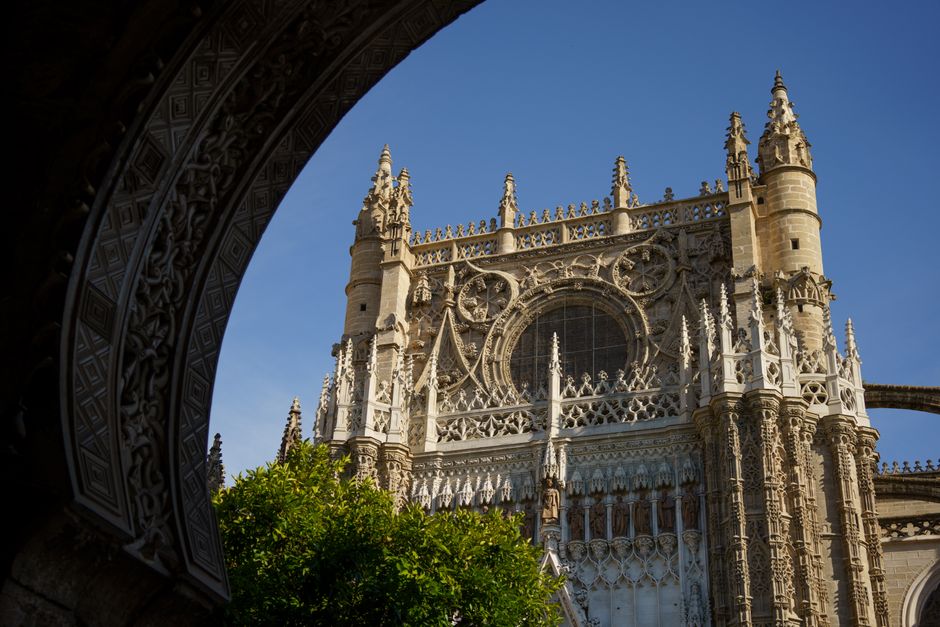
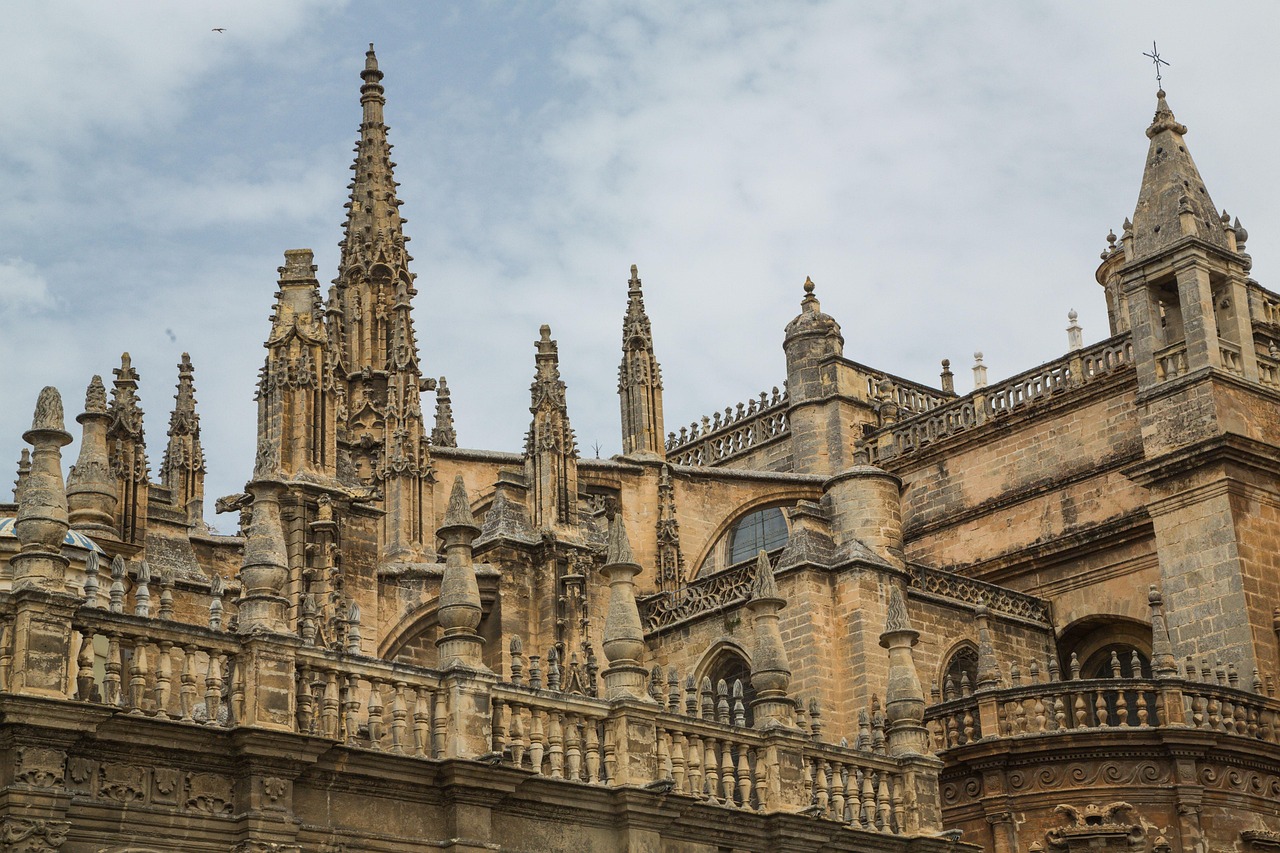
Seville Cathedral is the largest Gothic cathedral in the world, built from 1402 on the site of the city’s great mosque. Its bell tower, the Giralda, began as the mosque’s 12th-century minaret, and you climb it by ramps, not stairs. A general ticket costs €13 online or €14 at the ticket office (as of October 2026), includes the Giralda and the Iglesia del Salvador, and the cathedral opens Monday to Saturday 10:45–19:00 and Sunday 14:30–19:00. Allow about 90 minutes.
Right now in Seville Cathedral
- Wed17–28°C63–82°FPartly cloudy
- Thu17–29°C62–85°FClear
- Fri18–27°C64–80°FClear
- Mon 12 Oct National Day of Spain (Fiesta Nacional de España)
Tickets and tours for Seville Cathedral
See all tours for Seville Cathedral →
From local operators, with prices and reviews; you check availability and book on Viator, our partner. We may earn a commission at no extra cost to you. How we earn money
Why the cathedral matters
When Ferdinand III took Seville in 1248, the Almohad great mosque became the city’s cathedral. In 1401 the chapter decided to replace it with a church so large that, in the words of a well-known legend, those who saw it would think its builders mad. Work began in 1402 and went on for more than a century. Two pieces of the mosque survive: the Patio de los Naranjos, the old ablutions courtyard planted with orange trees, entered through the horseshoe arch of the Puerta del Perdón, and the minaret.
The minaret was built between 1184 and 1198. In the 16th century the architect Hernán Ruiz the Younger added the Renaissance belfry, and in 1568 the bronze weathervane figure of Faith, the Giraldillo, was placed on top, giving the tower its name. With the Real Alcázar and the Archivo de Indias, the cathedral has been a UNESCO World Heritage Site since 1987.
What you’ll see
- The nave and the Capilla Mayor: five aisles under soaring vaults, and the main altarpiece, a wall of gilded carved wood with scenes from the life of Christ, begun by the Flemish sculptor Pieter Dancart in 1482.
- The tomb of Christopher Columbus: his coffin is carried shoulder-high by four bronze figures representing the kingdoms of Castile, León, Aragon and Navarre. It was brought from Havana after 1898.
- The Sacristies and the Chapter House: treasures, paintings and a Renaissance oval chapter room.
- The Giralda: 34 ramps and 17 steps take you up to the bell chamber, with views over the rooftops, the Alcázar and the river. The ramps were wide enough for a person to ride up.
- The Patio de los Naranjos: the orange-tree courtyard where you finish the visit.
The ticket also includes the Iglesia del Salvador, a Baroque church about ten minutes’ walk north, built on the site of a 9th-century mosque.
Tickets and how to visit
From the cathedral’s official website, as of October 2026:
- Hours: Monday to Saturday 10:45–19:00; Sunday 14:30–19:00. The ticket office closes at 18:00. Religious services can change the hours without notice, and the Giralda has its own capacity limit.
- General ticket: €13 online, €14 at the ticket office. Reduced: €7 online, €8 at the office, for over-65s, students up to 25, people with a disability of 33–65% and qualifying large families.
- Free: children under 13 with an adult, people with a disability of 65% or more, and residents or natives of the diocese.
- Free Sunday visit: Sundays (not holidays) 16:30–18:00, with limited places booked on the official site.
- Audioguide: €5, or €4 as a phone app.
- Rooftop tour: €20 online (€21 at the office), about 1.5 hours over the vaults and roofs, from age 9. From October to May it runs at 10:00 and 10:30. It is not suitable for anyone with vertigo, heart or breathing problems or limited mobility.
- Which door: with an online ticket, go straight to the Puerta del Lagarto; to buy on the day, queue at the Puerta de San Cristóbal (Puerta del Príncipe).
How long to allow and when to go
The cathedral suggests about 75–90 minutes, more if you take the audioguide. Mornings straight after opening and late afternoons are calmer than the middle of the day. Climb the Giralda early in your visit, before the queue on the ramps builds.
Dress code, bags and accessibility
The cathedral is a working church. Shoulders must be covered; sleeveless, low-cut or see-through clothes and very short shorts or skirts are not allowed. Large bags are not allowed, and tripods need permission. The cathedral floor is level and step-free, wheelchairs can be borrowed free of charge, and there are adapted toilets. The Giralda is not open to wheelchair users, people with reduced mobility or pregnant visitors, and is not recommended for over-70s or anyone with vertigo or heart or breathing conditions; pushchairs, large backpacks and luggage are not allowed on the tower.
Getting there
The cathedral stands on the Avenida de la Constitución in the centre of the old town. The Metrocentro tram stops right outside (Archivo de Indias), and metro line 1 stops at Puerta de Jerez, about five minutes away. Santa Justa station is about 2 km away by bus or taxi.
Combine it with
The Real Alcázar is across the Plaza del Triunfo, about 400 metres away; do one in the morning and the other after lunch. Walk on through the Santa Cruz lanes, or south to the Plaza de España. See our Seville travel guide for the rest of the city, and the Mezquita of Córdoba for a mosque that kept its prayer hall when it became a cathedral.
Seville Cathedral FAQ
How much does Seville Cathedral cost?
€13 online or €14 at the ticket office as of October 2026, including the Giralda and the Iglesia del Salvador. Reduced tickets are €7 online. Children under 13 with an adult go free.
Is the Giralda included in the cathedral ticket?
Yes. The general ticket includes the climb, though the tower has its own capacity limit, so you may have to wait at busy times.
Is there a free time to visit Seville Cathedral?
Yes, on Sundays (except holidays) from 16:30 to 18:00. Places are limited and must be booked on the official website.
How many steps are there up the Giralda?
Mostly ramps: 34 ramps and then 17 steps to the top. It’s a steady climb, not steep, but not suitable for wheelchairs or pushchairs.
Is Christopher Columbus buried in Seville Cathedral?
His tomb is there, carried by four figures representing the kingdoms of Spain. It was brought from Havana after Spain lost Cuba in 1898.
What should I wear to Seville Cathedral?
Cover your shoulders and avoid sleeveless, low-cut or very short clothing. A light scarf solves it in summer.