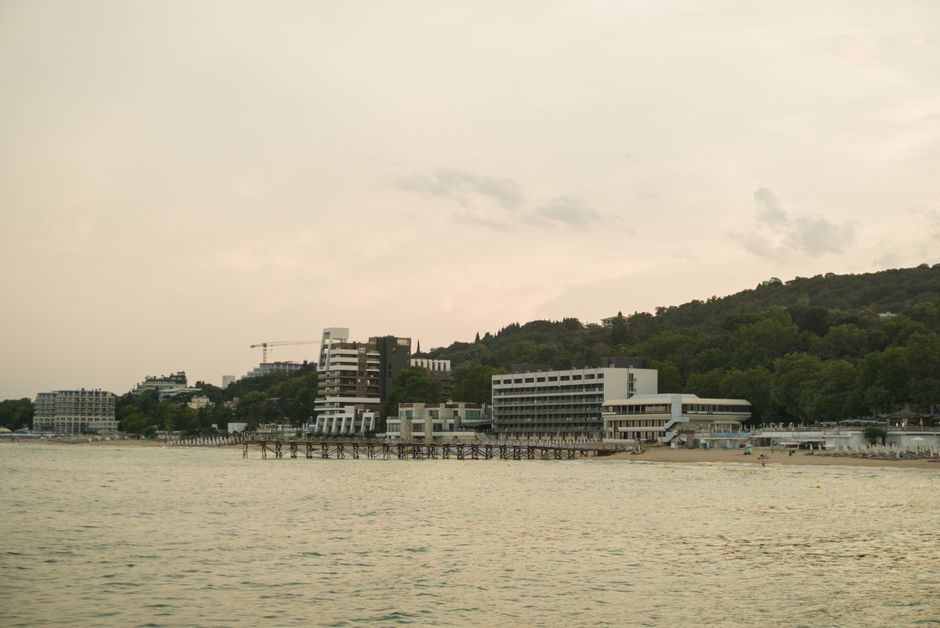
Varna is Bulgaria’s “sea capital”, a lively port city where a long seaside park runs beside a sandy beach right in town. It has some of the country’s best museums, including the gold of the Varna Necropolis, about 6,000 years old and among the oldest worked gold in the world; the largest Roman baths in Bulgaria; a big Orthodox cathedral; and cafés, beach bars and summer festivals. It is also a good base for the northern Black Sea coast: the beaches of Golden Sands, the rock-cut Aladzha Monastery, the stone columns of Pobiti Kamani and the palace and gardens of Balchik. Give it two days for the city, three or four with day trips.
Right now in Varna
- Wed 12–22°C 53–71°F Mostly clear
- Thu 14–21°C 56–69°F Partly cloudy
- Fri 14–24°C 57–75°F Clear
Weather: MET Norway (CC BY 4.0) · Sea temperature: NOAA CoastWatch · Air quality: OpenAQ · Rates: ECB
Top tours in Varna
See all tours for Varna →
From local operators, with prices and reviews; you check availability and book on Viator, our partner. We may earn a commission at no extra cost to you. How we earn money
Varna at a glance
- Best for: a city break by the sea, ancient gold and Roman ruins, beaches within reach of the centre, and day trips along the northern coast.
- How long: 2 days for the city and the Sea Garden; 3–4 days to add Golden Sands, Aladzha Monastery, Pobiti Kamani and Balchik.
- Best time: June and September for warm sea and fewer people; July and August for the full beach season and summer festivals; May and October for city sightseeing.
- Getting in: Varna Airport is about 10 km west of the centre, with summer flights from across Europe; trains from Sofia take about 7 hours 40 minutes on the fastest services, and buses about 6–7 hours.
- Getting around: the centre and the Sea Garden are walkable; city buses run to the airport, the beaches and Golden Sands.
- Before you go: Bulgaria has used the euro since 1 January 2026 and is a full Schengen member; country-wide entry rules, money and driving are covered on our Bulgaria country page.
Varna, area by area
Varna curves around a bay at the mouth of Lake Varna, with the port and the lake to the south-west and the sea to the east. The centre runs from the cathedral down the pedestrian Knyaz Boris I Boulevard to the Sea Garden and the beach.
The centre
The Cathedral of the Dormition, Nezavisimost Square with the opera house, the pedestrian streets around Knyaz Boris I Boulevard, the Archaeological Museum on Maria Luiza Boulevard, and the Roman baths in the old Greek quarter (Grutska Mahala) near the port. Best for: sightseeing, restaurants and shopping.
The Sea Garden and the beaches
The Sea Garden (Morska Gradina) is a park of more than 8 km along the cliffs above the beach, laid out from the late 19th century, with avenues of trees, flowerbeds, the Naval Museum, an aquarium, a dolphinarium, the observatory and planetarium, an open-air theatre and many cafés. Below it, the city beaches run north from the port, with beach bars and clubs along the promenade. Best for: walks, swimming and summer nights out.
Chayka, Sts Constantine and Helena and the north
North of the Sea Garden, the residential districts of Chayka and Briz run into the resort of St Constantine and Helena, with spa hotels and small beaches, and then Golden Sands. Best for: quiet beach stays within reach of the city.
Top things to see in Varna
Prices below were checked on the Varna Regional Museum of History’s official price list in October 2026. Tickets for its sites are sold only at the ticket office on the day; the museum warns that it does not sell tickets online or through third parties.
The Archaeological Museum and the Varna gold
Housed in a grand 19th-century school building, Varna’s Archaeological Museum is one of the best in the Balkans. Its star is the treasure of the Varna Necropolis, a cemetery discovered by chance in 1972 and dated to about 4,600–4,200 BC, which held thousands of gold objects: bracelets, beads, appliqués and a man buried with a gold-covered sceptre and gold sheath. It is the oldest large hoard of worked gold yet found. The museum also has Thracian, Greek and Roman finds, early Christian treasures and a fine collection of icons. As of October 2026, entry costs €10 for adults and €4 for schoolchildren; children under 7 enter free. Allow about two hours.
The Roman Baths (Roman Thermae)
The ruins of the public baths of Roman Odessos, built in the late second century AD, are the largest Roman building found in Bulgaria and among the largest Roman baths in the Balkans. You walk among high brick walls and arches, and can still see the hot and cold rooms, the furnaces and the under-floor heating system. As of October 2026, entry costs €4 for adults and €2 for schoolchildren. The smaller Roman baths nearby are not open to visitors.
The Cathedral of the Dormition
Varna’s cathedral, completed in 1886 shortly after Bulgaria’s liberation, has gilded domes, a carved wooden iconostasis and colourful murals, and is the city’s main landmark. Entry is free; dress modestly and be quiet during services.
The Sea Garden, the Naval Museum and the beach
Spend an afternoon in the Sea Garden: walk the shady alleys, visit the Naval Museum, with its warships and the torpedo boat Drazki outside, then go down to the beach for a swim and a drink at sunset. The Ethnographic Museum and the Museum of the National Revival, both run by the regional museum, are good rainy-day choices (€5 each as of October 2026).
Museums
- Varna Archaeological Museum
- Varna Naval Museum
Churches and cathedrals
- Cathedral of the Dormition, Varna
Monuments
- Roman Thermae, Varna
Parks and gardens
- Sea Garden, Varna
Archaeological sites
- Aladzha Monastery
Nature
- Pobiti Kamani
Beaches and the northern coast
Varna’s own beaches are sandy and lively, with public stretches and paid sunbeds; the water is cleaner north of the port. For bigger beaches, head north along the coast:
- St Constantine and Helena: the oldest resort on the coast, with mineral springs, spa hotels and small, pretty bays, about 10 km north.
- Golden Sands (Zlatni Pyasatsi): a big resort about 17 km north, with about 3.5 km of fine sand backed by forest, hotels, water parks and nightlife. Behind it lies Golden Sands Nature Park, with walking trails and Aladzha Monastery.
- Albena and Balchik: further north, the family resort of Albena and the hillside town of Balchik.
Most beaches are gently sloping and good for children; swim only where lifeguards are on duty. See our guide to beaches.
Activities and best months
- Beaches and swimmingThe central sea baths and the city beach lie below Varna's Sea Garden, with beach volleyball, surfing, diving, jet-skiing and boat trips; Golden Sands, 17 km north next to the Golden Sands nature park, has a 3.5 km beach up to 100 m wide. · source
- City sightseeingVarna's Sea Garden holds an amphitheatre, an astronomical complex with observatory and planetarium, play areas and a zoo along the cliffs above the beach; the Ministry of Tourism's city page also covers the museums and the Roman baths. · source
Day trips from Varna
Aladzha Monastery
In the forest of Golden Sands Nature Park, about 15 km north of Varna, monks carved cells, a chapel, a church and a crypt into a limestone cliff in the Middle Ages. You climb wooden and metal stairs to the rock rooms, with traces of 14th-century frescoes, and a small museum explains the site. As of October 2026, entry costs €5 for adults and €3 for schoolchildren. Combine it with a walk in the nature park or a swim at Golden Sands.
Pobiti Kamani (the Stone Forest)
About 18 km west of Varna, near the motorway, hundreds of natural stone columns up to about 7 m high stand in the sand, like a petrified forest; how they formed is still debated. It is a protected natural landmark with a short walking route. As of October 2026, entry costs €3 for adults and €2 for schoolchildren. There is no regular bus; go by car or taxi, or on a tour.
Balchik and Cape Kaliakra
Balchik, about 45 km north, is a small town of white houses on terraces above the sea. Its highlight is “The Palace”, the summer residence built in the 1920s and 1930s for Queen Marie of Romania, when this part of the coast belonged to Romania, with villas, a chapel, a wine cellar, terraces and a botanical garden of cacti, roses and other plants now run by Sofia University. In 2026, the palace and the botanical garden each charged about €10 for adults, with separate ticket booths at the entrance, as reported locally; a single combined ticket was planned, so check on arrival. About 30 km further, Cape Kaliakra is a long, narrow headland of red cliffs dropping into the sea, with the ruins of a medieval fortress, a museum in a cave and dolphins often seen offshore.
Further afield
The resort of Sunny Beach and the UNESCO old town of Nessebar are about two hours south. Inland, Shumen has the medieval fortress and monument above the town, and the UNESCO-listed Madara Horseman, an eighth-century rock relief, is about an hour west of Varna.
Nearby destinations
- Sunny Beach60 km
- Bucharest198 km
- Edirne203 km
- Danube Delta255 km
- Istanbul260 km
- Plovdiv285 km
Getting to Varna
By air. Varna Airport (VAR) is about 10 km west of the centre, with many summer flights and fewer in winter. City bus 409 runs from the airport through the centre to St Constantine and Helena and Golden Sands; fares are a euro or two depending on the distance. Registered taxis wait outside arrivals.
By train. Varna’s station is by the port, a short walk from the centre. On BDZ’s October 2026 timetable, the fastest trains from Sofia take about 7 hours 40 minutes, and there are overnight trains with sleeping cars; from Plovdiv, the fastest direct train takes about 5 hours 50 minutes. Many trains require a seat reservation.
By bus. Coaches from Sofia take about six to seven hours and run several times a day; buses also connect Varna with Burgas, Veliko Tarnovo and Bucharest.
By car. The drive from Sofia takes about five to six hours, partly on the Hemus motorway, which is finished only in sections; on motorways and most main roads outside towns you need the e-vignette (one day €5.30, one week €10 for a car as of October 2026), bought online at bgtoll.bg.
Getting around Varna
Walk in the centre and the Sea Garden. City buses link the station, the centre, the airport, the beaches and the resorts to the north; buy tickets on board or from machines, and validate them. Taxis are cheap; use registered companies with prices on the window. Hire a car or take a tour for Pobiti Kamani, Balchik and Kaliakra.
When to go and how long to stay
Varna has warm, dry summers and mild but windy winters, with most rain in autumn. The table uses the 1991–2020 climate normals of Bulgaria’s National Institute of Meteorology and Hydrology (NIMH) for the Varna station for average temperatures and rainfall, and the WMO 1991–2020 normals for the same station for daytime highs.
| Season | Average temperature | Average daytime high | Rain per month | What it’s like |
|---|---|---|---|---|
| Winter (Dec–Feb) | 2.7–4.3 °C | 6.5–8 °C | 33–47 mm | Cool, windy and quiet; city museums and cafés |
| Spring (Mar–May) | 6.5 °C rising to 16 °C | 11–21 °C | 38–42 mm | Fresh, with blossom in the Sea Garden; sea still cold |
| Summer (Jun–Aug) | 21–23.5 °C | 26–29 °C | 29–48 mm | Hot and sunny; beach season and summer festivals |
| Autumn (Sep–Nov) | 19 °C falling to 9 °C | 25 °C falling to 13 °C | 49–56 mm | Warm sea in September; quieter in October |
Varna gets about 510–530 mm of rain a year, on about 67 days, and about 2,360 hours of sunshine. August has only about three rainy days.
Varna in 2 days
Day 1: the Cathedral, the Archaeological Museum and the Varna gold, lunch in the centre, the Roman Baths, then the Sea Garden and a swim. Day 2: Aladzha Monastery and a walk in Golden Sands Nature Park, an afternoon on the beach at Golden Sands or St Constantine and Helena, and dinner by the sea.
Varna in 4 days
Add a day to Balchik and Cape Kaliakra, and a half-day to Pobiti Kamani, with an extra beach day or the Ethnographic Museum and Naval Museum.
Weather month by month
Averages from NIMH normals 1991–2020, Varna · Last reviewed 4 Oct 2026
Where to stay in Varna
- The centre: close to the museums, restaurants and the Sea Garden; good all year.
- Near the Sea Garden and the beach: for summer stays with the beach on the doorstep.
- St Constantine and Helena: spa and beach hotels, quieter than the city.
- Golden Sands: resort hotels with beaches and nightlife; most open only from May to September.
Prices peak in July and August; in winter, the city stays open while the resorts close. A small tourist tax per night is added to most bills.
Practical tips for Varna
- Museum tickets: buy them at the ticket office; the regional museum does not sell online.
- Money: prices are in euros; carry some cash for buses, kiosks and beach sunbeds.
- Beaches: swim where lifeguards are on duty and pay only the price posted for sunbeds.
- Churches: cover shoulders and knees.
- Taxis: use registered companies with tariffs on the window.
- Emergencies: call 112.
What to pack for Varna
Light summer clothes, swimwear, a sun hat and high-factor sunscreen in summer; comfortable shoes for the Sea Garden and the stairs at Aladzha Monastery; a light jacket for windy evenings in spring and autumn, and a warm coat in winter. Water shoes help on rocky coves around Kaliakra and Kamen Bryag. Bring a type F or C plug adapter if you need one.
What to pack
- City walking shoesLisbon and Porto are steep, with polished limestone cobbles that get slippery, so grippy soles matter.
- Day packs and anti-theft bagsCarries water, towel and sunscreen down the long stairways to Algarve coves.
- Dry bags and phone pouchesProtects phones and cameras from sand and spray on beaches reached by ferry or steep paths.
- Quick-dry beach towelsA sand-shedding quick-dry towel packs small for beach days and lido visits.
- Rain jacketsFrom October to April Porto and Lisbon see rain on roughly a third of days.
- Reef-friendly sunscreenSummer UV is strong on Portuguese beaches and there is little shade below the cliffs.
- Travel adapters and convertersPortugal uses Type C and F sockets at 230 V, so most visitors from outside Europe need an adapter.
- Water shoesRocky coves, lava pools and weever fish in shallow sand make water shoes useful.
- WetsuitsOn the west and north coasts the sea stays around 16–18 °C even in summer, so a thin suit helps for long swims.
Varna travel FAQ
How much does the Varna Archaeological Museum cost?
As of October 2026, €10 for adults and €4 for schoolchildren; children under 7 enter free. Tickets are sold only at the museum’s ticket office.
How old is the Varna gold?
The gold from the Varna Necropolis dates from about 4,600–4,200 BC, making it about 6,000 years old and the oldest large collection of worked gold yet found.
How much are the Roman Baths in Varna?
As of October 2026, €4 for adults and €2 for schoolchildren. They are the largest Roman building found in Bulgaria.
Is Varna Cathedral free?
Yes, entry to the Cathedral of the Dormition is free. Dress modestly.
How do I get from Varna to Golden Sands?
By city bus, including line 409 from the airport and the centre, in about 30–40 minutes, or by taxi. Golden Sands is about 17 km north.
How much is Aladzha Monastery?
As of October 2026, €5 for adults and €3 for schoolchildren. It is about 15 km north of Varna in Golden Sands Nature Park.
Can you visit Pobiti Kamani without a car?
Not easily: there is no regular bus. Take a taxi, a tour or a hire car; it is about 18 km west of Varna. Entry costs €3 as of October 2026.
How long does the train from Sofia to Varna take?
On BDZ’s October 2026 timetable, about 7 hours 40 minutes on the fastest trains, with overnight sleeper trains too. Coaches take about six to seven hours.
How many days do you need in Varna?
Two days for the city and the Sea Garden; three or four with Golden Sands, Aladzha Monastery, Pobiti Kamani and Balchik.
When is the best time to visit Varna?
June and September for warm sea and fewer people; July and August for the full beach season; spring and autumn for museums and walks.
Sources
- © OpenStreetMap contributors · ODbL · fetched 4 Oct 2026
- Wikidata · CC0 · fetched 4 Oct 2026
Sources and last review
Researched and last reviewed on 4 October 2026. Ticket prices for the Archaeological Museum, Roman Thermae, Aladzha Monastery, Pobiti Kamani and the city museums: the Varna Regional Museum of History’s official price list; train times: BDZ; climate: the National Institute of Meteorology and Hydrology (NIMH) 1991–2020 normals for Varna, with WMO 1991–2020 normals for daytime highs and sunshine; the euro changeover: the Bulgarian National Bank; vignette prices: BG TOLL and Bulgarian National Television. Balchik palace and garden prices, airport bus fares, coach times and distances come from secondary sources and are flagged for checking. Prices, timetables and rules change, so check the official links before you go.
Plan your trip
Partner links: TravelerCenter may earn a commission if you book, at no extra cost to you.
🇧🇬 Useful Bulgarian phrases for Varna
All 38 Bulgarian phrases: restaurant, hotel, emergencies, romance (printable) →