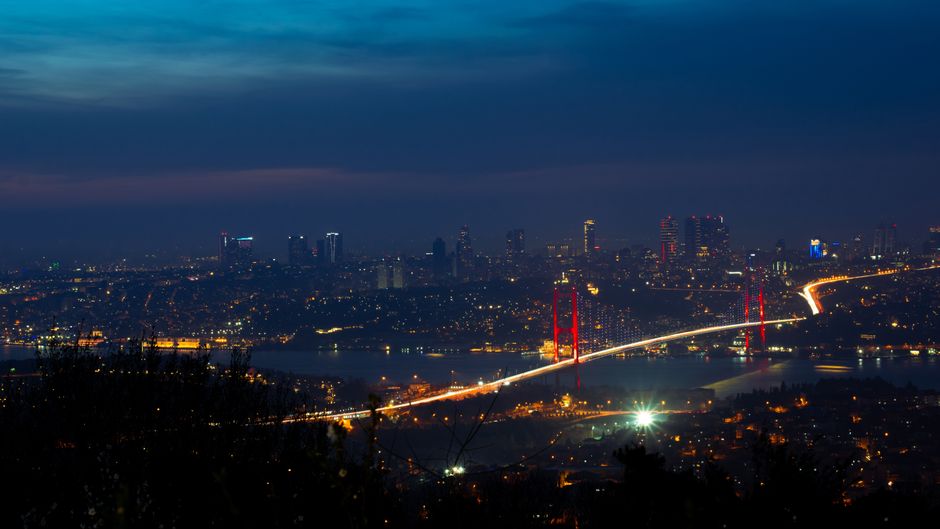
Istanbul is the only great city in the world built on two continents, and it feels like it: ferries crisscross the Bosphorus between Europe and Asia all day, the call to prayer rolls across the rooftops, and Byzantine churches, Ottoman mosques and palaces stand a short walk from rooftop bars and design shops. The old city on the Historic Peninsula holds Hagia Sophia, the Blue Mosque, Topkapı Palace, the Basilica Cistern and the Grand Bazaar. Across the Golden Horn, Galata and Beyoğlu are the city’s lively, hilly heart, and on the Asian side Kadıköy and Üsküdar show you everyday Istanbul at its best. With about 16 million people, it is Türkiye’s biggest city, its main airline hub and the start of most trips to the country. Give it at least three full days; five lets you add the Princes’ Islands, a full Bosphorus cruise and the Asian side at a relaxed pace.
Right now in Istanbul
- Wed 14–21°C 57–70°F Partly cloudy
- Thu 12–20°C 54–67°F Partly cloudy
- Fri 16–22°C 61–72°F Clear
Weather: MET Norway (CC BY 4.0) · Sea temperature: NOAA CoastWatch · Rates: ECB
Top tours in Istanbul
See all tours for Istanbul →
From local operators, with prices and reviews; you check availability and book on Viator, our partner. We may earn a commission at no extra cost to you. How we earn money
Istanbul at a glance
- Best for: world-class Byzantine and Ottoman monuments, bazaars, ferries and views, food, nightlife and city walks.
- How long: 3 days for the big sights, 4–5 days to add the Bosphorus, the Asian side and the islands.
- Best time: April to early June and September to November: mild, clear and good for walking. July and August are hot, humid and crowded; winter is grey and rainy but cheap and quiet.
- Getting in: Istanbul Airport (IST), the Turkish Airlines hub, is linked to the city by the M11 metro and Havaist buses; Sabiha Gökçen (SAW), on the Asian side, by the M4 metro.
- Money: Hagia Sophia, Galata Tower and most state museums price their tickets for foreign visitors in euros (paid in euros or lira by card); the Basilica Cistern and Topkapı price in lira.
- Before you go: visas, money and transport around the country are in our Türkiye travel guide.
Istanbul’s neighbourhoods and who each one suits
Istanbul is huge, but almost everything a first-time visitor wants to see lies in three areas on the European side, linked by the T1 tram, the metro and ferries. Pick your base by what you want to do in the evenings.
Sultanahmet and the Historic Peninsula
The old city, inside the Byzantine land walls, with Hagia Sophia, the Blue Mosque, Topkapı Palace and the Basilica Cistern all within ten minutes’ walk of each other, plus the Grand Bazaar and the Süleymaniye Mosque a little further west. Hotels range from small family guesthouses in wooden houses to restored Ottoman mansions. It is quiet at night and very touristy by day, and the carpet-shop touts are persistent. Best for: first-timers with only two or three days.
Galata, Karaköy and Beyoğlu
North of the Golden Horn, across the Galata Bridge: steep lanes around Galata Tower, galleries and cafés in Karaköy, and İstiklal Avenue running up to Taksim Square, with its historic tram, cinemas, churches, consulates and side streets of meyhanes (taverns) and bars. Cihangir and Çukurcuma, just below, have antique shops and a bohemian feel. Best for: food, nightlife and staying somewhere that feels like a living city.
Beşiktaş, Ortaköy and the Bosphorus shore
North-east along the European shore of the Bosphorus: Dolmabahçe Palace, the fish market and student bars of Beşiktaş, and Ortaköy’s waterside mosque under the first bridge. Further on, Bebek and Arnavutköy have seafront promenades and some of the city’s most expensive restaurants. Best for: couples and repeat visitors who want the water.
Kadıköy, Moda and Üsküdar (Asian side)
Twenty minutes by ferry from Eminönü or Karaköy. Kadıköy has a superb food market, street-art lanes, craft-beer bars and the seaside park of Moda; Üsküdar is more traditional, with fine Ottoman mosques and the Maiden’s Tower just offshore. Hotels are fewer but good value. Best for: foodies, longer stays and seeing how locals live.
Top things to see in Istanbul
Prices below are those for foreign visitors as of October 2026, from the official ticket sites where we could read them. Turkish citizens and residents pay different rates. Most state sites now price their tickets in euros, while city-run sites price in lira, which changes with inflation, so check the official pages close to your trip.
Hagia Sophia (Ayasofya)
Built by Emperor Justinian in 537 as the cathedral of Constantinople, converted to a mosque in 1453, a museum from 1934 and a working mosque again since 2020, Hagia Sophia’s vast dome still astonishes. Since January 2024 foreign visitors no longer enter through the prayer hall: they buy a ticket at the booth on the south side, facing the Fountain of Ahmed III, use a separate visitors’ entrance and follow a one-way route through the upper galleries, with the famous Deësis mosaic and the imperial portraits, and views down into the main hall. As of October 2026 this visitor ticket costs €25 for foreign visitors (children under 8 free); Turkish citizens and worshippers enter the ground floor for free through the mosque entrance. Buy from the official desk by the visitors’ entrance or the official online channel, and ignore people selling “skip-the-line” access outside.
Visiting rules: the visitor route closes during the five daily prayers, typically for about 30–40 minutes around each, and on Fridays from about 12:00 to 14:30 for the noon prayers. Women must cover their hair, shoulders and knees; men need trousers below the knee and covered shoulders. Hagia Sophia does not always lend scarves or wraps, so bring your own. Queues are longest from about 10:00 to 14:00; go at opening time or late afternoon. Nearby, the Hagia Sophia History and Experience Museum tells the building’s story with displays and projections (€25, open 09:00–20:00, a separate ticket).
The Blue Mosque (Sultan Ahmed Mosque)
Facing Hagia Sophia across Sultanahmet Square, the Blue Mosque (1609–1616) is named for the blue İznik tiles of its interior and is the only mosque in the city with six minarets. A long restoration finished in 2023, and it is a working mosque, free to enter. Visitors use the separate entrance on the Hippodrome side and are not admitted during prayer times: the mosque closes to tourists from about an hour before each prayer until it ends, so the usual visiting windows are roughly 08:30–12:15, 13:45–16:30 and 17:30–18:30 (they shift with the seasons), and on Fridays it opens to tourists only from about 14:30. Take off your shoes and carry them in the free plastic bags; women cover their hair (scarves are lent at the entrance), and everyone covers shoulders and knees. Keep your voice low and don’t photograph people praying.
Topkapı Palace
For almost four centuries the home of the Ottoman sultans: a sequence of courtyards, pavilions and gardens on the tip of the peninsula, with the Treasury (the Spoonmaker’s Diamond and the Topkapı Dagger), the Sacred Relics, the imperial kitchens, superb tilework and the Harem, the private quarters of the sultan’s family. Topkapı is run by the National Palaces administration (Milli Saraylar), which prices its tickets in lira. As of October 2026 foreign visitors pay 2,750 TL (about €50 at early October 2026 rates) for the combined ticket covering the palace, the Harem and the nearby Byzantine church of Hagia Irene; the Harem or Hagia Irene alone cost 1,050 TL each, and evening tours 4,000 TL. Children up to 6 are free. The ticket office is open 09:00–17:00, and the palace is closed on Tuesdays, New Year’s Day and the first day of the Ramadan holiday. Allow at least three hours, start early, and do the Harem first, before the tour groups arrive.
The Basilica Cistern (Yerebatan Sarnıcı)
A sixth-century underground reservoir held up by 336 columns, two of them resting on carved Medusa heads, now lit dramatically with art installations and walkways over the water. It is run by the city’s culture company, not the ministry, so museum passes don’t apply. As of October 2026 the foreign-visitor ticket is reported at 1,950 TL for daytime entry (about 09:00–18:30) and 3,000 TL for the quieter evening session (about 19:30–22:00). Queues can be long in summer; buy online on the official site.
Galata Tower
The 14th-century Genoese tower above Karaköy has a narrow balcony with one of the best 360-degree views over the Golden Horn, the old city and the Bosphorus, and a small museum inside. It is now a state museum: the ticket is €30 for foreign visitors as of October 2026, for daytime visits from 08:30 (last ticket 18:14) or the evening session to 22:00. It is included in MuseumPass Istanbul by day. Expect a queue at sunset.
The Grand Bazaar and the Spice Bazaar
The Grand Bazaar (Kapalıçarşı), one of the oldest covered markets in the world, has some 60 lanes of carpets, lamps, ceramics, leather, jewellery and gold. It is closed on Sundays and public holidays. Haggling is expected for souvenirs, less so in shops with marked prices. The Spice Bazaar (Mısır Çarşısı) by the Eminönü ferry docks is smaller and busier, selling Turkish delight, spices, dried fruit and tea; the surrounding streets are where locals actually shop.
Süleymaniye Mosque and the Golden Horn
The masterpiece of the architect Sinan (1550s), on the third hill above the Golden Horn, is calmer than the Blue Mosque and free to visit outside prayer times. Its terraces have wonderful views, and Sinan and Sultan Süleyman the Magnificent are buried in the garden. Walk down through the old trading streets to Eminönü, or continue to the tiled Rüstem Pasha Mosque.
Museums worth your time
- Istanbul Archaeology Museums: three buildings beside Topkapı with the Alexander Sarcophagus, the Treaty of Kadesh tablet and Istanbul’s past from prehistory to the Ottomans; €15, daily 09:00–18:30.
- Museum of Turkish and Islamic Arts: carpets, manuscripts and woodwork in the 16th-century palace of İbrahim Pasha on the Hippodrome; €17, daily 09:00–18:30.
- Dolmabahçe Palace: the 19th-century European-style palace of the late sultans on the Bosphorus, where Atatürk died in 1938; 2,000 TL for foreign visitors (state rooms, Harem and Painting Museum), open 09:00–17:00, closed on Mondays.
- Chora (Kariye): the Byzantine church with the finest mosaics and frescoes in the city, a mosque again since 2024; foreign visitors were charged €20 when it reopened, it is closed to tourists on Fridays, and visits pause before each prayer.
- Modern art: Istanbul Modern in its new Karaköy building, Pera Museum (with Osman Hamdi Bey’s The Tortoise Trainer) and SALT Galata.
- Maiden’s Tower: the little tower on an islet off Üsküdar, reopened after restoration, reached by boat; €27.
MuseumPass Istanbul
MuseumPass Istanbul costs €105 and is valid for 5 days from your first visit, with one entry to each of 13 museums, including Galata Tower, the Archaeology Museums, the Museum of Turkish and Islamic Arts, the Maiden’s Tower and the Great Palace Mosaics Museum. The official list still includes Topkapı Palace, the Harem and Hagia Irene, but since the palace now sells its own lira tickets, confirm at the Topkapı desk that the pass is accepted. It does not cover Hagia Sophia, the Basilica Cistern or Dolmabahçe. Add up the sites you will really visit before you buy: for most short trips, single tickets are cheaper. Travelling around the country? MuseumPass Türkiye (€165, 15 days, more than 350 state museums and sites) may pay off if you also visit Ephesus, Pamukkale and Cappadocia. Passes are not valid for night openings.
Other sights
- Basilica Cistern
- Grand Bazaar
Churches and cathedrals
- Blue Mosque
Monuments
- Galata Tower
- Hagia Sophia
Palaces
- Dolmabahçe Palace
- Topkapı Palace
Other things to do in Istanbul
A Bosphorus cruise
The ferry ride between Europe and Asia is the best-value sightseeing trip in the city. The city ferry company, Şehir Hatları, runs a full Bosphorus tour from Eminönü up to Anadolu Kavağı near the Black Sea (about 90 minutes each way with a lunch stop under the Yoros Castle) and a shorter two-hour round trip; foreign visitors pay a higher fare, reported at ₺640 return for the full tour and ₺340 for the short tour in early 2026 (check the current fare at the pier). The full tour usually leaves Eminönü mid-morning and returns late afternoon. Private operators sell 90-minute cruises and sunset trips from Eminönü and Kabataş. For a cheap taste, just ride a commuter ferry from Eminönü or Karaköy to Kadıköy or Üsküdar with your Istanbulkart, and feed the gulls with a simit. See our boat trips guide.
Hammams
An Ottoman bath with a scrub and foam massage is a classic Istanbul experience. Historic hammams such as the Ayasofya Hürrem Sultan, Çemberlitaş and Kılıç Ali Paşa have separate times or sections for men and women and charge tourist prices; neighbourhood hammams are much cheaper.
Eating and drinking
Start the day with a Turkish breakfast spread or a simit and tea, eat balık ekmek (fish sandwiches) by the Galata Bridge, try börek, lahmacun and döner, and finish with künefe or baklava from a famous name in Karaköy. Kadıköy’s market streets are the best place to graze. In the evening, meyhanes in Beyoğlu and Kumkapı serve cold meze, grilled fish and rakı. Alcohol is widely available outside the most conservative districts, though shops may not sell it between 22:00 and 06:00.
The Princes’ Islands
City ferries from Kabataş and Eminönü (about 1½ hours, ₺151.23 with an Istanbulkart) reach Büyükada and the other car-free islands in the Sea of Marmara, with wooden mansions, pine woods and swimming coves. Go on a weekday; summer weekends are packed. Get around on foot, by bike or by the small electric buses that replaced the horse carriages.
Day trips from Istanbul
- Edirne: the former Ottoman capital near the Greek and Bulgarian borders, with Sinan’s Selimiye Mosque, a UNESCO site; about 2½–3 hours by bus.
- Bursa: the first Ottoman capital, with the Green Mosque and Tomb, silk market, thermal baths and the cable car up Uludağ; about 2 hours by fast ferry and bus.
- Çanakkale, Gallipoli and Troy: the First World War battlefields and the legendary city are a long day (5–6 hours each way by road); better as an overnight.
- Further afield: domestic flights take you to Cappadocia, İzmir for Ephesus, and Ankara is about 4½ hours by high-speed train.
Activities and best months
- Boat tripsHopping on a local ferry and reaching another continent in a few minutes is the classic Bosphorus experience; GoTürkiye's Istanbul bucket list adds a sunset cruise along the Bosphorus. · source
- City sightseeingThe historic peninsula holds the Blue Mosque, Topkapı Palace and Hagia Sophia (Ayasofya Grand Mosque); along the Golden Horn and the Bosphorus stand the Galata Tower, Dolmabahçe, Çırağan and Beylerbeyi palaces and the Rumeli Fortress. MuseumPass İstanbul covers the state museums. · source
- CyclingGoTürkiye calls cycling the best way to discover Istanbul's many layers, and suggests riding on two continents in one day with the 15-minute ferry across the Bosphorus. · source
Getting there and getting around
From Istanbul Airport (IST)
Istanbul Airport, about 40 km north of the centre, is Türkiye’s main international airport and the Turkish Airlines hub.
- M11 metro: the airport metro runs from the terminal south-east to Kağıthane and Gayrettepe, where you change to the M2 for Taksim and Şişhane (for Galata); since June 2026 it also runs west to Halkalı, with connections to the Marmaray suburban line. The ride to Gayrettepe takes roughly 35–40 minutes. Fares are distance-based and paid with an Istanbulkart: the maximum fare (₺73.19 since 20 July 2026) is charged at the gate and the unused part refunded when you exit. Allow about 75–90 minutes door to door to Sultanahmet.
- Havaist buses: the airport’s coach service runs 11 routes, including HVL-9 to Taksim (₺470), HVL-11 to Sultanahmet (₺420), HVL-5 to Levent and Beşiktaş and HVL-6 to Kadıköy, many around the clock. Pay by Istanbulkart, QR ticket or bank card; journey times vary from about an hour to two in traffic.
- Taxis: metered taxis wait outside arrivals; expect 45–60 minutes to the centre without traffic. The official meter rate since 20 July 2026 is ₺71.94 to start plus ₺47.92 per km for a standard taxi, so the 45–50 km to Taksim or Sultanahmet comes to roughly ₺2,100–2,700, plus any toll. Use the official rank and insist on the meter.
From Sabiha Gökçen Airport (SAW)
The Asian-side airport, used mainly by Pegasus and AJet, is about 45 km east of Sultanahmet. The M4 metro runs from the airport to Kadıköy (about 50–55 minutes) for the standard fare, and ferries cross from Kadıköy to Karaköy and Eminönü. Airport coaches run to Taksim (SG-2, ₺485.10), Sultanahmet (HVL-13, ₺405) and Kadıköy; taxis take about 60–90 minutes to the European side.
Istanbulkart and public transport
The Istanbulkart is a rechargeable contactless card for metros, trams, buses, the Metrobus, Marmaray trains, funiculars and the city ferries. Buy one at the yellow Biletmatik machines in stations and ferry piers and top it up there. One card can be used by several people travelling together by tapping once per person. Under the city’s tariff in force since 20 July 2026, a standard full fare is ₺46.20, with cheaper transfers within 120 minutes (₺34.40 for the first). Cash is not accepted on board. Single-ride paper or QR tickets cost ₺65, and you can also tap a contactless bank card at the gates, but it is charged at the ₺65 single-ticket rate with no transfer discounts. For a busy stay, the tourist Istanbulkart passes (for example ₺1,380 for 3 days and 70 rides) are worth comparing. Fares double between 00:30 and 05:30.
- T1 tram: the visitor’s lifeline, running from Kabataş via Karaköy, Eminönü, Sirkeci and Sultanahmet to the Grand Bazaar and beyond.
- Metro: M2 runs north from Yenikapı over the Golden Horn bridge to Şişhane, Taksim and the business districts; the F1 funicular links Kabataş with Taksim, and the historic Tünel with İstiklal Avenue.
- Marmaray: suburban trains run under the Bosphorus between Sirkeci and Üsküdar in four minutes and link both sides of the city.
- Ferries: commuter ferries cross between Eminönü, Karaköy, Beşiktaş, Kabataş, Kadıköy and Üsküdar every few minutes at peak times and are often faster than the road. Use the same Istanbulkart.
Taxis and driving
Taxis are plentiful but notorious for long routes and “broken” meters; use the apps or ask your hotel to call one, and have the address written down. Don’t drive in the city: traffic is among the worst in Europe and parking is hard to find.
When to go and how long to stay
Istanbul has hot, humid summers and cool, wet winters, with the occasional snowfall. Average highs are around 9 °C in January and 28–29 °C in July and August, but humidity makes summer feel hotter. Spring (from April, when the tulip festival fills the parks) and autumn (September to November) are the best times to walk the city. Summer brings the most visitors and cruise passengers; winter is the cheapest, with short queues at the big sights.
During Ramadan (from about 8 February to 8 March in 2027), restaurants stay open for visitors, and the evening iftar meal brings a festive atmosphere to Sultanahmet; during the Eid holidays that follow, Turks travel and sights are busy. The Istanbul Film, Music and Jazz Festivals run in spring and summer, and the Istanbul Biennial is held in autumn in odd-numbered years.
Istanbul in 3 days
Day 1: Hagia Sophia at opening time, the Blue Mosque, the Hippodrome and the Basilica Cistern, then the Grand Bazaar. Day 2: Topkapı Palace and the Archaeology Museums in the morning, the Süleymaniye Mosque, the Spice Bazaar and a sunset ferry to Kadıköy. Day 3: a Bosphorus cruise, Dolmabahçe Palace, then Galata Tower, Karaköy and an evening on İstiklal Avenue.
Istanbul in 5 days
Add a day on the Asian side (Üsküdar, the Maiden’s Tower and Kadıköy’s market and Moda), a day on the Princes’ Islands, and time for the Chora mosaics, the land walls and the Fener and Balat neighbourhoods on the Golden Horn.
Weather month by month
Averages from MGM normals 1991–2020, Istanbul Florya · Last reviewed 4 Oct 2026
Where to stay in Istanbul
Sultanahmet has the most small hotels within walking distance of the monuments; Sirkeci and the area around the Grand Bazaar are cheaper and handy for the tram. Karaköy, Galata and Cihangir have boutique hotels and apartments with a livelier evening scene, and Beşiktaş, Ortaköy and the Bosphorus shore have the big luxury hotels. Book early for spring, autumn and summer weekends. Check that a hotel is near a tram, metro or ferry stop; Istanbul’s hills and traffic make “15 minutes away” mean very different things. Hotel bills include Türkiye’s accommodation tax (cut to 1% until the end of 2026).
Practical tips for Istanbul
- Dress for mosques: carry a scarf and something to cover your shoulders and knees every day; mosques lend some, Hagia Sophia may not.
- Plan around prayer times: check the day’s prayer times (posted at mosque entrances and in apps) before visiting Hagia Sophia or the Blue Mosque, and avoid Friday late morning to mid-afternoon.
- Buy official tickets only: use the official sites or desks, not touts near the queues.
- Pay in lira: when a card machine or cash machine offers to charge in your home currency, choose lira.
- Watch for scams: the “shoeshine brush” trick, friendly strangers who lead you to an expensive bar, and taxis without meters are the classics.
- Carry your passport: police can ask for ID, and you need it to register a local SIM card.
- Earthquake awareness: Istanbul sits near a major fault. Note your hotel’s exits and see our Türkiye guide for what to do.
What to pack for Istanbul
Comfortable shoes with grip for steep, cobbled hills, a light scarf or shawl for mosques, trousers or a long skirt, a sun hat and water bottle in summer, a light rain jacket and warm layers from November to March, and an adapter for type C/F sockets (230 V).
What to pack
- City walking shoesLisbon and Porto are steep, with polished limestone cobbles that get slippery, so grippy soles matter.
- Day packs and anti-theft bagsA small zipped or anti-theft bag makes crowded trams and viewpoints less stressful.
- Dry bags and phone pouchesSpray soaks phones and cameras on open boats to the Algarve caves and on whale-watching trips.
- Fleeces and warm layersIt is cooler at sea than on land, especially on morning whale-watching trips.
- Rain jacketsA windproof, waterproof shell keeps you warm on open boats, where wind and spray cool you quickly.
- Reef-friendly sunscreenSun reflects off the water on cruises and cave tours.
- Travel adapters and convertersPortugal uses Type C and F sockets at 230 V, so most visitors from outside Europe need an adapter.
- Water bottles and hydration packsRiding in the Algarve and Alentejo heat needs more water than you expect.
- Water shoesKayak and small-boat trips to the Algarve grottoes land on rock and wet sand.
Istanbul travel FAQ
How much is the Hagia Sophia ticket in 2026?
As of October 2026 foreign visitors pay €25 for the visitor route through the upper galleries, entered by a separate visitors’ entrance. Children under 8 are free. Worshippers and Turkish citizens enter the ground-floor prayer hall for free.
Is the Blue Mosque free?
Yes. The Blue Mosque is a working mosque with free entry for visitors outside prayer times. Use the visitors’ entrance, take off your shoes, and cover your shoulders, knees and, for women, hair.
When is Hagia Sophia closed to visitors?
The visitor route closes during each of the five daily prayers, typically for 30–40 minutes, and for longer at Friday noon prayers, roughly from late morning to about 14:30. Check the day’s prayer times before you go.
Is MuseumPass Istanbul worth it?
Only if you will visit several of the 13 museums it covers, such as Galata Tower (€30), the Archaeology Museums (€15), the Museum of Turkish and Islamic Arts (€17) and the Maiden’s Tower (€27). It costs €105 for 5 days and does not cover Hagia Sophia, the Basilica Cistern or Dolmabahçe; check at the desk whether it is still accepted at Topkapı.
How much is Topkapı Palace?
As of October 2026 the foreign-visitor combined ticket for the palace, the Harem and Hagia Irene costs 2,750 TL, according to the National Palaces administration. The palace is closed on Tuesdays.
How do I get from Istanbul Airport to Sultanahmet?
Take the M11 metro to Gayrettepe, the M2 to Yenikapı and then the T1 tram (or the M1A to Aksaray and the tram), or the Havaist HVL-11 bus to Sultanahmet (₺420). Allow 75–90 minutes. A taxi takes about 45–60 minutes in light traffic and costs roughly ₺2,100–2,700 on the meter.
What is an Istanbulkart and how much is a ride?
It is the city’s rechargeable transport card, sold and topped up at Biletmatik machines. A standard ride costs ₺46.20 since 20 July 2026, with discounts for transfers within 120 minutes. One card can pay for several people. A contactless bank card also works at the gates but costs ₺65 a ride.
How do I take a Bosphorus ferry tour?
Şehir Hatları’s public Bosphorus tours leave from Eminönü: a full tour to Anadolu Kavağı near the Black Sea and a shorter round trip. Commuter ferries between Europe and Asia are the cheapest way on the water, paid with an Istanbulkart.
How many days do you need in Istanbul?
Three days for the main sights of the old city, Galata and a ferry ride; four or five to add the Asian side, the Princes’ Islands and a full Bosphorus cruise.
Where should I stay in Istanbul for the first time?
Sultanahmet if you want to walk to the monuments; Karaköy or Galata if you prefer restaurants and nightlife and don’t mind a short tram ride.
What is the dress code for mosques in Istanbul?
Shoulders and knees covered for everyone, hair covered for women, shoes off inside. Shorts and sleeveless tops are not allowed. Many mosques lend scarves and wraps at the door.
Is Istanbul safe for tourists?
Generally yes; the main risks are pickpockets, scams and traffic. Avoid political demonstrations, follow local news, and see our Türkiye guide for safety and earthquake preparedness.
Nearby destinations
- Bursa92 km
- Edirne212 km
- Sunny Beach214 km
- Varna260 km
Sources
- © OpenStreetMap contributors · ODbL · fetched 4 Oct 2026
- Wikidata · CC0 · fetched 4 Oct 2026
Sources and last review
Researched and last reviewed on 4 October 2026. Ministry museum prices, hours and MuseumPass terms: the Ministry of Culture and Tourism’s official ticketing site (muze.gov.tr). Istanbulkart, M11, Havaist, ferry, Princes’ Islands and taxi fares: the Istanbul Metropolitan Municipality’s official tariff in force from 20 July 2026. Visa rules and safety notes are on our Türkiye guide. Topkapı and Dolmabahçe prices: the National Palaces administration (millisaraylar.gov.tr). The Hagia Sophia visitor ticket and prayer-time closures, the Blue Mosque visiting windows, the Basilica Cistern prices (published by the Turkish travel agents’ association), the Bosphorus tour fares and journey times come from Turkish press and secondary sources and are flagged for checking against the operators’ own pages. Prices in lira change often with inflation, so check the official links before you travel.
Plan your trip
Partner links: TravelerCenter may earn a commission if you book, at no extra cost to you.
🇹🇷 Useful Turkish phrases for Istanbul
All 38 Turkish phrases: restaurant, hotel, emergencies, romance (printable) →