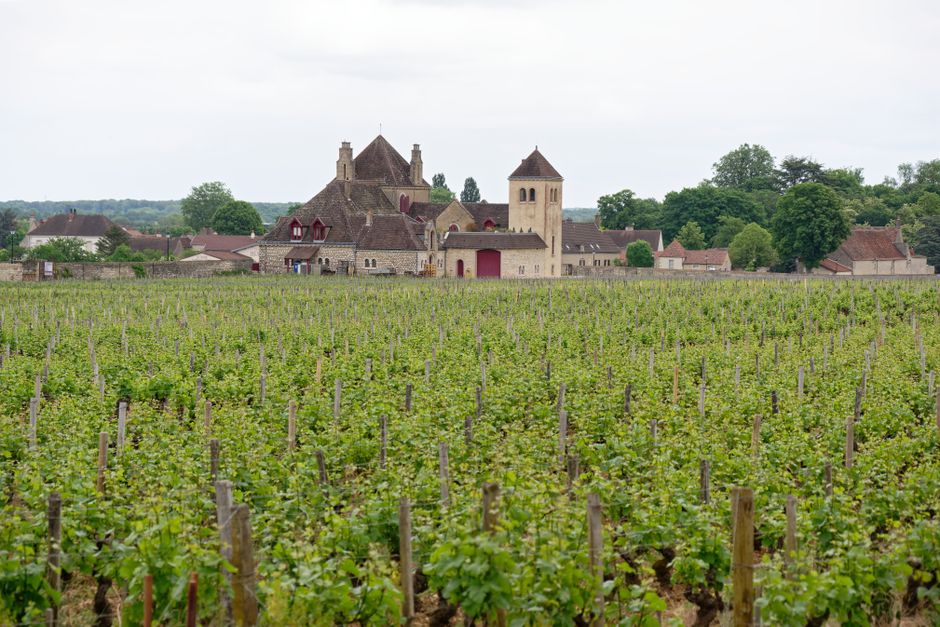
The Burgundy wine region is one of the most famous vineyards on earth: a narrow ribbon of slopes south of Dijon where Pinot Noir and Chardonnay are made from hundreds of tiny, named plots, the climats, listed by UNESCO. Its heart is the Côte d’Or, the Côte de Nuits and the Côte de Beaune, strung with stone villages whose names read like a wine list, from Gevrey-Chambertin and Vosne-Romanée to Pommard, Meursault and Puligny-Montrachet. Beaune, with the glazed-tile roofs of its medieval hospital, is the natural base, and the region also takes in Chablis to the north and the Mâconnais to the south. It suits wine lovers, food lovers and gentle cyclists. Allow at least five days, a week to add Chablis and the Mâconnais.
Right now in Burgundy wine region (Beaune)
- Wed13–21°C56–69°F3 mm rain
- Thu10–15°C49–59°F4 mm rain
- Fri6–15°C43–59°FCloudy
Top tours in Burgundy wine region
See all tours for Burgundy wine region →
From local operators, with prices and reviews; you check availability and book on Viator, our partner. We may earn a commission at no extra cost to you. How we earn money
Burgundy wine region at a glance
- Best for: wine tasting and cellar visits, village-to-village cycling, slow food, historic Beaune, and the November wine auction.
- How long: 2–3 days for Beaune and the Côte d’Or, 5 days to add Chablis or the Mâconnais, 7–10 days for the whole region at a relaxed pace.
- Best time: May to October; September and early October for the harvest, mid-November for the Hospices de Beaune auction weekend.
- Getting in: TGV from Paris Gare de Lyon to Dijon in about 1 h 40, then a regional train to Beaune in about 25 minutes; Lyon is about 1 h 45 by train from Beaune.
- Getting around: regional trains link Dijon, the Côte de Nuits villages, Beaune and Chagny; a car, a bike or a guided tour is easiest for the vineyards.
- Before you go: entry rules, money, trains and general safety are on our France travel guide; the nearest big city is covered in our Lyon travel guide.
The wine areas and who each one suits
Burgundy’s wine country runs for about 250 km from Chablis in the north-west to the Mâconnais in the south. The famous Côte d’Or itself is a single east-facing escarpment, barely a couple of kilometres wide, running some 50 km from Dijon to Santenay. Dijon, the old capital of the Dukes of Burgundy, is the gateway city at its northern end.
Côte de Nuits
From Marsannay to Corgoloin, home to most of Burgundy’s great red wines: Gevrey-Chambertin, Chambolle-Musigny, Vougeot, Vosne-Romanée and Nuits-Saint-Georges. Small, quiet villages and few hotels; ideal for serious red-wine lovers, a short drive or train from Dijon.
Côte de Beaune
From Ladoix to Santenay around Beaune, famous for whites (Meursault, Puligny- and Chassagne-Montrachet, Corton-Charlemagne) and reds such as Pommard and Volnay. Beaune has the most hotels, restaurants and wine shops; the best all-round base.
Chablis
An island of Chardonnay vineyards around the small town of Chablis, about 1 h 30 north-west of Beaune by car, making crisp, mineral whites. Rolling, open country; good for a night or two on the way from Paris.
Côte Chalonnaise and the Mâconnais
South of Beaune, quieter and better value: Mercurey, Givry and Rully, then the Mâconnais around Mâcon, with the white wines of Pouilly-Fuissé below the dramatic Rock of Solutré. Suits travellers continuing towards Lyon.
Top things to see in the Burgundy wine region
Prices and hours below come from the official websites, as of October 2026.
Beaune and the Hospices de Beaune Hôtel-Dieu
Beaune is a ring of ramparts around a lively small town of cobbled squares, wine shops and cellars. Its jewel is the Hôtel-Dieu, a charity hospital founded in 1443 by Nicolas Rolin, chancellor of the Duke of Burgundy, and his wife Guigone de Salins, which cared for patients until 1971. Its courtyard roofs of glazed, multicoloured tiles are the emblem of Burgundy; inside are the Great Hall of the Poor with its curtained beds, the kitchen and the pharmacy. Its masterpiece, Rogier van der Weyden’s Last Judgement polyptych, is beginning a long restoration from autumn 2026, so ask whether it is on show. How to visit: open every day, 9:00–19:30 from 1 April to 15 November, and 9:00–12:30 and 14:00–18:30 from 16 November to 31 March, with the ticket office closing an hour before. A ticket costs €12.50 for adults, €6.25 for ages 6–17, and is free under 6; book online in busy periods.
The Route des Grands Crus
The signposted Wine Road runs about 60 km from Dijon to Santenay along the foot of the slopes, through every famous village of the Côte de Nuits and the Côte de Beaune. Drive it slowly, stop to look at the walled vineyards (clos) and the stone crosses at their gates, and taste in the villages. The vines, not the villages, are the sight: Romanée-Conti, the world’s most expensive vineyard, is a small, plain plot above Vosne-Romanée.
Château du Clos de Vougeot
A Renaissance château among the walled vineyards founded by the monks of Cîteaux, with medieval wine presses in its cellar building and the banquet hall of the Confrérie des Chevaliers du Tastevin, Burgundy’s wine brotherhood. How to visit: open daily, 9:30–18:00 from April to October and 10:00–17:00 from November to March, except some weekends when it hosts receptions. A self-guided visit costs €12 for adults and €5 for ages 8–16 and students; a guided tour costs €15, with tours in English at 11:30 and 15:30.
The Climats of Burgundy (UNESCO)
Since 2015, the “Climats, terroirs of Burgundy” have been a UNESCO World Heritage Site: more than 1,200 precisely mapped vineyard plots of the Côte de Nuits and Côte de Beaune, each with its own name and character, together with the historic centres of Dijon and Beaune where the wine trade grew. You see them best on foot or by bike, following the dry-stone walls, small huts (cabottes) and gates between the plots.
The Cité des Climats et vins de Bourgogne
Three new wine centres, opened in 2023, explain Burgundy’s wines with films, models and scents, and end with a tasting. The largest, in Beaune, is a spiralling building with a free rooftop terrace 20 m up, open daily, 10:00–18:00 (10:00–19:00 from June to September); its visit costs €14.50 for adults and €7.50 for ages 6–17. The smaller sites in Chablis and Mâcon open Tuesday to Sunday, 10:00–18:00, from April to early November, and cost €9.50. A Pass 3 Cités, valid a year, costs €39.
Chablis
The town itself is small, with the Cité des Climats in a former monastery cellar, wine shops on every corner and the Serein river. Walk or drive up to the seven grand cru slopes facing the town, and taste Petit Chablis, Chablis, premier and grand cru side by side.
The Mâconnais and the Rock of Solutré
The limestone Rock of Solutré rises above the vineyards of Pouilly-Fuissé and is a short, steep walk with a huge view over the vines; a prehistoric museum sits at its foot. Nearby, the villages of Fuissé, Vergisson and Chasselas make easy tasting stops, and Mâcon has a riverside centre on the Saône.
Wine tasting in Burgundy: how it works
Burgundy is a land of small family domaines rather than grand châteaux: many make wine from a few hectares in a cellar under the house, and only some have a tasting room with regular hours. A few tips:
- Book ahead: email or phone the domaines you want to visit, or ask the Beaune tourist office to help. Walk-in tastings are easiest at the big négociant houses in Beaune and at the village wine cellars (caveaux).
- Expect to taste from the barrel or bottle in a cellar: it is cool, so bring a layer. Visits often last an hour.
- Paying: many small domaines do not charge for a tasting if you are a serious buyer; others now charge a fee. Buying a bottle or two is a polite thank-you, but not compulsory.
- Spit: spittoons are normal, especially if you are driving. Don’t wear strong perfume.
- Harvest time: in September growers are busy picking and visits are limited.
Read our wine-tasting guide for more on visiting wine regions in France.
The Hospices de Beaune wine auction
Since 1859 the Hospices de Beaune have sold the new wines from their own 60-hectare estate at a charity auction each November, the most famous wine sale in the world. The 166th sale takes place on Sunday 15 November 2026 at 14:30 under the Halles de Beaune, with a “charity barrel” whose proceeds go to good causes. The whole weekend is a festival, with tastings in the streets, a half-marathon and parties, and hotels in Beaune book up months ahead.
Food and drink in Burgundy
This is the land of bœuf bourguignon and coq au vin, both slow-cooked in red wine, of snails in garlic and parsley butter, jambon persillé (ham in parsley jelly), œufs en meurette (eggs poached in red wine sauce) and gougères, cheese puffs served with a glass of wine. Try Époisses, a pungent washed-rind cheese, Dijon mustard and gingerbread, and kir, white Aligoté with blackcurrant liqueur. Charolais beef comes from the south of the region. Beaune and the villages have many excellent restaurants, from simple bistros to Michelin-starred tables; book ahead, especially for Sunday lunch.
Other things to do in the Burgundy wine region
Cycling the Voie des Vignes
The Voie des Vignes is a signposted cycle route of about 22 km from Beaune to Santenay along small vineyard lanes, through Pommard, Volnay, Meursault, Puligny- and Chassagne-Montrachet. It has some gentle climbs, and a green way along the Canal du Centre and an old railway to Nolay extend it. Bike-hire shops in Beaune rent electric bikes and offer guided rides; see our cycling guide.
Walking in the vineyards and the Hautes-Côtes
Footpaths link the villages and climb into the Hautes-Côtes behind the escarpment, with woods, cliffs and views across the Saône plain to the Jura and, on clear days, Mont Blanc. Good walks start at Nuits-Saint-Georges, Pommard and Saint-Romain.
Balloon flights and wine courses
Hot-air balloon flights over the Côte de Beaune run on calm mornings from spring to autumn, and several schools in Beaune offer short tasting courses in English.
Day trips and the wider region
Dijon
The old capital of the Dukes of Burgundy, 25 minutes by train from Beaune, has a fine medieval centre with the Palace of the Dukes and its museum of fine arts, the Owl’s Trail walk, the Cité internationale de la gastronomie et du vin, and a great covered market.
Lyon
France’s food capital is about 1 h 45 south by train from Beaune; read our Lyon travel guide and combine the two by stopping in the Mâconnais and Beaujolais on the way.
Abbeys and castles
The Cistercian Abbey of Fontenay, a UNESCO site, and the hilltop basilica of Vézelay are within about 1 h 30 of Beaune or Dijon by car, and the Abbey of Cluny is half an hour from Mâcon. The Château de Savigny-lès-Beaune and the Château de Pommard combine castles with tastings.
Nearby destinations
Getting there and getting around
Arriving
By train, TGVs from Paris Gare de Lyon reach Dijon in about 1 h 40, and a few continue to Beaune; regional TER trains run from Dijon to Beaune in about 25 minutes, stopping at Côte de Nuits villages such as Gevrey-Chambertin, Vougeot and Nuits-Saint-Georges. For the Mâconnais, TGVs stop at Mâcon-Loché, about 1 h 35 from Paris, and regional trains run to Mâcon-Ville. For Chablis, take a train to Auxerre and continue by car or bus. From Lyon, regional trains run to Beaune in about 1 h 45 and to Mâcon in under an hour. The nearest international airports are Lyon-Saint-Exupéry and Paris; see our Paris travel guide.
Car or public transport?
Trains are fine for Beaune, Dijon and some Côte de Nuits villages, and Beaune’s tourist office and wine-tour companies run minibus tours of the vineyards. To visit several domaines, or Chablis and the Mâconnais, a car is the most flexible choice, but someone must stay sober: France’s drink-driving limit is 0.5 g of alcohol per litre of blood (0.2 g for drivers with less than three years’ experience), and police check often in wine country. Spit, share the driving or join a tour. There is no low-emission zone in Beaune or the vineyard villages; if you drive through Lyon, its zone requires a Crit’Air sticker.
When to go and how long to stay
Burgundy has a semi-continental climate: cold winters with frequent frost, warm to hot summers with thunderstorms, and long, golden autumns. The table uses Météo-France’s official 1991–2020 normals for Dijon-Longvic, the main station of the Côte d’Or, about 40 km north of Beaune: average daily highs and lows, and days with at least 1 mm of rain.
| Season | Average high / low | Rainy days per month | What it’s like | Good for |
|---|---|---|---|---|
| Winter (Dec–Feb) | 6–8 °C / 0–1 °C | 8–11 | Cold, often frosty; quiet villages, some domaines closed | Cellar tastings, Beaune, food |
| Spring (Mar–May) | 12–20 °C / 3–9 °C | 9–10 | Fresh and green, frost risk in the vines until May | Cycling, walking, quiet tastings |
| Summer (Jun–Aug) | 24–27 °C / 13–15 °C | about 8–9 | Warm to hot, with thunderstorms | Cycling early, picnics in the vines, festivals |
| Autumn (Sep–Nov) | 22 °C falling to 10 °C / 11 °C falling to 3 °C | 8–11 | Golden vines, harvest in September, misty mornings | The harvest, the November auction |
Dijon-Longvic gets about 745 mm of rain a year on about 112 days, and around 1,890 hours of sunshine. July is the warmest month, with an average high of about 27 °C.
5 days in the Burgundy wine region
Base yourself in Beaune. Day 1, Beaune: the Hôtel-Dieu, the ramparts and a tasting in a négociant cellar. Day 2, the Côte de Beaune by bike on the Voie des Vignes, with tastings in Meursault or Puligny-Montrachet. Day 3, the Côte de Nuits by car or tour: Clos de Vougeot, Vosne-Romanée and Gevrey-Chambertin. Day 4, Dijon by train. Day 5, the Cité des Climats in Beaune and the Hautes-Côtes or the Château de Savigny.
7 days in the Burgundy wine region
Add two nights in Chablis on the way from or to Paris, with grand cru vineyard walks and a tasting at the Cité des Climats there, or two nights in the Mâconnais with the Rock of Solutré, Pouilly-Fuissé and Cluny.
10 days or more
Combine Chablis, the Côte d’Or, the Côte Chalonnaise and the Mâconnais, then continue to Lyon and Beaujolais, or north to Fontenay Abbey and Vézelay.
Where to stay in the Burgundy wine region
- Beaune: the best all-round base, with hotels of every level, restaurants and the train station, inside or just outside the ramparts.
- Côte de Nuits and Côte de Beaune villages: guesthouses and small hotels in Nuits-Saint-Georges, Gevrey-Chambertin, Meursault or Pommard, for quiet nights among the vines; you will need a car or bike.
- Dijon: a city base with more choice and good train links, 25 minutes from Beaune.
- Chablis and the Mâconnais: smaller hotels and B&Bs, good value outside the auction weekend.
Beaune’s tourist tax (taxe de séjour), set by the Beaune Côte et Sud community of towns, is charged per person per night. According to the official government database of rates, in 2026 it is €0.88 in 1-star hotels, B&Bs and hostels, €1.10 in 2-star, €1.87 in 3-star, €2.86 in 4-star, €3.96 in 5-star hotels and €5.39 in palaces; unclassified rentals pay 5.5% of the price per person per night, within a legal cap. These totals include the Côte-d’Or department’s 10% surcharge. Under-18s are exempt; rates differ elsewhere in the region.
Practical tips for the Burgundy wine region
- Book domaines ahead: small producers rarely have open tasting rooms; email a week or more before.
- Plan around the auction: the third weekend of November is magical but crowded; book rooms months ahead, or avoid it.
- Sunday and Monday: many domaines, shops and restaurants close; the Beaune market is on Saturday morning.
- Respect the vines: stay on paths, don’t pick grapes, and give way to tractors, especially during the harvest.
- Shipping wine: wine shops in Beaune can ship home; check your country’s import allowance.
- Emergencies: call 112.
What to pack for the Burgundy wine region
Bring comfortable walking shoes for vineyard paths and cobbles, a light layer for cool cellars in every season, sunscreen, a hat and water for cycling in summer, and a waterproof for spring and autumn showers. In winter pack a warm coat. A padded wine carrier or bottle sleeves are useful if you plan to bring wine home in your luggage.
Burgundy wine region travel FAQ
Where is the best base for the Burgundy wine region?
Beaune is the best all-round base, with hotels, restaurants, the Hôtel-Dieu and a train station, between the Côte de Nuits and the Côte de Beaune. Dijon is a good city alternative, 25 minutes away by train.
How many days do you need in Burgundy wine country?
Two or three days covers Beaune and the Côte d’Or. Five days lets you add cycling and Dijon, and a week or more lets you add Chablis or the Mâconnais.
How much does the Hospices de Beaune cost?
As of October 2026, a ticket to the Hôtel-Dieu costs €12.50 for adults and €6.25 for ages 6–17; under-6s go free. It opens daily, 9:00–19:30 until 15 November and with a lunch break in winter.
When is the Hospices de Beaune wine auction in 2026?
The 166th auction takes place on Sunday 15 November 2026 at 14:30 under the Halles de Beaune. It is always held on the third weekend of November, with festivities around the town.
How much does the Clos de Vougeot cost?
As of October 2026, a self-guided visit costs €12 for adults and €5 for ages 8–16 and students, and a guided tour €15. It opens daily, 9:30–18:00 from April to October and 10:00–17:00 in winter, except some reception weekends.
Do you have to pay for wine tastings in Burgundy?
It varies. Many small domaines welcome serious buyers for free, while big houses, village cellars and the Cité des Climats charge a fee or include a tasting in a ticket. Always book ahead with small producers.
Can you visit Burgundy without a car?
Yes, for Beaune, Dijon and some Côte de Nuits villages, which are on the railway. Use bikes on the Voie des Vignes and minibus wine tours for the rest. A car helps for Chablis and the Mâconnais.
How long is the train from Paris to Beaune?
Take a TGV from Paris Gare de Lyon to Dijon, about 1 h 40, then a regional train to Beaune, about 25 minutes. A few direct trains run to Beaune.
What is the drink-driving limit in France?
0.5 g of alcohol per litre of blood, and 0.2 g for drivers with less than three years’ experience. Spit at tastings, share the driving or book a tour.
How much is the Cité des Climats in Beaune?
As of October 2026, the visit in Beaune costs €14.50 for adults, including a tasting, and €7.50 for ages 6–17. The Chablis and Mâcon sites cost €9.50 and open from April to early November.
What are the Climats of Burgundy?
They are more than 1,200 named vineyard plots on the Côte de Nuits and Côte de Beaune, each with its own soil and wine, listed by UNESCO in 2015 together with the historic centres of Dijon and Beaune.
How much is the tourist tax in Beaune?
In 2026 it ranges from €0.88 per person per night in 1-star hotels, B&Bs and hostels to €2.86 in 4-star and €3.96 in 5-star hotels, including the department’s surcharge. Unclassified rentals pay 5.5% of the price, and under-18s pay nothing.
Plan your trip
Partner links: TravelerCenter may earn a commission if you book, at no extra cost to you.
🇫🇷 Useful French phrases for Burgundy wine region
All 38 French phrases: restaurant, hotel, emergencies, romance (printable) →
Sources · last reviewed 4 October 2026
Researched and last reviewed on 4 October 2026. Prices and hours come from the official websites of the Hôtel-Dieu des Hospices de Beaune and its wine estate (auction date), the Château du Clos de Vougeot and the Cité des Climats et vins de Bourgogne, with the Voie des Vignes from the Côte-d’Or and Beaune tourism sites. Tourist-tax rates come from the French tax authority’s open data on local rates; climate figures are Météo-France’s 1991–2020 normals for Dijon-Longvic. Train times are approximate. Prices, timetables and opening hours change, so check the official sites before you travel. For entry rules, money and general safety, see our France travel guide.
Data: Weather: MET Norway (CC BY 4.0) · Rates: ECB · Costs: World Bank ICP and price levels · Wikidata (CC0)