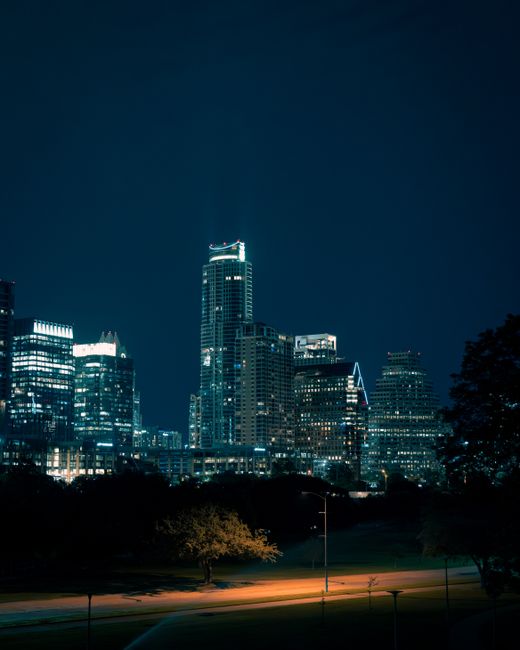
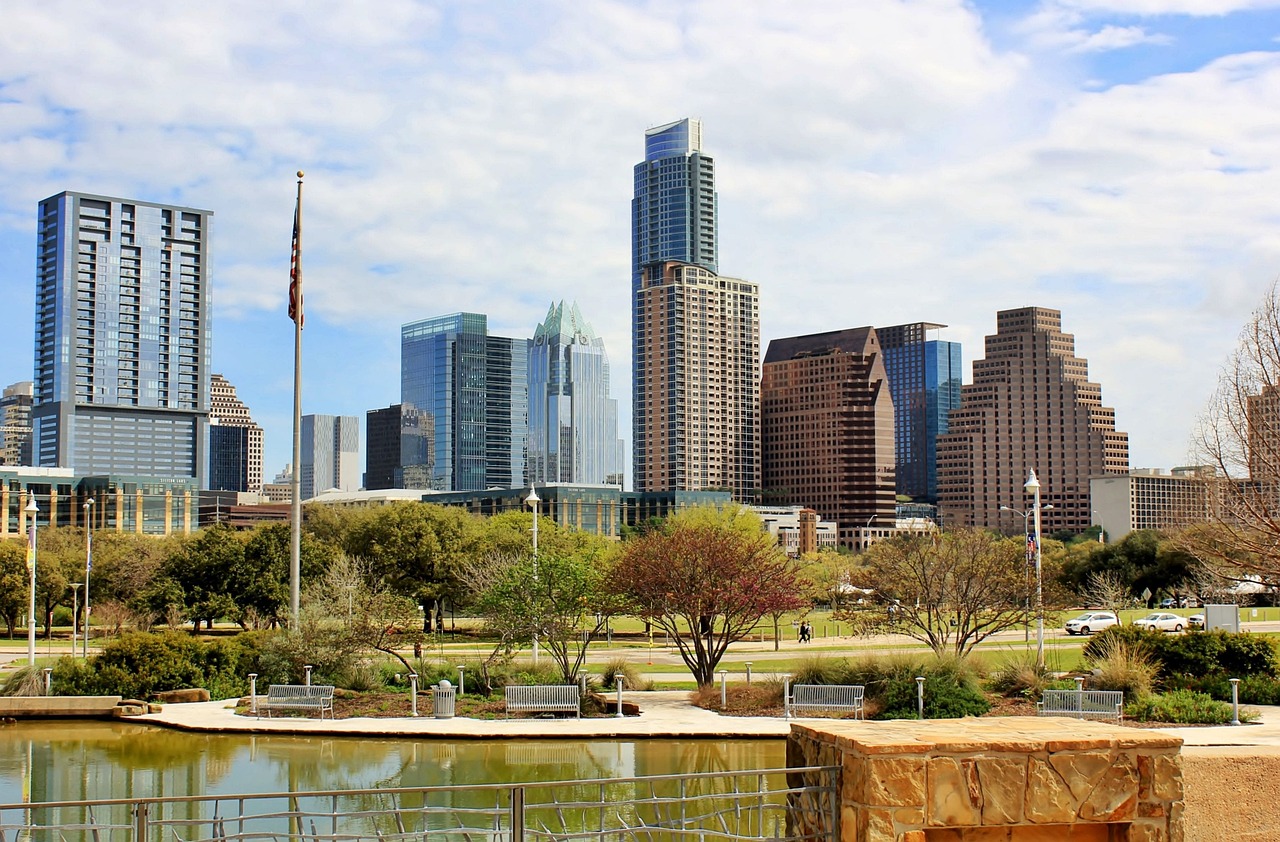
Austin, the capital of Texas, calls itself the Live Music Capital of the World, and on any night of the week you can hear blues, country, rock or jazz in a bar on Sixth Street, Red River or South Congress. The city of about 962,000 people sits where the rolling Texas Hill Country meets the plains, on the banks of the Colorado River, which runs through downtown as Lady Bird Lake. Add a spring-fed swimming pool in the middle of town, a pink granite Capitol, a million and more bats emerging from under a bridge on summer evenings, smoked brisket, breakfast tacos and two of the country’s biggest festivals, and it is easy to see why visitors keep coming back. A city bus links the airport with downtown for $1.25, and the center is compact enough to explore on foot.
Right now in Austin
- Tue 19–28°C 67–83°F Mostly clear
- Wed 18–29°C 65–84°F Clear
- Thu 19–28°C 66–83°F Clear
- Mon 12 Oct Columbus Day
- Mon 12 Oct Indigenous Peoples' Day · regional holiday in Texas
Weather: MET Norway (CC BY 4.0) · Holidays: Nager.Date
Top tours in Austin
See all tours for Austin →
From local operators, with prices and reviews; you check availability and book on Viator, our partner. We may earn a commission at no extra cost to you. How we earn money
Austin at a glance
- Best months: March–May and October–November for warm days, wildflowers in spring and the big festivals; June to September is very hot, with highs in the mid-90s °F (about 35 °C).
- Time needed: two or three days for downtown, South Congress, Barton Springs and a few music venues; add a day or two for the Hill Country or San Antonio.
- Getting there: Austin-Bergstrom International Airport (AUS) is southeast of downtown; CapMetro Route 20 runs to downtown and the University of Texas in about 35 minutes.
- Costs (as of October 2026): a CapMetro local ride is $1.25 and a day pass $2.50; Barton Springs Pool is $9 for non-resident adults; hotel bills add 17% in taxes, plus 2% at hotels with more than 100 rooms.
- Before you go: entry rules, money, driving and general safety are on our United States travel guide.
Austin neighborhoods and who each one suits
Downtown and Congress Avenue
Congress Avenue runs in a straight line from the Capitol down to Lady Bird Lake, lined with office towers, old storefronts, hotels and the historic Paramount Theatre. East and west of it are the city’s nightlife strips: Sixth Street, loud and packed with bars and young crowds on weekend nights; Red River, with many of the best small live-music clubs; and the Warehouse District and Second Street, with smarter restaurants and cocktail bars. Downtown is the easiest base for first-time visitors without a car, with the lake trail, the Capitol and many venues within walking distance.
South Congress
Across the Congress Avenue Bridge, South Congress Avenue (“SoCo”) is Austin’s most famous shopping and people-watching street, with vintage and Western-wear stores, boot shops, food trucks, taco joints, a few landmark motels turned boutique hotels and the famous “I love you so much” mural. It has views back to the Capitol and is a short walk or ride from the bat-watching spots on the bridge. It suits visitors who want a lively, walkable street with character.
East Austin
East of Interstate 35, the old working-class and Mexican American neighborhoods of East Austin have become the city’s creative quarter, with barbecue joints, taquerias, breweries, coffee shops, galleries and laid-back music bars, especially along East Sixth, East Cesar Chavez and Manor Road. Long lines form at the most famous barbecue places before they open. It suits food lovers and visitors who prefer neighborhood bars to the big downtown strips.
Rainey Street, Zilker and the university area
Rainey Street, at the southeast edge of downtown near the lake, is a short street of old bungalows turned into bars with big yards, now surrounded by high-rise hotels and condos; it is busiest on weekend nights. Southwest of downtown, Zilker and Barton Hills surround Zilker Park and Barton Springs, a greener, quieter area with easy access to the trails. North of the Capitol, the University of Texas campus has the Blanton Museum of Art and the LBJ Presidential Library, and Hyde Park beyond it is a leafy residential neighborhood.
Top things to see in Austin
Texas State Capitol
Built of pink granite in the 1880s, the Texas Capitol is taller than the US Capitol in Washington, and its dome and rotunda, with the portraits of the state’s governors, are worth a look even if you have no interest in politics. Entry is free. The building is open from 7 a.m. to 8 p.m. on weekdays and 9 a.m. to 8 p.m. on weekends, and closes on Easter Sunday, Thanksgiving, Christmas Eve, Christmas Day and New Year’s Day. Free guided tours of about 40 minutes leave from the South Foyer every 15 to 30 minutes, from 9 a.m. to 4:15 p.m. Monday to Saturday and from noon to 4:15 p.m. on Sunday. Expect a security check at the entrances. The Capitol Visitors Center at 112 East 11th Street, in the restored General Land Office building, has exhibits on the building and Texas history, and the grounds are full of monuments and shady lawns.
Barton Springs Pool and Zilker Park
Barton Springs Pool is a three-acre swimming hole fed by underground springs, with water at an average of 68 to 70 °F (20–21 °C) all year, set among old pecan trees in Zilker Park. It is run by the City of Austin. The pool is open from 5 a.m. to 10 p.m. every day; swimming is unguarded from 5 to 8 a.m. and guarded from 8 a.m. to 10 p.m. On Thursdays it closes for cleaning from 9 a.m. to 7 p.m., with unguarded swimming before and guarded swimming from 7 to 10 p.m. Day admission for non-residents is $9 for adults (18–62), $5 for juniors (12–17) and seniors (62+), $4 for children aged 1 to 11, and free for infants and veterans; Austin residents pay less. Parking at the pool is free on weekdays and $3 an hour on weekends and holidays from March 1 to Labor Day. Call 512-974-6300 for closures, which happen after heavy rain.
Zilker Park itself, 350 acres (140 ha) of lawns along Barton Creek and the lake, is Austin’s big backyard, with the Zilker Botanical Garden, a miniature train, canoe and paddleboard rentals on Barton Creek and the start of the Barton Creek Greenbelt trails. It is also the home of the Austin City Limits Music Festival, when much of the park is fenced off.
Lady Bird Lake and the Congress Avenue Bridge bats
Lady Bird Lake, the dammed Colorado River through downtown, is ringed by the Ann and Roy Butler Hike-and-Bike Trail, a loop of about 10 miles (16 km) with shorter loops using the bridges, and a boardwalk over the water on the south shore. Rent a kayak, canoe or paddleboard from one of the outfitters on the shore; swimming in the lake is not allowed. The lake is named after Lady Bird Johnson, who championed the trail and the wildflowers along Texas highways.
Under the Congress Avenue Bridge lives one of the largest urban bat colonies in North America: Mexican free-tailed bats that spend roughly March to early November in Austin before migrating to Mexico. Around sunset they pour out from under the bridge in long, swirling ribbons to feed on insects. The colony is largest, at well over a million bats, in late July and August, after the young are born; in October the flights get smaller and stop with the first strong cold fronts. Watch from the bridge’s east sidewalk, the lawn by the lakeshore on the southeast side, or from a sunset boat or kayak tour on the lake. Emergence times vary with the weather, so arrive before sunset and be patient.
Live music
Music is the reason many people come. On most nights you can find free or cheap shows in bars on Sixth Street, Red River, Rainey Street, South Congress and East Austin, from honky-tonk and blues to indie rock and Tejano. Some venues have been around for decades, with old-school dance halls where couples two-step to country bands. For bigger names, check the schedules at the Moody Theater, home of the long-running public television show Austin City Limits, the Paramount Theatre and the Moody Center at the university. Even the airport has live music on small stages. Bring cash for the tip jar, and check the age limit, since many bar shows are for 21 and over.
Other things to do in Austin
- Festivals: the Austin City Limits Music Festival fills Zilker Park over two weekends; in 2026 it runs on October 2–4 and October 9–11. SXSW, the film, music and tech festival, is announced for March 15–21, 2027. Hotel prices rise sharply on festival weekends, so book early.
- Formula 1: the United States Grand Prix is held at Circuit of the Americas, about 15 miles (24 km) southeast of downtown; the 2026 race weekend is October 23–25, 2026, with fan events at the circuit from October 22. A 2027 race is confirmed, but its date has not been announced.
- Food: central Texas barbecue (brisket, sausage and ribs), breakfast tacos, Tex-Mex and food trucks; the best-known barbecue places sell out, so go early.
- Hiking and cycling: the Barton Creek Greenbelt has limestone cliffs and seasonal swimming holes, and the lake trail is good for running and biking; see our hiking and cycling guides.
- Walking and sightseeing: combine the Capitol, Congress Avenue, the lake and South Congress in one easy day on foot; our city sightseeing guide has tips for city breaks.
Day trips from Austin
The Hill Country
West of the city, the Texas Hill Country is a landscape of limestone hills, live oaks, clear rivers and small towns, at its best in spring when bluebonnets and other wildflowers line the roads, usually from March to April. Popular stops include the swimming holes and waterfalls of the state parks, the old dance halls and wineries around Dripping Springs and Johnson City, and the LBJ Ranch near Stonewall. The famous swimming spots get very busy in summer and some need reservations, so check the park’s site before you drive out.
Fredericksburg
Fredericksburg, about 80 miles (130 km) west, was founded by German settlers in the 1840s and still has a long main street of stone buildings, bakeries, beer gardens and shops. Dozens of wineries line the highway east of town, and Enchanted Rock, a huge pink granite dome you can climb, is about 18 miles (29 km) north. It makes a full day out, or a relaxed overnight trip.
San Antonio and Lockhart
San Antonio, about 80 miles (130 km) southwest along Interstate 35, has the Alamo, the River Walk and the Spanish colonial missions; traffic on I-35 can be heavy, so allow at least 1.5 hours each way. On the way back, or as a short trip of its own, Lockhart, about 30 miles (48 km) south of Austin, is known as the barbecue capital of Texas, with several classic smokehouses around its courthouse square.
Nearby destinations
- San Antonio122 km
- Houston234 km
- Dallas289 km
Getting there and getting around
From Austin-Bergstrom International Airport
AUS is about 8 miles (13 km) southeast of downtown, with flights across the US and some to Mexico, Canada and Europe. The cheapest way into town is CapMetro Route 20, which leaves from the lower level outside baggage claim, at the stop marked by a neon guitar. It runs every 15 to 30 minutes, seven days a week, along Riverside Drive to downtown and the University of Texas in about 35 minutes, for the standard $1.25 local fare. Taxis and ride-shares take about 15 to 25 minutes to downtown without traffic, but much longer during rush hour and festivals.
CapMetro buses and rail
Capital Metro (CapMetro) runs local buses, the frequent MetroRapid lines and the MetroRail commuter train to the northern suburbs. Fares as of October 2026:
| Ticket | Standard fare | Notes |
|---|---|---|
| Local single ride | $1.25 | Local buses, MetroRapid and the airport Route 20 |
| Local day pass | $2.50 | Unlimited local rides from 4 a.m. to 3:59 a.m. the next day |
| Commuter single ride | $3.50 | MetroRail and express buses, plus local services |
| Commuter day pass | $7 | Unlimited rides on all services for the day |
| Reduced fares | $0.60 local ride, $1.25 local day | Seniors 65+, Medicare holders, military and riders with disabilities |
CapMetro caps fares: after you pay for two rides, the rest of your rides that day are free. You can tap a contactless bank card or phone on the reader as you board, or use the Umo app or a reloadable fare card. The downtown core, South Congress and the lake trail are walkable, and bike-share and scooters are widely available, but summer heat makes long walks in the middle of the day hard work.
Driving and longer trips
You can manage downtown without a car, but you will want one for the Hill Country. Interstate 35 through the city is one of the most congested highways in Texas, and toll roads such as State Highway 130 and Loop 1 (MoPac) express lanes charge electronically by license plate, so ask your rental company how tolls are billed. Intercity buses and Amtrak trains link Austin with San Antonio and Dallas.
When to go and how long to stay
Austin has long, hot summers and short, mild winters. Spring is warm and green, with wildflowers and occasional strong thunderstorms; May is often the wettest month. From June to September, afternoons regularly reach the high 90s °F (about 36 °C) and nights stay warm. October and November are pleasant, though heavy rain can fall in a few days. Winter is mostly mild and sunny, with the odd cold snap and, rarely, ice.
| Season | Average high | Average low | What it’s like |
|---|---|---|---|
| Spring (Mar–May) | 73–87 °F (23–30 °C) | 52–67 °F (11–19 °C) | Warm; wildflowers, SXSW and spring storms. |
| Summer (Jun–Aug) | 93–98 °F (34–37 °C) | 73–75 °F (23–24 °C) | Hot and humid; best for Barton Springs and bat flights. |
| Fall (Sep–Nov) | 91–72 °F (33–22 °C) | 70–50 °F (21–10 °C) | Hot September, pleasant October and November; ACL and Formula 1. |
| Winter (Dec–Feb) | 62–66 °F (17–19 °C) | 42–46 °F (5–8 °C) | Mild and often sunny; short cold snaps. |
Figures are NOAA 1991–2020 normals for Austin’s Camp Mabry station, a few miles northwest of downtown. The city gets about 36 inches (921 mm) of rain a year, often in heavy bursts in May, June, September and October.
Heat and flash floods
In summer, plan outdoor sightseeing for early morning and evening, drink plenty of water, wear a hat and sunscreen, and spend the hottest hours in museums or the pool. The Hill Country west of Austin is known as “flash flood alley”: heavy rain can make creeks and low-water road crossings rise very quickly. Never drive or walk into flooded roads, and check the forecast before river trips or camping.
How long to stay: 2, 3 and 4 days
- Two days: the Capitol and Congress Avenue; South Congress and the bats at sunset; Barton Springs and Zilker Park; live music on Red River or Sixth Street.
- Three days: add the Bullock Texas State History Museum near the university, a paddle on Lady Bird Lake, and barbecue and bars in East Austin.
- Four days: add a Hill Country day to Fredericksburg and Enchanted Rock, or a day in San Antonio.
Where to stay in Austin and the hotel tax
- Downtown and Congress Avenue: the most convenient base, close to music, the lake and the Capitol; noisy near Sixth Street on weekends.
- Rainey Street and the lakefront: big modern hotels with lake views, close to bars and the trail.
- South Congress: stylish boutique hotels and restored motels, walkable to shops and restaurants.
- East Austin: smaller hotels and rentals near food and nightlife, usually better value.
- Near the airport: handy for early flights and the Formula 1 circuit, but far from the sights.
Hotel tax: room rates are quoted before tax. The City of Austin charges an 11% hotel occupancy tax (9% occupancy tax plus a 2% venue project tax), and the State of Texas adds 6%, for a total of 17%. Since January 1, 2025, hotels with more than 100 rooms in the city also collect a 2% assessment for the Austin Tourism Public Improvement District, bringing the total at large hotels to about 19%. Many downtown hotels also add a daily “destination” or “amenity” fee and charge for parking, and prices jump on festival and race weekends; check the total price before you book.
Practical tips for Austin
- Time zone: Austin is on Central Time and uses daylight saving time, the same as Chicago and New Orleans.
- Book ahead: during ACL, SXSW, Formula 1 and big University of Texas football weekends, hotels fill up and prices can double or more.
- Tipping and prices: sales tax is added at the till; tip about 18–22% in sit-down restaurants and bars, and a few dollars to bands that pass the tip jar (see our United States travel guide).
- Safety: Austin is generally safe for visitors, but Sixth Street gets very crowded and rowdy late on weekend nights; stay with friends, watch your drink, use licensed ride-shares and keep valuables out of sight in parked cars.
- Emergencies: call 911.
What to pack for Austin
For most of the year, pack light, breathable clothes, a sun hat, sunglasses, high-factor sunscreen and a reusable water bottle, plus a swimsuit and quick-dry towel for Barton Springs and the swimming holes. Comfortable walking shoes or sandals are fine for the city; bring closed shoes with grip for the Greenbelt trails. A light rain jacket or small umbrella helps in spring and fall storms, and a sweater is useful for cold air-conditioning indoors. In winter, add a warm jacket for cool evenings. For festivals, bring a refillable bottle, a portable phone charger and ear protection.
Austin travel FAQ
How do I get from Austin airport to downtown?
Take CapMetro Route 20 from the lower level outside baggage claim; it runs every 15 to 30 minutes and takes about 35 minutes to downtown for $1.25. A taxi or ride-share takes about 15 to 25 minutes without traffic.
How much is a bus ticket in Austin?
$1.25 for a local ride and $2.50 for a local day pass; MetroRail and express buses cost $3.50 a ride or $7 a day. Fares are capped after two paid rides a day when you tap a card or use the Umo app.
How much does Barton Springs Pool cost?
Non-residents pay $9 for adults, $5 for juniors 12–17 and seniors, and $4 for children 1–11; infants and veterans are free. It is open from 5 a.m. to 10 p.m., but closes for cleaning from 9 a.m. to 7 p.m. on Thursdays.
When can you see the bats in Austin?
From about March to early November, around sunset, from the Congress Avenue Bridge and the lakeshore below it. The biggest flights are in late July and August; in October numbers fall as the bats migrate south.
What is the hotel tax in Austin?
17% in total: the City of Austin’s 11% (including a 2% venue tax) plus the State of Texas’s 6%. Hotels with more than 100 rooms add a 2% tourism district assessment, and some add resort or parking fees.
When is Austin City Limits Festival?
In 2026 it takes place in Zilker Park over two weekends, October 2–4 and October 9–11. Dates for 2027 have not been announced yet; the festival is normally held in early October.
When is SXSW 2027?
SXSW has announced March 15–21, 2027, in Austin. Hotels near downtown sell out early and are much more expensive that week.
Is the Texas Capitol free to visit?
Yes. The building is open daily, and free guided tours of about 40 minutes leave from the South Foyer every 15 to 30 minutes, from 9 a.m. (noon on Sunday) until 4:15 p.m.
When is the best time to visit Austin?
March to May and October to November, for warm weather, wildflowers and festivals. Summer is very hot but good for swimming and the bats; winter is mild and quiet.
Sources and last review
Researched and last reviewed on October 4, 2026. Fares, fare capping and the airport bus come from Capital Metro (CapMetro); Barton Springs Pool hours, prices and parking from the City of Austin; Capitol hours and tours from the Texas State Preservation Board; hotel taxes from the City of Austin and the Texas Comptroller of Public Accounts; festival and race dates from the Austin City Limits Music Festival, SXSW, Circuit of the Americas and Formula 1; climate from NOAA’s 1991–2020 normals for Camp Mabry; population from Wikidata. The bat season and colony size, distances to day-trip towns, airport driving times and some neighborhood details are general references and flagged for checking. Prices and timetables change, so check the official sites before you go. For entry rules, money and general safety, see our United States travel guide.
Plan your trip
Partner links: TravelerCenter may earn a commission if you book, at no extra cost to you.