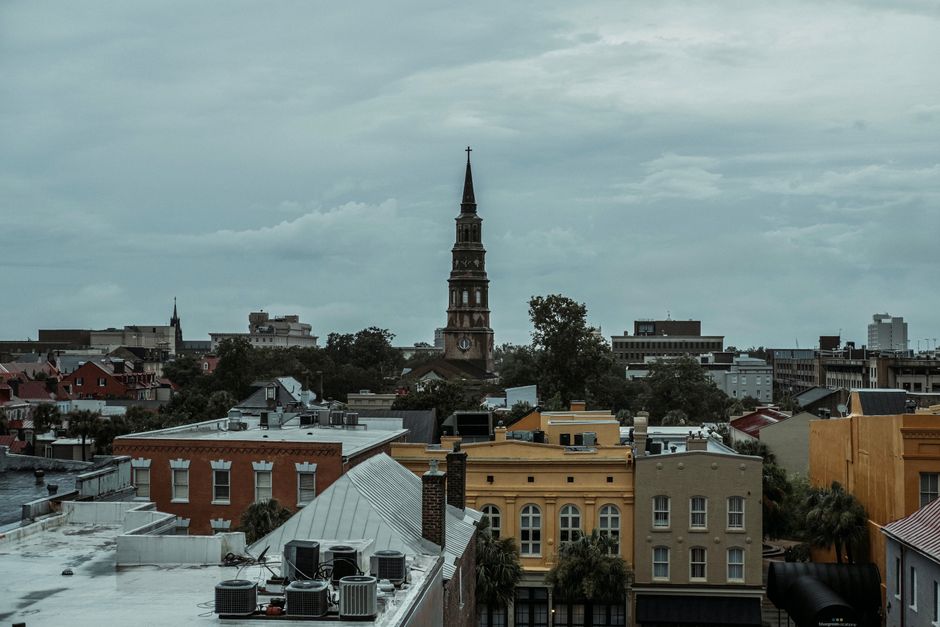
Charleston, on a narrow peninsula between the Ashley and Cooper rivers in South Carolina’s Lowcountry, is one of the best-preserved historic cities in the United States. Founded in 1670, it grew rich on rice, indigo and the labor of enslaved Africans, and its streets still show that layered past: pastel row houses, church steeples, iron gates, hidden gardens, cobbled lanes and grand antebellum mansions along the Battery. The Civil War began here in April 1861, when Confederate guns fired on Fort Sumter in the harbor. Today the city is known as much for its food as its history, with shrimp and grits, she-crab soup and some of the South’s most talked-about restaurants, while barrier-island beaches, old plantations and live-oak avenues lie within half an hour’s drive. Spring and fall are the most pleasant seasons; summer is hot, humid and stormy, and the Atlantic hurricane season runs from June to November.
Right now in Charleston
- Wed18–26°C65–78°FMostly clear
- Thu20–27°C68–80°FPartly cloudy
- Fri21–27°C69–80°FCloudy
- Mon 12 Oct Columbus Day · regional holiday in South Carolina
Top tours in Charleston
See all tours for Charleston →
From local operators, with prices and reviews; you check availability and book on Viator, our partner. We may earn a commission at no extra cost to you. How we earn money
Charleston at a glance
- Best for: historic streets and architecture, Civil War and African American history, plantations and gardens, Southern food, beaches and harbor boat trips.
- How long: 3 days for the Historic District, Fort Sumter and one plantation; 5 days to add the beaches and a day trip.
- Best time: March to May and October to November, with highs of 70–85 °F (21–29 °C). Summer highs reach about 91 °F (33 °C) with frequent thunderstorms.
- Getting there: Charleston International Airport (CHS) in North Charleston, about 12 miles (19 km) from downtown; Amtrak trains; Interstate 26 and US 17 by car.
- Getting around: walk the peninsula and use the free DASH shuttles; you need a car or a tour for plantations and beaches.
- Before you go: entry rules and ESTA, money, tipping and driving are in our United States travel guide.
Charleston neighborhoods and who each one suits
Most visitors spend their time on the peninsula, the oldest part of the city, and head out across the rivers and marshes for beaches, plantations and seafood. Charleston is compact: from the Battery at the tip of the peninsula to the upper end of King Street’s shops is about 1½ miles (2.4 km).
South of Broad and the French Quarter
The streets south of Broad Street are the postcard Charleston: grand single houses turned sideways to catch the breeze, with long piazzas (porches) facing private gardens; Rainbow Row on East Bay Street; the Battery’s seawall promenade; and White Point Garden under the live oaks. Just north, the French Quarter has cobbled lanes, art galleries, the Dock Street Theatre and the French Huguenot Church. It is quiet in the evening and has mostly inns and small luxury hotels. Best for couples, history lovers and anyone who wants to walk everywhere.
King Street, the Market and Upper King
King Street is the city’s main shopping and dining street, with antiques on Lower King, fashion and chain stores on Middle King and bars and restaurants on Upper King, which is the liveliest part of town at night. The City Market, a long row of open-air sheds where Gullah artisans sell sweetgrass baskets, links Meeting Street to East Bay Street. This is where most of the big downtown hotels are. Best for first-time visitors, food lovers and nightlife.
Mount Pleasant and Shem Creek
Across the Cooper River and the soaring Arthur Ravenel Jr. Bridge, Mount Pleasant is a large, leafy suburb with Patriots Point, one of the two Fort Sumter ferry docks, Boone Hall Plantation and the seafood restaurants and shrimp boats of Shem Creek. Hotels are cheaper than downtown and parking is easy, and Sullivan’s Island and Isle of Palms beaches are close. Good for families and anyone with a car.
The beach towns: Folly Beach, Sullivan’s Island and Isle of Palms
Charleston’s barrier islands each have their own feel. Folly Beach, about 12 miles (19 km) south of downtown, is casual and surf-minded, with a fishing pier and a view of the Morris Island Lighthouse. Sullivan’s Island is small, residential and relaxed, with Fort Moultrie and a short strip of good restaurants. Isle of Palms has the most beach hotels and rental houses and the Wild Dunes resort. Best for beach vacations with day trips into the city.
West Ashley, James Island and North Charleston
West Ashley, across the Ashley River, is the road to the great plantations along Ashley River Road and has good-value hotels. James Island leads to Folly Beach and the county park. North Charleston, near the airport, has the Amtrak station, the convention center and the most budget chain hotels, but it is a 15- to 25-minute drive from the historic center.
Top things to see in Charleston
Prices and hours below were checked on the official sites in October 2026, unless we say otherwise; check again before you go.
The Historic District on foot
In 1931 Charleston became the first American city to pass a historic-district zoning ordinance, and the result is a walkable museum of streets. A good route starts at Waterfront Park and its Pineapple Fountain, follows East Bay Street past Rainbow Row to the Battery and White Point Garden, then winds back through Legare, Church and Tradd streets to the Four Corners of Law at Broad and Meeting, where City Hall, the county courthouse, the federal post office and courthouse, and St. Michael’s Church (completed in the 1760s) face each other. Continue to the French Huguenot Church, the Dock Street Theatre and the City Market. Allow half a day, more if you go inside the house museums such as the Nathaniel Russell House, with its free-flying spiral staircase, or the Aiken-Rhett House, kept largely unrestored, with the quarters where enslaved people lived and worked. Guided walking tours cover ghosts, architecture, food and Black history. See our city sightseeing guide.
Fort Sumter and Fort Moultrie
Fort Sumter, on a man-made island at the harbor mouth, is where the first shots of the Civil War were fired on April 12, 1861. It is part of Fort Sumter and Fort Moultrie National Historical Park, and the National Park Service (NPS) charges no entrance fee at Fort Sumter, but you can only reach it on the park’s authorized boat, Fort Sumter Tours, and the ferry ticket is not covered by NPS passes. As of October 2026 an adult ticket costs $43; the trip takes about 2¼ hours in total, with about an hour on the fort. Boats leave from Liberty Square downtown (340 Concord Street, next to the South Carolina Aquarium) at 9:30 a.m., noon and 2:45 p.m., and from Patriots Point in Mount Pleasant at 10:45 a.m. and 1:30 p.m. on the schedule that runs to November 30, 2026. The NPS visitor center at Liberty Square is open daily from 9 a.m. to 4:30 p.m. Book ahead in spring and on fall weekends.
Fort Moultrie, on Sullivan’s Island, covers more than 170 years of coastal defense, from the palmetto-log fort that beat off a British fleet in 1776 (the origin of the palmetto on the state flag) to World War II. It is also where the NPS remembers Sullivan’s Island as a major point of arrival for enslaved Africans. Entry costs $10 per adult aged 16 and over, and payment is by card only; the grounds are open daily from 9 a.m. to 4:30 p.m. All park sites close on Thanksgiving, Christmas and New Year’s Day.
Plantations and gardens
The former rice and cotton plantations outside Charleston are among the region’s biggest draws, and the best of them now tell the story of the enslaved people whose labor built them as well as that of the families who owned them. Along Ashley River Road (SC 61), about 15 miles (24 km) from downtown, are three neighbors. Drayton Hall is the oldest unrestored plantation house in America open to the public, preserved rather than furnished; as of October 2026 it is open Wednesday to Monday, 9 a.m.–4:30 p.m. (the gate closes at 3 p.m.; closed Tuesdays), and an all-inclusive ticket costs $30 online or $35 at the gate, $15/$18 for ages 7–15, with under-7s free; the gate takes no cash. Middleton Place has America’s oldest landscaped gardens, terraced lawns and butterfly lakes, and Magnolia Plantation and Gardens is known for its romantic, informal gardens and azaleas in spring; check their own sites for current prices.
In Mount Pleasant, Boone Hall Plantation is famous for its avenue of live oaks, planted in the 1740s, and its row of brick slave cabins with exhibits on Gullah culture. As of October 2026 it is open Monday to Saturday 9 a.m.–5 p.m. and Sunday noon–5 p.m., and admission is $30 for adults, $27 for seniors, military and AAA members, and $12 for children aged 6–12 (5 and under free); tickets include all tours that day. The county-owned McLeod Plantation Historic Site on James Island focuses almost entirely on the lives of the enslaved and their descendants.
Museums and African American history
Historians estimate that around 40% of the enslaved Africans brought to what became the United States arrived through Charleston, and the city now confronts that history directly. The International African American Museum, opened in 2023 on the site of Gadsden’s Wharf, where tens of thousands of captives landed, traces the African diaspora and has a genealogy center for visitors researching their own families. The small Old Slave Mart Museum on Chalmers Street occupies a building where enslaved people were sold. The Charleston Museum, founded in 1773 and often called America’s first museum, covers the Lowcountry’s natural and social history, and the Gibbes Museum of Art shows Southern art from the colonial period to today. Check each museum’s site for timed tickets and current prices.
Patriots Point and the USS Yorktown
At Patriots Point Naval and Maritime Museum in Mount Pleasant you can explore the World War II aircraft carrier USS Yorktown, with aircraft on its flight and hangar decks, the destroyer USS Laffey and the Medal of Honor Museum. Allow 2–3 hours; combined tickets with the Fort Sumter ferry, which docks here, are sold by Fort Sumter Tours.
More to see
- Angel Oak, Johns Island: a city-owned live oak thought to be several hundred years old, with limbs spreading across a huge area; free to visit.
- South Carolina Aquarium: on the harbor next to the Fort Sumter ferry dock, with a sea turtle care center.
- Arthur Ravenel Jr. Bridge: walk or cycle the separated path for harbor views from 200 feet (61 m) up.
- Morris Island Lighthouse: a lone striped tower standing in the surf, best seen from the north end of Folly Beach.
Historic centres
- Rainbow Row
Zoos and aquariums
- South Carolina Aquarium
Museums
- Patriots Point
- USS Yorktown
Other sights
- Angel Oak
- Arthur Ravenel Jr. Bridge
Parks and gardens
- Fort Sumter
- Magnolia Plantation and Gardens
Castles and forts
- Fort Moultrie
Other things to do in Charleston
Eat your way through the Lowcountry
Charleston’s cooking mixes West African, Caribbean, French and English influences, and the Gullah Geechee people of the Sea Islands shaped much of it. Try shrimp and grits, she-crab soup, Frogmore stew (a Lowcountry boil of shrimp, sausage, corn and potatoes), red rice, hoppin’ John, fried green tomatoes, oysters roasted over fire in the cooler months and benne wafers. Book popular downtown restaurants well ahead for weekends. Restaurant bills in the city include a 2% local hospitality tax on top of sales tax.
Beaches
Folly Beach, Sullivan’s Island and Isle of Palms are all within 30–40 minutes’ drive of downtown in normal traffic, much longer on summer weekends. Each town sets its own rules and parking charges, and Charleston County Parks runs beach parks with lifeguards in season at Folly Beach, Isle of Palms and Kiawah Island (Beachwalker Park). Water temperatures are in the low to mid 80s °F (27–29 °C) in midsummer. Rip currents can form on any of these beaches, and swimming is dangerous near the Folly Beach pier, inlets and jetties. See our beaches guide.
Harbor cruises, dolphins and kayaks
Harbor cruises from downtown and Mount Pleasant pass the Battery, Fort Sumter and the Ravenel Bridge, often with bottlenose dolphins alongside. Kayak tours paddle into the tidal creeks and salt marshes around Shem Creek and Folly, and sailing trips leave from the downtown marinas at sunset. See our boat trips guide.
Cycling
The flat peninsula is easy to cycle, though streets are narrow and busy; the separated path over the Ravenel Bridge to Mount Pleasant is the classic ride. Bike rentals are available downtown and on the islands. See our cycling guide.
Day trips from Charleston
Savannah and Beaufort
Savannah, Georgia, with its leafy squares and riverfront, is about 110 miles (177 km) southwest, a 2-hour drive, and makes a natural pairing with Charleston. On the way, the small town of Beaufort, South Carolina, has antebellum houses on a quiet waterfront, and Hilton Head Island’s beaches and golf courses are about 2 hours away; see our Hilton Head Island travel guide.
Kiawah, Edisto and the ACE Basin
South of the city, Kiawah Island has a resort, golf and Beachwalker County Park, while Edisto Beach, about an hour away, is a low-key beach town with a state park. The ACE Basin, where the Ashepoo, Combahee and Edisto rivers meet, is one of the largest undeveloped estuaries on the East Coast, good for birding and kayaking.
Myrtle Beach and the Grand Strand
About 95 miles (153 km) north along US 17, past the historic port of Georgetown, the Grand Strand offers 60 miles of beach resorts, golf and family attractions; see our Myrtle Beach travel guide.
Nearby destinations
- Hilton Head Island102 km
- Savannah137 km
- Myrtle Beach142 km
Getting there and getting around
By air, train and car
Charleston International Airport (CHS) in North Charleston has nonstop flights from many US cities; it is about 12 miles (19 km) from downtown, a 20- to 30-minute drive by taxi or rideshare. Amtrak trains on the New York–Florida routes stop at the North Charleston station, about 8 miles (13 km) from the Historic District. By car, Interstate 26 links Charleston with Columbia and Interstate 95, and US 17 runs along the coast to Savannah and Myrtle Beach.
Getting around: DASH, buses and parking
The peninsula is best on foot. CARTA’s DASH shuttles are free for everyone as of October 2026, on three routes: the Orange Line (210) to the College of Charleston and the Aquarium, the Green Line (211) along Meeting and King streets, and the Purple Line (213) via King Street, Broad Street, Waterfront Park, the City Market and the Charleston Museum, all from the Visitor Center on Meeting Street. Other CARTA buses cost $2 a ride, express buses $3.50 and a day pass $7; fare boxes take exact cash only. Downtown parking is mostly in city and private garages; street meters are strictly enforced. For plantations, Folly Beach and the islands you need a car, a tour or a rideshare.
When to go and how long to stay
Charleston has a humid subtropical climate: long, hot and steamy summers with afternoon thunderstorms, mild winters with only rare frost, and warm, sunny springs and falls. The table uses NOAA’s 1991–2020 climate normals for Charleston International Airport: average daily highs and lows, and days with at least 0.1 inch (2.5 mm) of rain. The peninsula and the beaches are often a few degrees milder thanks to the sea breeze.
| Season | Average high / low | Wet days per month | What it’s like | Good for |
|---|---|---|---|---|
| Winter (Dec–Feb) | 60–64 °F (16–18 °C) / 39–42 °F (4–6 °C) | 5–6 | Mild, sometimes chilly and gray; occasional frost | Sightseeing, oyster roasts, low hotel rates |
| Spring (Mar–May) | 70–84 °F (21–29 °C) / 47–63 °F (8–17 °C) | 5 | Warm and sunny; azaleas in March and April | Gardens, walking, festivals; busy and pricier |
| Summer (Jun–Aug) | 89–91 °F (32–33 °C) / 70–74 °F (21–23 °C) | 8–9 | Hot and humid; thunderstorms most afternoons | Beaches, early-morning and evening sightseeing |
| Fall (Sep–Nov) | 85 °F falling to 69 °F (29–21 °C) / 68 °F falling to 47 °F (20–8 °C) | 4–7 | Warm September with peak hurricane risk; dry, pleasant October and November | Everything outdoors, food festivals |
The airport averages about 52.5 inches (1,334 mm) of rain a year, and June to September are the wettest months, with 6–7 inches (150–175 mm) each. The low-lying downtown streets flood during heavy downpours and the highest tides of the year, especially in fall; never drive or walk through floodwater, and follow the city’s flood alerts.
Hurricane season: according to NOAA’s National Hurricane Center, the Atlantic hurricane season runs from June 1 to November 30, with most activity from mid-August to mid-October and the peak around September 10. Charleston has been hit by major storms before, most famously Hurricane Hugo in 1989. If you travel in these months, follow the National Hurricane Center and the National Weather Service in Charleston, learn your hotel’s evacuation zone, obey any evacuation orders from the state and county, and consider travel insurance.
Events worth planning around
- Early March: Charleston Wine + Food festival.
- Spring: the Festival of Houses and Gardens opens private homes; the Cooper River Bridge Run fills the city in April.
- Late May to early June: Spoleto Festival USA, one of the country’s major performing-arts festivals; book rooms early.
- Fall: the MOJA Arts Festival celebrating African American and Caribbean culture, and the start of oyster-roast season.
How long to stay: 2, 3 and 5 days
2 days: day one, a walking tour of South of Broad, the Battery and the French Quarter, then dinner on King Street; day two, the morning boat to Fort Sumter and an afternoon at one Ashley River plantation. 3 days: add the International African American Museum, a house museum and Patriots Point or Boone Hall. 5 days: add a beach day on Folly or Sullivan’s Island with Fort Moultrie, a kayak or harbor cruise, and a day trip to Beaufort or Savannah.
Weather month by month
Where to stay in Charleston and the hotel taxes
- Historic District and French Quarter: boutique inns and historic hotels within walking distance of everything; the most expensive.
- King Street and Upper King: larger hotels near restaurants and nightlife.
- Mount Pleasant and West Ashley: better value with free parking; a 10- to 20-minute drive to downtown.
- Folly Beach, Isle of Palms, Kiawah: beach hotels, resorts and rental houses.
- North Charleston: airport and budget chain hotels; you will drive into town.
Downtown hotels are expensive, especially on spring and fall weekends, and many charge extra for parking. Room rates are quoted before tax. According to the South Carolina Department of Revenue (SCDOR), accommodations pay the state’s 5% sales tax plus a 2% state accommodations tax, plus the local sales taxes collected by the state: in the City of Charleston this brings the state-collected total to 10%. On top, Charleston County charges a 2% accommodations fee countywide and the City of Charleston adds its own 2%, according to Charleston County: about 14% in total on a downtown hotel room as of October 2026. Beach towns charge different local rates (Mount Pleasant, Kiawah and Sullivan’s Island 1%; Folly Beach, Isle of Palms and North Charleston 2%). Some hotels also add a nightly resort, amenity or “destination” fee; check the full price before you book.
Practical tips for Charleston
- Book Fort Sumter early: boats sell out on spring and fall weekends; arrive 30 minutes before departure.
- Respect the residents: the Historic District’s gardens and porches are private homes; stay on the sidewalk and keep voices down early and late.
- Heat: in summer, sightsee early and late, drink plenty of water and plan an indoor break at midday.
- Bugs: mosquitoes and tiny biting “no-see-ums” come out at dusk near the marshes; bring repellent.
- Safety: the Historic District and King Street are busy and generally safe; use normal city sense late at night on quiet streets, lock valuables out of sight in cars, and swim only near lifeguards on the beaches.
- Tipping and taxes: 18–22% is usual at sit-down restaurants; shop prices exclude sales tax, which is 9% in the city. More in our United States travel guide.
- Emergencies: call 911.
What to pack for Charleston
Comfortable walking shoes come first: sidewalks are uneven and some lanes are cobbled. From May to September pack light, breathable clothes, a sun hat, sunglasses, high-factor sunscreen and a compact umbrella or rain jacket for afternoon storms, plus a light layer for strongly air-conditioned restaurants and museums. In winter, bring a warm jacket and a sweater for chilly evenings. Add swimwear and sandals for the beaches, insect repellent for the marshes and a reusable water bottle. Charleston is fairly dressy at dinner: smart-casual clothes suit most good restaurants.
Charleston travel FAQ
How do I get to Fort Sumter?
Only by the authorized Fort Sumter Tours boat, from Liberty Square downtown or Patriots Point in Mount Pleasant. As of October 2026 an adult ticket costs $43 and the trip takes about 2¼ hours, including about an hour on the fort. The NPS charges no entrance fee at Fort Sumter.
Which Charleston plantation should I visit?
For architecture and history, Drayton Hall; for gardens, Middleton Place or Magnolia; for the famous oak avenue and Gullah history, Boone Hall; for the story of the enslaved, McLeod Plantation. One or two is plenty for most visitors.
What taxes are added to a Charleston hotel bill?
About 14% downtown as of October 2026: the state’s 5% sales tax and 2% accommodations tax, 3% in local sales taxes, Charleston County’s 2% accommodations fee and the city’s 2%. Some hotels add a resort or amenity fee as well.
When is the best time to visit Charleston?
March to May and October to November, when highs are about 70–85 °F (21–29 °C). Summer is hot, humid and stormy, and winter is mild and quiet with lower hotel prices.
When is hurricane season in Charleston?
From June 1 to November 30, according to NOAA’s National Hurricane Center, with most activity from mid-August to mid-October. Follow forecasts and obey evacuation orders, and consider travel insurance.
Do I need a car in Charleston?
Not for the Historic District, which you can walk or cover on the free DASH shuttles. You do need a car, a tour or rideshares for plantations and beaches.
Is the DASH trolley free in Charleston?
Yes. CARTA’s three DASH routes around the peninsula are free for everyone as of October 2026. Regular CARTA buses cost $2 a ride or $7 for a day pass.
What is the closest beach to downtown Charleston?
Sullivan’s Island and Folly Beach are both about 25–30 minutes’ drive away in normal traffic; Isle of Palms is a little farther. There is no beach on the peninsula itself.
How many days do I need in Charleston?
Three days covers the Historic District, Fort Sumter, a plantation and a museum or two. Add two more for the beaches and a day trip to Beaufort or Savannah.
Plan your trip
Partner links: TravelerCenter may earn a commission if you book, at no extra cost to you.
Sources · last reviewed 5 Oct 2026
Researched and last reviewed on October 4, 2026. Fort Sumter and Fort Moultrie fees and hours: Fort Sumter and Fort Moultrie National Historical Park (National Park Service); ferry prices and times: Fort Sumter Tours; Drayton Hall and Boone Hall hours and prices: the sites’ operators; DASH and bus fares: CARTA; accommodations and sales taxes: the South Carolina Department of Revenue and Charleston County; hurricane season: NOAA’s National Hurricane Center; climate: NOAA’s 1991–2020 normals for Charleston International Airport. Middleton Place, Magnolia and museum prices were not verified; neighborhood descriptions, distances, history and event dates are general references and flagged for checking. Prices, hours and timetables change, so check the official sites before you go. For entry rules, money and general safety, see our United States travel guide.
Also: NOAA NCEI normals 1991–2020, Charleston International Airport (climate)
Data: Weather: MET Norway (CC BY 4.0) · Sea temperature: NOAA CoastWatch · Rates: ECB · Holidays: Nager.Date · Costs: World Bank ICP and price levels · © OpenStreetMap contributors (ODBL) · Wikidata (CC0)