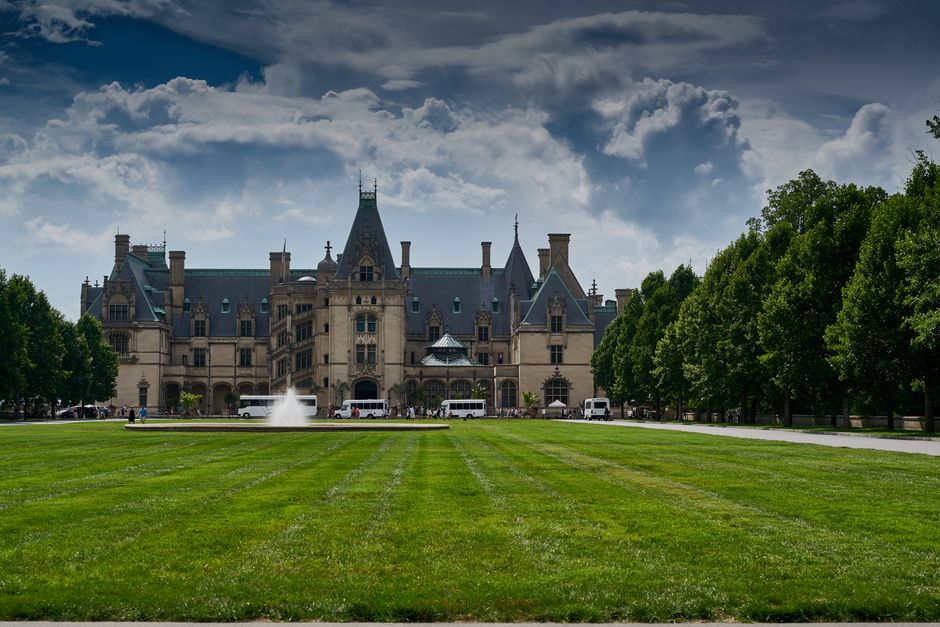
Asheville is a lively small city in the Blue Ridge Mountains of western North Carolina, set where the French Broad and Swannanoa rivers meet at about 2,100 feet (640 m). It is known for its Art Deco downtown, the vast Biltmore Estate built by George Vanderbilt in the 1890s, a celebrated food and craft beer scene, Appalachian crafts and music, and easy access to the Blue Ridge Parkway, waterfalls and the highest peaks in the eastern United States. In September 2024, Tropical Storm Helene caused severe flooding and landslides across the region; two years on, downtown, Biltmore and most attractions are open, while some areas, including parts of the River Arts District and sections of the Blue Ridge Parkway, are still being rebuilt. Fall color in October is the busiest and most beautiful season.

Right now in Asheville
- Wed9–25°C47–77°FClear
- Thu11–26°C51–79°FClear
- Fri11–27°C52–81°FCloudy
- Mon 12 Oct Columbus Day · regional holiday in North Carolina
- Mon 12 Oct Indigenous Peoples' Day · regional holiday in North Carolina
Top tours in Asheville
See all tours for Asheville →
From local operators, with prices and reviews; you check availability and book on Viator, our partner. We may earn a commission at no extra cost to you. How we earn money
Asheville at a glance
- Best for: the Biltmore Estate, mountain drives, hiking and waterfalls, breweries and restaurants, crafts, galleries and live music.
- How long: 2–3 days for the city and Biltmore; 4–5 days to add the Blue Ridge Parkway, Chimney Rock or the Great Smoky Mountains.
- Best time: October for fall color (book early), and late April to June for spring blooms; summers are warm and humid with afternoon storms.
- Getting there: Asheville Regional Airport (AVL) is 15 miles (24 km) south; Charlotte is about 2 hours by car and Atlanta about 3½.
- Getting around: downtown is walkable; you need a car for Biltmore’s outer estate, the Parkway and day trips.
- Before you go: entry rules, ESTA, money, tipping and driving are in our United States travel guide.
Asheville after Helene: what is open in October 2026
Tropical Storm Helene reached western North Carolina on September 27, 2024, bringing record rainfall. The French Broad and Swannanoa rivers flooded low-lying areas, including the River Arts District and Biltmore Village, and landslides damaged roads and towns across the mountains. Recovery has been steady. As of October 2026:
- Downtown, Biltmore and most attractions are open as usual, with hotels, restaurants and breweries operating.
- The River Arts District is reopening studio by studio. Many artists lost their spaces, some have moved elsewhere in the city, and an artist-led foundation is planning a new flood-safe creative campus; expect a mix of open galleries and construction.
- The Blue Ridge Parkway is open around Asheville, including Craggy Gardens Visitor Center, the Folk Art Center and the Mount Pisgah area, and the road north to Mount Mitchell State Park is open. Two sections farther northeast remain closed because of Helene damage (see below).
- Chimney Rock State Park reopened in June 2025 with timed-entry tickets; some of its trails are still closed.
Conditions keep changing as repairs finish, so check the National Park Service’s Parkway road status page and the websites of the places you plan to visit shortly before your trip. Visiting supports the many local businesses that depend on tourism.
Asheville’s neighborhoods and who each one suits
Downtown
Compact and hilly, downtown Asheville has one of the finest collections of Art Deco buildings in the South, including the City Building and the restored Grove Arcade, plus independent shops, bookstores, rooftop bars, dozens of restaurants and breweries, and street musicians on Pack Square. It is the best base for a first visit without a car and the liveliest place in the evening.
South Slope and the River Arts District
Just south of downtown, the South Slope has the city’s densest cluster of breweries in old warehouses. Below it, along the French Broad, the River Arts District grew from former industrial buildings into a mile of artists’ studios where you can watch potters, glassblowers and painters at work. It was the area hardest hit by Helene; check which studios are open before you go.
West Asheville
Across the river, Haywood Road is lined with laid-back cafés, taquerias, bars and music venues. It feels local and a little bohemian, with rentals and small inns. Good for repeat visitors and anyone who prefers neighborhood life to hotel districts.
Biltmore Village and Montford
Biltmore Village, at the estate’s gates, was built as a planned village with cottages that now house shops and restaurants; it flooded during Helene and has been reopening. Montford, just north of downtown, is a historic district of Victorian houses, many of them bed-and-breakfasts, close to the Riverside Cemetery where the writers Thomas Wolfe and O. Henry are buried.
Top things to see in Asheville
Prices and hours below were checked on the official sites in October 2026, unless we say otherwise; check again before you go.
Biltmore Estate
George Vanderbilt’s 250-room French Renaissance–style château, completed in 1895, is the largest privately owned house in the United States, with grand rooms, a library of 10,000 volumes and gardens laid out by Frederick Law Olmsted. Prices vary by date. As of October 2026, House and Grounds tickets start at $110 for adults and Grounds-only tickets at $85, with reduced prices for ages 16 and under and free entry for children 9 and under; buying House tickets online in advance guarantees your date and saves $10 per ticket, according to Biltmore. All tickets include the gardens and grounds, Antler Hill Village, the winery with a complimentary tasting, and parking. Candlelight Christmas Evenings run on selected nights from November 3, 2026 to January 9, 2027, by reservation, from $135 for adults. Allow a full day.
The Blue Ridge Parkway near Asheville
The Blue Ridge Parkway, a 469-mile (755 km) scenic road run by the National Park Service, passes right around Asheville with no entrance fee. Head north to the Folk Art Center (milepost 382), which sells fine Appalachian crafts, and on to Craggy Gardens (milepost 364), famous for rhododendron blooms in June and a short trail to grassy summits; the Craggy Gardens Visitor Center is open, but its picnic area is closed after Helene. Farther north, a spur road leads to Mount Mitchell State Park (milepost 355), at 6,684 feet (2,037 m) the highest point east of the Mississippi, open as of October 2026. South of Asheville, the Parkway climbs to the Mount Pisgah area (around milepost 408) and on toward Graveyard Fields and Looking Glass Rock views.
Closures as of October 4, 2026: according to the NPS, the Parkway is closed because of Helene damage between mileposts 344.2 and 355.3 (north of Mount Mitchell, so you can’t drive through toward Little Switzerland) and between mileposts 324.7 and 330.9 near Gillespie Gap, except for a short open stretch from milepost 327.5 to 330.9; all recreation is prohibited in the closed sections. The Parkway also closes in winter when snow and ice make it unsafe, especially at high elevations. Check the NPS road status page before you drive.
North Carolina Arboretum
Next to the Parkway southwest of the city, the 434-acre arboretum has themed gardens, a bonsai collection, forest trails and exhibitions. There is no admission charge, but parking costs $25 per vehicle as of October 2026; hours are 8 a.m.–9 p.m. from April to October and 8 a.m.–7 p.m. from November to March.
Downtown sights
- Asheville Art Museum: American art of the 20th and 21st centuries on Pack Square, with a rooftop terrace.
- Thomas Wolfe Memorial: the boardinghouse of the author’s childhood, the “Dixieland” of his novel Look Homeward, Angel.
- Grove Arcade: a 1929 indoor market building with shops and restaurants.
- Basilica of St. Lawrence: an early 1900s church with a large freestanding tiled dome by Rafael Guastavino.
Other sights
- Biltmore Estate
Museums
- Folk Art Center
Parks and gardens
- North Carolina Arboretum
Peaks and mountains
- Looking Glass Rock
- Mount Pisgah
Protected areas
- Mount Mitchell State Park
Other things to do in Asheville
- Breweries and food: Asheville has dozens of breweries, from small taprooms to large regional producers, and an inventive farm-to-table and Southern food scene; reserve popular restaurants on weekends.
- Music: catch bluegrass and old-time jams, the Friday-night drum circle in Pritchard Park in warmer months, and concerts at small clubs and theaters.
- Hiking and waterfalls: Pisgah National Forest surrounds the city, with trails to waterfalls and balds. After Helene, some forest roads and trails are still closed, so check the US Forest Service before you go. See our hiking guide.
- Crafts: shop for pottery, woodwork and textiles at the Folk Art Center, downtown galleries and the reopened studios of the River Arts District.
- Cycling: road cyclists ride the Parkway; mountain bikers head to Bent Creek and Pisgah. See our cycling guide.
Day trips from Asheville
Chimney Rock State Park
About 25 miles (40 km) southeast, this granite monolith rises above Hickory Nut Gorge and Lake Lure, with views of up to 75 miles on clear days. The town of Chimney Rock was badly damaged by Helene, and the park reopened on June 27, 2025. As of October 2026 the main Chimney Rock access is open daily, with timed-entry tickets required, bought in advance through the park’s management website; in October the gates open 8:30 a.m.–7 p.m., with ticket sales ending at 5:30 p.m. The Eagle Rock access and several trails, including the Tunnel and Riverwalk trails, remain closed, according to NC State Parks.
Great Smoky Mountains National Park
The most visited national park in the country is about an hour west via Cherokee, where the Museum of the Cherokee People and the Oconaluftee Visitor Center are good first stops. There is no entrance fee, but every vehicle parked for more than 15 minutes inside the park needs a parking tag: $5 a day, $15 a week or $40 a year, as of October 2026. The Smokies are not one of the parks with the non-resident fee.
Hendersonville, Brevard and the waterfall country
South of the city, Hendersonville has apple orchards and a pleasant main street, and Brevard is the gateway to the waterfalls of Pisgah National Forest and DuPont State Recreational Forest. Some roads and trails here were damaged by Helene, so check closures first.
Nearby destinations
- Great Smoky Mountains National Park79 km
- Gatlinburg87 km
- Atlanta265 km
Getting there and getting around
Asheville Regional Airport (AVL), about 15 miles (24 km) south of downtown, has nonstop flights from many US cities, often via Charlotte or Atlanta; taxis, ride-hail and rental cars meet arrivals. Larger airports are in Charlotte (about 130 miles, 210 km, 2 hours) and Atlanta (about 200 miles, 320 km, 3½ hours). Interstates 26 and 40 meet in Asheville. There is no passenger rail service. In the city, ART (Asheville Rides Transit) buses serve the main corridors, and downtown is easy on foot, but a car is the practical choice for Biltmore’s outer estate, the Parkway and day trips. Mountain roads are winding and can be closed by snow, ice or repairs; allow extra time.
When to go and how long to stay
Asheville has four distinct seasons, milder than you might expect in the mountains: cool winters with occasional snow, a long and flowery spring, warm and humid summers with frequent afternoon thunderstorms, and a dry, sunny fall. Higher elevations on the Parkway are much cooler. The table uses NOAA’s 1991–2020 climate normals for Asheville Regional Airport: average daily highs and lows and days with at least 0.1 inch (2.5 mm) of rain or melted snow.
| Season | Average high / low | Wet days per month | What it’s like | Good for |
|---|---|---|---|---|
| Winter (Dec–Feb) | 49–53 °F (9–12 °C) / 29–31 °F (−2 to −1 °C) | 6–6.5 | Cool, often sunny; light snow some years; Parkway sections close for ice | Biltmore at Christmas, breweries, low prices |
| Spring (Mar–May) | 60–76 °F (16–24 °C) / 37–53 °F (3–12 °C) | 7–7.5 | Changeable, blossoming from April; Biltmore’s gardens at their peak | Gardens, waterfalls, hiking |
| Summer (Jun–Aug) | 83–85 °F (28–29 °C) / 61–65 °F (16–18 °C) | 8–9 | Warm and humid, with afternoon thunderstorms; cooler on the Parkway | High-elevation hikes, music, rhododendrons in June |
| Fall (Sep–Nov) | 79 °F falling to 60 °F (26 to 15 °C) / 58 °F falling to 36 °F (14 to 2 °C) | 4.5–6 | The driest, clearest season; peak color in October | Leaf peeping, Parkway drives, hiking |
The airport averages about 49.6 inches (1,260 mm) of precipitation a year, with summer the wettest season, and about 10 inches (26 cm) of snow. Fall color usually starts at the highest elevations in early October and reaches the city in the second half of the month; hotels fill on October weekends, so book early.
Weather month by month
How long to stay: 2, 3 and 5 days
2 days: a full day at Biltmore; then downtown, the South Slope breweries and a drive up the Parkway to Craggy Gardens for sunset. 3 days: add Chimney Rock and Lake Lure, or the Mount Pisgah area and the arboretum. 5 days: add a day in the Great Smoky Mountains via Cherokee and a day of waterfalls around Brevard, checking closures first.
Where to stay in Asheville and the hotel tax
- Downtown: boutique and chain hotels within walking distance of restaurants and bars.
- Biltmore Estate and Biltmore Village: the estate’s own inn and hotels, and chain hotels near its gates.
- Montford and North Asheville: historic bed-and-breakfasts and the grand Omni Grove Park Inn on Sunset Mountain.
- West Asheville and the countryside: rentals and cabins, quieter and often cheaper; you’ll need a car.
Room rates are quoted before tax. As of October 2026, stays in Buncombe County pay the 7% North Carolina sales tax (4.75% state plus 2.25% local), according to the North Carolina Department of Revenue, plus Buncombe County’s 6% room occupancy tax, which also applies to rentals booked through Airbnb, Vrbo and similar sites, according to Buncombe County: 13% in total. Some hotels add parking or resort fees; check the full price before booking.
Practical tips for Asheville
- Book October early: fall-color weekends sell out, and prices are at their highest.
- Check closures: look at the Parkway road status page, NC State Parks and the US Forest Service before heading into the mountains.
- Safety: stay on marked trails near waterfalls, where wet rock is slippery and falls are a common cause of injury; don’t climb on or above falls. Store food properly in bear country, and watch for fog and slow traffic on mountain roads.
- Mobile signal is patchy on the Parkway; download maps before you go.
- Tipping: 18–22% at sit-down restaurants; more in our United States travel guide.
- Emergencies: call 911.
What to pack for Asheville
Pack layers: the Parkway can be 10–15 °F (6–8 °C) cooler than the city, and fall mornings are crisp. Bring comfortable walking shoes for hilly downtown streets, hiking shoes with good grip for wet trails, a rain jacket in spring and summer, sunscreen and a hat, insect repellent for ticks and mosquitoes, and a warm jacket from November to March.
Asheville travel FAQ
Is Asheville open to visitors after Hurricane Helene?
Yes. As of October 2026 downtown, Biltmore, hotels and most attractions are open. Parts of the River Arts District are still rebuilding, and two sections of the Blue Ridge Parkway northeast of the city remain closed.
Is the Blue Ridge Parkway open near Asheville?
Yes, around the city: Craggy Gardens, the Folk Art Center, Mount Mitchell State Park and the Mount Pisgah area are open. Mileposts 344.2–355.3 and most of 324.7–330.9 are closed after Helene, as of October 4, 2026.
How much are Biltmore tickets?
House and Grounds tickets start at $110 for adults and Grounds-only at $85, as of October 2026, with prices varying by date. Children 9 and under are free, and buying House tickets online saves $10.
When is Christmas at Biltmore in 2026?
Candlelight Christmas Evenings run on selected nights from November 3, 2026 to January 9, 2027, by reservation, from $135 for adults. Daytime visits continue throughout the season.
Is Chimney Rock State Park open?
Yes. It reopened in June 2025, and timed-entry tickets are required. As of October 2026 the Eagle Rock access and some trails remain closed.
When is the best time to see fall color in Asheville?
Usually October: early in the month on the high peaks along the Parkway, and in the second half of the month at city elevations. Book rooms well ahead.
What is the hotel tax in Asheville?
13% as of October 2026: the 7% North Carolina sales tax in Buncombe County plus the county’s 6% room occupancy tax, which also covers short-term rentals.
How far is Asheville from the Great Smoky Mountains?
About an hour by car to the Oconaluftee Visitor Center near Cherokee. There’s no entrance fee, but parking tags cost $5 a day or $15 a week.
Do I need a car in Asheville?
Not for downtown, which is walkable, but yes for the Blue Ridge Parkway, waterfalls and most day trips. There are local buses but no passenger trains.
Plan your trip
Partner links: TravelerCenter may earn a commission if you book, at no extra cost to you.
Sources · last reviewed 4 October 2026
Researched and last reviewed on 4 October 2026. Blue Ridge Parkway closures: the National Park Service (road status page updated October 4, 2026); Great Smoky Mountains parking tags: the National Park Service; Chimney Rock State Park: NC State Parks; Biltmore tickets and Christmas dates: Biltmore; the North Carolina Arboretum: its own website; sales tax: the North Carolina Department of Revenue; room occupancy tax: Buncombe County; climate: NOAA’s 1991–2020 normals for Asheville Regional Airport. River Arts District recovery, driving distances, some museum details and fall-color timing are press or general references, flagged for checking. Conditions are still changing after Helene, so check the official sites before you go. For entry rules, tipping and driving, see our United States travel guide.
Also: NOAA NCEI normals 1991–2020, Asheville Regional Airport (climate)
Data: Weather: MET Norway (CC BY 4.0) · Rates: ECB · Holidays: Nager.Date · Costs: World Bank ICP and price levels · © OpenStreetMap contributors (ODBL) · Wikidata (CC0)