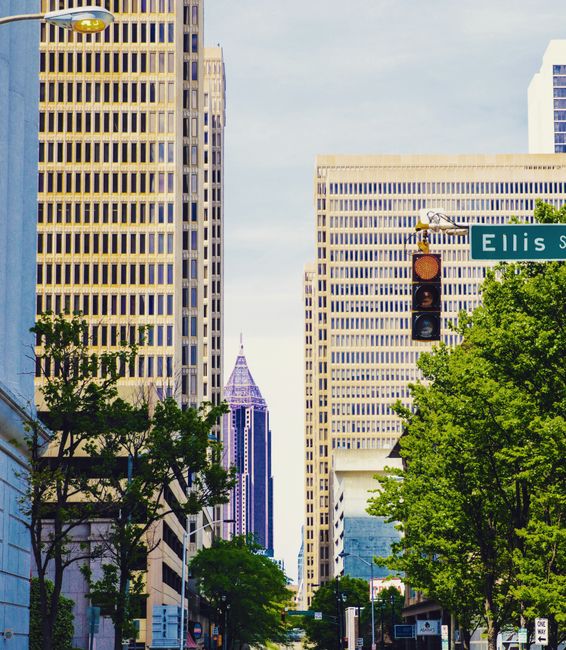
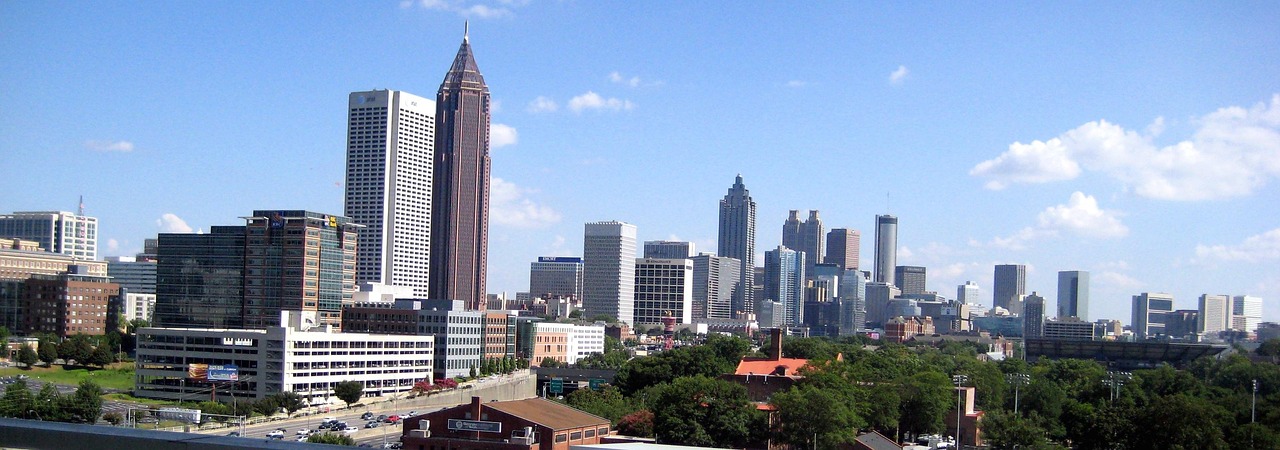
Atlanta, Georgia’s capital, is the big city of the American South: a green, hilly metropolis of leafy neighborhoods under a forest of tall trees, with glass towers rising from Downtown, Midtown and Buckhead. It is the birthplace of Dr. Martin Luther King Jr. and a center of the civil rights movement, and you can visit his childhood street, his church and his tomb on Auburn Avenue. Around Centennial Olympic Park, built for the 1996 Olympic Games, are the Georgia Aquarium, the World of Coca-Cola and the National Center for Civil and Human Rights. The Atlanta BeltLine, a walking and cycling trail on an old railway loop, links food halls, murals and parks. The world’s busiest airport is a short train ride from Downtown, so Atlanta is an easy first or last stop on a trip through the South.
Right now in Atlanta
- Tue 16–24°C 60–75°F Clear
- Wed 13–25°C 56–78°F Clear
- Thu 15–27°C 58–81°F Clear
- Mon 12 Oct Columbus Day · regional holiday in Georgia
Weather: MET Norway (CC BY 4.0) · Holidays: Nager.Date
Top tours in Atlanta
See all tours for Atlanta →
From local operators, with prices and reviews; you check availability and book on Viator, our partner. We may earn a commission at no extra cost to you. How we earn money
Atlanta at a glance
- Best months: April–May and October–early November, for warm, sunny days, spring blossom or fall color; summer is hot and humid with afternoon storms.
- Time needed: two or three days for Downtown, the King sites, Midtown and the BeltLine; add a day for Stone Mountain or a game or concert.
- Getting there: Hartsfield-Jackson Atlanta International Airport (ATL) is about 10 miles (16 km) south of Downtown, with MARTA trains from the terminal for $2.50.
- Costs (as of October 2026): a MARTA ride is $2.50 and a 1-day pass $9; the Martin Luther King Jr. National Historical Park is free; hotel bills add 16.9% in taxes plus a $5 state fee per night.
- Before you go: entry rules, money, driving and general safety are on our United States travel guide.
Atlanta neighborhoods and who each one suits
Downtown and Centennial Olympic Park
Downtown is the business and convention district, with the State Capitol, Mercedes-Benz Stadium, State Farm Arena and the big attractions around Centennial Olympic Park: the Georgia Aquarium, the World of Coca-Cola, the National Center for Civil and Human Rights and the College Football Hall of Fame. Many large hotels are here, within walking distance of MARTA. It is busy by day and during events, quieter at night. Best for first-time visitors and families.
Midtown
Midtown, along Peachtree Street north of Downtown, is the city’s arts and nightlife center, with the High Museum of Art and the Woodruff Arts Center, the Fox Theatre, Piedmont Park, the Atlanta Botanical Garden and dozens of restaurants and bars. It is the heart of Atlanta’s LGBTQ+ scene, walkable and well served by MARTA. Best for culture lovers and a lively base.
Sweet Auburn, Old Fourth Ward and Inman Park
Auburn Avenue, “Sweet Auburn”, was once the most prosperous Black business street in America and is where Dr. King was born. East of it, the Old Fourth Ward and Inman Park line the BeltLine’s Eastside Trail, with Ponce City Market and Krog Street Market (both food halls in old industrial buildings), murals, breweries and Victorian houses. Best for walkers, food lovers and history.
Buckhead, Virginia-Highland and Little Five Points
Buckhead, to the north, is the upscale shopping and hotel district, home to the Atlanta History Center. Virginia-Highland is a pretty neighborhood of bungalows with cafes and bars, and Little Five Points is the city’s bohemian corner, with vintage shops, record stores and music clubs. Decatur, a separate small city just east, has a charming square and a strong restaurant scene, reached by MARTA.
Top things to see in Atlanta
Martin Luther King Jr. National Historical Park
Along a few blocks of Auburn Avenue, the National Park Service looks after the places that shaped Dr. King: the house where he was born in 1929, Historic Ebenezer Baptist Church, where he was baptized and co-pastored with his father, Historic Fire Station No. 6, and the visitor center exhibits on the civil rights movement. Next door, The King Center holds the tomb of Dr. and Mrs. King in a reflecting pool with an eternal flame. Entrance and parking are free; the free visitor lot is at 423 John Wesley Dobbs Avenue NE. As of October 2026, the temporary visitor center (in Fire Station No. 6), Historic Ebenezer Baptist Church and Freedom Hall are open daily from 9 a.m. to 5 p.m., closed on January 1, Thanksgiving and December 25. Rangers lead talks in the church during the day. The Birth Home has been closed for renovation; the park’s home page now lists hourly Birth Home tours from 10 a.m. to 4 p.m. for 15 people each, with registration in person at Fire Station No. 6, so check on the day and arrive early.
Georgia Aquarium
One of the largest aquariums in the world, on Baker Street next to Centennial Olympic Park, with whale sharks and manta rays in the huge Ocean Voyager tank, beluga whales, sea lions, penguins and a dolphin show. Tickets are sold for timed entry and prices change by date, so book online, ideally for a weekday morning. On busy days allow three hours.
World of Coca-Cola and Centennial Olympic Park
Coca-Cola was invented in Atlanta in 1886, and the company’s museum, at 121 Baker Street, tells the story with the vault said to hold the secret formula, vintage advertising and a tasting room with more than 100 drinks from around the world. It opens at 10 a.m. daily; closing times vary by season and day, and online sales end an hour before closing. Across the street, Centennial Olympic Park, built for the 1996 Games, has lawns, the Fountain of Rings and the SkyView Ferris wheel nearby. The National Center for Civil and Human Rights, beside the aquarium, links the American civil rights movement to human rights struggles today; its lunch-counter sit-in simulation is unforgettable.
The Atlanta BeltLine
The BeltLine is a planned 22-mile (35 km) loop of trails and parks on old railway corridors around central Atlanta. The busiest part, the paved Eastside Trail, runs about 3 miles (5 km) from Piedmont Park past Ponce City Market, Historic Fourth Ward Park and Krog Street Market to Inman Park and Reynoldstown, lined with murals, patios and public art. Walk it, rent a bike or scooter, and stop for food at the markets. It is busiest on weekend afternoons; free and open all day.
High Museum of Art and the Midtown arts
The High Museum, in bright white buildings by Richard Meier and Renzo Piano at 1280 Peachtree Street NE, is the leading art museum in the Southeast, with strong collections of American, folk and self-taught art, photography, and modern and contemporary works. As of October 2026 it is open Tuesday to Saturday from 10 a.m. to 5 p.m. and on Sunday from noon to 5 p.m., and is closed on Mondays; the last tickets are sold an hour before closing. The Arts Center MARTA station is right next door. A few blocks south, the 1929 Fox Theatre, a fantasy of Moorish and Egyptian design, hosts Broadway tours and concerts.
Piedmont Park and the Atlanta Botanical Garden
Piedmont Park is Atlanta’s central park, with lawns, a lake, skyline views and the start of the BeltLine’s Eastside Trail. At its northern edge, the Atlanta Botanical Garden has a canopy walk through the treetops, a Japanese garden, an orchid conservatory and seasonal shows: Scarecrows in the Garden runs from October 1 to November 1, 2026, and Garden Lights, Holiday Nights fills the garden with lights from November to January. Buy tickets online.
Atlanta History Center, Oakland Cemetery and the Carter Library
The Atlanta History Center in Buckhead combines museum galleries, historic houses and the huge Cyclorama painting of the 1864 Battle of Atlanta. Oakland Cemetery, the city’s oldest, is a peaceful Victorian garden cemetery near Downtown with skyline views; Margaret Mitchell, author of Gone with the Wind, is buried there. The Jimmy Carter Presidential Library and Museum, set in parkland east of Downtown, tells the story of the 39th president, a Georgian, and of the work of The Carter Center.
Other things to do in Atlanta
- Sports: the Braves (baseball) play at Truist Park in the northwest suburbs; the Falcons (football) and Atlanta United (soccer) at Mercedes-Benz Stadium; and the Hawks (basketball) at State Farm Arena, Downtown.
- NASCAR: EchoPark Speedway (formerly Atlanta Motor Speedway) in Hampton, about 30 miles (48 km) south, hosts the NASCAR Cup Series Autotrader 400 on February 28, 2027 and the Dollar Tree 400 night race on July 18, 2027. The Georgia State Fair is held there from October 2 to 11, 2026.
- Peachtree Road Race: the world’s largest 10K runs down Peachtree Street every Fourth of July; the next race is on July 4, 2027, with entry by spring lottery.
- Food: try Southern classics such as fried chicken, shrimp and grits, biscuits and peach cobbler, and the international restaurants of Buford Highway in the northeast suburbs.
- Walking and cycling: the BeltLine trails and Piedmont Park are made for it; see our cycling and city sightseeing guides.
Day trips from Atlanta
Stone Mountain Park
About 16 miles (26 km) east of Downtown, a huge dome of granite rises 825 ft (251 m) above the surrounding forest. You can hike the steep 1-mile (1.6 km) trail to the top or ride the Summit Skyride cable car, and walk or cycle the 5-mile (8 km) path around the base. The park also has a lake, a campground, festivals through the year and a family attractions area. The giant carving on the north face depicts Confederate leaders and is a subject of ongoing debate. Vehicles pay a parking fee at the gate; check the park’s website for prices and events.
North Georgia mountains
An hour and a half north, the Blue Ridge Mountains begin. Dahlonega, site of America’s first major gold rush in 1829, has a historic square and nearby wineries; Helen is a Bavarian-themed mountain village; and Amicalola Falls State Park has the highest waterfall in Georgia and the approach trail to the start of the Appalachian Trail on Springer Mountain. Fall color peaks in late October.
Chattanooga, the Smokies and Savannah
Chattanooga, Tennessee, about 120 miles (193 km) northwest on Interstate 75, has the Tennessee Aquarium, Lookout Mountain and Rock City. Great Smoky Mountains National Park is about 3.5 to 4 hours north by car, and the historic coastal city of Savannah about 4 hours southeast on Interstate 16. For a longer Southern road trip, New Orleans is about 7 hours west (see our New Orleans travel guide).
Nearby destinations
- Great Smoky Mountains National Park224 km
- Gatlinburg233 km
- Asheville265 km
Getting there and getting around
From Hartsfield-Jackson Atlanta International Airport
ATL has direct flights from across the US and to Europe, Latin America, Africa and Asia. MARTA trains leave from Airport Station, at the end of the Red and Gold lines, between the north and south baggage claims at the west end of the Domestic Terminal. Trains run north through Downtown (Five Points), Midtown and beyond; the ride to Downtown takes about 20 minutes. Arriving at the International Terminal, take the free shuttle bus to the Domestic Terminal for the train. A single fare is $2.50. For Buckhead late in the evening, take a Gold Line train and change to the Red Line at Lindbergh Center. Taxis and ride-shares also serve the airport; the drive Downtown takes 20 to 40 minutes, much longer at rush hour. The SkyTrain links the terminal with the rental car center.
MARTA trains, buses and the streetcar
MARTA, the Metropolitan Atlanta Rapid Transit Authority, runs four rail lines (Red, Gold, Blue and Green), buses and the Atlanta Streetcar. Trains run from about 4:45 a.m. (6 a.m. at weekends) to 1 a.m., normally every 10 to 20 minutes. Fares as of October 2026:
| Ticket | Fare | Notes |
|---|---|---|
| One-way (rail and bus) | $2.50 | Includes up to 4 free transfers within 3 hours; the same fare to and from the airport |
| 1-day pass | $9 | Unlimited rail and bus rides; longer passes up to 30 days ($95) |
| 10-trip pass | $25 | Useful for longer stays |
| Atlanta Streetcar | $1 | Downtown–Sweet Auburn loop; no transfers |
| Seniors 65+, Medicare, riders with disabilities | $1 | With a reduced-fare card |
| Children 46 in (117 cm) or shorter | Free | Up to 2 per paying adult |
You can pay with a Breeze card or the Breeze mobile app, or tap a contactless bank card or phone at the gates; use the same card or phone for every leg so your transfers are free. MARTA covers Downtown, Midtown, Buckhead, Decatur and the airport well, but much of the metro area is built for cars.
Driving, trains and buses
Atlanta’s traffic is notorious, especially on the Downtown Connector (where Interstates 75 and 85 merge) and the I-285 ring road at rush hour; avoid driving between 7 and 10 a.m. and 3:30 and 7 p.m. if you can. Hotel parking is usually charged by the night. You will want a car for Stone Mountain, the mountains or the coast. Amtrak’s Crescent, between New York and New Orleans, stops once a day each way at Peachtree Station in Brookwood, and intercity buses arrive at the Downtown bus terminal.
When to go and how long to stay
Atlanta sits on the Piedmont plateau at about 1,000 ft (300 m), a little cooler than the coast but still humid. Spring is glorious, with dogwoods and azaleas in bloom in late March and April and comfortable temperatures. Summer is hot and sticky, with frequent afternoon thunderstorms. Fall is dry, sunny and pleasant into November, with color in the parks in late October. Winter is mild but changeable, with occasional cold snaps; a dusting of snow or ice every few years can close roads.
| Season | Average high | Average low | What it’s like |
|---|---|---|---|
| Spring (Mar–May) | 66–81 °F (19–27 °C) | 45–61 °F (7–16 °C) | Warm and blooming; pollen is heavy in late March and April; severe storms possible. |
| Summer (Jun–Aug) | 87–90 °F (31–32 °C) | 69–72 °F (21–22 °C) | Hot and humid; afternoon thunderstorms; Peachtree Road Race on July 4. |
| Fall (Sep–Nov) | 84–64 °F (29–18 °C) | 66–44 °F (19–7 °C) | Driest and most settled; fall color in late October; football season. |
| Winter (Dec–Feb) | 54–58 °F (12–14 °C) | 36–39 °F (2–4 °C) | Mild days, chilly nights; occasional ice storms; holiday lights. |
Figures are NOAA 1991–2020 normals for Hartsfield-Jackson International Airport, at about 1,010 ft (308 m). The city gets about 50 inches (1,281 mm) of rain a year, spread evenly through the months. Tornadoes are possible, mostly from March to May; follow National Weather Service warnings.
How long to stay: 2, 3 and 4 days
- Two days: the Martin Luther King Jr. National Historical Park and Sweet Auburn; the Georgia Aquarium or World of Coca-Cola and the National Center for Civil and Human Rights; the BeltLine Eastside Trail to Ponce City Market for dinner.
- Three days: add Midtown: the High Museum, Piedmont Park and the Botanical Garden, and a show at the Fox Theatre.
- Four days: add the Atlanta History Center or the Carter Library, and a morning hike up Stone Mountain or a game.
Where to stay in Atlanta and the hotel tax
- Downtown: big chain hotels near Centennial Olympic Park and MARTA; good for families and events, but quiet at night and busy with conventions.
- Midtown: the best all-round base, with restaurants, nightlife, museums and three MARTA stations.
- Old Fourth Ward and Inman Park: boutique hotels and rentals on or near the BeltLine.
- Buckhead: upscale hotels and shopping, on the Red Line.
- Near the airport: handy for early flights; most of these hotels are in the separate cities of College Park and Hapeville, with their own tax rates.
Hotel tax: room rates are quoted before tax. Inside the City of Atlanta, hotel bills add the city’s 8% hotel-motel tax and 8.9% sales tax (Georgia’s 4% plus local, transit and transportation taxes), a total of 16.9%, plus Georgia’s $5 per night State Hotel-Motel Fee. Some hotels also charge a daily “destination” or “amenity” fee and parking, which can be expensive; check the total price before you book.
Practical tips for Atlanta
- Time zone: Atlanta is on Eastern Time and uses daylight saving time.
- Peachtree confusion: dozens of streets are named Peachtree; always check the full address, including “NE” or “NW”.
- Book ahead: aquarium, World of Coca-Cola and garden tickets are timed; buy them online, especially on weekends and school holidays.
- Tipping and prices: sales tax is added at the till; tip about 18–22% in sit-down restaurants and bars.
- Safety: the main visitor areas are busy and generally safe by day; some Downtown streets empty out at night, so take a ride-share after late events. Car break-ins are common, so leave nothing visible in a parked car, and keep an eye on belongings on trains and in crowds.
- Emergencies: call 911.
What to pack for Atlanta
Pack light, breathable clothes for the long, humid summer, plus a small umbrella or rain jacket for afternoon storms and a light layer for strongly air-conditioned museums and restaurants. Bring comfortable walking shoes for the BeltLine and the hills, sunscreen, sunglasses and a reusable water bottle. Allergy sufferers should bring medicine in spring, when the pollen counts are high. From December to February, add a warm jacket for chilly evenings.
Atlanta travel FAQ
How do I get from Atlanta airport to downtown?
Take a MARTA Red or Gold Line train from Airport Station, at the Domestic Terminal, to Five Points or Peachtree Center in about 20 minutes, for a $2.50 fare. Taxis and ride-shares take 20 to 40 minutes outside rush hour.
How much is MARTA?
$2.50 for a one-way trip with up to four free transfers within three hours, or $9 for a 1-day pass. The streetcar costs $1, and children 46 inches tall or shorter ride free with a paying adult.
What is the hotel tax in Atlanta?
Inside the City of Atlanta, 16.9%: the 8% hotel-motel tax plus 8.9% sales tax. Georgia also charges a $5 State Hotel-Motel Fee for each night, and some hotels add resort or parking fees.
Is it free to visit the Martin Luther King Jr. sites?
Yes. The national historical park, Historic Ebenezer Baptist Church and the visitor exhibits are free, open daily from 9 a.m. to 5 p.m., with free parking. Birth Home tours have limited places; ask at Fire Station No. 6 when you arrive.
Do I need to book the Georgia Aquarium in advance?
It is a good idea. Tickets are for timed entry and prices vary by date, so booking online secures your slot, especially on weekends, holidays and in summer.
When are the NASCAR races near Atlanta in 2027?
EchoPark Speedway in Hampton, about 30 miles south, hosts the Autotrader 400 on February 28, 2027 and the Dollar Tree 400 night race on July 18, 2027, with support races the day before.
Can I walk the Atlanta BeltLine?
Yes. The paved Eastside Trail, about 3 miles long from Piedmont Park to Inman Park and Reynoldstown, is the most popular stretch, with food halls, murals and patios along the way. It is free and open all day.
How many days do you need in Atlanta?
Two or three days cover the King sites, Downtown’s attractions, Midtown and the BeltLine. Add a day for Stone Mountain, the North Georgia mountains or a game.
When is the best time to visit Atlanta?
April–May and October–early November, for warm, sunny days and fewer storms. Summer is hot and humid, and winter is mild but changeable.
Sources and last review
Researched and last reviewed on October 4, 2026. Fares, hours and the airport station come from MARTA; the King sites’ hours, free entry, parking and Birth Home tours from Martin Luther King Jr. National Historical Park (National Park Service); attraction hours and events from the High Museum of Art, the World of Coca-Cola, the Georgia Aquarium, the Atlanta Botanical Garden, EchoPark Speedway and the Atlanta Track Club; the hotel-motel tax from the Georgia Department of Community Affairs’ hotel-motel tax report; sales tax and the State Hotel-Motel Fee from the Georgia Department of Revenue; climate from NOAA’s 1991–2020 normals for Hartsfield-Jackson International Airport; population and elevation from Wikidata. Travel times, the BeltLine and Stone Mountain details, day-trip distances and some neighborhood details are general references and flagged for checking. Prices and timetables change, so check the official sites before you go. For entry rules, money and general safety, see our United States travel guide.
Plan your trip
Partner links: TravelerCenter may earn a commission if you book, at no extra cost to you.