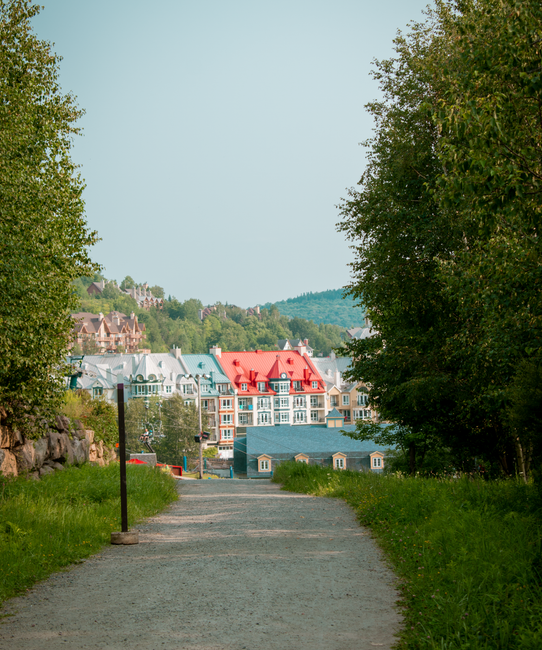
Mont-Tremblant is a lake-dotted town in the Laurentian mountains (Laurentides) of Quebec, about 130 km (80 miles) northwest of Montreal, and the home of eastern Canada’s best-known ski resort. The town of about 11,600 people has three faces: the resort at the foot of the mountain, with its car-free village of brightly painted buildings and a gondola to the summit; the quiet old village on Lac Mercier; and the everyday downtown of Saint-Jovite, now called Centre-ville. Around it lie forests, rivers and some 400 lakes and streams in Parc national du Mont-Tremblant, Quebec’s oldest national park. Come in winter to ski, in summer to swim, paddle and cycle, and in late September and early October for blazing autumn colour.
Right now in Mont-Tremblant
- Wed3–14°C38–57°F12 mm rain
- Thu8–14°C46–57°F2 mm rain
- Fri5–11°C40–52°F1 mm rain
- Mon 12 Oct Thanksgiving
Top tours in Mont-Tremblant
See all tours for Mont-Tremblant →
From local operators, with prices and reviews; you check availability and book on Viator, our partner. We may earn a commission at no extra cost to you. How we earn money
Mont-Tremblant at a glance
- Best months: December to March for skiing and snow; June to August for lakes, hiking and cycling; late September to mid-October for autumn colour.
- Time needed: a weekend for the resort village and one park visit; four days or more for a ski week or a cycling and canoe trip.
- Getting there: about 1.5 to 2 hours by car from Montreal on Highway 15 and Route 117, or by intercity bus; once there, a free town bus links the resort, the old village and Centre-ville. Prices on this page are in Canadian dollars.
- Costs (as of October 2026): daily access to Parc national du Mont-Tremblant is $10.30 per adult (about US$7.40), taxes included, and free for under-18s; the P’tit Train du Nord trail is free; hotels add Quebec’s 3.5% lodging tax plus 14.975% sales tax.
- Before you go: entry rules (eTA or visa), money, taxes and driving in Canada are in our Canada travel guide.
Mont-Tremblant’s areas and who each one suits
The resort and pedestrian village
At the base of the mountain, beside Lac Tremblant, the resort’s pedestrian village is a cluster of colourful, steep-roofed buildings full of hotels, condos, restaurants, bars and shops, linked by cobbled paths and a short open-air cabriolet lift. Ski lifts and the panoramic gondola start right from the village, so you can walk from your door to the slopes. It is lively, especially on winter weekends and during events, and the most expensive place to stay. Best for skiers, families and anyone who wants everything on foot.
The old village and Lac Mercier
A few kilometres south of the resort, the original village of Mont-Tremblant sits on the shore of Lac Mercier, with a white wooden church, a small public beach, a few cafés and inns, and the restored railway station of the old P’tit Train du Nord line, now on the cycling trail. It is calm and pretty, a good base for cyclists and for visitors who prefer a lakeside village to a resort.
Centre-ville (Saint-Jovite)
About 10 km (6 miles) south of the resort on Route 117, the former town of Saint-Jovite, merged into Mont-Tremblant in 2000, is the commercial centre, with a main street of restaurants and boutiques along Rue de Saint-Jovite, supermarkets, the tourist office and more affordable motels and B&Bs. It is practical for road-trippers and anyone on a budget.
Top things to see and do in Mont-Tremblant
Skiing at Tremblant
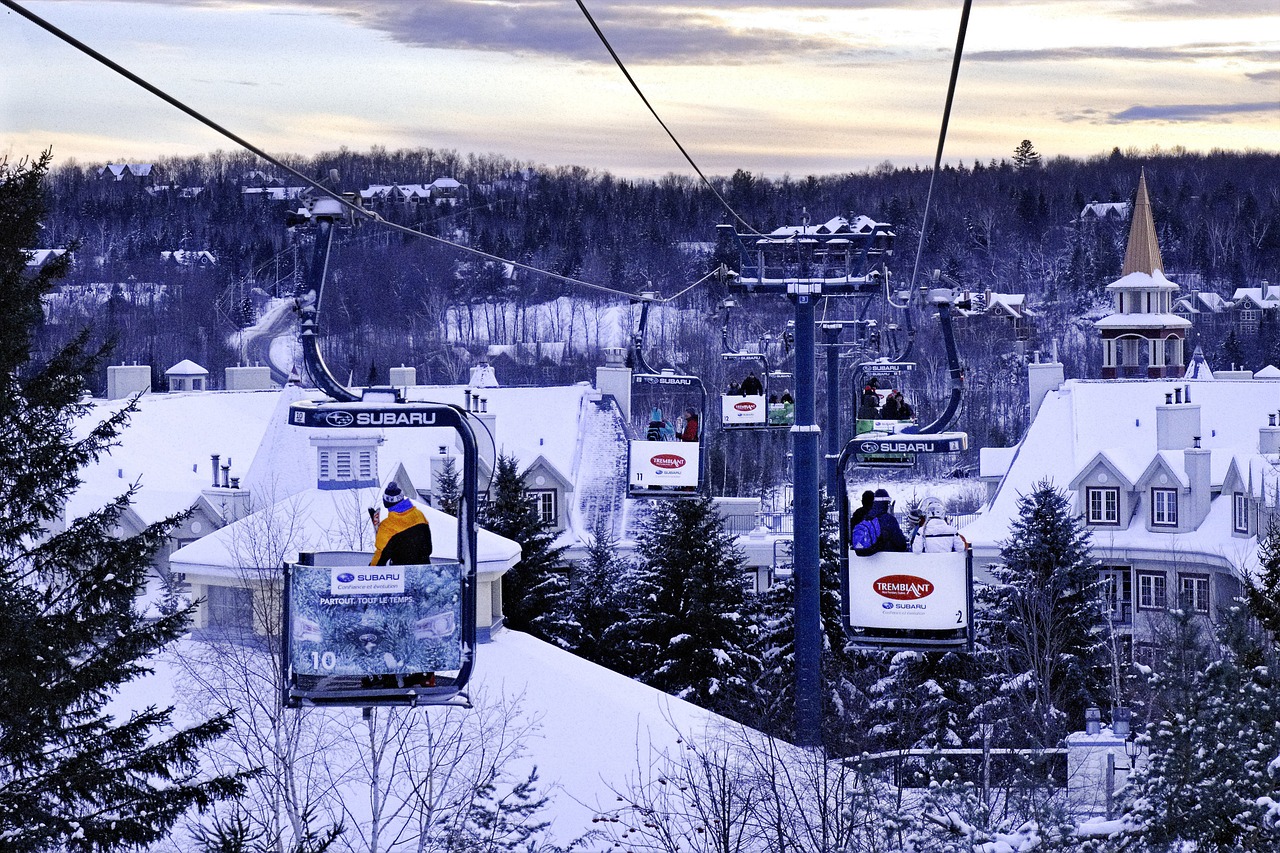
Tremblant is one of the largest ski areas in eastern North America, with about 100 runs spread over four sides of a 875 m (2,871 ft) mountain and a vertical drop of about 645 m (2,116 ft), served by a high-speed gondola from the village and a network of fast lifts. There are long cruising runs for intermediates, glades and steep mogul runs for experts, and a good ski school and children’s area. The season usually runs from late November or early December to mid-April, snow permitting; the resort publishes its exact 2026–27 opening dates in the autumn.
Lift tickets: prices vary by date and are generally cheapest when you buy online well ahead of your visit; window prices on holiday weekends can be high, so plan before you go. Multi-day tickets lower the daily cost, and Tremblant is part of the Ikon Pass, which may suit you if you ski several resorts in a season. Check tremblant.ca for the current season’s prices and conditions. Expect cold: January days at the summit are often below −15 °C (5 °F) before wind chill, and the resort’s lift lines can be long during Christmas, the Quebec school break in early March and US holiday weekends.
The panoramic gondola and summer on the mountain
In summer and autumn, the panoramic gondola carries walkers to the summit for views over Lac Tremblant and the rolling Laurentian forest, especially beautiful at the peak of the autumn colours. From the top, marked hiking trails lead around the summit or back down the mountain. In the village, summer brings mini-golf, a luge-style alpine slide, boat cruises and beaches on Lac Tremblant, and free outdoor concerts on many evenings. Gondola tickets and summer activities are sold by the resort; check the dates, as the gondola does not run every day in late autumn.
Parc national du Mont-Tremblant
Created on 12 January 1895, Parc national du Mont-Tremblant was the first park in Quebec and one of the first in North America. It covers 1,510 km² (583 sq miles) of forest, hills, six large rivers and some 400 lakes and streams, home to around 40 mammal species including moose, black bears and wolves. It is run by Sépaq, Quebec’s parks agency, and is open year-round. The park is divided into sectors: La Diable, the most visited, entered at the Lac-Monroe area north of the resort; Pimbina-Saint-Donat on the east side; and the wilder L’Assomption sector near Saint-Côme. The La Cachée sector is closed for the 2026 season.
| Sépaq national park entry (from 1 May 2026) | Adult (18+) | Children (17 and under) |
|---|---|---|
| Daily access, one park | $10.30 | Free |
| Annual card, one park | $51.50 | Free |
| Annual card, all Quebec national parks | $93.00 | Free |
Entry prices include taxes, and the fee covers parking. Children still need an access authorization, which is free. Sépaq limits the number of visitors per day, so buy your daily access online before you go (up to 30 days ahead); on busy autumn weekends, parking areas and trails can reach capacity and you may be turned away from a sector. Canada’s national park passes from Parks Canada are not valid in Quebec’s provincial national parks.
Canoeing, hiking and the via ferrata in the park
The park is a canoeist’s paradise. Rent a canoe or kayak (paddles, life jackets and a safety kit are included) at one of the park’s rental centres, including the Lac-Monroe visitor centre and La Crémaillère beach, or join the Winding Diable, an easy four-hour descent of the calm, twisting Rivière du Diable with transport back included. Private motorboats and rowboats are not allowed on most lakes, to keep out invasive plants. Hiking runs from mid-May to the first snowfalls, from short walks to waterfalls up to summit trails with wide views and a backcountry network of more than 82 km (51 miles); since 2022, 69.3 km of Quebec’s National Trail also crosses the park. The Via Ferrata du Diable, with cables, beams and rope bridges on the rock face of the Vache Noire above the river, is guided; the summer 2026 “Excursion” route cost $68.75 per adult, plus park entry. There is also a supervised beach at La Crémaillère, 124 km (77 miles) of cycling trails, and bike rental from $16.50 an hour.
Autumn colours
Mont-Tremblant is one of Quebec’s classic places to see the maples turn red, orange and gold. The peak is usually from late September to mid-October, often around the Thanksgiving long weekend (the second Monday of October). Ride the gondola, hike in the La Diable sector or cycle the P’tit Train du Nord to see it at its best, and go early on weekends, as roads, the resort village and park parking areas get very busy. In autumn 2026 the town added an extra free bus on the colour weekends, including the Thanksgiving Monday, 12 October.
The P’tit Train du Nord linear park
The old Laurentian railway line, built in the late 1800s and closed in the 1980s, is now the P’tit Train du Nord linear park, a 234 km (145 mile) multi-use trail from Saint-Jérôme north through Mont-Tremblant to Mont-Laurier. Gentle railway gradients, kilometre markers, restored stations, cafés, microbreweries and beaches along the way make it one of Canada’s favourite cycling trails, and it is free for everyone, all year round. Ride a section from Mont-Tremblant’s old village towards Labelle or Val-David for a day, or the whole thing in three or four days from inn to inn. Autobus Le Petit Train du Nord runs a bike shuttle from Saint-Jérôme and offers luggage transfers between your lodgings and bike rental; Saint-Jérôme is reachable from Montreal by commuter train with your bike. In winter, parts of the trail are used for cross-country skiing and others for snowmobiles, so check the trail conditions page before you set out. See our cycling guide for more routes.
- Mont-Tremblant National Park
Activities and best months
- HikingSépaq: Parc national du Mont-Tremblant, created in 1895, is Quebec's first national park, 1,510 km² with six rivers and some 400 lakes and streams, open all year, with the Via ferrata du Diable.
Other things to do in Mont-Tremblant
- Lakes and beaches: swim at the beaches on Lac Tremblant and Lac Mercier in July and August, take a boat cruise, or rent a paddleboard or kayak.
- Hiking: besides the national park, trails lead up and around Mont Tremblant itself; see our hiking guide for planning tips.
- Summer events: the resort village hosts outdoor concerts, endurance races such as triathlons and festivals through the summer; check Tourisme Mont-Tremblant’s events calendar for the dates of your stay.
- Winter beyond skiing: snowshoeing (48 km of trails in the national park), cross-country skiing (55 km of groomed classic trails in La Diable sector), dog-sledding, ice skating and snowmobile tours.
- Spas and food: Nordic spas with hot and cold pools in the forest are a Laurentian speciality; dine in the village or Centre-ville on Quebec cheeses, game and maple desserts.
- Casino and golf: the resort has a casino reached by gondola, and several golf courses open from late spring to autumn.
Day trips from Mont-Tremblant
Laurentian villages
Heading back south along Route 117 and the P’tit Train du Nord, the villages of Val-David (known for artists and rock climbing), Sainte-Agathe-des-Monts on Lac des Sables, and Saint-Sauveur, with its night skiing and outlet shops, make easy stops on the way to or from Montreal. North of Mont-Tremblant, Labelle has a small railway museum café on the trail.
Montreal, Ottawa and Quebec City
Montreal, about 1.5 to 2 hours away, is the obvious city to pair with a Tremblant stay (see our Montreal travel guide). Ottawa, the national capital, is about 2.5 hours southwest via Route 323 and the Ottawa River valley. Quebec City is about four hours by car (see our Quebec City travel guide), so combine it in a longer Quebec loop rather than a day trip.
Nearby destinations
- Montreal104 km
- Ottawa115 km
- Quebec City270 km
Getting there and getting around
By car from Montreal
The usual route from Montreal is Highway 15 north past Saint-Jérôme and Sainte-Agathe-des-Monts, then Route 117 to Mont-Tremblant, about 130 km (80 miles) and 1.5 to 2 hours without traffic. Friday evening and Sunday afternoon traffic in ski season and on autumn weekends can add an hour or more. In Quebec, winter tires are compulsory on passenger vehicles from 1 December to 15 March, and rental cars come equipped with them in that period; drive carefully on snowy, icy roads and watch for deer and moose at dusk. Turning right on a red light is allowed in Mont-Tremblant (unlike on the island of Montreal) unless a sign says otherwise.
By bus and from the airports
Autobus Galland runs an intercity coach service from Montréal to Mont-Laurier through the Laurentians, which stops in Mont-Tremblant; buy tickets online at least an hour before departure, and check the stops and timetable. Most international visitors fly into Montréal-Trudeau (YUL), about 2 hours away by car; private shuttles and car rental are the easiest ways on, especially in ski season. The small Mont-Tremblant International Airport at La Macaza, about 40 minutes north, has only occasional seasonal flights.
Getting around: the free town bus
The town runs BUS Mont-Tremblant, a free bus service linking Centre-ville, the old village and the resort (Centre de villégiature Tremblant). Timetables vary between weekdays, evenings and weekends, and change with the seasons; the summer timetable ended on 8 September 2026, with extra evening services on some autumn dates. Track the bus live in the Zenbus app or plan trips in the Transit app, which also shows connections with the regional Inter des Laurentides buses. In the resort itself, everything is on foot. To reach the national park, the canoe centres or trailheads, you will need a car, a bike or a tour.
When to go and how long to stay
Mont-Tremblant has a snowy continental climate, colder than Montreal. Winters are long and cold, with reliable natural snow plus snowmaking on the slopes from December to March; January and February are the coldest months. Summers are warm and pleasant, with cool nights and some thunderstorms, and black flies and mosquitoes in the forest in late May and June. Autumn brings the colours in late September and early October, and quiet “shoulder” periods in November and April–May, when some services close between seasons.
| Season | Average high | Average low | What it’s like |
|---|---|---|---|
| Spring (Mar–May) | 1–17 °C (34–63 °F) | −10 to 6 °C (13–42 °F) | Spring skiing in March; mud season in April; black flies from late May. |
| Summer (Jun–Aug) | 22–24 °C (72–76 °F) | 11–14 °C (52–56 °F) | Warm days, cool nights; swimming, paddling and cycling. |
| Autumn (Sep–Nov) | 18 to 3 °C (65–37 °F) | 8 to −4 °C (47–24 °F) | Peak colour late September to mid-October; quiet November. |
| Winter (Dec–Feb) | −4 to −7 °C (25–19 °F) | −13 to −18 °C (9–0 °F) | Cold and snowy; ski season; colder on the summit. |
Figures are Environment and Climate Change Canada’s 1981–2010 climate normals for Saint-Hippolyte, the nearest station with normals, about 50 km (30 miles) southeast of Mont-Tremblant in similar Laurentian country. It gets about 1,190 mm (47 in) of precipitation a year, including nearly 3 m (115 in) of snow, mostly from November to March. The summit of Mont Tremblant is several degrees colder and windier than the valley.
How long to stay: 2, 3 and 4 days
- Two days: the pedestrian village and the gondola (or a day of skiing), then a morning in La Diable sector of the national park and an evening in the old village or Centre-ville.
- Three days: add the Winding Diable canoe descent or the via ferrata in summer, a ride on the P’tit Train du Nord, or a spa afternoon.
- Four days or more: a full ski week, or a multi-day cycle along the P’tit Train du Nord with luggage transfers.
Where to stay in Mont-Tremblant and the accommodation tax
- The resort village: ski-in, ski-out hotels and condos with kitchens; walk to everything, but prices are highest at Christmas, in February and March and on autumn weekends.
- Lac Tremblant and around the mountain: lakeside lodges, chalets and rental homes; a car is useful.
- Old village and Lac Mercier: inns and B&Bs right on the cycling trail; quieter and good value.
- Centre-ville (Saint-Jovite): motels, small hotels and B&Bs near shops and restaurants, linked to the resort by the free bus.
- In the national park: Sépaq campgrounds, ready-to-camp tents, cabins and yurts; book well ahead for summer and autumn.
Taxes: accommodation in the Laurentides tourism region carries Quebec’s tax on lodging of 3.5% of the nightly price, on top of 5% GST and 9.975% QST (14.975% in total) on most purchases. Condo and rental bookings may also add cleaning and resort fees; check the final price before you pay. Book early for Christmas and New Year, the Quebec school break in early March and the autumn colour weekends.
Practical tips and staying safe outdoors
- Language: French is the everyday language, but the resort works comfortably in English, and most staff in hotels and shops are bilingual.
- Time zone: Eastern Time, with daylight saving time from March to November.
- Cold: on the slopes, dress in layers, cover your face and check the wind chill; take breaks indoors on very cold days, and watch for frostbite on cheeks and fingers.
- Wildlife: black bears live in the park; never feed animals, store food in your car or bear-proof lockers when camping, and keep your distance from moose, especially in autumn.
- On the water: lakes are cold outside midsummer; wear a life jacket in canoes, stay close to shore when the wind picks up, and swim at supervised beaches.
- Insects and ticks: black flies and mosquitoes peak in late May and June; bring repellent and check for ticks after walks in grass and woods.
- Cell coverage: phone signal is patchy deep in the national park; download maps and tell someone your plans.
- Emergencies: call 911.
What to pack for Mont-Tremblant
For skiing, bring (or rent) a helmet, goggles, a warm waterproof jacket and trousers, thermal base layers, a neck warmer, good gloves or mittens and hand warmers; in the village, add warm boots with grip. In summer, pack a swimsuit, quick-dry layers, a rain jacket, sturdy hiking shoes, sunscreen, a sunhat, insect repellent and a reusable water bottle. In autumn, mornings can be near freezing, so bring a fleece, a hat and light gloves for the gondola and early hikes.
What to pack
- Day packs and anti-theft bagsA 20–30 litre pack carries layers, water, a head torch and snacks on full-day levada walks.
- Fleeces and warm layersSummits like Pico do Areeiro averaged about 11 °C over 2024, so a fleece is needed even in summer.
- HeadlampsLevada routes such as PR1 and PR9 pass through long, dark, wet tunnels.
- Hiking shoes and bootsMadeira's levadas and the Azores' crater rims are wet, rocky and slippery, so grippy shoes matter more than anywhere else in Portugal.
- Rain jacketsMountain and island weather changes fast; a real shell beats an umbrella in the wind.
- Trekking polesLong stone staircases and steep descents on Madeira's peaks and the Azores' crater rims are easier on the knees with poles.
- Water bottles and hydration packsAlgarve and Alentejo trails are hot and exposed with few refill points.
Mont-Tremblant travel FAQ
How far is Mont-Tremblant from Montreal?
About 130 km (80 miles), or 1.5 to 2 hours by car via Highway 15 and Route 117. Autobus Galland’s Montréal–Mont-Laurier coaches also stop in Mont-Tremblant.
When is the ski season at Tremblant?
Usually from late November or early December to mid-April, depending on snow. Check the resort’s site for the confirmed 2026–27 opening and closing dates.
How can I save on Tremblant lift tickets?
Buy online well before your visit, ski on weekdays outside holiday periods and choose multi-day tickets; if you ski several resorts a season, compare the Ikon Pass, which includes Tremblant.
How much does it cost to enter Parc national du Mont-Tremblant?
$10.30 per adult per day, taxes included; under-18s are free but need an access authorization. Buy online before you go, as daily visitor numbers are capped.
When are the fall colours in Mont-Tremblant?
Usually from late September to mid-October, with the peak often around Canadian Thanksgiving. Go early in the day on weekends to beat the crowds.
Is the P’tit Train du Nord trail free?
Yes. The 234 km linear park from Saint-Jérôme to Mont-Laurier is free for everyone year-round. Shuttles, bike rental and luggage transfer are paid services.
Is there free transport in Mont-Tremblant?
Yes. BUS Mont-Tremblant is a free town bus linking Centre-ville, the old village and the resort; timetables change with the season, so check them in the Zenbus or Transit app.
Where can I go canoeing near Mont-Tremblant?
In the national park: rent canoes at Lac-Monroe or La Crémaillère beach in La Diable sector, or book the four-hour Winding Diable river descent, which includes transport back.
What taxes do hotels in Mont-Tremblant charge?
Quebec’s 3.5% tax on lodging plus 5% GST and 9.975% QST. Resort and cleaning fees may be added to condo bookings.
Plan your trip
Partner links: TravelerCenter may earn a commission if you book, at no extra cost to you.
Sources · last reviewed 4 October 2026
Researched and last reviewed on 4 October 2026. National park history, size, sectors, closures, activities, rental and via ferrata prices come from Parc national du Mont-Tremblant (Sépaq), and entry fees from Sépaq’s national park entry fees page; the free town bus from the Ville de Mont-Tremblant; the trail, its length, free access, shuttles and luggage service from Parc linéaire Le P’tit Train du Nord; the intercity coach route from Autobus Galland; the tax on lodging from Revenu Québec; sales tax rates from the Canada Revenue Agency; climate from Environment and Climate Change Canada’s 1981–2010 climate normals for Saint-Hippolyte; population and merger date from Wikidata. Tremblant resort statistics, ski season timing and lift ticket advice, summer events, driving times, the winter tire rule and colour timing are general references and flagged for checking, because the resort’s own site could not be read. Prices and timetables change, so check the official sites before you go. For entry rules, money and general safety, see our Canada travel guide.
Also: sepaq.com
Data: Weather: MET Norway (CC BY 4.0) · Air quality: OpenAQ · Rates: ECB · Holidays: Nager.Date · Costs: World Bank ICP and price levels · © OpenStreetMap contributors (ODBL) · Wikidata (CC0)