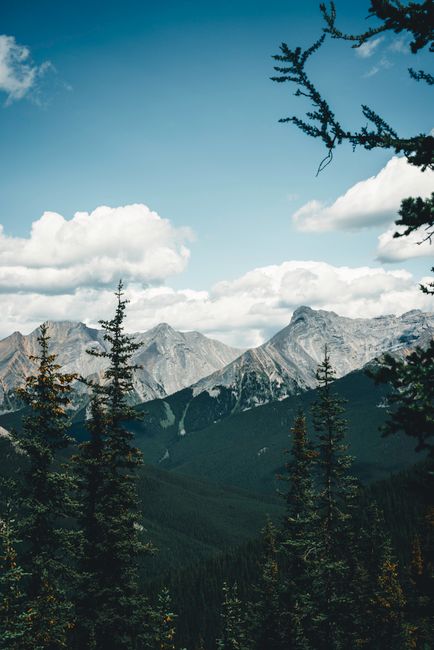
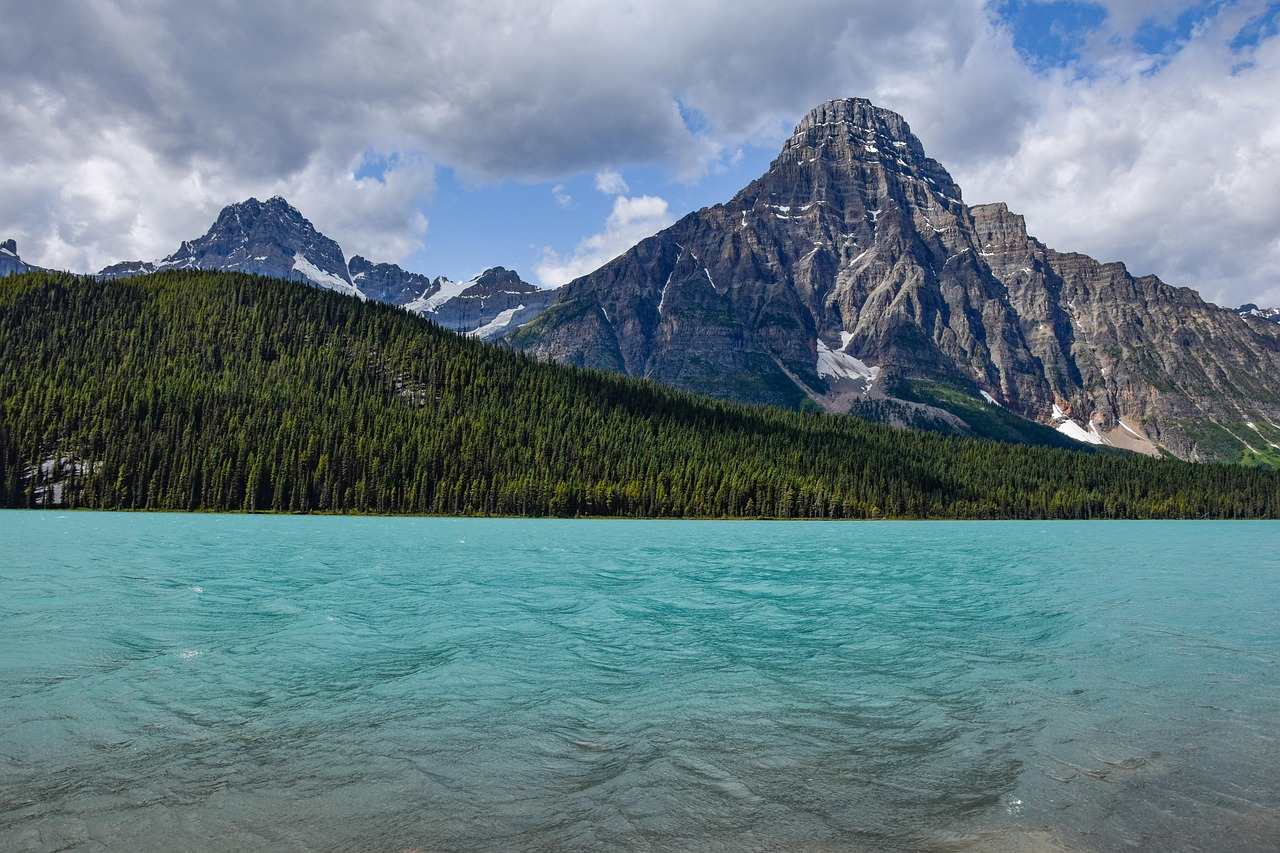
Banff National Park, Canada’s first national park, protects 6,641 km² (2,564 square miles) of the Rocky Mountains in Alberta: limestone peaks, glaciers, hot springs, forests full of elk and bears, and the famous turquoise lakes, Lake Louise, Moraine Lake and Peyto Lake, whose colour comes from fine glacial rock flour. The town of Banff sits inside the park on the Bow River, about 1.5 hours’ drive west of Calgary, with hotels, restaurants and a gondola up Sulphur Mountain. Lake Louise village lies 58 km (36 miles) farther west, and from there the Icefields Parkway runs north to Jasper. Visiting is easy but needs a little planning: everyone who stops in the park needs a park pass, Moraine Lake can only be reached by shuttle or tour bus, parking at Lake Louise is scarce and paid in summer, and from November to May you drive mountain roads in winter conditions. Summer is busy and beautiful, autumn brings golden larches, and winter means three ski resorts and frozen lakes.
Right now in Banff National Park (Banff)
- Wed3–17°C38–62°FPartly cloudy
- Thu4–16°C39–60°FPartly cloudy
- Fri5–12°C40–54°F11 mm rain
- Mon 12 Oct Thanksgiving
Top tours in Banff National Park
See all tours for Banff National Park →
From local operators, with prices and reviews; you check availability and book on Viator, our partner. We may earn a commission at no extra cost to you. How we earn money
Banff at a glance
- Best months: mid-June to September for hiking and the lakes (snow lingers on high trails until July); mid-September to early October for golden larches and fewer people; December to April for skiing.
- Time needed: two days for the town of Banff, the gondola and Lake Louise; three or four to add Moraine Lake, Johnston Canyon, a proper hike and the Icefields Parkway.
- Getting there: Calgary International Airport (YYC) is the gateway; the town of Banff is about 1.5 hours away by car or airport shuttle along the Trans-Canada Highway (Highway 1).
- Park fees (as of October 2026): adults $12.25 a day (about US$9), seniors $10.75, families or groups in one vehicle $24.50, under-18s free; or a $83.50 adult Discovery Pass for a year. Prices on this page are in Canadian dollars.
- Before you go: entry rules (eTA or visa), money, taxes and driving in Canada are in our Canada travel guide.
Park passes and fees (as of October 2026)
Everyone who stops anywhere in Banff National Park needs a valid park pass, displayed in your vehicle or shown when a Parks Canada employee asks. The only exception is travelling straight through without stopping on the Trans-Canada Highway or Highway 93 South. The pass also covers the Icefields Parkway and neighbouring Jasper, Yoho and Kootenay national parks for the days it is valid. Buy it online, at the park gates on the Trans-Canada Highway, or at the visitor centres in Banff and Lake Louise. Free admission with the Canada Strong Pass ended on 7 September 2026; regular fees apply again.
| Pass | Price (CAD) | What it covers |
|---|---|---|
| Daily admission, adult (18–64) | $12.25 | One person, valid until 4 p.m. the following day |
| Daily admission, senior (65+) | $10.75 | One person |
| Daily admission, family/group | $24.50 | Up to seven people arriving in one vehicle |
| Youth 17 and under | Free | Always free |
| Parks Canada Discovery Pass, adult / senior | $83.50 / $71.50 | 12 months at more than 80 national parks and historic sites |
| Discovery Pass, family/group | $167.50 | Up to seven people in one vehicle for 12 months |
Which to buy: a family pass for a week in the Rockies costs 7 × $24.50 = $171.50, so a family Discovery Pass ($167.50, about US$121) pays for itself on a seven-day trip and also covers Jasper, Yoho and Kootenay, plus sites such as the Halifax Citadel and the Fortress of Louisbourg later in the year. A couple staying four days pays $98 at the daily rate, so day passes are cheaper for short trips. Extra fees apply to camping, the Banff Upper Hot Springs, the Parks Canada shuttle, backcountry camping ($15 per person per night) and paid parking at Lake Louise and Sulphur Mountain.
Lake Louise and Moraine Lake: shuttles, parking and Moraine Lake’s bus-only road
The two most famous lakes in the Rockies are 14 km (9 miles) apart, and both get far more visitors than their parking lots can hold. Since 2023, Moraine Lake Road has been closed to personal vehicles all year. The only ways in are the Parks Canada shuttle, Roam Public Transit’s connections, a licensed commercial tour or bus, or a room at Moraine Lake Lodge. Driving up yourself, even to drop someone off, is not allowed, and fines can be heavy. Moraine Lake is a backcountry spot: there is no cell service, running water or lighting, only pit toilets.
| Parks Canada shuttle (2026) | Season | Departures | Last return |
|---|---|---|---|
| Park and Ride ↔ Lake Louise Lakeshore | 15 May to 12 October | Every 30 min, 6:30 a.m.–5 p.m. | 7:30 p.m. |
| Park and Ride ↔ Moraine Lake | 1 June to 12 October | Every 30 min, 6:30 a.m.–5 p.m. | 7:30 p.m. |
| Lake Connector (Lake Louise ↔ Moraine Lake) | 1 June to 12 October | Every 30 min, 7 a.m.–6 p.m. | 6 p.m. from Moraine Lake |
| Alpine Start (from Lake Louise Lakeshore) | 1 June to 12 October | 4 a.m. and 5 a.m. | Via the Lake Connector |
Fares and booking: $12.75 for adults, $6 for seniors and $4 for youth 17 and under, plus a non-refundable reservation fee of $3.50 online or $5.50 by phone (1-877-737-3783). One ticket covers both lakes in a day and the return to the free Park and Ride at the Lake Louise Ski Resort (1 Whitehorn Road), but not your park pass. Reservations open each April (15 April in 2026) for 40% of the seats; the other 60% are released at 8 a.m. Mountain Time two days before each departure, the best chance for last-minute plans. Expect to wait 30 minutes to an hour for a bus at busy times. In 2026 the last shuttle day is 12 October.
Lake Louise by car: the Lakeshore lot is open all year, but parking costs $42 per vehicle per day from 15 May to 12 October 2026 and is usually full early in the morning in summer. Without a shuttle, transit or tour booking you are unlikely to find a space. From the town of Banff, Roam Public Transit’s reservable Banff–Lake Louise express is the easiest option ($12.50 one way or $25 for a day pass for adults). After the shuttle season, Lake Louise is still reachable by car or Roam bus, but Moraine Lake effectively closes: plan on visiting it only between June and mid-October, when the lake is thawed.
The Icefields Parkway and winter driving
The Icefields Parkway (Highway 93 North) runs 232 km (144 miles) from Lake Louise to the town of Jasper, past more than a hundred glaciers, Bow Lake, Peyto Lake and the Columbia Icefield. Allow at least four hours one way without stops, and a full day with them. You need a park pass to drive it. Services operate only from early May to mid-October; the single gas station, at Saskatchewan River Crossing, opens in summer only, so fill up in Lake Louise or Jasper. There is no cell coverage on the parkway, apart from limited coverage at the Columbia Icefield from May to early October, so download maps before you leave.
Winter conditions: Parks Canada says winter weather on the parkway lasts from early November to mid-June. In winter there are no services at all along the 232 km: no fuel, hotels, restaurants or phone signal. Snow tires (marked with a snowflake or “M+S”) or chains are mandatory from 1 November to 31 March, and whenever the road is snowy or icy. From October to May, plowing and road maintenance happen only between 7 a.m. and 3:30 p.m. The road can close for storms or avalanche control, and its 38 major avalanche paths are signed as no-stopping zones. Check 511 Alberta (511alberta.ca or call 511) and the weather before setting out, carry warm clothes, food and water, and drive in daylight. Note that British Columbia, next door in Yoho and Kootenay, requires winter tires or chains on most routes from 1 October to 30 April.
Safety: wildlife, cold and wildfire smoke
- Wildlife: grizzly and black bears, elk, bighorn sheep, wolves and cougars all live here. Stay at least 100 m (330 ft) from bears, wolves and cougars and 30 m (100 ft) from elk, deer and sheep. During the elk rut, from late August to mid-October, bull elk are aggressive, even in town: never get between a male and the females. Feeding or disturbing wildlife is illegal, with fines up to $25,000.
- Bears on trails: hike in groups, make noise, carry bear spray and know how to use it, and check the park’s bulletins: trails close when bears are feeding nearby. In autumn 2026, for example, the Lake Minnewanka and Aylmer Pass trails were closed until further notice because of food-seeking black bears, and several Lake Louise-area trails carry group-hiking restrictions in summer.
- Cold and altitude: the town sits at about 1,380 m (4,530 ft) and trails climb well above 2,000 m. Snow can fall in any month, and summer nights are often close to freezing. In winter, temperatures below −20 °C (−4 °F) are possible; dress in layers and watch for frostbite.
- Wildfire and smoke: wildfires are a natural part of these forests, and smoke from fires in British Columbia or Alberta can haze the views for days in July and August. Check fire bans and current wildfires with Parks Canada, follow air-quality alerts, and report smoke to Banff Dispatch on 403-762-1470. Parks Canada also carries out prescribed burns in spring and autumn, which close small areas.
- Water and avalanches: glacial lakes and rivers are dangerously cold and fast. In winter, avalanche terrain starts just beyond the ski runs; check Avalanche Canada before any backcountry trip.
- Drones are prohibited in all national parks without a permit.
Top things to see in Banff
Lake Louise
The emerald lake below the Victoria Glacier, framed by the Fairmont Château Lake Louise, is the classic view of the Canadian Rockies. Walk the flat lakeshore trail to the far end, rent a canoe in summer, or hike up to the Lake Agnes Tea House (about 3.5 km / 2.2 miles each way, 400 m of climbing) or the Plain of Six Glaciers. The lake usually stays frozen from November to early June; in winter you can skate on the rink cleared in front of the hotel. Come before 8 a.m. or late in the day for calm water and fewer people.
Moraine Lake and the Valley of the Ten Peaks
Moraine Lake, ringed by the jagged Valley of the Ten Peaks, is even bluer than Lake Louise. Climb the short Rockpile Trail for the famous view, or walk the lakeshore. Strong hikers head up to Larch Valley and Sentinel Pass, best in the last two weeks of September, when the alpine larches turn gold; Parks Canada often requires hikers there to keep in tight groups because of bears. Moraine Lake is reachable only from June to mid-October, by Parks Canada shuttle, Roam transit connections or a licensed tour.
The town of Banff, Sulphur Mountain and the hot springs
Banff Avenue, with Cascade Mountain at its end, is lined with shops, restaurants and outfitters. The Banff Gondola, run by a private company, climbs Sulphur Mountain to a boardwalk and viewing decks at about 2,280 m; you can also hike up. At the foot of the mountain, the Banff Upper Hot Springs, Canada’s highest outdoor hot pool, costs $19.75 for adults ($64.25 for a family of four). It closes for annual maintenance from 13 October to early November 2026. Roam bus Route 1 runs from downtown every 20 minutes; parking at the Sulphur Mountain lots costs $17.50 a day in summer. The Cave and Basin National Historic Site, where the hot springs that led to the park’s creation in 1885 were found, tells the story of Canada’s national parks (adults $10, seniors $8.50). The Fairmont Banff Springs, the “castle in the Rockies,” and Bow Falls are a short walk from town.
Johnston Canyon and the Bow Valley Parkway
The 48 km Bow Valley Parkway (Highway 1A) is the slow, scenic alternative to the Trans-Canada between Banff and Lake Louise, with good chances of seeing wildlife. Its highlight is Johnston Canyon, where steel catwalks lead along a narrow limestone gorge to the Lower Falls (about 1.2 km) and Upper Falls (about 2.6 km); in winter, guided ice walks visit the frozen falls. Stay on the trail: going off-trail in the canyon is prohibited. Two rules affect driving: from 1 March to 25 June, the 17 km eastern section is closed to all travel from 8 p.m. to 8 a.m. for wildlife, and during the spring and autumn cycling pilot (1 September to 6 October in 2026), that section is closed to private vehicles. Reach Johnston Canyon via Castle Junction when it is, or take Roam’s Johnston Canyon bus ($5 one way for adults).
Lake Minnewanka and the Minnewanka Loop
Just northeast of town, the Minnewanka Loop passes Lake Minnewanka, the largest lake in the park, with boat cruises in summer, plus Two Jack Lake and frequent bighorn sheep. The western part of the loop road closes from November to May to protect a wildlife corridor. Boats and paddlers on park waters need an aquatic invasive species self-certification permit and must clean, drain and dry their gear.
Peyto Lake, Bow Lake and the Columbia Icefield
On the Icefields Parkway, Bow Lake and Crowfoot Glacier appear about 35 km north of Lake Louise, and Peyto Lake’s wolf-head-shaped turquoise basin is a short walk from the Bow Summit viewpoint. Farther north, past Saskatchewan River Crossing, the parkway enters Jasper National Park at Sunwapta Pass and reaches the Columbia Icefield and the Athabasca Glacier. See our Jasper National Park guide for the northern half.
Other sights
- Banff Upper Hot Springs
Viewpoints
- Sulphur Mountain
Nature
- Johnston Canyon
- Lake Louise
- Lake Minnewanka
- Moraine Lake
- Peyto Lake
Other things to do in Banff
Activities and best months
- HikingJunJulAugSepOctParks Canada: Moraine Lake Road is closed to personal vehicles; Parks Canada shuttles run to Lake Louise from 15 May and to Moraine Lake from 1 June until 12 October 2026, every 30 minutes (adult $12.75), so plan lake visits for June to mid-October.
- WaterThe Banff Upper Hot Springs, Canada's highest outdoor pool, open since 1886, cost $19.75 for adults (closed 13 October to early November 2026 for maintenance).
- Skiing and snowboarding: three resorts operate in the park. Lake Louise Ski Resort’s 2026/27 season runs from 6 November 2026 to 2 May 2027; Banff Sunshine, at the Continental Divide, usually opens in early November and runs to late May; Mt Norquay, the small hill above town, is open until 18 April 2027 and has night skiing on some evenings.
- Hiking: from easy strolls (Fenland Trail, Marsh Loop, Johnston Canyon) to classic day hikes (Lake Agnes, Plain of Six Glaciers, Sentinel Pass, Cory Pass) and the Skoki backcountry. Check trail conditions before going: high trails hold snow into July.
- Canoeing and paddling: rent a canoe on Lake Louise, Moraine Lake or the Bow River in town in summer; paddleboards and private boats need the invasive species permit.
- Cycling: the paved Legacy Trail links Canmore and Banff (not cleared in winter), and the car-free Bow Valley Parkway cycling pilot runs in spring and early autumn.
- Winter fun: skating on Lake Louise and the Vermilion Lakes when Parks Canada says the ice is safe, snowshoeing, cross-country skiing (Banff’s groomed trails from 1 December to 15 April, Lake Louise’s from 1 November to 30 April), dog sledding and the Johnston Canyon ice walk.
- Northern lights: auroras are possible on clear, dark nights from late August to April, especially away from town lights at Lake Minnewanka or Vermilion Lakes. Forecasts can’t promise a show, so treat it as a bonus.
Getting there
By air: Calgary International Airport (YYC) has flights from across Canada, the US and Europe. From the airport, the town of Banff is about 145 km (90 miles) west, roughly 1.5 to 2 hours by car on the Trans-Canada Highway; several private shuttle companies run between the airport and Banff or Lake Louise hotels. Car rental is the most flexible choice if you want to drive the Icefields Parkway. Edmonton and Vancouver airports are farther away.
From Calgary city and Canmore: Canmore, just outside the park gates, has cheaper hotels and is linked to Banff by Roam’s regional bus ($6 one way for adults). No VIA Rail passenger train stops in Banff; the scenic Rocky Mountaineer, a private tourist train, does call here on its Vancouver routes in summer. From Jasper: 290 km (180 miles) along the Icefields Parkway, about 4 hours without stops.
Getting around without a car: Roam Public Transit runs buses in Banff town (single ride $2 for adults, $5 day pass), to Canmore, Lake Minnewanka, Johnston Canyon and Lake Louise; a $30 system-wide day pass covers everything. Pay with exact cash, the Token Transit or Transit app, or at the ticket counter in the Banff Visitor Centre (224 Banff Avenue). Children 12 and under ride free.
Around Banff
Yoho National Park in British Columbia, 30 minutes west of Lake Louise, has Emerald Lake, the Natural Bridge and Takakkaw Falls (the road to the falls opens only in summer). Kootenay National Park, reached by Highway 93 South, has Marble Canyon and the Radium Hot Springs. Jasper National Park lies at the north end of the Icefields Parkway. Canmore and Kananaskis Country, just east of the gates, have hiking and cheaper beds. Calgary, with its Stampede and museums, is 1.5 hours east. See our Jasper National Park and Calgary guides.
Nearby destinations
- Calgary105 km
- Jasper National Park243 km
- Glacier National Park296 km
When to go and how long to stay
Banff has short, warm summers and long, cold winters. July and August bring the warmest days and busiest trails, with afternoon thunderstorms and sometimes wildfire smoke. September is often the loveliest month: clear, cool and calmer, with larches turning gold in the high valleys in the second half of the month and elk bugling in the valleys. October is quiet, with the first snow on the peaks and many services closing after Thanksgiving (12 October in 2026). From November to April, snow covers everything, the lakes freeze and the ski season takes over; May and June are muddy shoulder months with high trails still snowbound.
| Season | Average high | Average low | What it’s like |
|---|---|---|---|
| Spring (Mar–May) | 3–14 °C (38–58 °F) | −8 to 0 °C (17–33 °F) | Snow in town until April; lakes frozen; spring skiing. |
| Summer (Jun–Aug) | 18–23 °C (65–74 °F) | 4–7 °C (40–45 °F) | Peak season; June is the wettest month; cold nights. |
| Autumn (Sep–Nov) | 17 °C falling to 1 °C (63 to 33 °F) | 2 to −8 °C (36–18 °F) | Golden larches in September; first snow in October. |
| Winter (Dec–Feb) | −4 to −1 °C (24–30 °F) | −13 °C (8–9 °F) | Ski season; cold snaps below −20 °C (−4 °F). |
Figures are averages for 1996–2025 calculated from Environment and Climate Change Canada’s daily records at the Banff weather station (1,397 m), which records about 430 mm (17 in) of rain and melted snow a year. Lake Louise, 160 m higher, is a few degrees colder and much snowier.
Banff in two days
Day one: the town, Bow Falls and the Fairmont Banff Springs, the Cave and Basin, the gondola or a hike up Sulphur Mountain, and a soak at the Upper Hot Springs. Day two: an early shuttle to Moraine Lake (June to mid-October), the Lake Connector to Lake Louise, and a hike to the Lake Agnes Tea House.
Four days or more
Add Johnston Canyon and the Bow Valley Parkway, Lake Minnewanka, a full day on the Icefields Parkway to Peyto Lake and the Columbia Icefield (or straight on to Jasper), and a day trip to Emerald Lake in Yoho. In winter, swap hikes for ski days at Lake Louise, Sunshine and Norquay.
Where to stay in Banff and the taxes on your bill
- Town of Banff: the widest choice, from hostels to the Fairmont Banff Springs, with restaurants and buses on the doorstep. Book months ahead for July and August.
- Lake Louise: a small village plus the Fairmont Château Lake Louise and Moraine Lake Lodge; quiet in the evenings and handy for early starts.
- Canmore: outside the park, 20 minutes from Banff; often cheaper, with many condo-style rentals.
- Icefields Parkway: a few lodges and Hostelling International wilderness hostels, mostly open in summer only.
- Camping: Parks Canada campgrounds such as Tunnel Mountain, Two Jack and Lake Louise, from about $22 to $47 a night (oTENTik tent-cabins $147.50); book through the Parks Canada Reservation Service.
Taxes: Alberta has no provincial sales tax, so most purchases carry only the 5% federal GST. Hotel rooms also carry Alberta’s tourism levy, which rose from 4% to 6% for stays booked from 1 April 2026, and some Banff hotels add their own destination or resort fees. Check the total before you book.
Practical tips for Banff
- Time zone: Mountain Time, the same as Calgary and Denver. Clocks go back on 1 November 2026 and forward on 14 March 2027.
- Start early: parking at Lake Louise, Johnston Canyon and Peyto Lake fills by mid-morning in summer; Parks Canada’s BanffNow site shows parking in real time.
- Check the bulletins: trail closures, bear warnings and fire bans change week to week; the Banff and Lake Louise visitor centres can help.
- Phone signal: good in Banff and Lake Louise villages, absent at Moraine Lake and along most of the Icefields Parkway.
- Emergencies: call 911; Banff Dispatch for wildlife and wildfire reports is 403-762-1470.
What to pack for Banff
Layers in every season: a warm fleece or down jacket and a waterproof shell even in July, hat and gloves for early mornings, sturdy hiking shoes with good grip, sunscreen and sunglasses (the mountain sun is strong), a reusable water bottle and bear spray for any trail (buy it in Banff; you cannot fly with it). From October to May add insulated waterproof boots, ice cleats for icy paths, and a full winter coat. Drivers should carry a winter kit with a blanket, snacks, water and a phone charger.
What to pack
- Day packs and anti-theft bagsA 20–30 litre pack carries layers, water, a head torch and snacks on full-day levada walks.
- Fleeces and warm layersSummits like Pico do Areeiro averaged about 11 °C over 2024, so a fleece is needed even in summer.
- HeadlampsLevada routes such as PR1 and PR9 pass through long, dark, wet tunnels.
- Hiking shoes and bootsMadeira's levadas and the Azores' crater rims are wet, rocky and slippery, so grippy shoes matter more than anywhere else in Portugal.
- Rain jacketsMountain and island weather changes fast; a real shell beats an umbrella in the wind.
- Trekking polesLong stone staircases and steep descents on Madeira's peaks and the Azores' crater rims are easier on the knees with poles.
- Water bottles and hydration packsAlgarve and Alentejo trails are hot and exposed with few refill points.
Banff travel FAQ
How much does it cost to enter Banff National Park?
As of October 2026, $12.25 per adult per day, $10.75 for seniors, $24.50 for a family or group of up to seven in one vehicle, and free for under-18s. An annual Discovery Pass costs $83.50 for an adult or $167.50 for a family.
Can I drive to Moraine Lake?
No. Moraine Lake Road is closed to personal vehicles all year. Take the Parks Canada shuttle from the Lake Louise Park and Ride (1 June to 12 October in 2026), Roam transit connections or a licensed tour, or stay at Moraine Lake Lodge.
How do I book the Parks Canada shuttle to Lake Louise and Moraine Lake?
Through the Parks Canada Reservation Service online or on 1-877-737-3783. Seats open in April, with 60% released at 8 a.m. Mountain Time two days before each date. Adults pay $12.75 plus a $3.50 online booking fee.
How much is parking at Lake Louise?
$42 per vehicle per day at the Lakeshore lot from 15 May to 12 October 2026, and the lot is often full by early morning. Parking at the Park and Ride is free for shuttle passengers.
Is the Icefields Parkway open in winter?
Yes, but it is a remote winter road with no services or cell coverage for 232 km. Snow tires or chains are mandatory from 1 November to 31 March, and the road can close for storms or avalanche control. Check 511 Alberta first.
When is ski season in Banff for 2026/27?
Lake Louise opens on 6 November 2026 and runs to 2 May 2027; Sunshine usually runs from early November to late May; Mt Norquay is open until 18 April 2027.
How far is Banff from Calgary airport?
About 145 km (90 miles), roughly 1.5 to 2 hours by car or airport shuttle on the Trans-Canada Highway.
When do the larches turn gold in Banff?
Usually in the second half of September. Larch Valley above Moraine Lake is the most famous spot, reached by shuttle; Parks Canada may require hikers to travel in tight groups there because of bears.
Is it safe to hike in Banff with bears?
Yes, with precautions: hike in groups, make noise, carry bear spray, keep 100 m from bears, and obey trail closures and group-hiking restrictions posted in the park’s bulletins.
What is the best time to visit Banff?
Mid-June to September for lakes and hiking, the second half of September for larches and fewer crowds, and December to April for skiing.
Plan your trip
Partner links: TravelerCenter may earn a commission if you book, at no extra cost to you.
Sources · last reviewed 4 October 2026
Researched and last reviewed on 4 October 2026. Park fees, the Discovery Pass, shuttle dates, fares and booking rules, parking fees, the Moraine Lake Road restriction, the travel-pass order, Icefields Parkway services, cell coverage and winter tire rules, seasonal closures, the Bow Valley Parkway restrictions, trail closures, elk-rut and wildlife guidance, wildfire information, hot springs and Cave and Basin fees come from Banff National Park (Parks Canada); bus fares from Roam Public Transit; the tourism levy from the Government of Alberta; ski season dates from Lake Louise Ski Resort and Mt Norquay; climate from Environment and Climate Change Canada’s daily records for Banff. The park’s area, distances and drive times from Calgary, Sunshine Village’s usual season, aurora timing and some trail lengths are general references and flagged for checking. Conditions change quickly in the mountains, so check Parks Canada’s bulletins and 511 Alberta before you travel. For entry rules, money and general safety, see our Canada travel guide.
Also: parks.canada.ca
Data: Weather: MET Norway (CC BY 4.0) · Air quality: OpenAQ · Rates: ECB · Holidays: Nager.Date · Costs: World Bank ICP and price levels · © OpenStreetMap contributors (ODBL) · Wikidata (CC0)