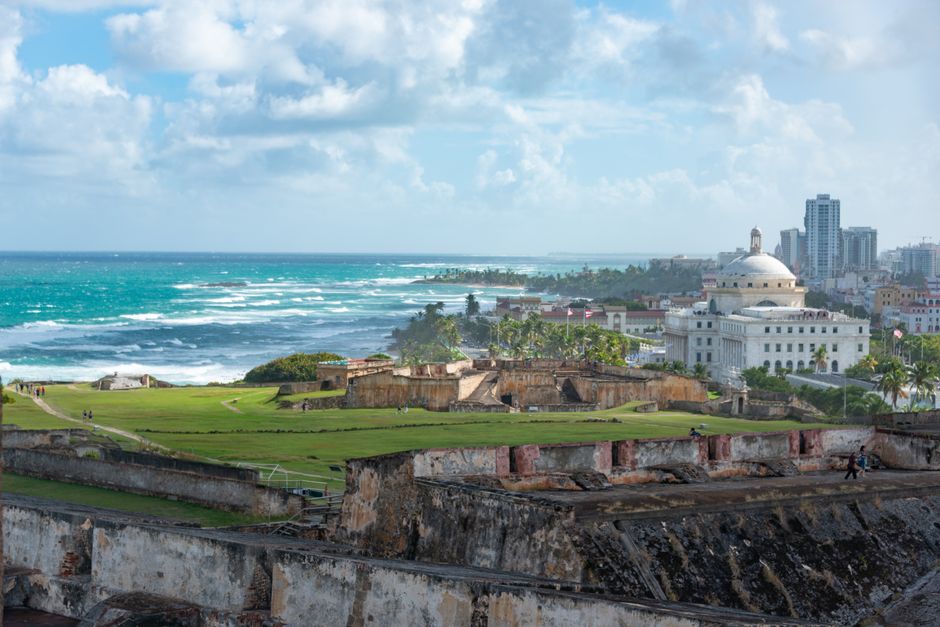
San Juan is the oldest city under the US flag and one of the most colorful in the Caribbean. Old San Juan, founded in the early 1500s on a narrow islet at the mouth of the bay, is a walled town of blue cobblestone streets, pastel houses with wrought-iron balconies, shady plazas and two huge Spanish forts, El Morro and San Cristóbal, now a national historic site. East of the old town, the beach districts of Condado, Ocean Park and Isla Verde have the big hotels, casinos and surf, and Santurce has the murals, food market and nightlife. It is also the gateway to the whole island: El Yunque rainforest is under an hour away, and the ferry to Vieques and Culebra leaves from Ceiba to the east. Visit from December to April for drier, breezy weather; summer and fall are hotter, wetter and hurricane season.
Right now in San Juan
- Tue 25–31°C 77–88°F 2 mm Rain
- Wed 24–31°C 75–88°F 1 mm Showers
- Thu 24–31°C 76–89°F 1 mm Cloudy
- Mon 12 Oct Columbus Day (Día de la Raza / Descubrimiento de América)
Weather: MET Norway (CC BY 4.0) · Sea temperature: NOAA CoastWatch · Air quality: OpenAQ · Holidays: Nager.Date
Top tours in San Juan
See all tours for San Juan →
From local operators, with prices and reviews; you check availability and book on Viator, our partner. We may earn a commission at no extra cost to you. How we earn money
San Juan at a glance
- Best for: colonial streets and forts, beaches in the city, food and nightlife, and day trips to El Yunque, Luquillo and the bioluminescent bay in Fajardo.
- How long: 3 days for Old San Juan, the beaches and Santurce; 4–5 days with El Yunque and a bio bay trip.
- Best time: December to April, with highs of 83–87 °F (28–31 °C) and the fewest rainy days. June to November is hot, wetter and hurricane season.
- Getting there: fly to Luis Muñoz Marín International Airport (SJU), next to Isla Verde; cruise ships dock at the Old San Juan piers.
- Getting around: on foot in Old San Juan; taxis and Uber between districts; a car only for day trips.
- Before you go: entry rules, money, taxes, power cuts and general safety for the whole island are in our Puerto Rico travel guide; for US entry rules, see our United States travel guide.
San Juan’s neighborhoods and who each one suits
The city stretches about 10 miles (16 km) along the coast from Old San Juan to the airport.
Old San Juan
The historic old town fills the western end of the San Juan islet, inside the remains of its city walls. It is compact and walkable but hilly, with dozens of restaurants, bars, galleries and small hotels in restored colonial buildings, and the cruise piers on its southern edge. There is no real beach. Best for first-timers who want history on the doorstep, and for anyone without a car.
Condado
A strip of high-rise hotels, condos and designer shops between the ocean and the Condado Lagoon, linked to Old San Juan by the Puerta de Tierra district. It has a city beach, many restaurants and a lively evening scene, and it is a short taxi ride from the old town. Best for a mix of beach and city.
Ocean Park
East of Condado, Ocean Park is a quieter residential neighborhood of low-rise homes, guesthouses and a long, wide beach popular with kitesurfers and locals at weekends. Best for a relaxed stay with a good beach.
Isla Verde
Technically in the neighboring municipality of Carolina, Isla Verde has the city’s longest beach, big resort hotels, casinos and nightlife, and it is right next to the airport. Best for beach-focused stays and short layovers; Old San Juan is about 20 to 30 minutes away by taxi.
Santurce
Inland from Condado and Ocean Park, Santurce is the city’s creative heart, with street art along Calle Cerra, the Museo de Arte de Puerto Rico, the Plaza del Mercado food market (La Placita), which turns into an open-air party on weekend nights, and some of the city’s best restaurants. Few visitors stay here, but most come to eat and go out.
Top things to see in San Juan
Prices and hours below were checked on the official sites in October 2026, unless we say otherwise; check again before you go.
Castillo San Felipe del Morro and Castillo San Cristóbal
The two great Spanish forts of Old San Juan, built over more than two centuries to guard the harbor and the city, form San Juan National Historic Site, run by the US National Park Service (NPS). El Morro stands on the headland at the entrance to the bay, with six levels of ramparts, tunnels and sentry boxes (garitas) above the ocean, and a huge lawn in front where families fly kites. San Cristóbal, on the landward side of the old town, defended the city from land attack. According to the NPS, as of October 2026 the forts open daily from 9 a.m. to 5 p.m., except Thanksgiving Day, Christmas Day and New Year’s Day, and the entrance fee is $10 per person, valid for 24 hours at both forts; children under 16 enter free, and America the Beautiful passes are accepted. The park is cashless, so bring a card or phone to pay. Allow two hours for El Morro and one for San Cristóbal, and go early: there is little shade on the ramparts.
A walk through Old San Juan
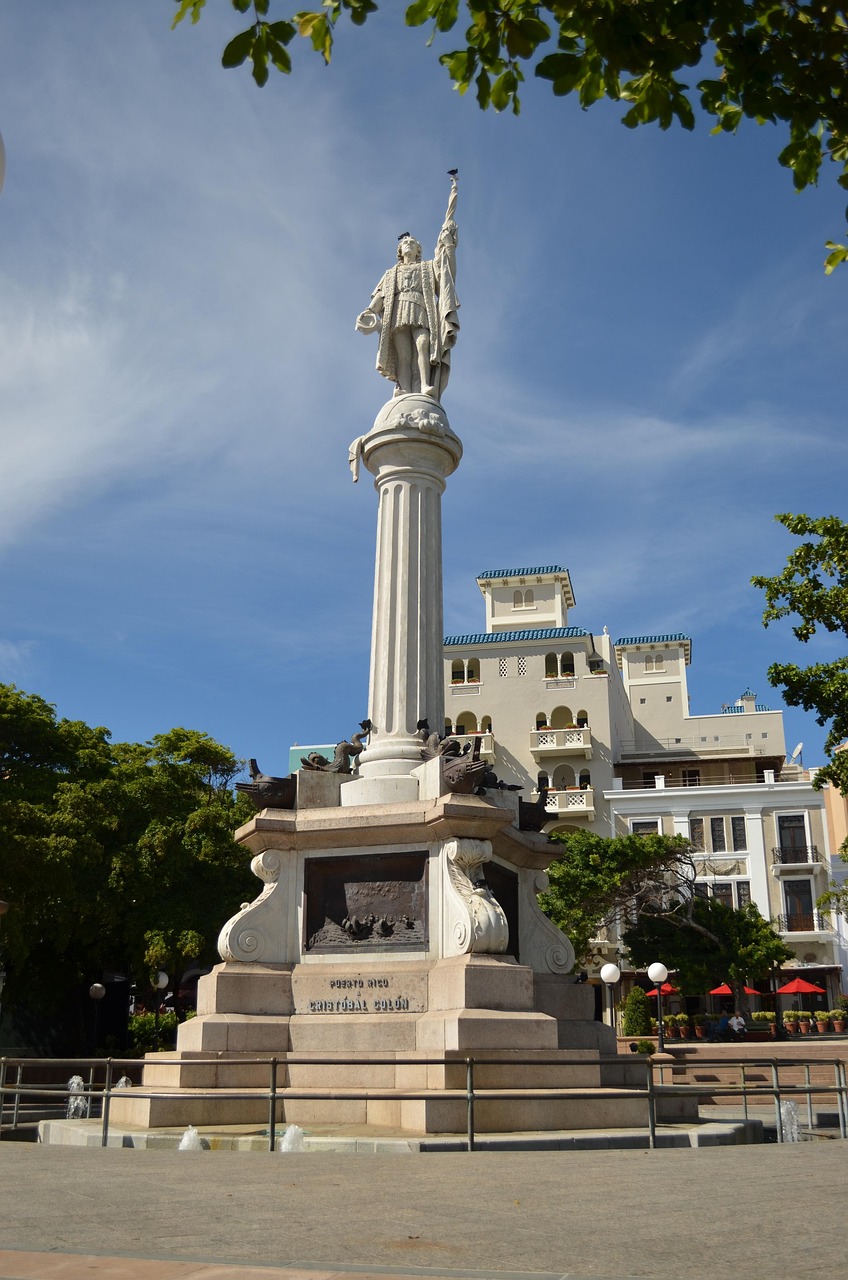
Start at the Paseo de la Princesa, a palm-lined promenade along the old city walls, and walk through the Puerta de San Juan, the last surviving city gate, to the Cathedral of San Juan Bautista, which holds the tomb of Juan Ponce de León. From there, wander up Calle del Cristo and the parallel streets to Plaza de Armas and Plaza de Colón, peek at La Fortaleza, the governor’s residence since the 1500s, and end at the Casa Blanca, built for Ponce de León’s family. La Fortaleza and San Juan National Historic Site together are a UNESCO World Heritage Site.
Santurce and La Placita
Spend an afternoon in Santurce looking at the murals of Calle Cerra and the Santurce es Ley street art festival, visit the Museo de Arte de Puerto Rico for the island’s art from the colonial era to today, and stay for dinner and drinks around the Plaza del Mercado, where the market’s fruit stalls give way to bars and salsa on Thursday to Saturday nights.
San Juan’s city beaches
San Juan is one of the few Caribbean capitals with good beaches in town. Condado Beach is right in front of the hotels; Ocean Park is wide and local; Isla Verde is the longest and calmest at its eastern end. Escambrón Beach in Puerta de Tierra is protected by a reef and is the closest swimming beach to Old San Juan.
More to see
- Cementerio Santa María Magdalena de Pazzis: a seaside cemetery below El Morro’s walls, best seen from the ramparts above.
- Paseo del Morro: a waterfront path below the walls from the Puerta de San Juan toward El Morro.
- Museums: the Museo de las Américas in the old Cuartel de Ballajá barracks and the Museo de San Juan.
- Bacardí distillery in Cataño: tours across the bay, reached by the short public ferry from Old San Juan.
Other things to do in San Juan
Bioluminescent bays and boat trips
The closest of Puerto Rico’s three bioluminescent bays is Laguna Grande in Fajardo, about an hour east, reached by kayak on guided evening tours; book with a licensed operator and go on a night with little or no moon for the brightest glow. Catamaran trips from Fajardo’s marinas to the small cays offshore make an easy day of snorkeling and swimming. In winter, sunset sails and fishing charters leave from the San Juan marinas.
Food, rum and nightlife
Eat mofongo in Old San Juan, fried snacks at Piñones’ beach kiosks just east of Isla Verde, and modern Puerto Rican cooking in Santurce and Condado. Try the piña colada, Puerto Rico’s national drink, and the island’s rums. Nightlife runs late: Calle San Sebastián in the old town, the bars around La Placita and the casinos and clubs of Condado and Isla Verde. The legal drinking age is 18, but some clubs admit only people aged 21 and over.
Beach safety and sargassum
San Juan’s beaches face the open Atlantic and can have strong waves and rip currents, especially from about November to March when winter swells arrive. Swim where the water is calm and others are swimming, heed any warning flags, and don’t swim after heavy rain, when runoff can affect water quality. Sargassum seaweed reaches the Caribbean mostly from spring to late summer; according to the University of South Florida’s Sargassum Watch outlook for September 2026, 2026 is one of the largest sargassum years on record, but amounts were falling in September and were expected to keep falling until about November. North-facing San Juan beaches are usually less affected than east- and south-facing ones, but check conditions locally.
Day trips and onward travel
El Yunque National Forest
The only tropical rainforest in the US national forest system lies less than an hour east of San Juan. As of October 2026, according to the USDA Forest Service, entry to the main recreation corridor on road PR-191 North is free and needs no reservation; it is open from 8 a.m. to 5 p.m., and the gate closes when parking is full, so arrive early. The El Portal visitor center charges $8 for adults. Some popular trails, including La Mina and Big Tree, have been closed for repairs, and ride apps can’t pick you up inside the forest, so drive, take a taxi or book a tour. See our El Yunque National Forest travel guide.
Luquillo Beach and the kiosks
Half an hour beyond El Yunque, the palm-fringed Balneario de Luquillo is one of the island’s best family beaches, sheltered by a reef. Next to it, the row of numbered food kiosks on Route 3 serves everything from fried snacks to fresh seafood; combine it with El Yunque for a classic day out.
Vieques and Culebra
The public ferry from Ceiba, about an hour’s drive east of San Juan, takes about an hour to Vieques; as of October 2026 an adult one-way ticket costs $2.00 to Vieques and $2.25 to Culebra, according to the operator Puerto Rico Ferry. Small planes also fly from San Juan’s airports. These islands deserve at least two nights each; see our Vieques travel guide.
Nearby destinations
- El Yunque National Forest39 km
- Vieques82 km
- Rincón121 km
- Punta Cana237 km
Getting there and getting around
By air
Luis Muñoz Marín International Airport (SJU) is the island’s main airport, on the edge of Isla Verde in Carolina, about 20 to 30 minutes by road from Old San Juan in normal traffic. It has nonstop flights from many US cities, among them Miami (about two and a half hours), Fort Lauderdale, Orlando, New York and Atlanta, and some international flights. Flights from the US mainland are domestic: US citizens need a REAL ID-compliant license or other TSA-accepted ID, not a passport. When you fly home to the mainland, your bags are checked by USDA agricultural inspectors before check-in; pork products and most fresh fruit are not allowed. Taxis, Uber and hotel shuttles serve the airport.
By cruise ship
San Juan is a major cruise port and the starting point for many Caribbean cruises. According to the Puerto Rico Ports Authority, cruise ships berth at piers 1, 3 and 4 on the Old San Juan waterfront, steps from the old town, and at the Pan American piers across the bay in Isla Grande, a short taxi ride away.
Getting around the city
Old San Juan is best on foot; wear comfortable shoes, as the streets are steep and the cobblestones uneven. Between neighborhoods, taxis and Uber are the easiest option. Taxis from the airport and the cruise piers to the main tourist zones charge fixed fares by zone; ask the dispatcher or driver before you set off. The Tren Urbano metro links Santurce with Hato Rey, Río Piedras and Bayamón but doesn’t reach Old San Juan, Condado or the airport. The ferry across the bay to Cataño costs $2.00 a trip since 1 January 2026, according to the operator. Rent a car for day trips; the expressways out of the city have electronic tolls, so ask how your rental company charges them.
When to go and how long to stay
San Juan is warm all year, cooled by the trade winds, and the sea is warm enough to swim in every month. The table uses NOAA’s 1991–2020 climate normals for the Luis Muñoz Marín International Airport weather station: average daily highs and lows, and days with at least 0.10 in (2.5 mm) of rain.
| Season | Average high / low | Rainy days per month | What it’s like | Good for |
|---|---|---|---|---|
| Winter (Dec–Feb) | 83–84 °F (28–29 °C) / 72–73 °F (22–23 °C) | 7–11 | Warm and breezy; passing showers, big Atlantic swells | Sightseeing, El Yunque, festivals; peak prices |
| Spring (Mar–May) | 85–87 °F (29–31 °C) / 72–76 °F (22–24 °C) | 5–9 | March is the driest month; showers return in May | Beaches and day trips; better value after Easter |
| Summer (Jun–Aug) | 89 °F (32 °C) / 77–78 °F (25 °C) | 8–11 | Hot and humid, calmer seas, short downpours | Swimming and snorkeling, family trips |
| Fall (Sep–Nov) | 89 °F falling to 86 °F (32 to 30 °C) / 78 °F falling to 75 °F (25 to 24 °C) | 11–12 | Wettest season and peak hurricane season | Low prices and few crowds |
The airport averages about 60 in (1,520 mm) of rain a year; March is the driest month at about 2.2 in (55 mm), and November the wettest at about 7.4 in (187 mm).
Hurricane season: according to NOAA’s National Hurricane Center (NHC), the Atlantic hurricane season runs from 1 June to 30 November, with most activity from mid-August to mid-October. Hurricane Maria, which made landfall in southeast Puerto Rico on 20 September 2017 as a high-end Category 4 storm, and Hurricane Fiona in September 2022 both caused island-wide power cuts that lasted far longer in some areas than in San Juan. As of 4 October 2026, the 2026 season had produced eight tropical storms and no hurricanes, according to the NHC. If you travel in season, buy travel insurance, follow the NHC and the National Weather Service in San Juan, and choose a hotel with a generator.
Events worth planning around
- Third week of January: the San Sebastián Street Festival fills Old San Juan with music, parades and huge crowds; book early.
- December to early January: Christmas lights, parrandas and Three Kings Day on 6 January.
- 23 June: Noche de San Juan, the city’s patron saint’s eve, with beach parties and a midnight dip.
How long to stay: 3, 4 and 5 days
3 days: day one, Old San Juan on foot, El Morro and San Cristóbal, and dinner in the old town; day two, Santurce’s murals and museum, an afternoon on Condado or Ocean Park beach and La Placita at night; day three, Isla Verde beach, Piñones’ kiosks and an evening bio bay kayak tour in Fajardo.
4 days: add a morning in El Yunque, with lunch at the Luquillo kiosks and a swim at Luquillo Beach. 5 days: add the ferry to Cataño and a distillery tour, or a catamaran snorkeling trip from Fajardo.
Where to stay in San Juan and the hotel tax
- Old San Juan: boutique hotels and guesthouses in colonial buildings, walkable to the forts and restaurants, but no beach and hilly streets.
- Condado: big hotels on the beach and the lagoon, a short ride from the old town.
- Ocean Park: small guesthouses and rentals near a wide, quiet beach.
- Isla Verde: resorts and casinos on the longest beach, next to the airport.
San Juan’s hotels are busiest and most expensive from mid-December to April. As of October 2026, under Puerto Rico’s Room Occupancy Rate Tax Act, rooms carry a 9% room tax at most hotels, 11% at hotels with a casino (common in Condado and Isla Verde) and 7% at certified bed and breakfasts and short-term rentals. Many large hotels also add a daily resort fee or service charge, and parking is often extra. Under the Federal Trade Commission’s fees rule, in force since May 2025, mandatory fees must be included in the total price advertised, but taxes can be added separately. Restaurant bills and most purchases carry the 11.5% IVU sales tax.
Practical tips for San Juan
- Pay by card at the forts: San Juan National Historic Site doesn’t accept cash.
- Go early: El Morro and El Yunque are cooler and quieter before 10 a.m.
- Ask about generators: power cuts still happen; bigger hotels usually have backup power.
- Don’t leave valuables: keep nothing in a parked car or unattended on the beach.
- Tipping: 15–20% in restaurants, but check the bill for a service charge first.
- Emergencies: call 911.
What to pack for San Juan
Pack light, breathable clothes, swimwear, reef-friendly sunscreen, a hat and polarized sunglasses. Old San Juan’s cobblestones call for comfortable walking shoes with good grip, as they get slippery in the rain. Bring a compact umbrella or light rain jacket, especially from May to November, insect repellent for mosquitoes at dusk, and a power bank in case of outages.
San Juan travel FAQ
How much does it cost to visit El Morro?
As of October 2026, $10 per person, valid for 24 hours at both El Morro and San Cristóbal. Children under 16 enter free, and the park accepts cards only, not cash.
What are El Morro’s opening hours?
Daily from 9 a.m. to 5 p.m., except Thanksgiving Day, Christmas Day and New Year’s Day, according to the National Park Service.
Do I need a passport to fly to San Juan?
Not from the US mainland: it is a domestic flight, and a REAL ID-compliant license or other TSA-accepted ID is enough. International visitors need a passport and an ESTA or US visa.
How far is the airport from Old San Juan?
About 20 to 30 minutes by taxi or Uber in normal traffic. The airport is next to Isla Verde, which makes it handy for short stays.
What is the hotel tax in San Juan?
As of October 2026, 9% at most hotels, 11% at hotels with a casino and 7% at bed and breakfasts and short-term rentals. Many resorts add a daily resort fee.
Which is the best area to stay in San Juan?
Old San Juan for history and walking, Condado for a mix of city and beach, Ocean Park for a quiet beach stay, and Isla Verde for resorts next to the airport.
Do I need a reservation for El Yunque?
As of October 2026, no. Entry to the PR-191 corridor is free and first come, first served, from 8 a.m. to 5 p.m.; arrive early, as the gate closes when parking is full.
Is Old San Juan walkable from the cruise port?
Yes, from piers 1, 3 and 4 on the Old San Juan waterfront. Ships at the Pan American piers in Isla Grande need a short taxi ride.
When is the San Sebastián Street Festival?
It is held in the third week of January in Old San Juan. Expect huge crowds and book your hotel early.
Sources and last review
Researched and last reviewed on 4 October 2026. Fort fees and hours: San Juan National Historic Site (National Park Service); El Yunque access, hours and fees: USDA Forest Service; ferry fares: Puerto Rico Ferry; cruise piers: Puerto Rico Ports Authority; hotel room tax: Puerto Rico’s Room Occupancy Rate Tax Act; sales tax: Puerto Rico Treasury Department (Hacienda); agricultural inspection: USDA APHIS; hurricanes: NOAA’s National Hurricane Center; sargassum: University of South Florida’s Sargassum Watch; resort fees: Federal Trade Commission; festival dates and travel tips: Discover Puerto Rico; climate: NOAA’s 1991–2020 normals for Luis Muñoz Marín International Airport. Driving times, flight times, taxi fares, neighborhood descriptions and event details are general references and flagged for checking. Prices, hours and timetables change, so check the official sites before you go. For US entry rules, see our United States travel guide.
Plan your trip
Partner links: TravelerCenter may earn a commission if you book, at no extra cost to you.
🇪🇸 Useful Spanish phrases for San Juan
All 38 Spanish phrases: restaurant, hotel, emergencies, romance (printable) →