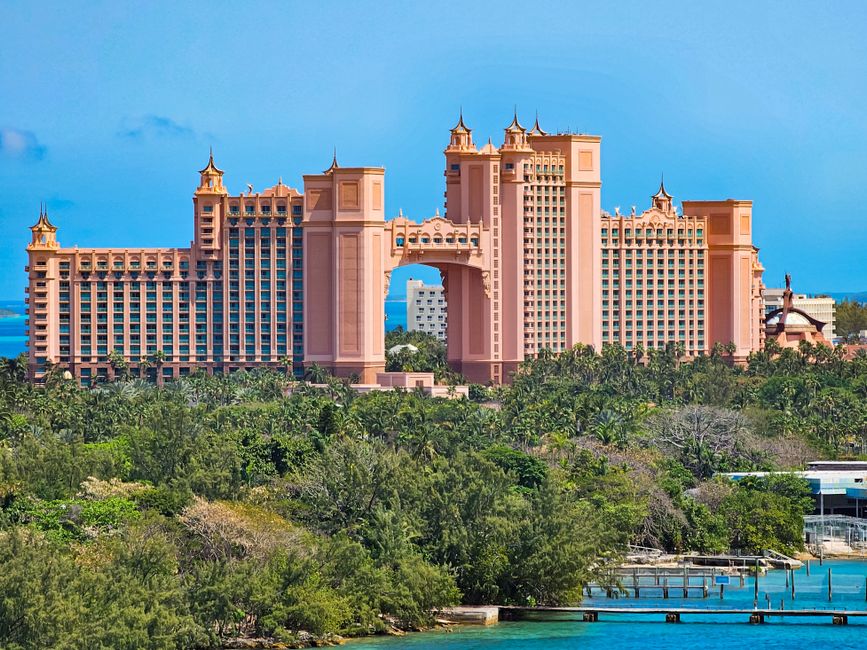
Nassau, the capital of the Bahamas, sits on the north shore of New Providence, a small island of limestone hills, pastel colonial buildings and turquoise water about 185 miles (300 km) east of Miami. It is a lively, slightly chaotic port town: cruise ships tie up a few steps from Bay Street, the pink Parliament buildings face a statue of Queen Victoria, and the Straw Market, rum distilleries and 18th-century forts are all within walking distance. To the west, Cable Beach and the Baha Mar complex line a long white beach; across the harbor, Paradise Island has Atlantis and Cabbage Beach. Eat conch salad at the Fish Fry, snorkel the reefs off the west and south coasts, and take a boat to the cays. Visit from December to April for dry, breezy weather; June to November is hot, humid and hurricane season, with lower prices.
Right now in Nassau
- Wed28–29°C83–84°F2 mm rain
- Thu28–29°C82–85°F2 mm rain
- Fri27–29°C81–85°F7 mm rain
- Mon 12 Oct National Heroes' Day
Top tours in Nassau
See all tours for Nassau →
From local operators, with prices and reviews; you check availability and book on Viator, our partner. We may earn a commission at no extra cost to you. How we earn money
Nassau at a glance
- Best for: colonial history and forts, beaches and resorts, Junkanoo culture, food, snorkeling and diving, and boat trips to the cays.
- How long: 3 days for the city and a beach; 4–5 days with a boat day and Paradise Island; add the Exumas for a week.
- Best time: December to April, with highs of 79–86 °F (26–30 °C) and only 5–7 rainy days a month in winter. June to November is hot and hurricane season.
- Getting there: fly to Lynden Pindling International Airport (NAS), 30–40 minutes from downtown, or arrive by cruise ship at Prince George Wharf.
- Getting around: walk downtown; jitney buses, taxis with fixed fares, and water taxis to Paradise Island.
- Before you go: entry rules, money, departure tax and general safety are in our Bahamas travel guide; for US entry rules on the way home, see our United States travel guide.
Nassau’s neighborhoods and who each one suits
New Providence is only about 21 miles (34 km) long and 7 miles (11 km) wide, and almost everything visitors want lies along its north coast.
Downtown Nassau and Bay Street
The historic heart: Bay Street’s shops and duty-free stores, Parliament Square, the Straw Market, the cruise port, and the steep lanes up to the Queen’s Staircase and Fort Fincastle. Best for history, food and short stays, with small hotels and guesthouses; it gets very busy when several ships are in port, and quiet after the shops close.
Cable Beach and Baha Mar
About 4 miles (6 km) west of downtown, a long, calm beach lined with big resorts, including the Baha Mar complex with its casino, golf course and restaurants. Best for a beach holiday with everything on site; jitneys and taxis run into town.
Paradise Island
Across the harbor, linked by two bridges: Atlantis, the marina, Cabbage Beach and upscale hotels. See our Paradise Island travel guide.
West Bay, Love Beach and the west
Quieter villas and small resorts along the coast past Cable Beach, with good snorkeling at Love Beach and the Clifton Heritage National Park. Best for people with a car who want calm water and space.
East Nassau and the south coast
Residential areas around Fort Montagu and the Eastern Road, with harbor-front restaurants and the marinas, and the south-west coast around Coral Harbour and South Ocean, home to dive operators and a few resorts.
Top things to see in Nassau
Prices and hours below were checked on official sites in October 2026 where they were available; check again before you go.
Parliament Square and Bay Street
Start in Parliament Square, where pink colonial buildings house the parliament and courts behind a statue of Queen Victoria, then walk Bay Street past the Straw Market and the cruise port. Look for Christ Church Cathedral, built of local limestone in 1841, the Pompey Museum of Slavery and Emancipation in the old Vendue House, and the colorful murals of the downtown art district, which the Ministry of Tourism describes as “20 square blocks of monuments, murals, and museums”.
The Queen’s Staircase and Fort Fincastle
Carved out of solid limestone in 1794 by enslaved people, according to the Ministry of Tourism, the Queen’s Staircase climbs about 65 steps through a shady, damp gorge with a waterfall to Fort Fincastle, a small fort shaped like the bow of a paddle steamer, at the top of Bennet’s Hill. The fort has the best view over Nassau’s rooftops and harbor. Go early in the morning, before the cruise crowds, and ignore the persistent hustlers at the bottom; the staircase is free.
Fort Charlotte
The largest of Nassau’s three 18th-century forts stands on a hill west of downtown, overlooking the harbor entrance, with a drawbridge, a dry moat, underground passages and casemates cut into the rock, according to the Ministry of Tourism. It never saw battle. Fort Charlotte opens daily from about 8 a.m. to 4 p.m. and charges a small entrance fee, about $5 for adults; check on arrival. Fort Montagu, the oldest, guards the eastern entrance to the harbor.
The Straw Market and the Fish Fry at Arawak Cay
The Straw Market on Bay Street sells woven straw bags and hats, wood carvings, shell jewelry and souvenirs; some items are local crafts, many are imported, so ask, and bargain politely. In the evening, head to Arawak Cay’s Fish Fry, a strip of brightly painted restaurants and shacks west of downtown serving conch salad made in front of you, fried fish, cracked conch and cold Kalik beer, with music on weekends. Potter’s Cay Dock, under the Paradise Island bridge, is the locals’ place for conch salad.
Clifton Heritage National Park
On the west tip of New Providence, this protected site combines Lucayan, Loyalist plantation and slavery history with forest trails and a coastline of reefs. Offshore is an underwater sculpture garden, which the Ministry of Tourism lists as a highlight for snorkelers and divers. Visit by car or on a tour; there are few services, so bring water.
More to see
- Ardastra Gardens and Zoo: known for its marching Caribbean flamingos, the national bird.
- John Watling’s Distillery: rum tours in an 18th-century estate on the hill above downtown.
- Pirates of Nassau museum: a hands-on museum of Nassau’s 18th-century pirate days, popular with children.
- National Art Gallery of The Bahamas: Bahamian art in a restored 1860s villa.
- Junkanoo museum at the cruise port: costumes and history of the national festival.
Other things to do in Nassau
Beaches
Beaches near town include Junkanoo Beach, a short walk from the cruise port, busy and lively; Cable Beach, long and calm, with resort water-sports; Love Beach in the west, for snorkeling; Jaws Beach near Clifton; and Cabbage Beach on Paradise Island, the most beautiful but with stronger waves. Beaches in the Bahamas are public up to the high-water mark, but resort facilities are for guests.
Snorkeling, diving and boat trips
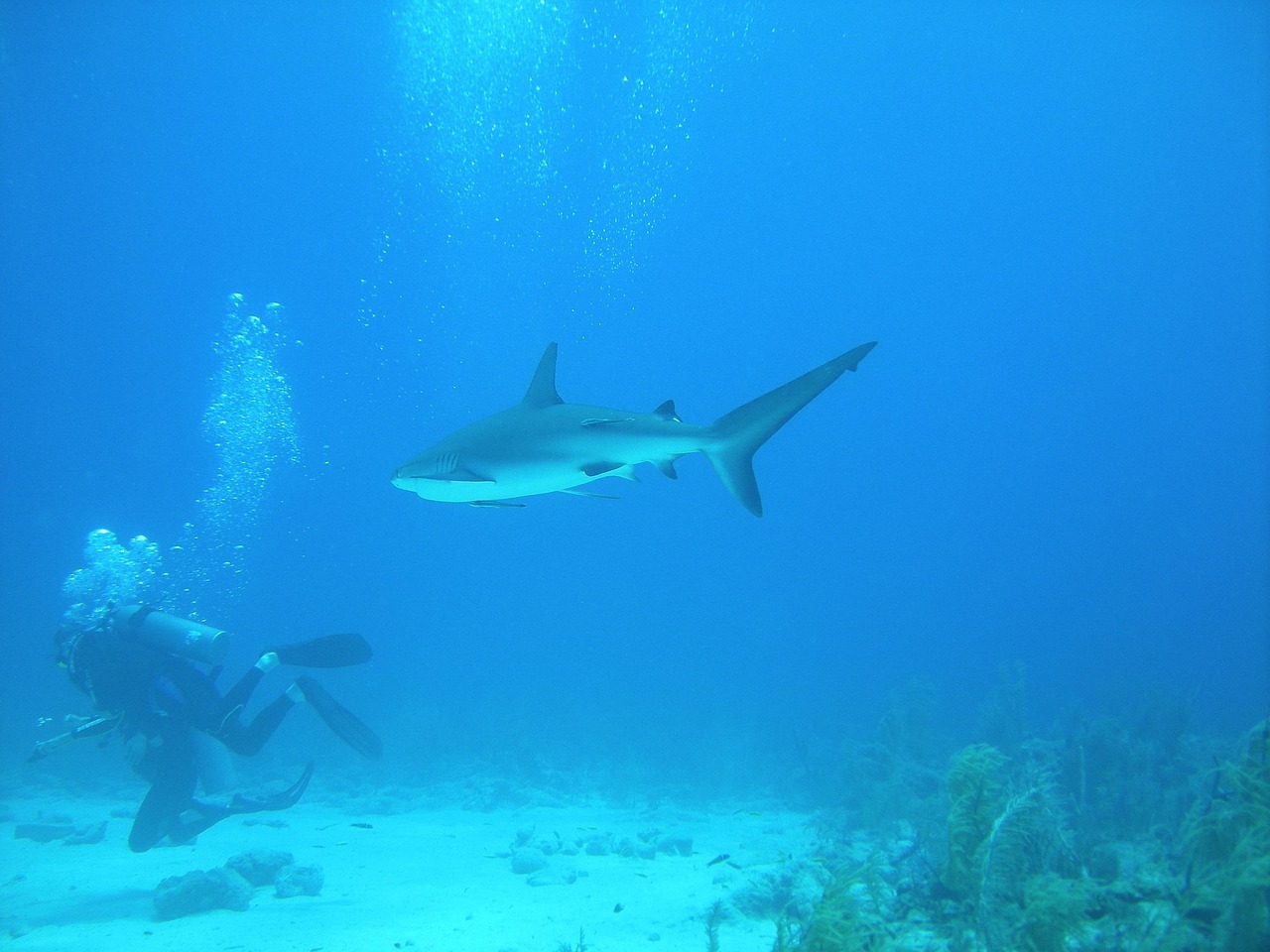
The reefs, wrecks and walls off the south-west of New Providence are among the most accessible dive sites in the country, with shark dives, wrecks used in films and the edge of the Tongue of the Ocean, a deep-water trench close to shore. Snorkeling trips go to Rose Island and the reefs off Paradise Island, and diving operators run from the south-west coast. Boat trips include sunset and glass-bottom cruises, day trips to Blue Lagoon Island and Rose Island, and full-day speedboat and air tours to the Exumas, about 40 minutes away by plane. Choose established operators and check that boats carry life jackets.
Junkanoo and nightlife
If you can, be in Nassau for Junkanoo, the national street festival, on Boxing Day (26 December) and New Year’s Day, when groups in huge, handmade costumes parade down Bay Street from the early hours to goatskin drums, cowbells and brass. Grandstand tickets sell out. The rest of the year, the casinos at Baha Mar and Atlantis, the Fish Fry, and live music bars keep evenings busy.
Beach safety and sargassum
Most Nassau beaches have no lifeguards. Cabbage Beach and other north-facing beaches can have strong rip currents when the wind blows; swim where it’s calm and stay close to shore. Don’t swim near boat channels or the harbor, and stay well clear of jet skis. Sargassum seaweed drifts through the region mainly from spring to late summer; according to the University of South Florida’s Sargassum Watch, 2026 is at least the second-largest sargassum year on record, though amounts were falling in September. Nassau’s sheltered north and west shores usually see less than Atlantic-facing beaches, and resorts clear their sand.
Day trips and onward travel
Paradise Island and Atlantis
A water taxi from downtown or a short taxi ride across the bridge. See our Paradise Island travel guide.
Rose Island and Blue Lagoon Island
Small cays east of Nassau with white beaches and reefs, reached by boat in 20 to 45 minutes on organized day trips. Good for snorkeling and an easy taste of the Out Islands.
The Exumas
The swimming pigs, Thunderball Grotto and the sandbars of the Exumas are the most popular long day trip, by speedboat (several hours each way) or by small plane. Better still, spend a few nights: see our Exuma travel guide.
Eleuthera and Harbour Island
Bahamas Ferries runs fast ferries from Potter’s Cay Dock to Harbour Island and Eleuthera; a day trip to the pink-sand beach is possible, but an overnight stay is more relaxed.
Nearby destinations
- Paradise Island1 km
- Exuma198 km
- Miami Beach292 km
- Miami297 km
Getting there and getting around
By air
Lynden Pindling International Airport (NAS) is on the west side of the island, about 30–40 minutes from downtown and 15–20 minutes from Cable Beach. It has direct flights from many US cities, including Miami, Fort Lauderdale, New York and Atlanta, plus Canada and London. According to the airport, taxis outside each terminal charge fixed fares for two passengers, as of October 2026: $29 to Cable Beach, $36 to downtown, $39 to Prince George Dock and $45 to Paradise Island plus a $2 bridge toll, with $5 for each extra passenger and $2.20 per extra bag. Flying back to the US, you clear US immigration and customs at the airport’s preclearance facility before boarding, so arrive early.
By cruise ship
Nassau Cruise Port, at Prince George Wharf, puts you right on Bay Street. According to the port, its $300 million redevelopment added restaurants, shops and an amphitheater, and on 8 June 2026 it handled a record 33,254 passengers in one day. On busy days, visit the forts and staircase first thing, and take a taxi or water taxi for beaches further away. Agree taxi fares before getting in.
Jitneys, taxis and water taxis
Jitneys, privately run minibuses, leave from downtown along fixed routes, including to Cable Beach, from early morning to about 7 p.m., for $1.25–3.50, according to the Ministry of Tourism. Pay the driver as you get off and have exact change. Taxis have fixed zone fares; confirm the price first. Water taxis cross the harbor to Paradise Island from the downtown waterfront during the day.
Driving
Rent a car if you want to explore the west and south coasts. Drive on the left, take roundabouts slowly, and expect heavy traffic downtown at rush hour and narrow roads. Your own license is valid for three months.
When to go and how long to stay
Nassau is warm all year, with a dry, breezy winter and a hot, wet summer. The table uses the official 1991–2020 climate normals for Lynden Pindling International Airport, submitted by the Bahamas Department of Meteorology to the World Meteorological Organization: average daily highs and lows, and days with at least 1 mm (0.04 in) of rain.
| Season | Average high / low | Rainy days per month | What it’s like | Good for |
|---|---|---|---|---|
| Winter (Dec–Feb) | 79–80 °F (26–27 °C) / 65–67 °F (18–20 °C) | 5–7 | Sunny, dry and breezy; occasional cool, windy fronts | Sightseeing, Junkanoo, beaches; peak prices |
| Spring (Mar–May) | 81–86 °F (27–30 °C) / 66–72 °F (19–22 °C) | 6–10 | Warm and mostly dry, calmer seas | Snorkeling, boat days, spring break (busy in March) |
| Summer (Jun–Aug) | 89–91 °F (32–33 °C) / 76–77 °F (24–25 °C) | 15–18 | Hot, humid, short heavy showers | Diving, family trips, lower rates |
| Autumn (Sep–Nov) | 90 °F falling to 83 °F (32 to 28 °C) / 76 °F falling to 70 °F (25 to 21 °C) | 17 in September, 9 in November | Peak hurricane season early on; quieter | Deals, with flexible bookings |
The airport averages about 56 in (1,426 mm) of rain a year; June is the wettest month, at about 8.7 in (220 mm).
Hurricane season: according to NOAA’s National Hurricane Center (NHC), the Atlantic hurricane season runs from 1 June to 30 November, with most activity between mid-August and mid-October. The two most recent major storms in the Bahamas missed Nassau: Dorian in 2019 struck Abaco and Grand Bahama, and Melissa in October 2025 hit Long Island and San Salvador in the south-east. As of early October 2026, the 2026 season had produced eight tropical storms and no hurricanes, according to the NHC. If a storm threatens, follow the Bahamas Department of Meteorology, your hotel and your airline; airports and the cruise port close during hurricanes.
How long to stay: 3, 4 and 5 days
3 days: day one, downtown on foot: Parliament Square, the Queen’s Staircase and Fort Fincastle, John Watling’s Distillery and dinner at the Fish Fry; day two, a morning snorkel or dive trip and an afternoon on Cable Beach; day three, Paradise Island and Cabbage Beach.
4 days: add a boat trip to Rose Island or Blue Lagoon Island, or Fort Charlotte, Ardastra Gardens and Clifton Heritage National Park by car. 5 days: add a full-day Exuma tour by boat or plane, or a day trip to Harbour Island.
Where to stay in Nassau and the hotel tax
- Downtown: small historic hotels and guesthouses, close to sights and restaurants, but quiet at night.
- Cable Beach and Baha Mar: big beach resorts with pools, casinos and restaurants; some all-inclusive.
- Paradise Island: Atlantis and upscale resorts on the best beach; the most expensive area.
- West Bay and Love Beach: villas and small resorts, best with a car.
Nassau is expensive, especially from Christmas to Easter. According to the Department of Inland Revenue, VAT is charged at the standard rate of 10%, and it applies to hotel rooms as of October 2026. Many resorts add a daily resort fee and mandatory gratuities or housekeeping charges, often quoted separately, so compare total prices before you book.
Practical tips for Nassau
- Cruise days: downtown is packed when several ships are in; visit the forts early or late.
- Cash: carry small US or Bahamian dollar notes for jitneys, the Fish Fry and tips; both currencies work.
- Taxis: agree the fare before you get in; airport fares are fixed by zone.
- After dark: stick to busy areas such as Bay Street’s restaurants, Cable Beach and Paradise Island, and take a taxi rather than walking long distances at night.
- Water sports: book jet skis, parasailing and boat trips through your hotel or an established operator.
- Emergencies: call 919 or 911.
What to pack for Nassau
Pack swimwear and a cover-up for town, light cotton or linen clothes, a hat, polarized sunglasses and reef-friendly sunscreen, which costs more on the island. Bring comfortable sandals for downtown’s uneven sidewalks and the Queen’s Staircase, water shoes for rocky snorkel entries, and a smart-casual outfit for resort restaurants. Add a light sweater for air-conditioned rooms and breezy winter evenings, a compact umbrella from May to November, insect repellent, and a small dry bag for boat days.
Nassau travel FAQ
How far is Nassau airport from downtown and Cable Beach?
About 30–40 minutes to downtown and 15–20 minutes to Cable Beach. As of October 2026, fixed taxi fares for two people are $36 to downtown, $29 to Cable Beach and $45 plus a $2 bridge toll to Paradise Island.
Can I walk from the Nassau cruise port to the beach?
Yes. Junkanoo Beach is a short walk west of Prince George Wharf. For calmer, prettier beaches, take a taxi or jitney to Cable Beach or a water taxi to Paradise Island.
Is the Queen’s Staircase free?
Yes. The staircase is free to climb, and Fort Fincastle at the top is a short walk. Go early to avoid crowds and hustlers.
What is the best beach in Nassau?
Cabbage Beach on Paradise Island is the most beautiful, Cable Beach is the most convenient and calm, and Love Beach is best for snorkeling.
What is the hotel tax in Nassau?
Hotel rooms carry 10% VAT as of October 2026. Many resorts add resort fees and automatic gratuities on top, so check the total price.
Do I need US dollars in Nassau?
You can pay in US dollars everywhere, as the Bahamian dollar is pegged one to one. Change may come in either currency. Cards work in hotels and most restaurants; carry cash for jitneys and small vendors.
Do I clear US customs in Nassau?
Yes, if you fly to the US: CBP preclearance at the airport’s US Departures Terminal means you arrive as a domestic passenger. Allow extra time.
When is Junkanoo in Nassau?
On Boxing Day (26 December) and New Year’s Day, with parades on Bay Street from the early hours of the morning. There are also summer Junkanoo events.
Can I visit the Exumas on a day trip from Nassau?
Yes, by speedboat or small plane on organized tours to the swimming pigs, Thunderball Grotto and the sandbars. It is a long day; an overnight stay is more relaxed.
Is Nassau safe at night?
The main tourist areas are busy and generally safe, but take normal city precautions: stay in busy, well-lit areas, use taxis at night, and keep valuables out of sight.
Plan your trip
Partner links: TravelerCenter may earn a commission if you book, at no extra cost to you.
Sources · last reviewed 4 October 2026
Researched and last reviewed on 4 October 2026. Taxi fares, terminals and US preclearance details from Lynden Pindling International Airport (Nassau Airport Development Company) and US Customs and Border Protection; cruise port facts from Nassau Cruise Port; sights, jitney fares, driving rules and the Queen’s Staircase date from the Bahamas Ministry of Tourism (bahamas.com); VAT from the Department of Inland Revenue; hurricane season, Hurricane Melissa and the 2026 season from NOAA’s National Hurricane Center; sargassum from the University of South Florida’s Sargassum Watch; climate from the WMO 1991–2020 normals for Lynden Pindling International Airport. Fort Charlotte’s fee and hours, beach details, museum list, travel times and Junkanoo dates are general references flagged for checking. Prices and hours change, so check the official sites before you go. For entry rules and money, see our Bahamas travel guide; for US rules on the way home, see our United States travel guide.
Data: Weather: MET Norway (CC BY 4.0) · Sea temperature: NOAA CoastWatch · Rates: ECB · Holidays: Nager.Date · Costs: World Bank ICP and price levels · Wikidata (CC0)