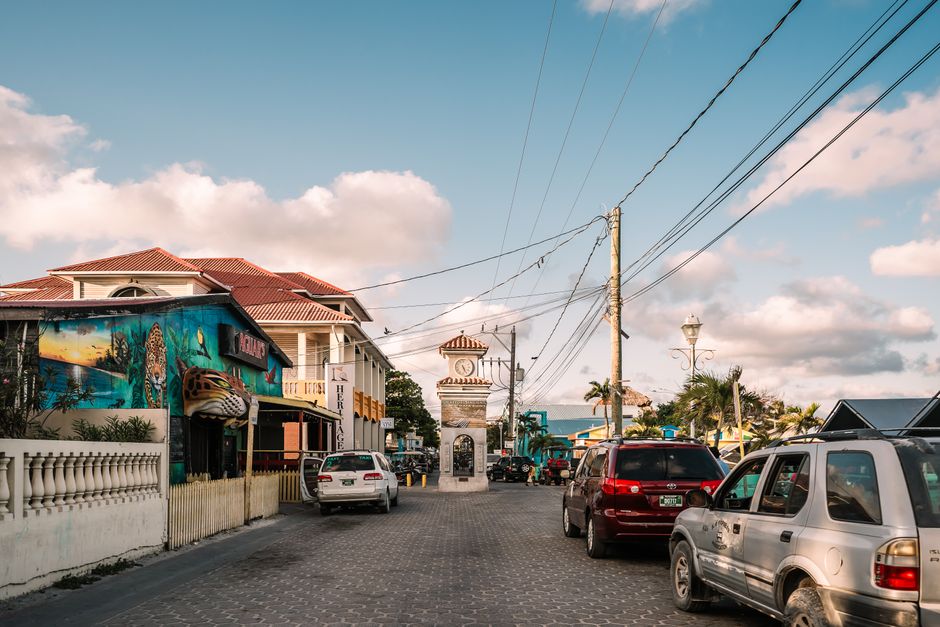
Caye Caulker is a small, car-free island off the coast of Belize with sandy streets, brightly painted wooden houses on stilts, seafood grills and a motto painted on signs all over town: “Go slow”. Once a fishing settlement founded by Mestizo families fleeing the Caste War in Mexico’s Yucatán, and later a lobster-fishing center, it is now one of Belize’s favorite island escapes, cheaper and more laid-back than its big neighbor, Ambergris Caye. The barrier reef runs just over a mile offshore, so snorkeling with turtles, rays and nurse sharks is a short boat ride away, and the island’s own marine reserve protects reef, seagrass and mangroves where manatees feed. Days end at the Split, the channel that cuts the island in two, where everyone gathers to swim and watch the sunset. It is only 45 minutes from Belize City by water taxi.
Right now in Caye Caulker
- Tue27–29°C80–85°F1 mm rain
- Wed27–29°C81–85°F1 mm rain
- Thu27–29°C80–84°FCloudy
- Mon 12 Oct Pan America Day · optional
Top tours in Caye Caulker
See all tours for Caye Caulker →
From local operators, with prices and reviews; you check availability and book on Viator, our partner. We may earn a commission at no extra cost to you. How we earn money
Caye Caulker at a glance
- Best for: snorkeling, a relaxed island stay on a budget, seafood, kayaking and paddleboarding, and sunset at the Split.
- How long: two or three nights for a snorkel trip and island time; four or five to add diving, sailing or the Blue Hole.
- Best time: February to May for dry weather and calm seas; June to November is wetter and is hurricane season.
- Getting there: about 45 minutes by water taxi from Belize City, according to the operator, or a short flight to the island’s airstrip (CUK).
- Before you go: entry rules, the exit fee and money are in our Belize travel guide.
The island: where things are
Caye Caulker is about 8 km (5 miles) long and less than 1.6 km (1 mile) wide. The village occupies the southern part of the north–south island, just south of the Split, a channel that divides the island in two. Three sandy main streets, Front Street (by the reef side), Middle Street and Back Street (by the lagoon), run the length of the village, with the water taxi dock on the east side in the middle of town and the airstrip at the southern end. North of the Split, the northern half of the island is mostly mangroves and protected forest, reached by boat or kayak.
Each side of the village has its own mood. Front Street, on the reef side, is the busiest, with tour shops, grills, bars and the main docks; the sea breeze keeps it cooler and the views face the line of white surf on the reef. Back Street and the lagoon side are more residential and local, with small shops, family restaurants and the best sunsets from the docks on the west shore. The southern end, toward the airstrip, is the quietest, with seafront guesthouses, a mangrove boardwalk and a small nature reserve. There are no real beaches; people swim from docks and at the Split.
Top things to see and do on Caye Caulker
Snorkeling trips
Snorkeling is the reason most people come. Half-day and full-day trips leave from the docks every morning to the Caye Caulker Marine Reserve just offshore, and to Hol Chan Marine Reserve and Shark Ray Alley off Ambergris Caye, where nurse sharks and stingrays gather around the boats. Common stops include the coral gardens, a spot where turtles feed and a place to see manatees. Tours are by licensed guides, who collect the reserve fees; ask what is included. See our snorkeling guide.
Caye Caulker Marine Reserve
The Caye Caulker Marine and Forest Reserve was created in April 1998, and its rules were published in 2008, according to the Fisheries Department, which manages it. The marine reserve covers more than 9,000 acres of the Mesoamerican Barrier Reef parallel to the island and includes mangroves and littoral forest, lagoon marshes, seagrass beds and coral reef. It shelters saltwater crocodiles, more than 100 bird species including the rare black catbird, over 170 species of fish and crustaceans, healthy stands of elkhorn and staghorn coral, and West Indian manatees that live seasonally in the north channel. It is divided into zones: a preservation zone where no activities or motor boats are allowed, a conservation zone for snorkeling and diving without fishing, and general-use zones.
The Split
A channel cut through the island, reportedly widened by a hurricane in 1961, at the north end of the village. Its edge has a beach bar, decks and ladders into the water, and it is the island’s swimming spot and sunset meeting point. Currents in the channel can be strong and boats pass through, so swim only in the marked areas.
Swallow Caye Wildlife Sanctuary
A protected mangrove area between Caye Caulker and Belize City where manatees feed in the seagrass. Licensed boat trips watch them quietly from a distance; touching or chasing manatees is not allowed.
Other things to do on Caye Caulker
- Diving: dive shops run reef dives, trips to the Turneffe atoll, and long day trips to the Great Blue Hole in Lighthouse Reef, which the Belize Audubon Society co-manages; operators collect the visitor fee, about US$40 per person at the time of writing. See our diving guide.
- Kayaking and paddleboarding: explore the calm lagoon side and the mangroves north of the Split.
- Sailing: day cruises with snorkel stops, and multi-day sailing trips south through the cayes to Placencia.
- Fishing: fly fishing for bonefish and tarpon on the flats.
- Kitesurfing and windsurfing: the steady trade winds from about November to June make the island a good place to learn.
- Eating: grilled lobster in season (from mid-June to mid-February), fresh fish, fry jacks, and Lobsterfest in June.
Getting there and getting around
By water taxi
The San Pedro Belize Express (Belize Water Taxi) runs several departures a day from the Belize Marine Terminal in Belize City. According to the company, the trip takes about 45 minutes to Caye Caulker and 30 minutes on to San Pedro on Ambergris Caye. Book online or buy at the terminal; children 4 to 10 pay a reduced fare. A shared shuttle from Philip S. W. Goldson International Airport to the terminal takes about 25 minutes and costs US$25 for the first person and US$10 for each additional person, according to the company. Boats also link Caye Caulker with Chetumal, Mexico, via San Pedro, about 30 minutes beyond the San Pedro stop; you pay Belize’s BZ$40 (US$20) departure fee in cash when you leave this way. Passengers arriving from Chetumal must overnight on the cayes before continuing to Belize City.
By air
Tropic Air flies hourly from Belize City to Caye Caulker’s airstrip (CUK), a flight of about 10–15 minutes; Maya Island Air flies the route too. The airstrip is at the south end of the village, a short golf-cart taxi ride from hotels.
Getting around the island
The village is small enough to walk end to end in 20 minutes. There are no cars: people walk, cycle (many guesthouses lend bikes) or use golf-cart taxis, which wait at the dock. “Go slow” is the island’s rule.
Arriving on an international flight, you have two choices. The quickest is to fly straight on from the international airport to the island’s airstrip, if your luggage fits the small-plane limits. The cheaper way is a taxi or shared shuttle to the Belize Marine Terminal in Belize City and the next water taxi; allow time for the transfer, as the last boats leave in the late afternoon, so travelers on evening flights usually spend a night in Belize City or near the airport. On the island, golf-cart taxis meet the boats and carry luggage to guesthouses for a small fare, but most places in the village are a short walk from the dock.
Nearby destinations
- Ambergris Caye32 km
- Bacalar111 km
- Placencia141 km
- Tikal National Park178 km
- Roatán228 km
- Tulum281 km
When to go and how long to stay
Caye Caulker is warm all year, with daytime temperatures of about 27–31 °C (81–88 °F). The dry season from February to May brings the most sunshine and calm, clear water, and is the busiest time. The wet season from June to November brings showers, especially in the afternoon, and the risk of tropical storms: the Atlantic hurricane season runs from June 1 to November 30, according to NOAA’s National Hurricane Center. Cold fronts between November and January can bring a few windy, rainy days and rough crossings. Lobster season opens in mid-June with Lobsterfest.
Caye Caulker month by month
| Month | Weather | Crowds and prices | Why go |
|---|---|---|---|
| January | Cooler; occasional cold fronts and rough crossings | Busy early in the month | Kitesurfing |
| February | Drier and sunnier | High season; lobster season closes mid-month | Snorkeling, diving |
| March | Dry, calm and clear | High season | The Blue Hole, Hol Chan |
| April | Dry and sunny | Busy at Easter | Snorkeling, sailing |
| May | Hot; the calmest sea | Moderate | Clear water, manatees |
| June | Hot; showers begin; hurricane season starts | Busy for Lobsterfest | Lobster season reopens |
| July | Hot, with showers | Moderate | Lobster, lower prices |
| August | Hot, with showers | Moderate | Snorkeling between showers |
| September | Wettest; peak hurricane risk | Quiet; September 10 and 21 national celebrations | Deals |
| October | Wet; hurricane risk | Very quiet; some businesses close | Quiet stays |
| November | Showers easing; first cold fronts | Quiet | Kitesurfing season begins |
| December | Cooler, windy | Busy at Christmas and New Year | Kitesurfing, holidays |
| Season | What it’s like | Good for |
|---|---|---|
| February–May | Driest; calm, clear water; busiest | Snorkeling, diving, the Blue Hole |
| June–August | Hot, with showers; Lobsterfest | Lower prices, lobster, festivals |
| September–October | Wettest; peak hurricane risk | Quiet stays, deals |
| November–January | Cooler; occasional cold fronts; windy | Kitesurfing, holidays |
2 days on Caye Caulker
Day one, arrive by water taxi, walk the village, and swim at the Split at sunset. Day two, a full-day snorkeling trip to the island’s reserve, Hol Chan and Shark Ray Alley, then grilled fish on Front Street.
4 to 5 days on Caye Caulker
Add a dive day or a Blue Hole trip, kayaking north of the Split, a manatee trip to Swallow Caye, a sailing day, or a day trip to San Pedro on Ambergris Caye.
Eating and drinking on Caye Caulker
Caye Caulker is a good place to eat well on a budget. In the evening, grills along Front Street cook fresh lobster (in season, from mid-June to mid-February), snapper, shrimp and chicken over open fires, served with rice and beans or coleslaw. Try conch ceviche, fry jacks with beans and eggs at breakfast, Belizean stew chicken, and coconut-flavored cakes and pies sold by local women on the street. Fruit stands sell fresh juices and smoothies, and the bar at the Split serves rum punch at sunset. Bakeries and small grocery stores make self-catering easy, but imported goods are expensive. Lobsterfest, usually in June, is the island’s biggest party.
For the cheapest meals, look for street stalls selling burritos and tamales at breakfast, salbutes and panades (small fried tortillas and turnovers) in the afternoon, and BBQ plates of chicken or fish with rice and beans for dinner. Most restaurants are casual, open-air and family run, with prices on chalkboards; service is island-paced, so order early if you are hungry. Conch has its own closed season, so ask whether it is in season before ordering ceviche. Drink Belikin beer, rum punch or fresh coconut water, and remember that restaurants add 12.5% GST to bills. Tap water isn’t recommended for drinking; refill bottles at guesthouses and water stations.
Day trips from Caye Caulker
- Ambergris Caye and San Pedro: 30 minutes by water taxi for a bigger town, more restaurants and the beach bars; see our Ambergris Caye travel guide.
- Altun Ha: a Maya site on the mainland north of Belize City, with plazas and temples where a famous carved jade head was found; reached on tours by boat and road.
- The Belize Zoo: native animals, including jaguars, tapirs and harpy eagles, in forest enclosures on the road west from Belize City, often combined with cave tubing on tours.
- Sailing south: multi-day sailing trips leave Caye Caulker for Placencia, camping on small cayes along the reef; see our Placencia travel guide.
- Turneffe and the Blue Hole: full-day boat trips for divers and snorkelers to the atolls east of the island.
Where to stay on Caye Caulker and the hotel taxes
- Near the Split: hostels and lively guesthouses close to the sunset bar.
- Front Street and the center: small hotels and cabanas near the dock, restaurants and tour shops.
- South of the village: quieter seafront guesthouses and small resorts, with sea views and a short bike ride to town.
Hotels charge Belize’s 9% accommodation tax, collected for the Belize Tourism Board, and most services carry 12.5% GST; check whether quoted prices include them.
What a day on Caye Caulker costs
Caye Caulker is the cheapest of Belize’s island bases, though still pricier than much of Central America. The Belize dollar is fixed at BZ$2 to US$1, and US dollars are accepted everywhere. These are our estimates for 2026, not official prices; hotel stays add 9% accommodation tax, and restaurants and tours 12.5% GST.
| Item | Belize dollars (BZ$) | About (US$) |
|---|---|---|
| Breakfast burrito or tamales from a stall | BZ$3–8 | US$1.50–4 |
| BBQ plate with rice and beans | BZ$15–25 | US$7.50–12.50 |
| Grilled lobster dinner (in season) | BZ$45–80 | US$22.50–40 |
| Belikin beer at a bar | BZ$5–8 | US$2.50–4 |
| Bike rental, per day | BZ$15–30 | US$7.50–15 |
| Full-day snorkel trip (plus reserve fees) | BZ$120–180 | US$60–90 |
| Water taxi from Belize City (one way) | BZ$40–60 | US$20–30 |
| Hostel dorm bed | BZ$40–70 | US$20–35 |
| Guesthouse or cabana, double | BZ$120–240 | US$60–120 |
Backpackers can get by on about US$50 to US$70 (BZ$100–140) a day with a dorm bed, street food and one tour; mid-range travelers with a seafront room, a snorkel or dive trip and restaurant dinners should plan on US$150 to US$250 (BZ$300–500).
Practical tips for Caye Caulker
- Money: the island has a few ATMs, which can run out of cash on busy weekends; bring US dollars in small notes. US dollars are accepted everywhere (BZ$2 = US$1).
- Choose licensed guides: look for licensed tour operators that give a safety briefing and carry life jackets.
- Reef rules: don’t touch coral, stand on the reef, or feed or chase marine life; use reef-safe sunscreen.
- Swimming: the island has little beach; people swim at the Split and from docks. Watch for boat traffic.
- Safety: petty theft of cash and phones happens, according to the UK government; use your guesthouse safe and avoid dark areas late at night.
- Bugs: sandflies and mosquitoes bite at dusk, especially on the lagoon side; bring repellent.
- Emergencies: 911 or 90. Medical care on the island is basic.
What to pack for Caye Caulker
Bring swimwear, a rash guard, reef-safe sunscreen, a hat, sunglasses, sandals, light cotton clothes, a light rain jacket from June to November, strong insect repellent, a dry bag for boat trips, your own mask and snorkel if you prefer, a headlamp, and small US dollar notes. Plugs are usually the US type.
Caye Caulker travel FAQ
How do I get to Caye Caulker from Belize City?
By water taxi from the Belize Marine Terminal, about 45 minutes, or by a short Tropic Air or Maya Island Air flight to the island’s airstrip.
How long is the ferry from Caye Caulker to San Pedro?
About 30 minutes, according to the water taxi company.
Is Caye Caulker cheaper than Ambergris Caye?
Generally yes: guesthouses, food and tours tend to cost less, and there are many hostels.
Can you see manatees from Caye Caulker?
Yes. Manatees live seasonally in the north channel of the Caye Caulker reserve, according to the Fisheries Department, and licensed trips visit Swallow Caye’s sanctuary.
Does Caye Caulker have a beach?
Not much. Most swimming is at the Split and from docks, and snorkeling trips go to the reef.
Can I go from Caye Caulker to Mexico?
Yes, by water taxi to Chetumal via San Pedro, with immigration in San Pedro; you pay BZ$40 (US$20) to leave Belize.
When is the best time to visit Caye Caulker?
February to May for sunny, calm weather. June to November is hurricane season, with more rain.
How much does a day on Caye Caulker cost?
By our estimates, about US$50 to US$70 a day on a budget and US$150 to US$250 mid-range. The Belize dollar is fixed at BZ$2 to US$1, and US dollars are accepted everywhere.
What day trips can I take from Caye Caulker?
Snorkeling at Hol Chan and Shark Ray Alley, a manatee trip to Swallow Caye, a water taxi to San Pedro, dive trips to Turneffe and the Blue Hole, and mainland tours to Altun Ha or the Belize Zoo.
Is there an airport on Caye Caulker?
Yes, a small airstrip at the south end of the village, with flights of about 10–15 minutes from Belize City on Tropic Air and Maya Island Air.
Plan your trip
Partner links: TravelerCenter may earn a commission if you book, at no extra cost to you.
Sources · last reviewed 4 October 2026
Researched and last reviewed on 4 October 2026. The marine and forest reserve’s dates, area, habitats, wildlife, manatees and zones: the Fisheries Department; Blue Hole management: the Belize Audubon Society; water taxi times, child fares, the airport shuttle price, the Chetumal route, the departure fee and the overnight rule: the Belize Water Taxi company (operator), which also gives the island’s history as a Caste War settlement and lobster-fishing center and its 45-minute crossing; flights: Tropic Air (operator); the 9% hotel tax: the Belize Tourism Board; GST: BELTRAIDE; the exchange rate: the Central Bank of Belize; hurricane season: NOAA’s National Hurricane Center; theft: the UK government. The Blue Hole fee, the island’s size and layout, the Split’s history, Swallow Caye, flight times, temperatures, seasons, lobster season and ATMs come from secondary sources or general knowledge and are flagged for checking. Prices change, so check with operators before you go. For entry rules and money, see our Belize travel guide; for the bigger island, see our Ambergris Caye travel guide. The village area notes, the extra food notes, the conch season, the day trips, the month-by-month table and its national holidays, and the daily costs come from general knowledge or our own estimates and are flagged for checking.
Data: Weather: MET Norway (CC BY 4.0) · Sea temperature: NOAA CoastWatch · Rates: ECB · Holidays: Nager.Date · Costs: World Bank ICP and price levels · Wikidata (CC0)