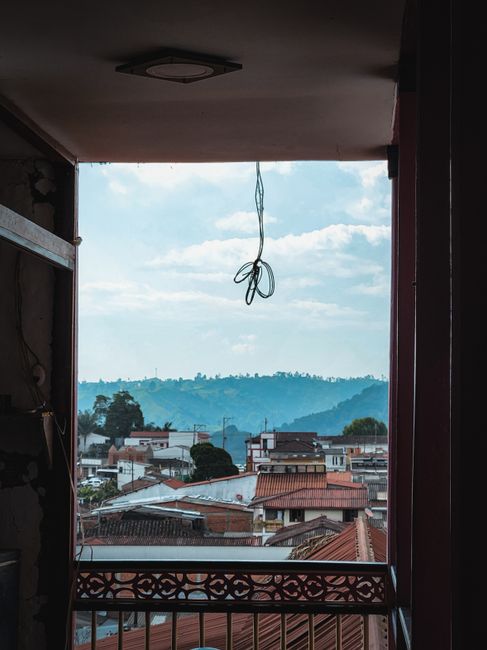
Salento is a small mountain town in the department of Quindío, in the heart of Colombia’s coffee region, and one of the country’s favorite places to slow down. Its streets are lined with brightly painted houses of bahareque, a traditional mix of cane, wood and earth, with balconies overflowing with flowers, and Willys jeeps rumble through the main square loaded with farm produce and passengers. Founded in the 19th century, it is the oldest town in the region, according to ProColombia, the country’s official tourism promoter, and it sits within the Coffee Cultural Landscape of Colombia, a UNESCO World Heritage Site. Just outside town, the Cocora Valley is home to forests of wax palms, Colombia’s national tree and the tallest palms in the world, rising out of misty green pastures. Add coffee farm tours, cloud-forest hikes and a mild climate averaging about 18 °C (64 °F), and it is easy to see why most travelers to Colombia make time for Salento.
Right now in Salento
- Tue 14–21°C 57–69°F 9 mm Heavy rain
- Wed 14–19°C 58–67°F 22 mm Heavy rain
- Thu 14–20°C 56–67°F 21 mm Heavy showers
- Mon 12 Oct Columbus Day (Día de la Raza)
Weather: MET Norway (CC BY 4.0) · Holidays: Nager.Date
Top tours in Salento
See all tours for Salento →
From local operators, with prices and reviews; you check availability and book on Viator, our partner. We may earn a commission at no extra cost to you. How we earn money
Salento at a glance
- Best for: coffee farms, hiking, the Cocora Valley’s wax palms, birdwatching, colorful architecture and a relaxed small-town pace.
- How long: two or three days for the Cocora Valley, a coffee farm and the town; four or five with Filandia and a longer hike.
- Best time: December to February and July to August are the drier months; it can rain any afternoon.
- Getting there: about 25 km (16 miles) from Armenia, according to ProColombia, and about an hour from Pereira; both have airports with flights from Bogotá.
- Before you go: entry rules, the Check-Mig form and money are in our Colombia travel guide.
Salento’s layout: where things are
Salento is compact, at about 1,900 m (6,200 ft), on a ridge above the Quindío River valley. Everything centers on the Parque Principal (main square), with the town hall, the church of Nuestra Señora del Carmen, cafés and the stand where the jeeps leave for the Cocora Valley, according to ProColombia. From the square, the Calle Real (Carrera 6), lined with craft shops and restaurants, leads to a staircase up to the Alto de la Cruz viewpoint. Coffee farms are on the slopes just outside town, and the Cocora Valley is about 11 km (7 miles) to the east.
Top things to see in Salento
The Cocora Valley and the wax palms
The Cocora Valley’s wax palms (palma de cera), Colombia’s national tree, can grow to around 60 m (200 ft), and they stand in groups on the grassy hills like giant pins against the cloud forest. The classic loop walk, about 5 to 6 hours, climbs through cloud forest past swinging bridges over the river to a hummingbird reserve, then up and over a ridge and down through the palms; you can also walk only to the palm forest and back in an hour or two. Entry is through private farms, which charge small fees in cash. Start early, before the clouds and afternoon rain roll in, and wear waterproof boots, as the trail is often deep in mud. The valley also borders Los Nevados National Natural Park.
Coffee farm tours
Salento is surrounded by coffee farms (fincas) that show you how coffee is grown, picked, washed, dried and roasted, ending with a tasting, according to ProColombia. Many are small family farms within walking distance of town; some offer stays where you can share stories around a bonfire with other travelers. Most tours take about two hours.
Calle Real and the Alto de la Cruz
Stroll the Calle Real for its colorful facades and handicraft shops, then climb the stairs at its end to the Alto de la Cruz, one of the region’s best views over the town, the Cocora Valley and, on clear days, the peaks of Los Nevados National Natural Park, according to ProColombia.
The Willys jeeps
The Second World War–era Willys jeeps, called “yipaos” locally, are the coffee region’s symbol: they carry farm goods, flowers and people, often with passengers standing on the back step, according to ProColombia. Shared jeeps to the Cocora Valley leave from the main square throughout the day.
Other things to do in Salento
- Birdwatching: the cloud forests around the Cocora Valley are home to hummingbirds, toucans and tanagers.
- La Patasola reserve: a 150-hectare humid forest with walking trails, waterfalls and birdwatching, according to ProColombia.
- Tejo: try Colombia’s national sport, throwing heavy disks at small gunpowder targets, in one of the town’s tejo halls.
- Food: trout from local farms, served with patacones (fried plantain), and coffee at every turn.
- Horseback riding: farm rides through the valleys; choose operators who treat horses well.
- Hiking: see our hiking guide.
Food and coffee in Salento
Salento’s food is the hearty cooking of the coffee region, with one local specialty that every visitor tries: trout.
- Trucha (trout): farmed in the cold streams of the area and served whole, fried, grilled or with garlic, cheese or creole sauce, usually on a giant patacón (flattened fried plantain).
- Bandeja paisa and frijoles: the beans-rice-pork platter of Antioquia and the coffee region, and red bean stews at lunchtime.
- Patacones: crisp plantain disks served as a base for toppings; some restaurants make them the size of a plate.
- Arepas and obleas: corn arepas with cheese from street stalls, and obleas, thin wafers filled with arequipe (caramel), cheese or jam, sold around the main square.
- Coffee: try a pour-over at a specialty café in town, then taste coffee at the farm where it was grown; many farms sell their own roasted beans.
- Canelazo and aguardiente: hot cinnamon drinks and the local anise liqueur, popular on cool evenings in the bars around the square, where locals also play tejo.
Coffee farms in more depth
A typical farm tour, about two hours, walks you through the coffee plants, which grow under shade trees on steep slopes, explains the varieties and the two harvests of the year, lets you pick ripe red cherries in season, and follows the beans through pulping, fermenting, washing, sun-drying and roasting before a tasting. Some farms focus on traditional methods and others on specialty coffee with cupping sessions. Many are within walking distance of town, down the road toward the Quindío River, while others are reached by jeep or taxi. Book at your hotel or at the farm, and wear shoes you don’t mind getting muddy.
Day trips from Salento
Filandia
A quieter, equally colorful coffee town about 20 km (12 miles) away, according to ProColombia, known for its basket weaving and a wooden lookout tower with views across the coffee region.
Los Nevados National Natural Park
Higher up, the páramo of Los Nevados is covered in frailejones and mosses, rising to about 4,700 m (15,400 ft) and the glaciers of the Nevado; ProColombia suggests a one-day visit to the Páramo de Santa Isabel or a three-day trek to the Nevado del Tolima. Go with a licensed guide, and allow for the altitude and cold.
Coffee parks and towns
Circasia, Armenia, Calarcá and Pereira are all within about an hour, according to ProColombia, with coffee theme parks, botanical gardens and hot springs near Santa Rosa de Cabal.
Pereira, Manizales and the hot springs
Pereira, about an hour away, is a lively commercial city and the region’s transport hub, with an airport and a large bus terminal. Further north, Manizales sits on a ridge with views of the snow-capped Nevado del Ruiz on clear days, and is the base for trips into the northern part of Los Nevados National Natural Park. Between them, the hot springs of Santa Rosa de Cabal, fed by mountain water and surrounded by waterfalls, make a relaxing day out after a few days of hiking.
Coffee towns of Quindío
The department of Quindío is dotted with small coffee towns built in the same colorful bahareque style as Salento. Circasia, about 15 km (9 miles) away, according to ProColombia, has a striking “free cemetery” built for people of all beliefs; Pijao and Buenavista, further south, are quieter and less visited, with viewpoints over the coffee slopes. A slow day hopping between these towns by bus or with a driver shows a side of the coffee region that most visitors miss.
Getting there and getting around
By air
The nearest airports are El Edén (AXM) in Armenia and Matecaña (PEI) in Pereira, each about an hour from Salento by road, with flights of about 50 minutes from Bogotá and some from Medellín. From either city, buses to Salento leave from the main bus terminals. See our Bogotá travel guide.
By road
Buses run from Armenia (about 45 minutes) and Pereira (about an hour) several times a day. From Medellín, the trip takes about six to seven hours, usually changing in Pereira; from Bogotá, about eight to nine hours. See our Medellín travel guide.
Getting around Salento
Walk in town. Shared Willys jeeps leave from the main square for the Cocora Valley (about 20–30 minutes) and other villages, and taxis can take you to coffee farms; many farms are a pleasant walk downhill from town.
Getting around in detail
- Willys jeeps: shared jeeps leave from the main square for the Cocora Valley throughout the day, starting early in the morning; they leave when full, with some passengers standing on the back step. Return jeeps wait at the trailhead.
- Buses: regular buses link Salento with Armenia and Pereira from the small terminal near the entrance to town; for Filandia, change at the junction on the main road or take a direct jeep where available.
- Taxis: useful for coffee farms and for early or late trips to the airports.
- Walking: the town is small and hilly; many farms are a pleasant walk away, and the Alto de la Cruz viewpoint is reached by a staircase.
- Horses and bicycles: farm rides and mountain-bike rentals for exploring the valleys.
When to go and how long to stay
Salento’s climate is mild and damp, with an average of about 18 °C (64 °F), according to ProColombia: days are often 20–24 °C (68–75 °F) and nights cool. Like the rest of Colombia’s Andes, it has two rainier seasons, roughly April to May and October to November, when afternoons are often wet and trails very muddy; December to February and July to August are drier. Coffee harvests run in two seasons, with the main harvest typically from about October to December and a smaller one from April to June. The town is busiest in late December, January and Holy Week, when Colombian families fill it, and on weekends.
| Season | What it’s like | Good for |
|---|---|---|
| December–February | Drier, sunny mornings; crowded at holidays | Cocora hikes, clear views |
| March–May | Rainier, especially April and May | Coffee farm stays, birdwatching |
| June–August | Drier, breezy | Hiking and Los Nevados trips |
| September–November | Rainiest; main coffee harvest begins | Harvest-time farm tours, quieter town |
Salento month by month
- January: one of the driest months, with clear mornings; crowded in the first week with Colombian holidaymakers.
- February: dry and sunny; good for the Cocora Valley.
- March: rain begins to increase; Holy Week (March 21–28, 2027) is very busy.
- April: one of the wettest months; trails are very muddy.
- May: rainy; the second, smaller coffee harvest (mitaca) runs around this time.
- June: drier spells return; school vacations begin.
- July: one of the drier months; good hiking weather.
- August: dry and breezy; good for Los Nevados.
- September: showers increase.
- October: one of the wettest months; the main coffee harvest gets underway.
- November: rainy; harvest-time farm visits.
- December: drying out; busy at Christmas and New Year.
2 days in Salento
Day one, the Cocora Valley loop early in the morning, then the Calle Real and sunset at the Alto de la Cruz. Day two, a coffee farm tour, lunch of local trout, and an evening game of tejo.
4 days in Salento
Add a day trip to Filandia, a morning at the La Patasola reserve or a birdwatching walk, and a guided day in Los Nevados or a relaxed day at the hot springs near Santa Rosa de Cabal.
Where to stay in Salento and the hotel taxes
- In town: guesthouses, boutique hotels and hostels within walking distance of the square and the jeeps; weekends can be noisy.
- Coffee farms: farm stays and eco-lodges on the slopes outside town, quiet and with views.
- The Cocora Valley road: cabins and glamping close to the trailhead.
- Filandia or Armenia: alternatives when Salento is full at holidays.
Prices include Colombia’s 19% value-added tax, but foreign tourists are generally exempt from it on hotel rooms when they show their passport entry stamp or migration record; ask when you book.
Costs in Salento
Salento is one of the cheaper places to travel in Colombia. These per-person estimates are a planning guide as of October 2026, at about COP 3,273 to US$1:
| Item | Typical price |
|---|---|
| Hostel dorm bed | about COP 40,000–70,000 (US$12–21) |
| Mid-range guesthouse or farm-stay double room | about COP 180,000–350,000 (US$55–107) |
| Trout with patacón | about COP 30,000–45,000 (US$9–14) |
| Willys jeep to the Cocora Valley, one way | a few thousand pesos |
| Cocora Valley farm entrance fees | small fees in cash, a few thousand pesos each |
| Coffee farm tour with tasting | about COP 30,000–80,000 (US$9–24) |
| Bus to Armenia or Pereira | about COP 6,000–12,000 (US$2–4) |
The figures are our estimates, not official statistics; prices rise on holiday weekends.
Practical tips for Salento
- Cash: Salento has few ATMs, and they can run out of money on busy weekends; bring pesos from Armenia or Pereira. Farm entry fees in the Cocora Valley are paid in cash.
- Trails: start hikes early, carry water and a rain jacket, and tell someone your plans. Mud can be ankle-deep after rain.
- Respect the palms: don’t climb or carve the wax palms, which are protected, and stay on paths.
- Safety: Salento is calm, but keep valuables close in crowds, and walk with others on remote trails. Emergencies: 123.
- Altitude: at about 1,900 m (6,200 ft), the sun is strong; Los Nevados reaches altitudes where altitude sickness is possible.
What to pack for Salento
Bring waterproof hiking boots or rubber boots (some hostels lend them), a rain jacket, a warm fleece for evenings, quick-dry layers, sunscreen and a hat, insect repellent, a refillable water bottle and cash in small notes. For Los Nevados, add warm gloves, a hat and a windproof jacket. Plugs are the US type.
Salento travel FAQ
How do I get to the Cocora Valley from Salento?
By shared Willys jeep from the main square, about 20–30 minutes each way. Jeeps leave regularly from early morning.
How long is the Cocora Valley hike?
The full loop through the cloud forest and the palm hills takes about 5 to 6 hours; a walk to the palm forest and back takes one to two hours.
How do I get to Salento?
Fly to Armenia or Pereira from Bogotá, then take a bus or taxi for about an hour. Buses from Medellín take six to seven hours.
When is the best time to visit Salento?
December to February and July to August are the driest months. Avoid holiday weekends if you dislike crowds.
Is Salento part of a UNESCO World Heritage Site?
Yes, it lies within the Coffee Cultural Landscape of Colombia, which UNESCO listed in 2011.
Are there ATMs in Salento?
Only a few, and they can run dry. Bring enough pesos from Armenia or Pereira.
How many days do I need in Salento?
Two or three days for the Cocora Valley, a coffee farm and the town; four or five to add Filandia or Los Nevados.
What food is Salento known for?
Trout from local farms, served on a giant patacón, plus coffee, arepas and obleas from stalls around the main square.
How much does a coffee farm tour cost in Salento?
Roughly COP 30,000–80,000 (US$9–24) for a tour of about two hours with a tasting, by our estimates.
How do I get from Salento to Filandia?
By bus, changing at the junction on the main road, or by direct jeep where one is running; the towns are about 20 km (12 miles) apart, according to ProColombia.
Sources and last review
Researched and last reviewed on 4 October 2026. Salento as the oldest town of the region, distances to Armenia, Calarcá, Circasia and Filandia, the average temperature, bahareque houses, the main square and church, the Calle Real and Alto de la Cruz, the Willys jeeps, coffee farm stays, the La Patasola reserve and Los Nevados: ProColombia; the emergency number: the UK government. The founding date, the UNESCO listing year, the wax palms’ height, Cocora hike times and fees, airports and travel times, altitude, harvest seasons, the weather table and the hotel tax exemption come from secondary sources or general knowledge and are flagged for checking. The food, neighborhood, getting-around, month-by-month and cost sections draw on secondary sources, general knowledge and our own estimates, except where an official source is named, and are flagged for checking. Prices and rules change, so check before you go. For entry rules and money, see our Colombia travel guide.
Plan your trip
Partner links: TravelerCenter may earn a commission if you book, at no extra cost to you.
🇪🇸 Useful Spanish phrases for Salento
All 38 Spanish phrases: restaurant, hotel, emergencies, romance (printable) →