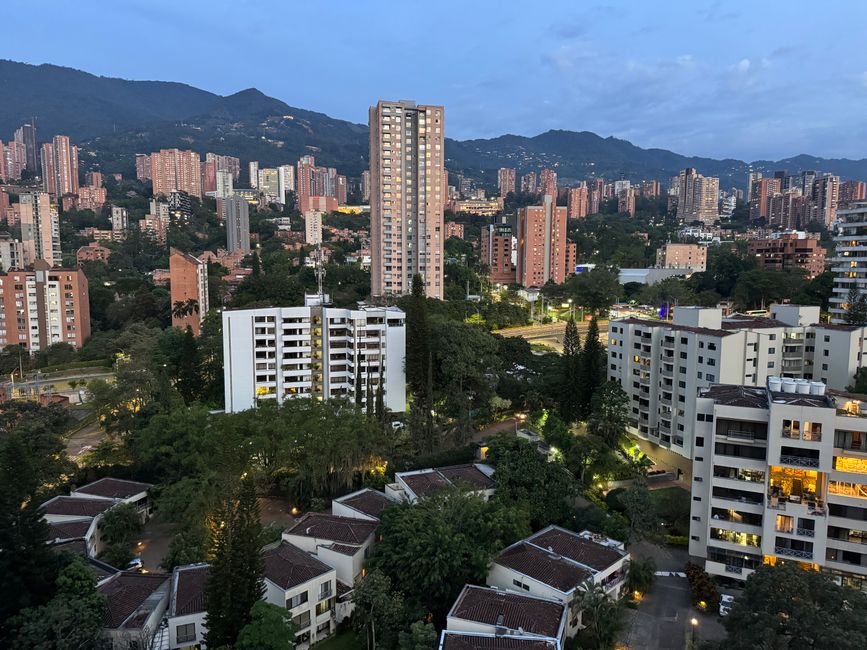
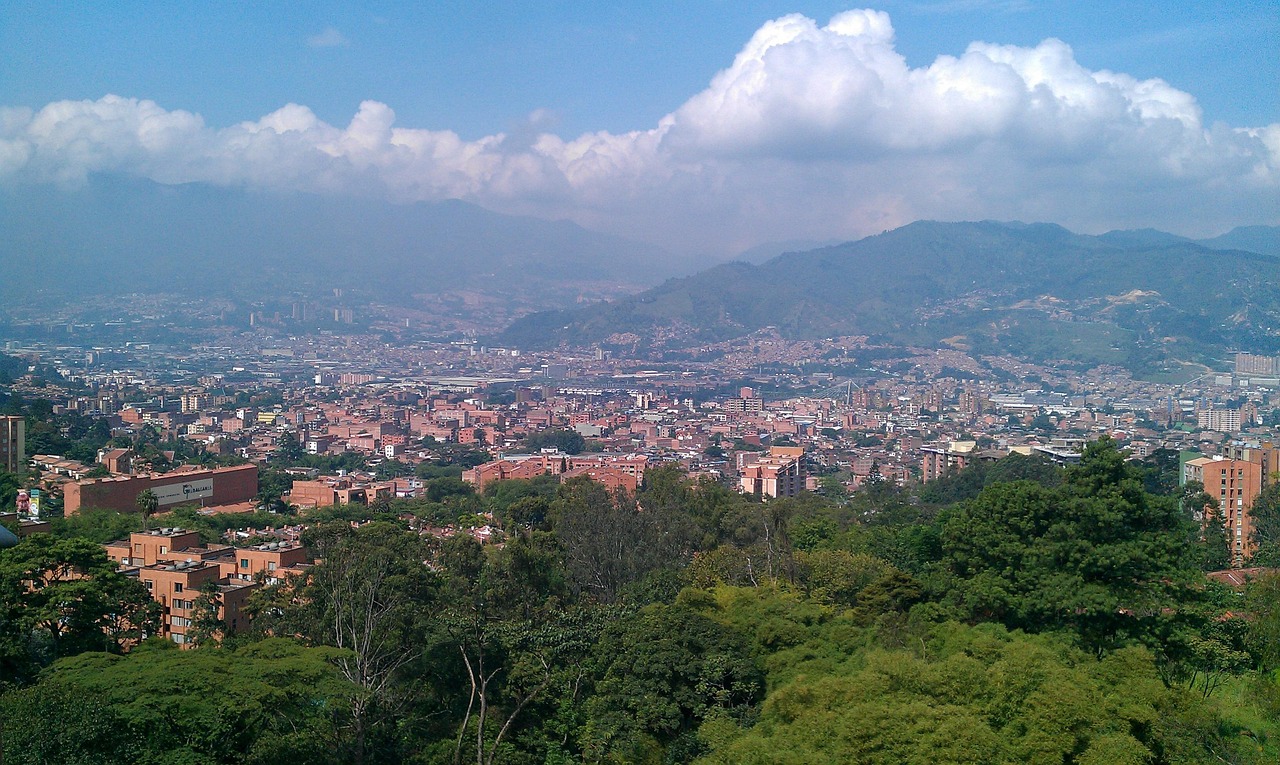
Medellín fills a long, green valley in the Andes, its brick towers climbing the mountainsides on both sides of the river. Colombia’s second city is known for its mild climate, around 19 °C (66 °F) all year according to ProColombia, the country’s official tourism promoter, which gives it the nickname “the city of eternal spring”. It is also known for its remarkable transformation: cable cars and outdoor escalators now link hillside neighborhoods to a clean, efficient Metro, and once-troubled districts such as Comuna 13 draw visitors for their street art and hip-hop. Add the rounded sculptures of Fernando Botero, a famous nightlife and food scene, the friendly “paisa” culture of Antioquia, and day trips to coffee farms and the colorful lakeside town of Guatapé, and it is easy to see why many travelers stay longer than planned.
Right now in Medellín
- Tue 16–28°C 60–82°F 14 mm Heavy rain
- Wed 16–27°C 61–81°F 13 mm Heavy rain
- Thu 16–27°C 61–81°F 9 mm Showers
- Mon 12 Oct Columbus Day (Día de la Raza)
Weather: MET Norway (CC BY 4.0) · Holidays: Nager.Date
Top tours in Medellín
See all tours for Medellín →
From local operators, with prices and reviews; you check availability and book on Viator, our partner. We may earn a commission at no extra cost to you. How we earn money
Medellín at a glance
- Best for: city life and food, art and street art, nightlife, coffee, day trips to the mountains and lakes.
- How long: three days for the city; four or five with Guatapé and a coffee farm.
- Best time: pleasant all year; December to February and July to August are drier, and the Flower Fair is in early August.
- Getting there: José María Córdova International Airport (MDE) is in Rionegro, about an hour from the city by road.
- Before you go: entry rules, the Check-Mig form and money are in our Colombia travel guide.
Medellín’s layout: where things are
The city runs north–south along the Medellín River, which the Metro’s main line follows. The Centro, with Plaza Botero, the Museum of Antioquia and Parque Berrío, is in the middle of the valley. To the south-east, on the slopes, is El Poblado, the main area for hotels, restaurants and nightlife around Parque Lleras; to the west, across the river, is the more residential Laureles, with its cafés and the 70th Street (“La Setenta”). Comuna 13 (San Javier) climbs the western hills, and the botanical garden, Parque Explora and the planetarium are together north of the center. Envigado, to the south, has a small-town feel.
Top things to see in Medellín
Most sights are close to Metro stations, so the Metro is the easiest way to link them in a day.
Plaza Botero and the Museum of Antioquia
Twenty-three bronze sculptures by Fernando Botero, Medellín’s most famous son, fill Plaza Botero, outside the Museum of Antioquia, which is largely dedicated to his work, according to ProColombia. The striking black-and-white Rafael Uribe Uribe Palace of Culture faces the square. The area is busy and chaotic; keep a close eye on your belongings, and visit by day.
The Metro and Metrocable
Medellín’s Metro, opened in 1995, is the city’s pride, and its Metrocable gondola lines carry commuters up to hillside neighborhoods. Ride line K from Acevedo station to Santo Domingo for views over the valley; on clear days, line L continues to the Parque Arví nature reserve.
Comuna 13
Once one of the city’s most violent districts, Comuna 13 is now known for its outdoor escalators, murals, street dancers and hip-hop, and is one of Medellín’s most visited places. Go with a local guide, many of whom grew up in the neighborhood, to understand its history; take the Metro to San Javier station and a short bus or taxi up the hill.
Parque Explora and the botanical garden
North of the center, the Joaquín Antonio Uribe Botanical Garden has orchids and a striking wooden canopy, and Parque Explora is an interactive science museum with an aquarium, close to the planetarium, according to ProColombia. The Parque de los Pies Descalzos (Barefoot Park) downtown is another of ProColombia’s recommendations.
Other things to do in Medellín
- Food: try the bandeja paisa, buñuelos and mondongo, according to ProColombia, plus arepas and fresh juices at the Minorista market.
- Coffee: specialty cafés in El Poblado and Laureles, or a coffee farm tour in the hills.
- Nightlife: El Poblado’s Parque Lleras and Provenza, and the salsa bars of Laureles and the center.
- Museums: the Museum of Modern Art (MAMM) and the Casa de la Memoria museum on the city’s recent history.
- Paragliding: tandem flights over the valley from San Félix, north of the city.
- Walking tours: free and paid tours of the center; see our city sightseeing guide.
Food, coffee and nightlife in Medellín
Paisa cooking is generous and hearty. ProColombia highlights the bandeja paisa, buñuelos and mondongo, and the city’s restaurants now range from traditional fondas to chef-led tasting menus.
- Bandeja paisa: a platter of red beans, rice, ground beef, chorizo, chicharrón (crisp pork belly), fried egg, plantain, arepa and avocado; best shared, at lunch.
- Arepas: the Antioquian arepa is thin, plain and white, eaten with every meal; try them with cheese or with hogao (tomato and onion sauce).
- Mondongo and sancocho: tripe soup and a hearty chicken or beef stew with plantain and yuca, both lunchtime staples.
- Buñuelos and natilla: fried cheese balls and a custard eaten especially at Christmas.
- Fruit and juices: the Minorista market and the stalls of the city sell lulo, maracuyá, guanábana and mango; try salpicón, a fruit salad in juice.
- Coffee: Medellín sits in coffee country, and specialty cafés in El Poblado, Laureles and Envigado roast beans from Antioquia’s farms.
- Nightlife: Parque Lleras and Provenza in El Poblado for bars and clubs, La Setenta in Laureles for a local crowd, and tango and salsa bars in the center and in Manrique, where the city’s tango tradition lives on.
A “menú del día” set lunch, with soup, a main course and a juice, is the cheapest way to eat well.
Day trips from Medellín
Guatapé and El Peñol
About two hours east, the Peñón de Guatapé, a giant granite monolith, rises above a maze of reservoir islands; more than 700 steps lead to the top for one of Colombia’s best views. Below it, the town of Guatapé is famous for its houses decorated with colorful relief panels called zócalos. Boat trips on the reservoir are popular; see our boat trips guide.
Coffee farms and Santa Fe de Antioquia
Coffee farms around Medellín offer tours of the growing and roasting process, and the colonial town of Santa Fe de Antioquia, about an hour and a half west, is a hot, whitewashed town with a historic bridge. For the full coffee-region experience, continue south to Salento; see our Salento travel guide.
Jardín
A colorful Antioquian village with a big plaza and coffee country around it, about three to four hours by road; best as an overnight trip.
Parque Arví and the eastern hills
From the top of Metrocable line K at Santo Domingo, line L continues over forested hills to Parque Arví, a nature reserve of pine and native forest with walking trails, pre-Hispanic paths, picnic areas and a weekend market of local farm products. It is a refreshing half day only about an hour from El Poblado, and noticeably cooler than the city. Check that line L is running before you go, as it can close for maintenance.
Coffee and flower farms of Santa Elena
The village of Santa Elena, in the hills east of the city, is home to the silleteros, the flower growers who carry the giant flower displays in the August Flower Fair. Some farms welcome visitors to see how the silletas are made, and coffee farms in the surrounding hills offer tours with tastings.
Getting there and getting around
By air
José María Córdova International Airport (MDE) is in Rionegro, in the mountains east of the city; the drive takes about 45 minutes to an hour through a tunnel. Official white airport taxis charge a fixed fare to the city, and shuttle buses run to the center. There are nonstop flights from Miami, Fort Lauderdale, Orlando, New York and other US hubs. The smaller Olaya Herrera airport, inside the city, handles some regional flights.
By road and domestic flights
Flights to Bogotá take under an hour, and to Cartagena about an hour and a quarter. Buses leave from the North terminal for the Caribbean and Guatapé, and from the South terminal for the coffee region; Medellín to Salento takes about six to seven hours. See our Bogotá and Cartagena travel guides.
Getting around Medellín
The Metro, with its tram line in the east and the Metrocable gondolas, is cheap, clean and safe; buy a rechargeable Cívica card or single tickets. It is crowded at rush hours. For other trips, use app-based taxis or taxis called by your hotel, and don’t hail them in the street.
Neighborhoods at a glance
- El Poblado: the main visitor district on the southeastern slopes, with hotels, malls, restaurants and nightlife; Provenza and Parque Lleras are the busiest parts.
- Laureles and Estadio: flat, leafy and residential, built around circular streets, with cafés, local restaurants and the football stadium; close to Metro line B.
- Envigado: technically a separate municipality to the south, with a traditional main square and a quieter pace.
- The center (El Centro): Plaza Botero, markets, museums and busy commercial streets; lively by day and empty at night.
- Belén and Sabaneta: local neighborhoods to the southwest and south, with traditional fondas.
Getting around in detail
- Metro lines: line A runs north–south along the river from Niquía to La Estrella, through the center and close to El Poblado; line B runs west from San Antonio to San Javier, for Comuna 13 and close to Laureles.
- Metrocable: gondola lines climb from Metro stations to the hillside neighborhoods; line K from Acevedo to Santo Domingo is the most popular with visitors.
- Tram: the Ayacucho tram runs east from San Antonio station toward the eastern hills, connecting with two more cable car lines.
- Cívica card: the rechargeable card used across the Metro system; single tickets are also sold.
- EnCicla: the city’s public bicycle system, with stations near Metro stops.
- Taxis: plentiful and cheap; use apps or ask your hotel to call one, especially at night.
When to go and how long to stay
Medellín is spring-like all year, with days of about 22–28 °C (72–82 °F) and cool nights, and an average of about 19 °C (66 °F), according to ProColombia. It has two rainier seasons, roughly April to May and October to November, when afternoon storms are common; December to February and July to August are drier. The Flower Fair (Feria de las Flores), held every year since 1957 in the first weeks of August, brings parades of flower farmers carrying huge “silletas” on their backs, according to ProColombia, and the city’s Christmas lights (alumbrados) along the river draw crowds in December.
| Season | What it’s like | Good for |
|---|---|---|
| December–February | Drier, sunny; Christmas lights | City walks, Guatapé, paragliding |
| March–May | Rainier, especially April and May | Museums, cafés, lower prices |
| June–August | Fairly dry; Flower Fair in August | Festivals and day trips |
| September–November | Rainier afternoons | Food tours, quieter streets |
Medellín month by month
- January: one of the driest and sunniest months, after the Christmas lights; good for Guatapé and paragliding.
- February: dry and warm; a good time for day trips.
- March: rain starts to increase later in the month; Holy Week brings processions and domestic travel.
- April: one of the rainiest months, with afternoon storms.
- May: rainy, especially in the afternoons; the hills are at their greenest.
- June: drier, warm; school vacations begin.
- July: one of the drier months; a good time for outdoor activities.
- August: dry and sunny; the Flower Fair, with the silleteros’ parade, fills the city in the first weeks of August, according to ProColombia, so book early.
- September: rain begins to return; quieter after the fair.
- October: one of the wettest months; plan indoor alternatives.
- November: rainy early, with the Christmas lights going up at the end of the month.
- December: the alumbrados, the city’s Christmas lights along the river and in parks, attract big crowds; drier toward the end of the month.
3 days in Medellín
Day one, the center by Metro: Plaza Botero, the Museum of Antioquia and Parque Berrío, then a Metrocable ride. Day two, a guided Comuna 13 tour, then the botanical garden and Parque Explora. Day three, a day trip to Guatapé and El Peñol.
5 days in Medellín
Add a coffee farm tour, Parque Arví by Metrocable, a paragliding flight, and an evening of salsa in Laureles.
Where to stay in Medellín and the hotel taxes
- El Poblado: the main area for visitors, with hotels from hostels to luxury, restaurants and nightlife; Provenza and around Parque Lleras can be loud at night.
- Laureles and Estadio: leafy, residential and calmer, with good cafés and easy Metro access.
- Envigado: a quieter, local feel south of El Poblado.
- The center: close to sights but noisy and less safe after dark; few visitors stay here.
Prices include Colombia’s 19% value-added tax, but foreign tourists are generally exempt from it on hotel rooms when they show their passport entry stamp or migration record; ask when you book.
Costs in Medellín
Medellín is good value compared with Cartagena and Bogotá. These per-person estimates are a planning guide as of October 2026, at about COP 3,273 to US$1:
| Item | Typical price |
|---|---|
| Hostel dorm bed in El Poblado or Laureles | about COP 45,000–90,000 (US$14–28) |
| Mid-range hotel double room in El Poblado | about COP 250,000–450,000 (US$75–140) |
| Luxury hotel | about COP 800,000+ (US$245+) |
| Menú del día (set lunch) | about COP 18,000–30,000 (US$5.50–9) |
| Bandeja paisa in a traditional restaurant | about COP 30,000–45,000 (US$9–14) |
| Metro single ride | a few thousand pesos (about US$1) |
| Guided Comuna 13 tour | about COP 60,000–150,000 (US$18–46) |
| Guatapé day tour with boat ride | about COP 150,000–300,000 (US$46–92) |
The figures are our estimates, not official statistics; prices rise during the Flower Fair and at Christmas.
Practical tips for Medellín
- Safety: street crime happens in Medellín, as in Colombia’s other big cities, according to the UK government. Keep your phone out of sight, especially in the center and on the street in El Poblado. Never accept drinks from strangers, and be careful with dating apps: criminals have used them, and drugs such as scopolamine, to rob visitors. Don’t invite strangers back to your room. Emergencies: 123.
- Respect: local people are proud of how the city has changed; avoid “narco tours” that glorify the drug era.
- Water: drink bottled or filtered water.
- Money: use ATMs inside banks or malls during the day; cards are widely accepted.
- Altitude: the city is at about 1,400–1,500 m (4,600–4,900 ft); the sun is strong.
What to pack for Medellín
Bring light clothes for warm days, a sweater or light jacket for evenings, a compact umbrella or rain jacket for afternoon showers, and comfortable shoes for the hills and the steps at El Peñol. Sunscreen, sunglasses and a secure daypack are useful, as are smart-casual clothes for restaurants and clubs. Plugs are the US type.
Medellín travel FAQ
Why is Medellín called the city of eternal spring?
Because its climate is mild all year, with an average of about 19 °C (66 °F), according to ProColombia.
How do I get from Medellín airport to the city?
By official taxi at a fixed fare or by airport bus, in about 45 minutes to an hour; the airport is in Rionegro, east of the city.
Is Comuna 13 safe to visit?
It is one of the city’s most visited places. Go by day with a local guide, keep your belongings close, and stay on the main tour route.
How do I get to Guatapé from Medellín?
By bus from the North terminal, in about two hours, or on a day tour that often includes a boat trip on the reservoir.
When is the Flower Fair in Medellín?
In the first weeks of August each year, according to ProColombia.
Where should I stay in Medellín?
El Poblado for nightlife and restaurants, or Laureles for a calmer, local atmosphere with good Metro access.
Is Medellín safe for tourists?
Most visits pass without trouble. Keep valuables hidden, use called or app-based taxis, and be very careful with strangers met online or in bars.
How do I get around Medellín?
By Metro, Metrocable and tram for most sights, using a rechargeable Cívica card, and by app-based or called taxis for other trips.
What should I eat in Medellín?
The bandeja paisa, arepas, buñuelos and mondongo, according to ProColombia, plus fresh tropical fruit juices and local specialty coffee.
How much does Medellín cost per day?
Roughly COP 180,000–250,000 (US$55–75) on a budget and COP 450,000–750,000 (US$140–230) for a mid-range trip, by our estimates.
Sources and last review
Researched and last reviewed on 4 October 2026. The climate, the Museum of Antioquia and Botero, the botanical garden, Parque Explora, the Barefoot Park, local dishes, El Poblado’s nightlife and the Flower Fair: ProColombia; street crime, scopolamine and dating-app robberies, taxis and the emergency number: the UK government. The number of Botero sculptures on the plaza, the Metro’s opening year and lines, Comuna 13, Guatapé and El Peñol, Jardín, Santa Fe de Antioquia, airport details, flight and bus times, the altitude and the hotel tax exemption come from secondary sources or general knowledge and are flagged for checking. The food, neighborhood, getting-around, month-by-month and cost sections draw on secondary sources, general knowledge and our own estimates, except where an official source is named, and are flagged for checking. Prices and rules change, so check before you go. For entry rules and money, see our Colombia travel guide.
Plan your trip
Partner links: TravelerCenter may earn a commission if you book, at no extra cost to you.
🇪🇸 Useful Spanish phrases for Medellín
All 38 Spanish phrases: restaurant, hotel, emergencies, romance (printable) →