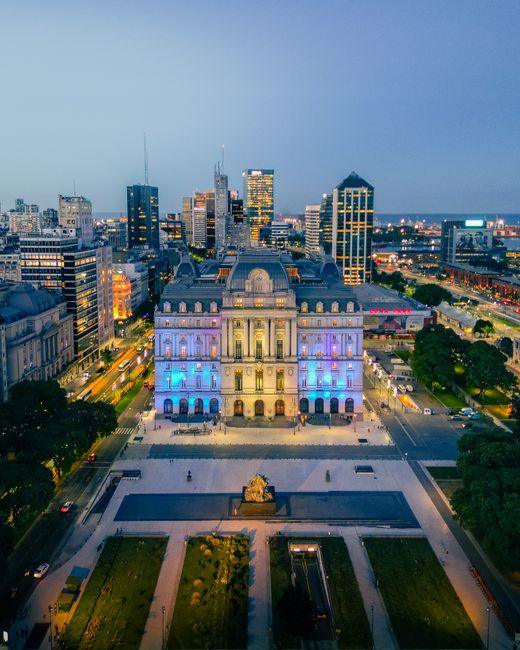
Buenos Aires, Argentina’s capital, is a big, elegant and late-night city on the wide brown estuary of the Río de la Plata. It mixes European boulevards and grand cafés with tango in the streets of San Telmo, the painted tin houses of La Boca, the marble tombs of Recoleta and the leafy, restaurant-packed streets of Palermo. Come for steak and Malbec, a tango show or a milonga, the Teatro Colón, football, bookshops and museums, and for day trips to the river delta at Tigre or across the water to Uruguay. Spring (September to November) and fall (March to May) are the most pleasant seasons; summer is hot and humid, and winter is mild and gray.
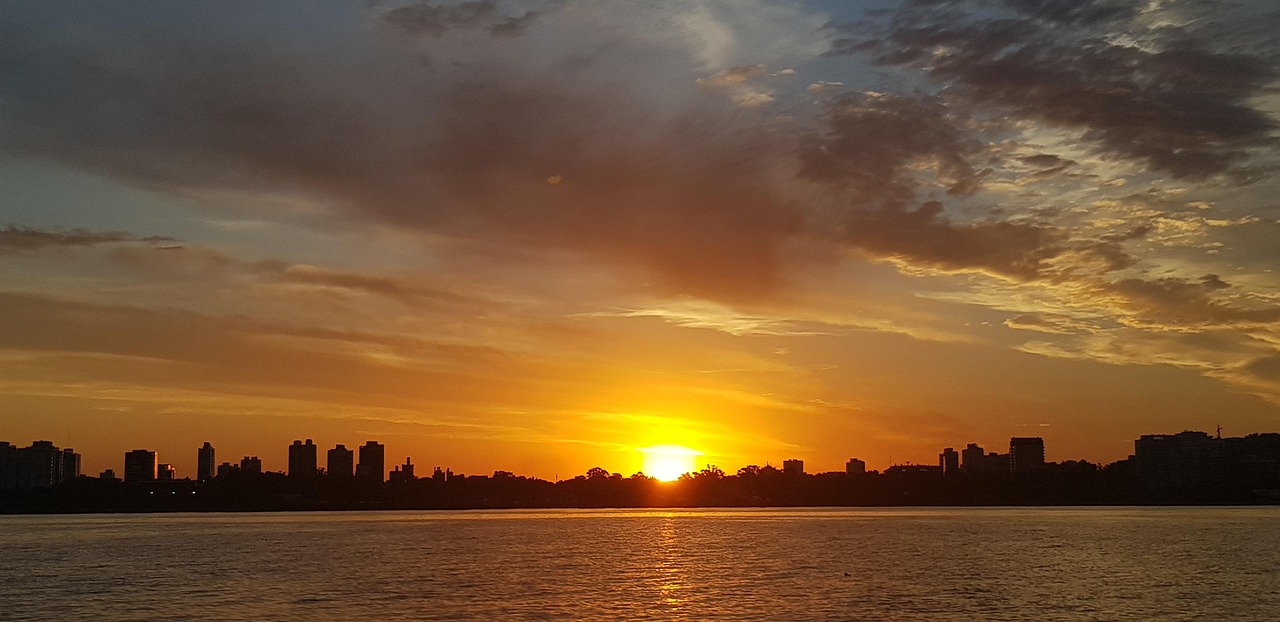
Right now in Buenos Aires
- Wed15–16°C59–62°F45 mm rain
- Thu14–16°C57–60°F1 mm rain
- Fri13–17°C55–62°F1 mm rain
- Mon 12 Oct Day of Respect for Cultural Diversity (Día del Respeto a la Diversidad Cultural)
Top tours in Buenos Aires
See all tours for Buenos Aires →
From local operators, with prices and reviews; you check availability and book on Viator, our partner. We may earn a commission at no extra cost to you. How we earn money
Buenos Aires at a glance
- Best for: food and wine, tango, architecture, museums, nightlife, football and shopping.
- How long: 3–4 days for the main neighborhoods; 5–7 days to add Tigre, an estancia or Uruguay.
- Best time: September to November and March to May, with highs of about 20–27 °C (67–81 °F). January and February average 29–30 °C (84–86 °F) and are humid.
- Getting there: long-haul flights land at Ezeiza (EZE), about 35 km (22 miles) from the center; domestic flights use Aeroparque (AEP), by the river in Palermo.
- Getting around: the Subte (subway), buses and commuter trains with a SUBE card, plus taxis and ride-hailing apps.
- Before you go: entry rules, money and general safety are in our Argentina travel guide.
Buenos Aires’ neighborhoods: where things are
The city proper, the Autonomous City of Buenos Aires, has about 3 million people and 48 barrios (neighborhoods); Greater Buenos Aires around it has more than 13 million. Most sights are in a band along the river from La Boca in the south to Palermo in the north.
The historic center (Microcentro and Monserrat)
The Plaza de Mayo, where Argentina’s history has been made and protested, is ringed by the pink Casa Rosada (the presidential palace), the Metropolitan Cathedral and the colonial Cabildo. Avenida de Mayo leads west to Congress past old cafés such as the Café Tortoni, and Avenida 9 de Julio, one of the widest avenues in the world, crosses it at the Obelisco.
San Telmo
The oldest barrio, with cobbled streets, antique shops, colonial houses and tango bars. On Sundays the Feria de San Telmo street market runs along Calle Defensa from Plaza Dorrego, with antiques, crafts and street tango.
La Boca
The old port district by the Riachuelo, home of the Boca Juniors football club and its stadium, La Bombonera. The short street of Caminito, with brightly painted houses, artists and tango dancers, is the photo stop; stay in the busy tourist area by day.
Puerto Madero
Old brick docks converted into restaurants, offices and apartments, with the white Puente de la Mujer footbridge and the Costanera Sur Ecological Reserve, a wild riverside park, just beyond.
Recoleta and Retiro
Elegant Paris-style mansions, the Recoleta Cemetery, the National Museum of Fine Arts and the Floralis Genérica, a giant metal flower that opens and closes. Retiro has the main train and bus stations and the Plaza San Martín.
Palermo
The biggest barrio, with parks, the Japanese Garden, the Rose Garden and the MALBA museum of Latin American art, and Palermo Soho and Palermo Hollywood, full of restaurants, bars, design shops and boutique hotels. Belgrano and Colegiales, further north, are quieter.
Top things to see in Buenos Aires
Many museums close on Mondays or Tuesdays, and opening hours and prices change often; check the official sites before you go.
Recoleta Cemetery
A city of marble mausoleums, angels and domes where Argentina’s presidents, generals and families are buried, including Eva Perón (Evita) in the Duarte family tomb. Foreign visitors pay an entry fee; free guided tours in Spanish and English are offered on some days.
Teatro Colón
One of the world’s great opera houses, opened in 1908 and famous for its acoustics. Guided tours run daily, and tickets for performances in the season (roughly March to December) range from cheap upper-tier seats to expensive boxes.
Plaza de Mayo and the Casa Rosada
The square at the heart of Argentine politics, where the Mothers of the Plaza de Mayo have marched every Thursday afternoon since 1977 for their children who disappeared under the military dictatorship. The Casa Rosada offers free guided visits on weekends, booked online.
Caminito and La Bombonera
The painted houses of Caminito are the city’s postcard. Next door, the Boca Juniors museum and stadium tour show off one of the world’s most famous football clubs; seeing a match there is best arranged through an official tour.
Museums
- MALBA: Latin American art from the 20th century to today, including Frida Kahlo and Diego Rivera.
- National Museum of Fine Arts (MNBA): Argentine and European art in Recoleta, free entry.
- Evita Museum: the life of Eva Perón, in Palermo.
- ESMA Museum and Site of Memory: a former navy school used as a secret detention center during the 1976–83 dictatorship, a UNESCO World Heritage Site since 2023.
More to see
- El Ateneo Grand Splendid: a bookshop in a 1919 theater, balconies and all.
- Palermo’s parks: the Bosques de Palermo, the Rose Garden and the Japanese Garden, busy with joggers and families at weekends.
- Costanera Sur Ecological Reserve: wetland trails beside the river, minutes from the skyscrapers of Puerto Madero.
Tango, food and nightlife
Tango
Tango was born in the port barrios of Buenos Aires and Montevideo in the late 1800s and is on UNESCO’s list of intangible cultural heritage. You can see it three ways: dinner shows in theaters (polished, for tourists), street performers in San Telmo and Caminito, and milongas, the dance halls where locals of all ages dance, often after a beginners’ class early in the evening. The city’s Tango Festival and World Cup is held each year in August.
Food and drink
Eat at a parrilla (steakhouse) for bife de chorizo (sirloin), ojo de bife (rib eye) and provoleta (grilled cheese); try empanadas, milanesas, Italian-style pizza at Avenida Corrientes’ old pizzerias, ice cream (helado) and medialunas (small croissants) with coffee. Malbec is the house red. Dinner starts at 9 p.m. or later, and many restaurants don’t open before 8 p.m.; a “puerta cerrada” (closed-door) restaurant in a private home is a fun splurge.
Nightlife
Bars fill around midnight and clubs (boliches) around 2 a.m., in Palermo, Recoleta and Costanera. Teatro and music listings are huge: Avenida Corrientes is the city’s Broadway.
Day trips from Buenos Aires
- Tigre and the Paraná Delta: about an hour north by commuter train from Retiro, a maze of rivers and islands with stilt houses, rowing clubs and wooden launches; take a boat tour or a river bus.
- An estancia day: ranches in the Pampas around San Antonio de Areco offer a gaucho lunch, horseback riding and folk shows.
- Colonia del Sacramento, Uruguay: a cobbled colonial town across the Río de la Plata, about an hour or more by fast ferry from Puerto Madero; bring your passport, and see our coming Uruguay guide.
- La Plata: the provincial capital, about an hour south, with a neo-Gothic cathedral and a natural history museum.
- Mar del Plata: the big beach city, about 400 km (250 miles) south, better as an overnight trip; see our Mar del Plata travel guide.
More day trips
- San Isidro and the Tren de la Costa: a riverside suburb north of the city with a cathedral, colonial houses and weekend markets; the coastal tourist train runs from Olivos to Tigre.
- Luján: about 70 km (43 miles) west, Argentina’s most important pilgrimage basilica and a colonial museum complex.
- Montevideo, Uruguay: ferries cross the Río de la Plata to Colonia, with connecting buses to Montevideo, or direct to Montevideo in about 2 to 3 hours; worth at least one night.
Nearby destinations
- Colonia del Sacramento51 km
- Montevideo203 km
Getting there and getting around
Airports
- Ezeiza (EZE): the international airport, about 35 km (22 miles) south-west of the center. Allow about 45 minutes to 1.5 hours by road. Use the official taxi and remis desks in arrivals, a ride-hailing app or a shuttle bus to the center; city buses also run but are slow with luggage.
- Aeroparque (AEP): the Jorge Newbery city airport, on the riverfront in Palermo, about 15–20 minutes from downtown by taxi, for most domestic flights and some regional ones.
- Between them: allow at least 3–4 hours between an international arrival at EZE and a domestic flight from AEP.
Getting around the city
- SUBE card: a rechargeable card for the Subte, buses (colectivos) and commuter trains; buy and top it up at Subte stations, kiosks and lottery shops. Some lines also accept contactless bank cards.
- Subte: six lines plus the Premetro, the quickest way across the center; avoid rush hours with luggage.
- Colectivos: hundreds of bus routes cover the whole city around the clock; check routes in a map app.
- Taxis and apps: black-and-yellow taxis are metered; radio taxis and ride-hailing apps are safer at night.
- Bikes: free public bikes (Ecobici) and protected bike lanes cover much of the center and Palermo.
Getting around: practical details
The Subte runs from about 5:30 a.m. to 11 p.m. on weekdays, with shorter hours on Sundays; the colectivos run all night. Top up your SUBE card before you travel, as drivers don’t take cash. Many streets are one-way, so a taxi route can look indirect; use a map app with live traffic. Avenida 9 de Julio has central bus lanes (the Metrobús), the quickest way across the center by bus. Walking is the best way to enjoy San Telmo, Recoleta and Palermo, but distances between them are long, so combine walks with short rides. For the airports, allow for heavy traffic on weekday mornings and Friday evenings.
When to go and how long to stay
Buenos Aires has a humid subtropical climate with no dry season. The table uses the National Meteorological Service’s 1991–2020 normals for the Buenos Aires Observatory station (Villa Ortúzar), as published by the World Meteorological Organization: average daily highs and lows and days with at least 1 mm of rain.
| Season | Average high / low | Rainy days per month | What it’s like | Good for |
|---|---|---|---|---|
| Summer (Dec–Feb) | 29–30 °C (84–86 °F) / 19–20 °C (67–68 °F) | 7–8 | Hot and humid, with thunderstorms; many locals leave town in January | Outdoor bars, open-air events, low hotel prices |
| Fall (Mar–May) | 27 °C falling to 19 °C (81 to 67 °F) / 18 °C falling to 11 °C (64 to 52 °F) | 5–7 | Warm, then crisp; one of the best times | Walking, cafés, theater season |
| Winter (Jun–Aug) | 16–18 °C (60–64 °F) / 8–9 °C (46–48 °F) | 5–6 | Mild but damp and gray, rarely below freezing | Museums, tango, the Tango Festival in August |
| Spring (Sep–Nov) | 20 °C rising to 26 °C (67 to 79 °F) / 11 °C rising to 16 °C (51 to 61 °F) | 6–8 | Mild and sunny, with jacaranda trees in bloom in November | Parks, walking tours, outdoor dining |
Buenos Aires gets about 1,260 mm (50 in) of rain a year, mostly in heavy showers; January, February and April are the wettest months.
Buenos Aires month by month
Figures are average daily highs and lows at the Buenos Aires Observatory station (SMN 1991–2020 normals, via the WMO).
| Month | High / low | What to expect |
|---|---|---|
| January | 30 °C (86 °F) / 20 °C (68 °F) | Hottest month, humid, many locals on holiday; quieter city, outdoor events |
| February | 29 °C (84 °F) / 19 °C (67 °F) | Hot, storms; Carnival weekends with murga street bands |
| March | 27 °C (81 °F) / 18 °C (64 °F) | Pleasant; theater and concert season starts |
| April | 23 °C (74 °F) / 14 °C (57 °F) | Mild, one of the best months; Easter crowds |
| May | 19 °C (67 °F) / 11 °C (52 °F) | Crisp fall days, golden plane trees |
| June | 16 °C (62 °F) / 8 °C (47 °F) | Cool and gray; cozy cafés and milongas |
| July | 16 °C (60 °F) / 8 °C (46 °F) | Coldest month; winter school holidays fill museums |
| August | 18 °C (64 °F) / 9 °C (48 °F) | Cool; the Tango Festival and World Cup |
| September | 20 °C (67 °F) / 11 °C (51 °F) | Spring begins; parks fill again |
| October | 23 °C (73 °F) / 13 °C (56 °F) | Warm, wetter; outdoor dining season |
| November | 26 °C (79 °F) / 16 °C (61 °F) | Jacarandas in bloom; papal visit holidays on November 9–10 in 2026 |
| December | 29 °C (84 °F) / 19 °C (65 °F) | Hot; Christmas markets and end-of-year parties |
Crowds and events: the city is busiest in spring and fall, and around holidays and big football matches. On Monday, November 9, 2026, there is a national holiday for Pope Leo XIV’s official visit to Argentina, and Tuesday, November 10, is also a holiday in the City of Buenos Aires, under Decree 1103/2026; expect closed streets, crowds and busy transport around the visit’s events.
4 days in Buenos Aires
Day one, the Plaza de Mayo, the Cabildo, Avenida de Mayo and coffee at the Café Tortoni, then the Obelisco and a theater show on Corrientes. Day two, San Telmo (on a Sunday for the fair), lunch at a parrilla, then Caminito in La Boca. Day three, Recoleta Cemetery, the Fine Arts Museum and El Ateneo, then a tango show or a milonga class. Day four, Palermo’s parks, MALBA and dinner in Palermo Soho.
A week in and around Buenos Aires
Add a day in Tigre and the delta, a day at an estancia, the Teatro Colón tour, the ESMA memory site, and a day or overnight trip to Colonia del Sacramento in Uruguay.
Where to stay in Buenos Aires
- Palermo: boutique hotels and apartments near the best restaurants and bars; lively at night.
- Recoleta: classic, elegant and central, near museums and the cemetery.
- San Telmo: character, hostels and tango, close to the center; quieter streets can feel deserted at night.
- Puerto Madero: big international hotels by the docks, safe and modern but less atmospheric.
- Microcentro: convenient for sightseeing, but empty at night and on weekends.
Foreign tourists who pay for their room with a card issued abroad, or a transfer from abroad, don’t pay Argentina’s 21% VAT (IVA) on accommodation, under the tax agency’s refund system; give the hotel your passport details and check that the bill shows it.
Choosing your neighborhood
First-time visitors who want restaurants and nightlife on the doorstep usually choose Palermo Soho or Palermo Hollywood; light sleepers should look at the quieter blocks of Palermo Chico or Recoleta. Families and older travelers often prefer Recoleta for its wide sidewalks, parks and classic hotels. San Telmo suits those who want old-world character and tango, and is closest to La Boca and the center. Puerto Madero is the most modern and secure-feeling area, popular with business travelers. Apartment rentals are common in Palermo and Recoleta and good value for longer stays.
Food and drink in Buenos Aires
Porteños eat late and well. Breakfast is light, coffee and medialunas; lunch runs from about 1 to 3 p.m., often with a fixed-price “menú ejecutivo” on weekdays; and dinner starts at 9 p.m. or later. Bodegones, old-fashioned neighborhood restaurants with huge portions of milanesa, tortilla and pasta, are a great-value alternative to trendy places. Pizza in Buenos Aires is thick, cheesy and eaten standing at the counter with a slice of fainá (chickpea bread) on top. Ice cream parlors (heladerías) stay open past midnight; dulce de leche flavors are a must. Vermouth has made a comeback in old bars, and Fernet with cola is the local mixed drink. Specialty coffee shops have spread through Palermo and Villa Crespo, while the historic cafés, the “bares notables,” are protected by the city for their heritage. For a market lunch, try the food stalls of the Mercado de San Telmo.
What a trip to Buenos Aires costs
These are our estimates for October 2026 at about ARS 1,520 per US dollar; prices in pesos change often.
| Item | Typical price |
|---|---|
| Hostel dorm bed | ARS 25,000–40,000 (US$16–26) |
| Mid-range double room | ARS 120,000–200,000 (US$80–130) |
| Weekday set lunch (menú ejecutivo) | ARS 15,000–25,000 (US$10–16) |
| Parrilla dinner with wine, per person | ARS 45,000–75,000 (US$30–50) |
| Coffee and medialunas | ARS 5,000–8,000 (US$3–5) |
| Subte or bus ride with SUBE | under ARS 1,500 (under US$1) |
| Tango dinner show | ARS 90,000–180,000 (US$60–120) |
| Taxi from Ezeiza to Palermo | ARS 45,000–70,000 (US$30–46) |
Practical tips for Buenos Aires
- Money: foreign cards are settled at the financial (“MEP”) dollar rate; choose to pay in pesos, not your home currency. Carry some cash for small shops, tips and markets. On October 2, 2026, the Central Bank’s reference rate was about ARS 1,520 per US dollar.
- Late hours: plan lunch from 1 p.m. and dinner from 9 p.m.; many restaurants are closed between meals.
- Tipping: about 10% in restaurants, in cash.
- Water: tap water is safe to drink.
- Safety: Buenos Aires is busy and mostly relaxed, but petty crime is common. Keep phones out of reach at the curb and on terraces, where motorbike thieves sometimes snatch them; watch bags on the Subte, in Retiro and Constitución stations and at the San Telmo fair; know the “mustard” distraction scam; and stay in the busy parts of La Boca by day. Use radio taxis or apps at night. Demonstrations are frequent around the Plaza de Mayo and Congress; they are usually peaceful but block traffic.
- Emergencies: call 911 for police and 107 for an ambulance.
What to pack for Buenos Aires
Smart-casual city clothes (porteños dress well, especially at night), comfortable walking shoes for cobbles, a light jacket for spring and fall evenings, a warm coat and umbrella in winter, and light, breathable clothes and mosquito repellent in summer. For a milonga, bring shoes with smooth soles. Argentina uses 220 V and type I plugs, so bring an adapter.
Buenos Aires travel FAQ
How many days do I need in Buenos Aires?
Three or four days covers the main neighborhoods, a tango show and a parrilla dinner; give it a week to add Tigre, an estancia and a day in Uruguay.
How do I get from Ezeiza airport to the city center?
By official taxi or remis from the desks in arrivals, a ride-hailing app, or a shuttle bus. Allow 45 minutes to 1.5 hours depending on traffic.
Which airport do domestic flights use?
Mostly Aeroparque (AEP), close to downtown in Palermo. Allow 3–4 hours if you connect from an international arrival at Ezeiza.
Where can I see tango in Buenos Aires?
At dinner shows in theaters, by street dancers in San Telmo and Caminito, or at a milonga, where locals dance; many milongas start with a beginners’ class.
Is La Boca safe to visit?
The tourist area around Caminito and the stadium is busy and policed by day. Don’t wander beyond it, and leave before dark.
Can I use my credit card in Buenos Aires?
Yes, widely. Purchases with foreign cards are settled at a rate based on the financial dollar, and you avoid the VAT on hotel rooms by paying with a foreign card.
Can I drink the tap water in Buenos Aires?
Yes, tap water is safe in Buenos Aires.
Is there a holiday during the Pope’s visit in November 2026?
Yes. Monday, November 9, 2026 is a national holiday for Pope Leo XIV’s visit, and November 10 is a holiday in the City of Buenos Aires.
What is the best area to stay in Buenos Aires for first-timers?
Palermo for restaurants and nightlife, Recoleta for a classic, central and quieter base.
How much money do I need per day in Buenos Aires?
Roughly ARS 75,000–120,000 (US$50–80) on a budget and ARS 180,000–330,000 (US$120–220) mid-range, by our October 2026 estimates.
Plan your trip
Partner links: TravelerCenter may earn a commission if you book, at no extra cost to you.
🇪🇸 Useful Spanish phrases for Buenos Aires
All 38 Spanish phrases: restaurant, hotel, emergencies, romance (printable) →
Sources · last reviewed 4 October 2026
Researched and last reviewed on 4 October 2026. Exchange rate and card rules: the Central Bank of Argentina (BCRA); VAT refund on hotels: the tax agency (ARCA); holidays for the papal visit: Decree 1103/2026; climate: the National Meteorological Service’s 1991–2020 normals for the Buenos Aires Observatory, as published by the World Meteorological Organization. Neighborhood descriptions, museum and sight details, airport transfers, the SUBE card and transport, tango events, safety tips and day-trip times come from general references and are flagged for checking. Prices and opening hours change, so check the official sites before you go. For entry rules and money, see our Argentina travel guide.
Data: Weather: MET Norway (CC BY 4.0) · Sea temperature: NOAA CoastWatch · Rates: ECB · Holidays: Nager.Date · Costs: World Bank ICP and price levels · Wikidata (CC0)