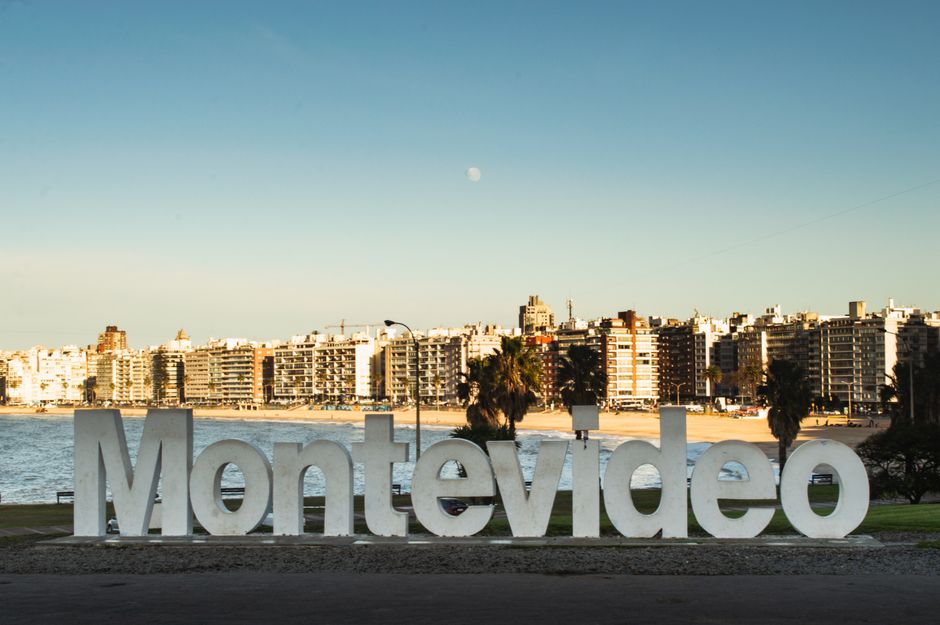
Montevideo, Uruguay’s capital and home to about a third of its people, is a relaxed, human-scale city on a broad bay of the Río de la Plata. Its old town, the Ciudad Vieja, packs colonial squares, grand 19th-century buildings and Art Deco façades onto a small peninsula, and the Rambla, a riverside promenade about 22 km (14 miles) long, runs east past city beaches to the leafy districts of Pocitos and Carrasco. Come for the parrilla grills of the Mercado del Puerto, the Teatro Solís, the candombe drums of the Sur and Palermo neighborhoods, the world’s longest carnival, Sunday markets and football. It’s an easy add-on to Buenos Aires by ferry and the natural base for Uruguay’s wineries and coast. Summers are warm and breezy, winters cool and damp, and rain falls in every season.
Right now in Montevideo
- Wed 14–17°C 58–63°F 29 mm Heavy rain
- Thu 14–15°C 57–59°F 1 mm Cloudy
- Fri 14–15°C 58–58°F Cloudy
- Mon 12 Oct Day of the race (Día de la Raza)
Weather: MET Norway (CC BY 4.0) · Sea temperature: NOAA CoastWatch · Holidays: Nager.Date
Top tours in Montevideo
See all tours for Montevideo →
From local operators, with prices and reviews; you check availability and book on Viator, our partner. We may earn a commission at no extra cost to you. How we earn money
Montevideo at a glance
- Best for: colonial and Art Deco architecture, walking and cycling the Rambla, food and wine, carnival and candombe, museums and football.
- How long: 2–3 days for the city; 4–5 days to add wineries, the coast or Colonia.
- Best time: November to April for warm weather, with highs of 22–28 °C (72–82 °F); late January to early March for carnival; spring and fall are mild and quiet.
- Getting there: Carrasco International Airport (MVD), about 20 km (12 miles) east of the center; ferries from Buenos Aires direct or via Colonia; buses to Tres Cruces terminal.
- Getting around: on foot in the Ciudad Vieja and Centro, by city bus with an STM card, by taxi or app, or by bike along the Rambla.
- Money: Uruguayan pesos; UYU 1,000 is about US$25. Foreign visitors pay no VAT on hotels.
- Before you go: entry rules, taxes and general safety are in our Uruguay travel guide.
Montevideo’s neighborhoods: where things are
The city spreads east from the old port along the shore. Most sights are in the Ciudad Vieja and Centro, linked by Avenida 18 de Julio, the main avenue, while the beaches, restaurants and most hotels are along the Rambla to the east.
Ciudad Vieja (the old town)
The original walled town on the peninsula, entered through the Puerta de la Ciudadela, the old city gate. Its pedestrian streets, Sarandí and Pérez Castellano, lead past the Plaza Matriz, the cathedral, the Cabildo, art galleries, antique shops and cafés to the Mercado del Puerto. It’s lively by day and on weekend evenings, but quiet in places after dark.
Centro and Cordón
East of Plaza Independencia, Avenida 18 de Julio is the city’s main shopping street, lined with early 20th-century buildings, the Palacio Municipal and plazas. Cordón, beyond it, is home to the university and the Sunday Tristán Narvaja street market.
Barrio Sur and Palermo
The traditional heart of the Afro-Uruguayan community, along the waterfront south of the Centro, where candombe drum groups (comparsas) practice in the streets on Sunday evenings and during carnival.
Parque Rodó, Punta Carretas and Pocitos
Leafy residential areas along the Rambla, with Parque Rodó’s lake and fairground, the Punta Carretas lighthouse and shopping mall in a former prison, and Pocitos, Montevideo’s favorite city beach, backed by apartment towers, cafés and restaurants. They’re the most popular areas to stay.
Carrasco
The upscale garden suburb near the airport, with large houses, the grand Hotel Casino Carrasco, quiet beaches and good restaurants.
Prado
North of the center, a district of 19th-century summer villas, the city’s largest park with a famous rose garden, and the Juan Manuel Blanes fine arts museum.
Top things to see in Montevideo
Museum hours vary and many close on Mondays; check before you go. Several of the city’s museums are free.
Plaza Independencia and Palacio Salvo
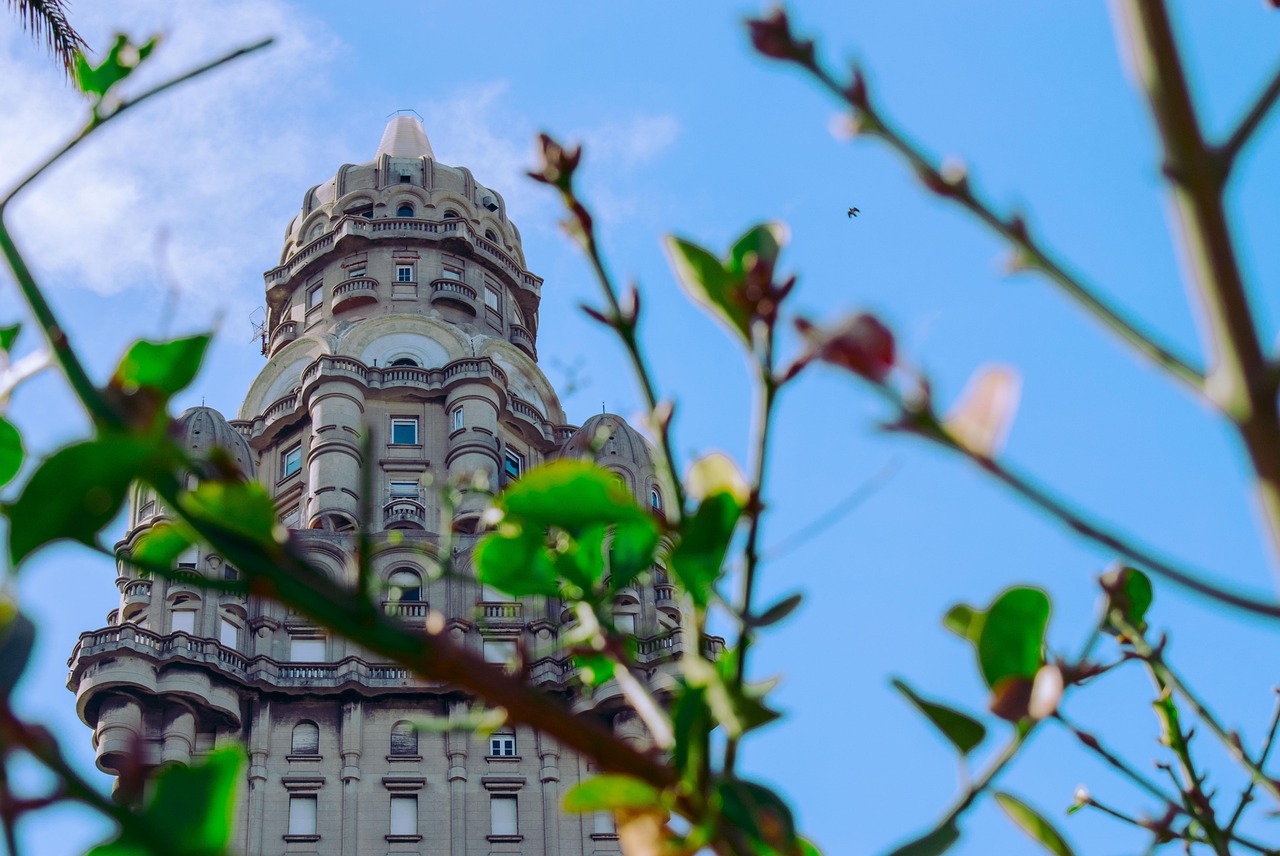
The grand square between the old town and the Centro is centered on the equestrian statue of José Artigas, the national hero, with his mausoleum beneath it. On one side rises the Palacio Salvo, an eccentric 1920s tower that was once the tallest building in South America, now a symbol of the city; guided tours climb to its top.
Teatro Solís
Uruguay’s main theater, opened in 1856, is one of the oldest in the Americas still in use, with a horseshoe auditorium seating about 1,500. Catch an opera, ballet or concert, or take a guided tour.
Mercado del Puerto
A 19th-century market hall with an ornate iron roof, now filled with parrillas grilling beef, sausages and provolone cheese over wood fires. Lunch here, with a glass of “medio y medio” (sparkling and white wine), is a Montevideo ritual. It’s busiest on Saturdays at midday.
Plaza Matriz and the Ciudad Vieja
The old town’s oldest square has the Metropolitan Cathedral and the colonial Cabildo, the old town hall, now a museum. Nearby, the Torres García Museum is dedicated to Joaquín Torres García, Uruguay’s great modernist painter, and the Pre-Columbian and Indigenous Art Museum (MAPI) has fine collections.
The Rambla and the beaches
The waterfront promenade is where Montevideo lives: joggers, cyclists, fishermen and families sharing mate at sunset. Walk or cycle from the Ciudad Vieja past Parque Rodó and Punta Carretas to Pocitos and Buceo, with beaches along the way. The water is the brown, slightly salty water of the river estuary, and the city publishes water-quality reports for each beach in summer, with lifeguards on duty during the season.
Museums of carnival, football and the Andes
The Museo del Carnaval, near the port, shows the costumes, masks and history of Montevideo’s carnival; the Museo del Fútbol at the Estadio Centenario, where Uruguay won the first World Cup in 1930, celebrates the national passion; and the Museo Andes 1972 tells the story of the Uruguayan rugby team whose plane crashed in the Andes.
More to see
- Palacio Legislativo: Uruguay’s ornate marble parliament building, with guided tours on weekdays.
- Feria de Tristán Narvaja: a sprawling Sunday morning street market of antiques, books, fruit and bric-a-brac in Cordón.
- Cerro de Montevideo: the hill across the bay, topped by a 19th-century fortress with a view of the city skyline.
- Museo Nacional de Artes Visuales: Uruguay’s national art collection in Parque Rodó.
- Jardín Japonés and the Botanical Garden: peaceful gardens in the Prado.
Food, drink and nightlife
Montevideo is a city of grills. Order an “asado” or a mixed grill (parrillada) with chorizo, morcilla (blood sausage), provoleta (grilled cheese) and salads; the chivito, the giant steak sandwich, is the national fast food; and for dessert, everything comes with dulce de leche. Try Tannat from the nearby Canelones wineries, local craft beer, and grappamiel. Dinner starts late, rarely before 9 p.m. Nightlife centers on the bars of the Ciudad Vieja, Cordón and Pocitos, with live music, tango and candombe; in carnival season, the murga shows at the Teatro de Verano run late into the night.
Carnival and candombe
Montevideo’s carnival runs for about 40 days from late January into March. Highlights are the opening parade along 18 de Julio, the Llamadas, two nights of candombe drum parades through Barrio Sur and Palermo in February, and the “tablados,” neighborhood stages where murgas (satirical choirs) and comedy troupes perform. Outside carnival, you can hear comparsas rehearsing in the streets of Barrio Sur and Palermo on many Sunday evenings.
Day trips from Montevideo
- Canelones wineries: family wineries producing Tannat and other wines, 30–60 minutes away, many offering tastings and long lunches. See our guide to wine tasting.
- Colonia del Sacramento: the UNESCO-listed colonial town, about 2.5 hours west by bus; worth a night if you can. See our Colonia del Sacramento travel guide.
- Punta del Este: Uruguay’s top beach resort, about 2 hours east by bus; see our Punta del Este travel guide.
- Atlántida and Piriápolis: family beach towns on the way to Punta del Este, with Piriápolis’ old-fashioned seafront and the view from Cerro San Antonio.
- Estancias: working ranches within 2 hours of the city offer day visits with horseback riding and an asado.
Nearby destinations
- Punta del Este114 km
- Colonia del Sacramento159 km
- Buenos Aires203 km
Getting there and getting around
From Carrasco airport (MVD)
Montevideo’s modern airport is about 20 km (12 miles) east of the center. Taxis and transfers from the official desks take 30–45 minutes to the Centro, depending on traffic; city and intercity buses run from the airport to the Tres Cruces terminal and the center, the cheapest option. Ride-hailing apps also operate.
By ferry from Buenos Aires
Buquebus sails from its Puerto Madero terminal in Buenos Aires directly to the port of Montevideo, next to the Ciudad Vieja. Alternatively, Buquebus and Colonia Express sail to Colonia, about 1 hour 15 minutes, with connecting buses to Montevideo; according to Colonia Express, the ferry-and-bus trip takes about 3.5 hours in total. Book ahead in summer and on long weekends, and bring your passport.
By bus
Tres Cruces, the central bus terminal and a shopping mall, has buses to every town in Uruguay, including Colonia (about 2.5 hours) and Punta del Este (about 2 hours), and international buses to Buenos Aires, Porto Alegre and beyond.
Getting around the city
Montevideo’s city buses are paid with a rechargeable STM card or in cash. According to the city government (Intendencia de Montevideo), fares from January 5, 2026, are:
| Ticket | With STM card | In cash |
|---|---|---|
| Standard or 1-hour ticket | UYU 52 (about US$1.30) | UYU 64 (about US$1.60) |
| 2-hour ticket | UYU 78 (about US$1.95) | UYU 97 (about US$2.40) |
| Central zone ticket | UYU 38 | UYU 48 |
The first STM card is free; recharge it at STM sales points (minimum UYU 100). Taxis use meters, and ride-hailing apps work well. The Ciudad Vieja and Centro are walkable, and the Rambla has a bike lane for most of its length; see our guide to cycling.
When to go and how long to stay
Montevideo has a humid subtropical climate with four seasons and rain spread through the year. The table uses the 1991–2020 climate normals of Uruguay’s Meteorological Institute (INUMET) for the Prado station, as published by the World Meteorological Organization.
| Season | Average high / low | What it’s like |
|---|---|---|
| Summer (Dec–Feb) | 26–28 °C (80–82 °F) / 17–19 °C (63–66 °F) | Warm and breezy, beach days on the Rambla; carnival from late January |
| Fall (Mar–May) | 25 °C falling to 19 °C (78 to 65 °F) / 17 °C falling to 11 °C (63 to 52 °F) | Mild and pleasant; Semana de Turismo in Holy Week |
| Winter (Jun–Aug) | 15–17 °C (58–62 °F) / 7–9 °C (45–47 °F) | Cool, damp and windy, with cold snaps; cultural season |
| Spring (Sep–Nov) | 18 °C rising to 24 °C (64 to 75 °F) / 10 °C rising to 15 °C (50 to 58 °F) | Fresh and sunny; jacaranda trees bloom in November |
Montevideo gets about 1,143 mm (45 in) of rain a year, spread fairly evenly. The wind off the river makes winter feel colder than the numbers suggest.
Montevideo month by month
| Month | High / low | Rain | What to expect |
|---|---|---|---|
| January | 28 °C (82 °F) / 19 °C (66 °F) | 95 mm (3.7 in) | Warm; many locals at the beach; carnival opens late in the month |
| February | 27 °C (81 °F) / 19 °C (65 °F) | 94 mm (3.7 in) | Carnival in full swing; Llamadas candombe parades |
| March | 25 °C (78 °F) / 17 °C (63 °F) | 106 mm (4.2 in) | Carnival ends; warm and pleasant |
| April | 22 °C (72 °F) / 14 °C (57 °F) | 111 mm (4.4 in) | Mild fall; Semana de Turismo some years |
| May | 18 °C (65 °F) / 11 °C (52 °F) | 83 mm (3.3 in) | Cooler; quiet and good value |
| June | 16 °C (60 °F) / 8 °C (47 °F) | 89 mm (3.5 in) | Cool and damp; cultural season |
| July | 15 °C (58 °F) / 7 °C (45 °F) | 93 mm (3.7 in) | Coldest month; winter school holidays |
| August | 17 °C (62 °F) / 8 °C (47 °F) | 90 mm (3.5 in) | Windy and cool; Independence Day on the 25th |
| September | 18 °C (64 °F) / 10 °C (50 °F) | 92 mm (3.6 in) | Spring begins; mild days |
| October | 21 °C (69 °F) / 12 °C (54 °F) | 102 mm (4.0 in) | Pleasant and green; heritage weekend events |
| November | 24 °C (75 °F) / 15 °C (58 °F) | 96 mm (3.8 in) | Warm, with jacarandas in bloom |
| December | 26 °C (80 °F) / 17 °C (63 °F) | 91 mm (3.6 in) | Summer begins; Christmas is “Family Day” |
Crowds and prices: Montevideo is never overcrowded. Hotels are busiest on weekdays with business travelers and during carnival, Semana de Turismo and major events; January is quieter in the city as locals head to the coast. Uruguay uses UTC−3 all year.
2 days in Montevideo
Day one, the Ciudad Vieja: Plaza Independencia and the Palacio Salvo, the Puerta de la Ciudadela, Plaza Matriz, the Torres García Museum and lunch at the Mercado del Puerto; evening show or tour at the Teatro Solís. Day two, the Carnival Museum, a walk or bike ride along the Rambla to Punta Carretas and Pocitos, and sunset on the beach.
4–5 days
Add the Estadio Centenario and football museum, the Prado, a Sunday at Tristán Narvaja market and candombe drums in Barrio Sur, a winery lunch in Canelones, and a night in Colonia or Punta del Este.
Where to stay in Montevideo
- Pocitos and Punta Carretas: the most popular areas, near the beach and the Rambla, with restaurants, cafés and good bus links to the center; safe and pleasant.
- Ciudad Vieja: boutique hotels in historic buildings, walking distance to the sights and the port; quiet at night.
- Centro: business and mid-range hotels along 18 de Julio, convenient and good value.
- Carrasco: upscale hotels near the airport and quiet beaches, far from the center.
Foreign visitors who show an ID document issued abroad pay no VAT (IVA) on hotels in Uruguay, according to the Ministry of Tourism.
What a trip to Montevideo costs
These are our estimates for October 2026 at about UYU 40 per US dollar, except the bus fares, which are official.
| Item | Typical price |
|---|---|
| City bus, 1-hour ticket with STM card | UYU 52 (US$1.30), official |
| Airport taxi to Pocitos or the Centro | UYU 1,400–2,000 (US$35–50) |
| Chivito with fries | UYU 500–800 (US$12–20) |
| Parrilla lunch at the Mercado del Puerto | UYU 1,200–2,000 (US$30–50) |
| Glass of Tannat | UYU 250–450 (US$6–11) |
| Hostel bed | UYU 800–1,400 (US$20–35) |
| Mid-range double room (without VAT for foreigners) | UYU 4,000–7,000 (US$100–175) |
| Winery tour with tasting and lunch | UYU 2,400–4,800 (US$60–120) |
Practical tips for Montevideo
- VAT benefits: pay hotels with your foreign ID, and pay restaurants with a card issued abroad, to get any IVA reduction in force; check whether the restaurant benefit has been renewed for the 2026–27 season.
- Safety: Montevideo is relatively calm, but pickpocketing and bag snatching happen in the Ciudad Vieja, the Centro and around Tres Cruces. Keep your phone away at the curb, avoid empty streets in the old town after dark, and take a taxi or app ride at night.
- Sundays: many shops close on Sundays, and the Ciudad Vieja is quiet, but the Tristán Narvaja market and the Rambla are busy.
- Swimming: swim at lifeguarded city beaches in season and check the city’s beach water-quality reports.
- Tipping: about 10% in restaurants.
- Emergencies: 911 for police, ambulance and fire.
What to pack for Montevideo
Light clothes, swimwear, a sun hat and sunscreen in summer; a windproof jacket for the Rambla at any time of year; and a warm coat, scarf and umbrella from May to September (see our guide to rain jackets). Comfortable shoes for the old town’s cobbles, and a plug adapter for Uruguay’s type C, F, L and I sockets at 220 V.
Montevideo travel FAQ
How many days do I need in Montevideo?
Two or three days for the old town, the Rambla, the markets and museums; four or five to add wineries, Colonia or the coast.
How do I get from Carrasco airport to Montevideo?
By taxi or transfer from the official desks, about 30–45 minutes, by ride-hailing app, or by bus to the Tres Cruces terminal and the center, the cheapest option.
How much is the bus in Montevideo?
According to the city government, a standard 1-hour ticket costs UYU 52 with an STM card or UYU 64 in cash, from January 5, 2026.
Can I take a ferry from Buenos Aires to Montevideo?
Yes. Buquebus sails directly to Montevideo’s port, and Buquebus and Colonia Express sail to Colonia with connecting buses; the ferry-and-bus trip takes about 3.5 hours.
Where should I stay in Montevideo?
Pocitos and Punta Carretas for the beach and restaurants, or the Ciudad Vieja for history and atmosphere.
When is carnival in Montevideo?
From late January into March, about 40 days, with the Llamadas candombe parades in February.
Is Montevideo safe?
It’s one of the calmer capitals in South America, but take normal precautions against pickpockets and bag snatching, especially in the Ciudad Vieja after dark.
Can you swim in Montevideo?
Yes, at the city beaches along the Rambla, such as Pocitos, in summer, when lifeguards are on duty; check the city’s water-quality reports.
What should I eat in Montevideo?
A parrilla lunch at the Mercado del Puerto, a chivito, empanadas, and anything with dulce de leche, with a glass of Tannat.
Do foreigners pay VAT on hotels in Montevideo?
No. According to the Ministry of Tourism, non-residents showing a foreign ID are billed without IVA for accommodation all year.
Sources and last review
Researched and last reviewed on 4 October 2026. City bus fares: the Intendencia de Montevideo; VAT benefits for non-residents: the Ministry of Tourism and decrees published in IMPO; ferry routes and times: Colonia Express and Buquebus; exchange rate: the Central Bank of Uruguay; climate: INUMET’s 1991–2020 normals for the Prado station, as published by the World Meteorological Organization. Neighborhood and museum descriptions, history, the Rambla’s length, carnival details, airport transfer times, bus times, beach information, safety notes and typical costs come from general references and are flagged for checking; costs are our estimates. Prices and timetables change, so check the official sites before you go. For entry rules, money and general safety, see our Uruguay travel guide.
Plan your trip
Partner links: TravelerCenter may earn a commission if you book, at no extra cost to you.
🇪🇸 Useful Spanish phrases for Montevideo
All 38 Spanish phrases: restaurant, hotel, emergencies, romance (printable) →