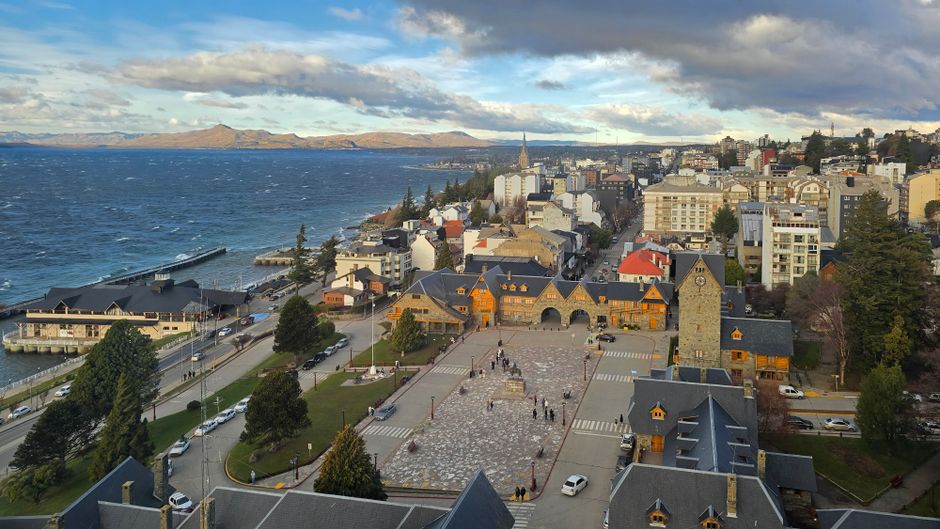
San Carlos de Bariloche, usually just called Bariloche, is the capital of Argentina’s Lakes District: a town of stone-and-timber chalets on the south shore of the deep blue Lake Nahuel Huapi, surrounded by forested mountains and snowy peaks inside Nahuel Huapi National Park. In summer it is a base for hiking to mountain refuges, kayaking, cycling the Circuito Chico, boat trips to Isla Victoria and the Arrayanes forest, and the Seven Lakes Road; in winter, Cerro Catedral, a short drive away, is one of the biggest ski areas in South America. In between, the town’s chocolate shops, craft breweries and smoked trout keep visitors busy. December to March is best for hiking and lakes, and roughly July to September for skiing.
Right now in San Carlos de Bariloche
- Wed5–10°C41–50°F4 mm rain
- Thu5–8°C41–47°F3 mm rain
- Fri5–8°C41–46°F1 mm rain
- Mon 12 Oct Day of Respect for Cultural Diversity (Día del Respeto a la Diversidad Cultural)
Top tours in San Carlos de Bariloche
See all tours for San Carlos de Bariloche →
From local operators, with prices and reviews; you check availability and book on Viator, our partner. We may earn a commission at no extra cost to you. How we earn money
Bariloche at a glance
- Best for: lakes and mountain scenery, hiking, kayaking, skiing and snowboarding, scenic drives, chocolate and craft beer.
- How long: 3–4 days for the classic sights; a week to add hikes, the Seven Lakes Road and Cerro Tronador, or for a ski holiday.
- Best time: December to March for summer activities, with highs of about 21–23 °C (69–74 °F); July to September for snow.
- Getting there: Bariloche airport (BRC), about 2 hours 20 minutes by air from Buenos Aires; long-distance buses from all over Argentina and from Chile.
- Fees to know: Nahuel Huapi National Park charges foreign visitors ARS 35,000 (about US$23) per day at its paid access points, as of October 2026.
- Before you go: entry rules, money and general safety are in our Argentina travel guide.
Bariloche’s areas: where things are
Bariloche stretches for more than 20 km (12 miles) along the lake shore. Addresses outside the center are given by the kilometer on Avenida Bustillo, the lakeside road west toward Llao Llao.
The center
The Centro Cívico, a square of gray stone and larch-wood buildings from the 1930s looking over the lake, is the heart of town. Calle Mitre, the main shopping street, is lined with chocolate shops, outdoor gear stores and restaurants.
Avenida Bustillo and Llao Llao
West of the center, Avenida Bustillo follows the shore past hotels, cabins and breweries to km 25 and the Llao Llao peninsula, with its famous hotel, golf course and forest trails. Most lake-view lodging is along this road.
Cerro Catedral
About 20 km (12 miles) south-west of the center, the ski area’s base village has hotels, rental shops and restaurants; in summer its lifts serve hikers and mountain bikers.
Top things to see in Bariloche
The Circuito Chico
A classic loop of about 60 km (37 miles) west of town through the lakes and forests of the national park: Cerro Campanario, Puerto Pañuelo and the Llao Llao hotel, the San Eduardo chapel, Bahía López and the Punto Panorámico viewpoint over Lake Moreno. Do it by car, bus tour, city bus to the start or by bike: rental shops near km 18 rent bikes for the hilly western section.
Cerro Campanario
A chairlift at km 17.5 of Avenida Bustillo climbs to a summit café with one of the finest views in Patagonia, a 360-degree panorama of lakes, islands and peaks. You can also hike up in about 30 minutes.
Isla Victoria and the Arrayanes forest
Boats from Puerto Pañuelo cross Lake Nahuel Huapi to Isla Victoria, with forest trails and beaches, and to the Quetrihué peninsula, home of Los Arrayanes National Park, a rare forest of cinnamon-colored myrtle trees with a wooden walkway. National park entry fees apply at these sites.
Cerro Otto and Cerro Catedral in summer
A cable car climbs Cerro Otto, just west of town, to a revolving restaurant and a viewing area; Cerro Catedral’s lifts open in summer for hikers heading to the ridge and Refugio Lynch.
More to see
- Museo de la Patagonia: in the Centro Cívico, on the region’s Indigenous peoples, settlers and nature.
- Colonia Suiza: a hamlet founded by Swiss settlers, with a Sunday craft market and a curanto, a feast cooked in a pit.
- The Cathedral of Our Lady of Nahuel Huapi: a stone church by the lake east of the center.
Other things to do in Bariloche
Hiking and mountain refuges
Nahuel Huapi National Park, Argentina’s first, created in 1934, has a network of trails between staffed mountain huts (refugios): popular routes include Refugio Frey below granite spires, Refugio Otto Meiling on Cerro Tronador, and the Laguna Negra and Jakob refuges. Register longer treks with the park’s rangers, carry layers for sudden weather changes and check trail conditions; many high trails are only snow-free from about December to April. See our guide to hiking.
Cerro Tronador and Pampa Linda
A full-day trip south-west to Pampa Linda at the foot of Tronador, an extinct volcano on the Chilean border, with the “black glacier” (Ventisquero Negro) and the Devil’s Throat waterfall. The road is gravel with timed one-way traffic on the last stretch; this is one of the park’s paid access areas.
Water and bikes
Kayak or paddleboard on Lake Moreno and Lake Gutiérrez in summer (the water is cold all year), raft the Manso River, or cycle the Circuito Chico; see our guide to cycling and boat trips.
Food and drink
Bariloche is famous for chocolate (the shops on Calle Mitre give tastings), craft breweries along Avenida Bustillo and the Circuito Chico, smoked trout and venison, Patagonian lamb, and fondue in winter.
Skiing at Cerro Catedral and the ski season
Cerro Catedral, about 20 km (12 miles) from the center, has dozens of runs and lifts, with views over the lakes from the upper slopes; Cerro Chapelco near San Martín de los Andes and La Hoya near Esquel are the other big resorts in the region.
- Season: the season usually runs from about late June or July to September, depending on the snow. In 2026, after a winter with little natural snow, Cerro Catedral opened on July 7 thanks to an expanded snowmaking system, and its operator extended the season to October 12, 2026.
- Passes: according to Cerro Catedral, the 2026 adult day pass started at ARS 160,000 (about US$105) as a cash promotion, and the resort’s resident season pass was priced at the equivalent of four high-season adult day passes. Children of 5 and under ski free.
- Busiest time: Argentina’s two-week winter school holidays in July, when Buenos Aires families arrive and prices peak. August and September often have the best snow and fewer crowds.
- Getting there: city buses run from the center to the base; many hotels offer shuttles.
Day trips from Bariloche
- The Seven Lakes Road (Ruta de los Siete Lagos): a paved scenic stretch of National Route 40 north through Villa La Angostura to San Martín de los Andes, past lakes Correntoso, Espejo, Falkner and Lácar; best as an overnight trip.
- Villa La Angostura: a smaller, quieter lakeside village about 80 km (50 miles) north, with access to the Arrayanes forest on foot or by bike.
- El Bolsón: about 120 km (75 miles) south, a laid-back town known for its craft market, hops and berry farms, and mountain hikes.
- Chile: buses cross the Cardenal Samoré pass to Osorno and Puerto Varas, and the “Cruce Andino” boat-and-bus route crosses the lakes to Chile; bring your passport and check that the pass is open in winter.
More day trips
- Cerro Tronador by boat and road: some tours combine Pampa Linda with a boat on Lake Mascardi.
- Lake Gutiérrez and Lake Mascardi: quieter lakes south of town on Route 40, with beaches, campgrounds and kayaking.
- The Cuyín Manzano and Traful valleys: rock formations and a deep blue lake on an alternative route north toward the Seven Lakes.
- Puerto Blest and Laguna Frías: a classic boat-and-bus trip through the rainforest-like western arm of Lake Nahuel Huapi toward the Chilean border, part of the old lake crossing to Chile.
Nearby destinations
- Puerto Varas142 km
Getting there and getting around
By air
Teniente Luis Candelaria International Airport (BRC) is about 15 km (9 miles) east of the center, with flights from Buenos Aires (about 2 hours 20 minutes) and other cities, and extra flights and charters in ski season; taxis, remises and shuttles run to town.
By bus
Comfortable long-distance buses arrive from Buenos Aires (about 20 hours), Mendoza, Neuquén and El Calafate, and from Chile. The bus terminal is east of the center.
Getting around
City buses run along Avenida Bustillo to Llao Llao and up to Cerro Catedral; they use a local rechargeable card. Taxis are easy to find. A rental car is the best way to explore the Circuito Chico, Tronador and the Seven Lakes Road at your own pace; in winter, carry snow chains when required.
Getting around: practical details
Bariloche’s city buses use a rechargeable card bought at kiosks in town; the most useful lines run along Avenida Bustillo (with services to Llao Llao and Colonia Suiza) and up to Cerro Catedral. Buses are slower and fuller in summer and the ski season, so allow time. Taxis are metered and plentiful in the center. Renting a car gives the most freedom for the Circuito Chico, Tronador and the Seven Lakes, but book ahead in January and July; from about June to September, carry chains when the authorities require them, and check the status of passes to Chile. Bikes are popular on the Circuito Chico, but traffic on Bustillo is heavy; start the ride from km 18.
When to go and how long to stay
Bariloche has dry, sunny summers and cold, wet winters, when most of the year’s rain and snow fall. The table uses the National Meteorological Service’s 1991–2020 normals for the Bariloche airport station (840 m), as published by the World Meteorological Organization; the lakeside town is a little milder and the mountains much colder.
| Season | Average high / low | Rainy days per month | What it’s like | Good for |
|---|---|---|---|---|
| Summer (Dec–Feb) | 21–23 °C (69–74 °F) / 6–7 °C (43–45 °F) | 2–4 | Warm, sunny days and cool nights; windy | Hiking, kayaking, the Circuito Chico, refuges |
| Fall (Mar–May) | 20 °C falling to 11 °C (68 to 51 °F) / 5 °C falling to 1 °C (41 to 34 °F) | 4–10 | Red and gold forests in April, getting wetter | Photography, quieter trails |
| Winter (Jun–Aug) | 7–8 °C (44–47 °F) / −2 to −1 °C (29–31 °F) | 11–13 | Cold, often gray, with snow in the mountains | Skiing and snowboarding |
| Spring (Sep–Nov) | 12 °C rising to 18 °C (53 to 64 °F) / 0 °C rising to 4 °C (32 to 39 °F) | 4–7 | Changeable, with spring skiing early and flowers later | Late skiing, lake drives |
The airport station records about 810 mm (32 in) of precipitation a year, more than half of it from May to August; the forests to the west get far more.
Bariloche month by month
Average daily highs and lows at the Bariloche airport station (SMN 1991–2020 normals, via the WMO); the lakeside town is a little milder.
| Month | High / low | What to expect |
|---|---|---|
| January | 23 °C (74 °F) / 7 °C (45 °F) | Peak summer, long days, busy beaches and trails |
| February | 23 °C (74 °F) / 7 °C (44 °F) | Warm and dry; best hiking weather |
| March | 20 °C (68 °F) / 5 °C (41 °F) | Calmer, still good for refuges |
| April | 15 °C (59 °F) / 2 °C (36 °F) | Fall colors, quiet trails, cold nights |
| May | 11 °C (51 °F) / 1 °C (34 °F) | Rain returns, low season |
| June | 7 °C (45 °F) / −1 °C (31 °F) | Wettest month; snow in the mountains |
| July | 7 °C (44 °F) / −2 °C (29 °F) | Ski season and school holidays, busiest winter weeks |
| August | 8 °C (47 °F) / −1 °C (30 °F) | Often the best snow |
| September | 12 °C (53 °F) / 0 °C (32 °F) | Spring skiing, sunny days |
| October | 15 °C (58 °F) / 2 °C (35 °F) | Changeable; Catedral’s 2026 season ran to October 12 |
| November | 18 °C (64 °F) / 4 °C (39 °F) | Lupins in bloom, quiet before summer |
| December | 21 °C (69 °F) / 6 °C (43 °F) | Summer begins, high-school trips in town |
Crowds and prices: highest in January and February and during the July winter school holidays; high-school graduation trips (“viajes de egresados”) also fill parts of town at times. March, April, November and early December are quieter.
3 days in Bariloche
Day one, the Centro Cívico, Calle Mitre’s chocolate shops and an afternoon on Cerro Campanario. Day two, the Circuito Chico by car or bike, with a stop at a brewery. Day three, the boat trip to Isla Victoria and the Arrayanes forest, or a day hike to Refugio Frey.
A week in Bariloche
Add a day at Cerro Tronador and Pampa Linda, a night on the Seven Lakes Road at San Martín de los Andes or Villa La Angostura, a day kayaking on Lake Moreno, and an overnight in a mountain refuge. In winter, plan four or five days on the slopes.
Where to stay in Bariloche
- The center: hotels and hostels close to restaurants, shops and buses; lake views from upper floors.
- Avenida Bustillo (km 1–25): cabins, lodges and resorts by the lake, from simple to luxurious, including the historic Llao Llao.
- Cerro Catedral base: ski-in hotels and apartments, best in winter.
Foreign tourists who pay for accommodation with a card issued abroad don’t pay Argentina’s 21% VAT (IVA) on the room; give the hotel your passport details.
Choosing where to stay
Stay in the center if you will rely on buses and want restaurants nearby; it is also the cheapest area. Couples and families who want lake views and quiet usually choose cabins and hotels along Avenida Bustillo between km 3 and km 15, close enough for buses into town. The Llao Llao area, around km 25, is beautiful and peaceful but far from the center. In winter, skiers save time by staying at the Cerro Catedral base or on the road up to it. Book January, February and July well ahead.
Food and drink in Bariloche
Chocolate is the town’s trademark: Calle Mitre’s shops sell bars, bonbons and “rama” chocolate in curls, and hot chocolate is a winter ritual. Bariloche also has one of Argentina’s biggest craft beer scenes, with breweries on the Circuito Chico and in town. Typical Patagonian dishes include lamb roasted on a cross (cordero al asador), venison and wild boar, smoked trout and salmon, and berry desserts and jams from El Bolsón. Swiss and Alpine traditions show in cheese and chocolate fondue and in the curanto of Colonia Suiza. Mountain refuges serve simple hot meals and beer to hikers.
What a trip to Bariloche costs
These are our estimates for October 2026 at about ARS 1,520 per US dollar, except the park fee and the ski pass, which come from official sources.
| Item | Typical price |
|---|---|
| Nahuel Huapi park fee at paid access points | ARS 35,000 (US$23), official |
| Adult ski day pass at Cerro Catedral, 2026 | from ARS 160,000 (US$105), official |
| Hostel bed | ARS 25,000–40,000 (US$16–26) |
| Lake-view mid-range double room | ARS 120,000–220,000 (US$80–145) |
| Boat trip to Isla Victoria and the Arrayanes | ARS 70,000–110,000 (US$46–72) |
| Bike rental for the Circuito Chico, a day | ARS 25,000–40,000 (US$16–26) |
| Dinner with craft beer | ARS 30,000–50,000 (US$20–33) |
| City bus ride | under ARS 2,000 (about US$1) |
Practical tips for Bariloche
- Park fees: Nahuel Huapi National Park charges ARS 35,000 (about US$23) per day for foreign visitors at its paid access points, such as Isla Victoria, the Arrayanes forest and Pampa Linda, as of October 2026, with 50% off a second day within 72 hours.
- Money: cards are widely accepted; foreign cards are settled at the financial dollar rate. On October 2, 2026, the Central Bank’s reference rate was about ARS 1,520 per US dollar.
- Weather: mountain weather changes fast; carry a windproof jacket and warm layers even in summer.
- Water: tap water is generally safe in town; treat stream water on longer hikes.
- Safety: Bariloche is relaxed; the main risks are outdoors. Register long hikes with the park, start early, don’t hike alone off the main trails, and stay off frozen or snow-covered high trails without experience. On the slopes, ski within marked runs. Watch for icy roads in winter. For emergencies, call 911.
What to pack for Bariloche
In summer: hiking shoes, a waterproof and windproof jacket, a fleece, sun hat, sunglasses and strong sunscreen (the sun is intense), and a swimsuit for brave lake dips. In winter: ski clothing, thermal layers, gloves, a warm hat and boots with good grip for icy sidewalks. Argentina uses 220 V and type I plugs.
Bariloche travel FAQ
When is the ski season in Bariloche?
Usually from about late June or July to September, depending on snow. In 2026, Cerro Catedral opened on July 7 and extended its season to October 12.
How much is a ski pass at Cerro Catedral?
According to the resort, the 2026 adult day pass started at ARS 160,000 (about US$105) as a cash promotion. Prices for 2027 will be set before the season.
What is the Circuito Chico?
A scenic loop of about 60 km (37 miles) west of Bariloche past Cerro Campanario, Llao Llao and the Punto Panorámico, done by car, tour or bike in half a day or a day.
Do I pay to enter Nahuel Huapi National Park?
Only at its paid access points, such as Isla Victoria, the Arrayanes forest and Pampa Linda: ARS 35,000 (about US$23) for foreign visitors as of October 2026.
What is the best time to visit Bariloche?
December to March for hiking and lakes, and July to September for skiing. April brings fall colors and fewer visitors.
How do I get to Bariloche from Buenos Aires?
By air in about 2 hours 20 minutes from Aeroparque or Ezeiza, or by long-distance bus in about 20 hours.
Can I drive the Seven Lakes Road in a day?
Yes, Bariloche to San Martín de los Andes takes about four hours without stops, but an overnight lets you enjoy the lakes.
Where should I stay in Bariloche?
In the center for buses and restaurants, along Avenida Bustillo for lake views, or at the Cerro Catedral base for skiing.
What food is Bariloche known for?
Chocolate, craft beer, smoked trout, Patagonian lamb and fondue.
Do I need a car in Bariloche?
Not for the town and the Circuito Chico, which buses and bikes cover, but a car makes Tronador and the Seven Lakes Road much easier.
Plan your trip
Partner links: TravelerCenter may earn a commission if you book, at no extra cost to you.
🇪🇸 Useful Spanish phrases for San Carlos de Bariloche
All 38 Spanish phrases: restaurant, hotel, emergencies, romance (printable) →
Sources · last reviewed 4 October 2026
Researched and last reviewed on 4 October 2026. National park fees: the National Parks Administration (APN) fee table in force since June 1, 2026; ski season dates and passes: Cerro Catedral (Catedral Alta Patagonia); exchange rate and card rules: the Central Bank of Argentina; VAT refund on hotels: the tax agency (ARCA); climate: the National Meteorological Service’s 1991–2020 normals for Bariloche airport, as published by the World Meteorological Organization. Sights, distances, which access points charge park fees, trails and refuges, flight and bus times and day trips come from general references and are flagged for checking. Prices and seasons change, so check the official sites before you go. For entry rules and money, see our Argentina travel guide.
Data: Weather: MET Norway (CC BY 4.0) · Rates: ECB · Holidays: Nager.Date · Costs: World Bank ICP and price levels · Wikidata (CC0)