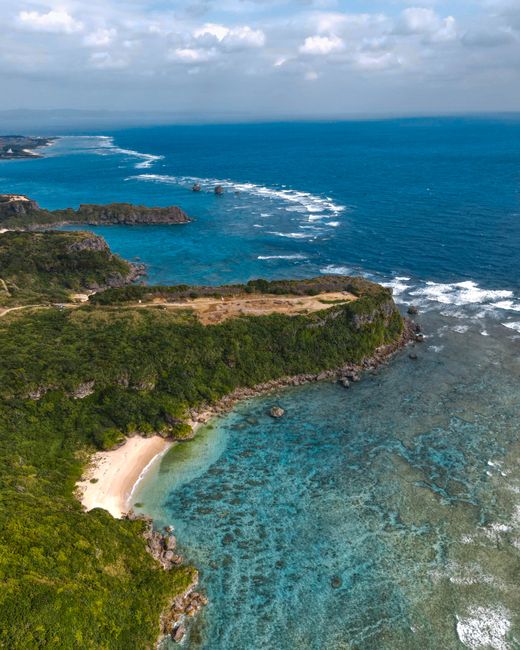
Okinawa Island is the largest island of Japan’s subtropical south, about 640 km (400 miles) from Taiwan and 1,550 km (960 miles) from Tokyo: a long, narrow island of white-sand beaches, coral reefs and turquoise water, forested hills in the north and the lively capital, Naha, in the south. It was once the center of the independent Ryukyu Kingdom, and it still has its own food, music, crafts and castle ruins, as well as moving memorials to the Battle of Okinawa in 1945. Come for the beaches and the Churaumi Aquarium, snorkeling and diving, the castles of Shuri and Nakijin, and a slower pace of life. The best months are April to early June and October to November; the rainy season usually runs from mid-May to late June, and typhoons are most likely from July to October.
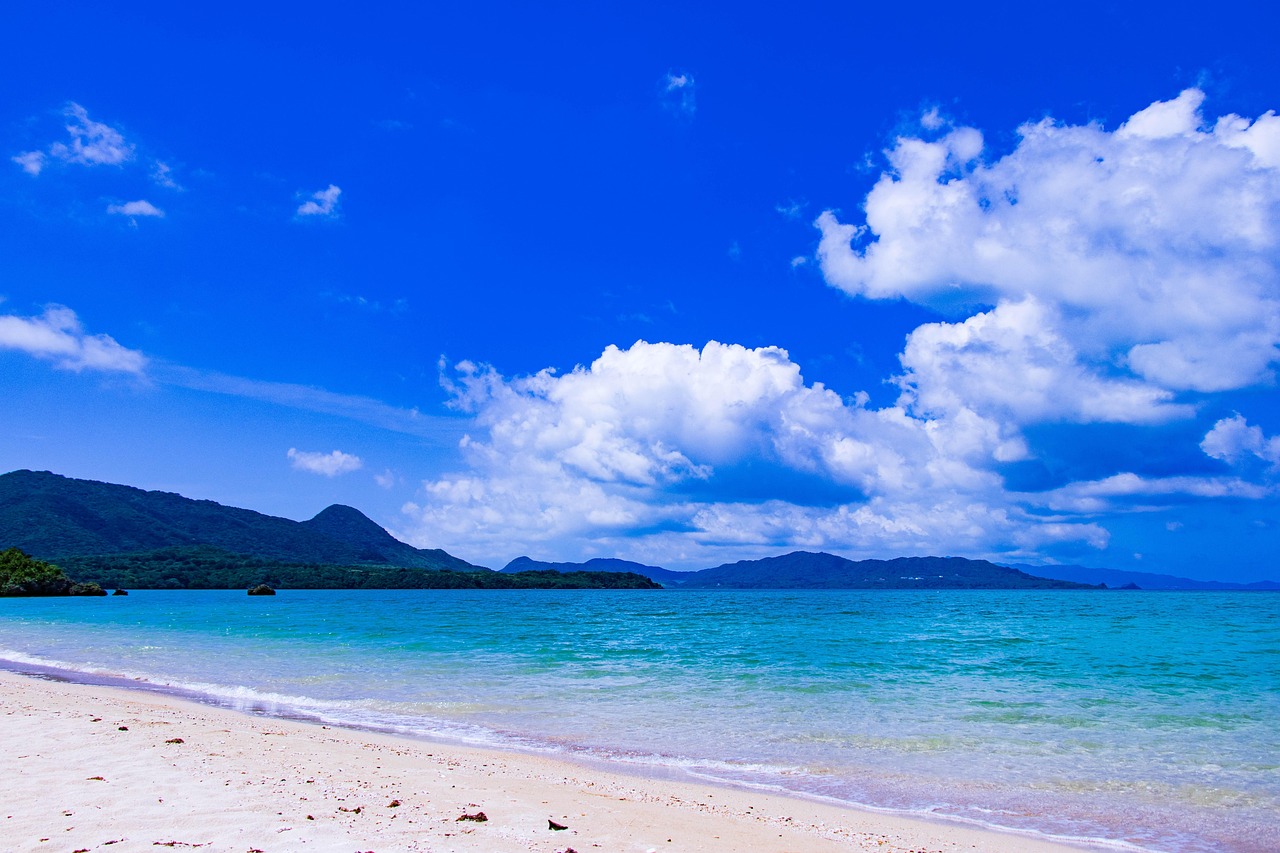
Right now in Okinawa Island (Naha)
- Wed23–27°C74–81°FPartly cloudy
- Thu24–29°C74–83°F1 mm rain
- Fri25–29°C76–83°F1 mm rain
- Mon 12 Oct Sports Day (スポーツの日)
Top tours in Okinawa Island
See all tours for Okinawa Island →
From local operators, with prices and reviews; you check availability and book on Viator, our partner. We may earn a commission at no extra cost to you. How we earn money
Okinawa Island at a glance
- Best for: beaches and snorkeling, diving, family holidays, Ryukyu history and castles, food and island culture.
- How long: 4–5 days for Naha, the central coast and the Motobu Peninsula; a week or more to add the far north or the Kerama Islands.
- Best time: April to early June and October to November, with highs of about 24–28 °C (75–82 °F); winter is mild, at about 20 °C (68 °F), but too cool for most swimmers.
- Getting there: Naha Airport (OKA) has flights from all over Japan (about 2.5 hours from Tokyo) and East Asia.
- Getting around: the Yui Rail monorail in Naha; a rental car or long bus rides elsewhere.
- Fees to know: Okinawa Prefecture will start an accommodation tax of 2% of the room rate, capped at ¥2,000 per person per night, on February 1, 2027; there is none yet in October 2026.
- Before you go: entry rules, money and general safety are in our Japan travel guide.
Okinawa Island’s areas: where things are
The island is about 100 km (62 miles) long and only a few kilometers wide in places. The south is urban; the farther north you go, the wilder it gets.
Naha and the south
Naha, the prefectural capital, has the airport, Kokusai-dori (the main shopping street), the Makishi public market, Shurijo Castle and most of the budget hotels. The south beyond it holds the war memorials, the Gyokusendo limestone cave and the sacred site of Sefa-utaki.
Central Okinawa: Chatan, Ginowan and Yomitan
Close to the large US military bases, this area has American-style shopping and dining at Chatan’s American Village, sunset beaches, and the pottery village and Zakimi Castle ruins of Yomitan.
The west coast: Onna and Nago
The island’s main resort strip, with beach hotels on coral coves, Cape Manzamo’s cliffs and the Blue Cave snorkeling spot at Cape Maeda.
The Motobu Peninsula
North of Nago, with the Okinawa Churaumi Aquarium, Nakijin Castle, the long bridge to Kouri Island and some of the clearest water on the island.
Yanbaru, the north
A rugged forest of subtropical hills, rivers and waterfalls, home to rare animals such as the flightless Okinawa rail. It is part of a UNESCO World Heritage natural site and Yanbaru National Park.
Top things to see on Okinawa Island
Shurijo Castle
The red-lacquered palace of the Ryukyu kings sits on a hill above Naha, part of the UNESCO-listed “Gusuku Sites and Related Properties of the Kingdom of Ryukyu”. Its main hall burned down in 2019 and is being rebuilt; you can walk the stone walls and gates, see the reconstruction work from viewing areas, and visit the restored side halls in the paid area. Check the park’s official website for the latest progress and opening times.
Okinawa Churaumi Aquarium
One of the world’s largest aquariums, in Ocean Expo Park on the Motobu Peninsula, about two hours by car or bus from Naha. Its huge Kuroshio Sea tank holds whale sharks and manta rays; outside are a free dolphin show, sea turtles and manatees. Go early or late in the day to avoid tour groups.
Kokusai-dori and the Makishi market
Naha’s 1.6 km (1-mile) main street of souvenir shops, bars and restaurants, with covered shopping arcades leading to the Makishi public market, where you can choose fish downstairs and have it cooked upstairs. The Tsuboya pottery street is a short walk away.
Nakijin, Zakimi and Katsuren castles
Okinawa’s gusuku castles are not Japanese-style keeps but sweeping, curved stone walls on hilltops. Nakijin, on the Motobu Peninsula, has magnificent ramparts and cherry trees that bloom in late January; Zakimi in Yomitan and Katsuren on the east coast have fine views of the sea. All are on the UNESCO list.
The Okinawa Peace Memorial Park
On the southern cliffs of Mabuni, where the Battle of Okinawa ended in June 1945, the Cornerstone of Peace lists the names of more than 240,000 people of all nationalities who died. The prefectural peace museum explains the battle from the viewpoint of Okinawan civilians. The Himeyuri Peace Museum nearby tells the story of the student nurses who died.
More classic sights
- Cape Manzamo: a grassy cliff shaped like an elephant’s trunk above clear water in Onna.
- Kouri Island: reached by a 2 km (1.2-mile) bridge over turquoise shallows, with a heart-shaped rock and quiet beaches.
- Sefa-utaki: the most sacred site of the Ryukyu Kingdom, a forest shrine among huge rocks, on the UNESCO list.
- Okinawa Prefectural Museum and Art Museum: the best introduction to Ryukyu history and culture, in Naha.
- Gyokusendo Cave: a limestone cave about 5 km (3 miles) long, part of the Okinawa World park with traditional crafts and an eisa dance show.
- Tamaudun: the stone royal mausoleum of the Ryukyu kings, near Shurijo.
Monuments
- Katsuren Castle
- Nakijin Castle
- Shuri Castle
- Zakimi Castle
Zoos and aquariums
- Okinawa Churaumi Aquarium
Churches and cathedrals
- Sefa-utaki
Other sights
- Makishi Public Market
Parks and gardens
- Okinawa Peace Memorial Park
Beaches, snorkeling and diving
Okinawa Island’s best beaches are on the west coast and around the Motobu Peninsula, such as Emerald Beach in Ocean Expo Park, Sesoko Beach and the beaches of Kouri Island, plus resort beaches in Onna. Most official beaches are open with lifeguards from about April to October and have nets against jellyfish. Habu-kurage, a box jellyfish with a dangerous sting, is most common from June to September; swim inside the nets, carry vinegar, which beaches often provide, and wear a rash guard. For more ideas, see our guide to beaches.
The Blue Cave at Cape Maeda is the island’s most popular snorkeling and diving spot, best reached on a guided tour, and it closes when waves are high. Divers also head to the Kerama Islands, a national park about an hour away by ferry, for some of Japan’s clearest water, sea turtles and, in winter, humpback whales. Don’t stand on or touch coral, and use only operators that follow local rules.
Other things to do on Okinawa Island
Food and drink
Okinawan food is different from mainland Japan’s: try Okinawa soba, wheat noodles in pork broth with braised pork rib; goya champuru, bitter melon stir-fried with tofu, egg and pork; rafute, pork belly slow-cooked in awamori and soy sauce; taco rice, a Tex-Mex dish born near the US bases; and sea grapes (umibudo). Drink Orion beer and awamori, the island’s own distilled rice spirit, and finish with Blue Seal ice cream or brown-sugar sweets. Naha’s izakaya often have live sanshin music in the evenings.
Culture and crafts
Watch eisa drum dancing in summer, especially at the Okinawa Zento Eisa festival in late summer, hear the three-stringed sanshin, and look for Ryukyu glass, bingata textiles and Tsuboya pottery. Classical Ryukyu dance is staged at the National Theatre Okinawa in Urasoe.
Day trips from Naha
- The Kerama Islands: Tokashiki and Zamami, with white beaches and coral, about 35–50 minutes by high-speed ferry from Naha’s Tomari Port.
- Motobu Peninsula: Churaumi Aquarium, Nakijin Castle and Kouri Island, about two hours north by car or highway bus.
- The south: the Peace Memorial Park, Himeyuri, Sefa-utaki and Gyokusendo, best by car or tour in a day.
- Yanbaru: forest hikes, waterfalls and Cape Hedo at the island’s northern tip, best as an overnight trip. See our guide to hiking.
Getting there and getting around
By air and sea
Naha Airport (OKA) is the island’s gateway, with flights from Tokyo (about 2.5 hours), Osaka, Fukuoka and other Japanese cities, and from Taipei, Seoul, Hong Kong and Shanghai. Low-cost airlines keep fares low outside the holidays. Ferries link Naha with the Kerama Islands, and many cruise ships call at Naha.
The Yui Rail monorail
Okinawa’s only railway is the Yui Rail monorail, which runs from the airport through Naha and Kokusai-dori (Makishi and Kencho-mae stations) to Shuri and on to Tedako-Uranishi in Urasoe. Pay with an IC card such as Suica, a phone, or a 1- or 2-day pass. The Japan Rail Pass is not valid on Okinawa.
Rental cars and buses
To explore beyond Naha, most visitors rent a car: the Okinawa Expressway runs from Naha to Nago, and driving is on the left. You need an International Driving Permit (or an official translation for some licenses). Traffic in Naha and around the bases is heavy at rush hour. Without a car, highway buses and airport limousine buses link Naha with the resorts of Onna and the Motobu Peninsula, and day tours cover the main sights.
When to go and how long to stay
Okinawa has a subtropical climate: hot, humid summers and mild winters. The table uses the Japan Meteorological Agency’s (JMA) 1991–2020 normals for its Naha station: average daily highs and lows, total rain and days with at least 1 mm of rain.
| Month | Average high / low | Rain (days with 1 mm or more) | What to expect |
|---|---|---|---|
| January | 20 °C (68 °F) / 15 °C (59 °F) | 102 mm (4.0 in), 10 days | Mild and breezy; pink hikanzakura cherries bloom from mid-January; whale watching |
| February | 20 °C (68 °F) / 15 °C (59 °F) | 114 mm (4.5 in), 10 days | Mild; cherries at Nakijin and Yaedake; whales; pro baseball spring camps |
| March | 22 °C (71 °F) / 17 °C (62 °F) | 143 mm (5.6 in), 11 days | Warming up; beaches start to open; whale season ends |
| April | 24 °C (76 °F) / 19 °C (66 °F) | 161 mm (6.3 in), 10 days | Warm and sunny; beaches open; a great month |
| May | 27 °C (81 °F) / 22 °C (72 °F) | 245 mm (9.7 in), 11 days | Rainy season usually from about May 10 (JMA normal); Golden Week crowds |
| June | 30 °C (86 °F) / 25 °C (77 °F) | 284 mm (11.2 in), 11 days | Rainy season usually ends around June 21; then hot and sunny; Irei no Hi on June 23 |
| July | 32 °C (89 °F) / 27 °C (81 °F) | 188 mm (7.4 in), 9 days | Hot and sunny; the most reliable beach weather, but typhoons begin |
| August | 32 °C (89 °F) / 27 °C (80 °F) | 240 mm (9.4 in), 12 days | The hottest, busiest month; typhoon peak; box jellyfish |
| September | 31 °C (87 °F) / 26 °C (78 °F) | 275 mm (10.8 in), 12 days | Hot; typhoons still likely |
| October | 28 °C (83 °F) / 24 °C (74 °F) | 179 mm (7.1 in), 9 days | Warm and drier; Naha Great Tug-of-War; good for diving |
| November | 25 °C (77 °F) / 20 °C (69 °F) | 119 mm (4.7 in), 8 days | Pleasant and quiet; sea still warm enough for many swimmers |
| December | 22 °C (71 °F) / 17 °C (62 °F) | 110 mm (4.3 in), 9 days | Mild and breezy; low season; illuminations |
Naha gets about 2,160 mm (85 in) of rain a year. The JMA’s normal rainy season for Okinawa runs from about May 10 to June 21, a month earlier than on the main islands (in 2026, about May 4 to June 29). Winter is mild but often cloudy and windy; the sea is coolest, about 21–22 °C (70–72 °F), in February.
Weather month by month
Typhoons: according to the JMA’s 1991–2020 normals, about eight typhoons a year come close to the Okinawa region, most often from July to October, with a peak in August. A typhoon can stop flights and ferries for one to three days and close beaches and attractions, so buy flexible tickets, keep extra days and follow the JMA’s warnings. Hotels have food and backup power.
Cherry blossoms: Okinawa’s cherries are a different species, the deep-pink hikanzakura, which blooms in winter: the JMA’s normal date for the first blossoms in Naha is January 16, with full bloom around February 4.
Crowds and prices: highest in Golden Week, from mid-July to August, and around New Year. Late September to November and April to early May (outside Golden Week) often have good weather at lower prices.
4 days on Okinawa Island
Day one, Shurijo Castle, the Prefectural Museum and Kokusai-dori. Day two, drive north via Cape Manzamo to the Motobu Peninsula, Churaumi Aquarium and Emerald Beach. Day three, Nakijin Castle, Kouri Island and a beach afternoon, then back via Chatan’s American Village for sunset. Day four, the Peace Memorial Park, Himeyuri and Sefa-utaki in the south.
A week with the islands
Add a snorkeling trip to the Blue Cave, a day or a night on Zamami or Tokashiki in the Keramas, and a night in Yanbaru for the forest.
Where to stay on Okinawa Island and taxes
- Naha: budget and mid-range hotels, nightlife and the monorail; good for short stays and travelers without a car.
- Chatan: seaside hotels and restaurants, central for driving north or south.
- Onna and the west coast: beach resorts, best for families and relaxation.
- Motobu Peninsula: quieter hotels near the aquarium and Kouri Island.
- Yanbaru: small lodges and eco-tourism stays.
As of October 2026 there is no accommodation tax on Okinawa Island. From February 1, 2027, according to Okinawa Prefecture, guests at all hotels, ryokan and private rentals will pay 2% of the room-only rate per person per night (rates rounded down to the nearest ¥1,000 and capped at ¥100,000), with a maximum of ¥2,000 per person per night. Where a town adds its own tax, the total stays at 2%, split between the prefecture (0.8%) and the town (1.2%). Students on school trips are exempt.
What a trip to Okinawa Island costs
Prices are approximate, for October 2026, converted at about ¥158 to the US dollar.
| Item | Typical cost |
|---|---|
| Bowl of Okinawa soba | ¥800–1,200 (about US$5.1–7.6) |
| Taco rice or a set lunch | ¥900–1,500 (about US$5.7–9.5) |
| Izakaya dinner with awamori | ¥3,000–6,000 (about US$19–38) |
| Yui Rail ride | ¥260–370 (about US$1.6–2.3) |
| Rental car, compact, per day | ¥5,000–12,000 (about US$32–76) |
| Blue Cave snorkeling tour | ¥5,000–8,000 (about US$32–51) |
| Naha hotel double, per night | ¥8,000–18,000 (about US$51–115) |
| Beach resort double, per night | ¥25,000–60,000 (about US$160–380) |
Practical tips for Okinawa Island
- Car rental: book early for Golden Week and summer, and allow extra time in traffic around Naha.
- Sun: the UV index is very high from April to September; use reef-safe sunscreen, a hat and a rash guard.
- Typhoon season: buy flexible tickets and keep a spare day before your flight home.
- Cash: most places take cards, but small soba shops and markets may want cash.
- Visitor hotline: the JNTO’s Japan Visitor Hotline, 050-3816-2787, answers in English 24 hours a day.
Safety
Okinawa is safe and relaxed. The main risks are natural: typhoons from July to October; box jellyfish (habu-kurage) and strong currents outside netted, lifeguarded beaches; sun and heat; and the venomous habu snake, which hides in long grass, caves and stone walls, so stay on paths, especially at night. Don’t touch cone shells or sea snakes while snorkeling. Japan is earthquake and tsunami country: if you feel strong shaking near the coast, move to high ground and follow the alerts. In an emergency, call 110 for the police, 119 for an ambulance or fire, or 118 for the Japan Coast Guard at sea.
What to pack for Okinawa Island
Swimwear, a rash guard, reef-safe sunscreen, a hat and sunglasses, water shoes for coral beaches, light clothes, a light rain jacket from May to October, and a sweater for windy winter evenings. Japan uses 100 V and two-pin type A plugs like the US.
Okinawa Island travel FAQ
When is the best time to visit Okinawa?
April to early June (before and after the short rainy season) and October to November, when it is warm, the sea is pleasant and typhoons are less likely than in summer.
When is typhoon season in Okinawa?
Mostly July to October, peaking in August; the JMA’s normals count about eight typhoons a year coming close to the Okinawa region.
Do I need a car on Okinawa Island?
For Naha alone, no; the monorail and buses are enough. To see the north, the beaches and the aquarium in comfort, a rental car is best.
Is there an accommodation tax in Okinawa?
Not yet. From February 1, 2027, Okinawa Prefecture will charge 2% of the room rate, up to ¥2,000 per person per night.
Can I swim in Okinawa in winter?
Some people do, but the sea is about 21–22 °C (70–72 °F) in February and most beaches close their lifeguard service from about November to March.
How do I get to the Churaumi Aquarium from Naha?
By rental car via the Okinawa Expressway, about two hours, or by highway bus or a day tour.
Is Shurijo Castle open?
The castle park is open, with the walls, gates and some restored halls; the main hall, destroyed by fire in 2019, is being rebuilt, and you can view the work.
Are there dangerous jellyfish in Okinawa?
Yes, the habu-kurage box jellyfish, mostly from June to September. Swim at netted beaches with lifeguards and wear a rash guard.
Does the JR Pass work in Okinawa?
No. There are no JR lines on Okinawa; use the Yui Rail monorail, buses or a car.
What should I eat in Okinawa?
Okinawa soba, goya champuru, rafute, taco rice and sea grapes, with Orion beer or awamori.
Plan your trip
Partner links: TravelerCenter may earn a commission if you book, at no extra cost to you.
🇯🇵 Useful Japanese phrases for Okinawa Island
All 38 Japanese phrases: restaurant, hotel, emergencies, romance (printable) →
Sources · last reviewed 4 October 2026
Researched and last reviewed on 4 October 2026. Accommodation tax: Okinawa Prefecture; climate normals, rainy season, typhoon statistics and cherry blossom dates: the Japan Meteorological Agency (JMA); visitor hotline: JNTO; exchange rate: the US Federal Reserve. Shurijo’s reconstruction status, sight descriptions, the jellyfish season, distances, journey times, fares and typical prices are general references or estimates, flagged for checking. Prices and hours change, so check the official sites before you go. For entry rules, money and general safety, see our Japan travel guide.
Also: JMA normals 1991–2020, Naha (climate)
Data: Weather: MET Norway (CC BY 4.0) · Sea temperature: NOAA CoastWatch · Rates: ECB · Holidays: Nager.Date · Costs: World Bank ICP and price levels · © OpenStreetMap contributors (ODBL) · Wikidata (CC0)