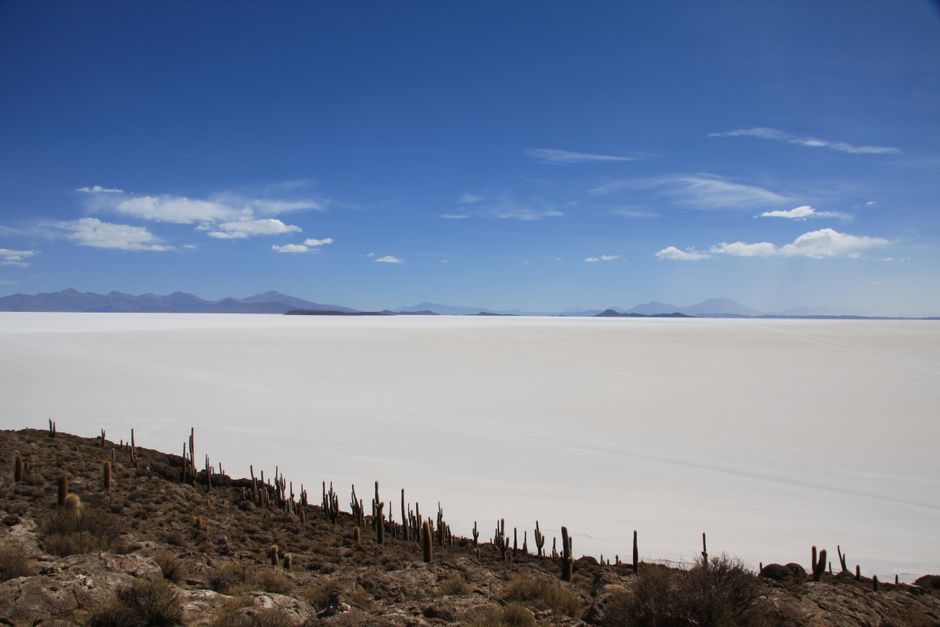
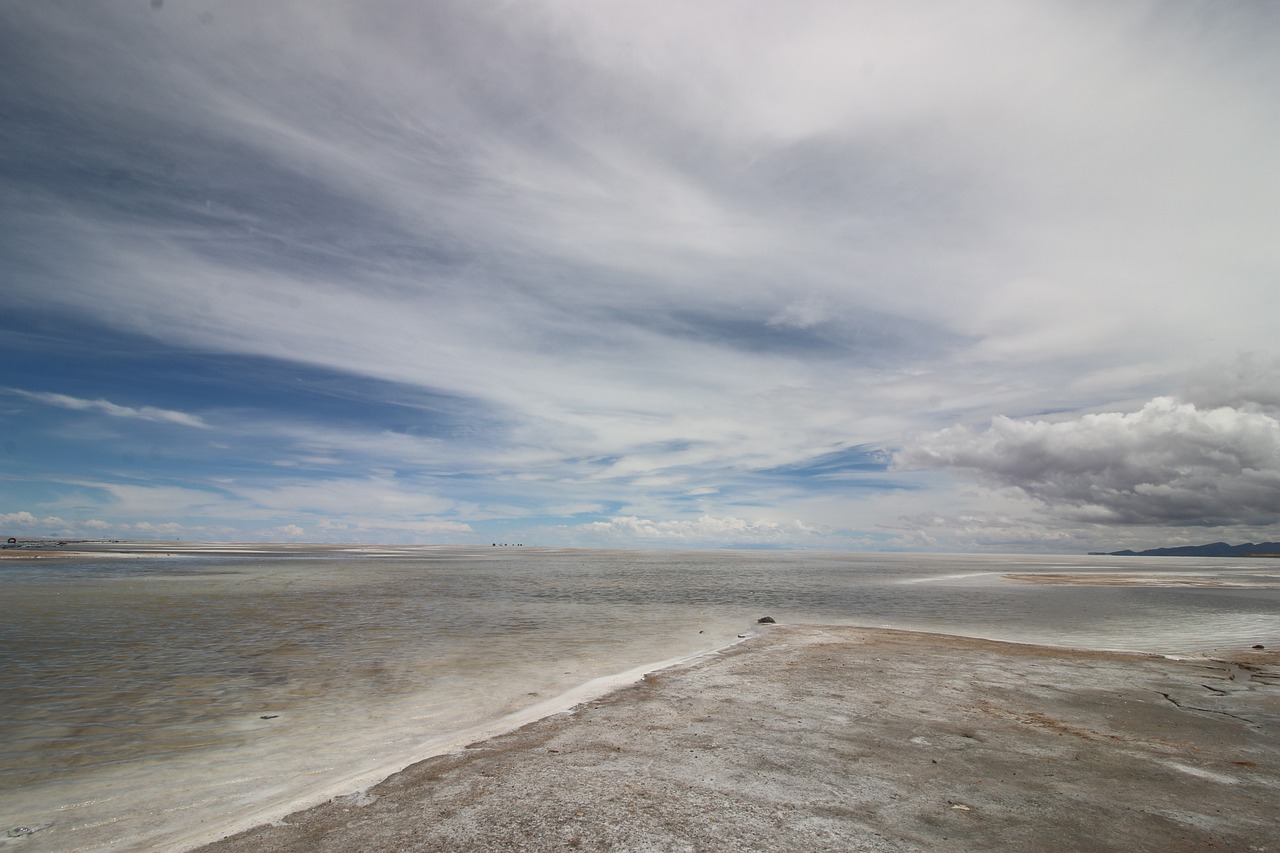
The Salar de Uyuni, in the high Andes of southwest Bolivia, is the largest salt flat in the world: more than 10,000 km² (3,900 sq miles) of blinding white salt at about 3,660 m (12,000 ft) above sea level, so flat that it is used to calibrate satellites. In the dry season the surface dries into a crust of hexagonal tiles stretching to the horizon, perfect for playful perspective photos; after the rains, a thin sheet of water turns it into the world’s largest mirror, reflecting the sky so perfectly that the horizon disappears. Beneath the crust lies a huge brine reserve rich in lithium. Most visitors explore the Salar on 4×4 tours from the town of Uyuni, often continuing south through a surreal landscape of volcanoes, geysers and red, green and white lagoons full of flamingos in the Eduardo Avaroa reserve, all the way to the border with Chile. It is one of South America’s great journeys, but it is also high, remote and extremely cold at night.
Right now in Salar de Uyuni (Uyuni)
- Tue 2–16°C 36–60°F Clear
- Wed 1–16°C 35–61°F Clear
- Thu 1–16°C 34–61°F Clear
Weather: MET Norway (CC BY 4.0)
Top tours in Salar de Uyuni
See all tours for Salar de Uyuni →
From local operators, with prices and reviews; you check availability and book on Viator, our partner. We may earn a commission at no extra cost to you. How we earn money
The Salar de Uyuni at a glance
- Best months: for the mirror effect, the rainy season, usually from about January to March; for driving across the salt to Incahuasi Island and the southwest lagoons, the dry season, May to October.
- Time needed: one full day for the salt flat; three days for the classic tour to the lagoons and the Chilean border.
- Getting there: about an hour’s flight from La Paz to Uyuni; buses take about 9–12 hours overnight.
- Altitude: about 3,660 m (12,000 ft) on the salt and up to about 5,000 m (16,400 ft) on the lagoon route; altitude sickness is a risk, according to the UK government.
- Before you go: entry rules, visas and money are in our Bolivia travel guide.
Tours, seasons and fees (as of October 2026)
Almost all visitors explore the Salar on organized 4×4 tours from Uyuni town, run by many local agencies. There are no official minimum standards for tour operators in Bolivia, according to the UK government, so choose carefully.
| Tour | Duration | What it covers | Notes |
|---|---|---|---|
| Day tour | About 8–10 hours | Train cemetery, Colchani salt village, the salt flat, Incahuasi Island (dry season) and sunset | Most popular; shared or private |
| Sunset and stargazing | About 4–5 hours | Sunset on the salt, mirror effect in the wet season, stars at night | Very cold after dark |
| Three-day tour | 3 days, 2 nights | The salt flat, Incahuasi, the southwest lagoons, Sol de Mañana geysers and hot springs | Can end in Uyuni or at the Chilean border for San Pedro de Atacama |
| Four-day tour | 4 days, 3 nights | As above at a slower pace, sometimes with Tupiza | Less driving per day |
Fees
Some sites charge separate entrance fees, paid in cash in bolivianos, and they are usually not included in tour prices: the Eduardo Avaroa Andean Fauna National Reserve, for the lagoon route; Incahuasi Island; and some hot springs and toilets along the way. Fees are set by the national protected areas service and local communities and can change; ask your operator for the current amounts, and carry enough bolivianos, as there are no ATMs on the route.
Choosing a tour operator
- Ask about the vehicle and driver: a well-maintained 4×4 with working seatbelts, a spare tire and a driver who doesn’t drink.
- Ask about safety equipment: oxygen, a first-aid kit and a satellite phone or radio, as there is no mobile signal on much of the route.
- Ask about fuel: fuel shortages affected Bolivia in 2026, according to the UK government; ask how the operator secures fuel for multi-day trips.
- Check what is included: meals, water, sleeping bags, park fees, an English-speaking guide, and the transfer to Chile if you are crossing.
- Read recent reviews and book through an established office in Uyuni or La Paz.
Top things to see on the Salar
The salt flat and the mirror effect
In the rainy season, a few centimeters of water on the salt create the famous mirror effect, usually from about January to March, though it depends on how much it rains. Tours then stay near the edge of the flat, where the water is shallow; driving across to Incahuasi Island is often impossible. In the dry season, the crust hardens into white hexagons, and you can drive deep into the flat for perspective photos.
Incahuasi Island
A rocky hill rising from the middle of the salt flat, covered in giant cardón cacti, some several meters tall, with a short trail to its summit and a 360-degree view across the white plain. It is usually reached only in the dry season.
Colchani and the salt hotels
The village of Colchani, on the edge of the flat, is where salt is harvested, dried and packed; visitors can see workshops and buy salt crafts. Nearby, hotels and a former museum are built almost entirely of salt blocks, and a monument marks the Dakar Rally’s passage.
The train cemetery
Just outside Uyuni town, rusting steam locomotives from the early 20th century, once used to carry minerals to the Pacific coast, lie abandoned on the desert, a favorite photo stop at the start of most tours.
The lagoons of the Eduardo Avaroa reserve
South of the Salar, the Eduardo Avaroa Andean Fauna National Reserve protects high-altitude lagoons and volcanoes: the red Laguna Colorada, colored by algae and home to thousands of flamingos; the emerald Laguna Verde below Licancabur volcano on the Chilean border; the steaming Sol de Mañana geysers at about 4,900 m (16,000 ft); the Polques hot springs; and the wind-carved Árbol de Piedra (Stone Tree) in the Siloli desert.
Other things to do in and around Uyuni
- Stargazing: the Altiplano’s dry, clear air makes for spectacular night skies, especially in the dry season.
- Photography: sunrise and sunset tours for the best light; bring props for perspective photos.
- Tunupa volcano: on the north edge of the Salar, with mummies in a cave at Coquesa and views over the salt.
- Tupiza: red canyons and cowboy country to the south, an alternative starting point for multi-day tours.
- Hiking: see our hiking guide.
Getting there
By air
Uyuni Airport (UYU), just outside town, has flights from La Paz of about an hour, the easiest way to avoid a long overland trip. See our La Paz, Bolivia travel guide.
By bus
Overnight buses from La Paz take about 9 to 12 hours; buses also run from Oruro, Potosí and Sucre. Choose tourist-oriented companies, which tend to have better safety standards and seatbelts, according to the UK government, and keep your valuables in a money belt on night buses. Fuel shortages and road blockades in 2026 have affected bus services; tickets sold as “condicionado” mean arrival is not guaranteed.
By train
Trains run several times a week between Oruro and Uyuni, continuing south to Tupiza and Villazón on the Argentine border; the trip from Oruro takes about seven hours. Check current timetables with the railway operator, as services change.
From Chile
Many travelers arrive or leave via San Pedro de Atacama in Chile, on a three-day tour across the lagoons. The Bolivian border post at Hito Cajón, near Laguna Verde, is very remote and high; make sure you get your entry or exit stamp. Chile and Bolivia have different entry rules, so check the requirements for both before you go.
Getting around Uyuni town
Uyuni is small and flat, and everything, from the tour agencies on Avenida Ferroviaria and Calle Potosí to the train station, market and bus offices, is within walking distance. Taxis wait near the plaza for trips to the airport, about 10 minutes away, and the train cemetery, just outside town. There is no public transport onto the salt flat itself; everything beyond Colchani is reached by tour vehicle.
Around the Salar de Uyuni
- Uyuni town: a small, windswept town of tour agencies, pizza restaurants and the train cemetery.
- Potosí: the silver-mining city, about four hours by road to the northeast.
- Sucre: Bolivia’s colonial constitutional capital, beyond Potosí.
- Tupiza: canyons and rock formations to the south.
- San Pedro de Atacama: the desert oasis town across the border in Chile.
When to go and how long to stay
The Salar has two main seasons. The rainy season, from about November to March, brings afternoon storms; the mirror effect usually appears from about January to March, and some routes, including the crossing to Incahuasi, can be closed. Floods and landslides during the rainy season can make roads impassable for days, according to the UK government. The dry season, from about May to October, has clear blue skies and the classic white salt, but nights are bitterly cold, often down to −15 °C (5 °F) or lower in June to August, with strong winds in August. April and November are transition months. The busiest periods are July and August, Christmas and New Year, and the mirror season.
| Period | What it’s like | Good for |
|---|---|---|
| December–March | Rainy season; mild days, storms in the afternoon | The mirror effect, usually from about January |
| April–May | Drying out; cold nights begin | Fewer crowds, both water and dry salt in places |
| June–August | Dry, clear, freezing nights, windy in August | Incahuasi, the lagoons, stargazing |
| September–November | Dry, warming days; first rains in November | Three-day tours, flamingos at the lagoons |
The Salar month by month
- January: the rainy season is underway; the mirror effect often appears when there has been enough rain; busy in the first week.
- February: often the best chance of the mirror; some areas flooded and Incahuasi usually unreachable; Carnival holidays bring domestic visitors.
- March: the mirror effect may last if the rains continue; the rainy season tails off.
- April: water evaporates and the salt starts to dry; some puddles remain for reflections.
- May: dry season begins; cold nights; routes to Incahuasi and the lagoons reopen.
- June: dry and clear; very cold nights, often far below freezing.
- July: dry and the coldest month; busiest with international travelers.
- August: dry and windy; cold nights; dusty roads on the lagoon route.
- September: dry, warming slightly; flamingos at the lagoons.
- October: dry and milder; a good balance of weather and crowds.
- November: the first rains may arrive late in the month; transition season.
- December: rains begin; reflections can start late in the month; busy over Christmas and New Year.
One day on the Salar
Fly from La Paz in the morning, or arrive on the overnight bus, and join a day tour: the train cemetery, Colchani, the salt hotels, the open salt flat, Incahuasi Island in the dry season, and sunset on the salt. Add a sunrise or stargazing tour in the mirror season.
Three days: the Salar and the lagoons
Day one, the Salar and Incahuasi, sleeping in a salt hotel near the edge. Day two, the volcanic deserts, Árbol de Piedra and Laguna Colorada, sleeping in a basic refuge at about 4,300 m (14,100 ft). Day three, the Sol de Mañana geysers at dawn, the Polques hot springs and Laguna Verde, then back to Uyuni or across the border to San Pedro de Atacama.
Where to stay near the Salar de Uyuni
- Uyuni town: hotels and hostels for the night before and after tours.
- Salt hotels: hotels built of salt blocks near Colchani and on the edge of the Salar, from simple to luxurious.
- On multi-day tours: salt hotels on the first night and basic shared refuges at high altitude on the second, often with limited heating and no showers.
Prices include Bolivia’s 13% value-added tax; ask for an invoice (factura). Book ahead for the mirror season and July and August.
Food on tours and in Uyuni
Multi-day tours include simple meals cooked by the driver or a cook: typically pasta, rice, chicken, llama meat, vegetables and soups, with breakfast of bread, eggs and pancakes, and picnic lunches on the salt or by the lagoons. Vegetarian meals can usually be arranged if you ask when booking. In Uyuni town, restaurants serve pizza, llama steaks, quinoa soup and pique macho, and the market has cheap set lunches and api, a warm purple-corn drink with pastries for breakfast. Bring snacks and plenty of water for the lagoon route, where shops are few and far between.
Costs of a Salar de Uyuni trip
These estimates are a planning guide as of October 2026, at the Central Bank of Bolivia’s official rate of Bs 12.00 to US$1. Prices in bolivianos have been changing with the new exchange rate and fuel costs, so check current prices.
| Item | Typical price |
|---|---|
| Shared one-day tour of the Salar | about Bs 300–600 (US$25–50) |
| Shared three-day tour to the lagoons | about Bs 2,400–4,200 (US$200–350), plus park fees |
| Private three-day tour with an English-speaking guide | about Bs 7,200+ (US$600+) per vehicle |
| Hostel bed in Uyuni | about Bs 100–200 (US$8–17) |
| Salt hotel double room | about Bs 1,200–3,600 (US$100–300) |
| Flight La Paz–Uyuni, one way | about Bs 1,200–2,400 (US$100–200) |
| Overnight tourist bus La Paz–Uyuni | about Bs 250–500 (US$21–42) |
| Set lunch in Uyuni | about Bs 30–50 (US$2.50–4) |
The figures are our estimates, not official statistics. Entrance fees for the Eduardo Avaroa reserve, Incahuasi Island and hot springs are extra and paid in cash.
Practical tips for the Salar de Uyuni
- Altitude: altitude sickness is a risk on the Salar, according to the UK government, and the lagoon route climbs to about 5,000 m (16,400 ft). Spend a few days at altitude, for example in La Paz, before your tour, drink plenty of water, avoid alcohol and see a doctor before you go if you have health conditions.
- Cold: nights can drop far below freezing, and many refuges are unheated; bring a warm sleeping bag or rent one.
- Sun and glare: the white salt reflects intense UV; use high-factor sunscreen, lip balm and dark sunglasses even on cloudy days.
- Cash: carry enough bolivianos for park fees, toilets and snacks; there are no ATMs on the route, and Uyuni’s ATMs can run out.
- Salt and water: salt water damages cameras and phones; bring rubber boots (often provided by tours) and a dry bag in the wet season.
- Respect the place: take all your rubbish with you and don’t disturb flamingos or vicuñas.
- Emergencies: police 110, ambulance 118; there is no mobile signal on much of the route.
What to pack for the Salar de Uyuni
Pack a warm down jacket, fleece, thermal base layers, hat, gloves and warm socks, plus a sleeping bag rated for well below freezing on multi-day tours. Add dark sunglasses, high-factor sunscreen, lip balm, a sun hat, sturdy shoes (and rubber boots in the wet season), a headlamp, a power bank, toilet paper, snacks, a refillable water bottle, any prescription and altitude medication, cash in bolivianos and your passport for the Chilean border.
Salar de Uyuni travel FAQ
When can you see the mirror effect at Uyuni?
In the rainy season, usually from about January to March, when a thin layer of water covers parts of the salt flat. It depends on the rain, and some routes close.
What is the best time to visit the Salar de Uyuni?
January to March for the mirror effect; May to October for the classic white salt, Incahuasi Island and the southwest lagoons, with very cold nights.
How do I get to Uyuni from La Paz?
By air in about an hour, or by overnight bus in about 9 to 12 hours. Trains also run from Oruro.
Do I need a tour to visit the Salar de Uyuni?
Practically, yes. The salt flat is vast, remote and without signs or signal, so almost all visitors go on 4×4 tours from Uyuni.
How do I choose a Uyuni tour operator?
There are no official minimum standards for tour operators in Bolivia, according to the UK government. Check the vehicle, seatbelts, safety equipment and what is included, and read recent reviews.
How cold is the Salar de Uyuni?
Days can be mild in the sun, but nights in the dry season often fall to −15 °C (5 °F) or lower. Bring proper winter clothing and a warm sleeping bag.
Can I go from Uyuni to San Pedro de Atacama?
Yes. Many three-day tours end at the Chilean border near Laguna Verde, with a transfer to San Pedro de Atacama. Get your Bolivian exit stamp.
Is altitude a problem at the Salar de Uyuni?
It can be. The salt flat is at about 3,660 m (12,000 ft), and the lagoon route climbs to about 5,000 m (16,400 ft). Acclimatize before your tour.
How much does a Salar de Uyuni tour cost?
By our estimates, about Bs 300–600 (US$25–50) for a shared day tour and Bs 2,400–4,200 (US$200–350) for a shared three-day tour, plus park entrance fees paid in cash.
What food is served on Uyuni tours?
Simple home-style meals cooked by the crew, such as soups, pasta, rice, chicken and llama, with picnic lunches; vegetarian options are usually available if you ask in advance.
Sources and last review
Researched and last reviewed on 4 October 2026. Altitude sickness on the Salar, the lack of official minimum standards for tour operators, the rainy and dry seasons, floods and landslides, fuel shortages and “condicionado” tickets, bus safety and emergency numbers: the UK government; the Salar’s altitude and area, Uyuni town, Colchani and Isla Incahuasi coordinates: Wikidata. The satellite-calibration and lithium facts, the mirror-effect months, temperatures, tour durations and routes, fees, the train cemetery, the lagoons and geysers with their altitudes, flight, bus and train times, the border post and salt hotels come from secondary sources or general knowledge and are flagged for checking; we could not reach the official sites of Bolivia’s protected areas service, Uyuni municipality or tourism ministry. The food, neighborhood, getting-around, month-by-month and cost sections draw on secondary sources, general knowledge and our own estimates, except where an official source is named, and are flagged for checking. Prices and rules change, so check before you go. For entry rules and money, see our Bolivia travel guide.
Plan your trip
Partner links: TravelerCenter may earn a commission if you book, at no extra cost to you.
🇪🇸 Useful Spanish phrases for Salar de Uyuni
All 38 Spanish phrases: restaurant, hotel, emergencies, romance (printable) →