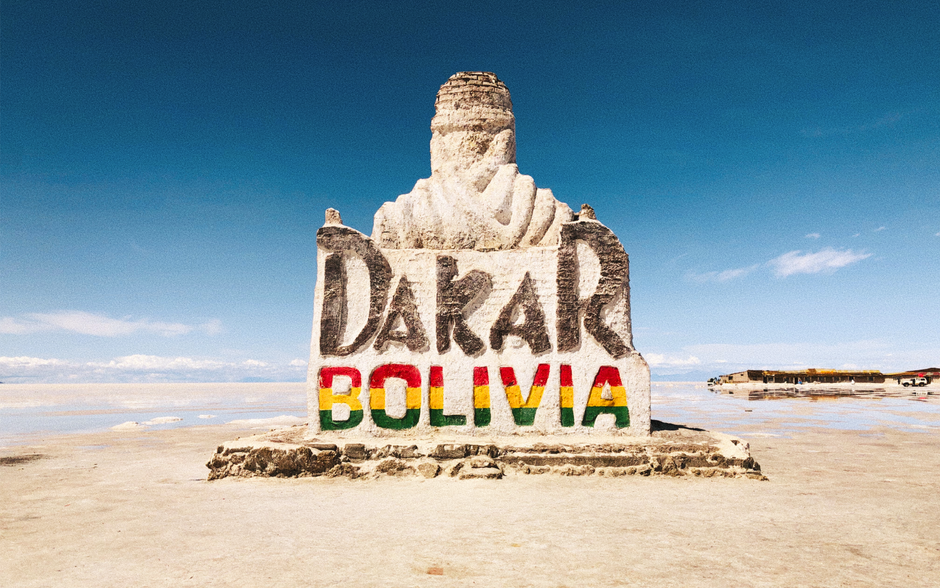
Bolivia is South America at its most dramatic and least changed. In the high Andes, the Salar de Uyuni, the world’s largest salt flat, stretches white to the horizon and turns into a giant mirror of the sky after the rains; La Paz tumbles down a canyon below snowy Illimani, linked to the city of El Alto by the world’s largest urban cable car network; and Lake Titicaca, sacred to the Inca, shimmers deep blue at almost 3,800 m (12,500 ft). Lower down are the white colonial city of Sucre, the silver-mining city of Potosí, the Amazon rainforest and the tropical lowlands around Santa Cruz. About two-thirds of Bolivians are of Indigenous descent, and Aymara and Quechua culture, from markets to festivals, is part of daily life. Travel here takes patience: most of the visitor highlights are at high altitude, roads can be slow and are sometimes blocked by protests, and fuel shortages were affecting transport in 2026. But few places in the world are as spectacular.
Right now in Bolivia
- Tue 4–20°C 38–68°F Partly cloudy
- Wed 4–21°C 40–70°F Mostly clear
- Thu 5–20°C 40–68°F Mostly clear
Weather: MET Norway (CC BY 4.0)
Multi-day tours of Bolivia
Multi-day tours from local operators. You check dates and book on Viator, our partner; we may earn a commission at no extra cost to you. How we earn money
Bolivia at a glance: the Altiplano, the valleys and the lowlands
Bolivia is a landlocked republic of about 12 million people in the center of South America, bordered by Peru and Chile to the west, Brazil to the north and east, and Paraguay and Argentina to the south. Sucre is the constitutional capital, and La Paz is the seat of government. The western third of the country is the Altiplano, a high plateau at about 3,600–4,000 m (11,800–13,100 ft) between two chains of the Andes; east of it, valleys drop through the Yungas and toward the Amazon basin and the Chaco plains, which cover most of the country. Spanish is the main language, and the constitution recognizes 36 Indigenous languages, of which Quechua, Aymara and Guaraní are the most spoken. Bolivia uses UTC−4 all year, with no daylight saving time, the same as US Eastern Daylight Time in summer.
Bolivia’s regions
- The Altiplano: La Paz and El Alto, Lake Titicaca and Copacabana, Oruro, and the Salar de Uyuni and the lagoons of the southwest.
- The valleys: Sucre, Potosí, Cochabamba and the wine region of Tarija.
- The Yungas: steep, subtropical valleys northeast of La Paz, with Coroico and the “Death Road”.
- The Amazon: Rurrenabaque, gateway to Madidi National Park and the pampas.
- The eastern lowlands: Santa Cruz, Bolivia’s largest city, the Jesuit missions of Chiquitos and Amboró National Park.
Where to go: the Salar de Uyuni, La Paz and Lake Titicaca
Most trips follow a loop through the Altiplano: La Paz, Lake Titicaca, Uyuni and its salt flat, and often Sucre and Potosí. Many travelers also arrive from or continue to Peru (Cusco and Puno) or Chile (San Pedro de Atacama).
The Salar de Uyuni
The world’s largest salt flat covers more than 10,000 km² (3,900 sq miles) at about 3,660 m (12,000 ft). Most visitors explore it on 4×4 tours from the town of Uyuni, from a day trip to three or four days across the southwest’s lagoons and volcanoes. See our Salar de Uyuni travel guide.
La Paz
The seat of government fills a deep canyon at about 3,640 m (11,940 ft), with markets, museums, the Mi Teleférico cable cars and day trips to Tiwanaku, the Valley of the Moon and Huayna Potosí. See our La Paz, Bolivia travel guide.
More places worth the trip
- Lake Titicaca and Copacabana: the lakeside town and boats to the Isla del Sol, about three to four hours from La Paz.
- Sucre: the “white city”, Bolivia’s constitutional capital, with colonial churches, museums and a mild climate at about 2,800 m (9,200 ft).
- Potosí: once one of the richest cities in the world from the silver of the Cerro Rico, at about 4,000 m (13,100 ft).
- Rurrenabaque and Madidi: jungle and pampas trips in the Amazon, reached by a short flight from La Paz.
- Tarija: high-altitude vineyards in the south; see our wine tasting guide.
- Oruro: famous for its carnival, one of the great festivals of the Andes.
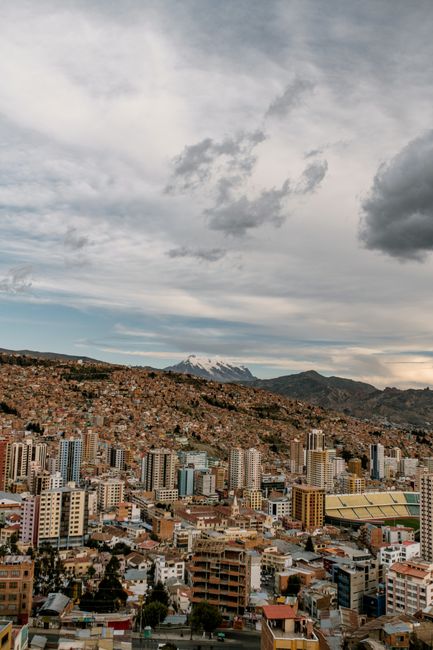
La Paz, Bolivia Travel Guide
Plan a trip to La Paz, Bolivia: the Mi Teleférico cable cars, Plaza Murillo, Calle Jaén and the Witches' Market, El Alto's markets and…
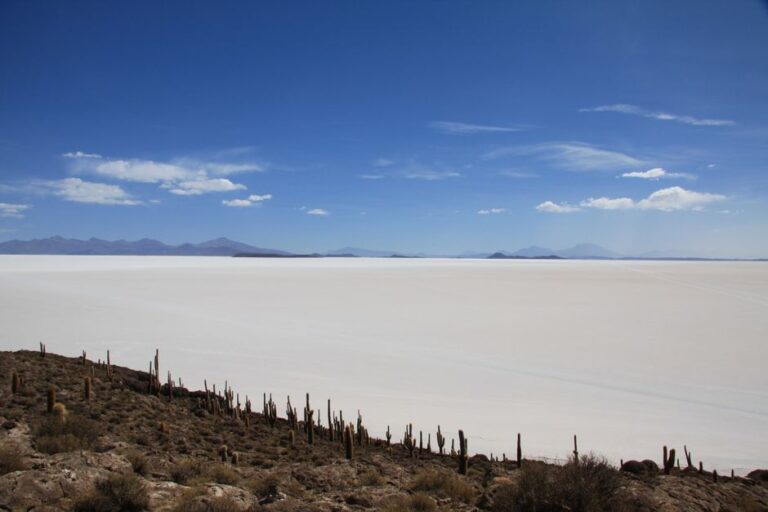
Salar de Uyuni Travel Guide
Plan a trip to the Salar de Uyuni in Bolivia: the dry season and the rainy-season mirror effect, one-day and three-day 4×4 tours, choosing…
Best time to visit Bolivia: dry and rainy seasons
Bolivia’s highlands have two clear seasons. The dry season, from about May to October, brings clear blue skies, strong sun and very cold nights on the Altiplano, often below freezing; it is the most popular time for trekking, Lake Titicaca and the southwest lagoons. The rainy season, from about November to March, brings afternoon storms; in the Salar de Uyuni a thin layer of water creates the famous mirror effect, usually from about January to March. The UK government notes that floods and landslides are common in mountainous areas during the November–March rainy season, and roads can become impassable for days. Forest fires are common in the dry season in the south and east and can affect air quality, even in La Paz.
| Region | Dry season | Rainy season | Temperatures |
|---|---|---|---|
| La Paz and Lake Titicaca | May to October | November to March | Days about 13–18 °C (55–64 °F); nights near or below 0 °C (32 °F) in winter |
| Salar de Uyuni | May to October (hard white salt) | December to March (mirror effect from about January) | Days about 5–20 °C (41–68 °F); nights down to −15 °C (5 °F) in June–August |
| Sucre and Cochabamba | April to October | November to March | Mild, about 18–24 °C (64–75 °F) by day |
| Santa Cruz and the Amazon | May to September | November to April | Hot and humid, about 28–33 °C (82–91 °F) |
Crowds, prices and events through the year
- January 24: the Alasitas fair in La Paz, where people buy miniature versions of things they hope to obtain in the coming year.
- Carnival: the Oruro Carnival, on the Saturday before Lent (February 6, 2027), a UNESCO-recognized festival of masked dances; carnival holidays February 8–9, 2027.
- June 21: the Aymara New Year (Willkakuti), celebrated at sunrise at Tiwanaku.
- June to August: the busiest tourist season, coinciding with the coldest, clearest weather on the Altiplano.
- August 6: Independence Day.
- November 1–2: All Saints’ and All Souls’ days; on November 8, the Día de las Ñatitas in La Paz honors decorated skulls.
Public holidays
Banks and offices close on national holidays, and buses fill up around them. The next ones, from October 2026:
| Holiday | Date | Good to know |
|---|---|---|
| All Souls’ Day | Monday, November 2, 2026 | Families visit cemeteries |
| Christmas Day | Friday, December 25, 2026 | Nationwide |
| New Year’s Day | Friday, January 1, 2027 | Nationwide |
| Plurinational State Day | Friday, January 22, 2027 | Nationwide |
| Carnival | February 8–9, 2027 | Oruro’s carnival parade is on February 6 |
| Good Friday | March 26, 2027 | Nationwide |
| Labor Day | Saturday, May 1, 2027 | Nationwide |
| Corpus Christi | Thursday, May 27, 2027 | Nationwide |
| Aymara New Year | Monday, June 21, 2027 | Sunrise celebrations at Tiwanaku |
| Independence Day | Friday, August 6, 2027 | Parades nationwide |
How long to stay: sample itineraries
Distances are long and most highlights are high up, so build in rest days to acclimatize, and allow extra time for possible road blockades.
7 days: La Paz and Uyuni
Two or three nights in La Paz, including a day trip to Tiwanaku or the Valley of the Moon, then fly to Uyuni for a three-day tour of the salt flat and the southwest lagoons.
10 days: Titicaca, La Paz and Uyuni
Start with two nights in Copacabana and the Isla del Sol, then La Paz, and finish with Uyuni.
2 weeks: the classic loop
Add Sucre and Potosí after Uyuni, or a jungle trip from Rurrenabaque. Travelers continuing to Chile often end the Uyuni tour in San Pedro de Atacama, and those heading to Peru cross at Lake Titicaca toward Puno and Cusco.
Entry, money and costs
Entry requirements by nationality (last reviewed October 2026)
Bolivia sorts countries into three groups. Citizens of Group I countries need no visa for tourism; Group II and Group III citizens need a tourist visa, and Group III visas also require prior approval from Bolivia’s migration office, according to Bolivia’s consulates.
- United States: Bolivia removed the visa requirement for US citizens on December 1, 2025, moving the United States from Group III to Group I, according to Bolivia’s Ministry of Foreign Affairs. Before then, Americans had to buy a visa costing US$160. Some older official pages, including the US Embassy’s entry page, still describe the old visa, so print the Foreign Ministry’s announcement and check with your airline before you fly.
- Canada: no tourist visa is needed for stays up to 30 days; extensions of 30 days can be obtained twice, free of charge, at the General Directorate of Migration, to a maximum of 90 days a year, according to the Canadian government.
- UK: no visa for up to 90 days; border officials stamp 30 days, but you can stay for 90 days in a one-year period without a new stamp, according to the UK government.
- European Union: most EU citizens are in Group I and need no visa for a tourist stay; Bulgaria and Romania were added to Group I in December 2025, according to the Foreign Ministry.
- Other countries newly in Group I since December 2025: South Korea, South Africa, Malta, the United Arab Emirates and Israel.
What every visitor needs:
- A passport valid for at least six months after arrival, with at least two blank pages, according to the UK government.
- Proof of accommodation, such as a hotel booking for at least your first night, and proof of onward travel.
- An entry stamp: without it, you will be fined when you leave. If you arrive overland, get stamped out of the country you are leaving and into Bolivia; at the Argentine border, Bolivia no longer stamps passports, but you must register your exit with Argentine immigration, according to the UK government.
- A yellow fever certificate if you arrive from a country with a risk of yellow fever transmission; vaccination is also recommended for the Amazon lowlands.
Customs and departure checks
Declare anything that may be prohibited or taxed on Bolivia’s customs form. Travelers can bring up to US$10,000 into the country without declaring it or being required to exchange it, according to the US Embassy in La Paz. On departing international flights, all passengers and their hold and hand baggage are searched by the anti-narcotics police, including with sniffer dogs, according to the UK government; never carry anything for anyone else.
Money: the boliviano
Bolivia’s currency is the boliviano (Bs, BOB). After years at a fixed rate of about Bs 6.96 to the dollar, the Central Bank of Bolivia moved to a more flexible exchange regime; its official rate for October 3–5, 2026, was Bs 12.00 to US$1, so Bs 100 is about US$8.30. Bolivia has been going through an economic crisis and a shortage of dollars, according to the UK government, so bring clean, undamaged US dollar bills to exchange at banks or authorized exchange houses (casas de cambio), carry a debit card for ATMs in the cities, and keep some cash, as cards are often not accepted outside the main cities and tours. Prices can change quickly; confirm the price in bolivianos before you pay.
Taxes and tipping
Prices include Bolivia’s 13% value-added tax (IVA); ask for an invoice (factura) in hotels and restaurants. Tipping is modest: about 10% in restaurants that don’t add a service charge, and tips for guides, drivers and cooks on tours.
Typical travel costs
These per-person, per-day estimates are a planning guide as of October 2026; prices in bolivianos have been rising with the new exchange rate:
| Style | Estimated cost per day | What that looks like |
|---|---|---|
| Budget | about Bs 420–660 (US$35–55) | Hostel bed, set lunches (almuerzos), local buses and shared Uyuni tours |
| Mid-range | about Bs 1,200–2,000 (US$100–165) | Comfortable hotel room shared by two, restaurant meals, taxis, a private day tour |
| High-end | about Bs 4,200+ (US$350+) | Boutique hotels, salt hotels in Uyuni, private 4×4 tours with a guide, domestic flights |
The figures are our estimates, not official statistics.
Getting there and getting around
Arrival airports
- El Alto International (LPB), La Paz: on the Altiplano above La Paz, at about 4,000 m (13,100 ft), one of the highest international airports in the world.
- Viru Viru International (VVI), Santa Cruz: the main international gateway, with connections to other South American hubs; there are no nonstop flights to the US as of October 2026, so most Americans connect through hubs such as Lima, Bogotá, Panama City or São Paulo.
- Uyuni (UYU): domestic flights from La Paz to the salt flat.
Copa Airlines connects Bolivia with its hub in Panama City, with onward flights to US cities such as Miami. See our United States travel guide if you are connecting there.
Domestic flights
Domestic flights save long, high-altitude road journeys: La Paz to Uyuni takes about an hour, La Paz to Sucre, Santa Cruz or Rurrenabaque about an hour. Many of Bolivia’s airports lack full safety and rescue capability, especially outside the departmental capitals, according to the UK government.
Buses, fuel shortages and blockades
Long-distance buses connect all the cities, often overnight; tourist-oriented companies with seatbelts and better-trained drivers cost more but tend to have better safety standards, according to the UK government. In 2026, regular petrol and diesel shortages have caused long queues at service stations, and bus services between cities may be affected; a bus ticket sold as “condicionado” means the company cannot guarantee arrival. Road blockades by protest groups can appear without warning, including on roads to airports, and have lasted for weeks. Allow spare days, check road conditions with the national road authority (ABC), and never try to cross a blockade.
Getting around cities
In La Paz, the Mi Teleférico cable cars are the fastest way across the city. Use radio taxis ordered by phone or through your hotel, with the company’s name and phone number on the roof and a sticker on the windscreen; don’t get into a taxi that already has other passengers, according to the UK government.
Culture, food and everyday etiquette
Bolivia has the largest Indigenous share of the population in South America, and Aymara and Quechua traditions shape daily life, from the bowler hats and layered skirts of the cholitas of La Paz to offerings to Pachamama (Mother Earth). Food to try: salteñas (juicy baked empanadas, eaten in the morning), sopa de maní (peanut soup), pique macho (beef, sausage and fries), silpancho, trout from Lake Titicaca, and quinoa in many forms. Coca tea (mate de coca) is legal in Bolivia and widely drunk for the altitude, but don’t take coca leaves or tea out of the country.
Etiquette: greet people before asking for anything, and always ask before photographing people, particularly in rural areas and markets; many will say no or expect a small tip. Be discreet with cameras and binoculars in coca-growing areas such as the Chapare and the Yungas, according to the UK government. Carry a copy of your passport photo page and entry stamp. Drug laws are severe: carrying any amount of illegal drugs is treated as trafficking, with a minimum sentence of eight years, according to the UK government.
Safety, health, accessibility and connectivity
Safety
Most visitors travel without serious problems, but petty crime is common in central La Paz, in other tourist areas and on buses, and crime has risen with the economic crisis, according to the UK government. Keep your bags with you, use a money belt on night buses, and ignore people offering help at bus terminals. Criminals impersonate police officers, sometimes with fake ID cards and uniforms; real police cannot search you in the street without a written order from a prosecutor, and you should never get into an unmarked police car. Express kidnappings have targeted tourists, especially solo travelers, near land borders with Peru, Chile and Argentina; on the route from Copacabana to La Paz, use a direct bus.
Protests and the 2026 state of emergency: Bolivia declared a state of emergency on June 21, 2026, to remove road blockades and restrict protests, according to the UK government. In September 2026, organizations called for new protests and blockades over the price and availability of gasoline and diesel, according to the US Embassy in La Paz, which noted that during the previous period of protests, overland travel was badly disrupted for more than seven weeks. Follow local news and official information, keep extra food, water and medicine if traveling overland, avoid protests and blockades, and be ready to change plans. The Chapare region of Cochabamba department, including Villa Tunari, has high levels of drug-related crime and is outside the usual tourist routes.
Altitude: altitude sickness is a real risk in La Paz (about 3,640 m / 11,940 ft), El Alto and its airport (about 4,000 m / 13,100 ft), Lake Titicaca and the Salar de Uyuni (about 3,660 m / 12,000 ft), according to the UK government. Plan two or three easy days on arrival, drink water, avoid alcohol and heavy meals at first, and see a doctor before you go if you have heart, lung or blood-pressure problems. Some travelers start lower, in Sucre or Cochabamba, and climb gradually.
In an emergency, call police 110, ambulance 118 or fire 119.
Health and insurance
Public healthcare is overstretched, and medicines are sometimes in short supply, so bring enough prescription medicine for your trip, according to the UK government. Private clinics in the main cities work with international insurance, but you must usually pay upfront; buy insurance that covers evacuation from remote areas. Zika, dengue and Oropouche occur in the lowlands. Don’t drink tap water.
Accessibility
High altitude, steep streets in La Paz and Potosí, uneven sidewalks and rough 4×4 tracks make Bolivia challenging for travelers with limited mobility. Newer hotels in La Paz and Santa Cruz may have adapted rooms, and the cable cars in La Paz are step-free at most stations; ask in advance.
Connectivity and power
Mobile coverage is good in cities but limited on the Altiplano and absent on much of the Uyuni route. Prepaid SIM cards from Entel, Tigo and Viva are sold with a passport. Bolivia mostly uses 230 V with type C (European two-pin) and type A sockets; some places in La Paz use 115 V. Bring a plug adapter, and check that your devices accept 230 V.
Things to do: salt flats, mountains, lakes and markets
- Hiking: the Isla del Sol, the Cordillera Real near La Paz, and the canyons around Tupiza.
- Cycling: the downhill ride on the “Death Road” from La Paz to Coroico; check that bikes are in good condition and that your guide carries safety equipment and a first-aid kit, according to the UK government.
- City sightseeing: La Paz’s markets and cable cars, colonial Sucre and the mint in Potosí.
- Boat trips: Lake Titicaca to the Isla del Sol and Isla de la Luna; check that life jackets are provided, as boats are often very basic.
- Wine tasting: Tarija’s high-altitude vineyards and singani distilleries.
- 4×4 tours: the Salar de Uyuni and the lagoons of the Eduardo Avaroa reserve.
What to pack
Pack for big temperature swings: a warm down jacket, fleece, thermal base layers, hat and gloves for nights on the Altiplano and Uyuni, plus a sun hat, high-factor sunscreen, lip balm and sunglasses for the intense high-altitude sun. Add sturdy walking shoes, a refillable water bottle with a filter, a headlamp, any prescription medicines, a plug adapter, clean US dollar bills and a copy of your passport. For the Amazon, bring light long sleeves and insect repellent.
Bolivia travel FAQ
Do US citizens need a visa for Bolivia?
Not anymore. Bolivia’s Ministry of Foreign Affairs moved the United States to Group I, with no visa needed for tourism, on December 1, 2025. Some older pages still mention the old US$160 visa, so carry a copy of the announcement and check with your airline.
When is the best time to visit Bolivia?
May to October, the dry season, for clear skies and trekking. For the mirror effect on the Salar de Uyuni, go in the rainy season, usually from about January to March.
How long can I stay in Bolivia as a tourist?
Usually 30 days on entry, extendable at the migration office up to 90 days a year, depending on your nationality.
What currency does Bolivia use?
The boliviano. The Central Bank’s official rate was Bs 12.00 to US$1 in early October 2026. Bring clean US dollar bills and some cash, as cards are not always accepted.
How do I deal with the altitude in Bolivia?
Rest for two or three days when you arrive in La Paz, drink water, avoid alcohol at first, and climb gradually. See a doctor before you go if you have health conditions.
Are there road blockades in Bolivia in 2026?
Blockades and protests over fuel prices and supply were expected after mid-September 2026, and they can appear without warning. Allow spare days, follow local news and never try to cross a blockade.
Can I drink the tap water in Bolivia?
No. Drink bottled, boiled or filtered water.
Is Bolivia safe for tourists?
Most visits pass without serious problems. Watch your belongings, use radio taxis, beware of fake police, and follow local news on protests and blockades.
Do I need a plug adapter in Bolivia?
Usually yes. Most sockets are 230 V and take European-style two-pin plugs, though some accept US plugs.
Sources and last review
Researched and last reviewed on 4 October 2026. The end of the visa requirement for US citizens and the eight countries moved to Group I on December 1, 2025: Bolivia’s Ministry of Foreign Affairs; the visa groups and their requirements: Bolivia’s consulates in New York and Miami; the official exchange rate: the Central Bank of Bolivia; stays, passport and entry stamps, the Argentine border, departure searches, fuel shortages, the June 21, 2026, state of emergency, blockades, crime, fake police, express kidnapping, the Chapare, altitude, health, the rainy and forest-fire seasons, airports, buses, the Death Road and Titicaca boats, drug penalties and emergency numbers: the UK government; the 30-day stay for Canadians and extensions: the Canadian government; the September 2026 protest calls and cash allowance: the US Embassy in La Paz; La Paz and Uyuni altitudes: Wikidata. Population, languages, seasons and temperatures, the mirror-effect months, festival and holiday dates, the 13% IVA, US flight connections, voltage and costs come from secondary sources or general knowledge and are flagged for checking. Prices and rules change, so check before you go.
Plan your trip
Partner links: TravelerCenter may earn a commission if you book, at no extra cost to you.
🇪🇸 Useful Spanish phrases for Bolivia
All 38 Spanish phrases: restaurant, hotel, emergencies, romance (printable) →