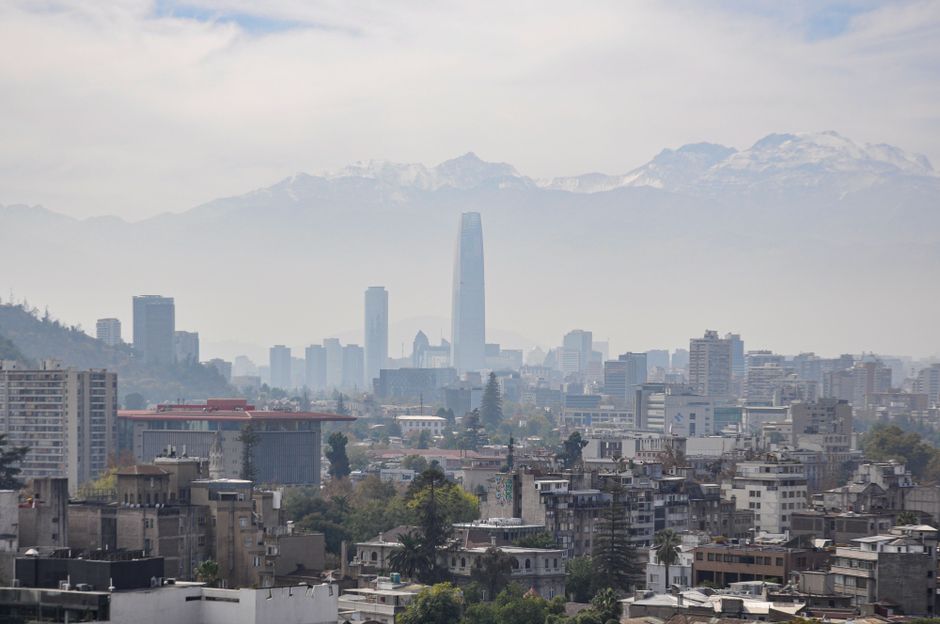
Santiago, Chile’s capital and by far its biggest city, spreads across a wide valley at the foot of the Andes, whose snowy peaks rise straight up behind the skyscrapers on clear days. It is the country’s main gateway and a city that rewards a few days on its own: the historic center around the Plaza de Armas and La Moneda palace, some of the best museums in South America, the bohemian streets of Lastarria and Bellavista, Pablo Neruda’s house La Chascona, the Mercado Central for seafood, and two city hills with sweeping views. Beyond the city, wineries in the Maipo Valley, the port of Valparaíso, the gorge of the Cajón del Maipo and ski resorts are all within reach for a day. Santiago has a Mediterranean climate: hot, dry summers, mild springs and falls, and cool, sometimes smoggy winters, when almost all the year’s rain falls.
Right now in Santiago
- Wed 11–19°C 52–66°F 7 mm Showers
- Thu 11–18°C 52–64°F 7 mm Mostly clear
- Fri 10–18°C 50–64°F 1 mm Light showers
- Mon 12 Oct Columbus Day (Día del Descubrimiento de Dos Mundos)
Weather: MET Norway (CC BY 4.0) · Holidays: Nager.Date
Top tours in Santiago
See all tours for Santiago →
From local operators, with prices and reviews; you check availability and book on Viator, our partner. We may earn a commission at no extra cost to you. How we earn money
Santiago at a glance
- Best for: museums, food and wine, city views with the Andes behind, neighborhood strolls, and day trips to wineries, the coast and the mountains.
- How long: 3 days for the city; 5 days to add Valparaíso and a winery or the Cajón del Maipo.
- Best time: September to November and March to May, with highs of 20–28 °C (68–82 °F); summer peaks at 30 °C (87 °F) and the city is quieter in January and February.
- Getting there: Arturo Merino Benítez International Airport (SCL), about 17 km (11 miles) west of the center, with official taxi and shuttle counters and airport buses.
- Getting around: a fast, clean Metro and the RED bus network, paid with a bip! card or the RED app; ride-hailing apps and taxis.
- Money: Chilean pesos; CLP 1,000 is about US$1, and cards work almost everywhere.
- Before you go: entry rules, the SAG food declaration and general safety are in our Chile travel guide.
Santiago’s neighborhoods: where things are
Greater Santiago is made up of more than 30 municipalities (comunas), each with its own mayor. Visitors mostly stay along the axis of the Mapocho River and the main avenue, the Alameda (Avenida Libertador Bernardo O’Higgins), which turns into Providencia and Apoquindo as it runs east toward the mountains. Metro Line 1 follows this axis, so most sights are a short ride apart.
The historic center (Santiago Centro)
The old grid laid out by the Spanish in 1541 holds the Plaza de Armas, the Metropolitan Cathedral, the Central Post Office and the National History Museum, plus La Moneda presidential palace, the pedestrian streets of Ahumada and Huérfanos, the Mercado Central and the Pre-Columbian Art Museum.
Lastarria and Bellas Artes
East of the center, below Cerro Santa Lucía, the small Lastarria and Bellas Artes neighborhoods have cobbled streets, cafés, bookshops, wine bars, the GAM cultural center and the Fine Arts Museum. It’s one of the most pleasant areas to stay.
Bellavista
Across the Mapocho at the foot of Cerro San Cristóbal, Bellavista is Santiago’s bohemian quarter, with colorful houses, murals, Neruda’s La Chascona, the Patio Bellavista food court, and many bars and clubs that stay open late.
Providencia and Barrio Italia
Leafy, safe and central, Providencia has mid-range hotels, restaurants and easy Metro access. Barrio Italia, on its southern edge, is full of design shops, cafés and restaurants in old one-story houses.
Las Condes and Vitacura
The modern business district nicknamed “Sanhattan” rises around the Costanera Center, South America’s tallest building, with international hotels, malls and upscale restaurants. Vitacura has galleries, the Parque Bicentenario and fine dining.
Barrio Brasil and Yungay
West of the center, these older neighborhoods have faded mansions, street art, cheap eats and hostels, and the Museum of Memory and Human Rights nearby.
Top things to see in Santiago
Opening hours and prices change, and many museums close on Mondays; check the official sites before you go.
Plaza de Armas and the historic center
Santiago’s main square, founded by Pedro de Valdivia in 1541, is surrounded by the Metropolitan Cathedral, the Central Post Office and the colonial Real Audiencia building, home to the National History Museum. Walk two blocks south-west to La Moneda, the presidential palace, built in the late 18th century as the colonial mint and bombed during the 1973 coup; the Centro Cultural La Moneda underneath it hosts major exhibitions.
Museo Chileno de Arte Precolombino
Near the Plaza de Armas, the Chilean Museum of Pre-Columbian Art is one of the finest small museums on the continent, with textiles, ceramics, gold and stone sculpture from Mexico to Patagonia, including a room of Andean textiles and wooden figures from Chile’s own peoples.
Cerro San Cristóbal and the Parque Metropolitano
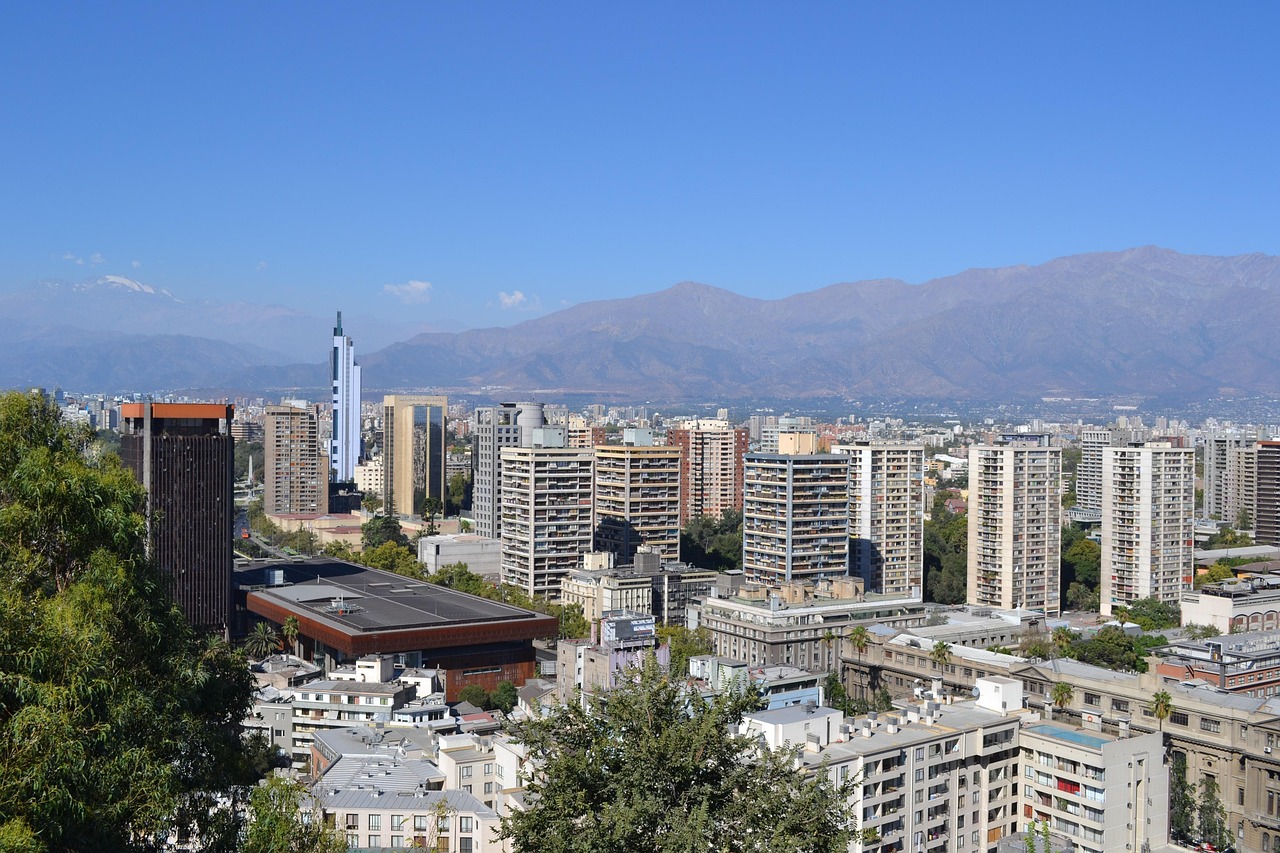
Santiago’s big hill, about 880 m (2,890 ft) high, forms one of the largest urban parks in Latin America, with a white statue of the Virgin Mary on the summit and the best view of the city and the Andes. Ride the historic funicular up from Bellavista, take the cable car (teleférico) from Providencia, or walk or cycle the road.
Cerro Santa Lucía
The small, rocky hill where Santiago was founded is a garden of terraces, fountains and stairways in the city center, with a fort-like lookout at the top. It’s a 20-minute climb; visitors sign in at the entrance.
La Chascona
Pablo Neruda, Chile’s Nobel prize-winning poet, built this quirky house in Bellavista for Matilde Urrutia in the 1950s, full of ship-like rooms, curious collections and the furniture and dishes he used. It’s run by the Fundación Pablo Neruda as one of its three house museums, along with La Sebastiana in Valparaíso and Isla Negra on the coast. According to the foundation, every Tuesday in October 2026 a special general ticket costs CLP 4,500 (about US$5) at all three houses; check its site for regular prices and audio-guide times.
Museum of Memory and Human Rights
This striking modern museum near Quinta Normal park documents the human rights violations of the 1973–1990 military dictatorship through testimonies, photos and objects. It is moving and essential for understanding modern Chile; allow at least two hours.
Sky Costanera
The observation deck at the top of the Gran Torre Santiago, about 300 m (980 ft) high, gives a 360-degree view across the city to the Andes. Sunset on a clear day is the best time; on smoggy winter days the view is poor.
More to see
- Museo Nacional de Bellas Artes: Chile’s national fine arts museum in a grand early-20th-century building in Parque Forestal, sharing it with the Museum of Contemporary Art.
- Mercado Central: the iron-roofed fish market, opened in 1872, with seafood restaurants in the middle and simpler stalls around the edges; go for lunch.
- La Vega Central: a vast, chaotic fruit and vegetable market across the river, with cheap set lunches.
- Cousiño Macul and Santa Rita: wineries within the city limits or close by, easy half-day visits by Metro and taxi.
Food, wine and nightlife
Food and drink
Santiago is the best place in Chile to eat well across all budgets. Try empanadas de pino, pastel de choclo, cazuela, a chorrillana (fries topped with meat, onions and eggs, for sharing), the “completo” hot dog with avocado, and seafood such as machas a la parmesana, ceviche and caldillo de congrio. Lunch is the main meal, and many restaurants offer a “menú del día,” a set lunch of two or three courses. Chilean wine is excellent value: ask for Carménère, Cabernet Sauvignon from the Maipo Valley or a Pais from the south. The pisco sour is the classic aperitif, and the “terremoto” (earthquake), white wine with pineapple ice cream and grenadine, is a strong local favorite. In summer, cool down with mote con huesillo.
Nightlife
Bellavista is the heart of Santiago’s nightlife, with bars, live music and clubs that start late, after midnight on weekends. Lastarria and Barrio Italia have wine bars and cocktail bars, and Providencia has pubs.
Day trips from Santiago
- Valparaíso and Viña del Mar: the UNESCO-listed port city of hills, funiculars and street art, and the beach resort next door, about 120 km (75 miles) west; buses leave every few minutes from the Pajaritos and Alameda terminals and take about an hour and a half. See our Valparaíso travel guide.
- Maipo Valley wineries: the closest wine region, south of the city, famous for Cabernet Sauvignon, with big historic estates and small boutique wineries; Concha y Toro in Pirque is the best known. See our guide to wine tasting.
- Casablanca Valley: cool-climate Sauvignon Blanc and Pinot Noir on the road to Valparaíso, easy to combine with the coast.
- Cajón del Maipo: a river gorge running into the Andes south-east of the city, with rafting in summer, hiking, hot springs and the turquoise El Yeso reservoir, about 2 hours away; go with a tour or a 4×4 in winter, when snow can close the upper road.
- Ski resorts: Farellones, El Colorado, La Parva and Valle Nevado are about 60 km (37 miles) and an hour and a half up a winding road, usually open from about late June to September; Portillo, near the Argentine border, is a classic resort about 160 km (99 miles) north-east.
- Isla Negra: Neruda’s favorite house, on the wild Pacific coast about 115 km (71 miles) west, open Tuesday to Sunday from 10 a.m. to 6 p.m. according to the foundation.
Nearby destinations
- Valparaíso100 km
- Mendoza179 km
Getting there and getting around
From Santiago airport (SCL)
Arturo Merino Benítez airport, in Pudahuel, handles international flights in Terminal 2 and domestic flights in Terminal 1, connected by walkways. According to Chile’s tourism board, official transport counters are at the exit of Terminal 2 after baggage claim; use them, a pre-booked transfer or a ride-hailing app, and ignore drivers who approach you in the hall. Airport buses run frequently to the Los Héroes and Pajaritos Metro stations, the cheapest way into the center, and shared shuttles go door to door. The ride to the center takes 30 to 45 minutes by car, longer at rush hour.
The Metro and buses
Santiago’s Metro has seven lines and is the quickest way around. Pay with a rechargeable bip! card, sold at Metro ticket offices, or a QR code from the RED or BancoEstado app. According to RED Movilidad, the integrated fare lets you make up to two transfers within two hours, and Metro fares depend on the time you travel:
| Time on the Metro (weekdays) | Fare as of October 2026 |
|---|---|
| Rush hour (7:00–8:59 a.m. and 6:00–7:59 p.m.) | CLP 895 (about US$0.90) |
| Off-peak (“valle”: 9:00 a.m.–5:59 p.m. and 8:00–8:44 p.m., plus weekends and holidays) | CLP 815 (about US$0.85) |
| Low (“bajo”: 6:00–6:59 a.m. and 8:45–11:00 p.m.) | CLP 735 (about US$0.75) |
| City buses (any time) | CLP 795 (about US$0.80) |
Buses don’t take cash, so buy the bip! card first.
Taxis, ride-hailing and driving
Black-and-yellow taxis use meters; ride-hailing apps are widely used and usually cheaper. You don’t need a car in the city, where traffic is heavy and parking scarce, but one is useful for wineries and the mountains; some city highways use electronic tolls (TAG), so ask the rental company how they are charged.
Long-distance buses and flights
Buses for the rest of Chile leave from the terminals along the Alameda; the Alameda terminal covers most of the country. Domestic flights from Terminal 1 reach Calama for San Pedro de Atacama, Puerto Montt for Puerto Varas, Punta Arenas and Puerto Natales for Torres del Paine, and Easter Island. Buses also cross the Andes to Mendoza in Argentina, about 7 hours when the Los Libertadores pass is open; see our Mendoza travel guide.
When to go and how long to stay
Santiago has a Mediterranean climate with a long dry season. The table uses the Meteorological Directorate’s 1991–2020 climate normals for the Quinta Normal station in the city, as published by the World Meteorological Organization.
| Season | Average high / low | Rainy days per month | What it’s like |
|---|---|---|---|
| Summer (Dec–Feb) | 29–30 °C (84–87 °F) / 12–14 °C (54–56 °F) | almost none | Hot, dry and sunny; the city empties in February as locals head to the coast |
| Fall (Mar–May) | 28 °C falling to 19 °C (82 to 67 °F) / 12 °C falling to 7 °C (53 to 44 °F) | under 1 to 4 | Warm days, cool nights, vineyard colors and the grape harvest |
| Winter (Jun–Aug) | 16–18 °C (60–64 °F) / 4–5 °C (39–41 °F) | 3–5 | Cool, with most of the year’s rain and some smoggy days; snow in the mountains |
| Spring (Sep–Nov) | 20 °C rising to 27 °C (68 to 80 °F) / 7 °C rising to 10 °C (44 to 51 °F) | under 1 to 3 | Clear, fresh and blooming; Fiestas Patrias in September |
Santiago gets only about 286 mm (11 in) of rain a year, almost all from May to August. On cold, still winter days, air pollution builds up in the valley and the authorities may declare an environmental alert or pre-emergency, restricting car use and wood stoves; the air is cleanest after rain or wind.
Santiago month by month
| Month | High / low | Rain | What to expect |
|---|---|---|---|
| January | 30 °C (87 °F) / 14 °C (56 °F) | almost none | Hot and dry; long days; many locals on holiday |
| February | 30 °C (85 °F) / 13 °C (55 °F) | 1 mm (0.1 in) | Hottest month to stay; the city is at its quietest |
| March | 28 °C (82 °F) / 12 °C (53 °F) | 4 mm (0.2 in) | Grape harvest begins; pleasant evenings |
| April | 23 °C (74 °F) / 9 °C (48 °F) | 18 mm (0.7 in) | Warm days, cool nights; fall colors in the parks |
| May | 19 °C (67 °F) / 7 °C (44 °F) | 43 mm (1.7 in) | Cooler; first rains; fewer tourists |
| June | 16 °C (61 °F) / 5 °C (40 °F) | 80 mm (3.2 in) | Rainiest month; ski resorts start to open late in the month |
| July | 16 °C (60 °F) / 4 °C (39 °F) | 50 mm (2.0 in) | Winter school holidays; ski season; occasional smog |
| August | 18 °C (64 °F) / 5 °C (41 °F) | 44 mm (1.7 in) | Cool and showery; good snow in the Andes |
| September | 20 °C (68 °F) / 7 °C (44 °F) | 25 mm (1.0 in) | Spring flowers; Fiestas Patrias on the 18th and 19th |
| October | 23 °C (74 °F) / 8 °C (47 °F) | 12 mm (0.5 in) | Warm, clear and green; excellent month |
| November | 27 °C (80 °F) / 10 °C (51 °F) | 5 mm (0.2 in) | Warm and sunny; outdoor dining season |
| December | 29 °C (84 °F) / 12 °C (54 °F) | 3 mm (0.1 in) | Hot; Christmas and New Year trips to Valparaíso |
Crowds and prices: Santiago is a business city, so hotels are busiest on weekdays and cheaper on weekends; it gets quiet in February, when many Chileans are on vacation. Fiestas Patrias (September 18–19) and Christmas fill buses and flights out of the city. Santiago uses UTC−4 in winter and UTC−3 in summer, with daylight saving time from about early September to early April.
3 days in Santiago
Day one, the historic center: the Plaza de Armas, the cathedral, the Pre-Columbian Art Museum, La Moneda, and lunch at the Mercado Central; finish with sunset from Cerro Santa Lucía. Day two, Bellavista and the hills: La Chascona in the morning, the funicular up Cerro San Cristóbal, then dinner in Lastarria. Day three, the Museum of Memory and Human Rights, Barrio Brasil, and an evening at Sky Costanera and Providencia.
5 days in Santiago and around
Add a day in Valparaíso and Viña del Mar, perhaps stopping at a Casablanca winery on the way, and a day in the Maipo Valley wineries or the Cajón del Maipo; in winter, swap one day for skiing at Valle Nevado or La Parva.
Where to stay in Santiago
- Lastarria and Bellas Artes: boutique hotels and apartments close to the center, museums and restaurants; lively and central.
- Providencia: safe, leafy and well connected by Metro Line 1, with plenty of mid-range hotels and restaurants; a good all-round choice.
- Las Condes and Vitacura: international chain hotels and business hotels near the Costanera Center; quieter and farther from the historic sights.
- Bellavista: small hotels and hostels close to the nightlife; noisy on weekends.
- Barrio Brasil and the center: the cheapest rooms and hostels, but quiet and less safe at night.
Foreign tourists who pay for a hotel registered with Chile’s tax service in US dollars or with a card issued abroad don’t pay the 19% VAT (IVA) on the room; show your passport and entry record and ask for the rate without IVA.
What a trip to Santiago costs
These are our estimates for October 2026 at about CLP 985 per US dollar, except the transport fares, which are official.
| Item | Typical price |
|---|---|
| Metro ride (rush hour / off-peak) | CLP 895 / 815 (US$0.90 / 0.85), official |
| Menú del día (set lunch) | CLP 7,000–12,000 (US$7–12) |
| Dinner for one with a glass of wine, mid-range | CLP 20,000–35,000 (US$20–35) |
| Pisco sour in a bar | CLP 5,000–8,000 (US$5–8) |
| Hostel bed | CLP 15,000–25,000 (US$15–25) |
| Mid-range double room | CLP 70,000–130,000 (US$70–130) |
| Winery tour with tasting | CLP 25,000–60,000 (US$25–60) |
| Airport taxi to Providencia | CLP 25,000–35,000 (US$25–35) |
Practical tips for Santiago
- Phones and bags: pickpocketing and phone snatching are the main problems for visitors, especially in the center, on the Metro, around the Plaza de Armas and in Bellavista at night. Keep your phone away at the curb, and wear your daypack on your front in crowds.
- Demonstrations: protests sometimes take place around Plaza Baquedano (Plaza Italia) and along the Alameda, especially on Fridays and anniversaries; avoid them.
- Earthquakes: Santiago’s buildings are built for them. If you feel a strong quake, drop, cover and hold on, and follow staff instructions.
- Sundays and Mondays: many shops close on Sunday afternoons, and most museums close on Mondays.
- Tipping: restaurants add a suggested 10% tip to the bill; you can accept or decline it.
- Water: tap water is safe to drink.
- Emergencies: 133 for the police, 131 for an ambulance.
What to pack for Santiago
Pack light summer clothes, a sun hat and sunscreen from November to March, and layers with a warm jacket from May to September, when nights are cold and many older buildings have little heating. Bring comfortable walking shoes for the hills, smart-casual clothes for restaurants, and a type C/L plug adapter for Chile’s 220 V sockets; see our guide to travel adapters. If you plan to ski or visit the Cajón del Maipo, bring a warm fleece and waterproof jacket.
Santiago travel FAQ
How many days do I need in Santiago?
Three days cover the main sights; five let you add Valparaíso and a winery or the mountains.
How do I get from Santiago airport to the city center?
Use the official taxi and shuttle counters at the exit of Terminal 2, a ride-hailing app, or the airport buses to the Los Héroes and Pajaritos Metro stations. By car, the trip takes 30 to 45 minutes.
How much is the Santiago Metro?
As of October 2026, according to RED Movilidad, a Metro ride costs CLP 895 at rush hour, CLP 815 off-peak and CLP 735 early and late; buses cost CLP 795. Pay with a bip! card or a QR code, and transfer up to twice within two hours.
What is the best area to stay in Santiago?
Lastarria and Providencia are the most convenient for first-time visitors: central, well connected and lively without being too noisy.
Is Santiago safe for tourists?
Most visits are trouble-free, but pickpocketing and phone snatching are common in the center, on the Metro and in Bellavista at night. Stay alert, avoid demonstrations, and use apps or official taxis at night.
When is the best time to visit Santiago?
Spring (September to November) and fall (March to May) for mild, clear weather. Summer is hot and dry; winter is cool and occasionally smoggy, but it’s ski season.
Can I visit Valparaíso as a day trip from Santiago?
Yes. Buses leave every few minutes and take about an hour and a half each way, so a day is enough for the funiculars, the hills and Viña del Mar’s seafront.
Which wineries can I visit from Santiago?
The Maipo Valley, south of the city, is the closest, with big estates such as Concha y Toro, Santa Rita and Cousiño Macul; the Casablanca Valley is on the way to Valparaíso.
Can I ski near Santiago?
Yes. Farellones, El Colorado, La Parva and Valle Nevado are about an hour and a half from the city, usually open from about late June to September.
Is tap water safe to drink in Santiago?
Yes, the tap water is treated and safe to drink, though some visitors prefer bottled water for the taste.
Sources and last review
Researched and last reviewed on 4 October 2026. Metro and bus fares and transfer rules: RED Movilidad; airport transport counters and bus terminals: Chile’s official tourism site, chile.travel; La Chascona and Isla Negra hours and the October 2026 ticket: the Fundación Pablo Neruda; exchange rate: the Central Bank of Chile; hotel VAT exemption: Decree-Law 825, as published by the National Congress Library; climate: the Meteorological Directorate’s 1991–2020 normals for Quinta Normal, as published by the World Meteorological Organization. Neighborhood descriptions, museum details, distances, bus times, ski seasons, the smog alerts, safety tips and typical costs come from general references and are flagged for checking; costs are our estimates. Prices and hours change, so check the official sites before you go. For entry rules, money and general safety, see our Chile travel guide.
Plan your trip
Partner links: TravelerCenter may earn a commission if you book, at no extra cost to you.
🇪🇸 Useful Spanish phrases for Santiago
All 38 Spanish phrases: restaurant, hotel, emergencies, romance (printable) →