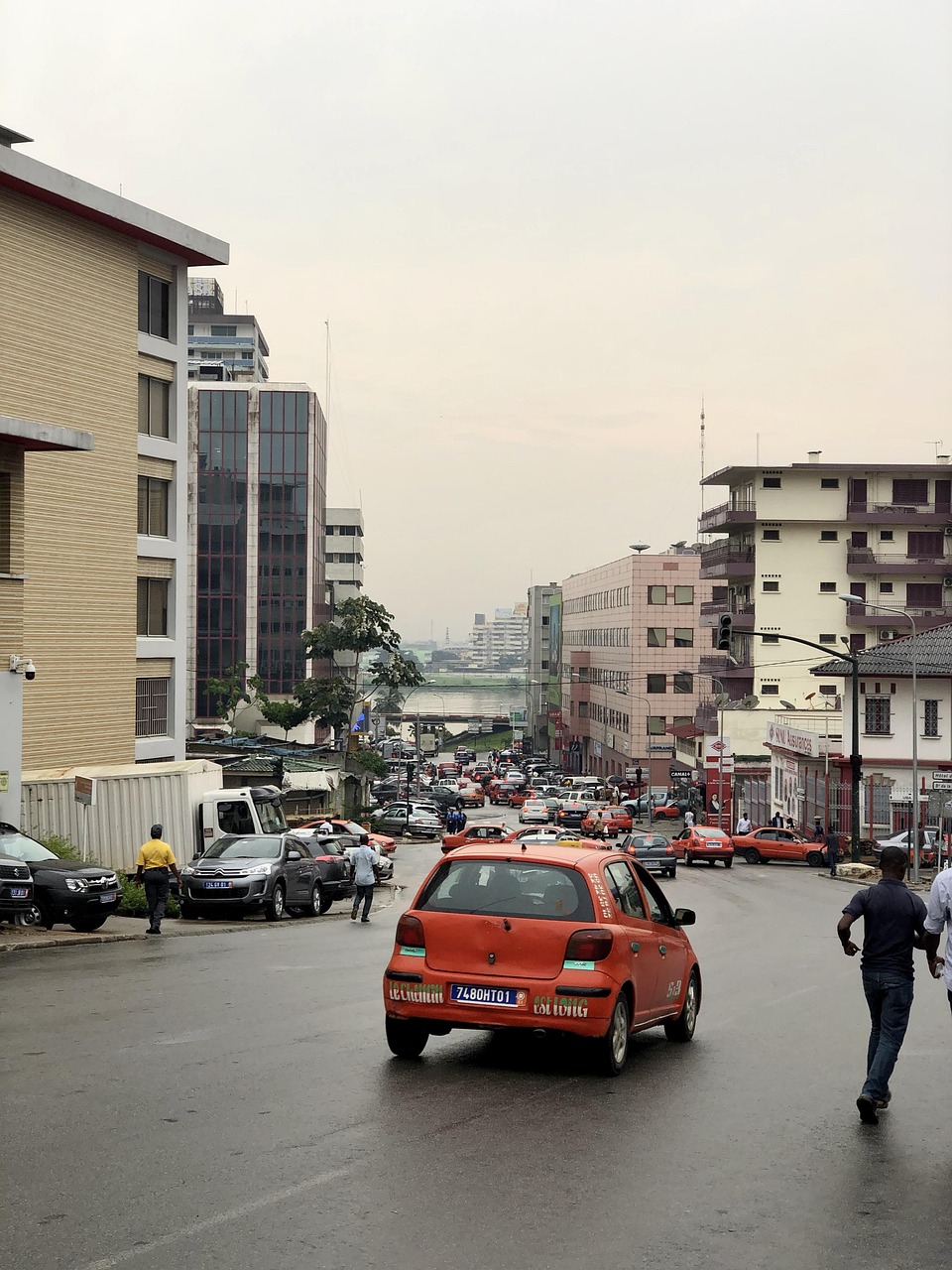
Abidjan is Côte d’Ivoire’s economic capital and West Africa’s most cosmopolitan French-speaking city: a sprawl of districts wrapped around the Ébrié Lagoon, linked by bridges and boats, with the glass towers of the Plateau rising over the water. It’s a city to enjoy more than to tick off: eat grilled fish and attiéké in an open-air maquis, hear coupé-décalé in a Yopougon bar, browse the markets of Treichville and Adjamé, and walk in a rainforest that survives inside the city limits. Its museum holds one of the region’s great collections of masks and sculpture, and the colonial town of Grand-Bassam and the beaches of Assinie are easy escapes. Most visitors need an e-visa, collected on arrival at Abidjan airport, and a yellow fever certificate. The dry months from December to March are the most pleasant; give the city two or three days.
Right now in Abidjan
- Sat26–29°C79–84°F3 mm rain
- Sun26–29°C79–83°F5 mm rain
- Mon27–29°C80–85°F4 mm rain
Abidjan: quick answers
- Things to do in Abidjan
- The Musée des Civilisations de Côte d’Ivoire, St. Paul’s Cathedral, The Plateau’s skyline and the lagoon, Banco National Park, The markets of Treichville and Adjamé, Galleries and contemporary art. More
- Best time to visit Abidjan
- December to March, the main dry season. May and June are the wettest months; August is cooler and usually fairly dry. More
- Where to stay in Abidjan
- The Plateau, Cocody and the Riviera, Marcory and Zone 4, Treichville and Adjamé, Yopougon. More
Abidjan at a glance
- Best months: December to March, when it’s sunny and dry. May and June are the wettest months, with about 270 mm and 440 mm of rain (official 1991–2020 normals for Abidjan airport); August is the coolest month, with highs around 28 °C.
- Days needed: 2 for the city; 3–4 with Grand-Bassam and Assinie.
- Getting there: Félix Houphouët-Boigny International Airport (ABJ) is in Port-Bouët, on the south side of the city. Collect your e-visa at the airport’s visa desks on arrival.
- Getting around: metered orange taxis, ride-hailing apps, lagoon boats and buses; the districts are spread out, so walking is for within a neighborhood.
- Money: the West African CFA franc (XOF), fixed at 655.957 to the euro. See our Côte d’Ivoire guide for entry rules and money.
Explore Abidjan in videos
Hand-picked travel videos from YouTube creators to help you picture the trip. They play from YouTube; the facts in this guide come from our own research.
Abidjan’s districts and where to stay
Abidjan is made up of communes on both sides of the lagoon, each with its own character. Most visitors stay in the Plateau, Cocody or Marcory–Zone 4.
The Plateau
The business district on a peninsula in the lagoon, with ministries, banks, the towers that make Abidjan’s skyline, St. Paul’s Cathedral and the Musée des Civilisations. It’s busy by day and quiet at night; good for business trips and sightseeing.
Cocody and the Riviera
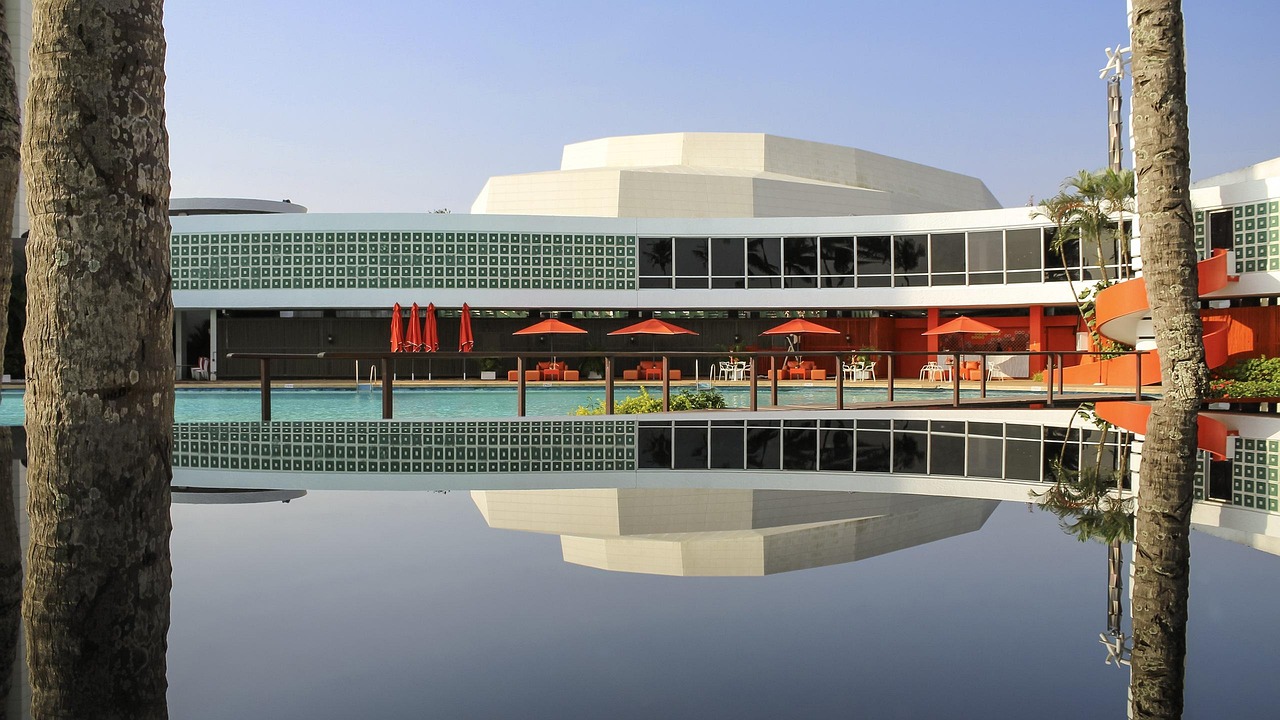
North-east of the Plateau, Cocody is the leafy residential district of embassies, villas, the university, the Hôtel Ivoire, art galleries and some of the city’s best restaurants. The Riviera and Deux Plateaux areas beyond it have shopping centers, cafés and nightlife. A good choice for a comfortable, relaxed base.
Marcory and Zone 4
South of the lagoon, Marcory and its Zone 4 area are lively and international, with restaurants, bars, lounges and boutique hotels along Rue du Docteur Blanchard and the streets around it. Close to the airport and popular with visitors who want to go out at night.
Treichville and Adjamé
Treichville, just across the bridges from the Plateau, is one of the oldest African neighborhoods, with a huge market, street food and a bustling, working-city feel. Adjamé, north of the Plateau, has the city’s largest market and its main bus stations. Both are fascinating to visit with a local guide, but busy and crowded, so keep valuables out of sight.
Yopougon
The city’s largest commune, west of the Plateau, is the heart of Abidjan’s popular nightlife, with open-air maquis, live music and the famous “Rue Princesse” area of bars. Go with friends or a local guide, and use a ride-hailing app to get there and back.
Port-Bouët and the coast
Between the airport and the ocean, Port-Bouët has the city’s beaches and seafood shacks, and is handy for a night before an early flight. The sea is rough here, so it’s a place for a walk and a meal rather than a swim.
Top things to see in Abidjan
Opening hours and ticket prices change, and many sites don’t publish them online, so check locally or ask your hotel before you go.
The Musée des Civilisations de Côte d’Ivoire
On the Plateau, the national museum was founded in 1942 and holds more than 15,000 objects covering three millennia of history, according to the museum: masks, statues, textiles, jewelry, musical instruments, ceremonial weapons and everyday objects from the country’s many peoples, including Baoulé, Dan, Senufo and Akan works. Its exhibition halls have been renovated, and guided visits can be booked through the museum’s website. Allow an hour or two, and visit early in your trip as an introduction to the country.
St. Paul’s Cathedral
At the northern tip of the Plateau, overlooking the lagoon, the modern Cathedral of St. Paul, consecrated in 1985, is one of the city’s landmarks: a dramatic, sail-like design with a huge sloping tower and colorful stained-glass windows showing biblical scenes alongside African ones. It’s an active place of worship, so dress modestly and visit outside service times.
The Plateau’s skyline and the lagoon
Walk the Plateau’s avenues for its 1970s and 1980s architecture, including the striking pyramid-shaped building and the towers along the lagoon, then cross to the Cocody side or take a lagoon boat for the classic view of the skyline across the water, best in the late afternoon light.
Banco National Park
On the north-western edge of the city, the Banco forest was declared a national park in 1953 and preserves a block of primary rainforest, with huge trees, streams and walking trails, only a short drive from the center. It’s a peaceful break from the traffic, best visited in the morning with a guide arranged at the park entrance; wear closed shoes and bring repellent.
The markets of Treichville and Adjamé
For the city’s everyday life, visit the big covered market of Treichville, with fabric, wax prints and tailors, or the vast market of Adjamé. Cocody’s artisans’ market has masks, carvings, jewelry, woven cloth and paintings, and bargaining is expected everywhere.
Galleries and contemporary art
Abidjan has a lively contemporary art scene, with galleries in Cocody and the Plateau showing Ivorian and West African painters, photographers and sculptors, and regular openings and art fairs. Ask your hotel or check local listings for current exhibitions.
Food, drink and nightlife
Abidjan is one of West Africa’s great food cities. Start with attiéké, the light cassava couscous served with grilled fish (poisson braisé) or chicken, onions, tomato and chili, and garba, attiéké with fried tuna, the city’s favorite street lunch. Try alloco (fried plantain), kedjenou (slow-cooked chicken stew), foutou with peanut or palm nut sauce, and fresh bissap and ginger juices. The best experience is a maquis, an open-air restaurant-bar where fish and chicken are grilled to order; Marcory, Zone 4, Cocody and Yopougon are full of them, and there are upscale restaurants serving Ivorian, French, Lebanese and international food in Cocody and Zone 4.
Nights are long. Abidjan is the home of coupé-décalé and zouglou music, and live bands and DJs play in maquis and clubs late into the night, especially at weekends. Zone 4 and Cocody have lounges and cocktail bars; Yopougon has the most popular street-party atmosphere.
Beaches and day trips from Abidjan
- Grand-Bassam: about an hour east, the first colonial capital, with its UNESCO-listed Quartier France of colonial-era houses and public buildings, the National Costume Museum, craft shops and beach restaurants.
- Assinie: about two hours east, a long sandy strip between lagoon and ocean, with beach hotels, lagoon trips and weekend crowds from the city.
- Bingerville: about 30 minutes east, the second colonial capital, with a botanical garden and views over the lagoon.
- Jacqueville: west of the city across the lagoon, for quiet beaches and old colonial houses.
- Yamoussoukro: about three hours by highway, for the Basilica of Our Lady of Peace, a long day trip or a night on the way inland.
The ocean along this coast has strong waves and currents; swim only where locals and hotels say it’s safe. See our beaches guide and our boat trips guide.
Getting there and getting around
From the airport
Félix Houphouët-Boigny International Airport (ABJ) is in Port-Bouët, on the south side of the lagoon, about 15 km from the Plateau. If you have an e-visa approval, go to the “Visa aéroport” desks, open 24 hours a day, for your fingerprints, photo and visa, with your approval, payment receipt, passport and yellow fever card. Taxis wait outside arrivals; agree the fare before you get in, use a ride-hailing app, or book a transfer through your hotel, especially at night. The ride to the Plateau takes 20 to 40 minutes, longer at rush hour.
Taxis and ride-hailing
The orange metered taxis are the easiest way around; check that the meter is running or agree a price first. Ride-hailing apps work across the city and show the fare before you book. Shared woro-woro taxis, color-coded by commune, and gbaka minibuses run fixed routes for very little money but are crowded and hard for first-time visitors to use.
Buses and lagoon boats
The public transport company SOTRA runs city buses and the bateau-bus lagoon boats, which link the Plateau with Treichville, Cocody and other districts across the water; services can be suspended or changed, so check locally. Small wooden boats also cross the lagoon. Traffic on the bridges can be very heavy at rush hour, so allow plenty of time.
Trains and intercity buses
Intercity buses to Yamoussoukro, Bouaké, Man, Korhogo, San-Pédro and Ghana leave from company stations, mainly in Adjamé and Yopougon; book a day ahead. For the coast to the east, taxis and minibuses run to Grand-Bassam and Assinie.
When to go and how long to stay
Abidjan is hot and humid all year, with average highs between 28 °C and 32 °C. The main dry season runs from December to March, with January the driest month (about 25 mm of rain, under two rainy days). Rain builds from April to a peak in June, the wettest month, with about 440 mm and 16 rainy days. July and August are cooler and cloudier, and August is usually fairly dry. A second, shorter rainy season comes in October and November. Rain mostly falls in heavy showers, so even in the wet season you’ll often have dry spells.
One day in Abidjan
Morning at the Musée des Civilisations and a walk around the Plateau and St. Paul’s Cathedral; lunch at a maquis; an afternoon in Treichville market or the Cocody artisans’ market; a sunset view of the skyline from the lagoon; dinner and music in Zone 4 or Cocody.
Two to three days
Add a morning walk in the Banco forest and an evening of live music in a maquis, then spend a day in Grand-Bassam, with lunch on the beach, or head to Assinie for a night on the coast.
What a trip to Abidjan costs
Abidjan is one of the region’s more expensive cities for hotels, but local food and transport are good value. These are our estimates for November 2026, at about 585 CFA francs to the US dollar:
| Item | Typical cost |
|---|---|
| Attiéké with grilled fish or garba at a maquis | 1,500–4,000 FCFA (about US$2.50–7) |
| Mid-range restaurant dinner | 10,000–25,000 FCFA (about US$17–43) |
| Metered or ride-hailing taxi across the city | 2,000–5,000 FCFA (about US$3.50–8.50) |
| Taxi from the airport to the Plateau or Cocody | 5,000–10,000 FCFA (about US$8.50–17) |
| Mid-range hotel double, per night | 50,000–110,000 FCFA (about US$85–190) |
| Côte d’Ivoire e-visa | 73 euros (about 48,000 FCFA) |
The e-visa fee is official; the other figures are estimates, not official prices.
Practical tips for Abidjan
- Cash: carry small notes for taxis, maquis and markets; cards work in larger hotels, supermarkets and upscale restaurants. ATMs inside banks and shopping centers are the safest to use.
- Language: French is used everywhere; English is limited outside big hotels. Learn a few greetings and always say bonjour first.
- Traffic: rush hours on the bridges are slow, so plan sightseeing by district.
- Photos: don’t photograph government buildings, the Presidency, military sites or the airport, and ask before photographing people.
- Documents: carry your original passport; copies aren’t always accepted.
- SIM cards: Orange, MTN and Moov Africa SIMs are cheap and need your passport to register.
- Power: plugs are the European two-pin type (C and E) at 220 volts; see our travel adapters guide.
Health and safety in Abidjan
Most visits are trouble-free. Keep valuables out of sight, don’t wear expensive-looking jewelry, use ride-hailing apps or taxis arranged by your hotel after dark, and avoid walking alone at night. Keep your card in sight when paying. Malaria is present all year, so use repellent and preventive medicine as advised by your doctor. Medical care in Abidjan is reasonable but expensive, so take insurance that covers treatment and evacuation. Emergency numbers: police 110, 111 or 170; fire 180; ambulance (SAMU) 185.
What to pack for Abidjan
Light, breathable clothes, a sun hat, sunscreen, sandals and comfortable walking shoes, insect repellent, and a smarter outfit for restaurants and bars in Cocody and Zone 4. Bring a compact umbrella or light rain jacket from April to July and in October–November, closed shoes for the Banco forest, and your yellow fever card and printed e-visa documents.
Abidjan travel FAQ
Is Abidjan worth visiting?
Yes, for its food, music, art and lagoon setting, and as the gateway to Grand-Bassam, Assinie and the rest of Côte d’Ivoire.
What is the best time to visit Abidjan?
December to March, the main dry season. May and June are the wettest months; August is cooler and usually fairly dry.
How do I get from Abidjan airport to the city?
By metered taxi or ride-hailing app, or with a transfer booked through your hotel. The ride to the Plateau is about 15 km and takes 20 to 40 minutes.
Do I need a visa for Abidjan?
Most visitors do. Apply online for the e-visa (73 euros) at snedai.com, then collect the visa at the airport on arrival with your yellow fever certificate.
Is Abidjan the capital of Côte d’Ivoire?
It’s the economic capital and largest city. The official capital is Yamoussoukro.
Where should I stay in Abidjan?
Cocody for a calm, leafy base; Marcory–Zone 4 for restaurants and nightlife; the Plateau for business and sightseeing.
How far is Grand-Bassam from Abidjan?
About an hour by road to the east, depending on traffic. It makes an easy day trip.
Can you swim at the beaches near Abidjan?
Take care: the Atlantic here has strong waves and currents. Swim only where locals and hotels say it’s safe, and never alone.
What should I eat in Abidjan?
Attiéké with grilled fish, garba, alloco and kedjenou, ideally in an open-air maquis.
What is the emergency number in Abidjan?
Police 110, 111 or 170; fire 180; ambulance (SAMU) 185.
Plan your trip
Partner links: TravelerCenter may earn a commission if you book, at no extra cost to you.
🇫🇷 Useful French phrases for Abidjan
All 38 French phrases: restaurant, hotel, emergencies, romance (printable) →
Before you go: guidebooks and travel gear
Affiliate links: we may earn a commission at no extra cost to you. As an Amazon Associate we earn from qualifying purchases. We pick items for the place, not for the commission. How we earn money
Sources · last reviewed 10 November 2026
Researched and last reviewed on 10 November 2026. The e-visa process and fee and the airport visa desks: SNEDAI, the government’s official e-visa provider; the museum’s founding and collection: the Musée des Civilisations de Côte d’Ivoire; climate averages: the official 1991–2020 normals for Abidjan airport submitted to the World Meteorological Organization; the euro parity and exchange rate: the Central Bank of West African States (BCEAO); photography rules, documents and emergency numbers: the UK government’s factual travel pages, used for practical facts only; malaria: the US CDC. District descriptions, sights, the cathedral and park dates, the UNESCO listing of Grand-Bassam, transport details, distances and typical prices come from general references or are our estimates, and are flagged for checking. Rules and prices change, so check the official sites before you go.
Data: Weather: MET Norway (CC BY 4.0) · Sea temperature: NOAA CoastWatch · Rates: ECB · Wikidata (CC0)