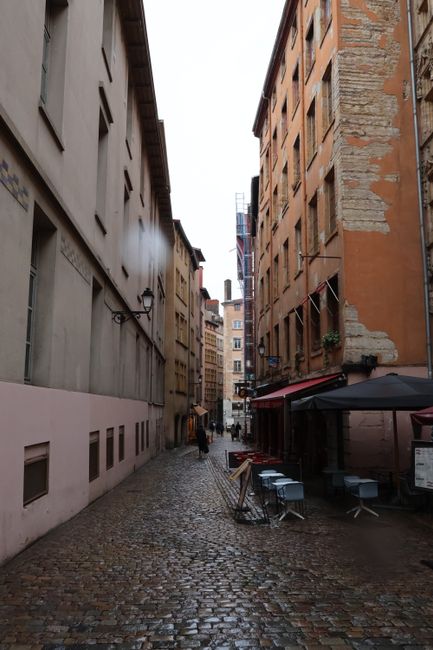
Vieux Lyon is the old town along the right bank of the Saône, one of Europe’s largest Renaissance quarters: three districts, Saint-Paul, Saint-Jean and Saint-Georges, of cobbled lanes, pastel townhouses, spiral staircases and hidden courtyards. It is free to wander at any time. Its famous traboules, passageways that cut through buildings from one street to the next, are open to the public in the daytime, roughly 7:00–19:00 (as of October 2026). Take metro D to Vieux Lyon – Cathédrale Saint-Jean and give it half a day, with lunch in a bouchon.
Right now in Vieux Lyon
- Wed15–18°C59–64°F15 mm rain
- Thu11–15°C52–59°F19 mm rain
- Fri8–14°C47–58°FClear
Tickets and tours for Vieux Lyon
See all tours for Vieux Lyon →
From local operators, with prices and reviews; you check availability and book on Viator, our partner. We may earn a commission at no extra cost to you. How we earn money
Why Vieux Lyon matters
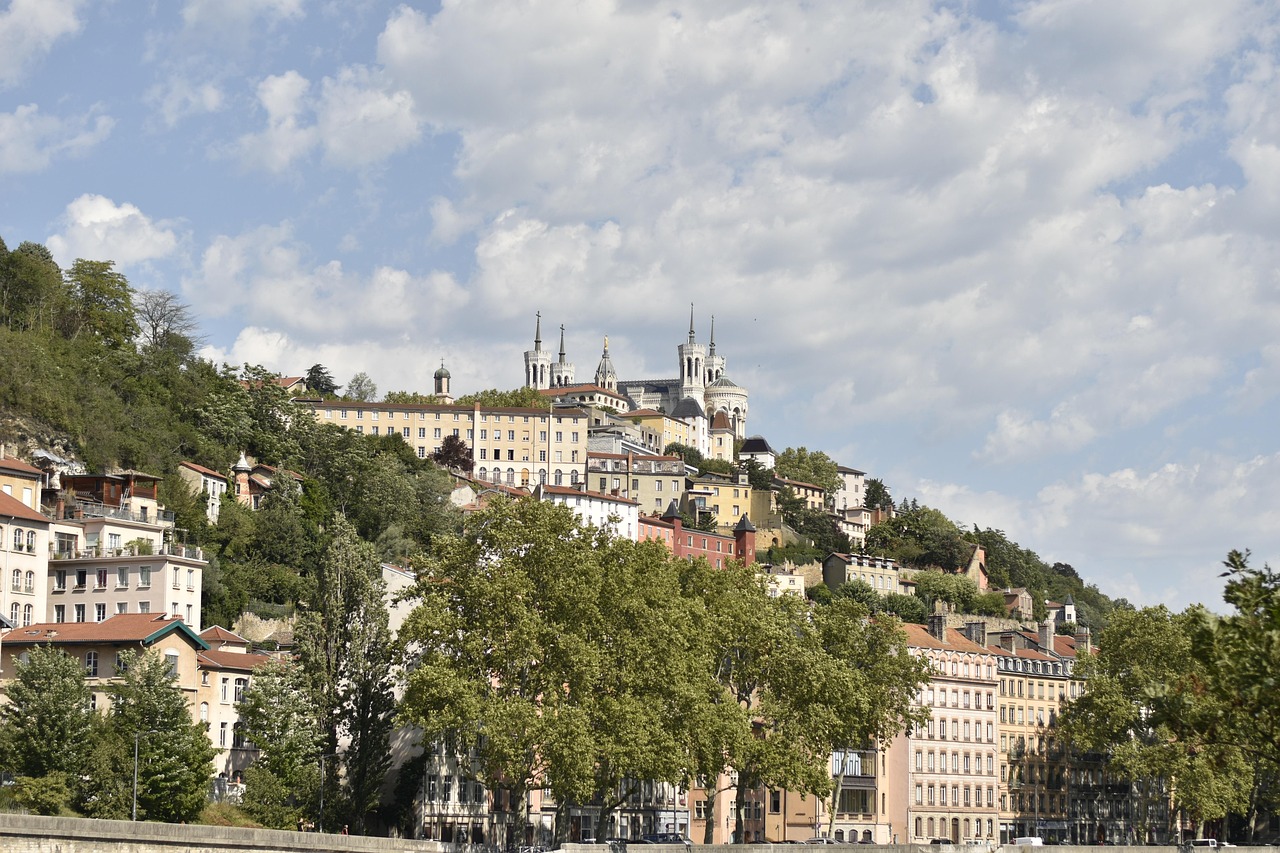
The old town grew at the foot of Fourvière hill after the Roman city on the hilltop was abandoned. Its golden age came in the 15th and 16th centuries, when Lyon’s trade fairs drew Italian, German and Flemish bankers and merchants, and the city became a great centre of printing and later of silk. They built tall houses with Italian-style courtyards, galleries and stair towers, many of which survive.
By the 20th century the quarter was run-down and a road scheme threatened to cut through it. Residents fought back, and in 1964 Vieux Lyon became the first protected heritage district (secteur sauvegardé) in France under the new Malraux law. In 1998 it became part of the Historic Site of Lyon on UNESCO’s World Heritage List, together with Fourvière, the Presqu’île and the Croix-Rousse slopes.
What you’ll see
- The traboules: Lyon’s tourist office counts about 500 traboules in the city, some 200 of them in Vieux Lyon, and about 50 open to the public under an agreement between the city and the owners. The longest in the old town runs from 54 Rue Saint-Jean to 27 Rue du Bœuf, through four buildings and four courtyards. Look for the small plaques on the doors, push and walk in.
- Saint-Jean Cathedral: the Gothic primatial church of Lyon, begun in the 12th century, with a 14th-century astronomical clock in the north transept. Restored and working again since 2024, its figures move to the chimes every day at 12:00, 14:00, 15:00 and 16:00.
- Rue Saint-Jean and Rue du Bœuf: the main lanes, lined with Renaissance facades, bouchons and shops. The pink stair tower of the Maison du Crible (the Tour Rose) is the most photographed courtyard.
- Musées Gadagne: two museums in a large Renaissance mansion, one on the history of Lyon and one on puppetry, including Guignol, the puppet born in Lyon.
- Saint-Paul and Saint-Georges: the quieter ends of the quarter, with the Saint-Paul church and riverside streets that see fewer visitors.
Visiting the traboules: hours and etiquette
The open traboules are private courtyards and stairways where people live. As of October 2026, the tourist office says they are open every day from 7:00 to 19:00; some owners may keep their doors closed outside those hours or for building works. Go in small groups, keep your voice down, don’t climb private stairs beyond the marked route and never block doors.
The Lyon tourist office runs guided walks of the old town and its traboules, starting at around €13 for “Vieux-Lyon in 1 hour”. A guide unlocks the stories (silk workers carrying cloth to the river, Resistance fighters escaping in World War II) and sometimes doors that are otherwise closed. One guided walk is included in the Lyon City Card.
Practical information
As of October 2026, from official sources:
- The quarter and traboules: free; streets open at all hours, open traboules roughly 7:00–19:00.
- Saint-Jean Cathedral: free entry; a guided visit of the astronomical clock costs €5.
- Musées Gadagne: Wednesday to Sunday 10:30–18:00, €8 (€6 reduced; €9/€7 during temporary exhibitions); free for under-18s and with the Lyon City Card.
- Lyon City Card: €29.90 for 24 hours (adult), covering most museums, public transport and a guided walk.
When to go
Weekday mornings are calm, and the light on the Saône is lovely at the end of the day. Weekends and summer afternoons are crowded on Rue Saint-Jean, and many traboules get busy with tour groups. In the evening the bouchons and bars fill up and the lanes are atmospheric. For the Fête des Lumières (5–8 December 2026) the old town and the cathedral are among the busiest spots, with one-way routes for the crowds.
Accessibility
Vieux Lyon is flat along the river, but the streets are cobbled and narrow, and many traboules have steps, sills and uneven stone courtyards. Wheelchair users can see the main streets and the cathedral; for the traboules, choose a guided tour and ask in advance which passages are step-free.
Getting there
Metro D stops at Vieux Lyon – Cathédrale Saint-Jean, in the middle of the quarter. From the Presqu’île, walk across one of the footbridges over the Saône from Place Bellecour or Saint-Paul. The F1 and F2 funiculars to the Roman theatres and Fourvière start from the same station, and a TCL ticket (€2.10 for one hour, as of October 2026) covers metro and funicular.
Combine it with
Ride the funicular up to the Basilica of Notre-Dame de Fourvière and the Roman theatres, then walk back down to the old town. Cross the Saône for the Presqu’île and the Croix-Rousse traboules, or head to Les Halles Paul Bocuse for a market lunch. More on bouchons and neighbourhoods in our Lyon travel guide; for the old town with a guide, see city sightseeing.
Vieux Lyon FAQ
What is a traboule?
A covered passageway that cuts through one or more buildings and courtyards to link two streets. Lyon has about 500, and around 50 are open to the public in the daytime.
When are the traboules open?
Open traboules can be visited every day from about 7:00 to 19:00, as of October 2026. Some may be closed for works or by residents, so a few doors may be locked.
Is Vieux Lyon free to visit?
Yes. The streets, courtyards, open traboules and the cathedral are free. You pay only for museums such as Gadagne (€8) and for guided walks.
What time does the astronomical clock in Saint-Jean Cathedral chime?
Its automata move to the chimes every day at 12:00, 14:00, 15:00 and 16:00. The clock was restored and working again in 2024.
Where is the longest traboule in Vieux Lyon?
It runs from 54 Rue Saint-Jean to 27 Rue du Bœuf, crossing four buildings and four courtyards.
How do I get to Vieux Lyon?
Take metro D to Vieux Lyon – Cathédrale Saint-Jean, or walk across the Saône from Place Bellecour in about ten minutes.