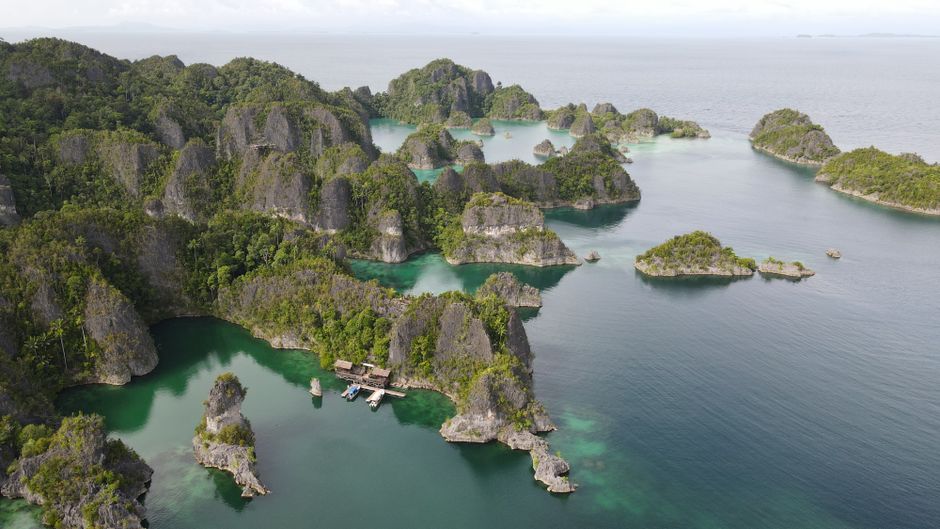
Raja Ampat, the “Four Kings,” is an archipelago of more than 1,500 islands, cays and reefs off the western tip of New Guinea, in Indonesia’s Southwest Papua province. Named for its four main islands, Waigeo, Batanta, Salawati and Misool, it sits at the heart of the Coral Triangle and is widely regarded as the richest marine area on Earth, with more species of reef fish and hard coral recorded than anywhere else. Above water, it is just as spectacular: jungle-covered limestone islets rise from turquoise lagoons at Wayag and Piaynemo, birds of paradise display in the forests of Waigeo, and Papuan villages on stilts welcome visitors to family-run homestays. Raja Ampat is remote and expensive to reach, via the city of Sorong, and it is a place for divers, snorkelers, nature lovers and travelers happy with simple comforts. Every visitor pays two separate conservation and tourism charges, which rose in 2026. The seas are calmest from about October to April, the main season for liveaboard dive boats.
Right now in Raja Ampat (Waisai)
- Wed25–31°C77–88°FPartly cloudy
- Thu25–31°C76–89°F1 mm rain
- Fri25–31°C77–88°FClear
Top tours in Raja Ampat
See all tours for Raja Ampat →
From local operators, with prices and reviews; you check availability and book on Viator, our partner. We may earn a commission at no extra cost to you. How we earn money
Raja Ampat at a glance
- Best for: diving and snorkeling, island scenery, birdwatching, homestays and liveaboard cruises.
- How long: at least 5–7 days on the islands, plus travel days; 10–14 for Misool or Wayag.
- Best time: October to April for calmer seas; June to September brings wind and rough water, especially in the south.
- Getting there: fly to Sorong (SOQ), usually via Jakarta, Makassar or Manado, then take the ferry to Waisai in about two hours.
- Getting around: by boat only: homestay and resort transfers, chartered speedboats or liveaboards.
- Good to know: Raja Ampat is on Eastern Indonesia Time (UTC+9); bring enough cash for your whole stay.
- Before you go: visas, the arrival card, money and general safety are in our Indonesia travel guide.
Fees, permits and rules (as of October 2026)
Raja Ampat charges two separate fees, collected by two different authorities. Carry proof of both throughout your stay; rangers and homestay owners may ask to see them.
The marine park fee (formerly the PIN or tag)
The BLUD UPTD for the Management of the Raja Ampat Islands Marine Protected Areas, under the provincial government of Southwest Papua, sells the environmental service fee, now called the Marine Park Fee (Tanda Layanan Pemeliharaan Jasa Lingkungan, or TLPJL), which replaced the old PIN or plastic tag. It funds patrols, reef monitoring and management of the marine protected areas, which the authority says cover about 1.66 million hectares of the archipelago’s waters. Buy it online at the authority’s official website, kkprajaampat.id, before you travel, uploading a photo of each visitor’s passport (up to 10 visitors per order), or at its office in Waisai, open Monday to Friday from 8 a.m. to 4 p.m. The website shows the price only during booking; travel operators reported it at about 700,000 rupiah for foreign visitors in early 2026, so check the current amount when you book.
The regency tourism levy
Separately, the Raja Ampat Regency government charges a tourism and recreation levy. Under Regent Regulation 34 of 2025, presented to the tourism industry on January 7, 2026, the levy is 1,000,000 rupiah (about US$56) per foreign visitor and 300,000 rupiah per domestic visitor, according to the regent’s statement to the state radio broadcaster RRI; children under 12 are reported to be exempt. Fifteen percent of the levy is earmarked for local communities and tourist sites. It is usually paid on arrival at Waisai port, or through your homestay, resort or liveaboard.
Rules in the marine protected areas
- Don’t touch, stand on or collect coral, shells or marine life; don’t feed fish.
- Use reef-safe sunscreen and don’t drop anchors on reefs; use moorings.
- Keep a respectful distance from manta rays and turtles, and don’t chase them.
- Fishing is restricted in the protected zones, and some areas are closed by village customary law (sasi).
- Take your plastic waste back to the mainland when you can.
- Drones may need permits at some sites; ask your operator.
Raja Ampat’s areas: where things are
Waisai and southern Waigeo
Waisai, on Waigeo, is the regency capital and ferry port, with the fee offices, a few hotels, shops, ATMs and the Waisai Torang Cinta beach. Most homestays and resorts are a short boat ride away.
The Dampier Strait: Kri, Mansuar, Gam and Arborek
Between Waigeo and Batanta, the Dampier Strait has the densest concentration of dive sites, homestays and resorts, with famous reefs such as Cape Kri, Blue Magic and Sardine Reef, the manta-cleaning stations near Arborek, and the village of Sawinggrai, known for birds of paradise.
Piaynemo and the Fam Islands
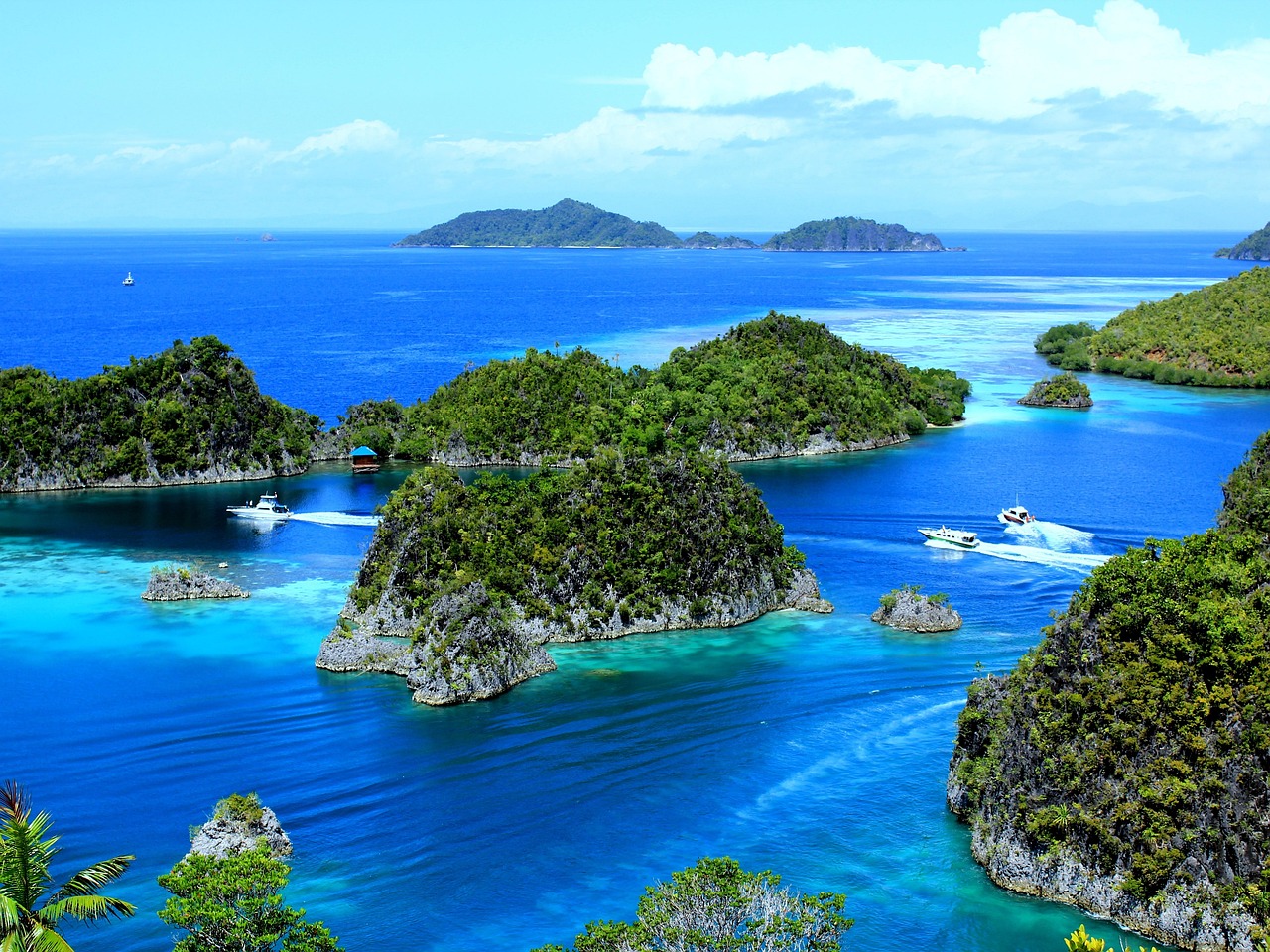
West of Gam, the Fam Islands include Piaynemo, whose viewpoint over a lagoon of karst islets is Raja Ampat’s postcard image, reached by a wooden staircase.
Wayag
In the far north, a remote cluster of steep limestone islets, reached by long boat trips or liveaboards, with climbs to viewpoints over its maze of lagoons.
Misool
The southern island group, 3–4 hours by boat from Waisai, with sea caves, rock art, hidden lagoons and some of the healthiest soft coral in the region, protected by a long-running community no-take zone.
Batanta and Salawati
Large, forested islands closer to Sorong, with waterfalls, wildlife and fewer visitors.
Top things to see in Raja Ampat
Diving the Dampier Strait
Strong currents carry nutrients that feed huge schools of fish, sharks, turtles and manta rays. Cape Kri is famous for one of the highest counts of fish species ever recorded on a single dive, and Manta Sandy and Manta Ridge are cleaning stations where reef mantas gather. Many sites suit experienced divers because of the currents; beginners can dive sheltered reefs near the homestays.
Snorkeling from the shore
You don’t need to dive: house reefs below homestay jetties and the shallow reefs around Arborek, Friwen and Yenbuba are full of fish and corals, and you may see blacktip reef sharks in the shallows.
The Piaynemo viewpoint
A climb of about 320 steps leads to a platform overlooking a lagoon studded with mushroom-shaped islets, one of the most photographed views in Indonesia. A small fee is often charged by the local community.
Birds of paradise
At dawn, local guides lead walks in the forests near Sawinggrai, Saporkren and other villages to watch the Wilson’s bird-of-paradise and the red bird-of-paradise perform their courtship displays; the red bird-of-paradise is found only in this region.
Wayag
The ultimate Raja Ampat landscape: a jagged maze of karst islands and lagoons, best seen from the climb to the viewpoint. Trips usually take a full day or longer from the Dampier Strait.
More classic sights
- Kabui Bay and the Passage: narrow channels between Gam and Waigeo lined with mangroves and karst walls.
- Arborek: a tidy village with handicrafts, a jetty full of fish and mantas nearby.
- Misool’s caves and rock art: ancient handprints painted on cliffs, and lagoons such as Lenmakana and Tomolol.
- Telaga Bintang: a star-shaped lagoon seen from a viewpoint in the Fam Islands.
- Waisai Torang Cinta beach: a white-sand beach and park in the regency capital.
Diving, snorkeling and boat trips
There are three main ways to explore: staying at a dive resort, which organizes everything; staying at a village homestay, mostly simple wooden huts on the beach with meals, where dives and snorkeling trips are arranged with local operators; or joining a liveaboard cruise from Sorong, which reaches remote sites such as Misool and Wayag. Book dives, transfers and liveaboards well in advance for the high season. See our guides to diving, snorkeling and boat trips.
Other things to do in Raja Ampat
Food and drink
Meals are usually included at homestays and resorts: fresh fish, rice, vegetables, papeda (sago porridge) and sambal, with fruit such as bananas and papaya. Variety is limited away from Waisai, so bring snacks and any special foods you need. Alcohol is rarely sold in villages, and some communities don’t allow it; bring your own discreetly only if your host agrees.
Village life and culture
Most Raja Ampat people are Papuan Christians, with Muslim communities in some areas such as Misool. Sunday is a day of church and rest, and some villages limit activities then. Ask before photographing people, dress modestly in villages, and respect customary marine closures (sasi).
Hiking and kayaking
Short jungle walks lead to viewpoints and waterfalls on Waigeo and Batanta, and sea kayaking between homestays is possible with local operators in calm months.
Side trips from Raja Ampat
- Sorong: the gateway city on the Bird’s Head peninsula, with seafood night markets on the waterfront at Tembok Berlin and simple hotels for overnight stops.
- Batanta: forest walks to waterfalls and good birding, an hour or so by boat from Waisai.
- Misool: a separate trip of several days in the south, by boat from Waisai or Sorong, or on a liveaboard.
- Wayag: a long day trip or overnight from the Dampier Strait, best shared with other travelers.
- Cenderawasih Bay: whale sharks around fishing platforms, reached on specialist liveaboards from Sorong or Manokwari.
Getting there and getting around
Flights to Sorong
Domine Eduard Osok Airport (SOQ) in Sorong, on the Bird’s Head peninsula of New Guinea, has flights from Jakarta (often overnight, about 4–5 hours), Makassar, Manado and Ambon. There are no direct international flights, so most visitors connect in Jakarta or Makassar, or via Bali with a change. Plan a buffer night in Sorong, especially before liveaboards and international flights home.
The ferry to Waisai
Express ferries cross from Sorong’s harbor to Waisai in about two hours, usually twice a day, with economy and VIP classes; slower boats run too. Seas can be rough, so take medication if you get seasick. From Waisai, homestays and resorts collect guests by speedboat; arrange your pickup in advance.
Getting around the islands
There are no roads between islands: everything is by boat. Homestays charge for transfers and trips, chartered speedboats are expensive because of fuel costs, and long trips to Wayag or Misool are best combined with others or done by liveaboard.
When to go and how long to stay
Raja Ampat lies just south of the equator and is hot and humid all year, with rain in every month. The calmest seas are generally from October to April, the main season for liveaboards; from about June to September, the southeast monsoon brings strong winds and rough seas, especially around Misool and the open passages, though the Dampier Strait remains diveable. BMKG has no published 1991–2020 normals for the islands, so the table combines average highs and lows calculated from BMKG’s 1991–2020 observations at Sorong/Jefman (WMO 97502), from NOAA’s global daily records, with satellite-based rainfall averages from NASA’s POWER project for Waisai. Rainfall varies a lot between islands.
| Month | Average high / low | Rain (satellite average) | What to expect |
|---|---|---|---|
| January | 32 °C (89 °F) / 24 °C (76 °F) | 162 mm (6.4 in) | Calm seas; liveaboard season |
| February | 31 °C (88 °F) / 24 °C (76 °F) | 168 mm (6.6 in) | Good diving; occasional storms |
| March | 31 °C (89 °F) / 25 °C (76 °F) | 205 mm (8.1 in) | Good conditions; manta season in the strait |
| April | 31 °C (89 °F) / 25 °C (76 °F) | 214 mm (8.4 in) | End of the main season |
| May | 32 °C (89 °F) / 25 °C (76 °F) | 268 mm (10.6 in) | Wetter; winds start to build |
| June | 31 °C (87 °F) / 24 °C (76 °F) | 330 mm (13.0 in) | Southeast monsoon; rough in the south |
| July | 30 °C (87 °F) / 24 °C (75 °F) | 321 mm (12.6 in) | Windy; some liveaboards leave |
| August | 30 °C (87 °F) / 24 °C (75 °F) | 238 mm (9.4 in) | Rough seas on open crossings |
| September | 31 °C (88 °F) / 24 °C (75 °F) | 238 mm (9.4 in) | Winds easing |
| October | 32 °C (89 °F) / 24 °C (76 °F) | 170 mm (6.7 in) | Season begins; calm seas |
| November | 32 °C (89 °F) / 24 °C (76 °F) | 177 mm (7.0 in) | Excellent diving |
| December | 32 °C (89 °F) / 25 °C (76 °F) | 183 mm (7.2 in) | Peak liveaboard season; holidays |
The figures add up to about 2,670 mm (105 in) of rain a year. Water temperatures stay around 27–30 °C (81–86 °F) all year.
5 days in the Dampier Strait
Day one, ferry from Sorong to Waisai and a boat to your homestay on Kri, Mansuar or Gam. Days two to four, dives or snorkeling trips at Cape Kri, Blue Magic and the manta stations, a dawn bird-of-paradise walk and a trip to Piaynemo. Day five, the morning boat back to Waisai and the ferry to Sorong.
10 days or more
Add a trip to Wayag or a few nights in Misool, or join a 7–10-night liveaboard from Sorong that covers both the north and the south.
Where to stay
- Village homestays: simple, family-run huts on the beach with meals included, mostly in the Dampier Strait and on Gam, Kri, Mansuar and Arborek.
- Dive resorts: from mid-range eco-lodges to luxury island resorts, with dives and transfers included.
- Waisai: a few hotels, useful for late ferries.
- Liveaboards: traditional pinisi schooners and modern boats sailing from Sorong.
- Sorong: city hotels for overnight stops.
What a trip to Raja Ampat costs
Prices are approximate, for October 2026, converted at about 17,900 rupiah to the US dollar.
| Item | Typical cost |
|---|---|
| Regency tourism levy, foreign visitor | 1,000,000 rupiah (about US$56) |
| Marine Park Fee (TLPJL), foreign visitor | about 700,000 rupiah (about US$39), check when booking |
| Express ferry, Sorong to Waisai, one way | about 150,000–300,000 rupiah (about US$8.40–17) |
| Homestay, per person per night with meals | 400,000–700,000 rupiah (about US$22–39) |
| Boat transfer, Waisai to a Dampier Strait homestay | 300,000–1,000,000 rupiah per boat (about US$17–56) |
| Day trip to Piaynemo, shared boat | 500,000–1,500,000 rupiah per person (about US$28–84) |
| Single fun dive with equipment | 700,000–1,200,000 rupiah (about US$39–67) |
| Dive resort, per person per night with meals | 2,500,000 rupiah and up (about US$140 and up) |
| Liveaboard, per person per night | 3,500,000–10,000,000 rupiah (about US$195–560) |
Practical tips for Raja Ampat
- Cash: ATMs exist only in Sorong and Waisai; bring enough rupiah for homestays, boats and fees.
- Connectivity: mobile signal is patchy or absent on many islands; download maps and tell people you’ll be offline.
- Book ahead: homestays, transfers and liveaboards fill up from October to April.
- Fees: keep your Marine Park Fee and levy receipts with you.
- Weather days: leave a spare day before your flight out of Sorong in case boats are canceled.
Safety
Raja Ampat is peaceful, and the main risks come from remoteness and the sea. Diving: currents in the Dampier Strait can be very strong; dive with reputable operators, carry a surface marker buoy, and stay within your training and limits. Medical facilities are very limited, and serious injuries or decompression illness require evacuation, so buy insurance that covers diving and medical evacuation. Boats: crossings in small boats can be rough; insist on life jackets and avoid traveling in bad weather or after dark. Health: malaria is present in Papua, along with dengue; use repellent, cover up at dusk and ask a travel clinic about prevention. Treat cuts quickly in the tropical heat. Sun: the equatorial sun is intense; use a rash guard and reef-safe sunscreen. Respect: follow village rules and customary closures. In an emergency, call 112, but expect help to take time to arrive.
What to pack for Raja Ampat
Mask, snorkel and fins (or rent locally), a rash guard and reef-safe sunscreen, a dry bag, a light rain jacket, insect repellent, a headlamp, a basic first-aid kit and any medication, seasickness tablets, modest clothes for villages, a power bank and enough cash. Indonesia uses 230 V and round two-pin plugs, but many homestays have power only in the evening.
Raja Ampat travel FAQ
How much is the Raja Ampat entry fee in 2026?
There are two charges: the regency tourism levy of 1,000,000 rupiah (about US$56) per foreign visitor under a 2025 regent’s regulation, and the separate Marine Park Fee sold at kkprajaampat.id, reported at about 700,000 rupiah for foreign visitors. Check current amounts before you go.
What is the Raja Ampat Marine Park Fee?
The environmental service fee, formerly called the PIN or tag, sold by the marine protected area authority online at kkprajaampat.id or in Waisai, to fund patrols and reef management.
How do I get to Raja Ampat?
Fly to Sorong (SOQ), usually via Jakarta, Makassar or Manado, then take the express ferry to Waisai in about two hours and a boat to your homestay or resort.
When is the best time to visit Raja Ampat?
October to April, when seas are generally calmest; June to September brings wind and rough crossings, especially in the south around Misool.
Can I visit Raja Ampat without diving?
Yes. Snorkeling from homestay jetties is excellent, and the viewpoints, lagoons, birds of paradise and village life are worth the trip on their own.
How many days do I need in Raja Ampat?
At least five to seven days on the islands, plus travel days to and from Sorong; 10–14 days to include Wayag or Misool.
Is Raja Ampat expensive?
Getting there and boat transport are costly, but homestays with meals are reasonably priced. Fees, dives and liveaboards add most to a budget.
What time zone is Raja Ampat in?
Eastern Indonesia Time (UTC+9), two hours ahead of Jakarta and one hour ahead of Bali.
Is there malaria in Raja Ampat?
Malaria is present in Papua. Use insect repellent, cover up in the evening and ask a travel clinic whether you need preventive medication.
Do I need cash in Raja Ampat?
Yes. Most homestays and boat operators accept only cash, and the only ATMs are in Sorong and Waisai.
Plan your trip
Partner links: TravelerCenter may earn a commission if you book, at no extra cost to you.
🇮🇩 Useful Indonesian phrases for Raja Ampat
All 38 Indonesian phrases: restaurant, hotel, emergencies, romance (printable) →
Sources · last reviewed 4 October 2026
Researched and last reviewed on 4 October 2026. The Marine Park Fee, its online sale, group limit, office hours and the managed area: the BLUD UPTD for the Management of the Raja Ampat Islands MPAs (kkprajaampat.id); the regency tourism levy under Regent Regulation 34 of 2025 and its use: the Raja Ampat regent, as reported by RRI (the state radio broadcaster) on January 7, 2026; visas and the arrival card: the Directorate General of Immigration; the 2026–27 seasonal outlook: BMKG; exchange rate: Bank Indonesia. The Marine Park Fee’s amount (not shown on the official site outside a booking), the exemption for children, temperatures (own 1991–2020 averages of BMKG observations at Sorong/Jefman via NOAA GHCN-Daily), rainfall (NASA POWER satellite averages), ferry and flight details, species records and typical prices are secondary references or estimates, flagged for checking. Fees change, so check the official sites before you go. For entry rules, money and general safety, see our Indonesia travel guide.
Data: Weather: MET Norway (CC BY 4.0) · Sea temperature: NOAA CoastWatch · Rates: ECB · Costs: World Bank ICP and price levels · Wikidata (CC0)