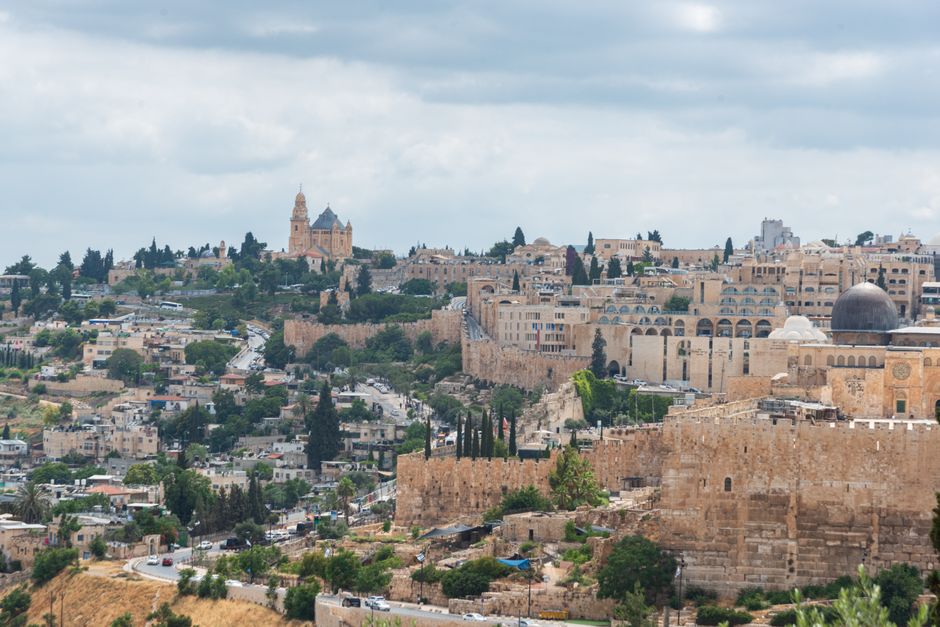
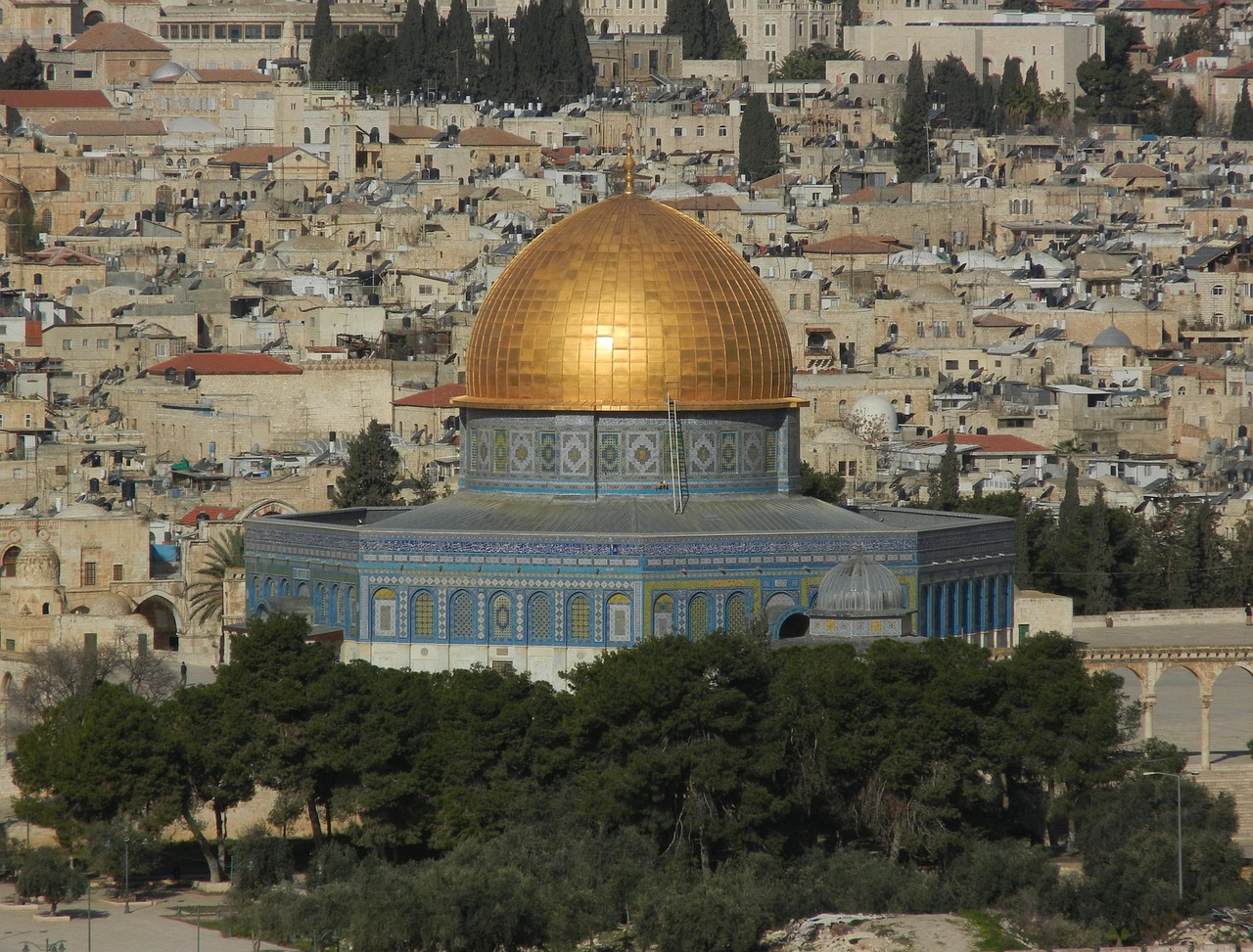
Israel, on the eastern shore of the Mediterranean, is a small country with an enormous concentration of history, faith and landscape. Jerusalem’s walled Old City holds sites sacred to Judaism, Christianity and Islam within a few hundred meters of each other: the Western Wall, the Church of the Holy Sepulchre and the Temple Mount / Haram al-Sharif. An hour away, Tel Aviv is a modern Mediterranean city of beaches, cafes, nightlife and white Bauhaus buildings, joined to the ancient port of Jaffa. In the east, the Dead Sea lies at the lowest point on Earth, with the clifftop fortress of Masada and the oasis of Ein Gedi above its shore; in the south, the Negev desert has the vast Ramon Crater and leads to Eilat, a resort on the Red Sea with coral reefs off its beaches. In the north, Haifa’s terraced Bahá’í Gardens, the crusader port of Acre, Nazareth and the Sea of Galilee draw pilgrims and hikers alike. Distances are short, trains and buses are good, and English is widely spoken. Visitors from visa-exempt countries now need an electronic travel authorization, the ETA-IL, before they fly. Plan around Shabbat, when most public transport stops from Friday afternoon to Saturday evening, around the seasons, and around the regional situation: flights and border crossings can be disrupted at short notice, so check their status before you travel.
Right now in Israel
- Wed 16–27°C 60–80°F Clear
- Thu 17–28°C 63–83°F Clear
- Fri 18–28°C 64–83°F Clear
Weather: MET Norway (CC BY 4.0)
Multi-day tours of Israel
Multi-day tours from local operators. You check dates and book on Viator, our partner; we may earn a commission at no extra cost to you. How we earn money
Israel at a glance: districts and regions
Israel is compact: Tel Aviv to Jerusalem takes about an hour by road or about half an hour by train, and Eilat is about a four-hour drive south of Tel Aviv. The population is about 10 million. Hebrew and Arabic are the main languages, and English is widely spoken, especially in tourism. The country is divided into six administrative districts. Its landscapes range from the green hills of the Galilee and the Mediterranean coastal plain to the Judean Hills around Jerusalem, the deep rift of the Jordan Valley and the Dead Sea, and the Negev desert, which covers much of the south down to the Red Sea at Eilat.
Time and the weekend: Israel uses Israel Standard Time (UTC+2), with daylight saving time (UTC+3) from late March to late October. The weekend is Friday and Saturday, and Shabbat, the Jewish day of rest, runs from sunset on Friday to nightfall on Saturday, when many businesses close and most public transport stops.
The main regions for visitors
- Jerusalem: the Old City with its four quarters and holy sites, the Mount of Olives, the Israel Museum, Yad Vashem, Mahane Yehuda market and the modern center.
- Tel Aviv and the coast: Tel Aviv’s beaches, White City and Jaffa; Caesarea’s Roman ruins; and Haifa, Acre and the northern coast.
- The Galilee: Nazareth, the Sea of Galilee and its Christian sites, Tiberias, Safed and hiking trails.
- The Dead Sea: the resorts of Ein Bokek, Masada, Ein Gedi and the Judean Desert.
- The Negev: Beersheba, the Ramon Crater and the Incense Route’s desert cities.
- Eilat and the Red Sea: coral reefs, beaches and Timna Park.
Where to go: holy cities, the coast, the desert and the Red Sea
For a first trip of a week to ten days, most visitors combine Jerusalem with Tel Aviv and Jaffa, a day at the Dead Sea and Masada, and a few days in the Galilee or Haifa; Eilat and the Negev add sun and desert.
Jerusalem
The Old City’s walls enclose the Jewish, Christian, Muslim and Armenian quarters, with the Western Wall, the Church of the Holy Sepulchre and the Temple Mount / Haram al-Sharif, plus the Via Dolorosa and the Tower of David. Outside the walls are the Mount of Olives, the Israel Museum with the Dead Sea Scrolls, Yad Vashem and the lively Mahane Yehuda market. See our Jerusalem guide.
Tel Aviv and Jaffa
Tel Aviv has about 14 km (9 miles) of city beaches, a promenade, the “White City” of Bauhaus-style buildings listed by UNESCO in 2003, the Carmel Market, museums, restaurants and nightlife. The old port of Jaffa, at its southern end, has a restored old town, flea market and harbor. Ben Gurion Airport is about 20 minutes away. See our Tel Aviv guide.
Eilat and the Red Sea
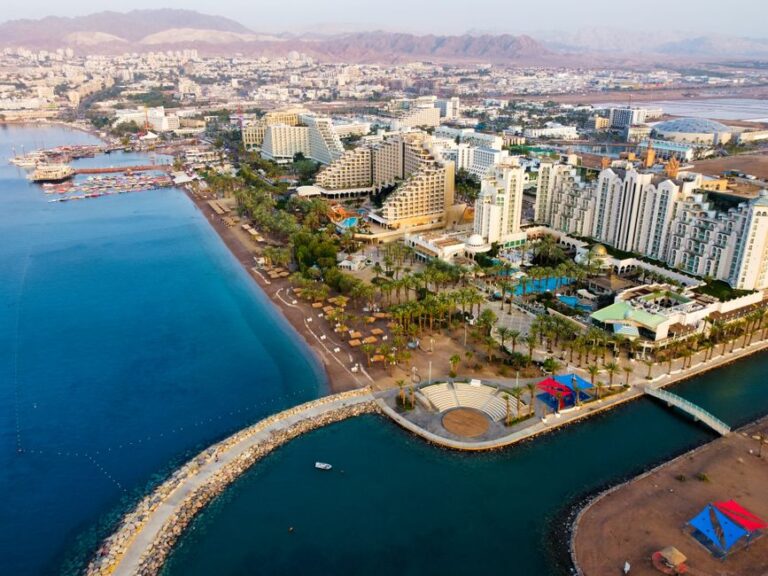
At the southern tip of the country, Eilat has the Coral Beach Nature Reserve, the Underwater Observatory, the Dolphin Reef, VAT-free shopping and the desert landscapes of Timna Park nearby. It’s served by Ramon Airport. See our Eilat guide.
The Dead Sea, Masada and Ein Gedi
About 1.5 hours from Jerusalem, the Dead Sea’s Israeli shore has the hotel strip of Ein Bokek, free public beaches and spa treatments. Masada, a UNESCO World Heritage Site, is a palace-fortress built by Herod the Great on a desert mesa; climb at dawn by the Snake Path or take the cable car. Ein Gedi has waterfalls, ibex and short trails.
Haifa, Acre and Caesarea
Haifa’s Bahá’í Gardens step down Mount Carmel in 19 terraces and are part of a UNESCO site. The Old City of Acre, also UNESCO-listed, has crusader halls, a harbor and Ottoman walls. Caesarea has a Roman theatre, hippodrome and harbor by the sea.
Nazareth and the Sea of Galilee
Nazareth’s Basilica of the Annunciation and old market, and the lakeside sites of Capernaum, Tabgha and the Mount of Beatitudes, draw Christian pilgrims. Tiberias is the lake’s main town.
The Negev and the Ramon Crater
The Ramon Crater (Makhtesh Ramon), near Mitzpe Ramon, is a huge erosion crater about 40 km (25 miles) long, with hiking, jeep tours and stargazing. The Nabataean towns of Avdat and Shivta, on the UNESCO-listed Incense Route, lie nearby.
Eilat Travel Guide
Plan a trip to Eilat on the Red Sea: snorkeling at the Coral Beach Nature Reserve, the Underwater Observatory, the Dolphin Reef, diving sites,…
Jerusalem Travel Guide
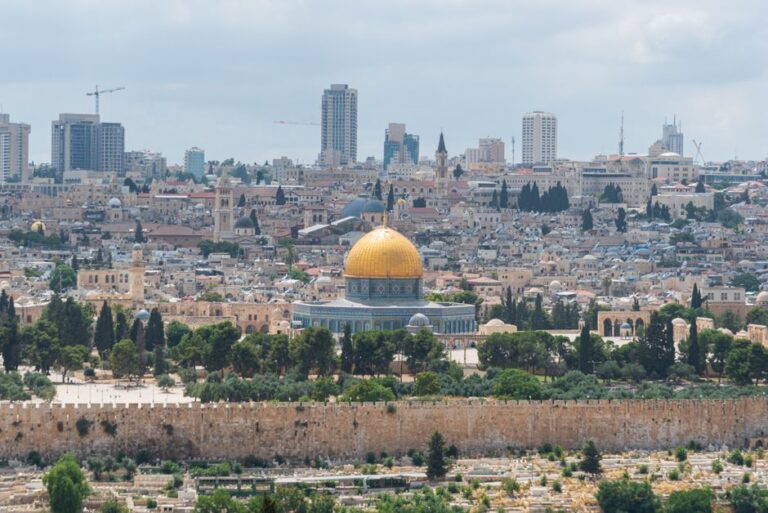
Plan a trip to Jerusalem: the Old City's quarters, the Western Wall and its visitor rules, the Church of the Holy Sepulchre, Temple Mount…
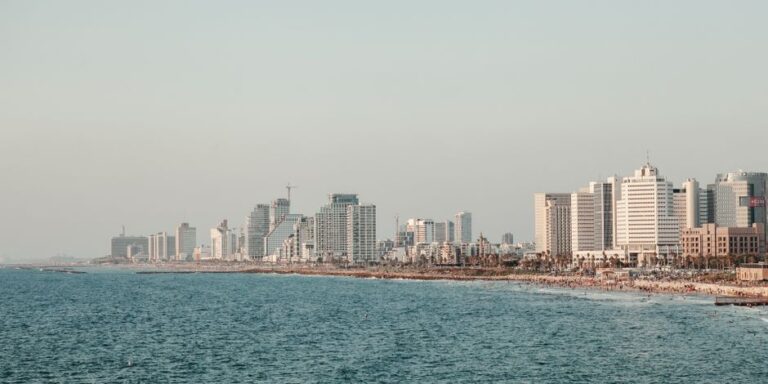
Tel Aviv Travel Guide
Plan a trip to Tel Aviv: the beaches and promenade, the UNESCO-listed White City, Old Jaffa, the Carmel Market, museums and nightlife, where to…
Best time to visit Israel
Spring (March to May) and autumn (September to November) are the best seasons for touring, with warm days and little rain. Summer (June to August) is hot and humid on the coast, with average highs of about 29–30 °C (84–86 °F) in Tel Aviv, cooler and drier in Jerusalem, and very hot at the Dead Sea and in Eilat, where average highs reach 40–41 °C (104–106 °F). Winter (December to February) is the rainy season in the north and center: Jerusalem gets most of its roughly 525 mm (21 in) of rain a year then, with average lows of about 7 °C (44 °F) and occasional snow, while Eilat and the Dead Sea stay mild and sunny, with average highs of about 21–24 °C (70–75 °F).
| Month | Jerusalem: high / low | Tel Aviv coast: high / low | Eilat: high / low | Dead Sea (Sedom): high / low |
|---|---|---|---|---|
| January | 13 / 7 °C (55 / 44 °F) | 18 / 11 °C (64 / 51 °F) | 22 / 11 °C (71 / 51 °F) | 21 / 13 °C (70 / 56 °F) |
| February | 14 / 7 °C (57 / 45 °F) | 18 / 11 °C (65 / 52 °F) | 24 / 12 °C (74 / 54 °F) | 22 / 15 °C (72 / 59 °F) |
| March | 17 / 10 °C (63 / 49 °F) | 20 / 13 °C (68 / 56 °F) | 27 / 15 °C (81 / 59 °F) | 26 / 18 °C (79 / 65 °F) |
| April | 22 / 12 °C (72 / 54 °F) | 22 / 16 °C (72 / 60 °F) | 32 / 19 °C (89 / 66 °F) | 31 / 22 °C (87 / 71 °F) |
| May | 26 / 16 °C (79 / 61 °F) | 25 / 19 °C (77 / 66 °F) | 36 / 23 °C (97 / 73 °F) | 35 / 26 °C (95 / 78 °F) |
| June | 29 / 18 °C (83 / 65 °F) | 27 / 22 °C (81 / 72 °F) | 39 / 25 °C (103 / 78 °F) | 39 / 28 °C (102 / 83 °F) |
| July | 30 / 20 °C (86 / 68 °F) | 29 / 24 °C (84 / 76 °F) | 41 / 27 °C (105 / 81 °F) | 41 / 30 °C (106 / 87 °F) |
| August | 30 / 20 °C (87 / 68 °F) | 30 / 25 °C (86 / 77 °F) | 40 / 28 °C (105 / 82 °F) | 40 / 31 °C (105 / 88 °F) |
| September | 29 / 19 °C (84 / 66 °F) | 29 / 24 °C (84 / 75 °F) | 38 / 26 °C (100 / 78 °F) | 38 / 29 °C (100 / 85 °F) |
| October | 26 / 17 °C (79 / 63 °F) | 27 / 21 °C (81 / 69 °F) | 34 / 22 °C (93 / 72 °F) | 34 / 26 °C (92 / 79 °F) |
| November | 20 / 13 °C (68 / 55 °F) | 24 / 16 °C (75 / 61 °F) | 28 / 17 °C (83 / 62 °F) | 28 / 20 °C (82 / 68 °F) |
| December | 15 / 9 °C (59 / 48 °F) | 20 / 12 °C (67 / 54 °F) | 23 / 12 °C (74 / 54 °F) | 22 / 15 °C (72 / 59 °F) |
| Rain a year | 526 mm (20.7 in) | 532 mm (21 in) | 23 mm (0.9 in) | 41 mm (1.6 in) |
The temperatures are average daily highs and lows from the 1991–2020 climate normals the Israel Meteorological Service submitted to the World Meteorological Organization for Jerusalem, Tel Aviv Coast, Eilat and Sedom at the southern end of the Dead Sea. Tel Aviv’s rainfall is from the nearby Mikve Israel station.
Crowds and prices through the year
- Peak (March to May and September to November): pilgrim groups and the main Jewish holidays; book Jerusalem hotels early.
- Jewish holidays: Passover in spring and the autumn holidays of Rosh Hashanah, Yom Kippur and Sukkot bring higher prices and full hotels; on Yom Kippur, the country almost completely shuts down, with no transport, and the airport closes.
- Summer: beach season in Tel Aviv and Eilat, with school holidays in July and August.
- Winter: quieter and cheaper in Jerusalem and the north; the season in Eilat and at the Dead Sea.
Festivals and events
- Christmas in Nazareth and Jerusalem (December): services and celebrations at the main churches.
- Easter and Holy Week (spring): processions in Jerusalem’s Old City; Orthodox Easter often falls on a different date.
- Jewish holidays: Passover, Shavuot, Rosh Hashanah, Yom Kippur, Sukkot and Hanukkah, each with its own customs and closures.
- Ramadan (in 2027 expected from about 8 February to 9 March): evening celebrations in Arab towns and in Jerusalem’s Old City.
- Tel Aviv Pride (usually June): one of the largest Pride events in the region.
Public holidays
On Jewish holidays, businesses, government offices and many sites close and public transport stops, as on Shabbat. Dates follow the Hebrew calendar and change each year; check them before you book. Muslim and Christian holidays are observed in their communities.
How long to stay: sample itineraries
5 days: Jerusalem, Tel Aviv and the Dead Sea
Two days in Jerusalem for the Old City, the Western Wall, the Holy Sepulchre, the Mount of Olives and the Israel Museum; a day trip to Masada, Ein Gedi and the Dead Sea; and two days in Tel Aviv and Jaffa.
8 to 10 days: the classic circuit
Add Caesarea, Haifa’s Bahá’í Gardens and Acre, a night in Nazareth or by the Sea of Galilee, and a night in the Ramon Crater or at the Dead Sea.
3 to 4 days: Eilat and the Red Sea
Fly to Ramon Airport for snorkeling at Coral Beach, the Underwater Observatory, the Dolphin Reef and a desert trip to Timna Park.
Combining Israel with other countries
Israel has land crossings to Jordan and Egypt, but they can close at short notice; check their status before you plan. See our Jordan, Petra and Aqaba guides, and for Sinai, our Egypt and Dahab guides. Cyprus is a short flight away; see our Cyprus guide.
Entry, money and costs
Entry: visa exemptions and the ETA-IL (last reviewed October 2026)
Since January 2025, visitors from visa-exempt countries, including the US, Canada, the UK, EU countries and Australia, must get an ETA-IL (Electronic Travel Authorization) from the Population and Immigration Authority before they travel. Other nationalities need a visa.
- Cost and validity: the ETA-IL costs ILS 25 (about US$8), non-refundable, and is valid for multiple visits over up to two years, or until your passport expires, whichever comes first.
- Length of stay: up to 90 days per visit; longer stays need an extension from the Population and Immigration Authority.
- Passport: must be valid for at least three months from the date of arrival.
- When to apply: most applicants get an answer immediately, but it can take up to 72 hours. The authority recommends applying at least 72 hours before booking flights and hotels. Apply only on the official government site.
- Exceptions: Israeli citizens and holders of an Israeli identity number don’t need an ETA-IL. An approved ETA-IL doesn’t guarantee entry.
At Ben Gurion Airport, visitors receive a paper entry card instead of a passport stamp; keep it with your passport until you leave. Expect detailed security questioning and baggage checks when you arrive and depart, and allow extra time, especially during holidays and summer. Children under 18 traveling alone or with one parent should carry a consent letter.
Customs
Declare goods that may be prohibited or dutiable, and check the Israel Tax Authority’s rules on carrying cash. Exporting antiquities requires a permit.
Money and cards
The currency is the new Israeli shekel (ILS, also written NIS or ₪), divided into 100 agorot. The Bank of Israel’s representative rate was about ILS 3.06 to the US dollar in early October 2026. Cards, including contactless payments, are accepted almost everywhere, and ATMs are common. Prices are high by regional standards, especially in Tel Aviv. Eilat is exempt from VAT.
Tipping
In restaurants, a tip of about 10–15% is expected if service isn’t included. Round up taxi fares, and tip guides and drivers at the end of a tour.
Typical travel costs
| Item (as of October 2026) | Israeli shekels | About US dollars |
|---|---|---|
| ETA-IL | ILS 25 | $8 |
| Train, Tel Aviv–Ben Gurion Airport, single | ILS 11.50 | $3.80 |
| Train, Tel Aviv–Jerusalem, single | ILS 27 | $8.80 |
| Bus or light rail ride within a city | ILS 8 | $2.60 |
| Daily public transport pass within a city (without train) | ILS 17.50 | $5.70 |
| Masada National Park, adult (without cable car) | ILS 37 | $12 |
| Yad Vashem | free (reservation required) | free |
| Casual restaurant meal | about ILS 60–120 | about $20–40 |
| Mid-range hotel room, per night | about ILS 700–1,300 | about $230–425 |
Transport fares are from Rav-Kav Online, the authorized Rav-Kav loading service; the ETA-IL fee from the Population and Immigration Authority; Masada from the Israel Nature and Parks Authority; and Yad Vashem from the museum. Meals and hotels are typical ranges.
Getting there and getting around
Arrival airports
Ben Gurion International Airport (TLV), about 20 km (12 miles) southeast of Tel Aviv, is the main gateway, with a railway station inside the terminal on the line between Tel Aviv and Jerusalem. Ramon Airport (ETM), about 20 minutes north of Eilat, serves domestic flights from Tel Aviv and some international routes.
Flight disruptions
Since early 2026, regional tensions have led to periodic airspace closures across the Middle East, and flights to and from Israel have been delayed, rerouted or canceled at short notice. Some airlines suspend or reduce routes at times. Check your flight with the airline and the airport’s status before you travel, and have a plan if your flight is canceled.
Land borders
Israel’s crossings to Jordan are the Yitzhak Rabin (Wadi Araba) crossing near Eilat, the Jordan River (Sheikh Hussein) crossing in the north and the Allenby (King Hussein) Bridge in the Jordan Valley; the Taba crossing near Eilat leads to Egypt’s Sinai, with separate Egyptian border charges paid in cash. Crossings can close at short notice, including on holidays and during strikes; check their status before you travel.
Trains
Israel Railways runs fast, modern trains along the coast from Nahariya through Haifa and Tel Aviv, and a high-speed line from Tel Aviv via Ben Gurion Airport to Jerusalem’s Yitzhak Navon station, deep under the city’s entrance, taking about half an hour from Tel Aviv. Trains also run to Beersheba. They don’t run on Shabbat, from Friday afternoon to Saturday evening, or on Jewish holidays.
Buses, light rail and the Rav-Kav card
Buses cover the whole country, and Jerusalem and Tel Aviv have light rail lines. You pay with a Rav-Kav smart card, sold and loaded at kiosks, Casponet machines and stations, or loaded with the Rav-Kav Online app. Load stored value (ILS 30–300) or a daily pass; a city ride costs ILS 8, and transfers between city buses within 90 minutes are free. Children under 5 ride free. Like trains, most buses stop on Shabbat, although shared taxis (sheruts) run on some routes.
Taxis and driving
Taxis should use the meter; ride-hailing apps such as Gett are widely used. Driving is a good way to see the Galilee, the Negev and the Dead Sea. Traffic drives on the right, police use speed cameras, and you need your license and, for some visitors, an International Driving Permit. Check that your rental insurance covers where you plan to go, as some areas require checking access or aren’t covered. Avoid driving into ultra-Orthodox neighborhoods of Jerusalem on Shabbat. In the desert, travel with others, carry water and a phone, and tell someone your plans.
Culture, food and everyday etiquette
A meeting place of faiths
Israel’s population is mostly Jewish, with large Muslim, Christian, Druze and other communities, and religious customs shape daily life. In Jerusalem, Safed and religious neighborhoods, dress modestly, covering shoulders, upper arms and knees; ask before photographing people in Orthodox Jewish and Muslim areas; and respect Shabbat by not driving, smoking or using phones loudly in religious areas. In Arab towns and the Old City’s Muslim Quarter, Friday is the main day of prayer.
Food and drink
Israeli food mixes Middle Eastern, North African and European Jewish traditions: hummus, falafel and sabich (pita with fried eggplant and egg), shakshuka for breakfast, shawarma, grilled meats, fresh salads, and Jerusalem’s bagel-shaped sesame breads. Tel Aviv has a renowned restaurant scene, and markets such as Mahane Yehuda and Carmel are food destinations in themselves. Many restaurants are kosher, which means no mixing of meat and dairy, and many kosher places close on Shabbat; non-kosher restaurants are common in Tel Aviv. Israel produces good wines, and alcohol is widely available.
Shabbat in practice
From Friday afternoon, shops close and public transport winds down; Saturday is quiet in Jerusalem, while Tel Aviv, Jaffa, Haifa and Arab towns are livelier. Many museums and cafes open on Saturday, and hotels serve meals. Plan travel days and airport transfers around Shabbat, and stock up on Friday morning.
Where to stay
Jerusalem has hotels from the Old City’s Christian hospices and guesthouses to boutique and luxury hotels in the center. Tel Aviv has beachfront hotels, boutique hotels in old Bauhaus buildings and hostels. Eilat has resort hotels along the northern beach and the coral coast. The Dead Sea has resorts at Ein Bokek, the Galilee has kibbutz guesthouses and B&Bs, and the Ramon Crater has eco-lodges and desert camps. Prices rise sharply on Jewish holidays.
Laws visitors need to know
- ID: carry your passport or a copy with your entry card.
- Drugs: possession can lead to prison sentences.
- Photography: don’t photograph military or police personnel or installations.
- Antiquities and wildlife: buying and exporting antiquities needs a permit, and wildlife laws carry heavy fines.
- LGBT+ travelers: same-sex relations are legal, and Tel Aviv has a large LGBT+ community; religious and conservative areas are less accepting of public affection.
Safety, health, accessibility and connectivity
Safety
Street crime is low in Israel, though theft from beaches is common. The main concerns for visitors are the regional situation, the desert climate, the sea and local customs.
- Official alerts: follow instructions from the local authorities, including official alerts sent to phones.
- Closed areas: some areas, including parts of the north and the south near the borders, are closed to visitors or require checking access before you go. Roads can close at short notice.
- Border crossings and flights: land crossings and airspace can close at short notice; check status before you travel.
- Jerusalem’s Old City: entrances may have security checks or close at short notice; follow police instructions and avoid large gatherings.
- Shabbat closures: trains and most buses stop from Friday afternoon to Saturday evening and on Jewish holidays; plan travel and airport transfers so you aren’t stranded.
- Heat and desert: at the Dead Sea, in the Negev and in Eilat, summer highs reach about 40 °C (104 °F). Hike early, carry at least 3 liters of water, and follow park opening rules, which change with the heat. Flash floods can sweep through desert wadis after rain, mainly from October to April.
- Dead Sea floating: float on your back, don’t swim on your front or dive, keep the water out of your eyes and mouth, and use beaches with lifeguards and showers.
- Sea safety: on the Mediterranean, swim only at beaches with lifeguards and obey the flags, as rip currents are common. In the Red Sea, don’t touch coral and watch for boats.
- Dress codes: cover shoulders, upper arms and knees in Jerusalem and at religious sites.
- Emergencies: police 100, ambulance 101, fire 102.
Health and insurance
Healthcare is of a high standard but expensive for visitors, and hospitals may insist on payment. Buy travel insurance that covers treatment and evacuation. Tap water is safe to drink.
Accessibility
Newer trains, light rail, museums and many hotels are accessible. The Old City of Jerusalem has steep stone streets and steps, and some sites, such as Masada’s cable car, are accessible while the Snake Path is not.
Connectivity and power
Mobile coverage is excellent in cities and patchy in deep desert valleys. Prepaid SIM cards and eSIMs are widely sold. Power is 230 V, 50 Hz, with Israeli type H sockets, which also take two-pin European (type C) plugs.
Things to do: faith, history, beaches and desert
Israel’s highlights include the Old City of Jerusalem and its holy sites; Masada at sunrise and floating in the Dead Sea; Tel Aviv’s beaches and White City; Jaffa’s old port; the Bahá’í Gardens of Haifa and the crusader city of Acre; Christian sites in Nazareth and around the Sea of Galilee; the Ramon Crater; and the coral reefs of Eilat. Israel’s UNESCO World Heritage List includes Masada, the Old City of Acre, the White City of Tel Aviv, the Biblical Tels of Megiddo, Hazor and Beer Sheba, the Incense Route desert cities, the Bahá’í Holy Places, the Mount Carmel caves, the caves of Maresha and Bet-Guvrin and the Necropolis of Bet She’arim.
- Hiking: the Israel National Trail runs the length of the country; shorter favorites include Ein Gedi, the Ramon Crater and the Galilee.
- Beaches: Tel Aviv’s city beaches, Haifa’s coast and Eilat’s Red Sea beaches.
- Diving and snorkeling: the Coral Beach Nature Reserve and other reefs in Eilat.
- Food tours: the markets of Jerusalem and Tel Aviv, and wineries in the Galilee and Judean Hills.
- Pilgrimage: Jerusalem’s Old City, Nazareth, Mount Tabor and the churches around the Sea of Galilee.
- Desert: jeep tours, stargazing and camel rides in the Negev and Arava.
What to pack
Pack light clothes plus at least one outfit that covers shoulders and knees for religious sites, a scarf, comfortable walking shoes for stone streets, swimwear, a hat, sunglasses and high-SPF sunscreen. Add a warm layer and rain jacket from November to March, especially for Jerusalem, sturdy shoes and a large water bottle for desert hikes, and a plug adapter.
Israel travel FAQ
Do I need a visa for Israel?
Visitors from visa-exempt countries, including the US, Canada, the UK and EU countries, don’t need a visa for tourist stays of up to 90 days, but must get an ETA-IL before traveling. Other nationalities need a visa.
How much does the ETA-IL cost and how long is it valid?
ILS 25. It’s valid for multiple trips over up to two years, or until your passport expires, with stays of up to 90 days each.
How far in advance should I apply for the ETA-IL?
Most answers come immediately, but processing can take up to 72 hours; the Population and Immigration Authority recommends applying at least 72 hours before booking flights and hotels.
How do I get from Ben Gurion Airport to Tel Aviv or Jerusalem?
By train from the station inside the terminal: a single ticket to Tel Aviv costs ILS 11.50, and trains also run to Jerusalem’s Yitzhak Navon station. Trains don’t run on Shabbat.
What is a Rav-Kav card?
Israel’s public transport smart card for buses, light rail and trains. Buy it at kiosks and stations and load stored value or a daily pass.
Does public transport run on Shabbat?
Trains and most buses stop from Friday afternoon to Saturday evening and on Jewish holidays. Some shared taxis run on Shabbat.
When is the best time to visit Israel?
March to May and September to November. Winter is good for Eilat and the Dead Sea, and summer for the beaches.
What should I wear in Jerusalem?
Clothes that cover shoulders, upper arms and knees, especially at holy sites; carry a scarf.
Is it safe to float in the Dead Sea?
Yes, at lifeguarded beaches, if you float on your back, keep the water out of your eyes and mouth and rinse off afterward.
What currency is used in Israel?
The new Israeli shekel (ILS or NIS), worth about US$0.33 in October 2026.
Are flights to Israel ever disrupted?
Yes. Since early 2026, regional tensions have led to periodic airspace closures, and airlines sometimes cancel or suspend routes. Check your flight before you travel.
Can I visit Eilat and Petra in one trip?
Eilat is next to the Yitzhak Rabin crossing to Aqaba, about two hours from Petra, but crossings can close at short notice and visa rules apply; check before you plan.
What are the emergency numbers in Israel?
Police 100, ambulance 101 and fire 102.
Sources and last review
Researched and last reviewed on 5 October 2026. The ETA-IL’s fee, validity, length of stay, passport validity, processing times and exceptions come from the Population and Immigration Authority’s official Israel Entry website; Rav-Kav fares, passes and how the card works from Rav-Kav Online, the authorized loading service; the exchange rate from the Bank of Israel; Masada’s fee and hours from the Israel Nature and Parks Authority; Yad Vashem’s admission from Yad Vashem; World Heritage listings from UNESCO; the entry card, security checks, dress codes, Shabbat driving, desert and flood precautions, healthcare, laws, land crossings and emergency numbers from GOV.UK’s Israel travel information (updated 22 July 2026), used only for practical facts; airspace disruption from the European Union Aviation Safety Agency; climate normals from the Israel Meteorological Service via the World Meteorological Organization; population from Wikidata. Train journey times and Shabbat hours, Ramon Airport and Eilat’s VAT exemption (Eilat’s official tourism site), the time-zone rules, Jewish and other holiday dates, Ramadan 2027 dates, tipping, power, the Ramon Crater’s size, beaches and typical meal and hotel prices are general references and flagged for checking. Entry rules can change at short notice, so check official sources before you travel.
Plan your trip
Partner links: TravelerCenter may earn a commission if you book, at no extra cost to you.
🇮🇱 Useful Hebrew phrases for Israel
All 38 Hebrew phrases: restaurant, hotel, emergencies, romance (printable) →