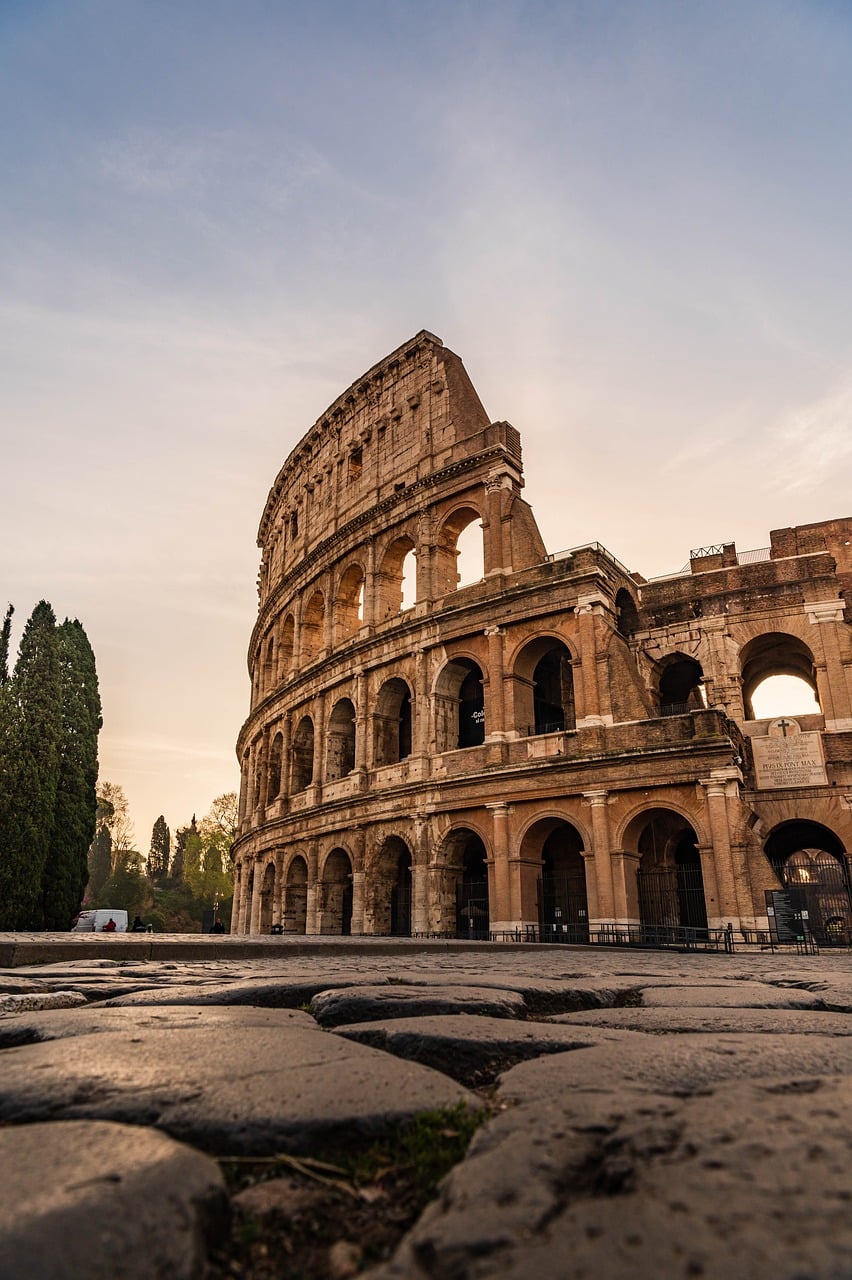
Short answer: Lazio is the region around Rome, and most visitors never leave the capital, which is a pity, because within an hour or two are Renaissance gardens, Roman ruins as impressive as the Forum, Etruscan tombs, hilltop towns, volcanic lakes and Mediterranean beaches. Spend most of your time in Rome, then add day trips to Tivoli, Ostia Antica and the Castelli Romani, or go further to Civita di Bagnoregio, Viterbo and the coast. Four or five days covers Rome and a day trip; a week to ten days lets you see the rest of the region too.
Lazio stretches from the hills of Tuscia, on the Tuscan and Umbrian borders, along the Tyrrhenian Sea to Campania in the south, with the Apennine mountains inland. It is one of Italy’s most-visited regions: according to ISTAT, Italy’s national statistics institute, its accommodation recorded more than 51.7 million nights in 2024, up 13.2% on 2023, the largest rise in nights of any region, with about two-thirds of the nights by visitors from abroad. Rome alone accounted for 42.7 million nights, by far the most of any Italian city. The region has five provinces, Rome, Viterbo, Rieti, Latina and Frosinone, and inside Rome lies the independent state of Vatican City. For entry rules, money, tipping and trains across the country, see our Italy travel guide.
Where to go in Lazio
Rome is the obvious base: regional trains and Cotral buses from the city reach Tivoli, Ostia, the Castelli Romani, Viterbo and the coast. For the north of the region or the beaches of the south, it is worth staying a night or two away from the city, or renting a car for a few days.
Rome
Few cities can match Rome’s layers of history. Ancient Rome lives on in the Colosseum, the Roman Forum and Palatine Hill and the Pantheon, almost 1,900 years old and still roofed by its great concrete dome. Baroque Rome is all fountains and piazzas, from the Trevi Fountain to the Spanish Steps and Piazza Navona. Add the masterpieces of the Borghese Gallery, the papal fortress of Castel Sant’Angelo, the neighborhood of Trastevere, and St. Peter’s Basilica and the Vatican Museums across the river. Our Rome travel guide has neighborhoods, tickets and transport.
Tivoli
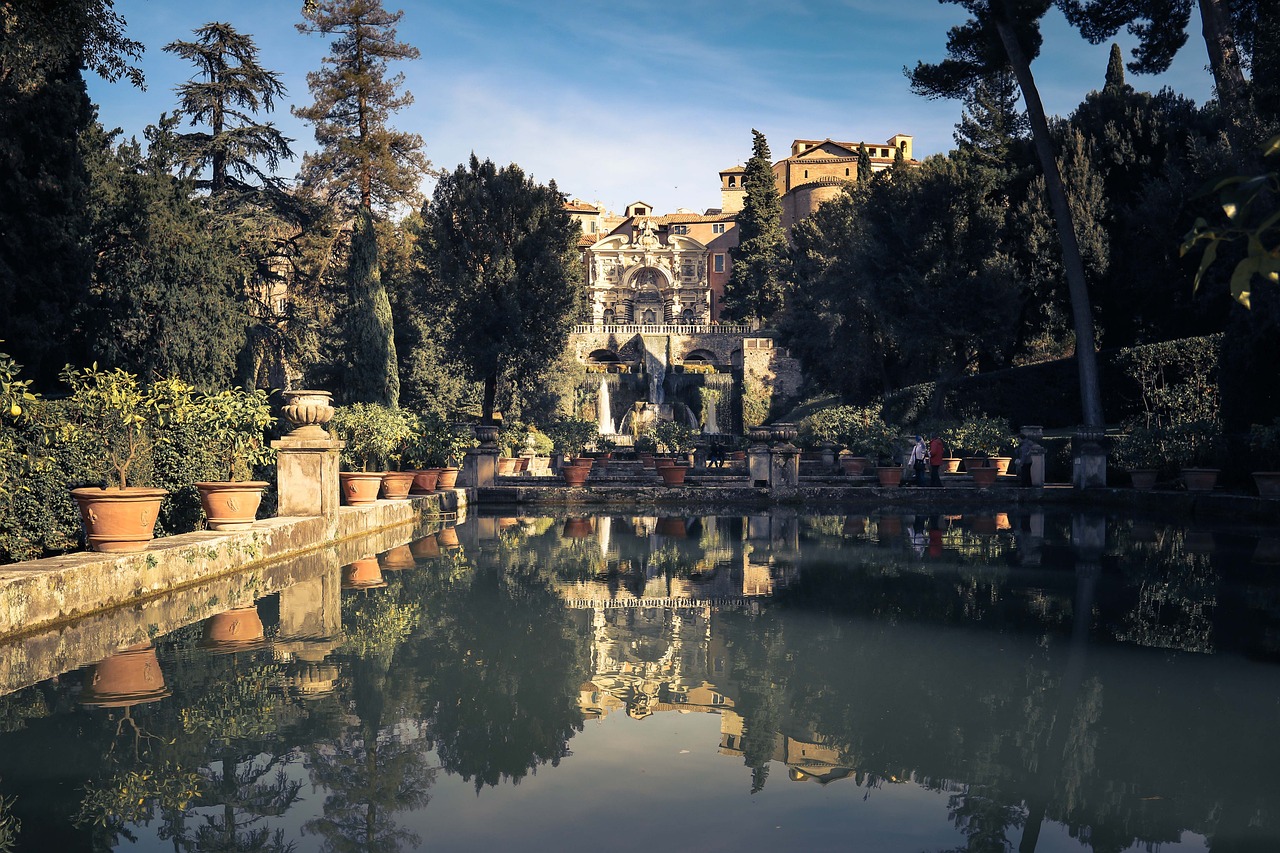
About 30 km east of Rome, the hill town of Tivoli has two UNESCO World Heritage Sites. Villa d’Este is a 16th-century cardinal’s villa with terraced gardens full of fountains, water organs and hundreds of jets, one of the finest Renaissance gardens in Europe. On the plain below, Hadrian’s Villa is the vast country retreat that Emperor Hadrian built in the 2nd century, with pools, baths, libraries and theaters spread over a huge area. Seeing both in one day is possible but tiring; they are run together by the state, and combined tickets are sold.
Ostia Antica
Ancient Rome’s port, near the mouth of the Tiber, is one of the best-preserved Roman towns anywhere, and much quieter than the Forum. You can walk its long main street past warehouses, apartment blocks, taverns with their counters still in place, mosaic-floored baths and a theater still used for summer performances. It is a short train ride from central Rome on the Roma–Lido line, and you can continue to the beaches of Ostia afterward.
The Castelli Romani
Rome’s own wine country lies in the Alban Hills, just south-east of the city: a ring of old towns around two volcanic crater lakes. Frascati is famous for its white wine and its Renaissance villas; Castel Gandolfo, above Lake Albano, is the traditional summer residence of the popes; Ariccia is the home of porchetta, herb-roasted pork, eaten in simple wine taverns called fraschette; and Nemi, above its tiny lake, is known for wild strawberries. In June, the main street of Genzano di Roma is carpeted with flower petals for its Infiorata.
Tuscia: Viterbo, Civita di Bagnoregio and the lakes
Northern Lazio, known as Tuscia, was once the land of the Etruscans. Viterbo, the “city of the popes”, has a medieval quarter, San Pellegrino, and the papal palace where the first conclave was held in the 13th century; every 3 September its citizens carry the Macchina di Santa Rosa, a lit-up tower about 30 meters tall, through the streets, a tradition on UNESCO’s intangible heritage list. Civita di Bagnoregio, a tiny medieval village on a crumbling clay outcrop reached only by a long footbridge, is one of the most photographed places in Italy; a small fee is charged to enter. Nearby are Lake Bolsena, a large volcanic lake with beaches, the Renaissance Villa Farnese at Caprarola, the strange stone sculptures of the Monster Park at Bomarzo, and Lake Bracciano, with its castle, closer to Rome.
The Etruscan necropolises of Cerveteri and Tarquinia
The Etruscans, who ruled central Italy before Rome, buried their dead in cities of tombs, and two of the greatest are in Lazio, together a UNESCO World Heritage Site. At Cerveteri, the Banditaccia necropolis has streets of round, grass-topped burial mounds you can walk into. At Tarquinia, steps lead down into painted tombs with scenes of banquets, dancers and hunters, still bright after more than two thousand years, and the town’s museum holds the famous winged horses. Both are an easy day trip from Rome, and Tarquinia is close to the cruise port of Civitavecchia.
The southern coast and the Pontine Islands
South of Rome, the Riviera di Ulisse has some of the best beaches near the capital. Sperlonga is a white hilltop village above sandy beaches, with the ruins of Emperor Tiberius’s seaside villa and grotto; Gaeta has an old town on a promontory and a famous split mountain, the Montagna Spaccata; and the Circeo National Park protects coastal lakes, dunes and Monte Circeo. Offshore, the Pontine Islands, especially Ponza and Ventotene, are a summer favorite of Romans, with clear water, sea caves and boat trips; ferries leave from Formia, Terracina and Anzio.
Monasteries and hill towns of the interior
Inland, Lazio becomes green and mountainous. At Subiaco, St. Benedict lived as a hermit, and the Monastery of the Sacro Speco is built into the cliff around his cave, covered in medieval frescoes. Anagni, the “city of the popes” of the south, has a cathedral crypt painted with remarkable 13th-century frescoes. The great Benedictine abbey of Montecassino, rebuilt after its destruction in 1944, looks down from its mountain near the Campania border, and in the Rieti valley, Greccio is where St. Francis staged the first living nativity scene in 1223.
Top things to do in Lazio
Walk through ancient Rome
Start at the Colosseum, then walk through the Roman Forum and up the Palatine Hill. The basic 24-hour ticket covers all three and cost €18 as of October 2026; tickets are named and timed, so book on the official site well ahead in high season. Since February 2026, visitors to the Trevi Fountain who want to go down to the basin pay €2 between 9:00 and 22:00 (residents of Rome and young children are exempt), and the fountain can still be seen from the square for free. Many of Rome’s best sights, including most churches and the Pantheon’s piazza, cost nothing at all.
Visit the Vatican
St. Peter’s Basilica is free to enter (dress modestly, with shoulders and knees covered), but expect a security line. The Vatican Museums, with the Sistine Chapel at the end of the route, cost €20 at the door or €25 online with the booking fee, according to the museums’ official site; buy only from the official ticket site to avoid resellers. They are open Monday to Saturday and free on the last Sunday of the month, when lines are very long. See our Vatican City guide.
Take a day trip to Tivoli or Ostia Antica
Tivoli and Ostia Antica are the two easiest and most rewarding day trips from Rome. Tivoli is reached by regional train from Roma Tiburtina or by Cotral bus, and the town center and Villa d’Este are within walking distance; Hadrian’s Villa is a short local bus or taxi ride away. Ostia Antica is about half an hour away on the Roma–Lido railway, which starts at Porta San Paolo, next to the Piramide metro station. Like other state museums and archaeological sites in Italy, both are usually free on the first Sunday of the month, and busier as a result.
Go underground with the Etruscans
Spend a day with the Etruscans: walk among the tombs of Cerveteri in the morning, then drive up the coast to Tarquinia for the painted tombs and the National Archaeological Museum in the town’s Gothic Palazzo Vitelleschi. In Rome, the Villa Giulia museum holds the best Etruscan collection in Italy, including the famous terracotta Sarcophagus of the Spouses from Cerveteri, and makes a good introduction before you go.
Eat and drink in the Castelli Romani
On weekends, Romans head to the Alban Hills for long lunches. In Ariccia, order porchetta, cheese, olives and a jug of local white wine in a fraschetta; in Frascati, try the wine where it is made and visit the gardens of Villa Aldobrandini; and at Castel Gandolfo or Nemi, walk the rim of the crater lakes. The towns are reached by regional trains from Roma Termini to Frascati, Albano and Velletri, and by Cotral buses.
Festivals through the year
Rome celebrates its birthday, the Natale di Roma, on 21 April with historical parades, and its patron saints Peter and Paul on 29 June, a holiday in the city. In June, Genzano di Roma lays out its carpet of flowers for the Infiorata, and on the evening of 3 September, Viterbo’s Macchina di Santa Rosa is carried through the dark streets by about a hundred porters. In December, Rome’s churches display nativity scenes and Piazza Navona holds a Christmas fair.
When to go to Lazio
Lazio has a Mediterranean climate: long, hot, dry summers and mild, wetter winters, colder and sometimes snowy in the Apennine mountains inland. Rome gets about 750 mm of rain a year, most of it from October to December; July and August usually have only a couple of rainy days each, and afternoon temperatures often climb well above the averages during heatwaves. The figures below are 1991–2020 averages for Rome Ciampino airport (Italian Air Force data); the coast is a little milder, and Viterbo and the hills are a few degrees cooler.
| Season | Rome: average high / low | Rain | What it’s like | Good for |
|---|---|---|---|---|
| Winter (Dec–Feb) | 12–13 °C / 3–5 °C | Fairly wet in December, drier by February | Mild, often sunny days and chilly nights; snow in the mountains | Museums and churches without crowds, Christmas in Rome, lower hotel prices |
| Spring (Mar–May) | 16–23 °C / 6–13 °C | Moderate, with some showers | Pleasant and green, warm by May | Sightseeing, Tivoli’s gardens, the Natale di Roma, day trips |
| Summer (Jun–Aug) | 28–32 °C / 17–20 °C | Very little | Hot and sunny, with heatwaves; Rome empties around mid-August | Beaches, Ponza and the islands, lakes, early-morning sightseeing |
| Autumn (Sep–Nov) | 27 °C falling to 17 °C / 16 °C falling to 8 °C | Rising, wettest in November | Warm September, mild October, rainy spells in November | Sightseeing, wine harvest in the Castelli Romani, Viterbo’s Santa Rosa |
Best overall: April to early June and mid-September to October, when it is warm enough to eat outdoors but not too hot for walking among the ruins. For the beaches and islands: June to September. Rome is busy almost all year, with the biggest crowds at Easter, from May to early July and in September and October, so book major sights in advance. November to February, apart from the Christmas holidays, is the quietest and cheapest time.
Getting there and getting around
Airports
Rome Fiumicino (FCO), on the coast west of Rome, is Italy’s largest airport, with nonstop flights from North America, Asia and across Europe. The Leonardo Express train runs nonstop to Roma Termini in 32 minutes and, as of October 2026, costs €14; taxis charge a fixed fare of €55 to anywhere inside the Aurelian Walls, according to the airport operator. Regional trains (line FL1) are cheaper and serve other Rome stations. Rome Ciampino (CIA), south-east of the city, is used mainly by low-cost airlines and is linked to Rome by buses and by a short bus ride to Ciampino railway station.
Trains, buses and Rome’s public transport
Roma Termini and Roma Tiburtina are hubs for high-speed trains to Florence, Naples, Milan and Venice, and for Trenitalia’s regional trains around Lazio: to Tivoli, Viterbo, the Castelli Romani, Civitavecchia and Tarquinia, and south to Latina, Fondi (for Sperlonga) and Formia (for Gaeta and the ferries to Ponza). Places the trains do not reach are served by the regional bus company Cotral. Paper regional train tickets must be validated before boarding; digital tickets do not need it.
In Rome, ATAC runs the metro, buses and trams. A standard BIT ticket costs €1.50 and is valid for 100 minutes, including one metro ride, and tourist passes cost €8.50 for 24 hours, €15 for 48 hours and €22 for 72 hours; you can also tap a contactless card at the metro gates and on board. The new Colosseo–Fori Imperiali station on metro line C opened in December 2025.
Driving
Do not drive in central Rome: the historic center is a large limited traffic zone (ZTL) watched by cameras, traffic is heavy and parking is scarce. A car is useful, however, for Tuscia, the Etruscan sites, the southern coast and the mountain monasteries, where public transport is thin. Rome’s ring road, the GRA, connects with the motorways, which have tolls. Pick up a rental car at the airport or on the edge of the city rather than in the center, and check the ZTL rules of each historic town you visit.
Tourist tax
Rome charges one of Italy’s higher tourist taxes (contributo di soggiorno), paid per person per night at your accommodation, with the amount depending on its type and star rating. Under Rome’s regulation, it is charged for a maximum of ten nights, and children under 10 are exempt. Other towns in Lazio set their own, usually lower, rates. Our Rome guide has more on costs in the city.
Food and drink in Lazio
Roman cooking is simple, bold and rooted in the region’s farms and pastures. The four classic pastas are carbonara, with egg, pecorino and cured pork cheek (guanciale); cacio e pepe, with pecorino and black pepper; gricia; and amatriciana, with tomato, named after the mountain town of Amatrice in the province of Rieti. Rome’s Jewish quarter gave the city carciofi alla giudia, whole fried artichokes, while carciofi alla romana are braised with mint. Try supplì, fried rice balls with a string of melted mozzarella inside, pizza by the slice (pizza al taglio), saltimbocca, veal with sage and ham, and the old offal dishes of the Testaccio district, such as oxtail stew (coda alla vaccinara).
Outside the city, look for Ariccia’s porchetta, lake fish from Bolsena and Bracciano, and the seafood of Gaeta and Sperlonga, along with Gaeta’s olives. Pecorino Romano, the sharp sheep’s cheese, is a key ingredient in Roman dishes, and the cream-filled sweet bun maritozzo is a favorite breakfast. To drink, there are the white wines of Frascati and the Castelli Romani, and Est! Est!! Est!!! from Montefiascone on Lake Bolsena. Lunch is the main meal in much of Lazio, and Romans eat dinner late, rarely before 20:00.
Plan your trip
Tell our AI trip planner how many days you have and what you enjoy, and it will build a Lazio itinerary from our guides, for example Rome with day trips to Tivoli and Ostia Antica, or Rome followed by Tuscia and the Etruscan coast. Check the forecast and monthly averages for each stop with our Destination weather tool, and pack comfortable shoes for cobblestones, a hat and water bottle for summer, and clothing that covers shoulders and knees for churches and the Vatican.
Frequently asked questions
What is the best time to visit Lazio?
April to early June and mid-September to October are the best months for sightseeing in Rome and day trips around the region, with warm, mostly dry weather. Come in summer for the beaches and the Pontine Islands, and from November to February for smaller crowds and lower prices.
What are the best day trips from Rome?
Within Lazio, the best are Tivoli for Villa d’Este and Hadrian’s Villa, Ostia Antica for a Roman town, the Castelli Romani for food and wine, the Etruscan tombs of Cerveteri and Tarquinia, and Civita di Bagnoregio with Viterbo. Further afield, Naples, Pompeii and Florence are within reach by high-speed train.
Is Vatican City part of Lazio?
No. Vatican City is an independent state, the smallest in the world, entirely surrounded by Rome. There are no border controls, so you simply walk in from the city, but it has its own rules, post office and museums.
How do I get from Fiumicino Airport to Rome?
The Leonardo Express train runs nonstop to Roma Termini in 32 minutes for €14, as of October 2026. Taxis charge a fixed €55 to anywhere inside the Aurelian Walls, according to the airport operator, and cheaper regional trains serve other Rome stations.
How many days do you need in Lazio?
Plan at least three or four days for Rome alone, plus a day each for Tivoli and Ostia Antica. With a week to ten days, you can add the Castelli Romani, the Etruscan sites, Viterbo and Civita di Bagnoregio, or a few days on the coast.
Before you go: guidebooks and travel gear
Affiliate links: we may earn a commission at no extra cost to you. As an Amazon Associate we earn from qualifying purchases. We pick items for the place, not for the commission. How we earn money