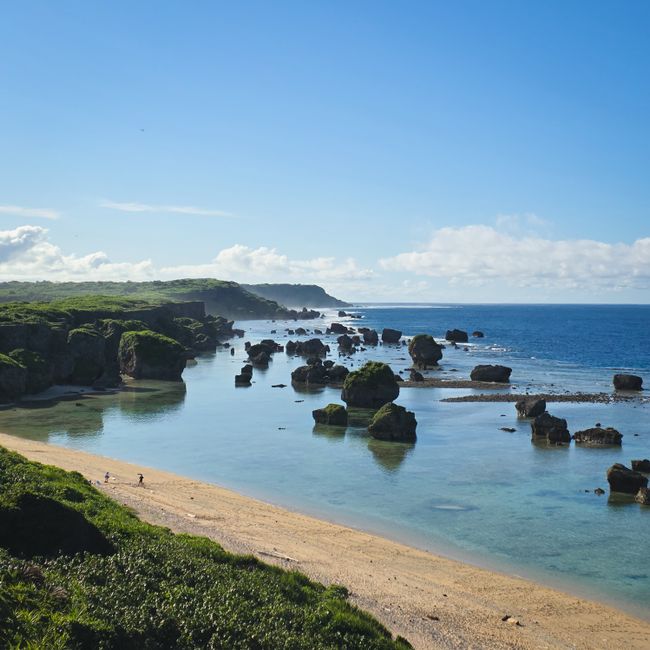
Miyakojima, or Miyako Island, is a flat, sunny coral island about 300 km (185 miles) south-west of Okinawa Island, at the heart of the Miyako Islands. Because the island is made of porous limestone, it has no rivers to carry soil into the sea, and its water is famously clear, in shades of blue so bright locals call it “Miyako blue”. Long white beaches, coral gardens close to shore and three great bridges linking it to the smaller islands of Ikema, Kurima, Irabu and Shimoji have made Miyakojima one of Japan’s favorite beach destinations. Come for beaches such as Yonaha Maehama and Sunayama, snorkeling with sea turtles, driving across the bridges, Miyako soba and awamori, and a slower, friendly island life. The best months are April to early June and October to November.
Right now in Miyakojima
- Wed 25–27°C 77–80°F Partly cloudy
- Thu 25–27°C 77–81°F 2 mm Showers
- Fri 26–28°C 80–82°F 1 mm Cloudy
- Mon 12 Oct Sports Day (スポーツの日)
Weather: MET Norway (CC BY 4.0) · Sea temperature: NOAA CoastWatch · Rates: ECB · Holidays: Nager.Date
Top tours in Miyakojima
See all tours for Miyakojima →
From local operators, with prices and reviews; you check availability and book on Viator, our partner. We may earn a commission at no extra cost to you. How we earn money
Miyakojima at a glance
- Best for: beaches and clear water, snorkeling and diving, scenic drives over bridges, family holidays, island food and drink.
- How long: 4–5 days to see Miyako and the bridged islands; a week for a slower beach holiday.
- Best time: April to early June and October to November, with highs of about 25–28 °C (77–82 °F); winter is mild, at about 21 °C (70 °F), but windy.
- Getting there: direct flights from Tokyo (about 3 hours), Osaka and Naha (about 50 minutes) to Miyako Airport or Shimojishima Airport.
- Getting around: a rental car is almost essential; buses are infrequent and taxis add up.
- Fees to know: the bridges are free; Miyakojima’s 2% accommodation tax (with Okinawa Prefecture) starts on February 1, 2027.
- Before you go: entry rules, money and general safety are in our Japan travel guide; see also our Okinawa Island guide and our Ishigaki Island guide.
Miyakojima’s areas: where things are
Miyako Island is about 159 km² (61 sq miles), roughly triangular and almost flat, with its highest point under 120 m (390 ft). A network of roads crosses sugar-cane fields between the town and the beaches; nowhere is more than about 40 minutes’ drive from anywhere else.
Hirara
The island’s town, on the west coast, with most budget and mid-range hotels, restaurants, izakaya and bars, the public market and the port. Miyako Airport is a 10-minute drive away. The best base without a car.
Yonaha and the south-west
The long white sand of Yonaha Maehama faces the island of Kurima across a shallow turquoise channel, with resort hotels along the coast and the Kurima Bridge nearby.
The south coast: Ueno and Shigira
A coast of cliffs and coves, with the large Shigira resort complex, golf, hot springs and beaches, and the Ueno German Culture Village.
Higashi-Hennazaki and the east
The island’s eastern tip, a thin cape stretching about 2 km (1.2 miles) into the Pacific, with a lighthouse and views of the ocean on three sides. Quiet guesthouses and empty beaches nearby.
Ikema, Kurima, Irabu and Shimoji
Small islands linked to Miyako by bridges, each with beaches, villages and views. Irabu and Shimoji have Shimojishima Airport, the Toriike ponds and some of the best snorkeling; Ikema has a wetland and a ring road; Kurima has cafés with views of Maehama.
Top things to see on Miyakojima
Yonaha Maehama Beach
About 7 km (4 miles) of fine white sand on the south-west coast, often ranked among Japan’s most beautiful beaches. The water is shallow, calm and turquoise, with Kurima Bridge on the horizon. It has showers, lifeguards in season and marine activity rentals.
Sunayama Beach
North of Hirara, reached by walking over a sand dune, Sunayama (“sand mountain”) has a natural rock arch framing the sea. It is best in the late afternoon, and the waves can be stronger than at Maehama.
The bridges: Irabu, Ikema and Kurima
Driving across the bridges is one of Miyako’s great pleasures. Irabu Bridge, opened in 2015, is about 3.5 km (2.2 miles) long and was the longest toll-free bridge in Japan when it opened, rising in a high arch over the reef to Irabu Island. Ikema Bridge (about 1.4 km, or 0.9 miles) and Kurima Bridge (about 1.7 km, or 1.1 miles) are shorter but just as beautiful. All are free; stop at the viewpoints at each end.
Snorkeling and diving
Miyako’s coral and clear water make it a top destination for snorkeling and diving. Imgya Marine Garden, a sheltered inlet in the south, is ideal for beginners; Aragusuku and Yoshino on the east coast have coral close to shore and sea turtles; and Nakanoshima Beach on Shimoji is a protected bay full of fish. Divers head to the underwater caves and arches of Irabu and Shimoji, such as the “Toriike” and “Mao’s Palace” sites. Join a guided tour if you are not a strong swimmer, as currents can be strong beyond the reef.
Higashi-Hennazaki
The long, narrow cape at the eastern tip of the island, a national scenic spot, with a lighthouse you can climb for views of the Pacific on three sides. In spring, the cape is covered with white teppo lilies.
Shimoji Island: 17END and the Toriike ponds
At the north end of Shimojishima Airport’s runway, the reef known as 17END turns an unreal shade of turquoise at low tide, and planes fly low overhead. Nearby, Toriike are two blue-green ponds connected underground to the sea, a famous dive site and viewpoint.
More classic sights
- Ikema Wetland: a mangrove and bird habitat at the heart of Ikema Island.
- Boraga Beach: a beach with a freshwater spring and good snorkeling on the south-east coast.
- Miyakojima City Museum: the history and culture of the Miyako Islands, from the old poll tax to traditional festivals.
- Yaebishi (Yabiji): a vast reef north of Ikema that appears above water at the lowest spring tides; visited on boat tours a few days a year.
- Miyakojima Tropical Botanical Garden: a large garden of tropical plants near Hirara.
- Sugar-cane fields and limestone caves: the island’s farmland and underground reservoirs explain how it stores water without rivers.
Museums
- Miyakojima City Museum
Beaches
- Sunayama Beach
- Yonaha-Maehama
Other sights
- Ikema Bridge
- Irabu Bridge
- Kurima Bridge
Viewpoints
- Higashi-hennazaki
Nature
- Tōriike
Other things to do on Miyakojima
Food and drink
Miyako’s food is a mix of Okinawan and island specialties. Try Miyako soba, with the toppings hidden under the noodles, as was once the custom; Miyako beef; fresh tuna and seafood; mozuku seaweed; and tropical fruit, especially mangoes in July and August. Yukishio, a fine salt made from island groundwater, flavors local ice cream and snacks. Miyako is famous for its awamori distilleries and for otori, a local drinking custom in which each person in turn makes a short speech and passes the cup; join in, but pace yourself.
Culture and festivals
The strange Paantu festival in Shimajiri village, in which masked figures covered in mud smear villagers and visitors to drive away evil, is listed by UNESCO as part of Japan’s “Raiho-shin” rituals; it takes place in autumn on dates chosen by the village, and visitors should keep a respectful distance. The All Japan Triathlon Miyakojima in April is one of the country’s oldest.
Family activities and resorts
The south coast’s resort complexes have pools, golf, hot springs and kids’ programs, and the calm beaches of Maehama, Sunayama and Aragusuku are good for families. Glass-bottom boats and semi-submarines let non-swimmers see the coral.
Day trips from Miyakojima
- Irabu and Shimoji: drive over Irabu Bridge for 17END, Toriike, Nakanoshima Beach and Sawada Beach’s giant rocks.
- Ikema: a loop drive around the small island, with the wetland and sunset views from the north cape.
- Kurima: cafés and viewpoints over Yonaha Maehama.
- Tarama: a remote, flat island with a traditional village and festivals, by ferry or small plane from Miyako.
- Ishigaki and Okinawa Island: a short flight away, for Taketomi and Iriomote or Naha and the Churaumi Aquarium. See our Ishigaki Island guide and Okinawa Island guide.
Nearby destinations
- Ishigaki Island121 km
Getting there and getting around
By air
Miyako has two airports. Miyako Airport, on the main island near Hirara, has flights from Tokyo Haneda (about 3 hours), Osaka (Kansai), Naha (about 50 minutes) and Ishigaki. Shimojishima Airport, on Shimoji Island across the Irabu Bridge, serves low-cost domestic flights and international routes; according to the airport, these include Starlux flights from Taipei and Taichung in Taiwan and a Jin Air service from Busan in South Korea, launched in 2026. Allow about 25–30 minutes by car from Shimojishima to Hirara.
By sea
There is no passenger ferry between Miyako and Okinawa Island or Ishigaki; you have to fly. Small ferries link Hirara with Tarama, and Miyako is a regular port of call for cruise ships, which dock at Hirara.
On the island
A rental car is the best way to explore, as the beaches and bridges are spread out and buses run only a few times a day on most routes. Book early for summer and holidays, bring an International Driving Permit, and drive on the left. Many rental companies meet you at either airport. Taxis are available in Hirara and at the airports. The Japan Rail Pass is not valid anywhere on the Miyako Islands, which have no railways.
When to go and how long to stay
Miyakojima has a warm, humid subtropical climate, with hot summers, mild but windy winters and a short rainy season in May and June. The table uses the Japan Meteorological Agency’s (JMA) 1991–2020 normals for its Miyakojima station near Hirara: average daily highs and lows, total rain and days with at least 0.5 mm.
| Month | Average high / low | Rain (days with 0.5 mm or more) | What to expect |
|---|---|---|---|
| January | 21 °C (69 °F) / 16 °C (61 °F) | 139 mm (5.5 in), 14 days | Mild and often cloudy; windy; hikanzakura cherries bloom |
| February | 21 °C (70 °F) / 17 °C (62 °F) | 120 mm (4.7 in), 12 days | Mild; low season; whales sometimes seen offshore |
| March | 23 °C (73 °F) / 18 °C (64 °F) | 139 mm (5.5 in), 12 days | Warming; beaches begin to open |
| April | 25 °C (77 °F) / 20 °C (69 °F) | 149 mm (5.9 in), 11 days | Warm and sunny; triathlon; a great month |
| May | 28 °C (82 °F) / 23 °C (73 °F) | 222 mm (8.8 in), 12 days | Rainy season usually from about May 10; Golden Week crowds |
| June | 30 °C (87 °F) / 26 °C (78 °F) | 195 mm (7.7 in), 11 days | Rainy season usually ends around June 21; then hot and sunny |
| July | 32 °C (89 °F) / 27 °C (80 °F) | 152 mm (6.0 in), 11 days | Hot; the best beach weather; typhoons begin |
| August | 31 °C (88 °F) / 26 °C (80 °F) | 257 mm (10.1 in), 14 days | The hottest, busiest month; typhoon peak; mango season |
| September | 30 °C (86 °F) / 26 °C (78 °F) | 259 mm (10.2 in), 13 days | Hot; typhoons still likely |
| October | 28 °C (82 °F) / 24 °C (75 °F) | 158 mm (6.2 in), 11 days | Warm and drier; sea still warm; Paantu in some years |
| November | 25 °C (78 °F) / 21 °C (70 °F) | 140 mm (5.5 in), 12 days | Pleasant; quiet; good snorkeling on calm days |
| December | 22 °C (72 °F) / 18 °C (65 °F) | 147 mm (5.8 in), 14 days | Mild and breezy; low season |
Miyakojima gets about 2,080 mm (82 in) of rain a year, most of it in May and from August to September, often in short, heavy showers. The JMA’s normal rainy season for the Okinawa region runs from about May 10 to June 21; in 2026 it ran from about May 4 to June 29. From November to March, the northern monsoon brings strong winds and cooler, cloudier days, when many beaches are too rough for snorkeling.
Weather month by month
Typhoons: according to the JMA’s 1991–2020 normals, about eight typhoons a year come close to the Okinawa region, most often from July to October, with a peak in August. Miyako is exposed to the open ocean, and a typhoon can cancel flights for one to three days and close beaches and tours, so keep extra days and buy flexible tickets.
Cherry blossoms: Miyako’s hikanzakura cherries bloom in midwinter: the JMA’s normal date for the first blossoms at its Miyakojima station is January 17, with full bloom around February 9; in 2026 they opened on January 9 and peaked on February 6.
Crowds and prices: highest in Golden Week, from mid-July to August and at New Year, when rental cars and resorts sell out. Late September to November and April to early May outside Golden Week usually mean warm water, fewer people and lower prices.
Four days on Miyakojima
Day one, Hirara and Sunayama Beach at sunset. Day two, Yonaha Maehama, Kurima and snorkeling at Imgya Marine Garden. Day three, across the Irabu Bridge to Toriike, 17END and Nakanoshima Beach. Day four, Higashi-Hennazaki, Aragusuku and Yoshino for sea turtles, then Ikema for the sunset.
A week of beaches
Add a dive day at Irabu’s caves, a boat to the Yaebishi reef if the tides are right, a day at a south-coast resort and a night of awamori and otori in Hirara.
Where to stay on Miyakojima and taxes
- Hirara: budget and mid-range hotels, guesthouses and nightlife; best for short stays.
- Yonaha Maehama: resort hotels facing the beach and Kurima.
- The south coast and Shigira: large resorts with pools, golf and hot springs.
- Irabu and Shimoji: boutique hotels and villas near Shimojishima Airport and the best snorkeling.
- The east and Ikema: quiet guesthouses and holiday rentals.
As of October 2026 there is no accommodation tax on Miyakojima. From February 1, 2027, according to the City of Miyakojima and Okinawa Prefecture, guests at all hotels, ryokan and private rentals will pay 2% of the room-only rate per person per night (rates rounded down to the nearest ¥1,000 and capped at ¥100,000), with a maximum of ¥2,000 per person per night, split between the city (1.2%) and the prefecture (0.8%) and collected through the city. For example, a room-only rate of ¥7,600 per person is taxed at ¥140.
What a trip to Miyakojima costs
Money exchange (JPY)Tip calculator
Prices are approximate, for October 2026, converted at about ¥158 to the US dollar.
| Item | Typical cost |
|---|---|
| Rental car, compact, per day | ¥5,000–12,000 (about US$32–76) |
| Guided snorkeling tour with sea turtles | ¥5,000–9,000 (about US$32–57) |
| Two-tank boat dive | ¥13,000–18,000 (about US$82–114) |
| Bowl of Miyako soba | ¥700–1,100 (about US$4.4–7.0) |
| Izakaya dinner with awamori | ¥3,000–6,000 (about US$19–38) |
| Fresh mango in season | ¥1,500–4,000 (about US$9.5–25) |
| Hirara hotel double, per night | ¥9,000–20,000 (about US$57–127) |
| Beach resort double, per night | ¥25,000–70,000 (about US$158–443) |
Practical tips for Miyakojima
- Book your car first: rental cars are the key to Miyako and sell out early in peak season.
- Snorkel safely: use a life vest or float, never snorkel alone, and choose sheltered spots; currents beyond the reef are strong.
- Protect turtles and coral: keep at least a few meters from sea turtles, never touch or chase them, and don’t stand on coral.
- Sun: the UV index is very high from April to September; use reef-safe sunscreen, a hat and a rash guard.
- Departure tax: since July 2026, Japan’s International Tourist Tax is ¥3,000 per departure, usually included in your air fare (tickets issued by June 30, 2026 keep the old ¥1,000).
- Visitor hotline: the JNTO’s Japan Visitor Hotline, 050-3816-2787, answers in English 24 hours a day.
Safety
Miyakojima is safe and friendly, but the sea is its main risk. Drowning accidents among snorkelers are sadly common, often at beaches without lifeguards or beyond the reef, where currents can quickly carry swimmers away; swim at lifeguarded beaches in season, wear a flotation vest, and stay out of the water in strong winds. The habu-kurage box jellyfish is most common from June to September; use netted beaches, wear a rash guard and treat stings with vinegar. Typhoons from July to October can be severe on this exposed island. Heat and dehydration are a risk for drivers stopping at beach after beach in summer. Japan is earthquake and tsunami country: if you feel strong shaking near the coast, move to high ground and follow the alerts. In an emergency, call 110 for the police, 119 for an ambulance or fire, or 118 for the Japan Coast Guard at sea, and keep the JNTO’s Safety Tips app on your phone.
What to pack for Miyakojima
Swimwear, a rash guard, a snorkel mask that fits, reef-safe sunscreen, a hat and sunglasses, water shoes for rocky beaches, light clothes, a light rain jacket from May to October, a windbreaker for winter, and your International Driving Permit. Japan uses 100 V and two-pin type A plugs like the US.
Miyakojima travel FAQ
How do I get to Miyakojima?
By air: there are direct flights from Tokyo, Osaka and Naha to Miyako Airport, and domestic and international flights to Shimojishima Airport. There is no passenger ferry from Okinawa Island.
What is the best beach on Miyakojima?
Yonaha Maehama for its long white sand and calm water; Sunayama for its rock arch; Imgya and Aragusuku for snorkeling.
Do I need a car on Miyakojima?
Yes, in practice: buses are infrequent and the beaches and bridges are spread out, so most visitors rent a car.
Are the Miyakojima bridges free?
Yes. The Irabu, Ikema and Kurima bridges are all free to drive, walk or cycle.
When is the best time to visit Miyakojima?
April to early June and October to November, avoiding the August typhoon peak and the windy winter.
Can I see sea turtles on Miyakojima?
Yes, often while snorkeling at Aragusuku, Yoshino and other reefs; keep your distance and never touch them.
Is there an accommodation tax on Miyakojima?
Not yet. From February 1, 2027, the city and Okinawa Prefecture will together charge 2% of the room rate, up to ¥2,000 per person per night.
When is typhoon season in Miyakojima?
Mostly July to October, peaking in August; about eight typhoons a year come close to the Okinawa region, according to the JMA.
Can I go from Miyakojima to Ishigaki by ferry?
No. You have to fly between Miyako and Ishigaki, a short hop of about 30 minutes.
Is Miyakojima good for families?
Yes. The calm, shallow beaches, resort pools and glass-bottom boats suit families, as long as children swim at lifeguarded beaches.
Plan your trip
Partner links: TravelerCenter may earn a commission if you book, at no extra cost to you.
🇯🇵 Useful Japanese phrases for Miyakojima
All 38 Japanese phrases: restaurant, hotel, emergencies, romance (printable) →
Sources · last reviewed 4 October 2026
Researched and last reviewed on 4 October 2026. Accommodation tax: the City of Miyakojima and Okinawa Prefecture; Shimojishima Airport’s international routes: Shimojishima Airport; climate normals, rainy season, typhoon statistics and cherry blossom dates: the Japan Meteorological Agency (JMA); visitor hotline: JNTO; exchange rate: the US Federal Reserve. Population, distances, bridge lengths, Miyako Airport routes, the absence of passenger ferries, sight descriptions, festival details, flight times and typical prices are general references or estimates, flagged for checking. Prices and hours change, so check the official sites before you go. For entry rules, money and general safety, see our Japan travel guide.
Also: JMA normals 1991–2020, Miyakojima (climate)
Place data: © OpenStreetMap contributors (ODBL) · Wikidata (CC0)