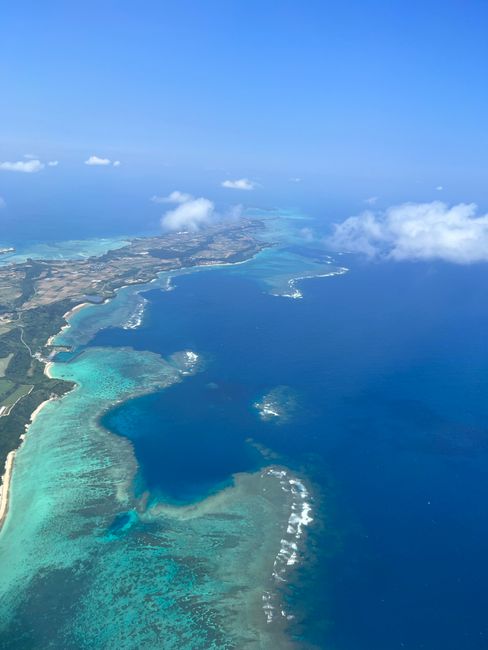
Ishigaki Island is the hub of the Yaeyama Islands, Japan’s far south-west, about 410 km (255 miles) south-west of Okinawa Island and closer to Taiwan than to Naha. A subtropical island of about 50,000 people, it has white-sand beaches, coral reefs where manta rays gather, forested hills rising to the highest peak in Okinawa Prefecture, and starry skies protected as a dark sky reserve. Ishigaki is also the gateway to the outer islands: the red-tiled village of Taketomi, the jungle and mangroves of Iriomote, a World Heritage site, and a string of smaller islands, all reached by fast ferries from the harbor in town. Come for the beaches and snorkeling, Kabira Bay, Ishigaki beef and Yaeyama soba, and island-hopping. The best months are April to early June and October to November.
Right now in Ishigaki Island (Ishigaki)
- Wed26–27°C78–80°FPartly cloudy
- Thu25–28°C77–82°F1 mm rain
- Fri26–28°C79–82°F1 mm rain
- Mon 12 Oct Sports Day (スポーツの日)
Top tours in Ishigaki Island
See all tours for Ishigaki Island →
From local operators, with prices and reviews; you check availability and book on Viator, our partner. We may earn a commission at no extra cost to you. How we earn money
Ishigaki Island at a glance
- Best for: beaches, snorkeling and diving with manta rays, island-hopping to Taketomi and Iriomote, stargazing, island food.
- How long: 4–5 days for Ishigaki, Taketomi and a day on Iriomote; a week or more for the smaller islands.
- Best time: April to early June and October to November, with highs of about 26–29 °C (79–84 °F); winter is mild, at about 22 °C (71 °F).
- Getting there: direct flights from Tokyo (about 3–3.5 hours), Osaka, Naha (about 1 hour) and Taiwan to New Ishigaki Airport.
- Getting around: a rental car or buses on Ishigaki; ferries from the Ishigaki Port Remote Island Terminal to the other islands.
- Fees to know: the ferry to Taketomi costs ¥970 one way and to Iriomote’s Ohara Port ¥2,520, as of October 2026; Okinawa’s 2% accommodation tax starts on February 1, 2027.
- Before you go: entry rules, money and general safety are in our Japan travel guide; for the main island, see our Okinawa Island guide and our Miyakojima guide.
Ishigaki Island’s areas: where things are
Ishigaki is about 222 km² (86 sq miles), shaped like a fat bird with a long tail stretching north. The town is on the south coast; beaches, capes and villages are spread around the rest of the island, linked by a coastal road.
Ishigaki town and the port
The south-west corner holds almost all hotels, restaurants and bars, the covered Euglena Mall arcade and the public market, and the Ishigaki Port Remote Island Terminal, where ferries leave for the other islands. The best base for island-hopping and nightlife without a car.
Kabira and the north-west
The island’s most famous scenery, with Kabira Bay, Sukuji Beach, Yonehara’s coral beach and the Kabira Park viewpoint. Resorts and guesthouses are scattered along the coast.
Shiraho and the east coast
The airport is on the east coast, near the Shiraho reef, which has one of the largest colonies of blue coral in the Northern Hemisphere. Quiet villages and a few small resorts.
The north: Hirakubo and Ibaruma
A long, thin peninsula of cattle pastures, empty beaches and the Hirakubozaki lighthouse at the northern tip, about an hour from town. Remote guesthouses and starry nights.
Top things to see on Ishigaki Island
Kabira Bay
A sheltered bay of turquoise water and small green islands that has become the symbol of Ishigaki. Black pearls are farmed here and the currents and boat traffic are strong, so swimming is not allowed; instead, take a glass-bottom boat over the coral and sea turtles, or look down from Kabira Park above the bay. Come in the morning, when the light brings out the colors.
Beaches: Sukuji, Yonehara and Fusaki
Sukuji Beach, near Kabira, is a shallow lagoon ideal for children. Yonehara, on the north coast, has coral and tropical fish close to the shore, but the currents beyond the reef can be dangerous, so snorkel only near the beach and in calm weather. Maesato Beach and Fusaki Beach, near town, have resort facilities, lifeguards in season and nets against jellyfish. For more ideas, see our guide to beaches.
Diving and snorkeling with manta rays
The channel between Ishigaki and Kohama, known as Manta Scramble or “Manta Point”, is one of the most reliable places in Japan to see manta rays, especially from spring to fall. Dive shops in town run daily trips, and snorkelers can join boat tours too. The reefs of Ishigaki and the islands around it are among the richest in Japan. See our guides to snorkeling and diving.
Tamatorizaki and Hirakubozaki
Two viewpoints on the northern coast: Tamatorizaki, a red-roofed lookout above hibiscus, with views of the long, thin north of the island between two seas; and Hirakubozaki, the white lighthouse at the northern tip, above coral reefs and the open ocean.
Ishigaki Yaima Village and Miyara Dunchi
Ishigaki Yaima Village is an open-air museum of traditional red-tiled Yaeyama houses moved from around the island, with a squirrel monkey park and folk performances. Miyara Dunchi, in town, is the 1819 residence of a local official, with a coral-stone garden, the only surviving samurai-class house of its kind in Okinawa Prefecture.
More classic sights
- Mount Omoto: at 526 m (1,726 ft), the highest peak in Okinawa Prefecture, with a forest trail to the top.
- Banna Park: a large forest park on a hill above town with walking trails and views over the sea.
- Ishigaki Island Limestone Cave: a long cave with stalactites and fossils, near town.
- Ishigaki City Public Market: fresh fish, fruit and local produce in the Euglena Mall.
- Tojinbaka: a colorful Chinese-style memorial to laborers who died in 1852.
- Yaeyama Museum: the history and folk culture of the Yaeyama Islands, in town.
Peaks and mountains
- Mount Omoto
Museums
- Ishigaki Yaima Village
Beaches
- Yonehara Beach
Caves
- Ishigaki Stalactite Cave
Nature
- Kabira Bay
Parks and gardens
- Miyaradunchi
Monuments
- Tōjin-baka
Viewpoints
- Cape Hirakubo
Island-hopping from Ishigaki
Ferries leave the Remote Island Terminal in town for most of the Yaeyama Islands. According to the operator Yaeyama Kanko Ferry, as of October 2026 adult fares are:
| Route from Ishigaki | Typical journey time | One way | Round trip |
|---|---|---|---|
| Taketomi | about 15 minutes | ¥970 (about US$6.1) | ¥1,880 |
| Kohama | about 25–30 minutes | ¥1,720 (about US$11) | ¥3,340 |
| Kuroshima | about 30 minutes | ¥1,850 (about US$12) | ¥3,590 |
| Iriomote, Ohara Port | about 40 minutes | ¥2,520 (about US$16) | ¥4,880 |
| Iriomote, Uehara Port | about 45–50 minutes | ¥3,290 (about US$21) | ¥6,370 |
Fares include a fuel surcharge that changes with oil prices, and children pay about half. A second company, Anei Kanko, runs similar routes. Sailings to Uehara, on the north coast of Iriomote, are often canceled in rough seas, especially from October to February; on those days, ferries usually run to Ohara, with a connecting bus. Book ahead in summer and for day tours.
Taketomi
A tiny, flat island 15 minutes away, where the village of red-tiled houses, coral-stone walls and white sand lanes is protected as a historic district. Tour the village by water buffalo cart, rent a bike, and swim at Kondoi Beach. Taketomi asks visitors for a voluntary island conservation contribution.
Iriomote
Nine-tenths jungle and mangroves, Iriomote is part of the UNESCO World Heritage site inscribed in 2021 and home to the endangered Iriomote cat. Kayak and walk through the mangroves to the Pinaisara Falls, take a boat up the Urauchi River, or ride a buffalo cart across the shallows to tiny Yubu Island. Some areas can only be entered with a certified guide and with numbers limited, so join a tour; drive slowly, as cats are often killed on the roads.
Kohama, Kuroshima, Hateruma and Yonaguni
Kohama has sugar-cane fields and resorts; Kuroshima, flat and heart-shaped, more cattle than people. Hateruma, Japan’s southernmost inhabited island, has one of the most beautiful beaches in the country and a famous starry sky; its ferry is often canceled in rough seas. Yonaguni, Japan’s westernmost island, is reached by air or a long ferry and known for hammerhead sharks in winter.
Nearby destinations
- Miyakojima121 km
- Taipei275 km
- Taroko National Park291 km
Other things to do on Ishigaki Island
Food and drink
Ishigaki is famous for Ishigaki beef, from calves raised on the island; try it grilled as yakiniku, as steak or in burgers. Yaeyama soba, thin, round noodles in a light pork and bonito broth topped with strips of pork and fish cake, is the local lunch, seasoned with pipatsu, a peppery local spice. Look for mozuku seaweed, fresh tropical fruit such as mango and pineapple in summer, and Yaeyama’s own awamori spirits and Ishigaki’s craft beers. Evenings in town mean izakaya with live sanshin music.
Stargazing
Ishigaki and Iriomote form a national park, and in 2018 Iriomote-Ishigaki National Park became an International Dark Sky Place. On clear nights, you can see the Milky Way and, from the south of the island, the Southern Cross from winter to early summer. Join a stargazing tour away from the town’s lights, or visit the Ishigakijima Astronomical Observatory.
Culture and festivals
Watch traditional Yaeyama dance and music, listen to the sanshin, and visit the island’s sacred groves (utaki). In summer, village harvest festivals and the Bon festival dance Angama, with masked dancers, are highlights.
Activities and best months
- Boat tripsYaeyama Kanko Ferry links Ishigaki's island terminal with Taketomi (¥970 one way), Kohama, Kuroshima and Iriomote; Iriomote's Uehara route is often cancelled in rough seas.
Getting there and getting around
By air
New Ishigaki Airport (also called Painushima Ishigaki Airport) has direct flights from Tokyo (Haneda and Narita), Osaka (Kansai), Nagoya and Fukuoka in some seasons, Naha (about 1 hour) and Miyako, and international flights from Taiwan, including a new Tigerair Taiwan route from Kaohsiung. Low-cost carriers keep fares reasonable outside the holidays. There is no passenger ferry from Okinawa Island or Miyako; you have to fly.
From the airport
The airport is on the east coast, about 30–40 minutes from town. According to the airport, buses run to the bus terminal and the Remote Island Terminal (including direct services), and a taxi to the ferry terminal takes about 25 minutes and costs about ¥3,500 (about US$22). Other buses go to Kabira and the north-west.
On the island
A rental car is the most convenient way to see Ishigaki’s beaches and capes; driving is on the left, and you need an International Driving Permit. Buses run from the town terminal around the island and to Kabira and the airport, with day passes, but services are infrequent. In town, everything is walkable, and bicycles and scooters can be rented. The Japan Rail Pass is not valid anywhere in the Yaeyama Islands.
When to go and how long to stay
Ishigaki has a warm, humid subtropical climate, a few degrees warmer than Okinawa Island, with hot summers, very mild winters and a short rainy season in May and June. The table uses the Japan Meteorological Agency’s (JMA) 1991–2020 normals for its Ishigakijima station in town: average daily highs and lows, total rain and days with at least 0.5 mm.
| Month | Average high / low | Rain (days with 0.5 mm or more) | What to expect |
|---|---|---|---|
| January | 22 °C (71 °F) / 17 °C (62 °F) | 135 mm (5.3 in), 15 days | Mild and often cloudy; windy; hikanzakura cherries bloom |
| February | 22 °C (72 °F) / 17 °C (63 °F) | 124 mm (4.9 in), 12 days | Mild; cherries in full bloom; low season |
| March | 24 °C (75 °F) / 19 °C (65 °F) | 134 mm (5.3 in), 12 days | Warming; beach season begins; good diving |
| April | 26 °C (79 °F) / 21 °C (70 °F) | 147 mm (5.8 in), 10 days | Warm and sunny; beaches open; a great month |
| May | 29 °C (84 °F) / 24 °C (75 °F) | 191 mm (7.5 in), 11 days | Rainy season usually from about May 10; Golden Week crowds |
| June | 31 °C (88 °F) / 27 °C (80 °F) | 208 mm (8.2 in), 10 days | Rainy season usually ends around June 21; then hot and sunny |
| July | 32 °C (90 °F) / 28 °C (82 °F) | 142 mm (5.6 in), 10 days | Hot; the most reliable beach weather; typhoons begin |
| August | 32 °C (90 °F) / 27 °C (81 °F) | 250 mm (9.8 in), 13 days | The hottest, busiest month; typhoon peak; box jellyfish |
| September | 31 °C (88 °F) / 26 °C (79 °F) | 260 mm (10.2 in), 13 days | Hot; typhoons still likely |
| October | 29 °C (84 °F) / 24 °C (75 °F) | 211 mm (8.3 in), 12 days | Warm and drier; excellent for diving |
| November | 26 °C (79 °F) / 22 °C (71 °F) | 138 mm (5.4 in), 13 days | Pleasant; sea still warm; quiet |
| December | 23 °C (73 °F) / 18 °C (65 °F) | 155 mm (6.1 in), 15 days | Mild and breezy; low season |
Ishigaki gets about 2,100 mm (83 in) of rain a year, spread fairly evenly, with the heaviest falls in the rainy season and with typhoons from August to October. Winter brings strong north winds and many cloudy days, so the sea can be rough even when it is warm. The JMA’s normal rainy season for the Okinawa region runs from about May 10 to June 21; in 2026 it ran from about May 4 to June 29.
Weather month by month
Typhoons: according to the JMA’s 1991–2020 normals, about eight typhoons a year come close to the Okinawa region, most often from July to October, with a peak in August. Ishigaki lies on many typhoon tracks, and a storm can stop flights and all ferries for one to three days, so keep spare days and buy flexible tickets.
Cherry blossoms: Yaeyama’s deep-pink hikanzakura blooms in midwinter: the JMA’s normal date for the first blossoms at its Ishigakijima station is January 18, with full bloom around February 10; in 2026 they opened on February 4 and peaked on February 18.
Crowds and prices: highest in Golden Week, from mid-July to August and at New Year. October and November, and April to early May outside Golden Week, often have fine weather, calmer seas and lower prices.
Four days on Ishigaki and Taketomi
Day one, town, the market and Miyara Dunchi, then sunset at Banna Park. Day two, drive to Kabira Bay for a glass-bottom boat, Sukuji Beach and Yonehara, then Tamatorizaki and Hirakubozaki. Day three, the ferry to Taketomi for the village, a buffalo cart and Kondoi Beach. Day four, a manta ray dive or snorkeling trip, and a stargazing tour at night.
A week with Iriomote
Add two nights on Iriomote for a mangrove kayak to Pinaisara Falls, the Urauchi River and Yubu Island, and a day on Kohama or Hateruma.
Where to stay on Ishigaki Island and taxes
- Ishigaki town: budget and mid-range hotels close to the ferry terminal, restaurants and bars; best without a car.
- Maesato and Fusaki: large beach resorts a short drive from town.
- Kabira and the north-west: guesthouses and boutique resorts near the island’s best scenery.
- The north: remote guesthouses and villas for quiet and stars.
- Taketomi and Iriomote: traditional inns on Taketomi and jungle lodges on Iriomote for an overnight stay.
As of October 2026 there is no accommodation tax on Ishigaki. From February 1, 2027, according to Okinawa Prefecture, guests at all hotels, ryokan and private rentals will pay 2% of the room-only rate per person per night (rates rounded down to the nearest ¥1,000 and capped at ¥100,000), with a maximum of ¥2,000 per person per night. Ishigaki City is one of six towns that will levy their own tax together with the prefecture, so the 2% is split between the prefecture (0.8%) and the city (1.2%), collected through the city.
Taketomi Town, which covers Taketomi, Iriomote, Kohama, Kuroshima, Hateruma and the other outer islands, has approved a visitor tax of ¥1,000 per person per visit, expected to start in 2027; check before you travel. Taketomi Island already asks visitors for a voluntary contribution of ¥300 to protect its environment and village.
What a trip to Ishigaki Island costs
Prices are approximate, for October 2026, converted at about ¥158 to the US dollar.
| Item | Typical cost |
|---|---|
| Ferry to Taketomi, round trip | ¥1,880 (about US$12) |
| Ferry to Iriomote (Ohara), round trip | ¥4,880 (about US$31) |
| Glass-bottom boat at Kabira Bay | about ¥1,300–1,500 (about US$8.2–9.5) |
| Manta ray snorkeling or dive trip | ¥8,000–18,000 (about US$51–114) |
| Bowl of Yaeyama soba | ¥700–1,100 (about US$4.4–7.0) |
| Ishigaki beef yakiniku dinner | ¥5,000–12,000 (about US$32–76) |
| Rental car, compact, per day | ¥5,000–12,000 (about US$32–76) |
| Town hotel double, per night | ¥9,000–20,000 (about US$57–127) |
| Beach resort double, per night | ¥25,000–60,000 (about US$158–380) |
Practical tips for Ishigaki Island
- Book cars and ferries early: rental cars sell out in summer and holidays, and popular ferry tours fill up.
- Check the morning ferry status: operators post cancellations each morning, especially for Uehara and Hateruma.
- Protect the reef: use reef-safe sunscreen, wear a rash guard, and never stand on or touch coral.
- Swim where it is safe: use lifeguarded, netted beaches in jellyfish season, and never swim at Kabira Bay.
- Cash: many small restaurants, ferry counters on the outer islands and inns prefer cash.
- Departure tax: since July 2026, Japan’s International Tourist Tax is ¥3,000 per departure, usually included in your air fare (tickets issued by June 30, 2026 keep the old ¥1,000).
Safety
Ishigaki is safe and relaxed, but the sea and weather demand respect. Typhoons from July to October can cut the island off for days. Rip currents beyond the reef have drowned snorkelers at Yonehara and other beaches; go with a guide or stay close to shore in calm water, and never snorkel alone. The habu-kurage box jellyfish is most common from June to September; swim inside nets, wear a rash guard and use vinegar on stings. The venomous Sakishima habu snake lives in forests and long grass, so stay on paths at night. The sun is strong all year, and heat exhaustion is common on summer hikes. Japan is earthquake and tsunami country; if you feel strong shaking near the coast, move to high ground and follow the alerts. In an emergency, call 110 for the police, 119 for an ambulance or fire, or 118 for the Japan Coast Guard at sea, and keep the JNTO’s Safety Tips app on your phone.
What to pack for Ishigaki Island
Swimwear, a rash guard, reef-safe sunscreen, a hat and sunglasses, water shoes for coral beaches and river walks on Iriomote, light quick-dry clothes, a light rain jacket from May to October, and a windbreaker for winter. Japan uses 100 V and two-pin type A plugs like the US.
What to pack
- Dry bags and phone pouchesSpray soaks phones and cameras on open boats to the Algarve caves and on whale-watching trips.
- Fleeces and warm layersIt is cooler at sea than on land, especially on morning whale-watching trips.
- Rain jacketsA windproof, waterproof shell keeps you warm on open boats, where wind and spray cool you quickly.
- Reef-friendly sunscreenSun reflects off the water on cruises and cave tours.
- Water shoesKayak and small-boat trips to the Algarve grottoes land on rock and wet sand.
Ishigaki Island travel FAQ
How do I get to Ishigaki?
By air: there are direct flights from Tokyo, Osaka, Naha, Miyako and Taiwan to New Ishigaki Airport. No passenger ferries link Ishigaki with Okinawa Island.
How much is the ferry from Ishigaki to Taketomi?
¥970 one way and ¥1,880 round trip for adults with Yaeyama Kanko Ferry as of October 2026; the trip takes about 15 minutes.
How do I get to Iriomote from Ishigaki?
By ferry from the Remote Island Terminal to Ohara (about 40 minutes, ¥2,520) or Uehara (about 45–50 minutes, ¥3,290); Uehara sailings are often canceled in rough seas.
Can you swim at Kabira Bay?
No. Swimming is not allowed because of strong currents, boat traffic and pearl farming; see it from a glass-bottom boat or the viewpoint.
When is the best time to visit Ishigaki?
April to early June and October to November, avoiding the August typhoon peak and the windy winter months.
Can I see manta rays at Ishigaki?
Yes, at Manta Scramble between Ishigaki and Kohama, most reliably from spring to fall, on dive or snorkel trips from town.
Is there an accommodation tax on Ishigaki?
Not yet. From February 1, 2027, Okinawa Prefecture and Ishigaki City will together charge 2% of the room rate, up to ¥2,000 per person per night.
Do I need a car on Ishigaki?
Not in town, but a rental car is the easiest way to see Kabira, the beaches and the north; buses are infrequent.
Does the JR Pass work on Ishigaki?
No. There are no trains in the Yaeyama Islands; use buses, rental cars and ferries.
How many days do I need on Ishigaki?
Four or five days for Ishigaki, Taketomi and Iriomote; a week or more to add smaller islands like Hateruma.
Plan your trip
Partner links: TravelerCenter may earn a commission if you book, at no extra cost to you.
🇯🇵 Useful Japanese phrases for Ishigaki Island
All 38 Japanese phrases: restaurant, hotel, emergencies, romance (printable) →
Sources · last reviewed 4 October 2026
Researched and last reviewed on 4 October 2026. Ferry fares and the Uehara route: Yaeyama Kanko Ferry; airport buses and taxi fares and the new Kaohsiung route: New Ishigaki Airport (Ishigaki Airport Terminal); accommodation tax and Ishigaki City’s share: Okinawa Prefecture; climate normals, rainy season, typhoon statistics and cherry blossom dates: the Japan Meteorological Agency (JMA); exchange rate: the US Federal Reserve. The Taketomi Town visitor tax and its start date, Taketomi’s voluntary contribution, population, distances, other flight routes, journey times, sight descriptions, swimming rules, the dark sky designation and typical prices are general references or estimates, flagged for checking. Prices and hours change, so check the official sites before you go. For entry rules, money and general safety, see our Japan travel guide.
Also: yaeyama.co.jp · JMA normals 1991–2020, Ishigakijima (climate)
Data: Weather: MET Norway (CC BY 4.0) · Sea temperature: NOAA CoastWatch · Rates: ECB · Holidays: Nager.Date · Costs: World Bank ICP and price levels · © OpenStreetMap contributors (ODBL) · Wikidata (CC0)