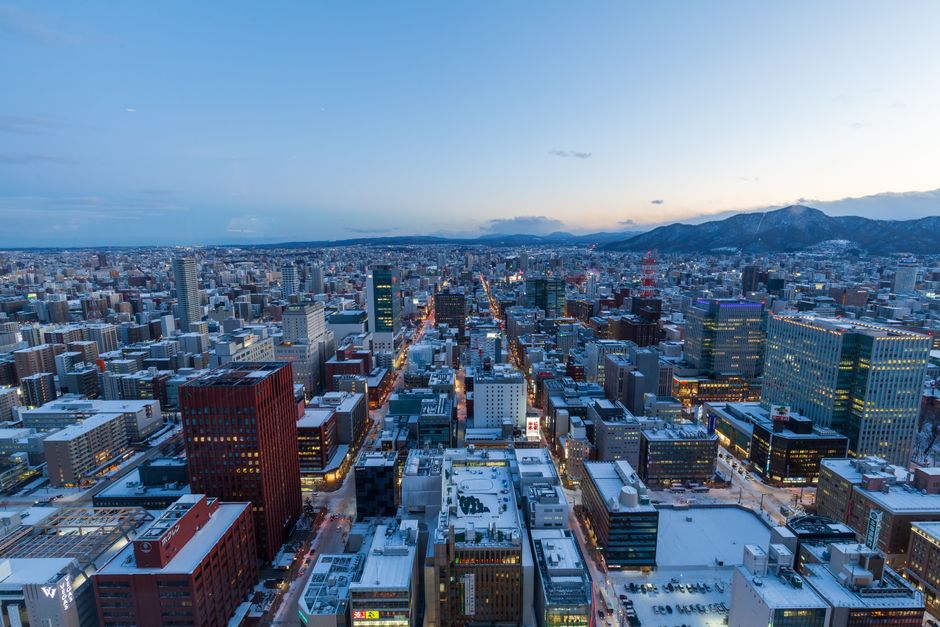
Sapporo is the capital of Hokkaido, Japan’s wild northern island, and its biggest city: a young, easygoing place laid out on a grid in the 1870s, with wide streets, parks and mountains on the edge of town. It is famous for its February Snow Festival, deep powder snow at ski resorts an hour or two away, miso ramen, fresh crab and sea urchin, and the beer that carries its name. In summer, when the rest of Japan swelters, Sapporo is pleasantly warm and dry, the gateway to lavender fields in Furano, the lakes and volcanoes of Shikotsu-Toya and the canal town of Otaru. The best times are June to September for mild weather and festivals, and December to March for snow; Hokkaido has no real rainy season.
Right now in Sapporo
- Wed 9–18°C 49–64°F Clear
- Thu 8–19°C 46–65°F Partly cloudy
- Fri 8–21°C 46–69°F 1 mm Light showers
- Mon 12 Oct Sports Day (スポーツの日)
Weather: MET Norway (CC BY 4.0) · Rates: ECB · Holidays: Nager.Date
Top tours in Sapporo
See all tours for Sapporo →
From local operators, with prices and reviews; you check availability and book on Viator, our partner. We may earn a commission at no extra cost to you. How we earn money
Sapporo at a glance
- Best for: the Snow Festival and winter sports, seafood and ramen, beer, summer escapes from the heat, and road trips into Hokkaido’s nature.
- How long: 2–3 days for the city; a week to add Otaru, a hot spring town and Furano or the lakes.
- Best time: June to September, with highs of about 22–26 °C (72–79 °F), or February for the Snow Festival, when highs hover around 0 °C (32 °F).
- Getting there: New Chitose Airport (CTS) is about 40 minutes away by JR rapid train; there are frequent flights from Tokyo and other Japanese cities.
- Getting around: three subway lines, a streetcar loop and JR trains, all paid with IC cards; the center is walkable.
- Fees to know: since April 1, 2026, Sapporo and Hokkaido both charge accommodation taxes, together ¥300 to ¥1,000 per person per night.
- Before you go: entry rules, rail passes, money and general safety are in our Japan travel guide.
Sapporo in brief
Hokkaido was the land of the Indigenous Ainu people long before Japanese settlers arrived in large numbers. After 1869 the new Meiji government created a colonization office here and chose a near-empty plain as its capital, hiring American experts who helped plan the grid, the farms and the agricultural college whose Clock Tower still stands. Sapporo grew quickly, hosted the 1972 Winter Olympics, the first held in Asia, and now has nearly two million people. To learn about Ainu culture, visit Upopoy, the National Ainu Museum and Park, in Shiraoi, on the way to Noboribetsu.
Sapporo’s areas and where to stay
Sapporo’s center is a simple grid: addresses count blocks north and south of Odori Park and east and west of the Sosei River, so a place such as “Minami 4 Nishi 3” is four blocks south and three west.
Sapporo Station and the north
The JR and subway hub, with department stores, underground shopping malls, the JR Tower observatory and many big hotels. The most convenient base, especially for day trips and the airport train; an underground walkway links it to Odori in about 10 minutes, handy in winter.
Odori and the center
Odori Park, a 1.5 km (1-mile) strip of lawns and fountains that hosts most of the city’s festivals, runs across the center, with the Sapporo TV Tower at its eastern end, the Clock Tower and the Tanukikoji covered shopping arcade nearby.
Susukino
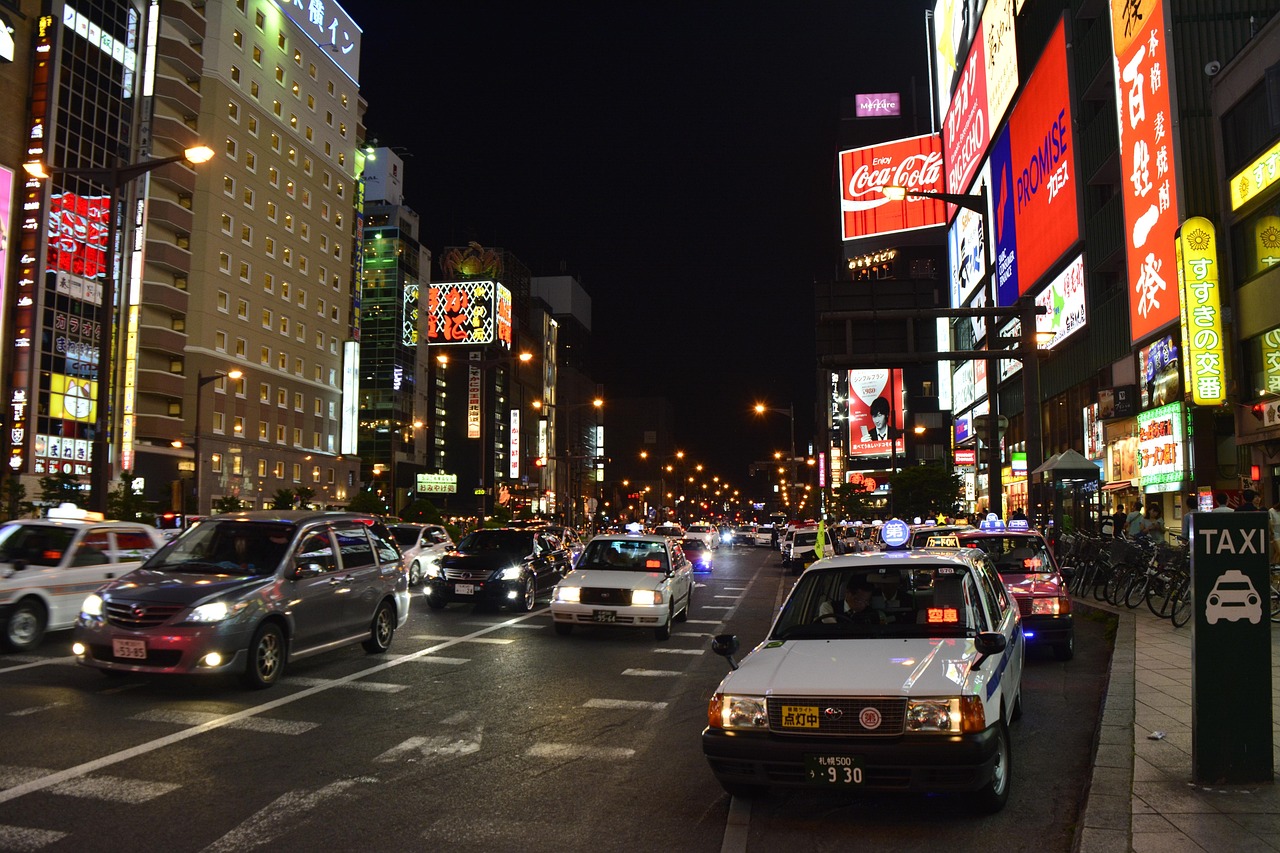
Hokkaido’s biggest entertainment district, south of Odori, with thousands of bars, restaurants, ramen shops and the ice sculptures of the Snow Festival’s Susukino site. Lively and safe, but noisy at night.
Nakajima Park and Maruyama
Quieter areas south and west of the center: Nakajima Park, with its pond and concert hall, and the Maruyama area, with cafés, Maruyama Park and Hokkaido Shrine in the forest.
Top things to see in Sapporo
Odori Park and the Sapporo TV Tower
The green spine of the city, with flower beds in summer, a beer garden in July and August, the Autumn Fest food festival in September and the White Illumination in winter. The TV Tower’s observation deck looks straight down the park.
The Sapporo Snow Festival
Held each February, usually for about a week in early to mid-February, the Snow Festival fills Odori Park with huge snow sculptures, sometimes the size of buildings, Susukino with ice sculptures, and the Tsudome site with snow slides for children. More than two million people visit, so book hotels months ahead. The festival’s dates for 2027 are announced by the organizers on its official site.
Sapporo Clock Tower and the Former Hokkaido Government Office
The wooden Clock Tower, built in 1878 for the Sapporo Agricultural College, is the city’s symbol and a small museum. A few blocks away, the red-brick Former Hokkaido Government Office Building, from 1888, reopened after a long restoration and has free exhibitions and gardens.
Mount Moiwa
Ride the ropeway and a mini cable car to the 531 m (1,742 ft) summit for one of Japan’s finest night views over the city lights and Ishikari Bay. Go just before sunset.
Hokkaido Shrine and Maruyama Park
A large shrine in the forest at the foot of Mount Maruyama, the busiest place in Sapporo for New Year visits and for cherry blossom picnics in early May.
More classic sights
- Sapporo Beer Museum: in a red-brick former brewery, with tastings and a jingisukan (grilled mutton) beer hall next door.
- Nijo Market: a small market of crab, sea urchin and salmon roe, with seafood rice bowls (kaisendon) for breakfast.
- Moerenuma Park: a huge park designed by the sculptor Isamu Noguchi, with a glass pyramid, a stone “mountain” and a sea fountain.
- Okurayama Ski Jump Stadium: the 1972 Winter Olympics ski jump, with a lift to the top and a winter sports museum.
- Historical Village of Hokkaido: an open-air museum of old buildings from Hokkaido’s pioneer era.
- Shiroi Koibito Park: the chocolate factory of Hokkaido’s famous white chocolate biscuits.
Museums
- Sapporo Beer Museum
- Sapporo Clock Tower
Viewpoints
- Okurayama Ski Jump Stadium
- Sapporo TV Tower
Monuments
- Former Hokkaidō Government Office
Parks and gardens
- Moerenuma Park
- Odori Park
Churches and cathedrals
- Hokkaidō Jingū
Peaks and mountains
- Mount Moiwa
Other things to do in Sapporo
Food and drink
Sapporo gave Japan miso ramen, rich and buttery, often topped with corn; try it in Ramen Yokocho in Susukino. Also try soup curry, a spicy broth with big pieces of vegetables and chicken; jingisukan, mutton grilled at the table on a dome-shaped pan; and Hokkaido’s seafood: hairy crab, king crab, scallops, sea urchin and salmon roe. Hokkaido’s dairy produces excellent ice cream, cheese and cakes. Sapporo Beer is brewed here, and the Sapporo Autumn Fest in September is a month-long food festival in Odori Park.
Skiing and outdoor activities
Sapporo has ski areas inside the city, such as Sapporo Teine and Sapporo Kokusai, about an hour by bus; Niseko and Rusutsu, two of Japan’s most famous powder resorts, are about two to three hours away. In summer, the hills offer hiking and cycling; see our guides to hiking and cycling.
Hot springs
Jozankei Onsen, in a forested river valley about an hour by bus from the center, is Sapporo’s own hot spring resort, with ryokan, day baths and fall colors in October.
Day trips from Sapporo
- Otaru: a canal town of old stone warehouses, glassworks, music boxes and sushi, about 35–45 minutes by JR along the sea.
- Noboribetsu Onsen: a famous hot spring town with a steaming volcanic valley called Jigokudani, about 1 hour 15 minutes by limited express and bus.
- Lake Toya and Lake Shikotsu: caldera lakes with volcanoes, hot springs and boat trips, 1–2 hours away.
- Furano and Biei: lavender fields (best in July), flower farms and rolling hills, about 2 hours by train or car; also a ski area in winter.
- Asahikawa: the Asahiyama Zoo, famous for its penguin walks in winter, and Asahikawa ramen, about 1.5 hours by limited express.
- Niseko: powder skiing in winter, rafting and hiking in summer, about 2–3 hours by bus or car.
Getting there and getting around
From New Chitose Airport
New Chitose Airport (CTS), Hokkaido’s main airport with domestic and Asian flights, is about 40 minutes from Sapporo Station by JR’s Rapid Airport trains, which run frequently; buses also serve hotels in the center. Flights from Tokyo take about 1.5 hours, and are often cheaper than the train. By rail, the Hokkaido Shinkansen runs from Tokyo to Shin-Hakodate-Hokuto in about 4 hours; continuing to Sapporo takes about 3.5 hours more by limited express, as the line’s extension to Sapporo is still under construction.
Rail passes
The nationwide Japan Rail Pass (¥50,000 (about US$315) for 7 days on the official site as of October 2026) covers JR Hokkaido trains, but most visitors fly to Hokkaido. JR Hokkaido’s regional passes are better value for trips from Sapporo: as of October 2026, the Sapporo–Noboribetsu Area Pass costs ¥10,000 (about US$63) for 4 days and covers New Chitose Airport, Otaru and Noboribetsu, and the Sapporo–Furano Area Pass costs ¥11,000 (about US$70) for 4 days.
Subway, streetcar and IC cards
Three subway lines (Namboku, Tozai and Toho) cross at Odori, and a streetcar loop runs through the south-west of the center to the Mount Moiwa ropeway. Pay with Sapporo’s SAPICA, JR Hokkaido’s Kitaca, or any other Japanese IC card such as Suica, or a phone. The center is walkable, and in winter the underground walkways from Sapporo Station to Odori and Susukino keep you out of the snow.
When to go and how long to stay
Sapporo has cold, snowy winters and warm, mostly dry summers. The table uses the Japan Meteorological Agency’s (JMA) 1991–2020 normals for its Sapporo station: average daily highs and lows, total precipitation (rain and melted snow) and days with at least 1 mm.
| Month | Average high / low | Rain (days with 1 mm or more) | What to expect |
|---|---|---|---|
| January | −0 °C (31 °F) / −6 °C (20 °F) | 108 mm (4.3 in), 18 days | Snowy and freezing; deep snow and skiing; frequent light snow |
| February | 0 °C (33 °F) / −6 °C (21 °F) | 92 mm (3.6 in), 16 days | Snow Festival, usually in early to mid-February; the snowiest time to visit |
| March | 4 °C (40 °F) / −2 °C (28 °F) | 78 mm (3.1 in), 14 days | Thawing slowly; slushy streets; ski season continues |
| April | 12 °C (53 °F) / 3 °C (38 °F) | 55 mm (2.1 in), 10 days | Cool, with the last snow melting; quiet before spring |
| May | 18 °C (64 °F) / 9 °C (48 °F) | 56 mm (2.2 in), 8 days | Cherry blossoms usually open around May 1 (JMA normal); Golden Week crowds |
| June | 22 °C (71 °F) / 13 °C (56 °F) | 60 mm (2.4 in), 8 days | Fresh and pleasant, no rainy season; lilacs and the Yosakoi Soran festival |
| July | 25 °C (78 °F) / 18 °C (64 °F) | 91 mm (3.6 in), 8 days | Warm and mostly sunny; lavender in Furano; beer gardens in Odori |
| August | 26 °C (80 °F) / 19 °C (66 °F) | 127 mm (5.0 in), 10 days | The warmest month, rarely very hot; summer festivals |
| September | 23 °C (73 °F) / 15 °C (59 °F) | 142 mm (5.6 in), 10 days | Clear and comfortable; Autumn Fest food festival in Odori Park |
| October | 16 °C (62 °F) / 8 °C (46 °F) | 110 mm (4.3 in), 12 days | Crisp; fall colors in Jozankei and the hills; first snow on the peaks |
| November | 9 °C (48 °F) / 2 °C (35 °F) | 114 mm (4.5 in), 15 days | Cold and grey; first snow in the city; White Illumination begins |
| December | 2 °C (36 °F) / −4 °C (25 °F) | 114 mm (4.5 in), 16 days | Snowy and cold; Christmas market in Odori Park; ski season opens |
Sapporo gets about 1,150 mm (45 in) of precipitation a year, much of it as snow from December to March, when it snows on most days; the JMA’s normals record about 4.8 m (16 ft) of total snowfall a winter. Unlike Honshu, Hokkaido has no official rainy season in June, and typhoons reach it less often and usually weaker. August highs average 26 °C (80 °F), with cool nights.
Weather month by month
Averages from JMA normals 1991–2020, Sapporo · Last reviewed 5 Oct 2026
Cherry blossoms and fall colors: spring comes late: the JMA’s normal date for the first cherry blossoms in Sapporo is May 1, with full bloom around May 6, a month after Tokyo; in 2026 they opened on April 18. The maples at the JMA’s Sapporo station normally turn around October 28, and the mountains around Jozankei peak in mid-October.
Crowds: hotels are fullest during the Snow Festival in February, Golden Week, and the summer holidays from mid-July to August, when visitors from the rest of Japan come to escape the heat.
2 days in Sapporo
Day one, Sapporo Station and the Clock Tower, Odori Park and the TV Tower, the Former Hokkaido Government Office, and dinner and ramen in Susukino. Day two, breakfast at Nijo Market, Hokkaido Shrine and Maruyama, the Sapporo Beer Museum with jingisukan, and Mount Moiwa at sunset.
A week in Hokkaido from Sapporo
Add a day in Otaru, a night at Noboribetsu or Jozankei hot springs, two days in Furano and Biei in summer or skiing in Niseko in winter, and a day at Lake Toya.
Where to stay in Sapporo and the accommodation taxes
- Sapporo Station: big hotels and the easiest base for the airport and day trips.
- Odori: central for sights and festivals.
- Susukino: for food and nightlife, with many good-value hotels.
- Nakajima Park: quieter, with some upscale hotels.
- Jozankei: hot spring ryokan for a night in the hills.
Since April 1, 2026, two accommodation taxes apply in Sapporo, one for the city and one for Hokkaido Prefecture, charged per person per night on all hotels, ryokan and registered private rentals. According to the City of Sapporo, the combined rates are:
| Room rate per person per night | Sapporo city tax | Hokkaido tax | Total |
|---|---|---|---|
| under ¥20,000 | ¥200 | ¥100 | ¥300 (about US$1.9) |
| ¥20,000 to ¥49,999 | ¥200 | ¥200 | ¥400 (about US$2.5) |
| ¥50,000 or more | ¥500 | ¥500 | ¥1,000 (about US$6.3) |
Students on school trips are exempt. Elsewhere in Hokkaido the prefectural tax applies, and some towns, such as Niseko, add their own.
What a trip to Sapporo costs
Prices are approximate, for October 2026, converted at about ¥158 to the US dollar.
| Item | Typical cost |
|---|---|
| Bowl of miso ramen | ¥1,000–1,500 (about US$6.3–9.5) |
| Soup curry | ¥1,300–2,000 (about US$8.2–13) |
| Seafood rice bowl at Nijo Market | ¥2,500–5,000 (about US$16–32) |
| Jingisukan dinner with beer | ¥3,000–5,000 (about US$19–32) |
| Subway ride | ¥210–380 (about US$1.3–2.4) |
| Business hotel double, per night (higher in February) | ¥9,000–20,000 (about US$57–125) |
| Accommodation taxes (room under ¥20,000 per person) | ¥300 (about US$1.9) per person per night |
Practical tips for Sapporo
- Winter walking: sidewalks are icy from December to March; wear boots with good grip or buy slip-on spikes at a convenience store, and watch for snow falling from roofs.
- Snow Festival: book hotels and flights months ahead; the sculptures are lit until 10 p.m.
- Car rental: a car is the best way to see Hokkaido’s countryside in summer; in winter, drive only with experience on snow. You need an International Driving Permit.
- Visitor hotline: the JNTO’s Japan Visitor Hotline, 050-3816-2787, answers in English 24 hours a day.
Safety
Sapporo is safe, and Susukino is lively but not dangerous; avoid bar touts who promise cheap drinks. The real hazards are winter ones: ice and snow cause falls and traffic accidents, and blizzards can cancel flights and trains for a day. Hokkaido also has earthquakes: in 2018 a strong earthquake caused an island-wide blackout. Take cover in strong shaking, follow staff instructions, and keep the JNTO’s Safety Tips app on your phone. Brown bears live in Hokkaido’s forests and are sometimes seen on the edge of the city, so follow local warnings and don’t hike alone in the hills. In an emergency, call 110 for the police or 119 for an ambulance or fire.
What to pack for Sapporo
From December to March: a warm, waterproof coat, hat, gloves, thermal layers and boots with grippy soles. In summer: light layers and a sweater for cool evenings, and comfortable walking shoes all year. Japan uses 100 V and two-pin type A plugs like the US.
Sapporo travel FAQ
When is the Sapporo Snow Festival?
Every February, usually for about a week in early to mid-February. The organizers announce each year’s dates on the festival’s official website; book accommodation months ahead.
How do I get from New Chitose Airport to Sapporo?
Take a JR Rapid Airport train to Sapporo Station, about 40 minutes, or an airport bus to the major hotels.
How cold is Sapporo in winter?
January averages a high of about 0 °C (31 °F) and a low of −6 °C (20 °F), with snow on most days.
How much is the accommodation tax in Sapporo?
Since April 1, 2026, the city and Hokkaido taxes together are ¥300 per person per night for rooms under ¥20,000, ¥400 up to ¥49,999 and ¥1,000 from ¥50,000.
Is Sapporo worth visiting in summer?
Yes. It is warm but not humid, with highs around 25 °C (77 °F), beer gardens, festivals and lavender in Furano.
What food is Sapporo famous for?
Miso ramen, soup curry, jingisukan grilled mutton, crab and other seafood, and Sapporo beer.
Can I ski from Sapporo?
Yes. Sapporo Teine and Sapporo Kokusai are about an hour away, and Niseko and Rusutsu are about two to three hours away.
When do the cherry blossoms bloom in Sapporo?
Around early May: the JMA’s normal date for the first blossoms is May 1, with full bloom around May 6.
Is the JR Pass worth it in Hokkaido?
Usually not. Most visitors fly to Hokkaido, and JR Hokkaido’s area passes, such as the Sapporo–Noboribetsu Area Pass (¥10,000 for 4 days), are cheaper for regional trips.
Do I need a car in Hokkaido?
Not for Sapporo and Otaru, but a car makes Furano, Biei and the lakes much easier in summer.
Sources
- © OpenStreetMap contributors · ODbL · fetched 5 Oct 2026
- Wikidata · CC0 · fetched 5 Oct 2026
Sources and last review
Researched and last reviewed on 4 October 2026. Accommodation taxes: the City of Sapporo; climate normals, cherry blossom and maple dates and typhoon statistics: the Japan Meteorological Agency (JMA); JR Pass: the official Japan Rail Pass website; area passes: JR Hokkaido; visitor hotline: JNTO; exchange rate: the US Federal Reserve. Snow Festival timing, sight descriptions, journey times, the shinkansen extension and typical prices are general references or estimates, flagged for checking. Prices and hours change, so check the official sites before you go. For entry rules, money and general safety, see our Japan travel guide.
Plan your trip
Partner links: TravelerCenter may earn a commission if you book, at no extra cost to you.
🇯🇵 Useful Japanese phrases for Sapporo
All 38 Japanese phrases: restaurant, hotel, emergencies, romance (printable) →