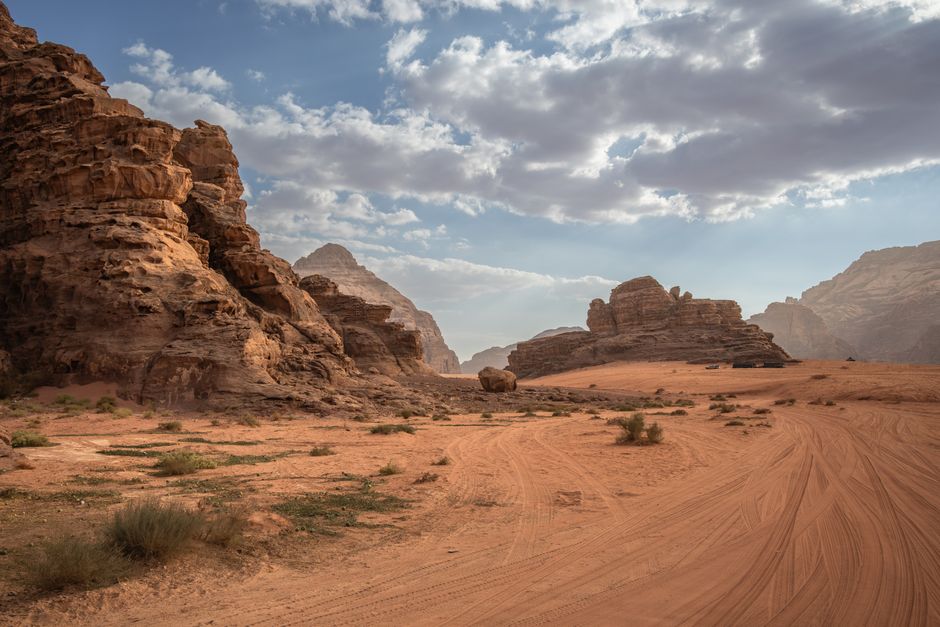
Wadi Rum, the “Valley of the Moon,” is a vast protected desert in southern Jordan where sandstone and granite mountains rise straight out of red and orange sand, cut by narrow canyons, natural rock bridges and towering cliffs. It has been the backdrop for many films set on Mars and in distant deserts, and its dramatic scale inspired T. E. Lawrence to describe it as “vast, echoing and God-like.” The Wadi Rum Protected Area covers about 74,000 hectares (about 290 square miles) and was inscribed by UNESCO in 2011 as a mixed natural and cultural World Heritage Site, the only one in Jordan, for its landscapes and for the thousands of rock carvings, inscriptions and archaeological remains left by people over about 12,000 years, including Nabataean temples and water systems. Bedouin families still live in and around Wadi Rum village and the nearby village of Disi, and they run most of the camps, jeep tours and camel treks. The classic visit is an afternoon or full-day jeep tour, sunset over the dunes, a dinner of zarb cooked under the sand and a night in a desert camp under some of the clearest skies in the region. Wadi Rum is about an hour from Aqaba and 1.5 hours from Petra, so it fits easily into any trip to southern Jordan.
Right now in Wadi Rum (Wadi Rum village)
- Wed 13–27°C 56–80°F Mostly clear
- Thu 16–31°C 61–88°F Clear
- Fri 19–30°C 65–87°F Mostly clear
Weather: MET Norway (CC BY 4.0)
Top tours in Wadi Rum
See all tours for Wadi Rum →
From local operators, with prices and reviews; you check availability and book on Viator, our partner. We may earn a commission at no extra cost to you. How we earn money
Wadi Rum at a glance
- Best months: March to May and September to November, with warm days and cool nights. Summer days are very hot; winter nights can drop close to freezing.
- Time needed: a half-day jeep tour is the minimum; one night in a camp is the classic visit; two nights allow a full-day tour, a hike or a camel trek.
- Entry (as of October 2026): the protected area fee is JOD 5 (about US$7) for foreign visitors, paid at the Visitor Center, and is included in the Jordan Pass. Tours and camps are paid separately.
- Getting there: about 66 km (41 miles) or just under an hour from Aqaba, 1.5 hours from Petra and 3.5 hours from Amman.
- Before you go: visas, the Jordan Pass, money and laws are covered in our Jordan travel guide.
Wadi Rum’s areas and sights
The Visitor Center
At the entrance to the protected area, on the road from the Desert Highway, the Visitor Center is where you pay the entry fee, meet your guide or camp transfer, and can book jeep tours and camel rides. It has a small exhibition about the area and a view of the rock formation known as the Seven Pillars of Wisdom.
Wadi Rum village
The Bedouin village at the end of the paved road, about 7 km (4 miles) past the Visitor Center, is the base for most guides and the starting point for jeep tours. It has small shops, a few simple restaurants and the remains of a Nabataean temple nearby. Beyond the village, all travel is on sand tracks.
The central valleys
South and east of the village, the main tour circuit takes in red dunes, the canyons of Jabal Khazali, natural rock bridges and the sandstone “islands” of mountains rising from the sand. Most camps are scattered among these valleys, out of sight of each other.
Disi
The village of Disi, on the northern edge of the protected area, has its own camps, the Disi Women’s Cooperative pottery center and the launch area for hot-air balloon flights. It’s a quieter alternative to Wadi Rum village.
Jabal Rum and Jabal Umm Ishrin
The two great massifs flanking the village are among Jordan’s highest peaks and a destination for serious climbers and scramblers, who must hire local guides.
Where to stay in Wadi Rum
- Traditional Bedouin camps: goat-hair tents with shared bathrooms, communal fires and dinners; the most atmospheric and affordable option.
- Mid-range camps: private tents or cabins with en-suite bathrooms, often with solar power.
- Luxury and “bubble” camps: domed tents with panoramic windows for stargazing from bed, air-conditioning and private bathrooms.
- Wild camping with a guide: a night under the stars at a remote spot, arranged with a licensed guide.
Book with licensed camps, check whether transfers from the Visitor Center or village and meals are included, and confirm the location: some camps are just outside the protected area near Disi.
Top things to see in Wadi Rum
Jeep tours
Most visitors explore by 4×4 with a Bedouin driver-guide, choosing a two-hour, half-day or full-day circuit. A typical route includes the red dunes, Khazali Canyon’s rock carvings, the Little Bridge and Um Fruth rock bridge, Lawrence’s Spring, the ruined stone house known as Lawrence’s House and a sunset viewpoint. Tours can be booked with your camp or at the Visitor Center; agree the route, duration and price before you set off.
Khazali Canyon and the inscriptions
A narrow cleft in Jabal Khazali shelters petroglyphs of people and animals and inscriptions in Thamudic and Nabataean scripts, part of the cultural heritage that earned Wadi Rum its UNESCO status. Look but don’t touch: the carvings are fragile.
The rock bridges
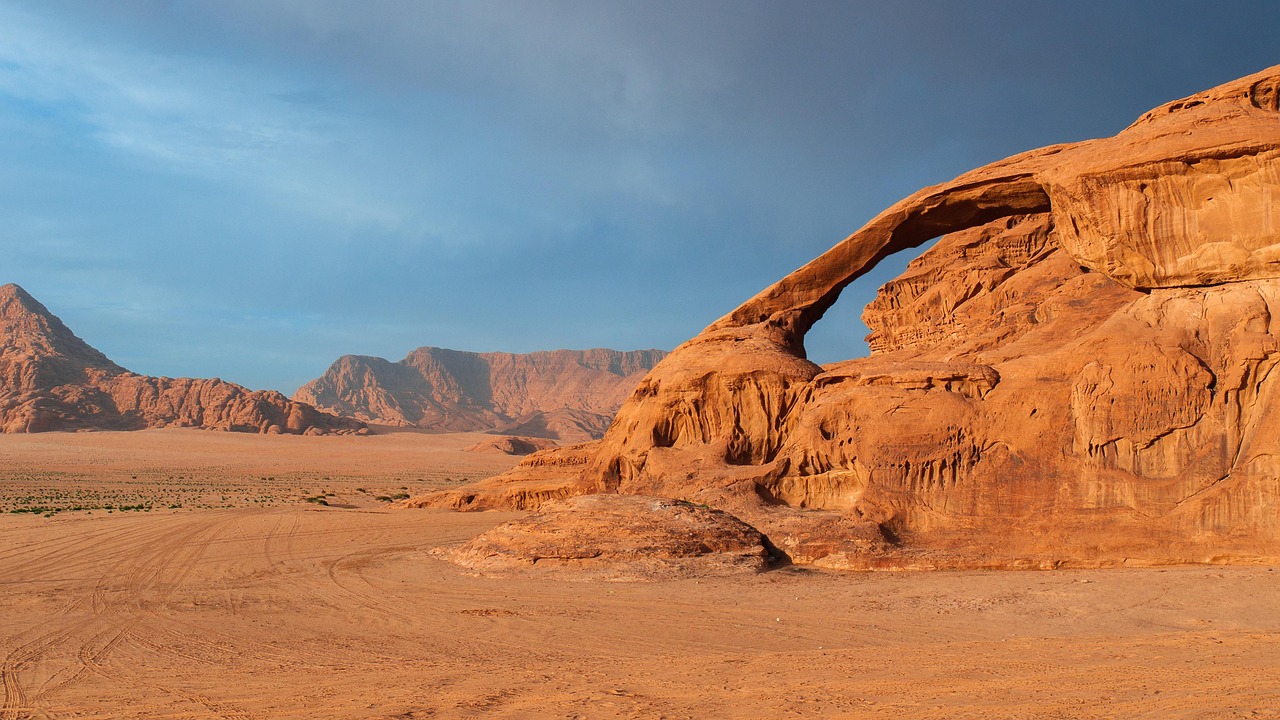
Wadi Rum’s natural arches range from the easy-to-climb Little Bridge and Um Fruth to the high Burdah rock bridge, which takes a strenuous guided scramble of a few hours to reach.
The red dunes
Climb the soft red dunes on foot for wide views over the valleys, or try sandboarding. The sand is hottest at midday, so go in the morning or late afternoon.
Lawrence’s Spring and the Nabataean temple
A short climb from the valley floor leads to Lawrence’s Spring (Ain Shellaleh), a small spring with Nabataean inscriptions and views over the desert. Near the village, the remains of a Nabataean temple and water systems show that traders passed through here more than 2,000 years ago.
Sunset and stargazing
Sunset turns the cliffs deep red, and with no artificial light, the night sky is spectacular. The Jordan Tourism Board lists guided stargazing programs such as RumSky, with telescopes and professional astronomers.
Camel treks
Short camel rides or overnight treks follow the sandy valleys at a slower pace; your camp can arrange them, and some combine camels with a jeep return.
Hot-air balloon and microlight flights
Balloons Over Rum, run in partnership with the Royal Jordanian Gliding Club, launches dawn flights from the Disi area, rising to about 2,000 feet (600 m) above the desert. Microlight flights in open aircraft are also offered.
Other things to do in Wadi Rum
- Hiking: short walks around the village, guided scrambles to Burdah bridge and day hikes in the canyons; the Jordan Trail’s section from Petra to Wadi Rum covers 125.4 km (78 miles) in six hiking days, and the section from Wadi Rum to Aqaba 75.9 km (47 miles) in five.
- Rock climbing: classic routes on Jabal Rum and Jabal Umm Ishrin, only with local licensed guides.
- Horse riding: guided rides through the valleys, from a few hours to multi-day trips toward Aqaba.
- Bedouin culture: pottery workshops at the Disi Women’s Cooperative, Bedouin cooking experiences and traditional music around the fire.
- The Hijaz railway: heritage train rides on a 14 km (9-mile) stretch of the old Hijaz line near Wadi Rum station, run by the Jordan Heritage Revival Company on some days.
- Camel racing: races are held at a track in Wadi Rum on some occasions.
Food and drink
Meals are usually included with your camp: Bedouin tea with sage, a buffet of mezze, rice and salads, and zarb, lamb, chicken and vegetables slow-cooked in a pit under the sand and unearthed in front of guests. Lunches on tours are often cooked over a fire in the shade of a rock. Wadi Rum village has a few simple restaurants and shops. Alcohol isn’t sold in the village, and most camps don’t serve it; ask before bringing your own, and drink discreetly.
Desert etiquette
Wadi Rum is a protected area and home to Bedouin communities. Take all rubbish with you, don’t drive off established tracks yourself, don’t touch or scratch the rock carvings, ask before photographing people, and dress modestly in the village.
Day trips and nearby
Petra
About 1.5 hours north, Petra deserves at least a full day; many visitors combine two nights in Wadi Musa with one or two in Wadi Rum. See our Petra guide.
Aqaba
Just under an hour south, Aqaba has coral reefs, beaches and Red Sea dive sites. See our Aqaba guide.
Humeima
Off the Desert Highway between Wadi Rum and Petra, the ruins of Humeima include Nabataean water systems and an Umayyad-era settlement; entry is included in the Jordan Pass.
Nearby destinations
- Aqaba40 km
- Eilat46 km
- Petra (Wadi Musa)83 km
- Dahab150 km
- Sharm El Sheikh220 km
- Jerusalem245 km
- Amman268 km
- Tel Aviv285 km
Getting there and getting around
By road
Wadi Rum is signposted from the Desert Highway, about 66 km (41 miles) north of Aqaba. Driving times are about 55 minutes from Aqaba, 1.5 hours from Petra and 3.5 hours from Amman. Leave your car at the Visitor Center or in the village, where your camp will collect you.
By bus and taxi
JETT and public buses link Aqaba and Amman with nearby towns, and local minibuses run between Aqaba, Petra and Wadi Rum village at limited times. Taxis from Aqaba or Petra, or transfers arranged by your camp or hotel, are the easiest option.
By train and air
The nearest airport is King Hussein International Airport in Aqaba, about an hour away. There are no regular passenger trains; the heritage train runs only on some days.
Getting around
Inside the protected area, you travel with a licensed local guide by jeep, camel or on foot. Don’t drive into the desert in a rental car: the sand is deep, tracks are unmarked, and getting stuck in the heat is dangerous.
When to go and how long to stay
Spring (March to May) and autumn (September to November) are the best seasons: days are warm and sunny, nights are cool, and camps are at their busiest. Summer (June to August) brings very hot days, so tours run in the early morning and late afternoon, but nights in the desert are pleasant. Winter (December to February) has mild, clear days but cold nights that can fall close to freezing, so choose a camp with heated rooms or plenty of blankets. Rain is rare but can cause flash floods in the canyons between November and March. Wadi Rum, at about 950–1,000 m (3,100–3,300 feet), has no station with published World Meteorological Organization normals, so the table shows the Jordan Meteorological Department’s averages for Aqaba, at sea level about 66 km (41 miles) to the south, and Amman, on the high plateau: Wadi Rum’s days usually fall between the two, while its clear desert nights are often colder than both.
| Month | Aqaba: high / low | Amman: high / low | What to expect in Wadi Rum |
|---|---|---|---|
| January | 20 °C (69 °F) / 9 °C (48 °F) | 12 °C (54 °F) / 4 °C (38 °F) | Mild days, cold nights |
| February | 22 °C (72 °F) / 10 °C (50 °F) | 14 °C (57 °F) / 4 °C (40 °F) | Mild days, cold nights |
| March | 26 °C (78 °F) / 13 °C (55 °F) | 17 °C (63 °F) / 6 °C (43 °F) | Warm; very good |
| April | 31 °C (87 °F) / 17 °C (63 °F) | 23 °C (73 °F) / 10 °C (49 °F) | Warm; excellent |
| May | 35 °C (95 °F) / 21 °C (69 °F) | 28 °C (82 °F) / 14 °C (56 °F) | Hot middays; good |
| June | 38 °C (101 °F) / 24 °C (74 °F) | 31 °C (87 °F) / 17 °C (62 °F) | Hot; tours early and late |
| July | 39 °C (103 °F) / 25 °C (77 °F) | 32 °C (90 °F) / 18 °C (65 °F) | Very hot by day |
| August | 39 °C (102 °F) / 25 °C (78 °F) | 32 °C (90 °F) / 19 °C (65 °F) | Very hot by day |
| September | 36 °C (98 °F) / 23 °C (74 °F) | 31 °C (87 °F) / 17 °C (62 °F) | Hot days, warm nights |
| October | 33 °C (91 °F) / 20 °C (68 °F) | 27 °C (81 °F) / 14 °C (57 °F) | Warm; excellent |
| November | 27 °C (81 °F) / 15 °C (59 °F) | 20 °C (69 °F) / 9 °C (49 °F) | Pleasant days, cool nights |
| December | 22 °C (71 °F) / 10 °C (51 °F) | 14 °C (58 °F) / 5 °C (41 °F) | Mild days, cold nights |
The figures are average daily highs and lows that the Jordan Meteorological Department publishes through the World Meteorological Organization’s World Weather Information Service. Aqaba averages about 32 mm (1.2 in) of rain a year, mostly from November to March.
Events worth planning around
- Spring and autumn: the busiest seasons; book camps and guides ahead.
- New moon nights: the darkest skies for stargazing.
- Eid holidays: popular with Jordanian and regional visitors.
- Ramadan: in 2027 expected from about 8 February to 9 March; camps continue to serve guests.
How long to stay: half a day, 1 and 2 nights
- Half a day: a two- to four-hour jeep tour from the Visitor Center, ideally ending at sunset, on the way between Petra and Aqaba.
- One night: an afternoon jeep tour, sunset, a zarb dinner and stargazing, with a sunrise walk the next morning.
- Two nights: add a full-day jeep or camel tour, a guided scramble to Burdah bridge or a balloon flight.
Typical costs in Wadi Rum
Prices are approximate, for October 2026, converted at about US$1.41 per dinar. Only the entry fee is set by the authorities; tour and camp prices vary by season and operator.
| Item | Typical cost |
|---|---|
| Wadi Rum Protected Area entry | JOD 5 (about US$7); included in the Jordan Pass |
| Jeep tour, 2–3 hours, per vehicle | about JOD 40–60 (about US$56–85) |
| Full-day jeep tour, per vehicle | about JOD 80–120 (about US$113–170) |
| Camel ride, 1–2 hours | about JOD 15–30 (about US$21–42) |
| Traditional camp, half board, per person | about JOD 25–50 (about US$35–70) |
| Luxury or “bubble” tent, per night for two | about JOD 120–300 (about US$170–425) |
| Hot-air balloon flight, per person | about JOD 150–200 (about US$210–280) |
| Taxi from Aqaba, one way | about JOD 25–35 (about US$35–50) |
Safety in Wadi Rum
Wadi Rum is peaceful, and its Bedouin guides know the desert well. The risks are natural ones: heat, sun, terrain, cold nights and, occasionally, floods.
- Heat and sun: from May to September, temperatures can pass 35 °C (95 °F) by midday. Tour in the morning and late afternoon, drink plenty of water, wear a hat and long, light clothing, and use high-SPF sunscreen.
- Desert travel: always go with a licensed local guide. Don’t drive a rental car into the sand, and don’t hike alone: tracks are unmarked, phone coverage is patchy, and distances are deceptive.
- Flash floods: heavy rain between November and March can send flash floods through canyons and across tracks. Check the forecast, follow your guide’s advice and stay out of narrow canyons when rain threatens.
- Climbing and scrambling: routes to Burdah bridge and the peaks involve exposed rock; go only with an experienced guide and suitable shoes, and turn back in strong wind.
- Cold nights: from December to February, nights can be close to freezing; bring warm layers and check that your camp provides heating or blankets.
- Jeep safety: ask for a vehicle with seatbelts, don’t ride on the roof or the back on rough tracks, and ask the driver to slow down if needed.
- Dress codes: dress modestly in the village and around Bedouin families.
- Emergencies: call 911 for police, ambulance and fire; tell your camp or the Visitor Center about your plans if you go hiking.
Practical tips for Wadi Rum
- Cash: bring enough Jordanian dinars; there are no reliable ATMs in Wadi Rum village, and many guides and camps prefer cash.
- Phone signal: coverage is good in the village but patchy in the valleys; download offline maps before you go.
- Booking: confirm what’s included (transfers, meals, tours) and the camp’s exact location before you pay.
- Luggage: bring a small overnight bag and leave large suitcases in your car or at your hotel.
What to pack for Wadi Rum
Pack long, light clothes that protect against the sun and cover shoulders and knees, a wide-brimmed hat, sunglasses, sunscreen and lip balm, closed shoes or sturdy sandals for the sand, and a scarf to keep sand out of your face. Add a warm fleece or down jacket for nights (essential from November to March), a headlamp, a power bank, a refillable water bottle and wet wipes.
Wadi Rum travel FAQ
How much does it cost to enter Wadi Rum?
The protected area fee is JOD 5 for foreign visitors, paid at the Visitor Center, and it’s included in the Jordan Pass.
Is Wadi Rum a UNESCO World Heritage Site?
Yes. The Wadi Rum Protected Area was inscribed in 2011 for both its natural landscapes and its cultural heritage of rock art and inscriptions.
Do I need to stay overnight in Wadi Rum?
No, but it’s the best way to see the sunset and the night sky. A half-day jeep tour is possible between Petra and Aqaba.
How do I get to Wadi Rum from Aqaba or Petra?
By car or taxi in about 55 minutes from Aqaba or 1.5 hours from Petra, or by transfer arranged with your camp.
Can I drive my rental car in Wadi Rum?
Only to the Visitor Center and the village. Inside the protected area, travel with a licensed local guide; the sand is deep and tracks are unmarked.
What is the best time to visit Wadi Rum?
March to May and September to November, when days are warm and nights cool.
How cold does Wadi Rum get at night?
In winter, nights can fall close to freezing, so bring warm layers.
Can I see the stars in Wadi Rum?
Yes. With almost no light pollution, the skies are excellent, especially around the new moon; guided stargazing with telescopes is available.
Is Wadi Rum safe?
Yes, if you travel with licensed guides, avoid the midday heat in summer and stay out of canyons when rain threatens.
What should I wear in Wadi Rum?
Light, long clothes for sun protection, a hat, closed shoes for the sand and warm layers for the night.
Sources and last review
Researched and last reviewed on 5 October 2026. The entry fee comes from the Jordan Tourism Board’s entrance fee list and the Ministry of Tourism and Antiquities’ Jordan Pass website; the UNESCO listing, area status and “Valley of the Moon” description from UNESCO’s list for Jordan and the Aqaba Special Economic Zone Authority’s Visit Aqaba website; distances and drive times, the Visitor Center fee and management by the Wadi Rum Regional Directorate from ASEZA and Visit Aqaba; activities including RumSky stargazing, Balloons Over Rum, microlight flights, horse riding, camel racing, the Hijaz heritage train, the Disi Women’s Cooperative and the Jordan Trail sections from the Jordan Tourism Board; flash floods, emergency numbers and outdoor safety from GOV.UK’s Jordan travel information (updated 10 September 2026); climate averages for Aqaba and Amman from the Jordan Meteorological Department via the World Meteorological Organization; area and coordinates from Wikidata. Wadi Rum’s altitude, the 12,000-year span of human activity, individual sites such as Khazali Canyon, the rock bridges and Lawrence’s House, camp types, alcohol in camps, ATMs, tour, camp, balloon and taxi prices are general references or estimates and flagged for checking. For entry rules and money, see our Jordan travel guide.
Plan your trip
Partner links: TravelerCenter may earn a commission if you book, at no extra cost to you.
🇪🇬 Useful Arabic phrases for Wadi Rum
All 38 Arabic phrases: restaurant, hotel, emergencies, romance (printable) →