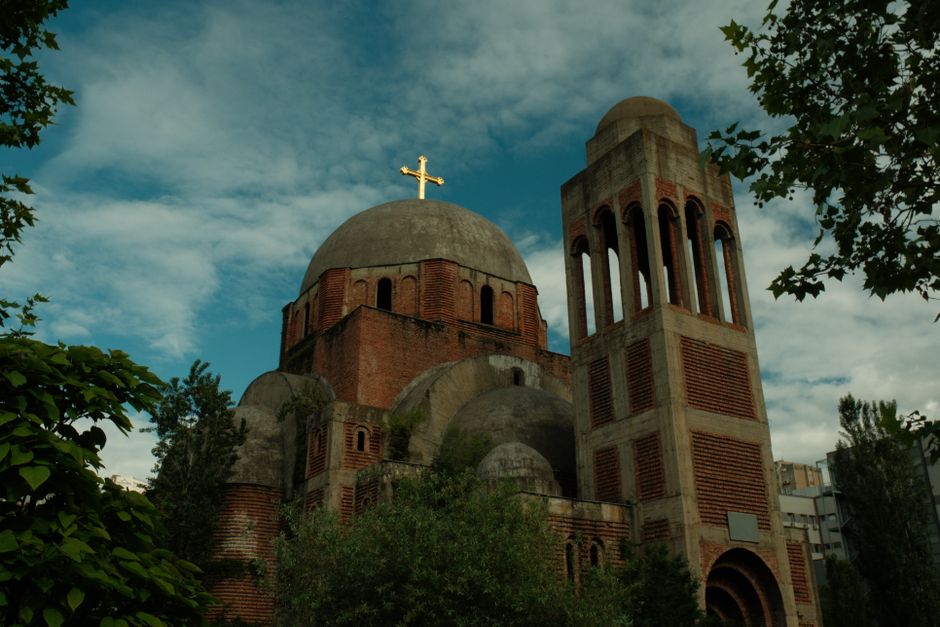
Kosovo is one of Europe’s youngest and least-visited corners, a small, mountainous, landlocked country in the heart of the Balkans with a very young population, a lively café culture and a lot of history packed into a short drive. Prizren, its most beautiful town, spreads below a hilltop fortress with an Ottoman stone bridge, mosques, hammams and Orthodox churches; Pristina, the capital, is all coffee bars, street life and new energy; and in the west, Peja and the Rugova gorge lead into the Accursed Mountains, with hiking, via ferratas and rafting. The Serbian Orthodox monasteries of Visoki Dečani, the Patriarchate of Peć and Gračanica are among the finest medieval buildings in the Balkans. Kosovo uses the euro, prices are low, and people are famously welcoming. It also has a complicated status and a border rule that matters if you go on to Serbia: read the entry section before you plan your route. Late spring and September are the best times. Three to five days covers the highlights; a week lets you hike.
Right now in Kosovo
- Wed 9–23°C 49–73°F Partly cloudy
- Thu 10–23°C 50–74°F Clear
- Fri 13–18°C 55–65°F 5 mm Cloudy
Weather: MET Norway (CC BY 4.0)
Multi-day tours of Kosovo
Multi-day tours from local operators. You check dates and book on Viator, our partner; we may earn a commission at no extra cost to you. How we earn money
Kosovo at a glance: mountains, monasteries and a young capital
Kosovo covers about 10,900 square kilometres, a little smaller than Jamaica. It borders Albania to the south-west, North Macedonia to the south, Montenegro to the west and Serbia to the north and east. The centre is made up of two wide basins, the Kosovo plain around Pristina in the east and the Dukagjini (Metohija) plain around Peja, Gjakova and Prizren in the west, ringed by mountains: the Accursed Mountains (Bjeshkët e Nemuna, also called Prokletije) on the Albanian and Montenegrin borders, where Gjeravica (Đeravica, 2,656 m) is the highest peak, the Sharr (Šar) Mountains in the south, and the Kopaonik range in the north.
Kosovo’s 2024 census, carried out by the Kosovo Agency of Statistics, counted about 1.6 million residents, down from 1.74 million in 2011 as many people have moved abroad; the population is one of the youngest in Europe, with an average age of about 35. Albanians are the large majority; Serbs live mainly in the north and in enclaves such as Gračanica and Štrpce, and there are smaller Bosniak, Turkish, Roma, Ashkali, Egyptian and Gorani communities. Albanian and Serbian are the official languages, and Turkish, Bosnian and Romani have official status in some municipalities, including Turkish in Prizren. English is widely spoken by younger people, and German is common because so many families have relatives in Germany and Switzerland. Kosovo uses the euro. Time zone: Central European Time (UTC+1, UTC+2 from the last Sunday in March to the last Sunday in October).
Kosovo’s status, in brief
Kosovo was an autonomous province of Serbia within Yugoslavia. After the 1998–99 war and NATO’s intervention, it was run by the United Nations under Security Council Resolution 1244, with the NATO-led Kosovo Force (KFOR) providing security; KFOR is still present. Kosovo’s assembly declared independence on 17 February 2008. Many countries, including the United States, the United Kingdom and most EU members, recognise it as an independent state; others, including Serbia, Russia, China and five EU members (Spain, Greece, Cyprus, Romania and Slovakia), do not. Serbia considers Kosovo part of its territory. In 2010, the International Court of Justice gave an advisory opinion that the declaration of independence did not violate international law. The EU facilitates talks between Belgrade and Pristina on normalising relations. For travellers this mostly shows up in practical ways: the border rule with Serbia, car insurance, and the fact that some international services list Kosovo under Serbia.
Kosovo’s regions
- Pristina and the centre: the capital (Prishtinë in Albanian, Priština in Serbian), with the Newborn monument, the National Library’s domed building, the Ethnological Museum in an Ottoman house, and lively Mother Teresa Boulevard. Nearby are Gračanica Monastery (14th century), the Gadime marble cave, the hilltop ruins of Novo Brdo and the Germia forest park.
- Prizren and the south: Kosovo’s cultural capital on the Bistrica river, with its fortress, Sinan Pasha Mosque, Ottoman bridge and the 14th-century church of Our Lady of Ljeviš, plus the Sharr Mountains and the ski area of Brezovica (Brezovicë) beyond.
- Peja and the Rugova valley (west): Peja (Peć) is the gateway to the Rugova gorge and the Accursed Mountains National Park, with the Patriarchate of Peć at the mouth of the gorge and Visoki Dečani Monastery half an hour south.
- Gjakova and the wine country (south-west): Gjakova (Đakovica) has one of the Balkans’ longest Ottoman bazaars, and the hills around Rahovec (Orahovac) produce most of Kosovo’s wine. The Mirusha waterfalls and canyon lie between Gjakova and Pristina.
- Mitrovica and the north: Mitrovica is divided by the Ibar river into a mainly Albanian south and a mainly Serb north. The northern municipalities are politically sensitive (see the safety section) and see few visitors.
Where to go: Prizren, Pristina and the western mountains
Distances are short. Pristina to Prizren takes about an hour and a quarter by motorway, Prizren to Peja about an hour and a half, and Peja back to Pristina about an hour and a half, so the main sights fit into a compact loop.
Prizren
The obvious first stop. Climb to the fortress (Kalaja) at sunset for the view over red roofs and minarets, cross the old stone bridge to Shadërvan square, visit the 17th-century Sinan Pasha Mosque and the Gazi Mehmed Pasha hammam, and, by arrangement, the frescoed church of Our Lady of Ljeviš. Prizren hosts Dokufest, a much-loved documentary and short film festival, every August. See our Prizren guide for details.
Pristina
Kosovo’s capital is not pretty in the classic sense, but it is fun: a young city of cafés (people say the macchiato is the best outside Italy), bars, galleries and street life. See the Newborn monument, repainted each February for Independence Day; the National Library, a brutalist building of domes and metal lattice; the Ethnological Museum (Emin Gjiku complex); the Imperial (Sultan Mehmed Fatih) Mosque; and the old Ottoman clock tower. Gračanica Monastery, one of the great Serbian medieval churches, is 15 minutes away.
Peja and the Rugova gorge
Peja (Peć) sits at the foot of the mountains. Just outside town, the Patriarchate of Peć, a group of 13th- and 14th-century churches, has long been the seat of the Serbian Orthodox Church. The road up the Rugova gorge passes cliffs, a via ferrata, ziplines and caves before climbing to high pastures and villages, the starting points for hikes in the Accursed Mountains National Park and on the cross-border Peaks of the Balkans trail.
Visoki Dečani Monastery
Founded in 1327, Dečani is one of the largest and best-preserved medieval churches in the Balkans, with a vast cycle of frescoes. It is still a working monastery, guarded by KFOR. UNESCO lists Dečani, together with the Patriarchate of Peć, Gračanica and the church of Our Lady of Ljeviš in Prizren, as the “Medieval Monuments in Kosovo” World Heritage Site, which is on its List of World Heritage in Danger. As of October 2026, the monastery welcomes visitors 09:30–14:30 and 15:30–17:30. Entry is free; you hand in your passport or ID card at the checkpoint and get a visitor’s card in return. Dress modestly (long trousers or skirts, covered shoulders), and don’t take photos inside the church.
Gjakova and Rahovec
Gjakova’s Grand Bazaar (Çarshia e Madhe), rebuilt after the war, is lined with wooden-shuttered shops, cafés and the Hadum Mosque. Rahovec, half an hour east, is the centre of Kosovo’s wine country; Stone Castle is the big winery, and a grape-harvest festival is held in September.
The Sharr Mountains and Brezovica
South of Prizren, the Sharr Mountains National Park has high meadows, glacial lakes and shepherds’ villages, good for summer hikes. On the north side, Brezovica is Kosovo’s ski area.
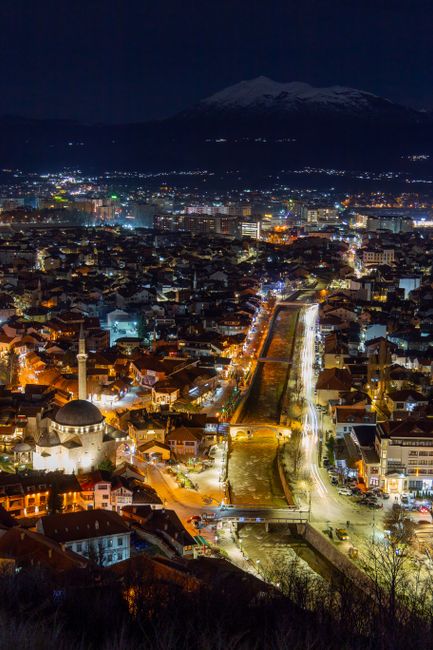
Prizren Travel Guide
Plan a trip to Prizren: the fortress and its 2026 hours, Shadërvan and the Stone Bridge, the Sinan Pasha Mosque, the Gazi Mehmed Pasha…
Best time to visit Kosovo, region by region
Kosovo has a continental climate tempered by the Adriatic in the south-west: warm, dry, sunny summers; cold winters with snow in the mountains and frequent frost in the basins; and changeable springs and autumns. The Dukagjini plain around Prizren and Gjakova is a little warmer than Pristina, which sits higher on the Kosovo plain. The mountains are much colder and keep snow from about December to April. The table shows rounded long-term averages (1961–1990) for Prizren, so treat them as a rough guide.
| Region (station) | Spring highs (Mar–May) | Summer highs (Jun–Aug) | Autumn highs (Sep–Nov) | Winter highs (Dec–Feb) | Winter lows (Dec–Feb) | Rain a year |
|---|---|---|---|---|---|---|
| Prizren and the south-west (402 m) | 12 °C rising to 22.5 °C | 26–28.5 °C | 24.5 °C falling to 11 °C | 3.5–7 °C | about −3 to −0.5 °C | about 860 mm |
July and August are the warmest months, with highs of 28 °C or more and frequent hot spells above 35 °C; January is the coldest, with nights below freezing. Pristina, higher up on the Kosovo plain, is a couple of degrees colder in winter, and the mountains are much colder, with snow from about December to April. These figures come from the old Yugoslav station network as published by Serbia’s Republic Hydrometeorological Service; we could not find official 1991–2020 normals from the Kosovo Hydrometeorological Institute.
Crowds and prices through the year
- April to June: green hills, blossom and mild weather; one of the best times for Prizren, Pristina and the monasteries. Mountain trails are often still snowy until late May.
- July and August: the busiest months, because hundreds of thousands of the Kosovar diaspora come home from Germany, Switzerland and elsewhere for the summer: towns are lively, weddings are everywhere, and border queues can be very long, especially at weekends at the start and end of the holidays. Prizren is packed during Dokufest. It is also the best time for high-mountain hiking.
- September and October: excellent: warm, settled days, the grape harvest in Rahovec and quieter roads once the diaspora has left.
- November to March: cold and often smoggy in Pristina, when coal and wood heating cause air pollution; the time for skiing at Brezovica and the Rugova valley, and for cheap rooms.
Festivals and events: late 2026 and 2027
| Event | Dates | Good to know |
|---|---|---|
| Independence Day | Wednesday 17 February 2027 | Celebrations in Pristina, where the Newborn monument is repainted with a new design each year |
| DokuFest | August (the 25th edition ran 7–15 August 2026) | An international documentary and short film festival in Prizren, with screenings in the fortress, by the river and in cinemas, and a lively music programme; 2027 dates not yet announced |
- Winter: Catholic Christmas (25 December), New Year and Orthodox Christmas (7 January); skiing in Brezovica.
- Spring: Ramadan, expected from about 8 February to Fitër Bajram on about 9 March 2027; Catholic Easter (28 March) and Orthodox Easter (2 May 2027).
- Summer: the diaspora returns, filling towns with weddings, concerts and street life; DokuFest in Prizren in August.
- September: the grape harvest and wine celebrations in Rahovec.
Public holidays
On public holidays, offices and banks close and many shops shorten their hours. When a holiday falls on a weekend, the following Monday is usually a day off. The next ones, from late 2026:
| Holiday | Date |
|---|---|
| Catholic Christmas | Friday 25 December 2026 |
| New Year | Friday 1 and Saturday 2 January 2027 |
| Orthodox Christmas | Thursday 7 January 2027 |
| Independence Day | Wednesday 17 February 2027 |
| Fitër Bajram (Eid al-Fitr) | about Tuesday 9 March 2027 (depends on the moon) |
| Catholic Easter (Sunday and Monday) | 28 and 29 March 2027 |
| Constitution Day | Friday 9 April 2027 |
| Labour Day | Saturday 1 May 2027 |
| Orthodox Easter (Sunday and Monday) | 2 and 3 May 2027 |
| Europe Day | Sunday 9 May 2027 (Monday 10 May off) |
| Kurban Bajram (Eid al-Adha) | about Sunday 16 May 2027 (Monday 17 May off) |
| Catholic Christmas | Saturday 25 December 2027 |
How long to stay: sample itineraries
Kosovo is small and buses link all the main towns, so you can see a lot in a few days. Many people combine it with Albania, North Macedonia or Montenegro; if you plan to continue to Serbia, read the border rule below first.
3 days: Prizren and Pristina
Day 1 in Pristina: the Newborn monument, the National Library, the old town and an evening on the café terraces; Day 2: Gračanica Monastery in the morning, then the bus to Prizren for the fortress at sunset; Day 3: Prizren’s mosques, hammam, churches and bazaar.
5 days: the western loop
Add two days in the west: Peja for the Patriarchate and the Rugova gorge, Visoki Dečani Monastery, and Gjakova’s bazaar on the way back to Prizren, perhaps with a wine tasting in Rahovec.
7 days and more: add the mountains and the neighbours
Spend two or three days hiking from Rugova or in the Sharr Mountains, or combine Kosovo with North Macedonia (Skopje is about an hour and a half from Pristina) and Albania (Tirana is about three to four hours from Prizren by motorway). A classic Balkan loop links Prizren, Skopje, Ohrid and Tirana.
Entry, money and costs
Entry: visas, passports and the Serbia border rule (last reviewed October 2026)
Kosovo sets its own entry rules. Citizens of EU and Schengen countries, the UK, the United States, Canada, Australia and many other countries can visit without a visa for up to 90 days, and Kosovo’s Ministry of Foreign Affairs lists EU and Schengen citizens, British citizens and some others as able to enter with a biometric national ID card. According to the UK government, your passport must be undamaged and valid for the length of your stay. Border officers may ask about the purpose of your visit or your funds. Kosovo is not in the EU or Schengen area, so the EU’s Entry/Exit System and ETIAS don’t apply at its borders, and days in Kosovo don’t count towards your Schengen 90 days.
The Serbia border rule. This is the most important practical point for anyone touring the Balkans:
- Serbia does not consider its crossing points with Kosovo to be official international border crossings, because it regards Kosovo as part of its territory.
- If you enter Kosovo from Serbia, you can return to Serbia the same way without problems.
- If you enter Kosovo from Albania, North Macedonia or Montenegro, or by flying into Pristina, you will not have a Serbian entry stamp, and you are likely to be refused entry if you try to cross from Kosovo directly into Serbia. Take a route through a third country instead: for example, from Kosovo to North Macedonia or Montenegro, then into Serbia from there.
- Serbian border guards have also refused entry to some foreign nationals with Republic of Kosovo stamps in their passports, and that in isolated cases Serbian officials have cancelled Kosovo stamps.
In practice, either visit Kosovo as a return trip from Serbia, or plan a southern loop that takes in Kosovo with Albania, North Macedonia and Montenegro, and enter Serbia from one of those countries. Tensions can also cause delays at the crossings between Kosovo and Serbia.
Rules change, so check Kosovo’s Ministry of Foreign Affairs, Serbia’s Ministry of Foreign Affairs and your own government’s travel information before you go.
Language
A few Albanian words go a long way: tungjatjeta (hello), mirëdita (good day), faleminderit (thank you), ju lutem (please), po and jo (yes and no), gëzuar (cheers) and sa kushton? (how much?). Note that nodding and shaking the head can be the reverse of what you expect among older people. In Serb areas, Serbian is spoken: zdravo (hello), hvala (thank you).
Money: the euro, cards and cash
Kosovo uses the euro, which it adopted unilaterally (after the German mark), although it is not part of the eurozone. Since 1 February 2024, a Central Bank of Kosovo regulation has made the euro the only currency allowed for cash payments, so Serbian dinars are no longer accepted in cash, including in Serb-majority areas. Cards and phone payments are accepted in hotels, larger restaurants and supermarkets in Pristina and Prizren, but carry cash for small cafés, bakeries, buses, markets, guesthouses, village restaurants and border car insurance. ATMs are common in towns; the UK government recommends using machines inside banks, as card skimming has been reported.
Tipping
Tipping is appreciated but modest: round up the bill or leave about 10% in restaurants, round up taxi fares, and give a little to guides. Coffee is often so cheap that people simply leave the change.
Typical travel costs
Kosovo is one of the cheapest countries in Europe to travel in. A macchiato often costs about €1 and a hearty meal in a local restaurant €5–10. These estimates, per person per day, are a planning guide as of October 2026:
| Style | Estimated cost per day | What that looks like |
|---|---|---|
| Budget | about €30–45 | Hostel dorm or simple guesthouse, bakery breakfasts, qebapa and byrek, local buses and free sights |
| Mid-range | about €60–100 | Double room in a good hotel shared by two, restaurant meals with wine, a guide or a taxi day trip to the monasteries |
| High-end | about €150+ | The best hotels in Pristina and Prizren, private driver-guides and mountain lodges |
The figures are our estimates, not official statistics.
Getting there and getting around
Airports
- Pristina International Airport Adem Jashari (PRN): about 15 km south-west of Pristina, with many flights to Germany, Switzerland, Austria and other European countries, busiest in summer and around holidays when the diaspora travels. City bus line 1A runs to Pristina’s bus station for about €3, roughly hourly, in about 40 minutes; taxis cost about €15–25 to the centre. Prizren is about an hour away by car.
Many visitors fly into Skopje in North Macedonia instead: as of October 2026, Skopje Airport’s official taxis charge fixed fares of 4,900 denars (€80) to Pristina and 6,700 denars (€110) to Prizren. Tirana in Albania is about three hours from Prizren.
Buses
Buses and minibuses link all the main towns frequently and cheaply. Pristina to Prizren takes about an hour and a half to two hours and costs about €4–5; buses also run from Pristina and Prizren to Peja, Gjakova and Mitrovica. International buses go from Prizren to Tirana (about two and a half to three hours, €15–20) and Skopje (about two and a half to three hours), and from Pristina to Skopje, Tirana, Podgorica and cities in Western Europe. Pay the driver or at the bus station. International ride-hailing apps don’t work in Kosovo; use registered taxi firms, ordered by phone or local app.
Trains
Kosovo’s railway company, Trainkos, runs only a few slow domestic trains, such as Pristina to Peja (about two a day, taking about two hours). The international service to Skopje has been suspended since 2025 while the line is rebuilt. Buses are faster and more frequent for most journeys.
Driving: insurance, roads and border crossings
Driving gives you the most freedom, especially for the monasteries, Rugova and the wine villages. Two modern motorways, the Arbën Xhaferi motorway from Pristina to the North Macedonian border and the Ibrahim Rugova motorway from Pristina towards Prizren and the Albanian border, are toll-free; other roads range from fair to poor, especially in rural areas and after bad weather.
- Insurance: Kosovo is not part of the green card system, so a European green card is generally not valid. Buy Kosovo border insurance when you enter, at the border or online from the Kosovo Insurance Bureau: as of October 2026, it costs €15 for 15 days or €20 for a month for a private car. Have euros in cash. Some ordinary third-party policies from neighbouring countries are accepted; check before you travel.
- Rules: under Kosovo’s road traffic law, speed limits are 50 km/h in built-up areas, 80 on other roads, 100 on dual carriageways, 110 on expressways and 130 on motorways. The alcohol limit is 0.5 grams per kilogram, and zero for new and professional drivers. Carry your registration and ownership documents.
- Hire cars and plates: many Serbian car hire firms don’t allow their cars into Kosovo, and some Kosovo firms don’t allow theirs into Serbia; the UK government notes that Serbian-registered cars have occasionally been targeted in isolated areas. Since January 2024, cars with Kosovo plates can drive in Serbia.
- Borders: expect long queues at the borders with North Macedonia, Albania and Serbia in summer and around holidays, when the diaspora travels; carry water and snacks.
- Night driving: avoid it if you can, especially in the mountains.
Culture, food and everyday etiquette
Kosovo’s culture is a mix of Albanian, Ottoman, Serbian and Balkan traditions, and people are proud of their hospitality: guests are offered coffee or tea, and refusing everything can seem rude. Most Kosovo Albanians are Muslim but relaxed about religion, with Catholic communities around Prizren and Gjakova; Serbs are Orthodox. Dress modestly in mosques, churches and monasteries (shoulders and knees covered, women often asked to cover their hair in mosques and at Orthodox monasteries), and take your shoes off where people pray. Politics and the war are sensitive subjects; listen more than you speak, and avoid displaying flags or symbols that might provoke.
The food is hearty and cheap. Try flija (layered crêpe-like pie baked under a hot lid, a slow-cooked speciality), byrek (filo pies with cheese, meat or spinach), qebapa (grilled minced-meat sausages), tavë kosi (lamb baked with yoghurt), pasul (bean stew), ajvar (pepper relish), Sharr cheese, and pastries such as bakllava and tespishte. Coffee culture is serious: a macchiato is the standard order. Peja beer is the national brand, Rahovec makes reds and whites, and raki, a strong grape brandy, is offered as a welcome.
Safety, health, accessibility and connectivity
Safety
Current conditions (October 2026): the north of Kosovo, including the municipalities of Zvečan, Zubin Potok and Leposavić and the part of Mitrovica north of the Ibar river, remains politically sensitive, and protests and incidents can occur there with little warning. Large evening gatherings in Pristina and other towns can disrupt traffic and public transport.
For most visitors, Kosovo feels safe and remarkably friendly, and crime against tourists is rare. Keep these points in mind:
- The north: if you visit Mitrovica or the northern municipalities, keep up with local news, avoid demonstrations and large gatherings, and follow any police or KFOR instructions.
- Protests: demonstrations happen in Pristina from time to time; they are usually peaceful, but stay away.
- Landmines: some mines and unexploded ordnance from the 1999 conflict remain in remote areas, mainly along the border with Albania, around the Dulje pass in central Kosovo and in the mountains between Kosovo, Albania and Montenegro. Keep to main roads and marked trails, and report anything suspicious to the police or KFOR.
- Petty crime and fraud: watch for pickpockets at the airport and on buses, use ATMs inside banks, and use pre-booked or registered taxis.
- Religious and political sensitivities: be respectful at Orthodox monasteries and mosques, and avoid displaying flags or symbols.
Emergency numbers: 112 for all services; from a mobile, 192 for police, 193 for the fire service and 194 for an ambulance (92, 93 and 94 from a landline).
Health
Bring travel insurance with medical cover: as the UK government notes, the public health system is poorly funded and short of medicines, and private clinics in Pristina are better. Pharmacies (barnatore) are common. Drink bottled water unless your host says the tap water is fine; in Pristina and Prizren, mains water is treated, but quality varies. In winter, air pollution can be very high in Pristina; people with asthma or heart and lung conditions should check air-quality readings. In summer, ticks are a risk in rural areas, and Crimean-Congo haemorrhagic fever, spread by ticks, occurs mainly around Malisheva in central Kosovo: cover up and check for ticks after walks.
Accessibility
Kosovo is hard going for travellers with limited mobility: pavements are uneven, many buildings have steps, and buses are not adapted. Prizren’s old town is cobbled and the fortress path is steep. Newer hotels in Pristina are the most accessible.
Connectivity and power
Kosovo has its own international dialling code, +383. It is not part of the EU’s roaming area, so EU and UK plans may charge high roaming fees; local prepaid SIMs and eSIMs from Vala or IPKO are cheap and quick to buy. Coverage is good in towns and along main roads, and Wi-Fi is everywhere in cafés and hotels. In Serb-majority areas in the north, some phones may connect to Serbian networks, which can mean expensive roaming. Kosovo uses 230 V and European two-pin plugs, type C and F. You need an adapter for UK, US and Australian plugs; see our guide to travel adapters.
Things to do: monasteries, mountains, food and old towns
- City sightseeing: Prizren’s fortress, mosques and churches, Pristina’s monuments and cafés, Gjakova’s bazaar and the monasteries of Gračanica, Peć and Dečani.
- Hiking: the Rugova valley and the Accursed Mountains, including stages of the Peaks of the Balkans trail through Kosovo, Albania and Montenegro, and the Sharr Mountains south of Prizren. Use marked trails and local guides; cross-border sections need permits arranged in advance.
- Wine tasting: the cellars of Rahovec, Kosovo’s wine capital, and family wineries in the Dukagjini plain.
- Climbing and adventure: the via ferrata and zipline in the Rugova gorge, caving at Gadime and swimming below the Mirusha waterfalls in summer.
What to pack
Pack layers: summer days are hot, but evenings in the mountains are cool, and winters are cold everywhere, with snow and ice in the hills. Bring comfortable shoes for cobbles and steep fortress paths, hiking shoes for Rugova and the Sharr Mountains, a light rain jacket for spring and autumn, a scarf or shawl and long trousers or a skirt for monasteries and mosques, and a type F plug adapter if you come from outside continental Europe. Carry some euro cash for border insurance, small cafés and buses.
Kosovo travel FAQ
Is Kosovo a country?
Kosovo declared independence from Serbia in 2008. Many countries, including the United States, the United Kingdom and most EU members, recognise it as an independent state; Serbia and some others do not. For travellers, Kosovo has its own border controls, entry rules and currency (the euro).
Do I need a visa for Kosovo?
Not if you are a citizen of the EU, the UK, the US, Canada, Australia or many other countries: you can stay up to 90 days. EU and Schengen citizens and British citizens can also enter with a biometric ID card.
Can I travel from Kosovo to Serbia?
Only if you entered Kosovo from Serbia. If you arrived in Kosovo from Albania, North Macedonia or Montenegro, or by air, you are likely to be refused entry to Serbia from Kosovo; travel via North Macedonia or Montenegro and enter Serbia there.
Does Kosovo use the euro?
Yes. Kosovo uses the euro, although it is not in the eurozone, and since February 2024 the euro has been the only currency allowed for cash payments.
Is Kosovo safe for tourists?
Yes, generally. Avoid demonstrations, take care in the politically sensitive north, and keep to main roads and marked trails in remote mountains because of landmines.
Is it safe to visit northern Kosovo?
The north remains politically sensitive, and protests and incidents can occur there with little warning. If you go, follow local news and stay away from gatherings.
When is the best time to visit Kosovo?
May, June and September are best: warm, green and less crowded. July and August are lively but busy, with long border queues as the diaspora returns; winter is cold, with skiing in Brezovica.
How many days do you need in Kosovo?
Three days covers Pristina and Prizren. Five days adds Peja, the Rugova gorge, Dečani and Gjakova, and a week lets you hike in the mountains.
How do I get from Pristina to Prizren?
By bus, about an hour and a half to two hours for about €4–5, with frequent departures, or by car in about an hour and a quarter on the motorway.
Do I need car insurance to drive into Kosovo?
Yes. European green cards are generally not valid in Kosovo, so buy Kosovo border insurance when you enter or online: €15 for 15 days for a car as of October 2026.
Can I visit the monasteries in Kosovo?
Yes. Visoki Dečani, the Patriarchate of Peć and Gračanica welcome visitors, free of charge. Dress modestly and carry your passport or ID: at Dečani you leave it at the checkpoint, and at Peć you show it at the gate.
What plug type does Kosovo use?
Type C and F European two-pin plugs, at 230 V. Visitors from the UK, Ireland, North America and Australia need an adapter.
Can I combine Kosovo with Albania and North Macedonia?
Easily. Skopje is about an hour and a half from Pristina, and Tirana about three hours from Prizren by motorway, so a loop through Kosovo, North Macedonia (with Ohrid) and Albania works well. Plan the order carefully if you also want to visit Serbia.
Sources and last review
Researched and last reviewed on 4 October 2026. Safety information and the Serbia border rule from GOV.UK foreign travel information and the US State Department’s country information; ID-card entry from Kosovo’s Ministry of Foreign Affairs; border insurance prices from the Kosovo Insurance Bureau; speed and alcohol limits from Kosovo’s Law on Road Traffic Provisions; Dečani visiting hours from the monastery; DokuFest from the festival; Skopje Airport taxi fares from Skopje International Airport; railways from Trainkos; climate from the station averages published by Serbia’s Republic Hydrometeorological Service. Census figures, the euro-only cash rule, holiday dates, visa-free rules for non-EU visitors, bus fares and times, airport bus and taxi fares, motorway tolls, the Skopje rail suspension and the Kosovo plates rule come from press reports or secondary sources and are flagged for checking. Daily costs are estimates. Prices, timetables and entry rules change, so check the official sites before you travel.
Plan your trip
Partner links: TravelerCenter may earn a commission if you book, at no extra cost to you.
🇦🇱 Useful Albanian phrases for Kosovo
All 38 Albanian phrases: restaurant, hotel, emergencies, romance (printable) →