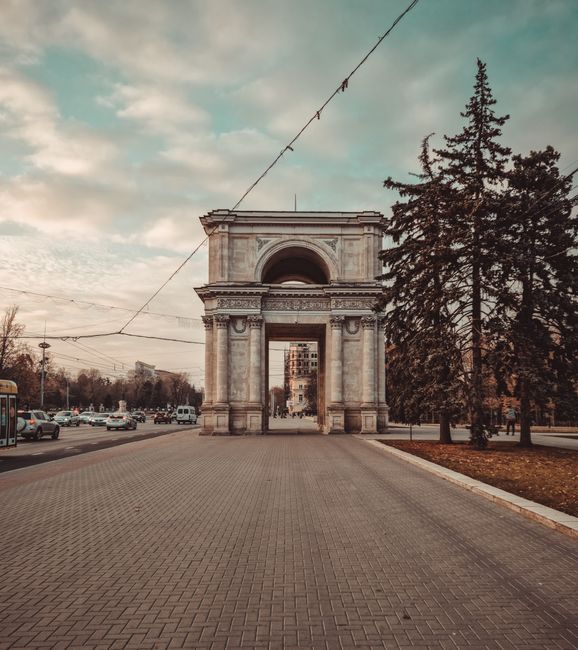
Moldova is a small, hilly and mostly rural country between Romania and Ukraine, a land of vineyards, sunflower fields, cave monasteries and some of the world’s largest wine cellars. Few tourists come, and those who do find a relaxed, inexpensive country with warm hospitality and a wine culture that dates back thousands of years. The capital, Chișinău, is green and easy-going, with Soviet boulevards, Orthodox churches and lively cafés. Within an hour or two are the vast underground cellars of Cricova and Mileștii Mici, the cave monastery of Orheiul Vechi in its river gorge, the old fortress of Soroca and family wineries in the south. Late spring and early autumn, the harvest and wine season, are the best times to come. Give it four or five days, or a week to explore the countryside.
Right now in Moldova
- Wed 11–23°C 51–74°F Partly cloudy
- Thu 11–24°C 53–74°F Partly cloudy
- Fri 13–24°C 56–76°F Cloudy
Weather: MET Norway (CC BY 4.0) · Air quality: OpenAQ
Multi-day tours of Moldova
Multi-day tours from local operators. You check dates and book on Viator, our partner; we may earn a commission at no extra cost to you. How we earn money
Moldova at a glance: vineyards, hills and two rivers
Moldova covers about 33,800 square kilometres between two rivers: the Prut, which forms the border with Romania in the west, and the Dniester (Nistru), which crosses the east of the country before flowing into Ukraine and the Black Sea. It has no coast, and most of the land is gently rolling, fertile black-earth plains and low hills; the forested Codri hills in the centre rise to about 430 m. Almost every village has its vineyard, and wine and fruit are central to the economy and to everyday life.
According to the National Bureau of Statistics, about 2.37 million people usually lived in Moldova on 1 January 2026 (a provisional figure that does not include Transnistria), and the population has been falling for decades as people leave to work abroad. The 2024 census counted 720,100 people in the municipality of Chișinău, almost 30% of the total. The official language is Romanian, written in the Latin alphabet. Russian is widely spoken, especially in Chișinău and the north, and the autonomous region of Gagauzia in the south has its own Turkic language, Gagauz. Most people are Orthodox Christians.
Moldova has its own currency, the leu (plural lei). It is not a member of the EU or the Schengen area, but it has been an EU candidate since June 2022 and has been negotiating membership since 2024; in June and July 2026 the first clusters of negotiating chapters were opened. Time zone: Eastern European Time (UTC+2, UTC+3 from the last Sunday in March to the last Sunday in October), the same as Romania.
A short history
The medieval Principality of Moldavia was founded in the 14th century and reached its height under Stephen the Great (Ștefan cel Mare, 1457–1504), whose statue stands at the entrance to Chișinău’s central park. It later became an Ottoman vassal. In 1812 the Russian Empire annexed its eastern half, between the Prut and the Dniester, which became known as Bessarabia. Bessarabia united with Romania in 1918, was annexed by the Soviet Union in 1940 and became the Moldavian Soviet Socialist Republic. Moldova declared independence on 27 August 1991. In 1992 a short war with separatists backed by Russian forces left Transnistria, on the left bank of the Dniester, under a self-declared administration that no country recognises.
Moldova’s regions
- Chișinău: the capital in the centre of the country, with its parks, cathedral, museums and markets, and the cellars of Cricova and Mileștii Mici on its edge.
- The centre and the Codri: wooded hills with monasteries such as Căpriana, Curchi, Hîncu and Condrița, the Orheiul Vechi gorge with its cave monastery, and many wineries.
- The north: the Dniester cliffs, with the Soroca fortress, the rock monasteries of Țipova and Saharna, and Bălți, the second city.
- The south: the warmest wine country, including Purcari in the south-east, the autonomous Gagauz region around Comrat, Cahul and the lakes and wetlands of the lower Prut.
- Transnistria: a strip along the left bank of the Dniester, with its main town Tiraspol, controlled by a self-declared administration, not by the Moldovan government (see below).
Transnistria: what you should know
Transnistria (officially the “Administrative-Territorial Units of the Left Bank of the Dniester” in Moldova, and calling itself the “Pridnestrovian Moldavian Republic”) broke away from Moldova in the early 1990s. It has its own de facto government, police, flag and currency, the Transnistrian ruble, and Russian troops are stationed there. No state, including Russia, formally recognises it, and Moldova and the international community consider it part of Moldova.
Before 2022 some visitors made day trips to Tiraspol and Bender. Since the war in neighbouring Ukraine began in 2022 there has been military activity close to the region, explosions took place there in 2022, and the self-declared authorities have taken powers to prosecute and detain people they regard as “extremists”, a term they apply to activities such as moderate protest or free expression. Practical points: there are separate de facto checkpoints between Moldova and Transnistria, where passports are checked but not stamped; the region uses its own currency, the Transnistrian ruble, and ATMs there do not accept foreign cards; consular access is very limited; and most travel insurance does not cover the region. All crossings between Transnistria and Ukraine are closed.
Where to go: Chișinău, cellars and cave monasteries
Chișinău is the hub of the country’s roads and railways and home to its only major international airport. Everything below is within about three hours’ drive of the capital, so you can base yourself there or stay a night or two at a winery or guesthouse in the countryside.
Chișinău
The capital, whose municipality has about 720,000 people, is a green, low-rise city rebuilt after the Second World War around the long Ștefan cel Mare Boulevard. See the Cathedral of the Nativity and its park, the Triumphal Arch, the Stephen the Great Central Park, the National Museum of History, the National Art Museum, the bustling Central Market, the Valea Morilor lake park and the Eternitate memorial. It has a lively café and wine-bar scene and good-value restaurants.
Cricova and Mileștii Mici
Moldova’s two most famous wine cellars lie just outside Chișinău. Cricova, about 15 km north, is a vast labyrinth of underground limestone galleries, in use for wine since 1952 and kept at a steady 10 to 12 °C; visitors tour its underground “streets” by electric train. Mileștii Mici, about 20 km south, has one of the largest underground wine galleries in the world, holding more than two million bottles, a collection recognised by Guinness World Records.
Orheiul Vechi
About 60 km north of Chișinău, the Răut river carves a tight, steep-sided loop through limestone. On its cliffs, monks dug a cave monastery that is still in use, with a small cave church open to visitors, and the area contains traces of Dacian settlements, a Golden Horde town and medieval Moldavian ruins. It is on Moldova’s tentative list for UNESCO World Heritage. The village of Butuceni below has traditional houses and guesthouses.
The Codri monasteries
The forests of the Codri hills, west and north-west of Chișinău, hide several historic monasteries: Căpriana, one of the oldest, linked to Stephen the Great; Curchi, a 19th-century ensemble often called the most beautiful in Moldova; and Hîncu and Condrița. They are working monasteries, so dress modestly.
Soroca and the Dniester cliffs
Soroca, in the far north on the Dniester, has a round stone fortress built in the 16th century on the orders of Petru Rareș, part of a chain of fortifications that guarded Moldavia’s borders. Further south, on the Dniester north-east of Orhei, the rock monasteries of Saharna and Țipova cling to cliffs above the river, with waterfalls and hiking trails.
Purcari and the southern wine country
The south and south-east are the warmest wine-growing areas. Château Purcari, near the Dniester in the south-east, has been making wine since 1827 and is the best known of several estates that welcome visitors for tastings, meals and overnight stays. Further west, the Gagauz autonomous region around Comrat has its own culture and cuisine.
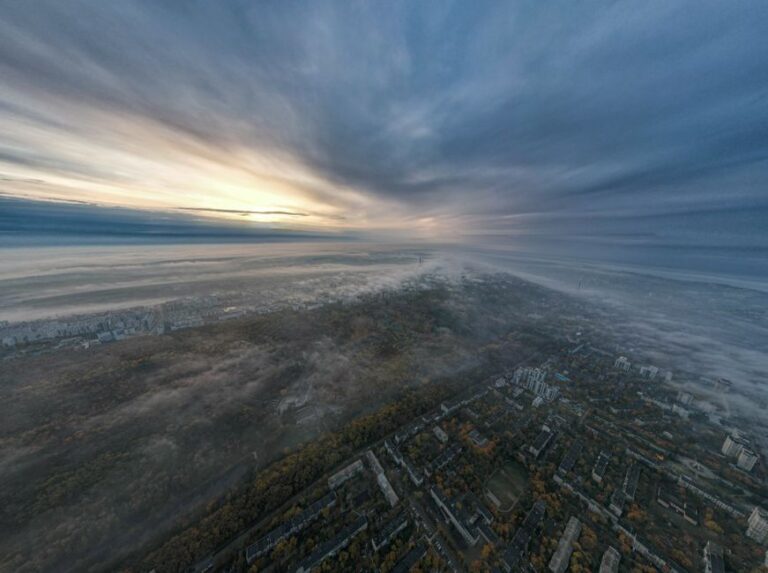
Chișinău Travel Guide
Plan a trip to Chișinău: the Cathedral of the Nativity and Triumphal Arch, Stephen the Great Park, the National Museum of History, the Central…
Best time to visit Moldova
Moldova has a moderate continental climate, with warm summers and cold winters. The best times are May to June, when the countryside is green and flowering, and September to October, the harvest season, when the weather is still mild and the wineries are busiest. Summers are hot and sunny, and winters are cold, grey and sometimes snowy. The table uses the official 1991–2020 averages for Chișinău that Moldova’s State Hydrometeorological Service submitted to the World Meteorological Organization.
| Season | Average daily high | Average nightly low | Rain per month | What it’s like |
|---|---|---|---|---|
| Winter (Dec–Feb) | 1.1–3.4 °C | −4.2 to −2.6 °C | 31–40 mm | Cold and grey, with some snow; quiet, but cellar tours run all year |
| Spring (Mar–May) | 9.2 °C rising to 22.4 °C | 0.8 °C rising to 11.8 °C | 36–53 mm | Fresh and green, with blossom in April and May |
| Summer (Jun–Aug) | 26.2–28.5 °C | 15.8–17.9 °C | 49–67 mm | Hot and sunny, with afternoon thunderstorms; the sunniest months |
| Autumn (Sep–Nov) | 22.4 °C falling to 8.1 °C | 12.5 °C falling to 2.2 °C | 42–49 mm | Harvest time: warm in September, golden in October, then cooling quickly |
Chișinău gets about 550 mm of rain a year and about 2,280 hours of sunshine, with July the sunniest month.
National Wine Day
Moldova’s biggest festival, National Wine Day (Ziua Națională a Vinului), is held on the first weekend of October, when dozens of wineries pour their wines in Chișinău’s Great National Assembly Square. The 25th edition took place on 3 and 4 October 2026. Many wineries also hold their own harvest festivals in September and October.
Public holidays
Moldova’s main public holidays are New Year’s Day (1 January), Orthodox Christmas (7 and 8 January), International Women’s Day (8 March), Orthodox Easter Sunday and Monday (12 and 13 April 2026, 2 and 3 May 2027), Memorial Easter (Paștele Blajinilor, the Monday a week after Easter), Labour Day (1 May), Victory and Europe Day (9 May), Children’s Day (1 June), Independence Day (27 August), National Language Day (31 August) and Christmas on 25 December. Banks and offices close, but most shops, restaurants and museums stay open on many of them.
How long to stay: sample itineraries
Four or five days are enough to see Chișinău and the main cellars and monasteries; a week lets you add the north and a night at a winery. A car or a hired driver makes the countryside much easier, although buses and minibuses reach most towns.
3 days: Chișinău and the cellars
Day 1: Chișinău’s centre, the cathedral park, the National Museum of History and the Central Market, with dinner and Moldovan wine in town. Day 2: a morning tour of Cricova and an afternoon in the Codri monasteries of Căpriana or Curchi. Day 3: Orheiul Vechi and lunch in Butuceni, then back to Chișinău.
5 days: the classic loop
Add Mileștii Mici and a southern estate such as Purcari, staying overnight among the vineyards, and spend a day in the north at Soroca fortress and the cliff monastery of Țipova or Saharna.
7 days: Moldova and Romania
Combine Moldova with north-eastern Romania: the old Moldavian capital of Iași is just across the Prut, and trains run from Chișinău to Iași and Bucharest. See our Romania travel guide and our Bucharest guide.
Entry, money and costs
Entry: visas and documents (last reviewed October 2026)
Moldova sets its own entry rules; check them with a Moldovan embassy before you travel.
- Visa-free visitors: citizens of the EU, the UK, the US, Canada, Australia, Japan and many other countries do not need a visa. British visitors can stay for up to 90 days in any 6-month period and must be able to show a return or onward ticket. Holders of a valid visa or residence permit from an EU or Schengen country, the UK, the US or Canada are also exempt.
- e-visa: travellers who do need a visa can apply online through Moldova’s official e-visa portal.
- Passport: your passport must be valid for at least three months after the date you plan to leave Moldova and have at least one blank page.
- Overstaying: the authorities record your arrival date automatically and strictly enforce penalties, including fines and expulsion, for overstaying.
- Cash: declare cash or traveller’s cheques worth €10,000 or more when you arrive; keep the certified declaration to show when you leave.
- Border crossings: enter only through official crossing points on Moldova’s borders with Romania and Ukraine outside Transnistria. Moldova is not in the Schengen area, so the EU’s Entry/Exit System applies when you cross back into Romania, not on entry to Moldova.
Language
Romanian is the official language, and Russian is widely understood. English is spoken by many younger people in Chișinău and at hotels and wineries, but less in the countryside. A few words go a long way: bună ziua (hello), mulțumesc (thank you) and noroc (cheers).
Money: the leu, cards and cash
The currency is the Moldovan leu (MDL). On 2 October 2026 the National Bank of Moldova’s official rate was €1 = 20.11 lei and US$1 = 17.80 lei. Card payment is now widespread, but you may not always be able to pay by card, especially outside Chișinău. Carry some lei in cash for markets, minibuses, monasteries and villages. Euros and US dollars are the easiest currencies to exchange, and notes should be in perfect condition or they may be refused; British pounds are harder to change. Watch your card when paying, as card and ATM fraud happen.
Tipping
Tipping is customary but modest: about 10% in restaurants if service is not included, rounding up in taxis and small tips for guides and drivers.
Typical travel costs
Moldova is one of Europe’s least expensive countries. These are rough estimates for a visitor in 2026, not official prices.
| Item | Typical cost |
|---|---|
| Trolleybus ticket in Chișinău | 7 lei |
| Lunch in a canteen or casual restaurant | 120–250 lei |
| Dinner with wine in a good restaurant | 400–800 lei per person |
| Glass of local wine in a bar | 50–120 lei |
| National Museum of History, adult ticket | 50 lei |
| Cricova underground tour | from 400 lei |
| Double room, mid-range hotel in Chișinău | €50–100 |
| Taxi across Chișinău | about €3–5 |
Getting there and getting around
Airports
Chișinău International Airport, about 13 km south-east of the centre, is the country’s main gateway, with flights to cities across Europe and to Turkey and the Middle East. Bus 165 and trolleybus 30 link it with the city centre, and a taxi takes about 25 minutes. Many travellers also fly to Iași or Bucharest in Romania and continue overland.
Trains
The state railway, CFM, runs international trains from Chișinău to Iași and Bucharest in Romania. Domestic services are limited and slow, so buses are usually more practical inside Moldova.
Buses and minibuses
Buses and minibuses (rutiere) connect Chișinău with almost every town and many villages, leaving from the city’s bus stations. They are cheap and frequent, but can be crowded and are driven fast. Within Chișinău, trolleybuses, buses and minibuses cover the city.
Driving
You can drive in Moldova on a UK photocard licence; you must declare a foreign-registered vehicle to customs when you enter and can keep it in Moldova for up to 90 days in any 365, and if you drive a car owned by someone else you need the owner’s translated and notarised permission. Driving standards are poor, roads are of variable quality and accidents are common, so avoid driving outside towns at night. The drink-driving limit is very low: a third of England’s limit. Hiring a car with a local driver is a popular, inexpensive alternative.
Taxis
Use taxis ordered by phone or app, or ask your hotel to call one. Official-looking taxis can be unlicensed: do not share taxis with strangers, and if there is no meter agree the price first.
Culture, food and everyday etiquette
Moldovans are hospitable, and a visit to a family winery often turns into a long meal. Moldovan cooking shares much with Romanian and Ukrainian food: mămăligă (polenta) with cheese, sour cream and pork; sarmale (stuffed cabbage or vine leaves); zeamă, a sour chicken soup with homemade noodles; and plăcinte, flat pies filled with cheese, potato, cabbage or pumpkin. Wine is everywhere, from Fetească Neagră and Rară Neagră reds to Fetească Albă whites, and homemade wine is offered generously in villages. In churches and monasteries, women usually cover their heads and men remove hats, and shorts are frowned on.
Safety, health, accessibility and connectivity
Safety
Moldova is a calm country for visitors. Points to be aware of: unexploded ordnance from the Second World War and the 1992 conflict remains in some fields, forests and riverbanks in central Moldova; Moldova borders Ukraine, where an armed conflict is ongoing; and an energy emergency declared in December 2024 can mean managed power cuts. Transnistria is covered in its own section above.
Chișinău and the countryside are generally safe and crime against visitors is mostly petty. Keep these points in mind:
- Unexploded ordnance: old mines and munitions are found mainly in fields, forests and on the banks of the Dniester in the districts of Anenii Noi, Căușeni, Ștefan Vodă, Ungheni, Chișinău, Ialoveni, Hîncești, Nisporeni, Călărași and Strășeni. Danger areas are marked with a red downward triangle, a skull and crossbones and the word “Mine”. Stay on paths and roads.
- Demonstrations: political demonstrations take place regularly in central Chișinău. They are usually small and peaceful, but stay away from them.
- Petty crime: watch for pickpockets and bag snatchers in crowded places and on transport, and for people posing as police officers who demand fines.
- Police checks: police can ask for ID in the street; carry a copy of your passport photo page.
- Night walking: streets and pavements are often uneven and poorly lit, even in Chișinău, so carry a torch.
- Photography: do not photograph military or government buildings, airports or power stations.
- Discrimination: some visitors of Asian or African-Caribbean descent have reported verbal abuse or assault, and same-sex couples may attract unwanted attention in public.
The emergency number for police, fire and ambulance is 112.
Health
Moldova is not in the EU, so the EHIC and GHIC are not valid; take travel insurance with medical cover. State hospitals are generally poor, private clinics are better, and most providers expect payment at the time of treatment. Drink bottled or boiled water rather than tap water. Use insect repellent and check for ticks after walks in forests and meadows, as tick-borne encephalitis occurs.
Accessibility
Chișinău’s newer trolleybuses are low-floor, but pavements are uneven, kerbs high and many buildings, monasteries and cellars have steps. Cricova’s tours are by electric train, which helps visitors who cannot walk far; ask the winery in advance.
Connectivity and power
Since 1 January 2026 Moldova (like Ukraine) has been part of the EU’s “roam like at home” area, so visitors with EU mobile plans pay domestic prices for calls, texts and data. Visitors from the UK, the US and elsewhere should check roaming charges or buy a local prepaid SIM or eSIM from Orange, Moldcell or Unite. Mobile coverage is good in towns and along main roads. Moldova uses 230 V and European two-pin plugs, type C and F; you need an adapter for UK, US and Australian plugs. See our guide to travel adapters.
Things to do: wine, monasteries and the countryside
- Wine tasting: tour the underground cellars of Cricova and Mileștii Mici and taste at family wineries and estates such as Purcari. See our guide to wine tasting.
- Monasteries: visit the cave monastery of Orheiul Vechi, the cliff monasteries of Țipova and Saharna, and Căpriana and Curchi in the Codri forests.
- City sightseeing: Chișinău’s parks, museums, Orthodox cathedral and Soviet-era architecture. See city sightseeing.
- Hiking: walk the Orheiul Vechi gorge, the Dniester cliffs at Țipova and the trails of the Codri reserve. See our hiking guide.
- Cycling: quiet back roads and vineyards make the countryside good for gentle cycling tours. See cycling.
- Fortresses and history: Soroca fortress on the Dniester and the museums of Chișinău.
What to pack
Bring layers for cool cellars, which stay at 10 to 14 °C all year, even in summer; comfortable walking shoes for uneven pavements and monastery paths; a scarf or head covering and long trousers or skirts for churches; insect repellent and sun protection in summer; a torch for poorly lit streets; and some euros in perfect condition. See our hiking shoes guide.
Moldova travel FAQ
Is Moldova safe to visit?
For most visitors, yes, with normal care. Crime against visitors is mostly petty. The main things to know are unexploded ordnance in some rural areas, occasional demonstrations in Chișinău, and the separate situation in the breakaway region of Transnistria.
Can I visit Transnistria?
Transnistria is a breakaway region that is not controlled by the Moldovan government. Its self-declared authorities run their own checkpoint and use their own currency, the Transnistrian ruble; foreign cards do not work there, consular access is extremely limited and travel insurance is unlikely to cover a visit.
Do I need a visa for Moldova?
Not if you are a citizen of the EU, the UK, the US, Canada, Australia or many other countries. British visitors can stay up to 90 days in any 6-month period and need a passport valid for at least three months after departure and a return or onward ticket. Others can apply through the official e-visa portal.
Is Moldova in the EU or the Schengen area?
No. Moldova is a candidate for EU membership and has been negotiating since 2024, but it is not a member and not in Schengen. It does belong to the EU’s roaming area, so EU mobile plans work at home prices.
What currency does Moldova use?
The Moldovan leu (MDL). In early October 2026, €1 was worth about 20.1 lei and US$1 about 17.8 lei. Cards are widely accepted in Chișinău, but carry cash in the countryside.
When is the best time to visit Moldova?
May and June, and September and October. The autumn harvest season, with National Wine Day on the first weekend of October, is the highlight for wine lovers.
How many days do you need in Moldova?
Four or five days cover Chișinău, Cricova, Mileștii Mici, Orheiul Vechi and a monastery or two. Allow a week to add the north and a night at a southern winery.
How do I get to Moldova?
Most visitors fly to Chișinău International Airport. You can also take the train from Bucharest or Iași in Romania, or travel by bus or car from Romania. Ukraine’s airspace is closed because of the war there.
Which wineries can I visit near Chișinău?
The two most famous are Cricova, a vast underground “wine city” just north of Chișinău, and Mileștii Mici, with one of the world’s largest underground wine collections south of the city. Both offer guided tours with tastings; book ahead.
What language is spoken in Moldova?
Romanian is the official language. Russian is widely spoken, especially in Chișinău, and Gagauz is spoken in the autonomous region of Gagauzia. Younger people in the capital often speak English.
Is the tap water safe to drink in Moldova?
It is best to drink only bottled or boiled water.
What plug type does Moldova use?
Type C and F European two-pin plugs, at 230 V. Visitors from the UK, Ireland, North America and Australia need an adapter.
Sources and last review
Researched and last reviewed on 4 October 2026. Safety and practical information from GOV.UK foreign travel information and the US State Department’s country information; visa exemptions and the e-visa from Moldova’s Ministry of Foreign Affairs; population and the 2024 census from the National Bureau of Statistics; exchange rates from the National Bank of Moldova; EU candidate status, negotiating clusters and roaming from the European Commission; climate from the official 1991–2020 normals Moldova submitted to the World Meteorological Organization; trolleybus fares and Wine Day dates from Chișinău’s trolleybus operator RTEC and City Hall; museum and winery details from the National Museum of History, Cricova, Mileștii Mici and Purcari; UNESCO’s tentative list for Orheiul Vechi. The 90-day rule beyond the UK, public holidays, airport bus routes, taxi fares, mobile operators, plugs and daily costs come from secondary sources or general knowledge and are flagged for checking. Prices, timetables and entry rules change, so check the official sites before you travel.
Plan your trip
Partner links: TravelerCenter may earn a commission if you book, at no extra cost to you.
🇷🇴 Useful Romanian phrases for Moldova
All 38 Romanian phrases: restaurant, hotel, emergencies, romance (printable) →