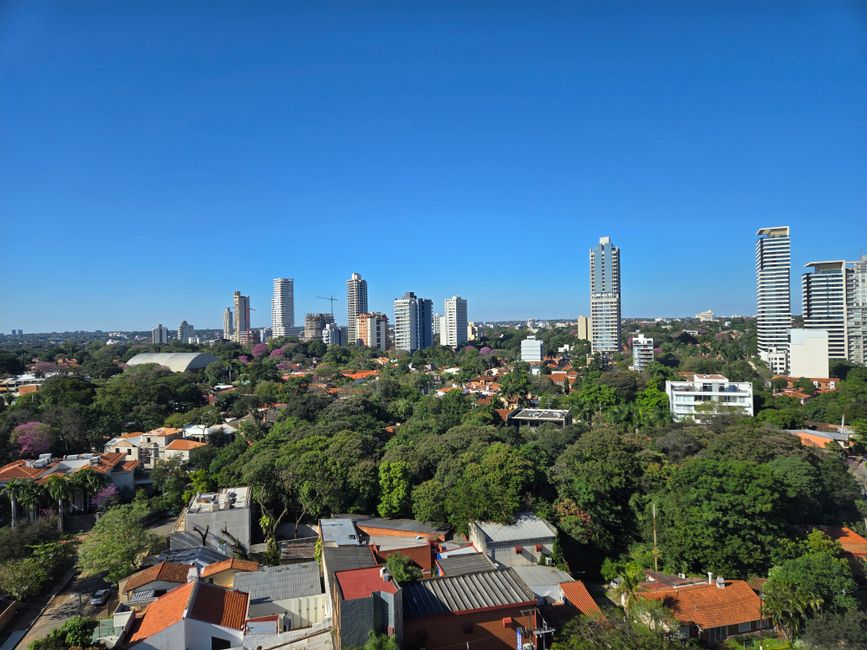
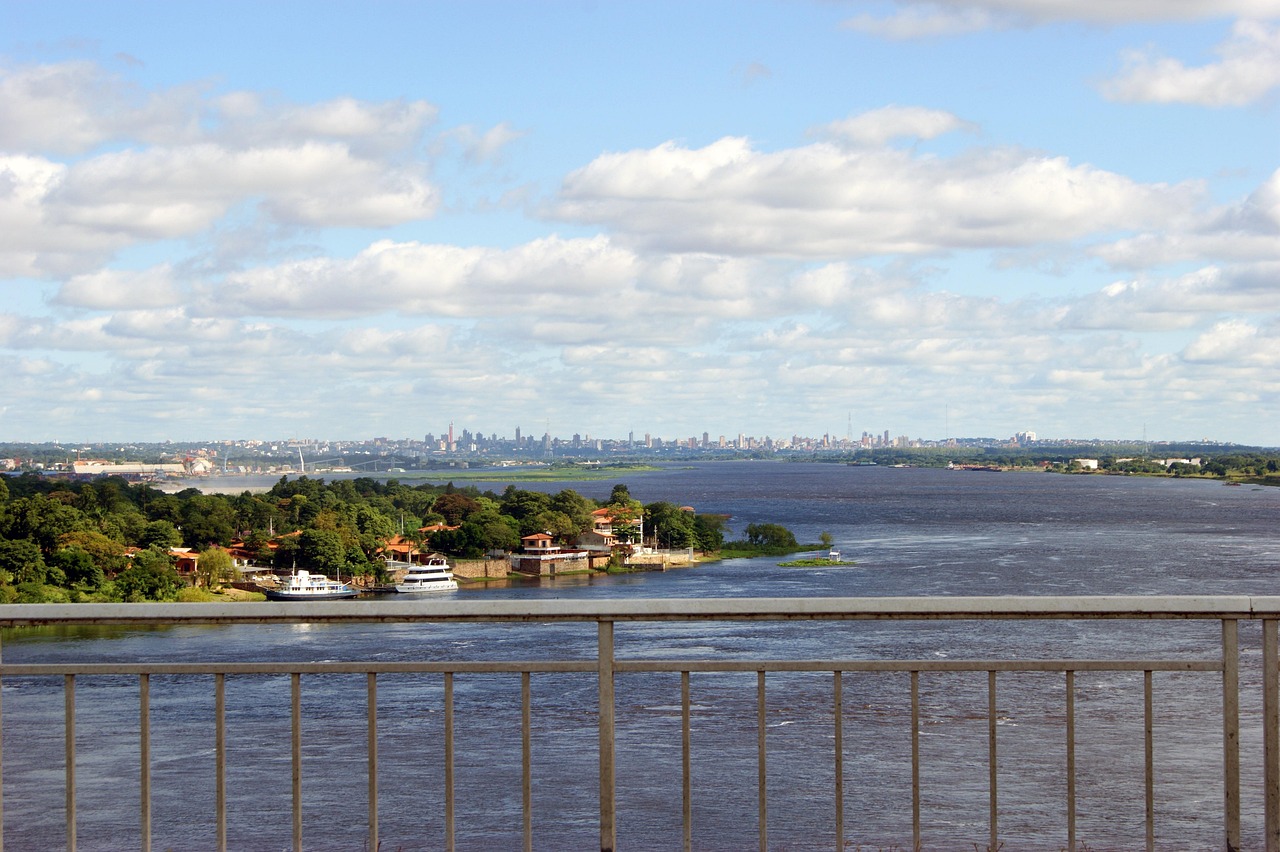
Asunción, the capital of Paraguay, is one of the oldest cities in South America, founded in 1537 on a bluff above a wide bend of the Paraguay River, with Argentina on the far bank. It is a low-rise, green city of flowering trees, colonial and 19th-century buildings, busy markets and a relaxed pace, where people sit outside sharing tereré in the heat and Guaraní is heard as much as Spanish. Visitors come for the historic center around the pink Palacio de López presidential palace and the Pantheon of the Heroes, the riverside Costanera, the colorful hillside neighborhood of Loma San Jerónimo, the outstanding Museo del Barro, the maze of Mercado 4, and day trips to the craft towns and lakeside resorts of the Cordillera. It’s also the main gateway to Paraguay, with the international airport and the national bus terminal. Summers are long, hot and stormy; the most pleasant months are from May to September.
Right now in Asunción
- Wed 22–31°C 72–87°F 5 mm Light showers
- Thu 22–31°C 72–87°F 61 mm Partly cloudy
- Fri 21–25°C 70–76°F 5 mm Rain
Weather: MET Norway (CC BY 4.0)
Top tours in Asunción
See all tours for Asunción →
From local operators, with prices and reviews; you check availability and book on Viator, our partner. We may earn a commission at no extra cost to you. How we earn money
Asunción at a glance
- Best for: history and architecture, museums, markets and crafts, Paraguayan food, riverside sunsets, and day trips to Areguá, San Bernardino and Caacupé.
- How long: 2 days for the city; 3–4 days to add the Cordillera towns.
- Best time: May to September, with highs of 24–28 °C (74–82 °F); December to February is very hot, with highs around 33–34 °C (91–93 °F) and frequent heat waves above 38 °C (100 °F).
- Getting there: Silvio Pettirossi International Airport (ASU), in Luque, about 15 km (9 miles) north-east of the center; long-distance buses from Buenos Aires, Brazil and every Paraguayan town.
- Getting around: on foot in the historic center; ride-hailing apps and taxis elsewhere.
- Money: Paraguayan guaraníes; ₲100,000 is about US$17.
- Before you go: entry rules, the yellow fever requirement for some travelers and general safety are in our Paraguay travel guide.
Asunción’s neighborhoods: where things are
Asunción sprawls east from the river into a metropolitan area of about 2.5 million people that includes Luque, San Lorenzo, Lambaré and Fernando de la Mora. Most sights are in the compact historic center by the river, while hotels, restaurants and malls cluster in the newer districts to the east.
The historic center (Microcentro)
The grid of streets between the river and Plaza Uruguaya holds the government buildings, the Palacio de López, the Pantheon of the Heroes, the cathedral, the old Cabildo, the Casa de la Independencia and the old railway station. It’s busy on weekday mornings and quiet in the evenings and on Sundays.
Loma San Jerónimo and the Costanera
On a small hill at the north-west edge of the center, Loma San Jerónimo is a traditional neighborhood of brightly painted houses, stairways, murals and small bars, revived as a tourist route. Below it, the Costanera, a riverside avenue and promenade, runs past the Palacio de López with views over the bay.
Villa Morra, Carmelitas and Recoleta
The upscale districts about 5–7 km (3–4 miles) east of the center, with the main hotels, restaurants, bars, shopping malls and the Paseo La Galería towers, plus the Recoleta cemetery and the Museo del Barro nearby.
Sajonia and Barrio Obrero
Older residential neighborhoods with local life, cheaper eateries and the Defensores del Chaco football stadium in Sajonia.
Top things to see in Asunción
Many museums and historic buildings are free or cheap, close on Mondays or Sundays, and keep shorter hours in summer; check before you go.
Palacio de López
The pink presidential palace, built in the 1850s and 1860s for Francisco Solano López, faces the bay with an Italianate façade and is the city’s emblem. It’s the seat of government, so access is limited to its gardens and occasional guided visits, but it’s best seen from the Costanera at sunset and when it’s lit up at night.
Panteón Nacional de los Héroes
Modeled on Les Invalides in Paris, this domed mausoleum on the corner of the Plaza de los Héroes holds the remains of national heroes, including presidents Carlos Antonio López and Francisco Solano López, and unknown soldiers of the Chaco War. An honor guard stands at the door, and the changing of the guard draws onlookers.
Casa de la Independencia
The small colonial house where the patriots met on the night of May 14–15, 1811, to plan Paraguay’s independence from Spain is now a museum with period furniture, weapons and documents. It’s one of the few colonial buildings left in the city.
Manzana de la Rivera and the Cabildo
Across from the Palacio de López, the Manzana de la Rivera is a block of restored houses from colonial to Art Nouveau styles, now a cultural center with a small museum of the city and a café. Nearby, the Cabildo, the former legislative palace, houses the Centro Cultural de la República, with exhibits on Paraguayan history, indigenous cultures and music.
Museo del Barro
The Museum of Art from Indigenous, Popular and Contemporary cultures, usually called the Museo del Barro (Clay Museum), is one of the best museums in South America for folk and indigenous art: ceramics, wooden carvings, feather work, masks and religious figures from across Paraguay, plus contemporary Paraguayan art. It’s in the Isla de Francia area east of the center; allow two hours.
Loma San Jerónimo
Walk up the stairways of this colorful hillside barrio, decorated with murals and flowers, for views over the river; local residents run small cafés, craft shops and guided walks. Go in the late afternoon and stay for dinner nearby.
Mercado 4
Asunción’s huge, chaotic main market, spread over several blocks, sells everything from fruit, herbs for tereré and cheap lunches to clothes, electronics and crafts. It’s an intense, very local experience; go in the morning with a small amount of cash and keep a close eye on your belongings.
More to see
- The old railway station (Estación Central del Ferrocarril): the elegant terminus of one of South America’s first railways, opened in the 1860s, now a museum with old locomotives.
- Metropolitan Cathedral: on the Plaza de la Independencia, rebuilt in the 19th century on the site of the city’s first church.
- Teatro Municipal Ignacio A. Pane: the city’s restored 19th-century theater, with concerts and dance.
- Jardín Botánico: a large park on the former estate of the López family, north of the center, with a small zoo and a natural history museum.
- Recoleta Cemetery: elaborate tombs and chapels of Paraguay’s leading families.
Food, drink and nightlife
Asunción is the best place to try Paraguayan food. Start the day with chipa, the cheese-and-cassava bread rings sold everywhere, or mbejú with coffee; at lunch, try sopa paraguaya (a dense cornbread), chipa guasú, vori vori soup with cornmeal and cheese dumplings, so’o yosopy (a beef soup), and Paraguayan asado. River fish such as surubí and pacú appear on many menus. Many lunch places serve a cheap “menú del día,” and restaurants with live Paraguayan harp music are a classic night out. Cool off with tereré, iced yerba mate with herbs, which locals share from a guampa cup through a metal straw, or a cold local beer. Nightlife centers on the bars and clubs of Villa Morra and Carmelitas, with some bars in the historic center and Loma San Jerónimo, and starts late, from about 11 p.m. on weekends.
Day trips from Asunción
- Areguá: a hillside town on Lake Ypacaraí, about 30 km (19 miles) east, known for its pottery and ceramic workshops, colonial houses, a church on a hill with lake views, and strawberries in winter and spring.
- San Bernardino: a lakeside resort about 50 km (31 miles) east, founded by German settlers in the 1880s, with summer homes, restaurants and nightlife in season.
- Caacupé: home of the basilica of the Virgin of Caacupé, Paraguay’s patron saint, about 55 km (34 miles) east; a huge pilgrimage arrives for her feast day on December 8.
- Itauguá: about 30 km (19 miles) east, the center of ñandutí, the fine spiderweb lace that is Paraguay’s best-known craft.
- Yaguarón: about 50 km (31 miles) south-east, with a remarkable 18th-century Franciscan church with a carved and painted wooden interior.
- Luque: next to the airport, famous for Paraguayan harps and guitars and for silver filigree jewelry.
- Piribebuy and the Cordillera: waterfalls, small streams and hiking in the hills about 75 km (47 miles) east. See our guide to hiking.
Getting there and getting around
From Silvio Pettirossi airport (ASU)
Paraguay’s main international airport, in Luque, about 15 km (9 miles) north-east of the center, is one of the official entry points listed by Paraguay’s National Directorate of Migration. Taxis from the official stand and ride-hailing apps take about 30–45 minutes to the center and less to Villa Morra, depending on traffic. Flights connect with Buenos Aires, São Paulo, Santiago, Lima, Panama City, Montevideo and Madrid, among others; there are no nonstop flights from the United States.
By bus
The Terminal de Ómnibus de Asunción, about 6 km (4 miles) south-east of the center, has buses to every town in Paraguay, including Encarnación (about 5–6 hours) and Ciudad del Este (about 5–6 hours), and international services to Buenos Aires, Brazil, Uruguay and Bolivia. Use executive services on long routes.
From Argentina by river and road
According to Paraguay’s migration authority, Puerto Itá Enramada, on the south side of Asunción, is an official border post with boats to Puerto Pilcomayo in Formosa province, Argentina, and Puerto José Falcón, across the Pilcomayo River from Clorinda, is the main road crossing near the city. The DNM’s free online pre-registration, completed at least 48 hours ahead, speeds up processing at both. See our Argentina travel guide.
Getting around the city
The historic center is compact and walkable, though hot in summer. For anything farther, ride-hailing apps such as Bolt and Uber are cheap, safe and widely used; taxis are also available. City buses go everywhere and are very cheap but crowded and confusing for newcomers, with routes marked by number on the windshield; pay with a transit card where required. Driving in Asunción is hectic, and many streets flood briefly after heavy storms.
When to go and how long to stay
Asunción has a hot, humid subtropical climate. The table uses the 1991–2020 climate normals of Paraguay’s Meteorological Directorate (DMH) for Silvio Pettirossi airport, as published by the World Meteorological Organization.
| Season | Average high / low | What it’s like |
|---|---|---|
| Summer (Dec–Feb) | 33–34 °C (91–93 °F) / 22–23 °C (72–74 °F) | Very hot and humid, with violent storms; heat waves above 38 °C (100 °F) are common |
| Fall (Mar–May) | 32 °C falling to 25 °C (89 to 77 °F) / 22 °C falling to 16 °C (71 to 60 °F) | Hot early, then pleasant; Holy Week brings chipa and holidays |
| Winter (Jun–Aug) | 24–26 °C (74–79 °F) / 13–15 °C (55–58 °F) | Warm, sunny and drier days, cool nights; cold fronts bring short chilly spells |
| Spring (Sep–Nov) | 28 °C rising to 31 °C (82 to 88 °F) / 17 °C rising to 20 °C (62 to 69 °F) | Heating up, with flowering lapacho trees in August and September and storms returning |
Asunción gets about 1,462 mm (58 in) of rain a year, falling mostly in heavy summer storms; July and August are the driest months, with under 50 mm (2 in) each.
Asunción month by month
| Month | High / low | Rain | What to expect |
|---|---|---|---|
| January | 34 °C (93 °F) / 23 °C (74 °F) | 133 mm (5.2 in) | Hottest month; heat waves; many locals away on holiday |
| February | 33 °C (91 °F) / 22 °C (72 °F) | 146 mm (5.8 in) | Hot and stormy; carnival weekends in Encarnación |
| March | 32 °C (89 °F) / 22 °C (71 °F) | 131 mm (5.2 in) | Still hot; summer storms |
| April | 29 °C (85 °F) / 19 °C (66 °F) | 152 mm (6.0 in) | Warm and pleasant; Holy Week some years |
| May | 25 °C (77 °F) / 16 °C (60 °F) | 134 mm (5.3 in) | Comfortable; Independence Days on May 14 and 15 |
| June | 24 °C (74 °F) / 14 °C (58 °F) | 71 mm (2.8 in) | Mild, sunny days and cool nights; San Juan festivals |
| July | 24 °C (74 °F) / 13 °C (55 °F) | 48 mm (1.9 in) | Coolest nights; occasional cold snaps; winter school holidays |
| August | 26 °C (79 °F) / 15 °C (58 °F) | 39 mm (1.5 in) | Driest month; pink lapacho trees bloom; Asunción’s founding day on the 15th |
| September | 28 °C (82 °F) / 16 °C (62 °F) | 79 mm (3.1 in) | Warming up; lapachos still in bloom |
| October | 30 °C (86 °F) / 20 °C (67 °F) | 158 mm (6.2 in) | Hot again; storms return |
| November | 31 °C (88 °F) / 20 °C (69 °F) | 195 mm (7.7 in) | Wettest month; hot and humid |
| December | 33 °C (91 °F) / 22 °C (72 °F) | 176 mm (6.9 in) | Hot; Caacupé pilgrimage on the 8th; Christmas |
Crowds and prices: Asunción is never crowded with tourists. Hotels are busiest on weekdays with business travelers and during conferences and big events; prices are fairly stable through the year. Paraguay uses UTC−3 all year.
2 days in Asunción
Day one, the historic center: the Plaza de los Héroes and the Pantheon, the cathedral and the Cabildo, the Casa de la Independencia and the Manzana de la Rivera, then sunset over the Palacio de López and the bay from the Costanera and dinner in Loma San Jerónimo. Day two, the Museo del Barro in the morning, a long Paraguayan lunch, an hour in Mercado 4 or the old railway station, and an evening with harp music in a traditional restaurant.
3–4 days
Add a day trip to Areguá and San Bernardino around Lake Ypacaraí, or a craft circuit to Itauguá, Yaguarón and Luque, and a visit to the Caacupé basilica.
Where to stay in Asunción
- Villa Morra and Carmelitas: the main hotel area, with international chains, boutique hotels, restaurants and malls; safe and lively in the evenings, 15–20 minutes by car from the historic center.
- The historic center: historic and mid-range hotels close to the sights, convenient by day but quiet after dark and on weekends.
- Near the airport and Luque: practical for early flights, with fewer restaurants.
Hotel rates in Asunción are reasonable by regional standards; many business hotels lower prices on weekends.
What an Asunción trip costs
These are our estimates for October 2026 at about ₲5,875 per US dollar.
| Item | Typical price |
|---|---|
| Ride-hailing trip, airport to Villa Morra | ₲60,000–100,000 (US$10–17) |
| Ride-hailing trip within the city | ₲15,000–40,000 (US$3–7) |
| Chipa from a street vendor | ₲3,000–6,000 (under US$1) |
| Menú del día (set lunch) | ₲30,000–50,000 (US$5–9) |
| Dinner for one with a drink, mid-range | ₲120,000–200,000 (US$20–34) |
| Local beer in a bar | ₲15,000–30,000 (US$3–5) |
| Hostel bed | ₲70,000–120,000 (US$12–20) |
| Mid-range double room | ₲350,000–600,000 (US$60–100) |
Practical tips for Asunción
- Heat: from November to March, plan walking for the morning and late afternoon, drink plenty of water and use sunscreen; many shops close for a siesta in the early afternoon.
- Mosquitoes: dengue and chikungunya occur in hot, wet months; use repellent and choose air-conditioned rooms with screens.
- Safety: watch for “motochorros,” thieves on motorbikes who snatch phones and bags, and for pickpockets in Mercado 4 and the historic center. Keep your phone away at the curb, carry little cash, and use app rides at night, when the center is quiet.
- Storms: summer downpours can flood streets within minutes; wait them out indoors and don’t walk or drive through moving water.
- Money: carry guaraníes for markets, small shops and street food; cards work in hotels, restaurants and malls.
- Entry and exit: keep your proof of entry to show when you leave Paraguay, as required by the migration authority.
- Emergencies: 911.
What to pack for Asunción
Light, breathable clothes, a sun hat, sunglasses and high-factor sunscreen; insect repellent; a compact umbrella or light rain jacket for summer storms (see our guide to rain jackets); a sweater for winter evenings and air-conditioned buses; comfortable walking shoes; your yellow fever certificate if you’re arriving from a risk area; and a type C plug adapter for Paraguay’s 220 V sockets (see our guide to travel adapters).
Asunción travel FAQ
How many days do I need in Asunción?
Two days for the historic center, the Museo del Barro and the markets; three or four to add day trips to Areguá, San Bernardino and Caacupé.
How do I get from Asunción airport to the city?
By taxi from the official stand or by ride-hailing app, about 30–45 minutes to the center, depending on traffic.
What is the best area to stay in Asunción?
Villa Morra and Carmelitas, for hotels, restaurants and evening life; the historic center is convenient by day but quiet at night.
When is the best time to visit Asunción?
May to September, when it’s warm, sunny and drier. Summer, from December to February, is very hot and humid, with storms.
Is Asunción safe?
Most visits are trouble-free, but phone and bag snatching by thieves on motorbikes is common. Stay alert, keep valuables out of sight, and use app rides at night.
Do I need a visa to visit Asunción?
According to Paraguay’s migration authority, US, Canadian, Australian and New Zealand citizens don’t need a visa for up to 90 days under a law valid until August 2027; UK, Irish and most EU citizens are also exempt.
What is the Museo del Barro?
The Museum of Art from Indigenous, Popular and Contemporary cultures, one of South America’s best collections of Paraguayan folk and indigenous art.
Can I take a boat from Asunción to Argentina?
Yes. Boats cross the Paraguay River from Puerto Itá Enramada in Asunción to Puerto Pilcomayo in Formosa province, an official border crossing.
What should I eat in Asunción?
Chipa, sopa paraguaya, chipa guasú, mbejú, vori vori, river fish such as surubí, and tereré to drink.
What day trips can I take from Asunción?
Areguá and San Bernardino on Lake Ypacaraí, the basilica of Caacupé, the lace town of Itauguá, Yaguarón’s Franciscan church and the hills of the Cordillera.
Sources and last review
Researched and last reviewed on 4 October 2026. Visa exemptions, proof of entry, official border posts at the airport, Puerto Itá Enramada and Puerto José Falcón, and pre-registration: Paraguay’s National Directorate of Migration; exchange rate: the Central Bank of Paraguay; climate: the Meteorological Directorate’s 1991–2020 normals for Silvio Pettirossi airport, as published by the World Meteorological Organization. History, neighborhood and museum descriptions, distances, transfer and bus times, flight routes, festivals, food notes, safety tips and typical costs come from general references and are flagged for checking; costs are our estimates. Hours and prices change, so check before you go. For entry rules, money and general safety, see our Paraguay travel guide.
Plan your trip
Partner links: TravelerCenter may earn a commission if you book, at no extra cost to you.
🇪🇸 Useful Spanish phrases for Asunción
All 38 Spanish phrases: restaurant, hotel, emergencies, romance (printable) →