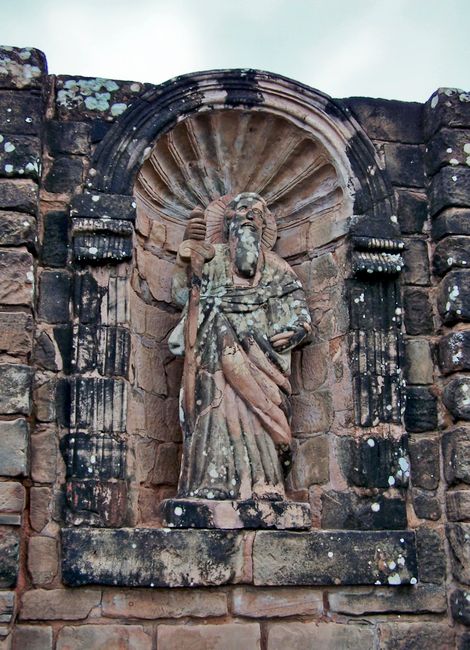
Paraguay is South America’s least-visited country and one of its most surprising: a landlocked nation in the heart of the continent, where Spanish and the indigenous Guaraní language are spoken side by side, people share tereré, iced yerba mate, from a common cup, and the pace of life is slow and friendly. Its capital, Asunción, on a bend of the Paraguay River, is one of the oldest cities in South America. To the south stand the red sandstone ruins of the Jesuit missions of Trinidad and Jesús, a UNESCO World Heritage Site that sees only a trickle of visitors; to the east, the vast Itaipú dam and the border city of Ciudad del Este lie a short ride from the Iguazú Falls; and to the west stretches the Chaco, a hot, wild scrubland of Mennonite colonies, jaguars and giant anteaters. Paraguay is good value, with low prices by regional standards. Most visitors from the Americas and Europe need no visa. Summers are very hot and wet, and the most comfortable months are from May to September.
Right now in Paraguay
- Tue 20–27°C 67–80°F 1 mm Cloudy
- Wed 23–30°C 73–86°F 5 mm Light showers
- Thu 22–30°C 72–87°F 63 mm Light rain
Weather: MET Norway (CC BY 4.0)
Multi-day tours of Paraguay
Multi-day tours from local operators. You check dates and book on Viator, our partner; we may earn a commission at no extra cost to you. How we earn money
Paraguay at a glance: two regions divided by a river
Paraguay is a republic of 17 departments plus the capital district of Asunción. It covers about 407,000 km² (157,000 square miles), slightly larger than California, and has a population of a little over 6 million. The Paraguay River splits the country in two: the Eastern Region, with green hills, farmland, forests and almost all of the people, and the Western Region, the Chaco, which covers about 60% of the land but has only about 3% of the population. Paraguay borders Argentina to the south and west, Brazil to the east and Bolivia to the north-west.
Spanish and Guaraní are both official languages, and most Paraguayans speak Guaraní, often mixed with Spanish in an everyday blend called jopara. English is spoken in some hotels and tour companies in Asunción, but rarely elsewhere, so a little Spanish goes a long way.
Time: Paraguay uses UTC−3 all year. It adopted permanent summer time in October 2024, so there are no longer clock changes, and Paraguay now shares the time of Buenos Aires and São Paulo.
Paraguay’s regions
- Asunción and the Central department: the capital and its metropolitan area, including the craft towns of Itauguá, famous for ñandutí lace, and Areguá, known for pottery and strawberries.
- Cordillera: green hills east of Asunción, with Lake Ypacaraí, the resort of San Bernardino, the pilgrimage basilica of Caacupé and waterfalls and hiking trails.
- The south: Itapúa and Misiones: the riverfront city of Encarnación, with sandy beaches on the Paraná and South America’s liveliest summer carnival outside Brazil, the Jesuit mission ruins of Trinidad and Jesús, and German, Ukrainian and Japanese immigrant towns.
- Alto Paraná: Ciudad del Este, a duty-free shopping city on the Brazilian border, the Itaipú hydroelectric dam, the Saltos del Monday waterfalls, and the gateway to Iguazú.
- The north: the river port of Concepción, Cerro Corá national park, and the border towns of Pedro Juan Caballero and Bella Vista.
- The Chaco: the Mennonite colonies of Filadelfia and Loma Plata in the central Chaco, salt lagoons with flamingos, and remote national parks toward Bolivia.
- Ñeembucú and the south-west: wetlands and rivers around Pilar, near the Argentine border.
Where to go: Asunción, the missions, Itaipú and the Chaco
Most visits combine Asunción with the Jesuit missions near Encarnación, and many travelers pass through Ciudad del Este on the way to or from the Iguazú Falls. A longer trip adds the Cordillera hills, a stay on an estancia, or the Chaco.
Asunción
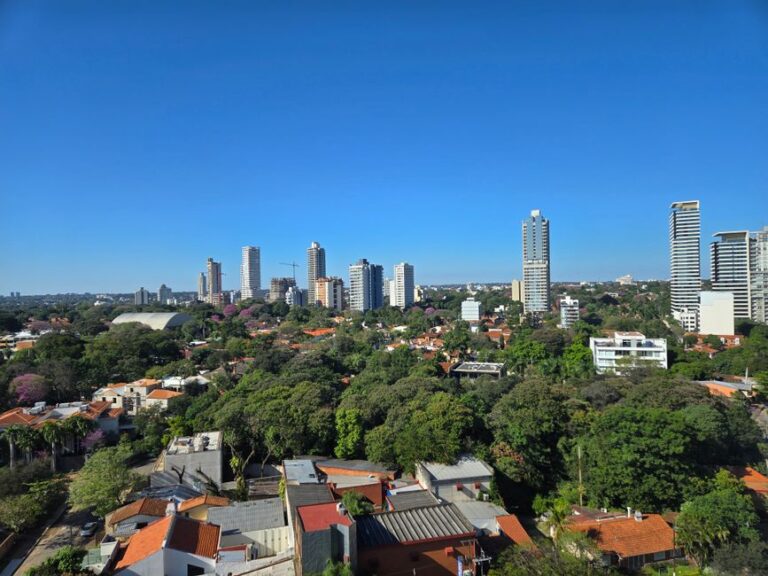
Founded in 1537, Asunción is a low-rise, leafy city of colonial and 19th-century buildings, lively markets and a riverfront promenade. See the pink Palacio de López presidential palace, the Pantheon of the Heroes, the Casa de la Independencia, where the 1811 independence plot was hatched, and the colorful houses of the Loma San Jerónimo hill; shop at the sprawling Mercado 4; and visit the Museo del Barro, one of the best folk and indigenous art museums in South America. See our Asunción travel guide.
Encarnación and the Jesuit missions
From the early 17th century, Jesuit missionaries and the Guaraní people built about 30 “reductions” (missions) across what is now Paraguay, Argentina and Brazil, communities with churches, workshops and houses arranged around great plazas, until the Jesuits were expelled in 1767. The ruins of La Santísima Trinidad de Paraná and Jesús de Tavarangue, about 30–45 minutes from Encarnación, were inscribed on the UNESCO World Heritage List in 1993; Trinidad’s carved church and its evening light-and-sound show are highlights. Encarnación itself, linked to Posadas in Argentina by a bridge, has a long riverside promenade and beaches on the Paraná, and in January and February a flamboyant carnival. We don’t yet have a separate guide.
Ciudad del Este, Itaipú and Iguazú
Paraguay’s second city is a hectic duty-free shopping hub on the Friendship Bridge to Foz do Iguaçu in Brazil. North of the city, the Itaipú dam, shared with Brazil and one of the largest hydroelectric plants in the world, offers guided visits; south of the city, the Saltos del Monday waterfalls tumble into a forested gorge. The Iguazú Falls are about 30–45 minutes away across the border: see our Iguazú National Park and Foz do Iguaçu travel guides.
The Cordillera and Lake Ypacaraí
An hour or so east of Asunción, the Cordillera hills make an easy escape: San Bernardino, a resort founded by German settlers on the shore of Lake Ypacaraí; Caacupé, with the basilica of Paraguay’s patron saint, the Virgin of Caacupé; Areguá’s ceramic workshops; and hiking and waterfalls around Piribebuy and Tobatí. We don’t yet have separate guides.
The Chaco
The Gran Chaco is one of South America’s last great wildernesses, a hot, dry plain of thorn forest, palm savanna and salt lagoons. The Transchaco Highway leads to the Mennonite colonies founded in the 1920s and 1930s, whose towns of Filadelfia and Loma Plata have neat streets, museums and dairy cooperatives. Farther out, national parks such as Defensores del Chaco shelter jaguars, pumas, peccaries and giant anteaters, but they are remote and need a 4×4 and a guide. We don’t yet have a separate guide.
The northern rivers and the Pantanal
The Paraguay River flows north from Asunción through Concepción to the edge of the Pantanal wetland, shared with Brazil and Bolivia. River trips are adventurous and slow; most visitors see the Pantanal from Brazil. See our Pantanal travel guide.
Visiting the Jesuit missions: practical details
Trinidad and Jesús are about 10 km (6 miles) apart, and Trinidad is right on Route 6, about 30 km (19 miles) north-east of Encarnación; buses toward Ciudad del Este stop at the turnoff, and taxis and tours run from Encarnación. Allow two hours at Trinidad, the larger and better preserved site, with its great church, carved stone friezes of angels playing instruments, the bell tower, and the long rows of Guaraní houses. Jesús de Tavarangue, a short taxi ride away, was never finished: its huge church, with Moorish-style trefoil arches, was still under construction when the Jesuits were expelled. Many visitors return to Trinidad after dark for the light-and-sound show, which projects the history of the mission onto the ruins; check the schedule on arrival, as it varies with the season. A third mission site, San Cosme y Damián, with an astronomical observatory used by the Jesuits, lies about 90 km (56 miles) west of Encarnación. Bring water and a hat: there is little shade, and summer afternoons are scorching.
Estancias and rural tourism
Cattle ranching is part of Paraguayan life, and a growing number of estancias across the Eastern Region welcome guests for a day or a few nights: horseback riding, milking and cattle work, swimming in rivers and lagoons, birdwatching, and home cooking such as asado, chipa and sopa paraguaya. Many are within two or three hours of Asunción, especially in the departments of Paraguarí, Cordillera and Misiones. Most require advance booking and a car or transfer.
Ciudad del Este: shopping and border practicalities
Ciudad del Este exists largely for cross-border trade, and its shopping malls and street stalls sell electronics, perfume, clothing and household goods at low prices to Brazilian and Argentine shoppers. Compare prices, buy in established malls, ask for a receipt and a warranty, and test electronics before you pay. Remember that Brazil and Argentina limit the value of goods you can bring back duty-free, and customs on the Brazilian side check bags. If you are only visiting for the day from Foz do Iguaçu, ask the border officers whether you need stamps; if you are continuing into Paraguay, you must get the Paraguayan entry stamp or card at the immigration office by the bridge, which is easy to miss in the traffic.
Asunción Travel Guide
Plan a trip to Asunción, Paraguay's capital: the Palacio de López and the Costanera, the Pantheon of the Heroes, Casa de la Independencia, Manzana…
Best time to visit Paraguay
Paraguay has a subtropical climate with long, hot, humid summers and short, mild winters. The best time for most travelers is from May to September, when days are warm and sunny and nights cool, while from December to February temperatures often climb above 35 °C (95 °F) with storms and high humidity. Rain falls in every month in the east, with the wettest periods in spring and summer; the Chaco has a clear dry season in winter. The table shows averages at one official weather station per region, from the 1991–2020 climate normals that Paraguay’s Meteorological Directorate (DMH) submitted to the World Meteorological Organization.
| Region (weather station) | Summer highs (Dec–Feb) | Winter highs (Jun–Aug) | Winter nights | Rain a year |
|---|---|---|---|---|
| Asunción (Silvio Pettirossi airport) | 33–34 °C (91–93 °F) | 24–26 °C (74–79 °F) | 13–15 °C (55–58 °F) | about 1,462 mm (58 in) |
| The south and the missions (Encarnación) | 32–33 °C (90–91 °F) | 22–25 °C (72–76 °F) | 10–12 °C (50–53 °F) | about 1,804 mm (71 in) |
| Alto Paraná (Guaraní airport, near Ciudad del Este) | 32–33 °C (89–90 °F) | 23–26 °C (74–79 °F) | 11–13 °C (53–55 °F) | about 1,856 mm (73 in) |
| The north (Concepción) | 34–35 °C (93–94 °F) | 26–29 °C (78–83 °F) | 13–15 °C (56–58 °F) | about 1,410 mm (56 in) |
| The Chaco (Mariscal Estigarribia) | 35–36 °C (95–97 °F) | 26–30 °C (79–86 °F) | 13–15 °C (55–58 °F) | about 760 mm (30 in), mostly from October to April |
Averages hide extremes: heat waves above 40 °C (104 °F) are common in summer, especially in the Chaco, while cold fronts from the south (surazos) can bring a few days of frost in winter. Summer storms can be violent, with flooding in low-lying parts of Asunción.
Seasons and festivals
- Carnival in Encarnación: parades with elaborate costumes and floats on weekends in January and February, along the Costanera.
- Caacupé pilgrimage: on and before December 8, the feast of the Virgin of Caacupé, hundreds of thousands of pilgrims walk from Asunción and across the country to the basilica; roads east of Asunción are crowded.
- San Juan: around June 24, towns celebrate with fire games, traditional food and dances.
- Holy Week: a major family holiday, when Paraguayans bake chipa and many businesses close on Thursday and Friday.
- The Transchaco Rally: an off-road race across the Chaco, usually held in September.
Crowds and prices
Paraguay rarely feels crowded. Hotels in Asunción are busiest on weekdays with business travelers and during big events; Encarnación and San Bernardino fill up on summer weekends and during carnival; and Christmas, New Year and Holy Week see many Paraguayans traveling.
Public holidays
Paraguay’s national holidays are set by law, and some can be moved to Mondays. Banks and offices close; many shops close on the main holidays. The next ones, from October 2026:
| Holiday | Date | Good to know |
|---|---|---|
| Virgin of Caacupé | Tuesday, December 8, 2026 | Huge pilgrimage to Caacupé |
| Christmas Day | Friday, December 25, 2026 | |
| New Year’s Day | Friday, January 1, 2027 | |
| Heroes’ Day | Monday, March 1, 2027 | |
| Holy Thursday and Good Friday | March 25–26, 2027 | Easter week travel peak |
| Labor Day | Saturday, May 1, 2027 | |
| Independence Days | Friday and Saturday, May 14–15, 2027 | National celebrations |
| Chaco Peace Day | Saturday, June 12, 2027 | |
| Founding of Asunción | Sunday, August 15, 2027 | |
| Boquerón Victory Day | Wednesday, September 29, 2027 |
How long to stay: sample itineraries
Distances are moderate, but buses are slow, so give each region at least two nights.
4–5 days: Asunción and the missions
Two days in Asunción, then the bus to Encarnación (about 5–6 hours) for two nights, with an afternoon and evening at Trinidad and a morning at Jesús.
1 week: adding Iguazú
Asunción, Encarnación and the missions, then on to Ciudad del Este for Itaipú and the Saltos del Monday, crossing the border to see the Iguazú Falls from Brazil and Argentina.
10–14 days: hills and the Chaco
Add a few days in the Cordillera around San Bernardino and Caacupé, a stay on an estancia, and a trip along the Transchaco Highway to the Mennonite colonies and, with a guide, the wildlife of the central Chaco.
Entry, money and costs
Entry: visas and documents (last reviewed October 2026)
According to Paraguay’s National Directorate of Migration (DNM), citizens of the United States, Canada, Australia and New Zealand don’t need a visa for stays of up to 90 days, under Law 7314 of August 13, 2024, which is valid until August 13, 2027. Citizens of the United Kingdom, Ireland, Japan and most European Union countries, including Spain, France and Germany, are also exempt for up to 90 days under bilateral agreements, and citizens of Mercosur and associated countries (Argentina, Brazil, Uruguay, Bolivia, Chile, Colombia, Ecuador and Peru) can enter with their national identity card. Other nationalities should check the DNM’s visa list before booking.
Practical points, according to the DNM:
- Everyone must register entry and exit at an official border post. At entry, foreign visitors receive proof of entry, a stamp in the passport or a card issued at the border; keep it and show it when you leave, as losing it or overstaying brings a fine.
- Check the stay you’re given: officers set the permitted length of stay at entry; if your passport is close to expiry, you may get less time.
- Optional pre-registration: a free online “Pre Registro Migratorio” form, completed at least 48 hours ahead, gives you a QR code to speed up border processing at the Friendship Bridge (Ciudad del Este), Puerto José Falcón (from Clorinda, Argentina) and Puerto Itá Enramada in Asunción.
- Yellow fever: under a Health Ministry resolution of May 2025, travelers aged 1 to 59 arriving from yellow fever risk areas must show an International Certificate of Vaccination against yellow fever. The listed risk areas are the Brazilian states of Amazonas, Minas Gerais, São Paulo, Rio Grande do Sul and Roraima, parts of Colombia, Guyana and Peru; get vaccinated at least 10 days before travel.
Arriving: customs
Customs rules are typical for the region: declare cash above the equivalent of US$10,000, carry prescription medicines in their original packaging, and expect bags to be X-rayed at Asunción’s airport and at the main land borders. Meat, fresh fruit, plants and seeds may be confiscated. Duty-free allowances apply to goods for personal use; the large quantities of electronics bought in Ciudad del Este are regulated by the customs of the country you take them back to, not by Paraguay.
Money: the guaraní
The currency is the Paraguayan guaraní (PYG), written “₲” or “Gs.,” with a dot separating thousands. On October 2, 2026, the Central Bank of Paraguay’s (BCP) reference rate was ₲5,873.69 to the US dollar, so ₲100,000 is about US$17. Practical points:
- Cards: accepted in hotels, restaurants, supermarkets and malls in Asunción, Encarnación and Ciudad del Este; small shops, markets, buses and rural areas often take cash only.
- Cash: ATMs are common in cities, often with a fee and a per-withdrawal limit; some dispense US dollars too. Exchange houses (casas de cambio) in Asunción and at borders change dollars, euros, reais and Argentine pesos at good rates.
- US dollars: accepted in some hotels and in Ciudad del Este’s shops, but you’ll usually pay less in guaraníes.
- Pay in guaraníes when a card machine or ATM offers to charge you in your home currency.
Taxes and tipping
Paraguay’s value-added tax (IVA) is included in prices, at 10% on most goods and services and 5% on some basic items. Tipping is modest: about 10% in restaurants if service isn’t included, small change for porters, and nothing expected in taxis beyond rounding up.
Typical travel costs
Paraguay is one of the cheapest countries in South America, although Asunción’s upscale hotels and restaurants charge international prices. These per-person daily estimates are a planning guide as of October 2026:
| Style | Estimated cost per day | What that looks like |
|---|---|---|
| Budget | about ₲200,000–350,000 (US$35–60) | Hostel bed or simple hotel, set lunches, buses |
| Mid-range | about ₲500,000–900,000 (US$85–155) | Comfortable hotel room shared by two, restaurant meals, taxis or app rides, a tour or museum most days |
| High-end | about ₲1,500,000+ (US$255+) | Top hotels in Asunción, private drivers and guides, estancia stays |
The figures are our estimates, not official statistics. Chaco trips with 4×4 transport and guides are the big extra cost.
Getting there and getting around
By air
- Asunción–Silvio Pettirossi (ASU): Paraguay’s main international airport, in Luque, about 15 km (9 miles) north-east of central Asunción, and one of the official entry points listed by the DNM. Flights connect with Buenos Aires, São Paulo, Santiago, Lima, Panama City, Montevideo, Santa Cruz (Bolivia) and Madrid, among others; there are no nonstop flights from the United States, so most North American travelers connect in Panama City, São Paulo, Lima or Miami. See our Miami travel guide. Taxis and app rides take 30–45 minutes to the center.
- Ciudad del Este–Guaraní (AGT): a smaller airport near Ciudad del Este with a few domestic and regional flights.
By land and river
- From Brazil: the Friendship Bridge links Foz do Iguaçu with Ciudad del Este; expect long queues, and make sure you get exit and entry stamps.
- From Argentina: the San Roque González de Santa Cruz bridge joins Posadas and Encarnación, with an international shuttle train across it; Clorinda connects with Asunción via Puerto José Falcón; and small boats cross the Paraguay River between Puerto Pilcomayo (Formosa) and Puerto Itá Enramada in Asunción.
- From Bolivia: the Transchaco Highway crosses the Chaco to the Bolivian border; long-distance buses run between Asunción and Santa Cruz.
- Long-distance buses: link Asunción with Buenos Aires (about 18–20 hours), São Paulo, Montevideo and Santa Cruz.
Getting around Paraguay
- Buses: the main way to travel, from Asunción’s bus terminal to every town; executive services on routes such as Asunción–Encarnación and Asunción–Ciudad del Este have reclining seats and air conditioning. Buy tickets at the terminal.
- Driving: Paraguayans drive on the right. The main highways are paved, but many rural roads are dirt, and they become impassable after heavy rain; in the Chaco, carry water, fuel and a spare tire. Watch for motorbikes, animals and pedestrians, and avoid driving at night outside cities.
- In cities: ride-hailing apps work in Asunción and other big cities and are usually the easiest option; city buses are cheap but confusing for visitors.
Culture, food and everyday etiquette
Paraguay’s culture is a blend of Guaraní and Spanish traditions, shaped by long periods of isolation and by two devastating wars: the War of the Triple Alliance (1864–1870) against Brazil, Argentina and Uruguay, which killed a large share of the population, and the Chaco War (1932–1935) with Bolivia. National pride is strong, and the Guaraní language is spoken everywhere, from markets to parliament.
The food is hearty and corn-based. Chipa, a ring-shaped bread of cassava flour and cheese, is sold everywhere, hot from roadside vendors; sopa paraguaya, despite its name, is a dense cornbread with cheese and onion; chipa guasú is a fresh-corn version; and mbejú is a cassava-and-cheese pancake. Try vori vori (a soup with corn and cheese dumplings), so’o yosopy (a beef soup), asado on Sundays, and river fish such as surubí and dorado. The national drink is tereré, cold yerba mate with medicinal herbs, shared from a guampa (cup) through a metal straw; the practices and knowledge of tereré are on UNESCO’s list of Intangible Cultural Heritage. The Paraguayan harp and the slow guarania and polka paraguaya are the country’s signature music, and ñandutí, spiderweb lace from Itauguá, is the classic craft.
Tap water in central Asunción is treated, but many residents and visitors prefer bottled or filtered water, especially outside the capital.
A few words of Guaraní
Paraguayans love it when visitors try a word or two of Guaraní. “Mba’éichapa?” means “How are you?” (answer “Iporã,” “Fine”), “Aguyje” is “Thank you,” “Jajotopata” is “See you later,” and “Iporã eterei” means “Very good.” You’ll also hear Guaraní words in Spanish conversation all the time, such as “che” (my) and “nde” (you), and many place names, foods and drinks, from Ypacaraí to tereré and mbejú, come from Guaraní.
Everyday etiquette
Paraguayans are warm, polite and unhurried. Greet with a handshake, or a kiss on the cheek among friends, and say “buen día” when you enter a shop. If you’re offered tereré or mate, accept; the person serving refills the cup and passes it around, and you say “gracias” only when you’ve had enough. Siesta is still observed in many towns, especially in summer, when shops may close in the early afternoon. Dress is casual but neat; shorts are fine in the heat, but cover up a little more in churches.
Safety, health, accessibility and connectivity
Safety
Most visits to Paraguay are trouble-free, and Paraguayans are notably friendly and helpful to visitors. Practical points:
- In Asunción, watch for pickpockets in the historic center and Mercado 4, and for “motochorros,” thieves on motorbikes who snatch phones and bags from people on sidewalks; keep valuables out of sight and use app rides at night.
- In Ciudad del Este, the shopping district by the Friendship Bridge is crowded and chaotic; watch your belongings and use reputable shops.
- In parts of the departments of Concepción, San Pedro and Amambay, near the northern border with Brazil, drug trafficking groups and an armed group are active, mostly in rural areas away from tourist routes; if you travel there, stick to main roads, travel by day and get local advice.
- Protests and road blockades happen occasionally, especially in Asunción’s center; avoid them.
The bigger risks are often environmental: extreme heat in summer, mosquito-borne diseases, storms and flash floods, and the remoteness of the Chaco. For emergencies, call 911.
Health and insurance
No vaccinations are required for most visitors arriving directly from outside the risk areas, but yellow fever vaccination is required if you arrive from the risk areas listed above, and it’s worth discussing with a travel clinic in any case. Dengue and chikungunya, spread by mosquitoes, occur in hot, wet months, especially in Asunción and the east; use repellent and cover up at dawn and dusk. Drink plenty of water in the heat. Private hospitals in Asunción are good, but care is limited elsewhere, so buy travel insurance with medical cover and evacuation.
Accessibility
Asunción’s newer hotels and malls are accessible, but sidewalks are often broken or high-curbed, and older buildings rarely have elevators. The Jesuit missions have grass and gravel paths.
Connectivity and power
Tigo, Personal and Claro sell prepaid SIMs; you’ll need your passport. Coverage is good in cities and along main roads, weak in the Chaco. Paraguay uses 220 V and type C sockets (two round pins), so most visitors need an adapter, and US devices must handle 220 V; see our guide to travel adapters.
Things to do: sightseeing, history, nature and more
- City sightseeing: Asunción’s historic center, museums and markets, and Encarnación’s riverside.
- History: the Jesuit missions of Trinidad, Jesús and San Cosme y Damián, and the Chaco War sites and museums.
- Hiking: the Cordillera hills, Cerro Corá national park and the Ybycuí waterfalls.
- Boat trips: sunset cruises on the Paraguay River in Asunción, and longer river journeys north toward the Pantanal.
- Beaches: Encarnación’s river beaches on the Paraná and the lake shore at San Bernardino in summer.
- Wildlife: birds and mammals in the Chaco, the Pantanal and the Atlantic Forest reserves of the east.
What to pack
Light, breathable clothes, a sun hat, sunglasses and high-factor sunscreen for the heat; insect repellent with DEET or icaridin; a light rain jacket for summer storms (see our guide to rain jackets); a warm layer for winter evenings and cold snaps; comfortable walking shoes; your yellow fever certificate if needed; and a type C plug adapter.
Paraguay travel FAQ
Do I need a visa to visit Paraguay?
According to Paraguay’s migration authority, citizens of the US, Canada, Australia and New Zealand don’t need a visa for up to 90 days under a law valid until August 13, 2027; UK, Irish and most EU citizens are also exempt for 90 days, and Mercosur citizens can enter with their ID card.
Do I need a yellow fever vaccine for Paraguay?
You must show a yellow fever certificate if you’re aged 1 to 59 and arriving from listed risk areas, including the Brazilian states of São Paulo, Minas Gerais, Amazonas, Rio Grande do Sul and Roraima, and parts of Colombia, Peru and Guyana.
What is the currency of Paraguay?
The guaraní (₲). On October 2, 2026, the Central Bank of Paraguay’s reference rate was ₲5,873.69 per US dollar, so ₲100,000 is about US$17.
Can I use cards in Paraguay?
Yes, in hotels, restaurants and supermarkets in the cities, but carry cash for small shops, markets, buses and rural areas.
How do I get to Paraguay?
Most visitors fly to Asunción’s Silvio Pettirossi airport via Buenos Aires, São Paulo, Panama City, Lima or Madrid, or cross by land from Foz do Iguaçu, Posadas or Clorinda.
When is the best time to visit Paraguay?
May to September, when it’s warm and sunny but not oppressively hot. Summer, from December to February, is very hot and humid, with storms.
What time zone is Paraguay in?
UTC−3 all year. Paraguay adopted permanent summer time in October 2024, so the clocks no longer change.
Is Paraguay safe for tourists?
Most visits are trouble-free. Watch for phone and bag snatching in Asunción and Ciudad del Este, use app rides at night, and avoid remote northern border areas.
Are the Jesuit missions worth visiting?
Yes. Trinidad and Jesús, near Encarnación, are among the best-preserved Jesuit-Guaraní mission ruins and a UNESCO World Heritage Site, with very few visitors.
Can I visit the Iguazú Falls from Paraguay?
Yes. From Ciudad del Este, the falls are about 30–45 minutes away across the Brazilian or Argentine border; bring your passport and get all stamps.
What languages are spoken in Paraguay?
Spanish and Guaraní are both official, and most Paraguayans speak Guaraní, often mixed with Spanish.
What should I eat in Paraguay?
Chipa, sopa paraguaya, chipa guasú, mbejú, vori vori, river fish such as surubí, and a cup of iced tereré.
Sources and last review
Researched and last reviewed on 4 October 2026. Visa exemptions, entry and exit registration, proof of entry and fines, pre-registration and official border posts, and the yellow fever requirement: Paraguay’s National Directorate of Migration; exchange rate: the Central Bank of Paraguay; climate: the Meteorological Directorate’s 1991–2020 normals as published by the World Meteorological Organization. The time zone change, population and geography, history, UNESCO listings, festivals and holidays, airports and flights, bridges, train and bus details, taxes, culture and food, safety tips, health notes, plugs and typical costs come from general references and are flagged for checking; daily costs are our estimates. Rules and prices change, so check the official sites before you go. For trips that combine Paraguay with its neighbors, see our Argentina, Brazil and Bolivia travel guides.
Plan your trip
Partner links: TravelerCenter may earn a commission if you book, at no extra cost to you.
🇪🇸 Useful Spanish phrases for Paraguay
All 38 Spanish phrases: restaurant, hotel, emergencies, romance (printable) →