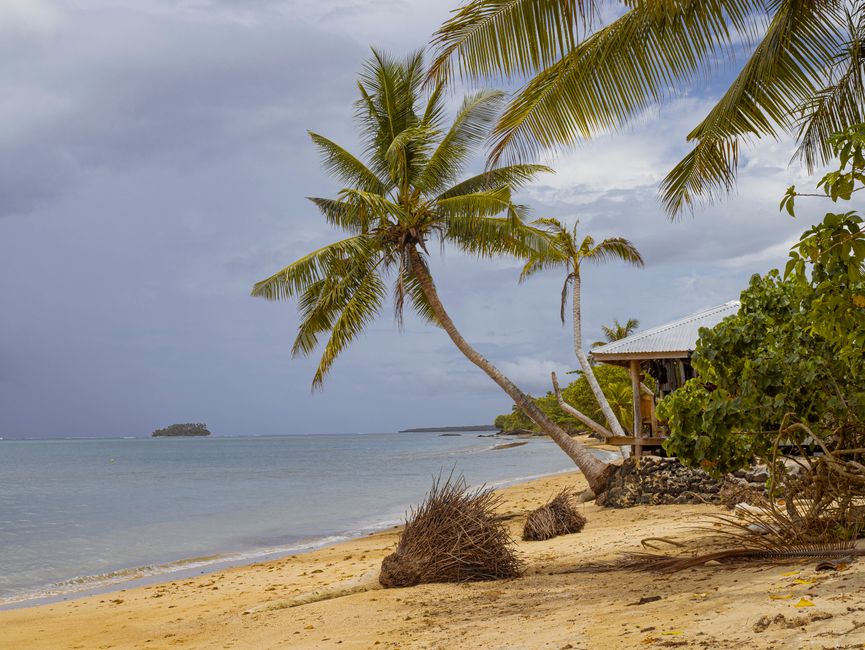
Upolu is the island where nearly every trip to Samoa begins. It is about 75 km (47 miles) long and 1,125 km² (434 sq miles) in area, a ridge of extinct volcanoes covered in rainforest and plantations, with a coast of black lava rock, white-sand beaches and lagoons protected by fringing reefs. About three-quarters of Samoa’s people live here, many in villages of open-sided fales strung along the coast road, each with its own church and village green. The capital, Apia, sits on a harbor on the north coast; Faleolo International Airport is on the northwest tip; and the beaches, swimming holes and waterfalls that fill Samoa’s brochures are mostly on the south and east coasts, an hour or so across the mountains. In a week you can see the To Sua Ocean Trench, swim from the beach at Lalomanu, slide down the Papase’ea rocks, float in the Piula Cave Pool, climb to Robert Louis Stevenson’s grave and still have plenty of days to do nothing in a beach fale. The dry season from May to October is the most comfortable time to visit.
Right now in Upolu (Apia)
- Wed 25–30°C 76–85°F 1 mm Partly cloudy
- Thu 25–29°C 77–83°F 1 mm Partly cloudy
- Fri 25–30°C 76–85°F Cloudy
- Mon 12 Oct Lotu a Tamaiti
Weather: MET Norway (CC BY 4.0) · Sea temperature: NOAA CoastWatch · Holidays: Nager.Date
Top tours in Upolu
See all tours for Upolu →
From local operators, with prices and reviews; you check availability and book on Viator, our partner. We may earn a commission at no extra cost to you. How we earn money
Upolu at a glance
- Best months: May to October, when trade winds bring drier, less humid weather; June to September is busiest. November to April is hot, wet and cyclone season.
- Where to base yourself: one or two nights in Apia, then the south or east coast (Lalomanu, Saleapaga, Matareva, Salamumu) for beaches; the west coast near the airport for resorts and the Savai’i ferry.
- Getting there: fly into Faleolo International Airport (APW), 35 km (22 miles) from Apia, usually via Auckland, Sydney, Brisbane or Nadi.
- Getting around: rental car (with a temporary Samoan driving permit), taxis, tours or the colorful local buses; drive on the left.
- Time needed: five days for the highlights; a week or more to slow down, plus extra days for Savai’i.
- Before you go: entry rules, money and culture are covered in our Samoa travel guide.
Upolu’s areas and who each one suits
Apia and the north coast
Apia is Samoa’s only town, with government buildings, the markets, banks, supermarkets, cafés and most of the nightlife. It suits a first or last night, travelers who want restaurants and day tours, and anyone on business. East of Apia, the north coast road passes Piula Cave Pool and Falefa Falls on the way to the Le Mafa Pass. West of town, the road runs past villages and the Mulinu’u peninsula toward the airport.
The west coast and the airport area
The flat northwest corner around Faleolo has several resorts and lodges with lagoon swimming, a short drive from the airport and the Mulifanua ferry wharf for Savai’i. It is the most convenient base for late-night arrivals, early departures and a trip to Manono, but the beaches are shallower and less dramatic than in the south.
The south coast
From Salamumu and Matareva in the southwest to Siumu, Poutasi and Lotofaga, the south coast is lined with beaches, small resorts and fales, backed by the steep green flank of the island. To Sua Ocean Trench, Sopoaga Falls and O Le Pupu-Pu’e National Park are here. It suits travelers who want to swim and snorkel every day, surfers who come for the reef breaks and couples looking for a quiet resort.
Lalomanu and the Aleipata coast
The far eastern tip of Upolu has the most famous beaches: Lalomanu, Saleapaga and Vavau, with views of the islets of Nu’utele, Nu’ulua and Namu’a in the Aleipata Marine Protected Area. Accommodation is mostly family-run beach fales, with breakfast and dinner included. This is the place for a few days of swimming, snorkeling and sleeping to the sound of the waves.
The interior
The Cross Island Road climbs from Apia over the island’s spine, passing Vailima, the Baha’i House of Worship and the start of the walk to Lake Lanoto’o before dropping to the south coast. There is little accommodation inland, but it is a beautiful drive.
Top things to see on Upolu
To Sua Ocean Trench
To Sua, in the village of Lotofaga on the south coast, is the image that sells Samoa: a deep, round sinkhole in the lava cliffs, about 30 m (100 feet) deep, with clear, turquoise seawater at the bottom that flows in and out through an underwater tunnel. A long, steep wooden ladder leads down to a platform, and you can swim in the pool and, at the right tide and with care, near the tunnel mouth. The family that owns the site has turned the surrounding clifftop into landscaped gardens with fales, a second sinkhole, lava-rock pools and sea views. An entry fee is charged at the gate (about ST$20 for adults). Go in the morning before day-tour groups arrive, check the tide (swimming is easiest at mid-tide, without strong surges), and hold the handrails on the ladder, which can be wet.
Lalomanu Beach
Lalomanu, at Upolu’s eastern tip, is a long curve of soft white sand and clear, calm water inside the reef, with the steep, forested islet of Nu’utele offshore. It is lined with beach fales, many owned by families from the village, and day visitors pay a small customary fee. Snorkeling is good off the beach and around Namu’a, a small islet you can reach by boat from Mutiatele, where there are also fales for overnight stays. Swim inside the lagoon and ask about currents near the reef passages.
Papase’ea Sliding Rocks
In the hills a short drive inland from Apia, a stream tumbles over smooth volcanic rock into pools, forming natural slides of about 2 to 5 m (6 to 16 feet). Locals and visitors slide down on their backsides or in the bigger chute; it is fun but bruising, so wear sturdy swimwear and check the depth first. The rocks are reached by a steep staircase of about 100 steps, and a small entry fee is charged. Flow varies: after rain the slides are fast, in a long dry spell they can be slow.
Piula Cave Pool
On the north coast about 30 minutes east of Apia, below the Piula Theological College church, a spring-fed pool of cool, clear fresh water runs into a lava cave. You can swim into the cave and, with a mask and a bit of nerve, under a rock wall into a second chamber. It is open most days except Sunday, with a small fee, changing rooms and a calm, shaded setting.
Robert Louis Stevenson Museum and Mount Vaea
The Scottish author of Treasure Island and Strange Case of Dr Jekyll and Mr Hyde spent the last four years of his life at Vailima, his plantation house above Apia, where Samoans named him Tusitala, “teller of tales.” The restored house is now a museum with guided tours of his rooms, library and the only fireplace in Samoa. From the gardens, two trails climb Mount Vaea to his tomb: the short trail is steep, the long trail gentler; allow about an hour up through rainforest. Go early to avoid the heat and wear proper shoes, as the path can be muddy.
Waterfalls: Sopoaga, Fuipisia, Togitogiga and Papapapai-tai
- Sopoaga Falls: a high fall dropping into a deep gorge, viewed from a lookout in landscaped gardens just off the Le Mafa Pass road, with a small fee.
- Fuipisia Falls: a 55-meter (180-foot) fall reached by a short walk through a plantation off the same road.
- Togitogiga Falls: lower, stepped falls with swimming pools near the south coast, at the edge of O Le Pupu-Pu’e National Park, popular with families on weekends.
- Papapapai-tai Falls: a tall, thin fall seen from a roadside lookout on the Cross Island Road.
Apia’s waterfront and markets
Walk Beach Road along the harbor, past the Immaculate Conception Cathedral, government buildings and the clock tower, and browse Maketi Fou, the main produce market, which runs early in the morning and is busiest on Saturdays. The flea market near the bus station sells lavalavas, carvings, siapo (bark cloth) and woven fans. The Samoa Cultural Village at the tourism information center has demonstrations of tattooing, carving, weaving and an umu on weekdays.
Palolo Deep Marine Reserve
Near the harbor on the edge of Apia, Palolo Deep is a lagoon with a deep blue hole surrounded by coral, reached by wading and snorkeling out from the shore. Fish life is good for a reserve so close to town. Go at high tide, wear reef shoes and stay off the coral.
O Le Pupu-Pu’e National Park and Lake Lanoto’o
Samoa’s first national park stretches from the island’s central ridge to the south coast, protecting rainforest, lava fields and the O Le Pupu coastal trail with sea arches and blowholes. In the highlands nearby, Lake Lanoto’o is a crater lake surrounded by moss forest, known for the goldfish that were introduced long ago. The walk to the lake is muddy and confusing, so go with a local guide.
Other things to do on Upolu
- Snorkeling: try the Aleipata lagoon off Lalomanu and Namu’a, Palolo Deep and the lagoons in front of south coast resorts; turtles are often seen.
- Diving: dive shops in the west and south run trips to walls, channels and coral gardens.
- Surfing: reef breaks on the south coast for experienced surfers, best from about May to October; stay with a surf camp that has local knowledge and boat access.
- Kayaking and stand-up paddleboarding: calm lagoons on the west and south coasts; some resorts lend gear free.
- Cultural shows: fiafia nights with siva (dance), music and fire-knife dancing at resorts and hotels, usually with a buffet.
- Village visits and church: attending a Sunday service is the best way to hear Samoan choirs; dress modestly and accept any invitation to eat with the family afterward.
- Deep-sea fishing: charters from Apia for marlin, tuna and mahi-mahi.
Food and drink
Apia has the widest choice, from waterfront fish and chips and cafés serving koko Samoa (local cocoa) to Chinese, Italian and Pacific fusion restaurants and a few bars. Outside town, most visitors eat at their resort or fale, where dinner is often a set menu of fish, chicken, taro, breadfruit and palusami (taro leaves cooked in coconut cream). Try oka, raw fish in coconut cream; panipopo, sweet coconut buns; and fresh pineapple, papaya and bananas from roadside stalls. The Maketi Fou food stalls serve cheap local meals. On Sunday, if you are invited to share a family’s umu (earth-oven) lunch, say yes. Vailima is the local beer.
Island hopping from Upolu
Savai’i
Samoa’s biggest island is a ferry ride from Mulifanua, near the airport: 60 to 90 minutes to Salelologa, with daily sailings by Samoa Shipping Corporation for cars and foot passengers (ST$10 for adult foot passengers, paid in cash). Savai’i is quieter and more traditional, with the Alofaaga Blowholes, the Saleaula lava fields, Afu Aau Falls and the beaches of Manase. Stay at least two nights, or take a car across for a long day trip. See our Samoa travel guide for more on Savai’i.
Manono
Manono is a small, car-free island inside the reef off Upolu’s western tip. Boats leave from the Manono-uta jetty on the west coast, a short drive from the airport, for a crossing of about 20 minutes. Walk the path around the island, which takes about 90 minutes, stay in a beach fale, and visit the ancient star mounds and the grave of 99 stones.
Namu’a
Namu’a is a tiny islet off Upolu’s eastern tip, reached by boat from Mutiatele near Lalomanu. It has simple beach fales, a steep walk to the summit and very good snorkeling. At low tide you can sometimes wade across, but ask locally before trying.
Getting there and getting around
By air
International flights land at Faleolo International Airport (APW) on the northwest tip, mostly from Auckland, Brisbane, Sydney and Nadi. Small planes to American Samoa use Fagali’i Airport near Apia. Many New Zealand flights arrive late at night, so book a transfer or a room near the airport.
From the airport
Resorts and hotels arrange transfers, and shuttles run to Apia and the main resorts. A taxi to Apia costs about ST$60–80 (agree the price first and pay cash), and if you land before 5 p.m. the local bus from the main entrance costs about ST$5.
Driving
A rental car gives you the most freedom. You need a temporary Samoan driving permit (ST$21 for a month), issued by rental companies, Samoa Post or the Land Transport Authority on your home license. Drive on the left, keep to 56 km/h (35 mph) or less and slow right down in villages. The coast road circles the island, and three roads cross the mountains: the Cross Island Road from Apia, the Le Mafa Pass in the east and the Richardson Road in the center. The east coast and the Le Mafa Pass are steep and winding. Fuel stations are clustered around Apia and the airport, so fill up before heading south or east and before Sunday.
Buses and taxis
Colorful wooden buses leave the Apia bus station for villages all over the island. There are no timetables; buses leave when full and are scarce after mid-afternoon and on Sundays. Fares are a few tala, paid in cash when you get off. Taxis are easy to find in Apia; agree the fare in advance. Many fales and resorts also arrange day tours.
When to go and how long to stay
Upolu is hot all year, with average highs of about 30 to 31 °C (86 to 88 °F) and lows of 23 to 25 °C (74 to 77 °F) in Apia. The dry season from May to October has the least rain and humidity; December to March is the wettest, with heavy downpours and the risk of tropical cyclones from November to April.
| Month | Apia high / low | Rain | Days with 1 mm or more |
|---|---|---|---|
| Jan | 31 / 25 °C (87 / 76 °F) | 483 mm (19.0 in) | 20 |
| Feb | 31 / 25 °C (87 / 76 °F) | 406 mm (16.0 in) | 18 |
| Mar | 31 / 25 °C (88 / 76 °F) | 302 mm (11.9 in) | 18 |
| Apr | 31 / 25 °C (88 / 76 °F) | 232 mm (9.1 in) | 14 |
| May | 31 / 24 °C (87 / 75 °F) | 245 mm (9.6 in) | 13 |
| Jun | 30 / 24 °C (86 / 75 °F) | 139 mm (5.5 in) | 10 |
| Jul | 30 / 24 °C (86 / 74 °F) | 133 mm (5.2 in) | 11 |
| Aug | 30 / 23 °C (86 / 74 °F) | 112 mm (4.4 in) | 10 |
| Sep | 30 / 24 °C (86 / 74 °F) | 143 mm (5.6 in) | 12 |
| Oct | 30 / 24 °C (86 / 75 °F) | 221 mm (8.7 in) | 13 |
| Nov | 31 / 24 °C (87 / 76 °F) | 261 mm (10.3 in) | 16 |
| Dec | 31 / 24 °C (87 / 76 °F) | 414 mm (16.3 in) | 18 |
Figures are the World Meteorological Organization 1991–2020 normals for Apia Observatory (Samoa Meteorology Division): mean daily maximum and minimum, total rainfall and days with at least 1 mm of rain. The south and east coasts and the mountains are wetter than Apia.
How long to stay: 3, 5 and 7 days
- 3 days: one night in Apia (market, seawall, Robert Louis Stevenson Museum), then two nights at Lalomanu, with To Sua Ocean Trench and Sopoaga Falls on the way.
- 5 days: add Papase’ea Sliding Rocks and Piula Cave Pool, a day of snorkeling and a night on the south coast near To Sua or Togitogiga.
- 7 days: add a night on Manono or Namu’a and a lazy beach day or two, or use two days for a quick trip to Savai’i.
Events
Independence Day celebrations in Apia (1 June), the week-long Teuila Festival (early September) with dance, fire-knife and fautasi longboat races, and White Sunday (the second Sunday in October) are the biggest events. Late December brings family reunions, choirs and fireworks, and many businesses close for a few days.
Where to stay on Upolu
- Apia: business hotels, boutique guesthouses and budget lodges near the waterfront; convenient for restaurants and tours but not for beaches.
- South coast: boutique resorts and family-run fales from Salamumu to Lotofaga, close to To Sua, the waterfalls and surf breaks.
- Lalomanu and Aleipata: mostly beach fales with breakfast and dinner, plus a few small resorts; the best beach on the island.
- West coast near the airport: larger family resorts and lodges, handy for flights, Manono and the Savai’i ferry.
- Manono and Namu’a: simple fales for a night of real island quiet.
Typical costs on Upolu
| Item (as of October 2026) | Samoan tala | About US dollars |
|---|---|---|
| Taxi, airport to Apia | about ST$60–80 | about US$22–29 |
| Bus, airport to Apia | about ST$5 | about US$1.80 |
| Temporary driving permit, one month | ST$21 | US$7.60 |
| Ferry to Savai’i, adult foot passenger, one way | ST$10 | US$3.60 |
| To Sua Ocean Trench entry, adult | about ST$20 | about US$7 |
| Small site fees (sliding rocks, cave pool, beach) | about ST$5–10 | about US$2–4 |
| Beach fale with breakfast and dinner, per person | about ST$100–180 | about US$36–65 |
| Mid-range resort room, per night | about ST$350–700 | about US$125–250 |
| Lunch at a market stall or café | about ST$15–40 | about US$5–14 |
Taxi, bus, permit and ferry prices come from the Samoa Tourism Authority. Entry fees, accommodation and meal prices are typical ranges, not official prices, and change often. Conversions use about US$0.36 to ST$1 (Central Bank of Samoa, 5 October 2026).
Safety on Upolu
- Currents: reef passages have strong outgoing currents, especially on falling tides. Swim and snorkel inside the lagoon, ask locally about safe spots and never swim alone; few beaches have lifeguards.
- To Sua and waterfalls: the ladder is steep and wet; surges at To Sua can be strong at high tide; waterfall rocks are slippery, and pools rise after heavy rain.
- Tsunami: if you feel a strong or long earthquake on the coast, go to high ground immediately; follow village evacuation signs.
- Cyclones: November to April is cyclone season; follow Samoa Meteorology Division warnings.
- Roads: watch for dogs, pigs, chickens and children; avoid driving at night outside Apia.
- Coral cuts: clean them thoroughly, as they infect easily; wear reef shoes.
- Mosquitoes: dengue occurs; use repellent and sleep under a net.
- Belongings: lock valuables away in open fales and never leave them in a parked car at a beach.
What to pack for Upolu
Swimwear plus modest clothes for villages and church (a lavalava, or shorts and skirts that cover the knees, and a shirt with sleeves), reef shoes for coral and slippery rocks, a mask and snorkel, reef-safe sunscreen, a hat, insect repellent, a light rain jacket, a headlamp for fales, a dry bag, cash in small notes and a Type I power adapter.
Upolu travel FAQ
How do I get from Faleolo Airport to Apia?
By taxi (about ST$60–80, agreed in advance and paid in cash), by hotel transfer or shuttle, or by local bus for about ST$5 if you land before 5 p.m. The drive takes about 40 minutes.
How far is To Sua Ocean Trench from Apia?
About an hour’s drive across the island via the Cross Island Road or the Le Mafa Pass, on the south coast at Lotofaga. Many visitors combine it with Lalomanu and the waterfalls.
Can you swim at To Sua Ocean Trench?
Yes. A steep wooden ladder leads down to a platform and the pool. Swimming is easiest at mid-tide when surges are gentle; hold the handrails and don’t swim into the tunnel.
Is Lalomanu Beach worth it?
Yes. It is one of the most beautiful beaches in Samoa, with calm lagoon swimming, snorkeling and views of Nu’utele. Stay overnight in a beach fale to enjoy it before and after the day visitors.
Do I need a car on Upolu?
Not strictly, as buses, taxis and tours cover most sights, but a rental car makes it far easier to reach beaches, waterfalls and swimming holes at your own pace. You need a temporary Samoan driving permit.
Where should I stay on Upolu?
One night in Apia, then the south coast or Lalomanu for beaches and fales. Stay on the west coast near the airport if you have a late arrival, an early flight or plan to visit Savai’i or Manono.
Are attractions on Upolu open on Sundays?
Many are not. Sunday is a day of church and rest; markets, most shops and some sites close, and buses barely run. Resorts and some fales stay open, so plan Sunday as a beach day.
How do I get from Upolu to Savai’i?
Take the ferry from Mulifanua, about 6 minutes from the airport, to Salelologa: 60 to 90 minutes. Foot passengers pay ST$10 cash; vehicles must be booked in Apia or through a rental company.
When is the best time to visit Upolu?
May to October, when the weather is drier and less humid. November to April is wetter, hotter and cyclone season, but quieter and cheaper.
Is it safe to snorkel on Upolu?
Yes, inside the lagoons and with care. Ask locals about currents near reef passages, avoid snorkeling alone or on outgoing tides, and don’t touch coral or marine life.
Sources and last review
Researched and last reviewed on 5 October 2026. Island size and population figures, airport, ferry, taxi, bus and driving-permit information come from the Samoa Tourism Authority; visitor permit rules from Samoa Immigration; climate from the World Meteorological Organization’s 1991–2020 normals for Apia (Samoa Meteorology Division); exchange rates from the Central Bank of Samoa. Entry fees for attractions, accommodation and meal prices, drive times and some site details are general estimates. Prices change, so check locally before you go.
Plan your trip
Partner links: TravelerCenter may earn a commission if you book, at no extra cost to you.