Short answer: The Canary Islands are Spain’s subtropical archipelago in the Atlantic, off the coast of Africa: eight inhabited islands with spring-like weather all year, volcanic landscapes, black and golden beaches and some of Europe’s darkest night skies. Each island has a different character. Choose Tenerife for variety and Mount Teide, Gran Canaria for a real city plus dunes and mountains, Lanzarote for volcanoes and art, Fuerteventura for long beaches and wind, and La Palma or La Gomera for hiking and quiet. One island is plenty for a week; with ten days or more, pair a big island with a small one by ferry.
The Canary Islands are one of Spain’s 17 autonomous communities, home to about 2.3 million people, with two provinces: Las Palmas (Gran Canaria, Lanzarote, Fuerteventura and La Graciosa) and Santa Cruz de Tenerife (Tenerife, La Palma, La Gomera and El Hierro). They are among the most visited regions of Spain: according to Spain’s National Statistics Institute (INE), the islands received a record 15.7 million international tourists in 2025, 3.0% more than the year before, on top of many visitors from mainland Spain. The islands are one hour behind mainland Spain, on the same time as the United Kingdom and Portugal. For entry rules, money and tipping, see our Spain travel guide.
Which Canary Island should you choose?
The islands get greener and wetter from east to west. The eastern islands, Lanzarote and Fuerteventura, are low, dry and sunny, with desert-like volcanic scenery and the best sandy beaches. Tenerife and Gran Canaria, in the middle, are high, mountainous “continents in miniature,” with big resorts in the dry south, lush valleys in the north and pine forests above the clouds. The western islands, La Palma, La Gomera and El Hierro, are steep, green and much less developed, and are made for walking. Here is a quick guide to who each island suits best.
Tenerife: for first-timers, families and variety
The largest and most visited island has a bit of everything. The sunny south around Costa Adeje, Los Cristianos and Playa de las Américas is full of hotels, beaches and water parks; the greener north has the old towns of La Orotava and Puerto de la Cruz and the UNESCO-listed city of San Cristóbal de La Laguna; and in the middle rises Mount Teide, at about 3,715 meters Spain’s highest mountain, inside a national park of lava fields and strange rock towers that Tenerife’s tourist board says receives around three million visitors a year. Add the cliffs of Los Gigantes, the Masca gorge and the laurel forests of Anaga, and Tenerife is the easiest island to fill a week or two. Our Tenerife travel guide has the details, from Teide permits to buses.
Gran Canaria: for city life, beaches and mountains in one
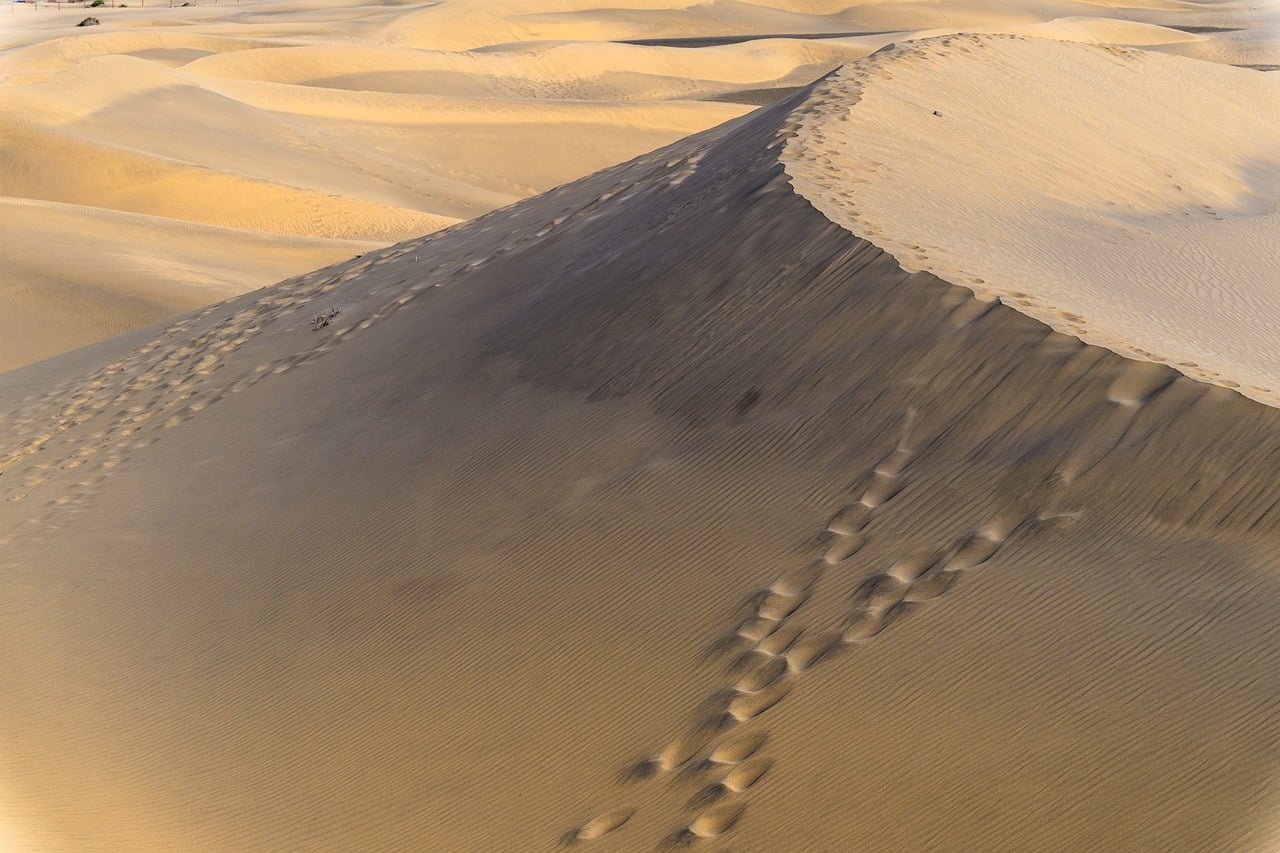
Gran Canaria is the island for people who want a real city as well as a beach. Las Palmas, the largest city in the Canaries, has the long urban beach of Las Canteras, sheltered by a natural reef, and the old Vegueta quarter with the Casa de Colón. In the south, the resorts of Playa del Inglés and Maspalomas sit beside the Maspalomas Dunes, a protected nature reserve of golden sand, and Puerto de Mogán is a pretty fishing harbor of canals and flowers. Inland, the mountain roads climb to the village of Tejeda and the basalt monolith of Roque Nublo, part of a landscape added to the UNESCO World Heritage list in 2019. Our Gran Canaria travel guide covers the beaches, the mountain villages and the buses.
Lanzarote: for volcanic landscapes, art and couples
Lanzarote looks like nowhere else in Europe. Eruptions between 1730 and 1736 buried a large part of the island in lava, and today Timanfaya National Park, the “Fire Mountains,” is a sea of red and black craters. The artist César Manrique, born here, shaped the island’s look: low white houses with green or blue doors, no high-rise hotels, and a string of spaces he built into the volcanic landscape, such as the Jameos del Agua lava tube, the Mirador del Río viewpoint and the Cactus Garden. Vines grow in black volcanic ash in La Geria, Papagayo has some of the island’s best sandy coves, and the tiny car-free island of La Graciosa is a short ferry ride from Órzola in the north. Our Lanzarote travel guide has tickets for all the sights.
Fuerteventura: for beaches, windsurfing and kitesurfing
The second-largest island, and the closest to Africa, has the longest and emptiest beaches in the Canaries: the white dunes of the Corralejo natural park in the north, the lagoon of Sotavento on the Jandía peninsula, where steady trade winds make it one of Europe’s best spots for windsurfing and kitesurfing, and the wild, wave-battered sweep of Cofete below the mountains in the far south. Inland, the old capital of Betancuria hides in a valley, and from Corralejo boats cross to the tiny protected islet of Lobos, which needs a free permit. Fuerteventura is ideal for a beach holiday, surfing and families who want space. Our Fuerteventura travel guide has beaches, the Lobos permit and ferries.
La Palma: for hikers and stargazers
“La Isla Bonita” is green, steep and quiet. At its heart is the Caldera de Taburiente National Park, a vast eroded crater of pine forests, streams and waterfalls; on its rim, at 2,426 meters, the Roque de los Muchachos Observatory has some of the world’s largest telescopes, protected by laws that keep the island’s skies dark. The Ruta de los Volcanes follows the volcanic ridge south to Fuencaliente, and in 2021 the Tajogaite eruption added new land to the west coast; it can be visited on a guided trail. Laurel forests at Los Tilos, banana plantations and the balconied old town of Santa Cruz de La Palma complete the picture. Our La Palma travel guide explains the trails and permits.
La Gomera: for walkers and a slower pace
Just 50 minutes by ferry from southern Tenerife, La Gomera is a round island of deep ravines, terraced valleys and palm groves. In the center, Garajonay National Park, a UNESCO World Heritage Site since 1986, protects one of the best-preserved laurel forests in the world, often wrapped in mist. The islanders’ whistled language, silbo gomero, is on UNESCO’s list of intangible heritage. Valle Gran Rey, in the west, is the main base for beaches and sunsets, and San Sebastián, where Columbus stopped before sailing to the Americas in 1492, is the port and capital. Many people visit on a day trip from Tenerife, but La Gomera deserves a few nights. See our La Gomera travel guide.
El Hierro and La Graciosa: for getting away from it all
El Hierro, the smallest and most westerly of the main islands, is a whole-island UNESCO Biosphere Reserve with very few hotels, natural rock pools, juniper trees bent by the wind and clear water that draws divers to the marine reserve at La Restinga. Fred. Olsen’s ferry from Tenerife takes about two hours and twenty minutes, and there are short flights from Tenerife Norte and Gran Canaria. La Graciosa, off northern Lanzarote, has sandy tracks instead of paved roads, one small village, Caleta de Sebo, and beaches you can walk or cycle to. Both are best for travelers who want nature, silence and simple places to stay.
Top things to do in the Canary Islands
Ride up Mount Teide
The Teide cable car climbs from 2,356 meters to 3,555 meters in under eight minutes. As of November 2026, a return ticket costs €43 for adults and €21.50 for children aged 3 to 13 who are not Canary residents, and the cable car runs from 9:00 to 17:00 (last ride up at 16:00) until 31 December. It closes in high wind, so check the operator’s site on the morning you go. To walk the last 160 meters to the summit crater, you need a permit for trail 10 (Telesforo Bravo): since January 2026 it costs €15 for visitors from outside the Canaries (less for Canary residents) and is booked on the Cabildo’s Tenerife ON website, up to 56 days ahead. The cable car and the summit permit are separate bookings. See our Teide National Park guide.
Cross the Fire Mountains of Timanfaya
In Lanzarote, the only way into the heart of Timanfaya National Park is the coach tour of the Ruta de los Volcanes, a 14-kilometer loop through the craters from the Islote de Hilario, where guides show how hot the ground still is a few meters down. As of November 2026, the Montañas del Fuego visit costs €30, runs daily from 9:00 to 15:45 and must be booked online for a set date and time; children up to 6 are free. The same Cabildo network runs the Jameos del Agua (from €17), the Cueva de los Verdes lava tube (€17, online booking), the Mirador del Río and the Cactus Garden (€9 each).
Walk the dunes and the mountains of Gran Canaria
Walk across the Maspalomas Dunes to the lighthouse at sunset, keeping to the marked paths, then head inland for the classic short hike to Roque Nublo. Access to the Roque Nublo trail from the Degollada de La Goleta is controlled during the day and must be booked in advance on the Cabildo’s hiking website; the booking is free, and the nearest car parks and shuttle buses are in Tejeda and Cruz de Los Llanos. The Bandama crater, the cave houses of Guayadeque and the village of Tejeda are other easy inland trips.
Hike the laurel forests and volcanic ridges
The western islands are some of Europe’s best winter walking destinations. In La Gomera, Garajonay National Park has 18 signposted routes from 20-minute loops to a full-day circuit; in La Palma, the Caldera de Taburiente and the Ruta de los Volcanes are the classics, and the La Cumbrecita viewpoint needs a free authorization during the day. The GR 131 long-distance path crosses all the islands. Mountain weather changes quickly, so carry water, a windproof layer and a phone, and remember that 112 is the emergency number.
Watch the stars
Thanks to clear air, high mountains and strict laws against light pollution, the Canaries are among the best places in the world for stargazing. La Palma is a Starlight Reserve with astronomical viewpoints across the island, and the Roque de los Muchachos Observatory can be visited on small guided daytime tours with Starlight guides, booked in advance. On Tenerife, the Teide National Park is a Starlight destination, with sunset and stargazing tours above the clouds. Bring warm clothes: nights at 2,000 meters and more are cold all year.
See whales and dolphins
The deep strait between Tenerife and La Gomera is home to pilot whales and bottlenose dolphins all year, and boats leave daily from Los Cristianos, Puerto Colón and Los Gigantes. Choose a boat flying the official blue flag (Barco Azul), which shows it is licensed: licensed boats keep at least 60 meters from the animals, stay no more than 30 minutes and never let passengers swim with or feed them. Trips also run from southern Gran Canaria and from Valle Gran Rey on La Gomera.
Hop to a small island
Island hopping is easy and rewarding. From Lanzarote, the Biosfera Express ferry from Órzola reaches La Graciosa in about half an hour; return tickets cost €29 for adult non-residents, as of autumn 2026. From Corralejo, small ferries cross to the islet of Lobos (€17 return for adults, as of autumn 2026), but every visitor needs a free permit from the Cabildo de Fuerteventura before landing. From Los Cristianos on Tenerife, fast ferries reach La Gomera in 50 minutes, and from Playa Blanca on Lanzarote, Corralejo on Fuerteventura is 25 to 35 minutes away.
Join a carnival
The Canaries celebrate carnival on a huge scale, with weeks of costume contests, music and street parties. The two biggest are in Santa Cruz de Tenerife and Las Palmas de Gran Canaria, both in February. In Las Palmas, the organizers have announced the 2027 program: the opening proclamation on 22 January, the famous Drag Queen Gala on 19 February, the grand parade on 20 February and the Burial of the Sardine on 28 February 2027. Hotels in both cities fill up early for the main weekends.
When to go to the Canary Islands
The Canaries are a year-round destination, often called the islands of eternal spring. Cool trade winds and the Atlantic keep the coasts mild: daytime highs are usually in the low 20s °C in winter and the high 20s °C in summer, and rain falls on only a few days a month even in winter, mostly between October and March. The north coasts of the high islands are cloudier and greener than the south, and the mountains are much colder: at Izaña, at about 2,370 meters on Tenerife, January highs average only about 8 °C, and snow sometimes dusts Teide in winter. The sea is coolest in late winter and warmest from August to October. The figures below are 1991–2020 averages published by the World Meteorological Organization from Spain’s weather service (AEMET) for three airports on the coast.
| Season | Tenerife South: average high / low | Gran Canaria: average high / low | Lanzarote: average high / low | Good for |
|---|---|---|---|---|
| Winter (Dec–Feb) | 23–24 °C / 15–17 °C | 21–22 °C / 16–17 °C | 22–23 °C / 14–15 °C | Winter sun, hiking, Christmas and carnival, whale watching |
| Spring (Mar–May) | 24–25 °C / 16–17 °C | 22–24 °C / 16–18 °C | 24–26 °C / 15–17 °C | Walking in the green western islands, wildflowers on Teide, Easter |
| Summer (Jun–Aug) | 26–29 °C / 19–21 °C | 25–28 °C / 20–22 °C | 27–30 °C / 19–21 °C | Beaches, family holidays, windsurfing and kitesurfing in Fuerteventura |
| Autumn (Sep–Nov) | 28 °C falling to 25 °C / 21 °C falling to 18 °C | 27 °C falling to 24 °C / 21 °C falling to 18 °C | 29 °C falling to 25 °C / 21 °C falling to 17 °C | Warmest sea, quieter beaches before the winter season |
Best overall: any month, depending on what you want. For winter sun: November to March, the islands’ high season, when prices are highest around Christmas, New Year and carnival; Tenerife’s south and Gran Canaria’s south are the most reliably sunny. For hiking: October to May, when the western islands are green and the heat is gentle. For beaches and warm water: June to October. For windsurfing and kitesurfing: summer, when the trade winds blow hardest. July and August are also busy, with Spanish families on holiday.
Getting there and getting around
Airports
Every inhabited island except La Graciosa has an airport run by Aena. The main gateways, with direct flights from across Europe and from mainland Spain, are Tenerife South (TFS), Gran Canaria (LPA), Lanzarote (ACE) and Fuerteventura (FUE); Tenerife North (TFN) and La Palma (SPC) also have some flights from mainland Spain and Europe, while La Gomera (GMZ) and El Hierro (VDE) are mainly reached by short inter-island hops. Flights from mainland Spain take around two and a half hours from Madrid. Long-haul travelers usually connect in Madrid or another European hub.
Ferries and inter-island flights
Two main companies link the islands by sea: Fred. Olsen Express and Armas, which now operates in the Canaries as part of Baleària. Fred. Olsen’s published crossing times include Santa Cruz de Tenerife–Agaete (Gran Canaria) in 80 minutes, Los Cristianos–La Gomera in 50 minutes, Tenerife–La Palma in 150 minutes, Tenerife–El Hierro in 140 minutes, Gran Canaria–Fuerteventura (Morro Jable) in 2 hours, and Playa Blanca (Lanzarote)–Corralejo (Fuerteventura) in 25 or 35 minutes; Líneas Romero also sails between Lanzarote and Fuerteventura and to La Graciosa. Many ferries carry cars, but check that your rental company allows you to take its car to another island. Fares shown “from” on operator sites are often resident prices, so compare the visitor fare. Binter and Canaryfly fly between the islands in 30 to 50 minutes, the quickest way between distant islands such as Lanzarote and La Palma.
Buses and driving
Each island has its own bus network, called guaguas locally: TITSA on Tenerife, which also runs with the tram between Santa Cruz and La Laguna, Global on Gran Canaria, and smaller networks on the other islands. Buses link the airports with the capitals and the main resorts and are cheap and reliable, but services to mountain villages and trailheads can be infrequent, especially at weekends. To explore the interior and the quieter beaches, a rental car is the easiest option on every island. Mountain roads are narrow and winding, with many hairpin bends, and fog is common in the cloud forests; allow more time than the distances suggest, and fill up before heading into the mountains.
Food and drink in the Canary Islands
Canarian cooking is simple, hearty and different from mainland Spain’s. The signature dish is papas arrugadas, small potatoes boiled in very salty water until their skins wrinkle, served with mojo sauces: red mojo picón, with chili peppers and paprika, and green mojo verde, with coriander or parsley. Gofio, a flour of toasted grain that dates back to the islands’ first inhabitants, appears in soups, desserts and even ice cream. Fish is excellent: look for grilled vieja (parrotfish), cherne (wreckfish) and limpets (lapas) with green mojo, and try rabbit in salmorejo sauce or goat stew in the mountains.
Every island makes its own cheese, and some, such as Majorero from Fuerteventura and Palmero from La Palma, have protected-origin status. Wine is grown in volcanic soils, from Lanzarote’s Malvasía in La Geria to the vineyards of Tenerife’s Orotava Valley and the north; in winter, Tenerife’s informal guachinches serve home-made wine and simple food in family farmhouses. Bananas from the Canaries are sold all over Spain, Gran Canaria makes rum and honey rum (ron miel), and La Gomera is known for palm honey (miel de palma). In cafés, order a barraquito, a layered coffee with condensed milk and liqueur, or a cortado. Note that the islands have their own sales tax, the IGIC, instead of Spain’s VAT.
Plan your trip
Tell our AI trip planner how many days you have and what you enjoy, and it will build a Canary Islands itinerary from our guides, for example Tenerife with a day trip to La Gomera, or Lanzarote and Fuerteventura by ferry. Check the forecast and monthly averages for each island with our Destination weather tool, and use the packing list: beach clothes and strong sun protection, plus a warm layer and good shoes for the mountains, where it can be 15 °C colder than on the coast.
Frequently asked questions
Which Canary Island is best for a first visit?
Tenerife or Gran Canaria. Both have big airports, lots of hotels, good buses, beaches in the sunny south and mountains to explore inland. Tenerife has Mount Teide and the easiest day trip to La Gomera; Gran Canaria has the lively city of Las Palmas and the Maspalomas dunes. Choose Lanzarote for volcanic scenery and a calmer feel, and Fuerteventura for long beaches.
What is the warmest Canary Island in winter?
The differences are small. Average winter highs at the coastal airports are about 21 to 24 °C on all the main islands, with the south of Tenerife and the south of Gran Canaria usually the sunniest and most sheltered. The eastern islands, Lanzarote and Fuerteventura, are the driest, but can be windy and have slightly cooler nights.
Can you visit more than one island on a trip?
Yes. Ferries link every inhabited island, and the easiest pairs are Tenerife and La Gomera (50 minutes), Lanzarote and Fuerteventura (25 to 35 minutes), and Tenerife and Gran Canaria (80 minutes). For islands farther apart, short Binter flights are quicker. With a week, stick to one or two islands.
Do I need a permit to climb Mount Teide?
Only for the final summit path, trail 10 from the top of the cable car to the crater. Since January 2026 it costs €15 for visitors from outside the Canaries and is booked on Tenerife ON up to 56 days ahead. The cable car itself, the viewpoints and most park trails need no permit.
Are the Canary Islands in Europe or Africa?
Geographically they sit off the coast of northwest Africa, but politically they are part of Spain and of the European Union, and they use the euro. They are outside the EU’s VAT area and have their own IGIC sales tax, so customs allowances can apply to some goods, such as tobacco, when you travel on to mainland Spain or the rest of Europe.
Before you go: guidebooks and travel gear
Affiliate links: we may earn a commission at no extra cost to you. As an Amazon Associate we earn from qualifying purchases. We pick items for the place, not for the commission. How we earn money