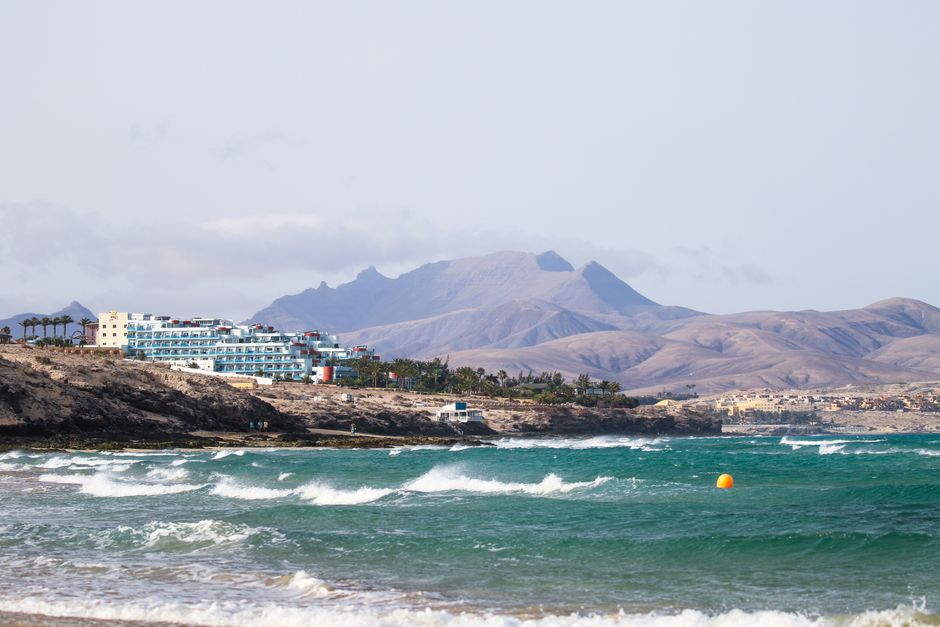
Fuerteventura is the Canary Island of beaches and wind. The second-largest island of the group and the closest to Africa, it has more than 150 beaches, from the white dunes of Corralejo in the north to the endless golden sands of Jandía and wild Cofete in the south, with turquoise lagoons, surf breaks and some of the best kitesurfing and windsurfing in Europe in between. Inland it is bare, brown and quiet: old volcanoes, palm-filled valleys, windmills and the little former capital of Betancuria. Most visitors stay in Corralejo in the north, Caleta de Fuste in the middle or Costa Calma and Morro Jable in the south, and spend their days on the sand. Hire a car for a few days, book the free permit for the islet of Lobos, and remember that the trade winds that make it a paradise for sailors can make some beaches blustery.
Right now in Fuerteventura (Puerto del Rosario)
- Wed 21–26°C 70–78°F Partly cloudy
- Thu 20–26°C 68–78°F 3 mm Showers
- Fri 20–25°C 68–77°F 1 mm Clear
- Mon 12 Oct National Day of Spain (Fiesta Nacional de España)
Weather: MET Norway (CC BY 4.0) · Sea temperature: NOAA CoastWatch · Rates: ECB · Holidays: Nager.Date
Top tours in Fuerteventura
See all tours for Fuerteventura →
From local operators, with prices and reviews; you check availability and book on Viator, our partner. We may earn a commission at no extra cost to you. How we earn money
Fuerteventura at a glance
- Best for: long beaches and lagoons, kitesurfing, windsurfing and surfing, quiet nature, family holidays and winter sun.
- How long: a week is ideal; the island is about 100 km long, and the north and south feel like two different holidays.
- Best time: all year. Spring and autumn are calmest; summer brings the strongest winds; winter is mild, around 21 °C by day.
- Getting there: flights to Fuerteventura Airport (FUE) near Puerto del Rosario; ferries from Lanzarote to Corralejo and from Gran Canaria to Morro Jable.
- Getting around: a hire car is best; Tiadhe public buses link the airport, the capital and the main resorts.
- Before you go: entry rules, money and general safety are on our Spain travel guide. Like all the Canaries, Fuerteventura is one hour behind mainland Spain.
Fuerteventura’s areas and who each one suits
The resorts sit on the coast at both ends and in the middle of the island. Distances are long, so choose your base by what you want to do most.
Corralejo and the north
Corralejo is the island’s liveliest town: a former fishing village with a harbour, a pedestrian old quarter of bars and restaurants, and the great dunes just south of town. Ferries leave here for Lanzarote and for the islet of Lobos. It suits couples, groups, surfers and anyone who likes to walk out to dinner. Nearby Lajares is a laid-back surf village, and El Cotillo on the north-west coast has calm lagoon beaches on one side and powerful surf and sunsets on the other.
Caleta de Fuste and the centre
Just south of the airport, Caleta de Fuste (also called El Castillo) has a sheltered horseshoe beach, a small marina with an 18th-century watchtower, golf courses and many family apartments. It is the most central base for exploring by car. Puerto del Rosario, the capital, is a working port town with a seafront promenade and outdoor sculptures, but few visitors stay there.
Costa Calma and Jandía
The Jandía peninsula in the south has the island’s longest beaches. Costa Calma is a green, low-rise resort beside the Sotavento beaches and lagoon, a world centre for windsurfing and kitesurfing. Morro Jable, at the southern end, combines a pretty old fishing quarter with a long beach, a lighthouse and a ferry port with boats to Gran Canaria. Both suit families and anyone who wants big, quiet beaches.
Top things to see in Fuerteventura
Prices and hours below were checked on the official sites in October 2026, unless we say otherwise; check again before you go. Most of Fuerteventura’s highlights are natural and free to visit, but some protected areas have access rules.
Corralejo Dunes Natural Park
South of Corralejo, a sea of pale, wind-sculpted sand dunes runs down to wide beaches of fine white sand and clear turquoise water, with Lobos and Lanzarote on the horizon. The main road to Puerto del Rosario crosses the park, with parking areas beside the beaches; the northern beaches, known as Grandes Playas, are the easiest to reach. Low stone windbreaks on the sand give shelter. Stay on the beaches and marked paths, do not take sand or stones, and take all rubbish away. The sea can have strong currents on windy days, so watch the flags.
The islet of Lobos
The little volcanic island of Lobos, 2 km off Corralejo, is a natural park with a lagoon beach called La Concha, a lighthouse, salt flats and a path to the top of its 127 m crater, the Montaña de La Caldera, for views over the dunes and Lanzarote. A loop walk round the island takes about three hours. Visits are limited: you need a free authorisation from the Cabildo de Fuerteventura, applied for on the official LobosPass website, and you must show it when you land. As of October 2026 one boat operator says you can request up to three places per application, from three days before the date; the Cabildo has long run two visiting shifts, 10:00–14:00 and 14:00–18:00. The permit is separate from the boat: the operator’s return ticket from Corralejo costs €17 for adults and €11 for children aged 4–11, with departures from Corralejo at 9:45, 11:00, 12:30 and 13:30 in the winter timetable (from mid-September to mid-June). There are no shops, only a small restaurant, so bring water, food and sun protection. Beware of websites that charge for the free permit.
Cofete and the Jandía Natural Park
On the wild windward side of the Jandía peninsula, Cofete is a beach of some 12 km below a wall of jagged mountains, one of the most dramatic in Spain. The mysterious Villa Winter, a house built in the 1940s by a German engineer, stands alone above it. Cofete is reached from Morro Jable on a long, rough gravel track over the mountains; many hire-car contracts exclude unpaved roads, so check yours or go with a 4×4 tour. Bathing is dangerous: there are big waves, strong currents and no lifeguards. Admire it from the sand.
Sotavento lagoon
Between Costa Calma and Morro Jable, the Playas de Sotavento form a huge tidal lagoon that floods and drains with the tide behind a long sandbar. At low tide you can walk far out across the sand; at high tide it is a shallow turquoise lake. The constant side-shore wind has made it a famous spot for windsurfing and kitesurfing, with schools and hire centres on the beach.
Betancuria
Hidden in a valley in the mountains of the west, Betancuria was founded in the early 15th century by the Norman conqueror Jean de Béthencourt and was the island’s capital for centuries. Its whitewashed houses, palm trees and the church of Santa María make it the most beautiful village on the island. The road there climbs through the Betancuria Rural Park past viewpoints such as the Mirador Morro Velosa and the Mirador de Guise y Ayose, with statues of the island’s last two native kings. Combine it with the fishing village of Ajuy and its sea caves.
More to see
- Ajuy caves: a short cliff path from the black-sand beach of Ajuy leads to huge sea caves in some of the oldest rocks in the Canaries, a protected natural monument.
- El Cotillo: an old fortress tower, lagoon beaches and sunset surf on the north-west coast.
- Tindaya: a sacred mountain of the island’s first people, with ancient footprint carvings near the top; climbing it needs a permit.
- Windmills: the traditional mills of Tefía, Antigua and Villaverde, symbols of the island’s farming past.
- Morro Jable lighthouse: a tall modern lighthouse on the beach at the edge of town, near a protected turtle hatchery.
Other things to do in Fuerteventura
Kitesurfing and windsurfing
The trade winds blow most reliably from May to September, and Sotavento in the south and the Flag Beach area at Corralejo in the north are the main spots, with schools for complete beginners. Lessons usually start on the shallow lagoon or with a few hours on the beach learning to fly the kite. Winter brings lighter winds and bigger waves.
Surfing
The north shore between Corralejo, Lajares and El Cotillo has a string of reef and beach breaks known as the North Track, which come alive from October to March. Surf schools take beginners to sandy beaches such as those near El Cotillo and Corralejo, and run camps all year. See our surfing guide.
Beaches, snorkelling and diving
For calm water, choose the lagoons at El Cotillo, the sheltered bay of Caleta de Fuste, the Corralejo dunes on light days, or Morro Jable. Lobos and the reefs off Corralejo are good for snorkeling and diving, with rays, angel sharks and shoals of fish. See our beaches guide.
Walking, boats and cycling
Bare and open, the island is good for walking in the cooler months: climb Calderón Hondo near Lajares to look into a volcano, cross Lobos, or walk up to the Pico de la Zarza, the island’s highest point at 807 m, above Morro Jable. See our hiking guide. Catamaran and glass-bottom boat trips leave Corralejo for Lobos and the coast; see our boat trips guide.
Food
Fuerteventura’s Majorero goat’s cheese has its own protected designation of origin; try it fresh, smoked or rubbed with paprika and gofio. Fresh fish, goat stew and papas arrugadas with mojo are on most menus.
Day trips and onward travel
Lanzarote
From Corralejo, ferries reach Playa Blanca on Lanzarote in about 25–35 minutes, several times a day; Fred. Olsen Express fares start at €8 one way as of October 2026, and Líneas Romero and Armas also sail the route. Rent a car or join a tour to see Timanfaya’s volcanoes and César Manrique’s caves and gardens in a day; book Timanfaya online first.
Gran Canaria
From Morro Jable, Fred. Olsen Express sails to Las Palmas in about two hours, up to four times a day, with fares from €14; Baleària Canarias also runs the route. It is best as an onward trip rather than a day out. See our Gran Canaria travel guide, or fly with Binter to Tenerife.
Nearby destinations
- Lanzarote79 km
- Gran Canaria164 km
- Tenerife255 km
Getting there and getting around
Flights and ferries
Fuerteventura Airport (FUE) is on the east coast just south of Puerto del Rosario, with direct flights from much of Europe and mainland Spain. Corralejo is about 40 minutes’ drive north and Morro Jable about 90 minutes south. Ferries arrive at Corralejo from Lanzarote, at Morro Jable from Gran Canaria and at Puerto del Rosario from Gran Canaria, Lanzarote and the mainland. Book ahead if you take a car.
Car hire, buses and taxis
A hire car is the easiest way to explore, and the main FV-1 and FV-2 roads are fast and quiet. Public buses are run by Tiadhe on behalf of the Cabildo and link the airport, Puerto del Rosario, Corralejo, Caleta de Fuste, Costa Calma and Morro Jable, but services to villages are sparse; check the timetables on the Tiadhe and Cabildo websites. Taxis wait at the airport and in the resorts.
Protected areas and planned fees
The Cabildo de Fuerteventura has announced plans to charge visitors for some protected natural areas, including Lobos, Cofete, the Corralejo dunes and the Ajuy caves, with residents exempt. As of October 2026 we found no such fee in force, only the free Lobos permit, but check before you go.
When to go and how long to stay
Fuerteventura has a warm desert climate with very little rain and a steady breeze. The table uses the 1991–2020 climate normals of the AEMET weather station at Fuerteventura Airport, as published by the WMO: average daily highs and lows, and days with at least 1 mm of rain. The island gets only about 84 mm of rain a year, almost all between October and March.
| Season | Average high / low | Rainy days per month | What it’s like | Good for |
|---|---|---|---|---|
| Winter (Dec–Feb) | 21–22 °C / 15–16 °C | 2–3 | Mild and sunny with cool evenings; biggest surf | Winter sun, surfing, walking |
| Spring (Mar–May) | 22–24 °C / 16–18 °C | 0–2 | Sunny, breezy and pleasant | Beaches, Lobos, walking, kitesurfing |
| Summer (Jun–Aug) | 26–27 °C / 19–21 °C | 0 | Warm and dry, with the strongest winds | Kitesurfing, windsurfing, family beach holidays |
| Autumn (Sep–Nov) | 27 °C falling to 24 °C / 21 °C falling to 18 °C | 0–2 | Warmest sea, lighter winds, surf returning | Swimming, snorkelling, everything |
Daytime temperatures vary only about 6 °C across the year. The sea is coolest, about 18 °C, in late winter and warmest, about 22–23 °C, in September and October. Calima, dusty wind from the Sahara, can bring hazy, hot days.
Events worth planning around
- February or March: Carnival in Puerto del Rosario, Corralejo and the other towns.
- Summer: international windsurfing and kitesurfing competitions at Sotavento in some years; check the dates.
- Through the year: local fiestas in each village; ask at the tourist offices.
How long to stay: 3, 5 and 7 days
3 days: day one, the Corralejo dunes and an evening in the old town; day two, Lobos with your permit; day three, El Cotillo’s lagoons and Lajares, or the drive through Betancuria to Ajuy.
5 days: add a day at Sotavento with a kitesurf or windsurf lesson, and a day on Cofete with a 4×4 tour. 7 days: split your stay between north and south, and add a ferry day to Lanzarote, a surf lesson and a lazy day on the sand.
Where to stay in Fuerteventura and the tourist tax
- Corralejo: the most restaurants and nightlife, the dunes and the boats to Lobos and Lanzarote.
- El Cotillo and Lajares: small, relaxed and surfy, with lagoons and sunsets.
- Caleta de Fuste: central, family-friendly and close to the airport.
- Costa Calma: next to Sotavento, ideal for kitesurfers and windsurfers.
- Morro Jable: a long beach, an old town and the ferry to Gran Canaria; the base for Cofete.
As of October 2026 we found no overnight tourist tax in force in Fuerteventura or anywhere in the Canary Islands; check when you book. Prices include the Canary sales tax, IGIC, not mainland VAT. Book ahead for Christmas, Easter and the summer holidays.
Practical tips for Fuerteventura
- Get the Lobos permit first: it is free and limited, and you cannot land without it.
- Respect the sea: the west coast, including Cofete and much of the north, has big waves and rip currents; swim at lifeguarded beaches and watch the flags.
- Choose sheltered beaches on windy days: lagoons, harbour beaches and windbreaks help.
- Check your hire contract: many exclude gravel tracks, including the road to Cofete.
- Nudism: it is common and accepted on some quieter beaches, including parts of the dunes and Sotavento.
- Emergencies: call 112.
What to pack for Fuerteventura
Pack for sun, sand and wind. A sun hat that will not blow away, sunglasses, high-factor sunscreen and a light windproof jacket are essential, as is a beach shelter or windbreak if you plan long days on the sand. Bring a swimsuit, a sand-shedding towel, water shoes for rocky beaches and a snorkel mask for Lobos and the lagoons. For Lobos and the dunes, carry plenty of water, snacks and a small daypack. Surfers and kiters will want a wetsuit from November to May, when the water is cooler, and a rash vest in summer.
Fuerteventura travel FAQ
Do I need a permit to visit Lobos?
Yes. The Cabildo de Fuerteventura requires a free authorisation for every visitor, requested on its official LobosPass website a few days ahead. The boat ticket is separate, about €17 return from Corralejo as of October 2026.
Which part of Fuerteventura is best to stay in?
Corralejo for restaurants, the dunes and boat trips; Costa Calma or Morro Jable for long, quiet beaches and kitesurfing; Caleta de Fuste for a central family base close to the airport.
Can you swim at Cofete?
It is not safe. Cofete faces the open Atlantic, with big waves, strong currents and no lifeguards. Walk the beach and swim elsewhere.
Is Fuerteventura good for beginners at kitesurfing?
Yes. Schools at Sotavento and Corralejo teach complete beginners, often on shallow lagoons. Summer has the most reliable wind; spring and autumn are gentler.
How do I get from Fuerteventura to Lanzarote?
By ferry from Corralejo to Playa Blanca, about 25–35 minutes, several times a day, with fares from €8 one way as of October 2026.
How long is the ferry from Gran Canaria to Fuerteventura?
About two hours from Las Palmas to Morro Jable with Fred. Olsen Express, with up to four departures a day.
Is there a tourist tax in Fuerteventura?
Not on overnight stays, as of October 2026. The Cabildo has announced plans to charge for some protected natural areas, but we found no fee in force yet.
Do I need a car in Fuerteventura?
It helps a lot, because the island is long and the best beaches are spread out. Buses link the main resorts, but rarely the villages.
When is the best time to visit Fuerteventura?
Any time. Spring and autumn are calm and warm, summer is best for wind sports, and winter is mild, sunny and best for surfing.
Sources and last review
Researched and last reviewed on 4 October 2026. Lobos permit: the Cabildo de Fuerteventura and its LobosPass site; Lobos boat fares and timetable: the Corralejo–Lobos ferry operator; ferries: Fred. Olsen Express and Líneas Romero; buses: Tiadhe, the Cabildo’s bus concession; climate: AEMET 1991–2020 normals for Fuerteventura Airport, as published by the WMO. The current Lobos booking window and the planned protected-area fees come from the boat operator and the regional press and are flagged for checking, as is the tourist-tax position. Prices, timetables and access rules change, so check the official links before you travel. For entry rules, money and general safety, see our Spain travel guide.
Plan your trip
Partner links: TravelerCenter may earn a commission if you book, at no extra cost to you.
🇪🇸 Useful Spanish phrases for Fuerteventura
All 38 Spanish phrases: restaurant, hotel, emergencies, romance (printable) →