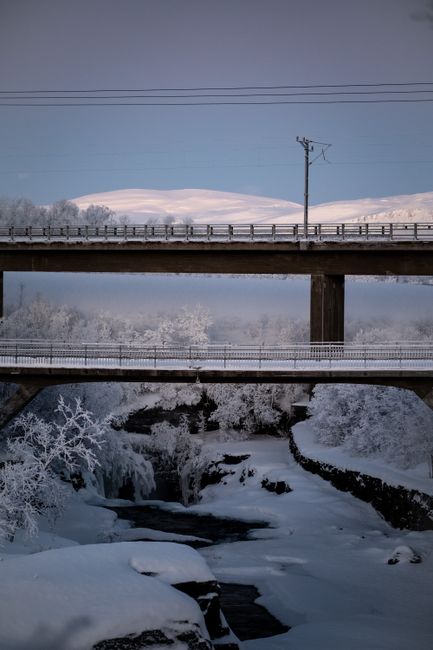
Swedish Lapland is Europe’s great northern wilderness: a vast land of birch forest, rivers, bare mountains and frozen lakes above and around the Arctic Circle, home to the Sámi people for thousands of years. It is the place to watch the northern lights dance over Abisko, sleep in a hotel carved from river ice at Jukkasjärvi, ride a dog sled through the forest, and, in summer, walk the King’s Trail under a sun that never sets. Kiruna, the mining town being moved east to make way for its iron mine, is the hub; Luleå on the coast adds an island-dotted archipelago and the UNESCO church town of Gammelstad. Plan four or five days in winter, or a week to hike in summer.
Right now in Swedish Lapland (Kiruna)
- Wed1–4°C33–40°FPartly cloudy
- Thu-1–4°C31–40°FClear
- Fri-4–1°C26–33°FPartly cloudy
Top tours in Swedish Lapland
See all tours for Swedish Lapland →
From local operators, with prices and reviews; you check availability and book on Viator, our partner. We may earn a commission at no extra cost to you. How we earn money
Swedish Lapland at a glance
- Best for: northern lights, the Icehotel, dog sledding and snowmobiles, Sámi culture, midnight sun hiking, Kebnekaise and wild, empty landscapes.
- How long: 4–5 days in winter for Kiruna, Jukkasjärvi and Abisko; a week or more in summer to hike part of the Kungsleden or climb Kebnekaise.
- Best time: February and March for northern lights with longer days and deep snow; December for Christmas and the polar night; late May to mid-July for the midnight sun; late August and September for autumn colours and the first auroras.
- Getting there: flights from Stockholm to Kiruna take about 1 hour 30 minutes, and to Luleå a little over an hour; SJ’s night train runs from Stockholm to Kiruna, Abisko and Narvik.
- Budget: expensive: guided activities such as dog sledding, snowmobile and aurora tours typically cost from a few hundred to several thousand Swedish kronor per person, and winter rooms at the Icehotel and in Abisko book up months ahead.
- Before you go: temperatures can fall below −30 °C, so dress properly or rent warm gear locally; Sweden is almost cashless; and carry your passport if you cross into Norway at Narvik.
Swedish Lapland, place by place
Strictly, Lappland is Sweden’s largest historical province, covering the mountains and forests of the north-west; the tourist region of Swedish Lapland also takes in the Norrbotten coast around Luleå. Distances are huge: Kiruna is about 1,240 km north of Stockholm, and Abisko another 93 km north-west.
Kiruna
Sweden’s northernmost town grew up around the iron-ore mountain of Kiirunavaara in the early 1900s. It is the main base for the region, with the airport, hotels, tour operators and the Kiruna Tourist Center. Best for: first-timers, the mine tour and day trips in all directions.
Jukkasjärvi
A small village on the Torne River, about 17 km east of Kiruna, home of the Icehotel, an old wooden church and Sámi reindeer experiences. Best for: the Icehotel, dog sledding and quiet aurora nights.
Abisko, Björkliden and Riksgränsen
Along the railway and the E10 towards Norway, on the long lake Torneträsk: Abisko, with its national park, the Aurora Sky Station and the start of the Kungsleden, and the ski resorts of Björkliden and Riksgränsen. Nikkaluokta, a Sámi village at the end of a road 66 km west of Kiruna, is where the trail to Kebnekaise begins. Best for: northern lights, hiking and mountain views.
Luleå, Gammelstad and Jokkmokk
Luleå, a university and steel town on the Gulf of Bothnia, has an archipelago of hundreds of islands that freezes solid in winter. Gammelstad, its original centre, is 10 km north-west. Inland, Jokkmokk, just north of the Arctic Circle, is a centre of Sámi culture and the gateway to the Laponia World Heritage area. Best for: city comforts, the frozen sea, Sámi history and the winter market.
Top things to see in Swedish Lapland
Prices, seasons and hours below were checked on the official sites in October 2026. They change, so check before you go.
Icehotel, Jukkasjärvi
For more than three decades, the Icehotel has been built anew every winter from blocks of ice cut from the Torne River, with art suites designed by artists from around the world. It melts back into the river each spring. The 2026/27 hotel, Icehotel 37, opens in December, with winter packages available from 1 December 2026, and usually stands until spring. Next to it, Icehotel 365 is a permanent building kept frozen all year by solar-powered cooling, with ice suites, an ice bar and a gallery, so you can see ice art even in summer. Guests sleep in thermal sleeping bags on reindeer hides at about −5 °C, usually for one night, combined with a night in a warm room.
Day visits. As of October 2026, a day ticket costs SEK 325 for adults, SEK 225 for students and seniors and SEK 39 for children aged 4 to 12; under-4s go free with a paying adult. It covers Icehotel 365 and the art exhibition (and the winter hotel when it is open). In 2026 the art exhibition and the Icebar opened daily 11:00–18:00 until 30 November. Overnight guests get in free. Icehotel is cashless.
Abisko National Park and the Aurora Sky Station
Founded in 1909, Abisko is one of Sweden’s oldest national parks, a valley of birch forest and a roaring canyon (Abiskojåkka) framed by the U-shaped mountain pass of Lapporten, the “Gate of Lapland”. It sits in a rain shadow behind the Norwegian mountains, so skies are often clear when the rest of the region is cloudy: Abisko gets only about 350 mm of rain and snow a year, which makes it one of the best places in the world to see the aurora. The STF Abisko Turiststation, a classic mountain lodge, is the base for hikers and aurora watchers.
The Aurora Sky Station sits at about 900 m on Mount Nuolja, reached by a chairlift about 2 km long. In the 2026/27 season, Night Visits run from 19 October 2026 to 27 March 2027, from 20:30 to no later than 01:00, with a guide, the return chairlift (or a visit to a Sámi-style lavvu tent instead) and warm overalls and boots included. Groups are limited to 40, so book ahead through STF. In summer the chairlift runs by day (in 2026 from 12 June to 27 September, 09:30–16:00) and late in the evening for the midnight sun (12 June to 19 July, 20:00–01:30).
Kiruna, the mine and the town on the move
Kiruna sits on top of the world’s largest underground iron-ore mine, run by the state company LKAB, and the ground beneath the old town is cracking as mining goes deeper. Since the 2000s the whole town has been moving about 3 km east: the new town hall, Kristallen, opened in 2018 as the first building of the new centre, and a culture centre, bathhouse and schools are being built around it. In August 2025, Kiruna Church, built in 1912 in the shape of a Sámi tent and voted Sweden’s finest building from before 1950, was lifted onto trailers and moved in one piece to its new site over two days. It is closed to visitors until sometime in the first half of 2027.
The mine tour. LKAB’s visitor mine, deep underground, is visited on a 3-hour guided bus tour from the Kiruna Tourist Center (Malmvägen 9B), all year round. As of October 2026, it costs SEK 590 for adults and SEK 190 for children aged 6 to 15; children must be at least 6 and 110 cm tall. Places are limited and languages and times vary by season, so book ahead.
Gammelstad Church Town, Luleå
Gammelstad is the largest and best-preserved church town in the world, a UNESCO World Heritage Site since 1996 (it celebrates 30 years in 2026). More than 400 small red wooden cottages surround Nederluleå Church, from 1492 the largest medieval stone church in northern Sweden. Families from distant villages stayed in them overnight when church attendance was compulsory; many are still used on church holidays. Land uplift left the harbour too shallow, and Luleå moved to its present site in 1649. Take a guided walk from the visitor centre, and visit the Hägnan open-air museum next door in summer.
Luleå and its archipelago
Luleå’s archipelago has more than a thousand islands, many with summer cabins. In summer, boats run out to islands such as Brändön, Hindersön and Kluntarna for swimming, saunas and walks. In winter the sea freezes: an ice track of usually about 10 km is ploughed around the city peninsula for skating, walking and kick sleds, and you can cross the ice to the islands by fatbike, snowmobile or ski with a guide. Luleå is also a good place to see the northern lights without leaving town.
Museums
- Ájtte, Swedish Mountain and Sámi Museum
Peaks and mountains
- Kebnekaise
Historic centres
- Gammelstad Church Town
Other sights
- Icehotel, Jukkasjärvi
- Kiirunavaara (Kiruna Iron-Ore Mine)
- Luleå Cathedral
Protected areas
- Abisko National Park
Northern lights, midnight sun and polar night
Swedish Lapland lies under the auroral oval, and the northern lights season runs from about September to the end of March. You need darkness (about 21:00 to 02:00 is best), clear skies and some solar activity, so check the aurora and cloud forecasts, get away from town lights and give yourself at least three nights.
- Midnight sun: in Kiruna the sun stays above the horizon for about 47 days, from late May to mid-July (roughly 28 May to 14 July); in Abisko, a little longer. With the bright nights before and after, locals talk of 100 days without night.
- Polar night: in Kiruna the sun does not rise from about mid-December to early January; the tourist board puts it at about 28 days. It is not pitch dark: there are a few hours of blue twilight around midday, perfect for photos.
- Luleå and Jokkmokk: Luleå lies just south of the Arctic Circle, so it has very light summer nights rather than true midnight sun; Jokkmokk sees the midnight sun for a few weeks around midsummer.
Sámi culture and the Jokkmokk Winter Market
Swedish Lapland is part of Sápmi, the homeland of the Sámi, Europe’s only recognised Indigenous people, which stretches across Norway, Sweden, Finland and Russia. Reindeer herding, duodji (Sámi handicraft), the yoik song tradition and the Sámi languages are very much alive. The best way to learn is from Sámi people themselves: visit a Sámi-run reindeer camp or eat at a Sámi-owned restaurant, and see the Ájtte museum in Jokkmokk, the Swedish mountain and Sámi museum.
- Be respectful: ask before photographing people, homes or reindeer herds; never approach or disturb herds, especially in spring calving; keep dogs on a lead; and do not wear imitation Sámi clothing (gákti) as a costume.
- Buy genuine crafts: look for the Sámi Duodji label, which guarantees handicraft made by Sámi artisans.
- Jokkmokk Winter Market 2027: held since 1605, the 422nd market runs from 4 to 6 February 2027 (market stalls Thursday to Saturday, 10:00–18:00), with events all week: reindeer races on the frozen lake, Sámi handicraft, food, concerts, exhibitions and seminars. Rooms in Jokkmokk sell out a year ahead; many visitors stay in Luleå, about 2 hours 30 minutes away by car or bus.
Winter activities: dog sledding, snowmobiles and skiing
Husky farms around Kiruna, Jukkasjärvi and Abisko offer everything from a one-hour ride sitting in the sled to multi-day expeditions driving your own team. Snowmobile safaris, ice fishing, snowshoeing, reindeer sled rides and evening aurora tours with dinner by an open fire are easy to book through the Kiruna Tourist Center or your hotel; most include warm overalls and boots. Björkliden and Riksgränsen have downhill skiing late into spring (Riksgränsen often into June, under the midnight sun).
Hiking: the Kungsleden and Kebnekaise
The Kungsleden (King’s Trail) runs about 440 km from Abisko south to Hemavan, with Swedish Tourist Association (STF) mountain huts and stations a day’s walk apart. The most popular stretch, from Abisko to Nikkaluokta via the Kebnekaise mountain station, takes about five to seven days; the summer hiking season runs from late June to mid-September, and in late August and September the birch and dwarf shrubs turn red and gold. You can also hike it on skis in March and April. See our hiking guide for gear and planning tips.
Kebnekaise, at roughly 2,100 m, is Sweden’s highest mountain. Its southern summit is a glacier that has been melting, so the rocky northern summit is now the higher of the two. From Nikkaluokta, it is 19 km to the STF Kebnekaise mountain station (5–6 hours on foot, or about 6 km less with the boat across lake Láddjujávri, which runs daily from late June to mid-September). From the station, the western route to the summit is about 9 km each way with around 1,800 m of ascent, a 10- to 16-hour day; the eastern route crosses a glacier and needs a guide. July and August are best, and you should allow at least five days from Kiruna.
Activities and best months
- CultureSwedish Lapland is part of Sápmi, the land of the Sámi, which spans Norway, Sweden, Finland and Russia; Sámi life follows the reindeer through eight seasons, and duodji handicraft uses wood, antler and reindeer hide. Sámi-run businesses such as Nutti Sámi Siida, Båtsuoj Sámi Center, Silba Siida and SamiReindeer welcome visitors, and Ájtte museum in Jokkmokk is the main museum of Sámi culture. The Jokkmokk winter market, with reindeer, crafts, concerts and seminars, holds its 422nd edition on 4-6 February 2027.
- HikingJulAugAbisko National Park, founded in 1909, is where the King's Trail (Kungsleden) begins, with walks from half an hour to many days, the Abisko canyon and views of Lapporten. From Nikkaluokta it is 19 km (5-6 hours) to the Kebnekaise mountain station; July and August are the best months to climb Kebnekaise, a 10-16-hour round trip with about 1,800 m of ascent on the western route, best with a guide for inexperienced hikers and with at least five days planned from Kiruna.
- LandJanFebMarAprDecDog sledding around Kiruna runs from about December to April (sometimes from November when snow comes early). Tours last 2.5 to 5 hours, with about an hour on the sled on shorter trips; you can ride as a passenger or drive your own team of mostly Alaskan or Siberian huskies, by morning or on evening tours with a chance of northern lights, and overnight and multi-day trips are also offered. Abisko adds snowshoeing, ski touring and snowmobile trips in winter.
Getting there and around
By air. SAS and Norwegian fly from Stockholm Arlanda to Kiruna all year in about 1 hour 30 minutes, and to Luleå in a little over an hour. In winter 2026/27, SAS also flies from Copenhagen to Kiruna (17 December 2026 to 7 March 2027) and Eurowings from Düsseldorf (6 February to 20 March 2027). Kiruna Airport is about 10 km from town, and Luleå Airport about 5 km from the centre; airport buses meet most flights.
By night train. SJ’s night train runs overnight from Stockholm to Kiruna, Abisko and Narvik in Norway, a journey of around 16 to 19 hours, with seats, couchettes and sleeper compartments (first-class compartments have a shower and toilet, and breakfast) and a bistro on board. By day, Norrtåg trains run from Sundsvall and Luleå to Kiruna. Kiruna’s station is about 6 km from the centre, with free shuttle buses for every train. Snälltåget also runs a one-off northern lights night train from Malmö via Stockholm to Narvik, leaving on 23 November 2026 and returning from Narvik on 27 November.
By car and bus. The E10 links Luleå, Kiruna, Abisko and Narvik; Abisko is about an hour from Kiruna. Winter tyres are compulsory from December to March in winter conditions, and you should watch for reindeer on the road, carry warm clothes and keep the tank topped up, as distances between fuel stations are long. Regional buses (Länstrafiken Norrbotten) connect the towns, Jukkasjärvi and Nikkaluokta, but services are sparse, so most visitors combine trains, buses and tour pick-ups.
Nearby destinations
- Lofoten282 km
When to go and how long to stay
Swedish Lapland has a subarctic climate: long, cold, snowy winters and short, mild summers. The table uses our averages for 1991–2020 from SMHI’s official records: temperatures at Kiruna Airport and precipitation at the Kiruna town station, which has a shorter record (about 14 years in that period). Abisko, in its rain shadow, is drier and slightly milder in winter.
| Season | Average daily high | Average nightly low | Rain or snow per month | What it’s like |
|---|---|---|---|---|
| Winter (Dec–Feb) | −7 to −5 °C | −16 to −14 °C | 29–32 mm | Snow, deep cold, polar night in December; northern lights, dog sledding, the Icehotel |
| Spring (Mar–May) | −3 °C rising to 9 °C | −13 °C rising to 0 °C | 20–53 mm | Bright, snowy March and April: the best time for skiing and snowmobiles; slushy May |
| Summer (Jun–Aug) | 15–18 °C | 6–9 °C | 61–116 mm | Midnight sun, hiking, mosquitoes in July; the wettest season |
| Autumn (Sep–Nov) | 10 °C falling to −3 °C | 3 °C falling to −11 °C | 38–47 mm | Red and gold ruska colours in early September; first snow by October; auroras return |
Kiruna gets about 550 mm of precipitation a year, with July the wettest month; Abisko gets only about 350 mm, which is why its skies are so often clear. Cold snaps below −30 °C happen most winters. Mosquitoes and midges are fierce from late June to early August, especially in the forests and wetlands.
Swedish Lapland in 4 days in winter
Day 1: fly to Kiruna, see the new town centre and Kristallen, and join an evening aurora tour. Day 2: the LKAB mine tour, then on to Jukkasjärvi for the Icehotel and a night in an ice room. Day 3: a dog sledding morning, then the train or bus to Abisko and the Aurora Sky Station at night. Day 4: snowshoe in the national park and the canyon, then fly home from Kiruna or take the night train south.
Swedish Lapland in 7 days in summer
Take the night train to Abisko, ride the chairlift for the midnight sun, then hike the Kungsleden over four or five days to the Kebnekaise mountain station and out to Nikkaluokta, with a bus back to Kiruna. Or base yourself in Luleå for Gammelstad and the archipelago and drive inland to Jokkmokk and the Ájtte museum.
Weather month by month
Where to stay in Swedish Lapland
- Kiruna: hotels, apartments and hostels with the widest choice of tours and restaurants; convenient but less atmospheric.
- Jukkasjärvi: the Icehotel (ice rooms and warm rooms and cabins) and riverside lodges; book months ahead for December to March.
- Abisko: the STF Abisko Turiststation and a handful of lodges, hostels and cabins; the best base for aurora hunting and hiking, so it fills up early.
- Luleå: city hotels near the frozen sea, the treehouse-style hotels of the forest further inland, and island cabins in summer.
- In the mountains: STF huts and mountain stations along the Kungsleden and at Kebnekaise, simple and sociable; open in the summer and late-winter seasons.
Practical tips for Swedish Lapland
- Book the big things early: Icehotel nights, Aurora Sky Station visits, Abisko rooms and Jokkmokk market beds sell out months ahead.
- Respect the right of public access: you may hike and camp on most land, but not close to homes or reindeer herds; follow the national park rules in Abisko.
- Cross-border trips: Narvik is in Norway, which uses the krone; carry your passport or ID card, as police checks are possible at the border.
What to pack for Swedish Lapland
In winter, dress in layers: merino base layers, a fleece or wool mid-layer, an insulated windproof jacket and trousers, a warm hat, a buff, inner and outer mittens, thick wool socks and insulated boots with good grip (tour companies usually lend overalls and boots). Add a head torch, hand warmers and a tripod for aurora photos. In summer bring hiking boots, waterproofs, warm layers, an eye mask for the midnight sun and plenty of insect repellent.
What to pack
- Day packs and anti-theft bagsA 20–30 litre pack carries layers, water, a head torch and snacks on full-day levada walks.
- Fleeces and warm layersSummits like Pico do Areeiro averaged about 11 °C over 2024, so a fleece is needed even in summer.
- HeadlampsLevada routes such as PR1 and PR9 pass through long, dark, wet tunnels.
- Hiking shoes and bootsMadeira's levadas and the Azores' crater rims are wet, rocky and slippery, so grippy shoes matter more than anywhere else in Portugal.
- Rain jacketsMountain and island weather changes fast; a real shell beats an umbrella in the wind.
- Trekking polesLong stone staircases and steep descents on Madeira's peaks and the Azores' crater rims are easier on the knees with poles.
- Water bottles and hydration packsAlgarve and Alentejo trails are hot and exposed with few refill points.
Swedish Lapland travel FAQ
When is the best time to see the northern lights in Swedish Lapland?
From about September to the end of March, on dark, clear nights. February and March combine good aurora chances with longer days and plenty of snow; Abisko, in a rain shadow, has the clearest skies.
When does the Icehotel open for 2026/27?
Icehotel 37 opens in December 2026, with winter packages from 1 December, and melts back into the river in spring. Icehotel 365, with ice suites and an ice bar, is open all year.
How much does it cost to visit the Icehotel?
As of October 2026, a day visit costs SEK 325 for adults, SEK 225 for students and seniors and SEK 39 for children aged 4 to 12. Overnight guests get in free.
When is the Aurora Sky Station open?
Night visits run from 19 October 2026 to 27 March 2027, from 20:30 until 01:00 at the latest, with a guide, the chairlift and warm clothing included. In summer, the chairlift runs by day and on midnight sun evenings.
Can you visit the Kiruna mine?
Yes. LKAB’s visitor mine tour runs all year from the Kiruna Tourist Center, takes 3 hours and costs SEK 590 for adults and SEK 190 for children aged 6 to 15, as of October 2026. Book ahead.
Why is Kiruna moving?
Because the iron-ore mine beneath it is causing the ground to crack. The town centre is being rebuilt about 3 km east; the new town hall opened in 2018 and Kiruna Church was moved there in August 2025. The church reopens in the first half of 2027.
When is the Jokkmokk Winter Market in 2027?
From 4 to 6 February 2027, the 422nd market, with stalls open Thursday to Saturday from 10:00 to 18:00 and events all week, including reindeer races.
When is the midnight sun in Kiruna?
From late May to mid-July, about 47 days. The polar night, when the sun stays below the horizon, lasts from about mid-December to early January.
Is there a night train to Swedish Lapland?
Yes. SJ’s night train runs from Stockholm to Kiruna, Abisko and Narvik, with seats, couchettes and sleeper compartments. Book early for the winter season.
How cold does it get in Kiruna?
Average January highs are about −7 °C and lows about −16 °C, and most winters bring cold snaps below −30 °C. Dress in layers and use the warm gear tour companies lend.
How long do you need in Swedish Lapland?
Four or five days in winter for Kiruna, the Icehotel, Abisko and at least three aurora nights; a week or more in summer to hike the Kungsleden or climb Kebnekaise.
Plan your trip
Partner links: TravelerCenter may earn a commission if you book, at no extra cost to you.
🇸🇪 Useful Swedish phrases for Swedish Lapland
All 38 Swedish phrases: restaurant, hotel, emergencies, romance (printable) →
Sources · last reviewed 4 October 2026
Researched and last reviewed on 4 October 2026. Icehotel: icehotel.com; Aurora Sky Station: auroraskystation.se; the mine tour, the town move, Kiruna Church, midnight sun, polar night, Abisko, Kebnekaise, flights and trains: Kiruna Lapland (kirunalapland.se); Jokkmokk Winter Market: jokkmokksmarknad.se; Gammelstad and Luleå: Visit Luleå and the City of Luleå; climate: our averages from SMHI’s official station records, 1991–2020. Night-train times, Kebnekaise’s height and some activity and Sámi culture details come partly from general knowledge and are flagged for checking. Prices and seasons change, so check the official links before you go.
Also: swedishlapland.com · kirunalapland.se · SMHI normals 1991–2020, Kiruna Flygplats; sunshine Kiruna Sol (climate)
Data: Weather: MET Norway (CC BY 4.0) · Rates: ECB · Costs: World Bank ICP and price levels · © OpenStreetMap contributors (ODBL) · Wikidata (CC0)